How Much Is Number 17A, 1948 Worth?
Last updated: May 8, 2026
Quick Facts
- Last Sale
- $200.0M (2015, Private sale (New York))
- Methodology
- comparable analysis
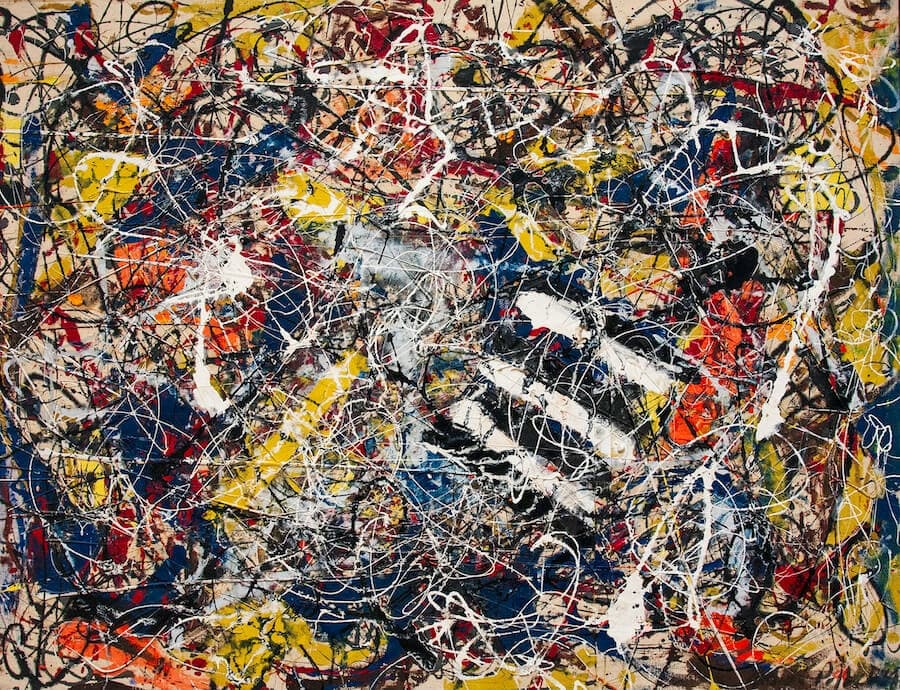
Anchored to the widely reported ~$200 million private sale in 2015 and adjusted for 2026 purchasing power and market depth, Jackson Pollock’s Number 17A, 1948 is estimated at $250–300 million today. Scarcity of prime 1947–50 drip paintings and Pollock’s blue‑chip status support this range, assuming excellent condition and optimal sale strategy.
Valuation Analysis
Conclusion: We estimate the fair‑market value of Jackson Pollock’s Number 17A, 1948 at $250–300 million as of May 2026. This range is anchored by the painting’s c. $200 million private transaction in 2015, reported by multiple major outlets, and is supported by inflation, extreme scarcity of top‑period Pollock drip paintings, and sustained collector and institutional demand [1][5].
Anchor and inflation adjustment: The 2015 private sale at roughly $200 million established a market reference for this specific work and for Pollock’s top tier more broadly [1]. Adjusted to 2026 CPI, that price equates to approximately $274 million, providing a robust mid‑range benchmark within today’s estimate [5]. Given the rarity of 1947–50 all‑over drips and the painting’s canonical status, a modest premium to inflation is justified under normal market conditions.
Market comps and positioning: Public auction benchmarks for Pollock remain far below this painting’s last known private price, reflecting the scarcity of museum‑caliber drips at auction. The artist’s auction record is $61.2 million for Number 17, 1951 (Sotheby’s, 2021) [2], while a prime 1949 work achieved $54.205 million (Christie’s, 2022) [3]. More recently, a period‑adjacent work realized $15.3 million (Phillips, 2024) [4]. These results validate deep demand for significant Pollocks but also highlight that true trophy material trades privately or with bespoke auction guarantees; Number 17A far exceeds the caliber of recent public comparables.
Sale channel and deal mechanics: In a tightly curated evening sale with a strong third‑party guarantee and optimal timing, a result in the high $200 millions is plausible. A discreet private placement to a small set of trophy collectors could test or exceed the upper end of the range. The current market skews toward private channels for nine‑figure works, with buyers rewarding fresh, A‑quality material—conditions under which Number 17A would likely perform strongly [1][2][3].
Risks and assumptions: Valuation assumes excellent, stable condition for enamel and oil on fiberboard, with secure adhesion and no significant structural or surface issues. Because conservation risks in this medium can be value‑sensitive, a current independent condition report is decisive. Provenance is blue‑chip (David Geffen Foundation to Kenneth C. Griffin), and prior high‑profile loans add to its visibility, both supportive of value [1]. Macro liquidity and timing can introduce variance, but the top tier of Abstract Expressionism remains a core store of value for leading collectors.
Bottom line: With a 2015 anchor around $200 million and a 2026 inflation equivalent of roughly $274 million, the $250–300 million range represents a balanced fair‑market view that reflects scarcity, stature, and present market depth, subject to confirmation of premier condition and optimal sale strategy [1][2][3][4][5].
Key Valuation Factors
Art Historical Significance
High ImpactNumber 17A is a canonical 1948 drip painting from Pollock’s breakthrough 1947–50 period—the body of work that redefined painting with all‑over composition and direct manipulation of enamel. Works of this date and scale are central to the narrative of Abstract Expressionism and American postwar art, comparable in stature to museum cornerstones from 1947–50. The painting’s formal complexity, density of skeins, and period date place it at the apex of Pollock’s oeuvre, making it one of the most important examples still in private hands. This exceptional art‑historical significance translates directly into demand from top collectors and institutions, supporting valuation well above general Pollock auction benchmarks.
Rarity and Supply
High ImpactFully realized, large‑scale drip paintings from 1947–50 are exceptionally scarce on the market; most reside in major museums or long‑term private collections. Genuine trophy‑level examples appear only rarely and often trade privately before reaching auction consideration. This constrained supply creates a persistent scarcity premium that compounds over time, particularly for 1948 works on panel or fiberboard with rich, layered enamel structures. Given near‑zero near‑peer substitutes, collectors seeking a marquee Pollock masterpiece have few alternatives. This supply dynamic is a primary driver of the valuation range and explains the significant spread between public auction comparables and private‑treaty pricing for Number 17A.
Provenance and Exhibition Visibility
High ImpactThe painting’s provenance is blue‑chip, having been owned by the David Geffen Foundation and subsequently acquired by Kenneth C. Griffin in 2015 in one of the highest‑profile modern art transactions of the decade. Public reporting of that price point materially elevated the work’s market profile. Following acquisition, the painting was reported on loan to the Art Institute of Chicago, adding institutional exposure and scholarly visibility. Clear title and high‑quality ownership history reduce transactional friction and enhance buyer confidence at the nine‑figure level. Together, these attributes materially support liquidity and justify pricing at the upper end of the artist’s market.
Condition and Medium
High ImpactPollock’s enamel and oil on fiberboard constructions are sensitive to issues of adhesion, craquelure, and surface integrity. While no public condition report is available, the estimate presumes excellent, stable condition with no significant structural interventions. At this price tier, even moderate conservation concerns can influence bidding depth or require enhanced guarantees, while pristine condition can catalyze competitive offers among top collectors. A current, independent condition assessment remains the single most important confirmatory input. The assumed stability of the support, paint layers, and surface appearance is embedded in the valuation; any adverse findings would warrant recalibration.
Market Benchmarks and Sale Channel
Medium ImpactPublic auction records for Pollock, led by $61.2 million for Number 17, 1951 (Sotheby’s, 2021), trail the private prices achieved for prime drip paintings from 1947–50. Prime 1949 material realized $54.205 million in 2022, and a period‑adjacent work made $15.3 million in 2024, underscoring consistent demand but also the rarity of true trophies at auction. Number 17A’s 2015 private price near $200 million, adjusted to ~ $274 million in 2026 dollars, justifies today’s $250–300 million range. In practice, a strong third‑party guarantee and optimal placement could deliver a high‑$200 million auction outcome, while a discreet private sale could test the upper bound.
Sale History
Private sale (New York)
Reportedly sold by the David Geffen Foundation to Kenneth C. Griffin; transaction disclosed in February 2016 press.
Jackson Pollock's Market
Jackson Pollock is among the most important American artists, with a deep, global collector base and intense institutional interest. His auction record stands at $61.2 million (Number 17, 1951; Sotheby’s, 2021), while top‑tier drip paintings from 1947–50 have achieved far higher values in private transactions, reflecting extreme scarcity and museum competition. Public results for significant but non‑trophy works typically range from single‑digit to mid‑eight figures, whereas true masterpieces are largely transacted privately with bespoke structuring. Pollock’s brand strength, limited supply of A‑period drips, and enduring art‑historical primacy sustain robust pricing power and strong liquidity for A‑material, even amid broader market cycles.
Comparable Sales
Number 5, 1948
Jackson Pollock
Same artist; same breakthrough 1947–50 drip period; large enamel/oil on fiberboard; canonical trophy and closest like‑for‑like to 17A.
$140.0M
2006, Private sale (New York)
~$222.9M adjusted
Number 19, 1948
Jackson Pollock
Same artist and year (1948) within the prime drip period; important, widely published painting; strong public auction benchmark.
$58.4M
2013, Christie's New York
~$80.4M adjusted
Number 17, 1951
Jackson Pollock
Same artist; museum‑level work and current public auction record; slightly later 'black' series but top‑tier market bellwether.
$61.2M
2021, Sotheby's New York
~$72.5M adjusted
Number 31, 1949
Jackson Pollock
Same artist; prime 1949 drip period; major evening‑sale benchmark close in period and style to 17A.
$54.2M
2022, Christie's New York
~$59.4M adjusted
Untitled (circa 1948)
Jackson Pollock
Same artist and c.1948 date; mid‑level example of the drip idiom; recent market signal for period material.
$15.3M
2024, Phillips New York
~$15.7M adjusted
Number 28, 1949
Jackson Pollock
Same artist; prime 1949 drip period; smaller/less iconic but helpful for period pricing gradient.
$6.7M
2023, Christie's New York (Day Sale)
~$7.0M adjusted
Current Market Trends
After a contraction in public auctions in 2024 and a shift toward private channels, the high end rebounded in 2025, with spending concentrated on museum‑quality, fresh material. Postwar art remained the largest auction category by value, and demand for blue‑chip Abstract Expressionism proved resilient. Sellers of nine‑figure works increasingly favor guarantees and private‑treaty placements, which can optimize outcomes when supply is scarce and buyer pools are known. Against this backdrop, a prime Pollock drip from 1947–50 is well positioned: limited availability, strong brand equity, and cross‑category collector demand support sustained pricing at the top of the market.
Sources
- Bloomberg: Billionaire Griffin Said to Pay $500 Million for Two Paintings
- Sotheby’s: New York White Glove Result for the Macklowe Collection (Nov 2021)
- Christie’s: Marquee Week Sale Results (May 2022)
- Phillips: New York Evening Sale of Modern & Contemporary Art (Nov 2024)
- In2013Dollars: US Inflation Calculator (2015 to 2026)