How Much Is One: Number 31, 1950 Worth?
Last updated: May 7, 2026
Quick Facts
- Methodology
- comparable analysis
One: Number 31, 1950 is a canonical, museum‑held Pollock drip painting and would sit at the very top of the Pollock market if ever offered. Based on public auction anchors and widely reported private‑sale precedents, a realistic realized range if sold under ideal conditions is approximately $150–$250 million, subject to condition, provenance and sale method.
Valuation Analysis
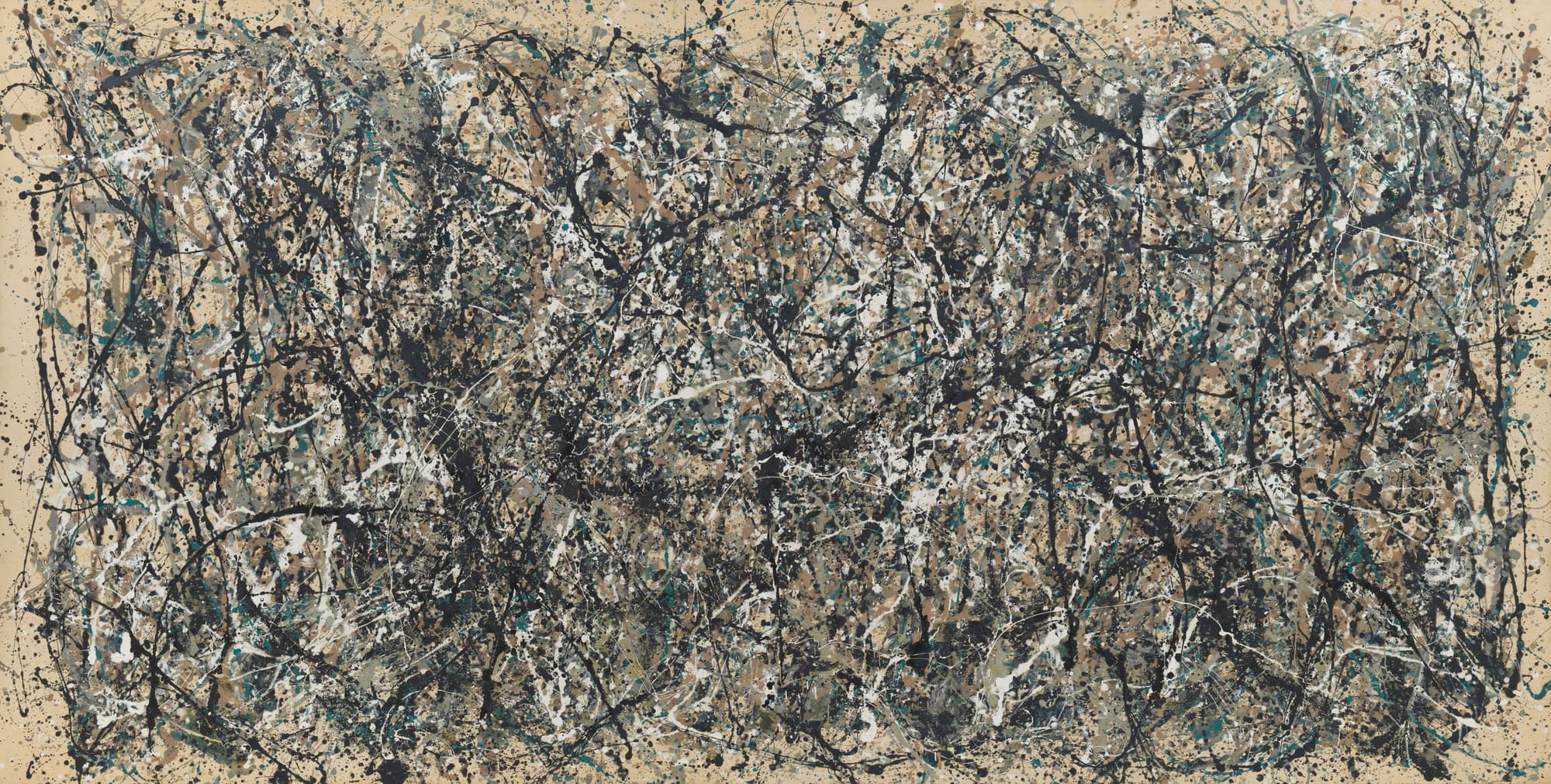
Overview and conclusion: One: Number 31, 1950 is among Jackson Pollock's signature, large‑scale drip canvases and is part of The Museum of Modern Art’s permanent collection, which both elevates its cultural value and effectively removes it from the active market [1]. Public auction anchors for museum‑quality Pollocks sit in the high tens of millions (for example the Macklowe Number 17, 1951 result), while widely reported private transactions demonstrate that well‑situated works can sell for many multiples of public auction results [2][3]. Taking those verifiable public results and private‑sale anchors together supports a practical market estimate of approximately $150–$250 million if the work were sold under optimal conditions.
Comparables and rationale: The reliable, verifiable public‑auction ceiling for Pollock remains in the ~$60M range (Sotheby’s Macklowe sale—Number 17, 1951) and Christie’s earlier evening‑sale highs, which establish a documented public floor for museum‑quality canvases [2][5]. Private‑sale reports (No. 5, 1948 at ≈$140M and Number 17A at reported ≈$200M) show that private treaty transactions for top‑tier Pollocks have materially exceeded auction anchors and create a realistic private‑market ceiling that informs the upper bound of this valuation [3][4]. The $150–$250M band therefore brackets a likely private‑sale outcome given One: Number 31’s scale, condition (conserved and exhibited by MoMA), and canonical status.
Key uncertainties and sale mechanics: The single largest caveat is ownership: museum accession and donor conditions make deaccessioning unlikely and would introduce legal/ethical constraints that materially affect marketability and price [1]. If MoMA were to sell (a remote scenario), sale method would matter: a curated private treaty sale to multiple competing collectors or a brokered institutional sale is the likeliest route to exceed auction anchors and reach the top of the band. Condition, full provenance documentation, export restrictions, and any donor restrictions must be confirmed before any binding valuation — defects or contested provenance could reduce value significantly.
Final note: This valuation is a market synthesis built from verifiable auction benchmarks and widely reported private transactions; it is not a formal appraisal. A formal valuation would require access to the MoMA accession/provenance files, an up‑to‑date condition and conservation report, and consultation with major auction‑house specialists or blue‑chip private dealers to test buyer interest and sale mechanism.
Key Valuation Factors
Art Historical Significance
High ImpactOne: Number 31, 1950 is a canonical work from Pollock’s mature drip period and is regularly reproduced and cited in scholarship and exhibitions of Abstract Expressionism. Its large scale, complex surface facture and execution date (1950) place it at the apex of Pollock’s action‑painting development; the painting functions as a reference point for technique, conservation studies and scholarly debates about authorship and process. This centrality in the narrative of mid‑century American art elevates its cultural and market value beyond that of many other Pollock canvases, because institutions and elite private collectors prize museum‑quality works with demonstrable historic importance when competing for major acquisitions.
Provenance & Ownership
High ImpactThe painting’s current accession into The Museum of Modern Art’s permanent collection is the dominant single factor affecting value and market availability. Museum ownership confers maximum cultural legitimacy and exhibition history, which increases desirability, but conversely removes the work from normal market circulation and subjects any potential sale to strict deaccession policies, donor restrictions and institutional governance. If MoMA were ever to deaccession (an unlikely outcome), the work would enter a tiny pool of fresh, museum‑quality Pollocks — a scenario that historically drives premium private offers. Clear, clean provenance with no title or restitution issues is essential to realize upper‑band prices.
Condition & Conservation
Medium ImpactMoMA has actively conserved and studied One: Number 31, 1950, and documented conservation work improves market confidence by reducing technical uncertainty. Nevertheless, any sale would require a formal up‑to‑date condition report; issues such as paint loss, relining history, past restoration, or structural instability can materially reduce buyer willingness and price. The painting’s scale creates transport and insurance complexity that buyers price into offers. A pristine, well‑documented conservation dossier maintained by MoMA would support the high end of the valuation band, whereas unresolved or extensive restoration needs would depress values.
Market Scarcity & Demand
High ImpactLarge, museum‑quality Pollocks rarely reach the market; this scarcity concentrates buyer demand among a handful of ultra high‑net‑worth collectors, private dealers and occasionally other institutions. When such works do appear, private treaty transactions have demonstrated buyers’ willingness to pay well above public auction anchors. That concentrated demand, combined with trophy search dynamics (competition among buyers for unique canonical works), supports a substantial premium over auction results. However, macro conditions (credit availability, geopolitical risk and collector risk appetite) moderate how aggressively buyers bid within any given selling window.
Comparables & Price Precedents
High ImpactVerifiable auction results for major Pollocks (e.g., Sotheby’s Macklowe Number 17, 1951 at roughly $61.16M total) provide a documented public‑market floor. Widely reported private sales — No. 5, 1948 (≈$140M reported) and Number 17A (reported ≈$200M as part of a two‑work deal) — establish a private‑market ceiling for top examples. The gap between public auction anchors and private‑sale reports reflects scarcity, buyer profile and sale mechanics. Mapping One: Number 31 onto that set of comparables (museum provenance, scale, exhibition history) supports positioning in the $150–$250M band if sold under optimal private‑sale circumstances.
Sale History
One: Number 31, 1950 has never been sold at public auction.
Jackson Pollock's Market
Jackson Pollock is a blue‑chip, canonical figure in Post‑War American art. Market interest in museum‑quality Pollocks remains strong among institutions and ultra high‑net‑worth collectors; public auction benchmarks for top canvases sit in the high tens of millions, while verified and widely reported private transactions have pushed select works into the low‑to‑mid hundreds of millions. Supply of trophy Pollocks on the market is extremely limited, which concentrates demand and creates the potential for outsized private‑sale results when museum‑quality canvases do become available. Collector depth and institutional recognition keep Pollock among the most liquid and headline‑driving artists in his category.
Comparable Sales
Number 17, 1951
Jackson Pollock
Large, museum-quality drip painting from Pollock's mature period sold at a marquee evening auction — primary public‑market benchmark for top-tier Pollocks.
$61.2M
2021, Sotheby's New York (The Macklowe Collection)
~$68.8M adjusted
Number 19, 1948
Jackson Pollock
Major evening-sale result from Pollock's key late‑1940s drip period; an important earlier public auction high for the artist.
$58.4M
2013, Christie's New York
~$76.5M adjusted
No. 5, 1948 (reported private sale)
Jackson Pollock
Widely reported private transaction often cited as the first major private-market ceiling for canonical Pollocks; demonstrates private‑sale willingness to far exceed public auction anchors.
$140.0M
2006, Private sale (widely reported)
~$211.4M adjusted
Number 17A, 1948 (reported private sale)
Jackson Pollock
High‑profile, widely reported private purchase (two‑work transaction) used as a top‑end market anchor for trophy Pollocks.
$200.0M
2016, Private sale (widely reported)
~$254.0M adjusted
Untitled (c.1948)
Jackson Pollock
Recent mid‑range evening‑sale result for a high‑quality Pollock canvas; useful to show the broad range of realized prices and how size/quality shift outcomes.
$15.3M
2024, Phillips New York
~$15.8M adjusted
Current Market Trends
The high end of the Post‑War market softened modestly in 2024–2025 with fewer marquee lots offered, though collector demand remains robust for fresh, museum‑quality masterpieces. Auction anchors continue to set a public floor while private sales can and do exceed those levels for trophy works. Macro factors (interest rates, liquidity) and the scarcity of comparable consignments will determine how aggressively buyers pursue a canonical Pollock in the near term.
Sources
- MoMA Collection: One: Number 31, 1950
- Sotheby's: The Macklowe Collection — Jackson Pollock, Number 17, 1951 (sale page)
- Chron: Pollock painting brings record $140 million (reporting on No. 5, 1948 private sale)
- CNBC: Ken Griffin spent $500 million on two paintings (reporting on private purchase reports)
- Christie's press release: Post‑War & Contemporary Evening Sale (Number 19, 1948 result)