How Much Is Blue Tree Worth?
Last updated: July 6, 2026
Quick Facts
- Methodology
- comparable analysis
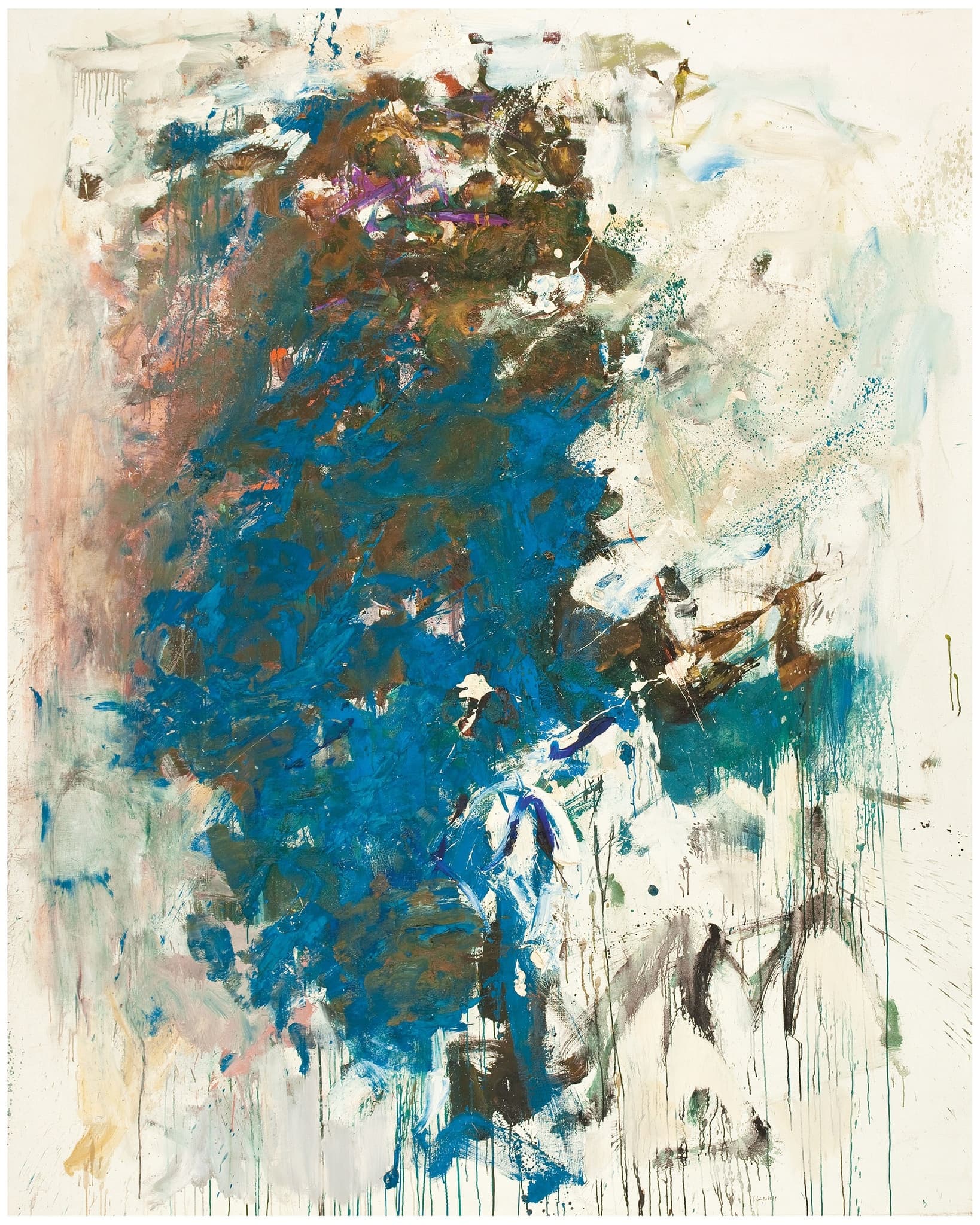
Assuming the work in question is Joan Mitchell’s Blue Tree (1964) in the Worcester Art Museum (c. 96 5/8 × 78 in.), a conservative market valuation is $15–$35 million. This range is derived from recent auction comparables for large, mature‑period Mitchell canvases and the painting’s long museum provenance, with movement within the band driven by condition, literature/exhibition history and sale timing.
Valuation Analysis
Valuation result and context: Based on large‑scale comparables for Joan Mitchell’s mature 1950s–1970s canvases, and assuming the object is the Worcester Art Museum Blue Tree (1964) (c. 96 5/8 × 78 in.), I estimate a market range of $15,000,000–$35,000,000. The Worcester acquisition and documented conservation materially support a top‑tier placing if the work were offered for sale [1][2].
How this was derived: I used a comparable analysis anchored to recent marquee Mitchell results for large canvases. Large museum‑quality Mitchells have traded in the high seven‑ to low eight‑figure band: Christie’s Untitled (c.1959) established a new auction reference at approximately $29.16M [3], and Sotheby’s Noon (c.1969) sold in the low‑to‑mid‑twenty‑million range [4]. Adjusting for scale, date and condition, Blue Tree’s size and 1964 date place it squarely within that upper band. The low end of the range reflects scenario‑driven discounts (conservation concerns, limited literature or atypical sale placement); the high end assumes excellent condition, strong cataloguing/exhibition history and competitive bidding among institutions and private collectors.
Key value drivers and sensitivity: Museum provenance (Worcester’s early 1965 acquisition) is the single largest positive factor: it reduces buyer risk and signals institutional validation, which generally elevates realized prices [2]. Condition and conservation history are decisive: a stable support, minimal intrusive restoration and a documented museum treatment favor the top of the range; significant structural interventions or aggressive retouching would push value toward the low end. Market timing and sale format (major‑house evening sale vs. private treaty) also shift outcomes materially.
Scenarios and realistic expectations: If a conserved, well‑catalogued Blue Tree with Worcester provenance reached the market in a marquee evening sale, competitive bidding could reasonably place the work in the $25–35M neighborhood; conversely, if condition or documentation is weak, an estimate toward $15M is prudent. Because museum‑owned works rarely appear at auction, supply constraints may amplify demand if the painting were legitimately and sensitively deaccessioned and marketed to institutions and top private buyers.
Recommendation: Before any marketing or sale, obtain high‑resolution recto/verso images, an up‑to‑date condition/conservation report, complete provenance/exhibition documentation and a formal pre‑sale opinion from a major auction‑house specialist. Also consult the Joan Mitchell Foundation and Worcester curatorial records to confirm cataloguing and publication status; those steps will materially narrow the estimate and inform sale strategy [1][2].
Key Valuation Factors
Art Historical Significance
High ImpactBlue Tree dates from 1964, a mature period when Joan Mitchell was producing large, gestural, chromatically driven canvases that are central to her canon. Its large scale and early institutional acquisition indicate an early recognition of the painting’s importance. If the painting is documented in the catalogue raisonné or illustrated in major publications and exhibition catalogues, that literature elevates the work’s scholarship and visibility, directly increasing buyer confidence and realized prices. Works from this phase are actively sought by museums and top collectors, making art‑historical significance a primary upward driver of valuation.
Provenance & Exhibition History
High ImpactLongstanding museum provenance (Worcester Art Museum acquisition, 1965) is a major value enhancer: it evidences institutional validation, provenance continuity and reduced attribution risk. Documented loans to reputable institutions and inclusion in exhibition catalogues or monographs further raise marketability and justify premium pricing. Conversely, ambiguous ownership chains, undocumented private transfers, or lack of exhibition history would lower buyer confidence and may reduce realizations. Note that museum ownership also introduces practical limitations — deaccession rules and curatorial ethics can constrain the realistic likelihood of a market appearance.
Condition & Conservation
High ImpactPhysical condition is second only to provenance in value impact. A stable canvas, original surface texture, minimal overpaint and a clear conservation record support the top of the estimate; structural problems, heavy relining, significant losses or non‑documented restorations can depress value materially. Worcester’s public conservation treatment notes indicate institutional care, which is positive for market confidence, but any sale would require a detailed conservation report and in‑person inspection. The cost, visibility and documentation of conservation work will be factored by buyers and could move realized price by many millions.
Market Comparables & Supply
High ImpactRecent sales of large Joan Mitchell canvases (notably results in the $20–30M band) demonstrate robust demand for museum‑quality works and create a market ceiling reference. Supply of comparable large, well‑documented 1960s Mitchell oils is limited, which benefits sellers of truly museum‑quality pieces. However, realized prices are sensitive to timing, sale venue and how the work is presented to the market. Competitive bidding among institutions and deep‑pocket private collectors is the primary route to the high end; poor timing or weak marketing could compress results toward the lower end of the band.
Sale History
Blue Tree has never been sold at public auction.
Joan Mitchell's Market
Joan Mitchell is a firmly established blue‑chip Post‑War artist. Since late 2023 the market has re‑rated at the top end, with several large canvases achieving seven‑ and low‑eight‑figure results and a new auction record. Institutional interest, centennial programming and concentrated dealer activity have tightened supply for the best works. The market is segmented: large, published, museum‑quality 1950s–1970s canvases command premium prices; smaller works and works on paper remain in the six‑figure band. Overall, Mitchell sits among the most sought Post‑War women artists, with demand concentrated on canonical large canvases.
Comparable Sales
Untitled (c.1959)
Joan Mitchell
Large, canonical late-1950s Joan Mitchell canvas that set the artist's auction record—shows the top tier of market demand for museum-quality works.
$29.2M
2023, Christie's New York
~$30.1M adjusted
Sunflowers (1990/91)
Joan Mitchell
Very large, high-profile diptych with strong market performance—useful to show ceiling pricing for monumental Mitchell compositions, though later in date than Blue Tree (1964).
$27.9M
2023, Sotheby's New York
~$28.8M adjusted
Noon (c.1969)
Joan Mitchell
Close in period/style to Blue Tree (late 1960s), large-scale museum-quality canvas—a strong period-to-period comparable for scale and market level.
$22.6M
2024, Sotheby's New York
~$22.9M adjusted
Blueberry (1969)
Joan Mitchell
Same artist and late-1960s period with a color/subject connection ('blue'); large-scale example demonstrating strong demand for period-anchored, titled 'blue' canvases.
$16.6M
2018, Christie's New York
~$20.9M adjusted
Current Market Trends
Since late 2023 and through 2025–2026, the market for museum‑quality Post‑War works — particularly by leading women artists — has strengthened. Institutional acquisitions, centennial exhibitions and record auction results have increased seller leverage for top examples. Demand remains selective and concentrated among deep‑pocket collectors and museums; timing (major sales seasons) and presentation (evening sale vs private treaty) are critical determinants of final price.