Most Expensive Joan Mitchell Paintings
Joan Mitchell occupies a distinctive peak in the postwar market, her canvases prized for a volatile fusion of abstract gesture and landscape memory that has translated into commanding auction results. Collectors chase the painterly energy and emotional density that define works like Blue Tree, which has fetched between $15 and $35 million, and the elusive Untitled (c.1959), recorded with a stratospheric range up to $29.16 million. Big-name pieces such as Blueberry and Noon have held firm in the $24–28 million and $22–28 million brackets respectively, while 12 Hawks at 3 O'Clock and City Landscape demonstrate the depth of demand across her oeuvre, showing as much as $14–25 million and $9–25 million on the market. Landscape series like La Grande Vallée IX and VII, and field studies such as Plowed Field, round out a resale narrative that routinely sees works in the $10–25 million and $10–20 million windows. These price points reflect a collector appetite for Mitchell’s rare combination of formal ambition, emotional intensity, and the relative scarcity of top-tier canvases.
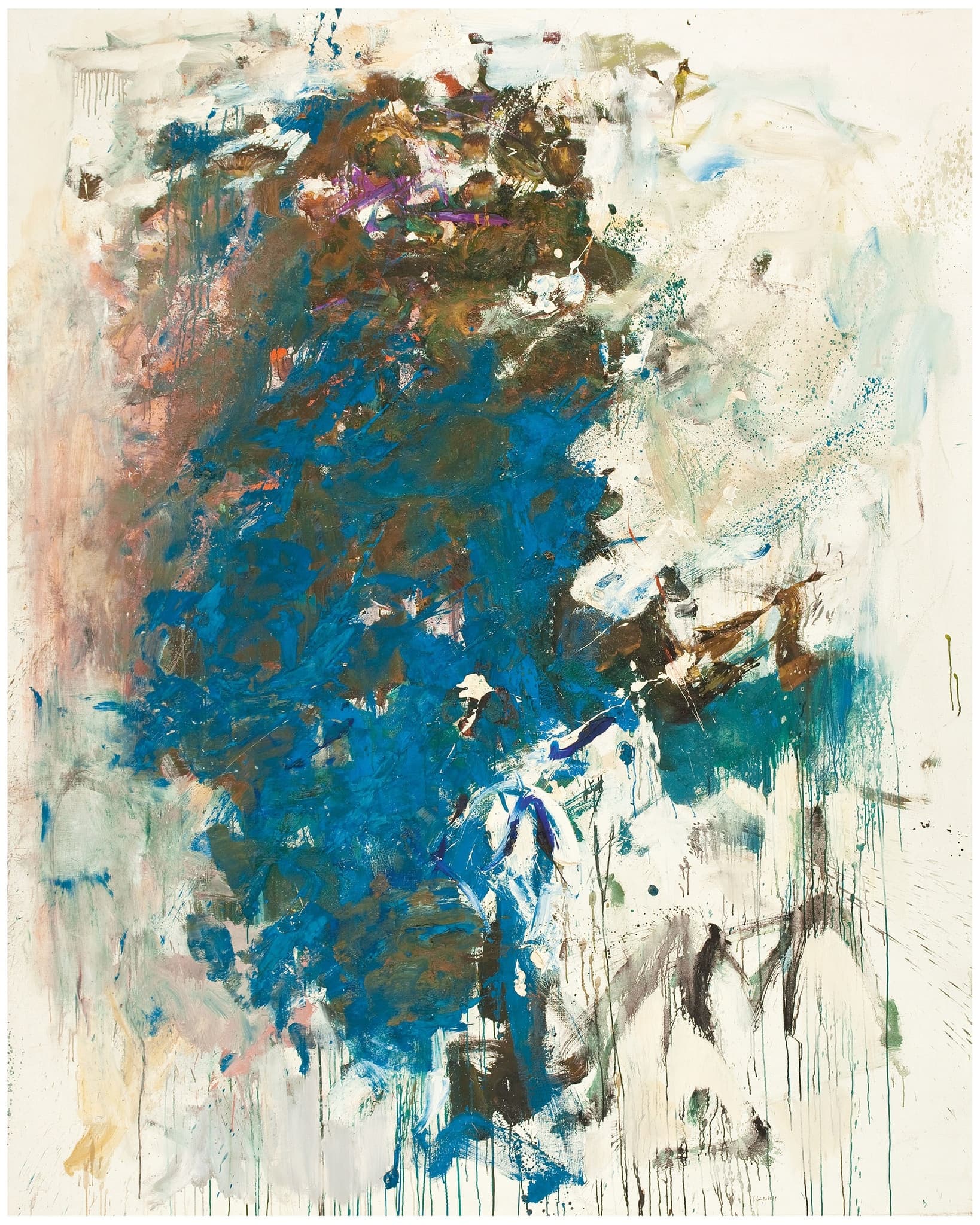
$15-35 million
Conservatively valued at $15–$35 million, anchored to large mature‑period Joan Mitchell auction comparables and the painting’s long Worcester Art Museum provenance.
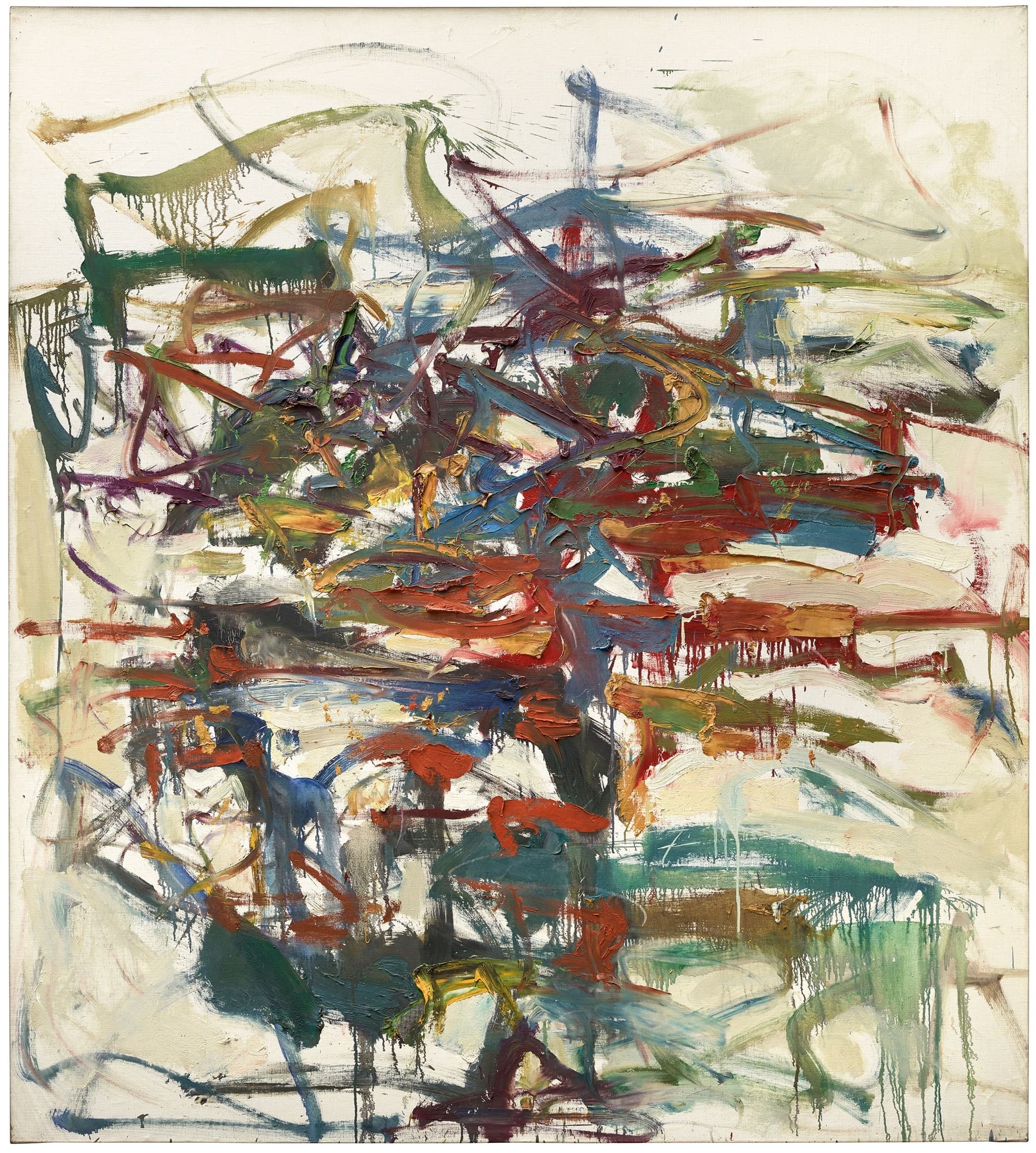
$300,000-$29,160,000
The market spans roughly $300,000–$29,160,000 because absent images, dimensions or provenance the low end reflects small/poorly documented canvases while the high end is Christie’s Nov 9, 2023 record.
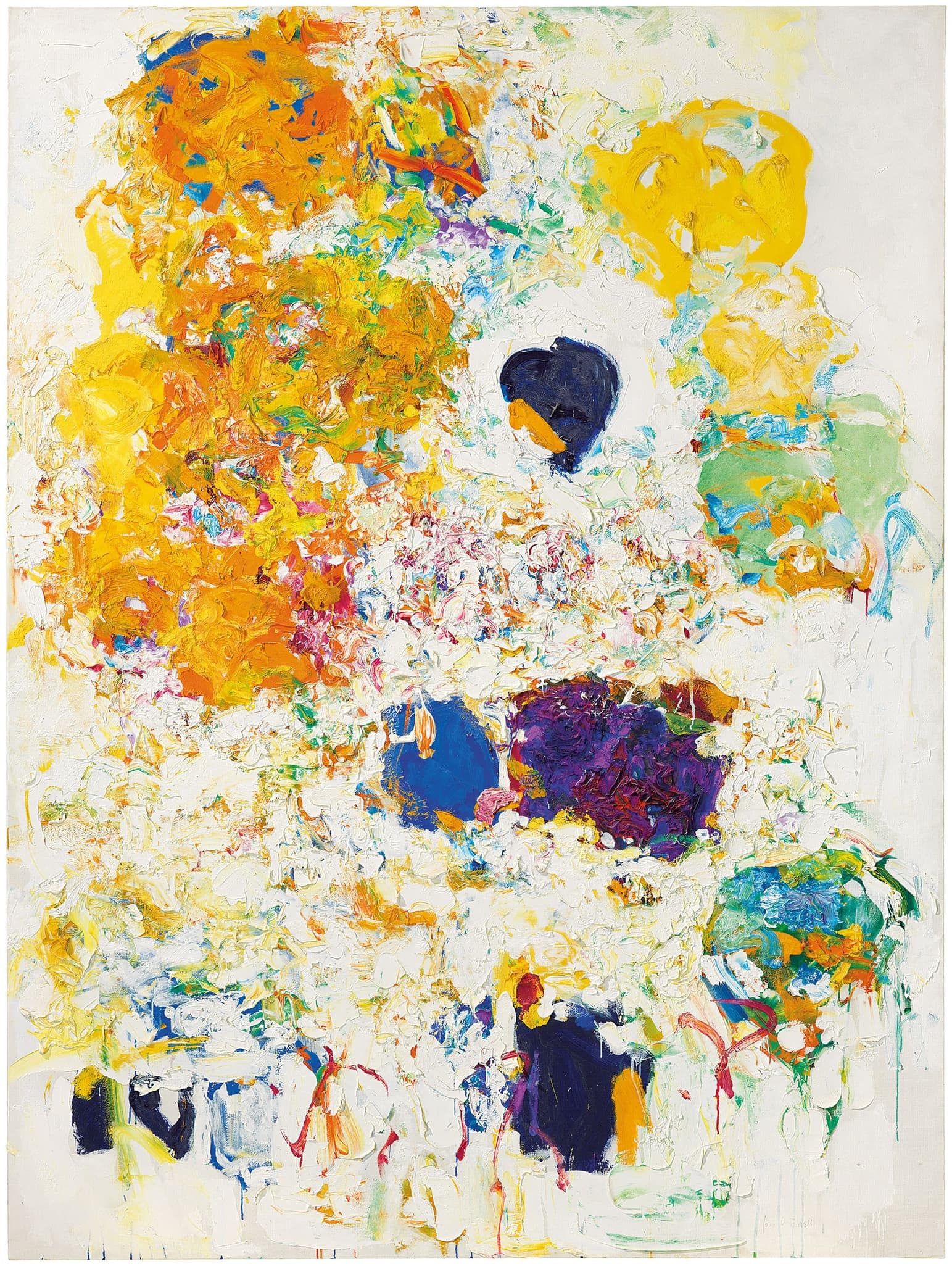
$24-28 million
Fair‑market value $24–$28 million, anchored to Blueberry’s $16.625 million 2018 sale and recent prime‑period comparables including Noon at $22.6M and the 2023 $29.16M record.
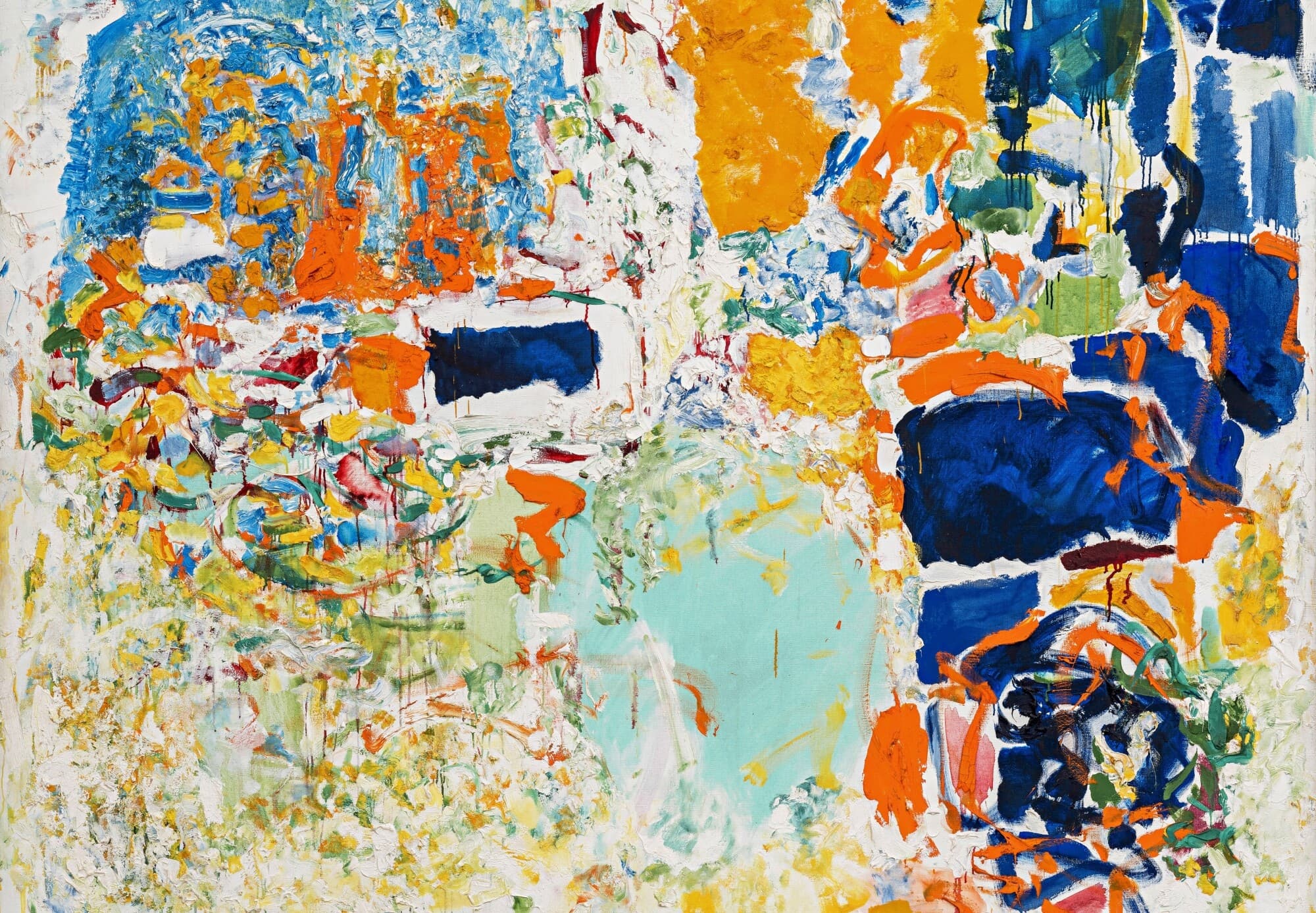
$22-28 million
Noon last sold for $22.6 million at Sotheby’s New York on May 13, 2024, underpinning a current market range of $22–$28 million.
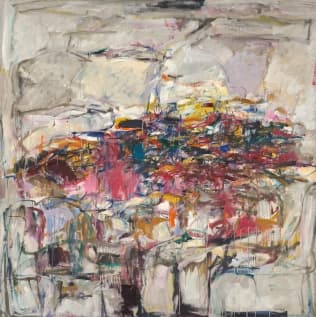
$9,000,000-$25,000,000
Valued at $9,000,000–$25,000,000 for a large museum‑quality 1955 City Landscape, anchored to Christie’s Rockefeller University sale at $17,085,000 and adjusted for condition/provenance.
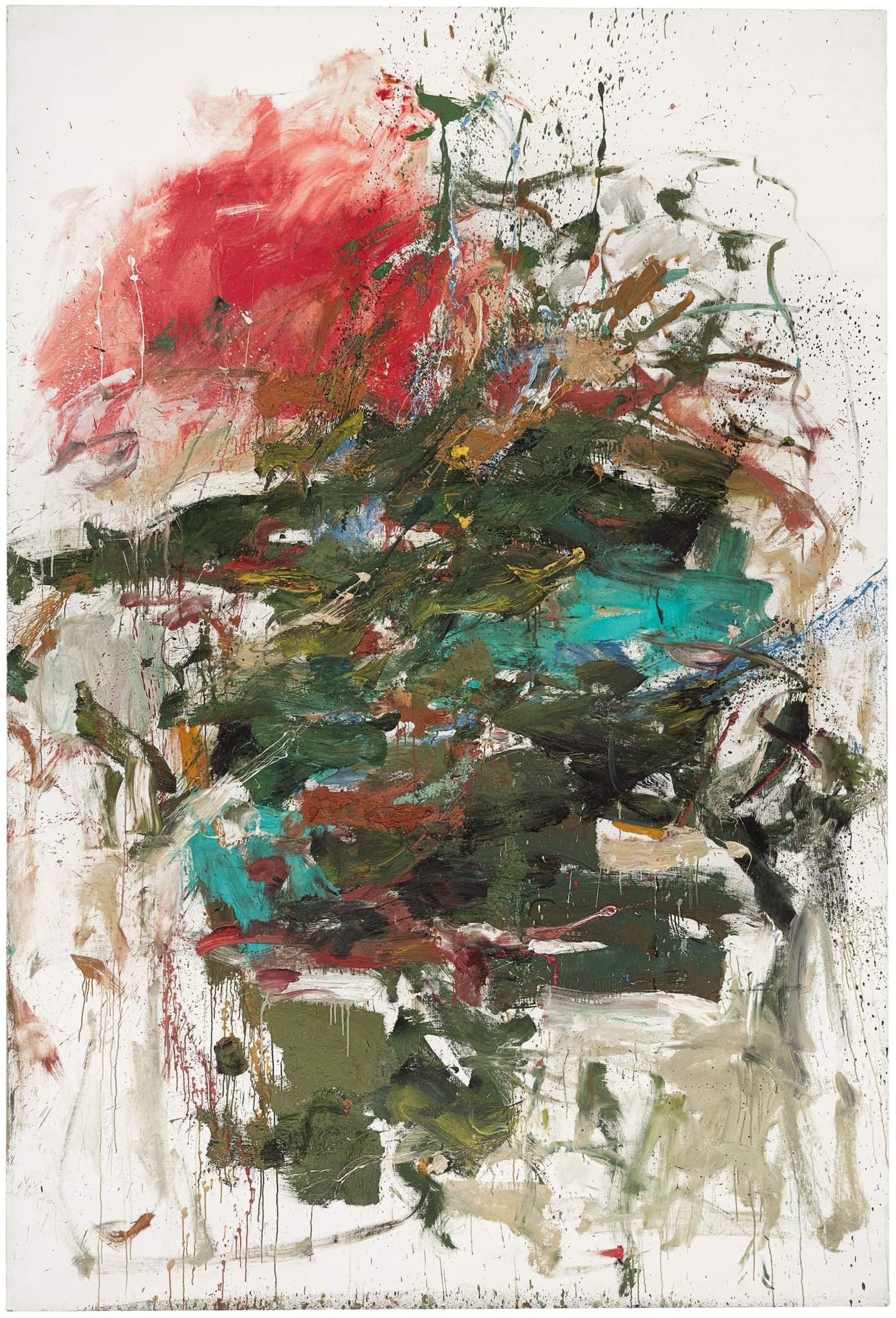
$14.0-25.0 million
Estimated $14.0–$25.0 million, anchored by Christie’s Nov 13, 2018 hammer of US$14,037,500 and a Masterworks reported purchase on Apr 23, 2021 for US$14.2M.
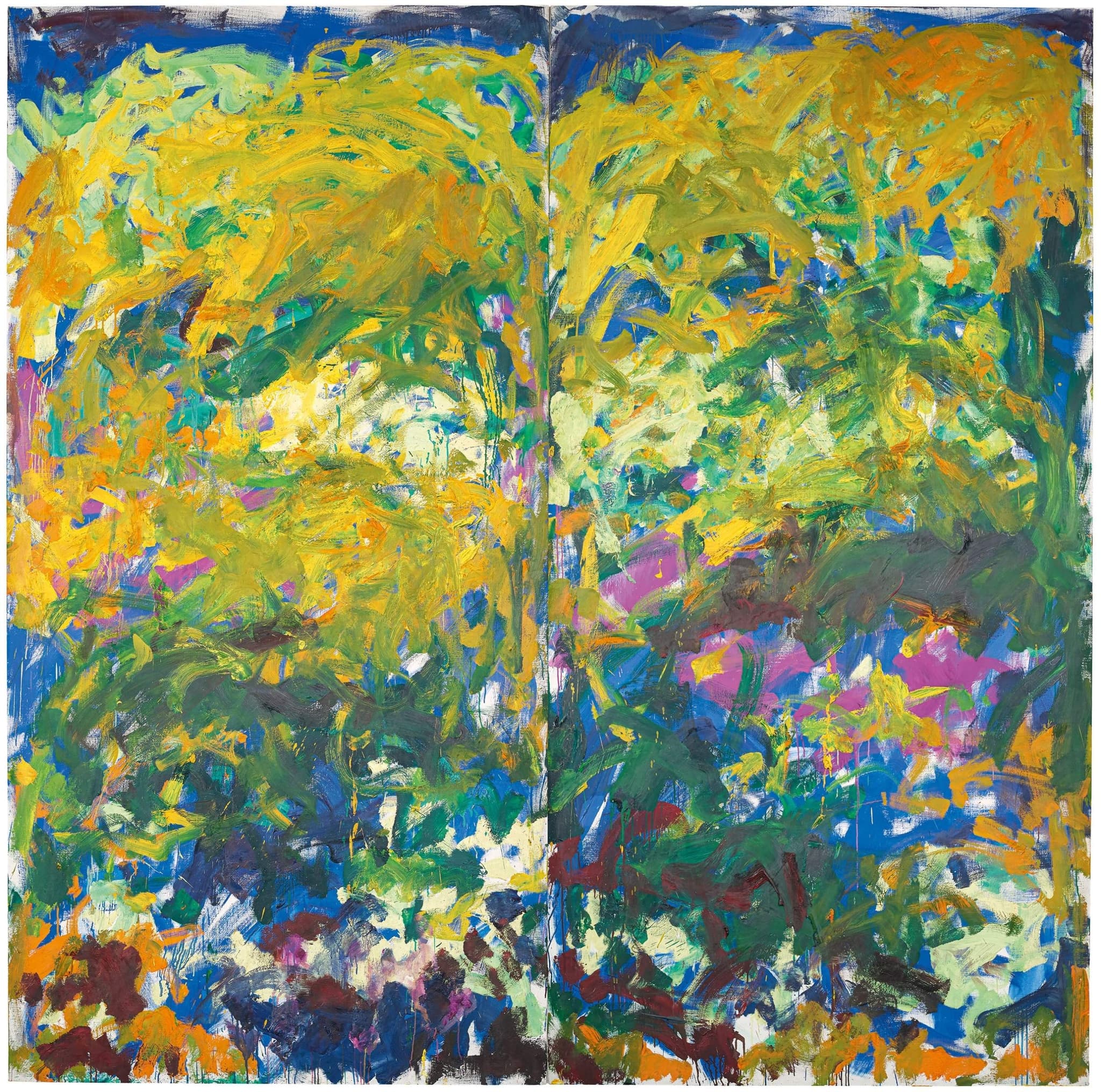
$10-25 million
Hypothesized at $10–$25 million, triangulated from La Grande Vallée VII (US$14.5M at Christie’s 2020) and ~US$17–18M results at Sotheby’s Hong Kong.
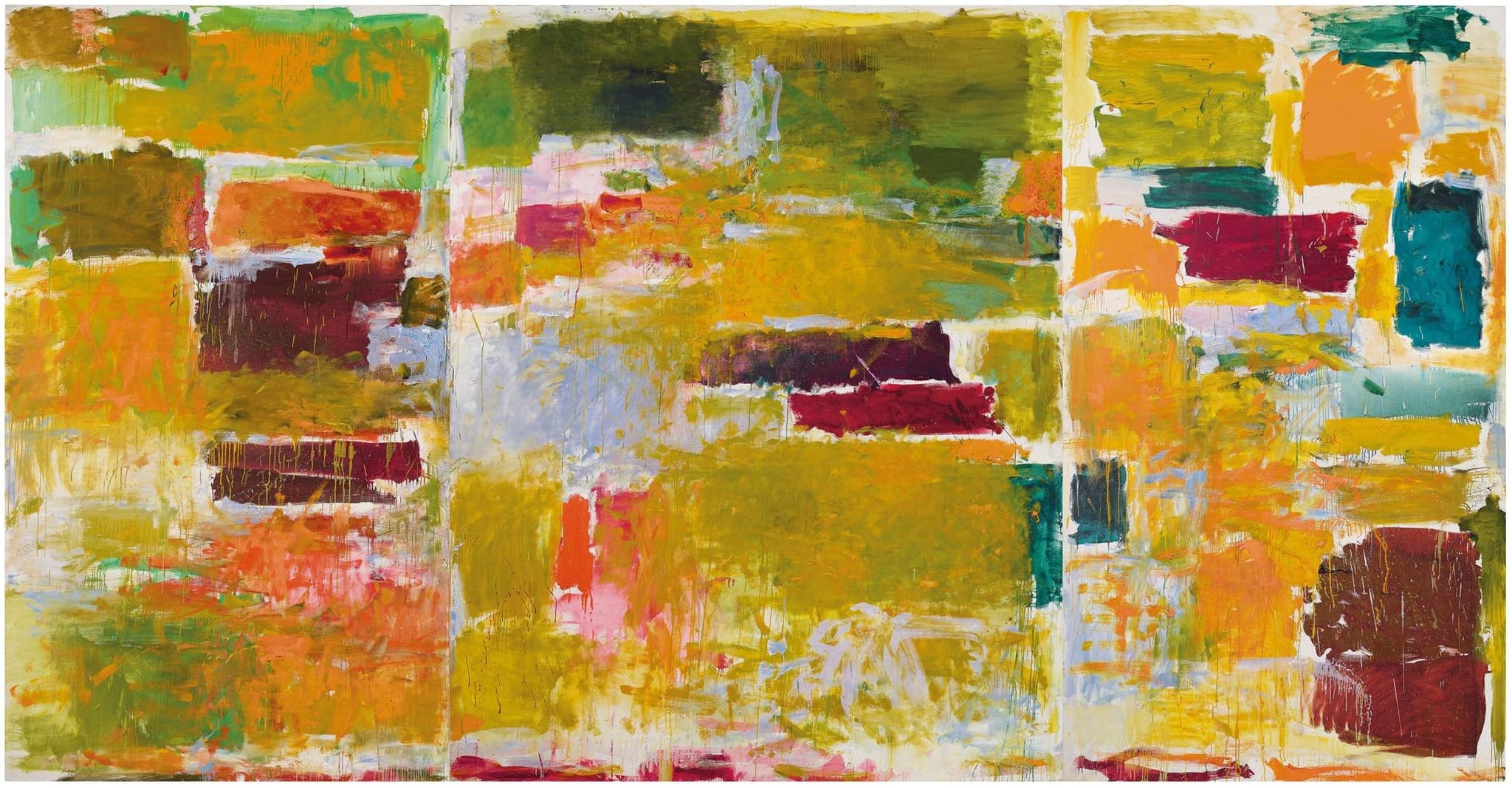
$10-20 million
Estimated $10–$20 million, anchored to the identical Plowed Field sold at Christie’s on 13 Nov 2019 for approximately $13.3M with fees and adjusted for market appreciation.
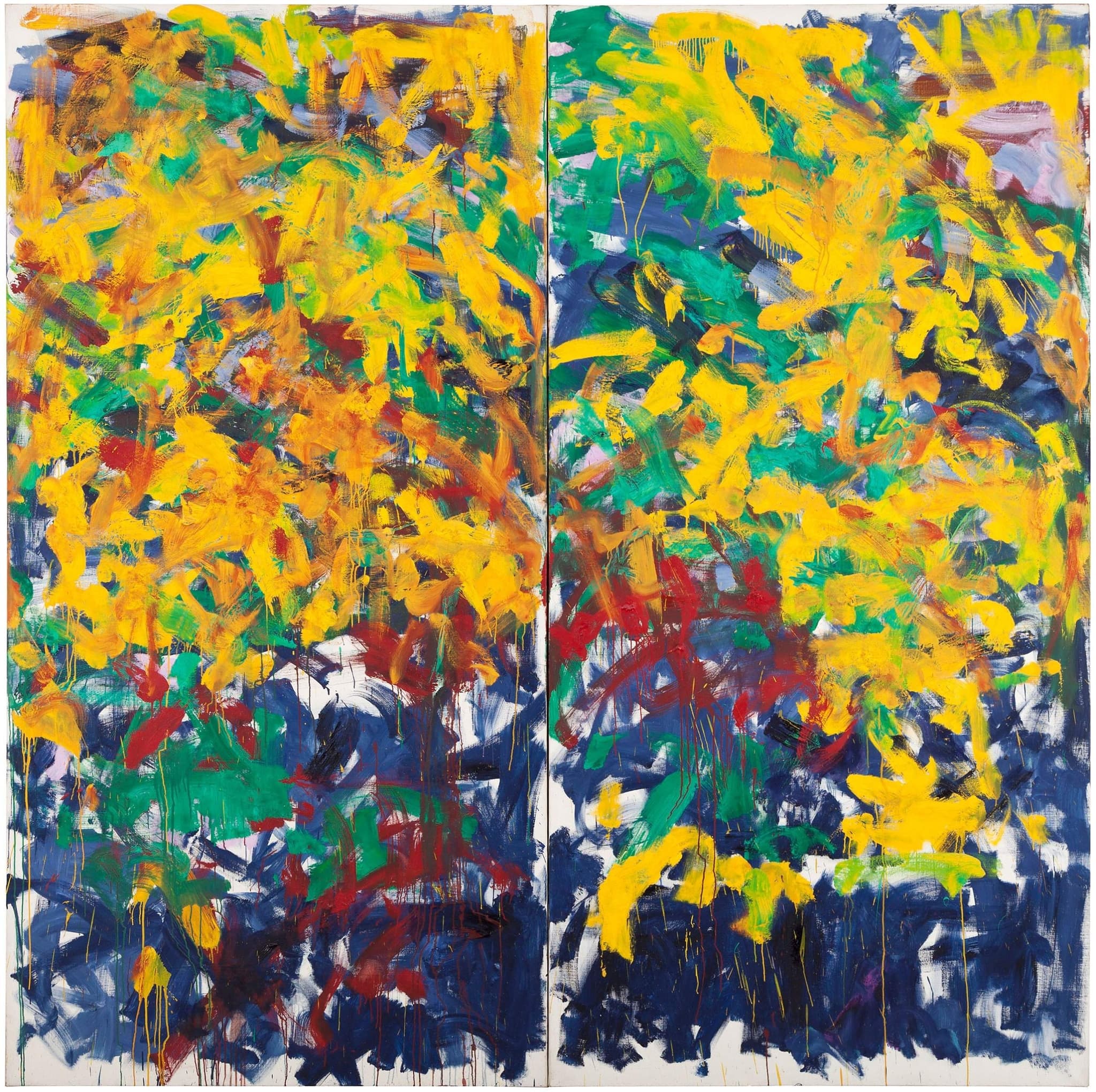
$16-19 million
La Grande Vallée VII sold at Sotheby’s Hong Kong on Mar 29, 2026 for $17,608,974 (with premium), supporting an auction‑equivalent estimate of $16–$19 million.
What Drives Value in Joan Mitchell's Work
Period & Dating — prime 1950s–60s vs late‑career cycles
Joan Mitchell’s market is period‑driven: late‑1950s canvases and late‑1960s Vétheuil works are structurally more valuable than undated or later studio pieces. The c.1959 Untitled that set the artist record (~$29M) and 1969 Noon ($22.6M) show the premium for these pivotal moments. Mid‑1950s pieces like City Landscape also sit above routine works because they mark key stylistic shifts central to Mitchell’s canon.
Scale & Format — museum‑scale singles and multi‑panel works
Mitchell’s price curve sharply rewards immersive formats: large single‑panel canvases and multi‑panel compositions outperform small studies. Noon’s ~103×79 inch presence and Blueberry’s substantial single‑panel size both landed in the high‑value bracket, while diptychs/triptychs from La Grande Vallée and Plowed Field (a 1971 triptych sold at Christie’s) command institutional interest and a structural premium because they display her full gestural range.
Series & Title Identity — La Grande Vallée and named masterpieces
Works tied to recognised series or stable titles carry measurable uplift. The La Grande Vallée cycle has its own collector ecosystem (La Grande Vallée VII, IX) with recent double‑digit million benchmarks, while named, well‑documented masterpieces (Blue Tree, Blueberry, Noon) produce tighter, higher comparables. Series identity signals curatorial relevance and bibliographic traction, concentrating demand and compressing buyer uncertainty relative to anonymous studio canvases.
Artist‑specific Provenance & Institutional Exhibition
For Mitchell, early museum acquisition and historic gallery placement materially alter outcomes: Worcester’s 1965 acquisition of Blue Tree, Blueberry’s Martha Jackson/Hillman/Whitney/Carnegie trajectory, and La Grande Vallée IX’s FRAC/Musée listing each elevate market confidence. Provenance tied to Mitchell’s key dealers or institutional loans (Galerie Jean Fournier, Joan Mitchell Foundation citations) converts potential buyers into active bidders and often shifts realized prices several million dollars upward.
Market Context
Joan Mitchell’s auction market is firmly blue‑chip and has strengthened since late 2023, highlighted by the artist record of $29.16M (Christie’s, Nov 2023) and clustered marquee results—e.g., Noon c.1969 at $22.6M (Sotheby’s, May 2024)—with multiple major canvases realizing mid‑teens to low‑$20M figures. Institutional acquisitions, centennial programming and concentrated dealer activity have tightened supply for museum‑quality works, driving selective, deep‑pocket demand from museums and high‑net‑worth collectors; provenance, publication and condition separate trophy lots from the broader secondary market, where smaller works and works on paper trade in the six‑figure band. Guarantees, private treaty channels and auction timing/presentation remain decisive in capturing premium outcomes as the trajectory for prime Mitchell canvases remains upwardly biased.