How Much Is Plowed Field Worth?
Last updated: July 6, 2026
Quick Facts
- Last Sale
- $13.3M (2019, Christie's New York, Post‑War & Contemporary Evening Sale)
- Methodology
- recent sale
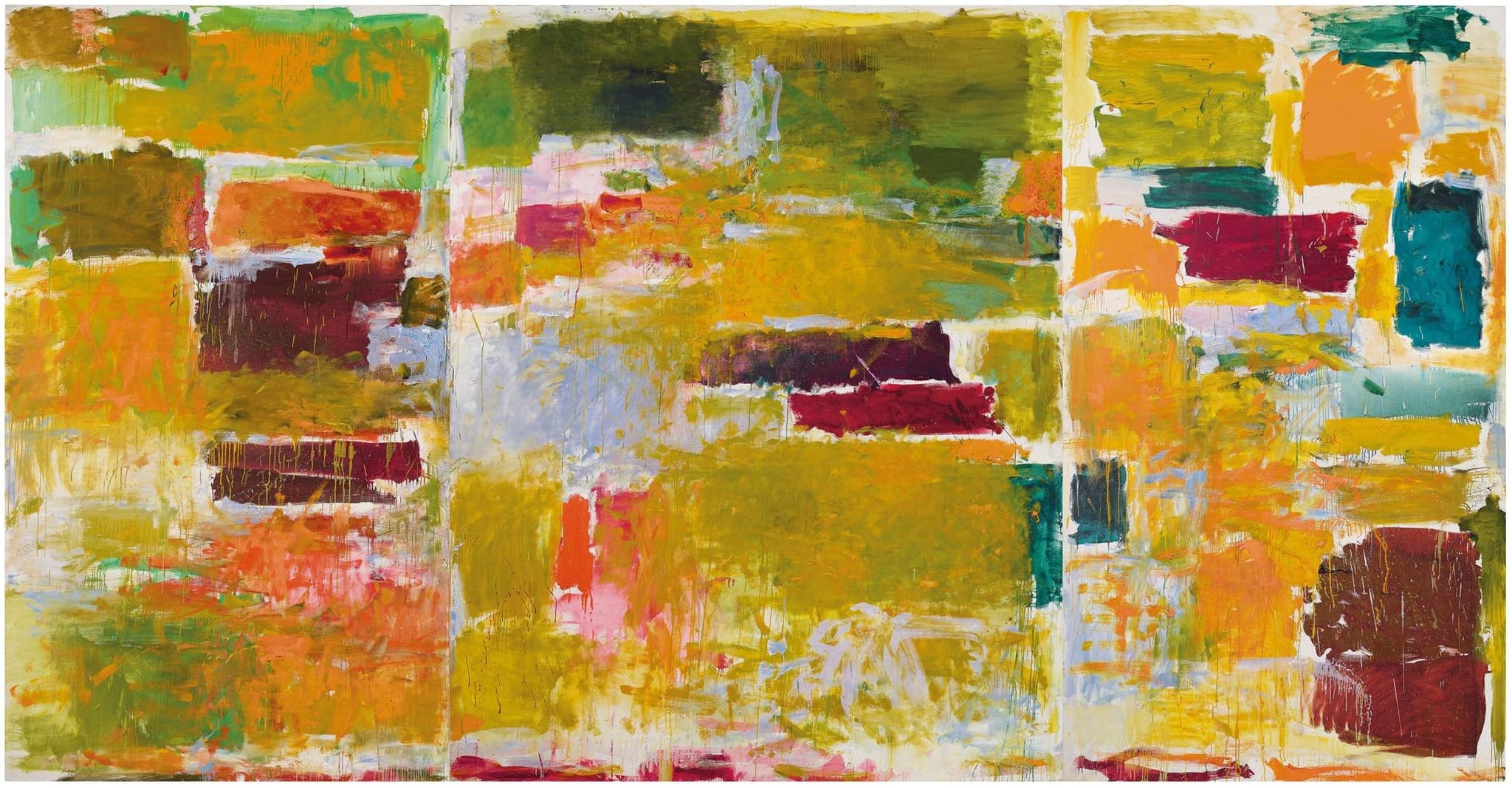
Valuation anchored to the identical Plowed Field (1971) sold at Christie’s on 13 Nov 2019 (reported ≈ $13.3M with fees). Given the identical-object anchor, museum provenance and stronger market for Joan Mitchell since 2019, a defensible present-market range is USD $10–20M, with precise placement depending on current condition, encumbrances, and chosen sale route.
Valuation Analysis
Valuation conclusion: This appraisal is anchored to the documented Christie’s Nov 13, 2019 sale of the identical Plowed Field triptych (reported sale total ≈ $13.3M) and adjusted to reflect subsequent market movement and the work’s institutional placement [1][2]. Because this is the identical object, the 2019 result is the primary market anchor; the recommended market band of USD $10–20M reflects that anchor plus allowances for market momentum, the object's museum-quality provenance, and possible premium or discount depending on sale strategy.
How the anchor was applied: The 2019 sale establishes demonstrated buyer willingness to pay in the low tens of millions for this exact triptych [1]. Since 2019 the Joan Mitchell market has strengthened at the top end (notably multi‑million results in 2023–2024) and the work entered the Fondation Louis Vuitton collection and exhibition circulation, which supports institutional validation and conservatively preserves the 2019 price as a minimum market reference [2]. I therefore set a symmetrical band that allows for: (a) a modest uplift to reflect top‑end market re‑rating and inflationary factors; (b) a downward adjustment scenario should condition, title or export/loan encumbrances limit marketability.
Key adjustments and risk items: Upward pressure would apply if the work is in exceptionally fine, unrestored condition, if full provenance and catalogue‑raisonné documentation are present, and if it is brought to a global evening sale with strong marketing (possible premium relative to 2019). Downward pressure would apply for condition issues requiring major treatment, incomplete title/provenance, unresolved export controls, or if the owner requires a private sale with limited marketing. Institutional ownership (Fondation Louis Vuitton) increases the work’s scholarly visibility but can reduce near‑term liquidity should the owner choose to retain rather than reoffer [2].
Market context: Joan Mitchell’s auction ceiling has risen since 2019, with several large Mitchell works achieving eight‑figure outcomes in 2023–2024; this supports an upper valuation nearer the $20M ceiling for canonical, museum‑quality canvases while reaffirming that results are highly sensitive to scale, period and provenance [4]. The identical 2019 sale remains the single most reliable comparable for Plowed Field, and other top Mitchell results (2018–2024) validate that major triptychs/diptychs can trade across a wide band of mid‑ to high‑eight figures and into the low tens of millions.
Practical recommendation: For insurance or financial reporting, use the mid‑point of the band (~USD $15M) if condition and documentation are verified; for market preparation, obtain a formal conservation report, the Christie’s invoices (hammer vs. premium) and a catalogue‑raisonné confirmation from the Joan Mitchell Foundation to move from a band to a single estimate or sale strategy [1][2].
Key Valuation Factors
Art Historical Significance
High ImpactPlowed Field (1971) sits within Joan Mitchell's mature French period when she was producing large, densely worked canvases and occasional multi‑panel works. Triptychs by Mitchell are relatively rare compared with single‑panel canvases, and a 1971 triptych—if confirmed at the large dimensions documented in auction material—represents a work of high scholarly and collecting interest. The painting's exhibition history (Whitney, Carnegie) and inclusion in Mitchell literature further elevate its standing, meaning art‑historical significance is a strong positive driver of market value and justifies placement toward the upper portion of the valuation band.
Provenance & Exhibition History
High ImpactThe documented ownership chain (gallery placements and institutional exhibition record) materially increases market confidence. Provenance that includes reputable galleries, foundations and museum loans reduces buyer risk and attracts institutional and advanced private bidders. The triptych’s recorded exhibitions and catalogue illustrations materially increase desirability and marketability; works with that depth of provenance routinely achieve premiums at auction or in dealer sales. Gaps or unverified transfers would be a significant negative; verified provenance is therefore a major positive.
Condition & Conservation
High ImpactCondition is a determinative value factor for large post‑war canvases. Structural issues (unstable stretchers, relining, major inpainting) or historic restorations can reduce marketability and demand substantially; conversely, original surface integrity and documented, professional conservation increase confidence. A current, specialist conservation report is required to firm a single number within the band: even minor localized interventions on a multi‑panel work can affect both buyer appetite and estimate brackets materially.
Market Liquidity & Comparable Sales
High ImpactThe primary market signal is the identical‑object 2019 Christie’s sale (reported ≈ $13.3M). Other large Mitchell results (e.g., Blueberry 1969; Sunflowers; Noon) show a high-end market capable of low‑ to mid‑eight‑figure results and occasional low‑tens‑of‑millions outcomes. Liquidity is strong for museum‑calibre works but thin for mid‑market examples. Thus, comparables support both the $10M floor and the possibility of achieving toward $20M in optimal sale conditions.
Sale Venue, Marketing & Timing
Medium ImpactWhether the work is offered in a major evening sale, a curated private placement, or a fair sale will materially affect realized value. Evening‑sale marketing and multi‑house interest can drive competitive bidding and lift results; conversely, private sale or immediate-sale situations often realize discounts. Market seasonality, guarantees and third‑party underwriting are additional strategic levers that can either mitigate seller risk or compress net proceeds. Choice of venue is therefore a tactical factor that should be decided after confirming condition and title.
Sale History
Christie's New York (Anon. sale)
Christie's New York (Post‑War & Contemporary Evening Sale)
Fondation Louis Vuitton (Paris)
Joan Mitchell's Market
Joan Mitchell is a firmly established blue‑chip Post‑War/Abstract Expressionist artist. Since 2018–2024 her market has shown strong upward revaluation at the top end, culminating in new personal records in 2023–2024 and repeated multimillion‑dollar outcomes for large, museum‑quality canvases. Institutional retrospectives and major museum placements, plus an active market among top dealers, have increased demand for canonical works; however, the market remains bifurcated, with the strongest liquidity reserved for large, well‑provenanced pieces.
Comparable Sales
Plowed Field
Joan Mitchell
Identical object — same date (1971), triptych format, museum provenance and exhibition history; therefore the single strongest market anchor for valuation.
$13.3M
2019, Christie's New York (Post‑War & Contemporary Evening Sale)
~$16.8M adjusted
Blueberry
Joan Mitchell
Large, museum‑quality late‑1960s Mitchell canvas (1969) — comparable period/scale and a high pre‑Plowed Field market result that helps define the mid‑to‑upper bracket for late‑career/large canvases.
$16.6M
2018, Christie's New York
~$21.4M adjusted
Untitled (c.1959)
Joan Mitchell
Early‑career New York‑period work (c.1959) that set a new personal auction record — useful as a ceiling/upper‑tier precedent showing what the market will pay for canonical Mitchell masterpieces.
$29.2M
2023, Christie's New York
~$30.9M adjusted
Sunflowers
Joan Mitchell
Large late‑career diptych (1990–91) with an exceptionally strong result — shows continued demand for large, high‑quality Mitchell works across periods and helps establish the high end of the market band.
$27.9M
2023, Sotheby's New York
~$29.6M adjusted
Noon
Joan Mitchell
Large canvas c.1969 sold in 2024 — similar period/scale to Plowed Field and a recent, post‑anchor sale that demonstrates sustained demand and pricing momentum for large Mitchell canvases.
$22.6M
2024, Sotheby's New York
~$23.2M adjusted
Current Market Trends
Current market dynamics favor museum‑quality Post‑War works: concentrated buyer demand, growth in private/fair placements, and heavier use of guarantees. This benefits top Joan Mitchell canvases while the mid‑market remains softer. Institutional acquisitions and high‑profile retrospectives have tightened supply for canonically important works, supporting higher price realizations for the best examples while making sale strategy increasingly important.
Sources
- Christie’s lot file / sale results for Plowed Field (2019)
- Artnet News coverage of Christie’s Nov 13, 2019 Post‑War & Contemporary sale (Plowed Field reported ≈ $13.3M)
- Fondation Louis Vuitton collection entry — Plowed Field (1971)
- Christie’s press material and market coverage on Joan Mitchell marketplace strength (record sales 2023–2024)