How Much Is Lady with an Ermine Worth?
Last updated: May 6, 2026
Quick Facts
- Methodology
- comparable analysis
Lady with an Ermine is a securely attributed, museum‑held Leonardo da Vinci and therefore effectively off‑market; a hypothetical, legally‑permissible open‑market sale would likely command a competitive range of USD 300–800 million. Practical, insurance‑style valuations for a state‑held national treasure are typically lower and contingent on legal/condition factors.
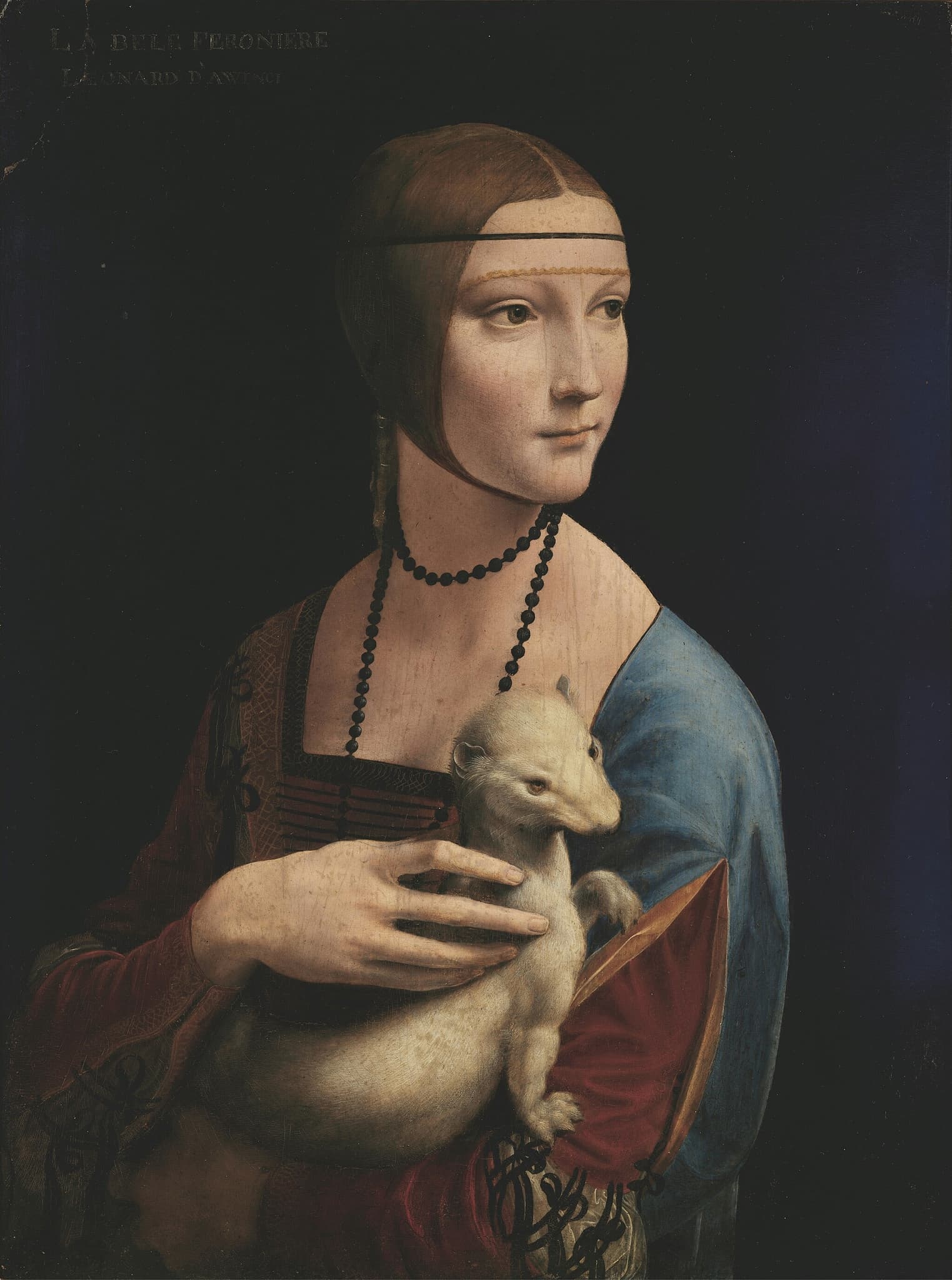
Lady with an Ermine
Leonardo da Vinci, c. 1489–1491 • Oil on walnut panel
Read full analysis of Lady with an Ermine →Valuation Analysis
Lady with an Ermine (Portrait of Cecilia Gallerani) is one of Leonardo’s few surviving autograph paintings and sits at the top tier of cultural and market value. Because it is held by the Princes Czartoryski Museum / National Museum in Kraków and effectively treated as a national treasure, a true open‑market sale is hypothetical; nonetheless, using Leonardo market comparables and scarcity dynamics, a competitive auction or negotiated sale would likely fall in the range USD 300–800 million. The market ceiling for Leonardo remains informed by the 2017 Salvator Mundi result, which sold for USD 450.3m (including premium) and set a practical upper benchmark for an autograph Leonardo in active competition [1]. The 2016 state purchase of the Czartoryski collection for a reported €100m placed Lady with an Ermine in public ownership and materially constrains liquidity and sale feasibility [2].
The reconstruction of this figure rests on three pillars: extreme scarcity of autograph Leonardos (traditionally counted in the low tens), the unquestioned art‑historical status of the portrait as a major early Leonardo, and the expected composition of bidders (national museums, sovereign buyers and a handful of ultra‑high‑net‑worth collectors). Those bidders have capacity to drive prices into the mid‑hundreds of millions, but political and legal barriers reduce the real‑world bidder set and therefore the probability of a clean competitive sale that could push the painting to an absolute record high.
Legal and provenance constraints are determinative. National patrimony laws, the Polish state’s 2016 acquisition, and likely inalienability or export restrictions create a high barrier to market entry; when such obstacles exist, valuations become primarily for insurance/accounting rather than a true market‑clearing price. The €100m acquisition for the entire Czartoryski collection is the only concrete transactional milestone in recent years, but that figure cannot be used as a direct open‑market comparable since it was a state purchase of a body of works, not an isolated auction of an autograph Leonardo [2][4].
Condition and technical authentication would materially influence real‑world proceeds. Buyers at this level demand full technical dossiers (infrared reflectography, pigment and stratigraphy analysis, panel/board stability reports and conservation history). A pristine, well‑documented condition and uncontested attribution would support the top of the range; any unresolved conservation issues or lingering attribution or provenance questions would lower competitive value substantially.
Final valuation judgment: For a hypothetical, legally‑permissible open‑market sale I place a reasoned market estimate at USD 300,000,000 (30,000,000,000 cents) to USD 800,000,000 (80,000,000,000 cents). For practical institutional/insurance purposes, a conservative indemnity‑style valuation used by museums or lenders would more plausibly sit in the USD 100–300 million band, reflecting limited market liquidity and legal constraints.
To refine a formal appraisal the single most important steps are: obtain the legal text of the 2016 sale and the current statutory designation under Polish cultural‑heritage law; secure the museum’s full conservation and technical file for independent review; and solicit confidential hammer‑range opinions from Old Master specialists at major auction houses. If those inquiries confirm clear title, export feasibility and excellent condition, the higher end of the estimate becomes credible; absent those confirmations, any market valuation must remain probabilistic and contingent.
Key Valuation Factors
Art Historical Significance
High ImpactLady with an Ermine is universally recognized as a major portrait by Leonardo da Vinci, painted c. 1489–1491 during his Milanese period. The subject (Cecilia Gallerani), the sophisticated handling of form and chiaroscuro, and the psychological subtlety of the depiction place the work at the center of Leonardo scholarship and public recognition. For collectors and institutions, that kind of canonical status translates directly into monetary premium: museums prize such works for their research, exhibition and tourism value, while sovereign collections gain diplomatic and cultural capital. Because the painting’s attribution to Leonardo is secure and its iconography and condition are well documented in scholarship, art‑historical significance is a clear, high‑impact positive for valuation.
Rarity / Supply
High ImpactSurviving autograph paintings by Leonardo are extremely few—commonly cited counts place them in the low tens—so supply is effectively fixed. That scarcity concentrates global demand among a very small set of deep‑pocketed buyers and turns any major Leonardo offered for sale into a market event. Unlike markets where production continues, the corpus cannot be replenished; scarcity therefore justifies headline multimillion‑dollar price expectations and compresses relative price dispersion at the top of the Old Master market. For valuation, rarity is a high‑impact driver that supports the theoretical upper range of prices.
Provenance & Legal / Political Constraints
High ImpactProvenance and statutory protections materially reduce liquidity. The painting has been in the Czartoryski collection for centuries and was included in the Polish state’s 2016 acquisition of the collection; that transfer effectively placed the work into public stewardship and likely subjects it to patrimony designations, export controls and inalienability rules. Such legal encumbrances mean the work cannot be freely marketed internationally without explicit governmental action, which in practice makes open‑market transactions unlikely. Consequently, provenance and legal restrictions are a high‑impact factor that can depress realizable value relative to a theoretical open‑market ceiling.
Condition & Conservation
Medium ImpactCondition and conservation history strongly affect buyer confidence at the highest price levels. Collectors and institutions require full technical documentation—imaging, pigment and layer analysis, and support stability reports—to underwrite record purchases. If the picture is structurally sound with limited intrusive restoration, it supports the top of the estimated range; significant panel instability, overpaint, or unresolved interventions would necessitate discounts and could deter buyers. While Leonardo’s rarity can preserve interest despite moderate condition issues, condition remains a medium to high determinant of near‑term marketability and price realization.
Market Demand & Buyer Pool
Medium ImpactDemand for canonical Leonardos is concentrated among national museums, sovereign collections and a very small set of ultra‑high‑net‑worth collectors. These buyers have the capacity to pay record prices but are constrained by public accountability, national priorities and institutional budgets. When a top‑tier Leonardo is saleable, competition among such buyers can push prices into the hundreds of millions; however, the narrowness of the buyer pool and political considerations make actual transaction frequency very low. As a result, buyer dynamics support high theoretical prices but constrain practical liquidity.
Sale History
Polish state / National Museum (purchase of Princes Czartoryski collection)
Leonardo da Vinci's Market
Leonardo da Vinci occupies the apex of the art market: extremely scarce autograph paintings, unrivaled cultural status and institutional demand place his works in a class of their own. The auction benchmark is Salvator Mundi (Christie’s, 2017, USD 450.3m), which established a practical ceiling for an autograph Leonardo despite controversies around attribution and provenance. Drawings and studies sell for millions but remain far below major paintings. Collectors and institutions demand rigorous technical documentation and clear title, which sustains extraordinary pricing for authenticated paintings but limits transactional frequency.
Comparable Sales
Salvator Mundi
Leonardo da Vinci
Highest public sale for a Leonardo painting; sets the market ceiling for autograph Leonardo paintings and is the primary auction benchmark.
$450.3M
2017, Christie's New York
~$590.0M adjusted
Czartoryski collection purchase (includes Lady with an Ermine)
Various (collection includes Leonardo da Vinci)
Direct documented transfer that included Lady with an Ermine; provides the only concrete transactional figure tied to the painting, but it was a state/museum purchase of a collection (not an open-market auction price).
$105.7M
2016, Polish state / National Museum (purchase of Princes Czartoryski collection)
~$143.0M adjusted
Head of a Bear (drawing)
Leonardo da Vinci
Recent high-value sale of an autograph Leonardo drawing; indicates continued collector demand for Leonardo material, but drawings trade at materially lower levels than paintings.
$12.2M
2021, Christie's London
~$14.4M adjusted
Current Market Trends
Top‑end demand for iconic Old Masters remains resilient—institutions and sovereign collectors still chase headline works—but since 2017 the market has been tempered by heightened provenance scrutiny, political nationalism and export controls that restrict liquidity for national treasures. Insurance valuations tend to be conservative relative to hypothetical auction ceilings. In practice, headline demand exists but saleability for state‑held masterpieces is contingent on legal and diplomatic factors.
Study print
Study this painting as a print
Pair the full artwork with a museum-style study sheet focused on one meaningful detail.
Sources
- Christie’s — Salvator Mundi auction result (Nov 15, 2017)
- DW — Poland buys private art collection with da Vinci painting at bargain price (Dec 2016)
- Culture.pl — Leonardo da Vinci, Lady with an Ermine (collection record)
- The Art Newspaper — Behind the scenes of Poland’s €100m art deal (analysis of the Czartoryski sale)