How Much Is Virgin of the Rocks Worth?
Last updated: May 6, 2026
Quick Facts
- Methodology
- comparable analysis
Hypothetical market value for the Louvre’s Virgin of the Rocks is estimated at USD 400 million–USD 1.5 billion. This is a conditional, academic estimate anchored to the Salvator Mundi sale and adjusted for attribution, condition, legal inalienability and buyer set; the work is museum‑held and effectively off‑market, so any sale is highly unlikely.
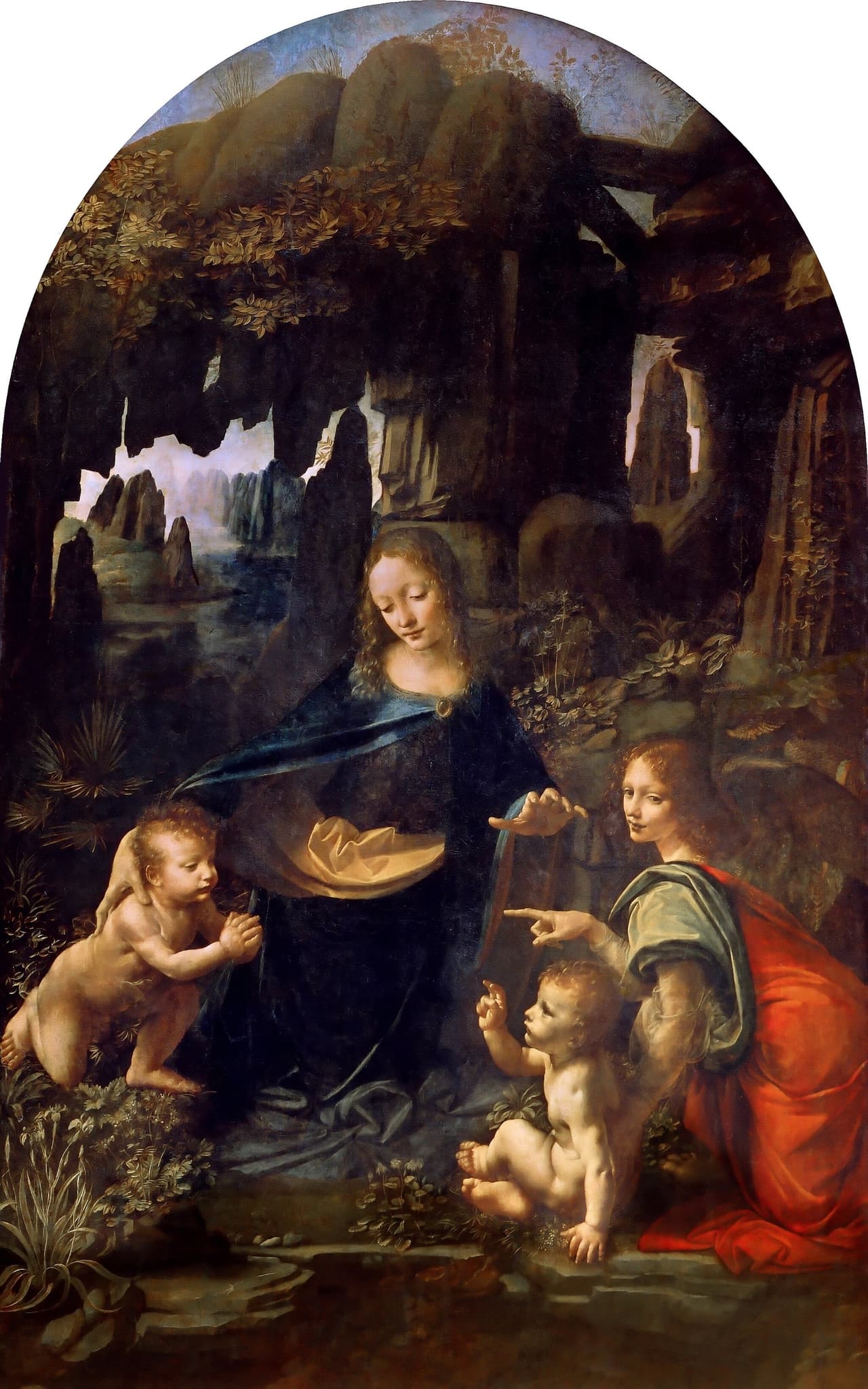
Virgin of the Rocks
Leonardo da Vinci, c. 1483–1494 • Oil on panel, transferred to canvas (1806)
Read full analysis of Virgin of the Rocks →Valuation Analysis
Overview: This valuation sets a conditional market range of USD 400,000,000 to USD 1,500,000,000 for Leonardo da Vinci's Virgin of the Rocks (Louvre version). The estimate is hypothetical because the painting is part of the Musée du Louvre collection and has not been offered on the modern market [1]. The range is derived by comparative analysis using the modern Leonardo market anchor (Salvator Mundi, Christie’s 2017) and high‑end Old Master institutional purchase comparables, then adjusting for attribution certainty, condition history, and legal/institutional constraints [2].
Attribution and significance: The Louvre version is a major Leonardo composition with a long museum provenance and intense scholarly interest; it occupies a high place in Leonardo's small surviving corpus, which creates an extreme scarcity premium [1][3]. The market value depends critically on the degree of autograph Leonardo paint versus documented studio contribution. A strong, uncontested autograph attribution would push realizable price toward the top of the range; significant studio involvement would reduce it materially.
Market anchor and comparable logic: The modern market anchor is Salvator Mundi (Christie’s, Nov 2017), which realized USD 450.3M and demonstrates the ceiling that buyers have paid for an attributed Leonardo in private hands [2]. Institutional purchases of major Old Masters (for example joint museum acquisitions) and blockbuster Impressionist/Modern sales provide secondary context about buyer behavior at the extreme upper end. From these anchors we extrapolate an asymmetric range: conservative private‑sale outcomes near the lower bound and trophy/sovereign purchases or superheated negotiated sales toward or above the upper bound.
Condition and conservational adjustment: The Louvre painting's documented history (panel‑to‑canvas transfer, early 19th century interventions and later restorations) creates technical risk that collectors and insurers factor into pricing. Conservation compromises reduce market fungibility versus an unrestored autograph work; in practice condition and the readability of Leonardo's original paint can move a hypothetical price by tens of percent relative to the Salvator Mundi anchor [5].
Legal and liquidity constraints: French cultural‑heritage law and museum policy make deaccessioning and export improbable, so the valuation remains theoretical absent extraordinary legal/political action [4]. If a sale were permitted, the buyer pool would be tiny (sovereigns, mega‑collectors, institutions) and negotiations would determine whether the work sells at a premium, at parity, or at discount relative to the anchor. These constraints both limit liquidity and create a wide valuation band.
Conclusion and next steps: The USD 400M–1.5B range reflects realistic scenarios from conservative private treaty outcomes to premium trophy acquisitions. To refine the figure, obtain the Louvre's full technical/conservation dossier, independent attribution opinions from leading Leonardo specialists, and confidential market testing with major auction houses. Final caveat: this is a conditional, academic valuation for a museum‑held masterpiece and should not be interpreted as an operational market listing.
Key Valuation Factors
Art Historical Significance
High ImpactThe Louvre Virgin of the Rocks is a canonical Leonardo composition and therefore carries exceptional cultural and scholarly weight. As one of the relatively few large-scale paintings associated with Leonardo, it benefits from the same scarcity premium that applies to the artist's autograph works. Museum prominence, wide public exposure, and sustained academic interest heighten its symbolic value and desirability among top-tier collectors and states. This significance translates directly into market value because buyers at the top end pay a premium for works that are both visually and historically central to an artist's œuvre. The painting's position as a museum centerpiece amplifies that premium in hypothetical private transactions.
Attribution Complexity
High ImpactAttribution uncertainty is the single largest market lever for this painting. Leonardo's studio practices and the presence of multiple 'versions' raise questions about which passages are autograph. If technical imaging and pigment analysis confirm a dominant Leonardo hand, the painting approaches the market ceiling; if substantial studio participation is accepted, market value falls sharply. Given the extreme price levels at play, even modest downgrades in autograph percentage materially reduce buyer competition and insurance appetite. Because buyers at this scale prize certainty, definitive scholarly consensus would substantially increase marketability and price realization.
Condition & Conservation
Medium-high ImpactThe work's early panel‑to‑canvas transfer and subsequent restorations create tangible conservation risk that affects insurability, display confidence, and buyer willingness to pay. Technical interventions can obscure or alter original paint and may require ongoing conservation commitments. At the ultra‑high end, buyers and insurers apply steep discounts for irreversible damage or heavy restorations; conversely, demonstrable stability and transparent conservation documentation can mitigate concern. Practical market impact typically ranges from modest downward adjustments for cosmetic/restoration issues to larger discounts where structural or paint loss impairs authorship or authenticity signals.
Legal & Institutional Constraints
High ImpactFrench law and museum governance make the Louvre's holdings largely inalienable, and export controls further limit cross‑border transfer. This legal framework means that a commercial sale is functionally improbable without exceptional state action. The resultant lack of marketability narrows the buyer pool and introduces legal and political risk that will be priced by any potential purchaser. Even if a sale were authorized, reputational considerations and political pushback could shape the transaction structure and price outcome. In short, legal barriers materially reduce the likelihood of a voluntary market sale and therefore the practical liquidity of the asset.
Market Liquidity & Comparable Sales
High ImpactThe top end of the Old Master market is extremely illiquid: only a handful of buyers can transact at the hundreds of millions of dollars level. Salvator Mundi demonstrates that a Leonardo can reach mid‑hundreds of millions in a private sale or auction, but that sale also underscores volatility and provenance sensitivities. Institutional purchases can set valuation signals but are infrequent and driven by different incentives. The thin buyer pool and the uniqueness of comparable transactions mean that small changes in perceived attribution, condition, or sale circumstances can produce large swings in price—hence the wide valuation range provided.
Sale History
Virgin of the Rocks has never been sold at public auction.
Leonardo da Vinci's Market
Leonardo da Vinci occupies the apex of the art market: very few autograph paintings survive, each is a one‑off in global cultural capital, and demand among sovereigns, museums and ultra‑high‑net‑worth collectors is intensely concentrated. Salvator Mundi’s 2017 sale reset the contemporary price ceiling and serves as the primary market anchor. Because Leonardo works rarely come to market and because attribution disputes and provenance questions are common and consequential, each potential sale is treated as a unique event; prices depend more on buyer psychology and geopolitical dynamics than on standard comparables. Overall, Leonardo is the market’s rarest and highest‑value name.
Comparable Sales
Salvator Mundi
Leonardo da Vinci
Direct same-artist auction precedent; the single modern public-market sale attributed to Leonardo and the primary market anchor for Leonardo masterpieces.
$450.3M
2017, Christie's, New York
~$592.0M adjusted
Les Femmes d'Alger (Version O)
Pablo Picasso
Top-tier masterpiece sale that reset the market ceiling for unique, high-profile works in 2015; useful for understanding buyer behavior at the ultra-high end.
$179.4M
2015, Christie's, New York
~$244.0M adjusted
Nu couché (Reclining Nude)
Amedeo Modigliani
Another marquee 2015 auction blockbuster (unique, highly coveted painting); demonstrates the scale collectors will pay for iconic single-owner masterpieces.
$170.4M
2015, Christie's, New York
~$231.8M adjusted
Portrait of Dr. Gachet
Vincent van Gogh
Historic Impressionist record sale showing long-term inflation/market-growth uplift for single-masterpiece records; helps benchmark older high-price sales in today's dollars.
$82.5M
1990, Christie's, New York
~$203.4M adjusted
Portraits of Maerten Soolmans and Oopjen Coppit (pair)
Rembrandt van Rijn
High-value Old Masters institutional purchase; comparable because it reflects museum valuation and willingness to pay for major, canonical works outside the auction arena.
$179.2M
2016, Private acquisition (joint purchase by Rijksmuseum & Musée du Louvre)
~$240.7M adjusted
Current Market Trends
The ultra‑high‑end market for canonical Old Masters remains robust among a narrow set of buyers, but liquidity is thin and transactions are idiosyncratic. Recent years have shown appetite for trophy works from sovereigns and mega‑collectors, even as regulatory, reputational and macroeconomic factors create caution. Record prices are achievable but hinge on attribution certainty, provenance clarity, and buyer motivations; volatility and geopolitical risk can compress or expand final outcomes rapidly.
Study print
Study this painting as a print
Pair the full artwork with a museum-style study sheet focused on one meaningful detail.
Sources
- Musée du Louvre — La Vierge aux rochers (Louvre) — Collection Entry
- Christie’s — Salvator Mundi sale reporting (15 Nov 2017)
- National Gallery, London — The Virgin of the Rocks (catalogue/technical material)
- Discussion of French public‑collection inalienability (legal commentary)
- Virgin of the Rocks — technical/condition overview (summary)