How Much Is Sleeping by the Lion Carpet Worth?
Last updated: July 6, 2026
Quick Facts
- Last Sale
- $38.8M (2026, Sotheby's, London)
- Methodology
- recent sale
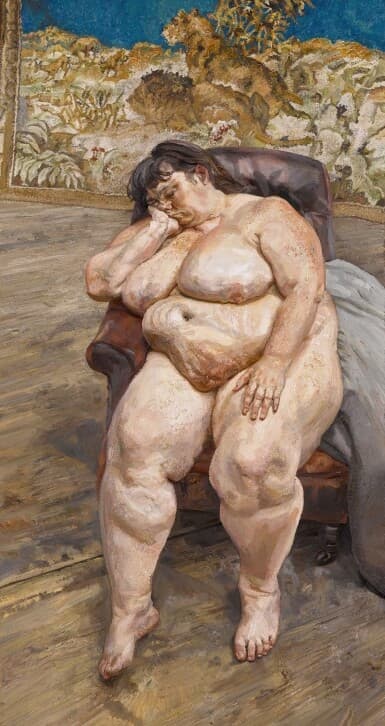
Anchored to the Sotheby’s London sale on 24 June 2026 (realised c. $38.8M), I assess the fair market value of Lucian Freud’s Sleeping by the Lion Carpet at $35–$45 million USD. This range reflects the public sale result, the painting’s strong provenance and exhibition history, and comparable late‑career Freud price realizations.
Valuation Analysis
Anchor and approach. This valuation is anchored to the public market realization reported by Sotheby’s for Sleeping by the Lion Carpet (Masterpieces from the Lewis Collection, 24 June 2026), which showed a sale of £29.3 million (reported ≈ $38.8 million) for the lot [1]. Because that sale is a recent, bonafide market transaction for the same work, it provides the primary datum. I have tempered the single-result anchor with comparative analysis across Freud late‑career portraits and accounted for provenance, exhibition history and likely buyer’s‑premium/auction costs to produce a prudent market band of $35–$45M.
Comparables and market position. Freud’s market is top‑heavy: a small number of late‑career masterpieces (for example Large Interior, W11, and Benefits Supervisor Resting) have set the ceiling for the artist, while other authenticated portraits sell in the mid‑six to low‑seven figure range [2]. The reported Sotheby’s result places Sleeping by the Lion Carpet comfortably above routine late‑career portraits and squarely in the high‑tier bracket, but below the absolute auction records for the very largest, most singular works. That placement is consistent with the painting’s size, sitter and documented exhibition history and explains the market’s willingness to pay a multi‑tens‑of‑millions price.
Provenance and exhibition premium. Sotheby’s lot notes record acquisition from Acquavella Galleries (1996), long ownership in the Lewis Collection and multiple institutional exhibitions—credentials that materially improve liquidity and buyer confidence at the top end of the market [1]. Works with this level of public exposure and dealer provenance attract both private collectors and institutions and typically command a premium over similar works lacking that record.
Practical caveats. Sotheby’s editorial reporting does not always break hammer from buyer’s premium; the reported $38.8M figure should be verified against the official lot invoice if an exact hammer/total‑paid split is required for insurance or accounting [1]. Condition and any conservation history are also determinative: my range assumes normal museum‑quality condition and no major restoration issues. Technical authentication (pigment analysis, IR/X‑ray, canvas weave, and confirmation from the Lucian Freud Archive) has been assumed consistent with Sotheby’s cataloguing; any contrary technical findings would necessitate immediate re‑appraisal.
Conclusion. Given the public 24 June 2026 sale, the high‑quality provenance and the comparative price band for Freud late portraits, a market value of $35,000,000–$45,000,000 (USD) is appropriate today. For a formal insured valuation or sale reserve, obtain the lot invoice, a current condition report, and the archive/authentication correspondence and then reissue a signed appraisal.
Key Valuation Factors
Art Historical Significance
High ImpactSleeping by the Lion Carpet belongs to Lucian Freud’s late‑career portrait work, a period widely regarded as his mature peak. Freud’s late portraits are celebrated for their dense impasto, psychological immediacy and sculptural handling of flesh—qualities that place them at the center of his critical reputation and collectability. If, as reported in the lot notes, this painting is the final and largest of Freud’s major portraits of Sue Tilley (the sitter of his best‑known late works), that status elevates the picture’s importance: works connected to a named sitter in a major series tend to be more desirable, better documented and more often sought after by both private collectors and institutions. The art‑historical weight of that association is therefore a significant value driver.
Provenance & Exhibition History
High ImpactThe painting’s provenance—acquisition via Acquavella Galleries and long tenure in the Lewis Collection—plus documented exhibitions at major institutions materially increase its market value and liquidity. Museum and catalogue appearances (for example listed exhibitions in Sotheby’s lot notes) create verifiable public record, reduce perceived attribution risk and attract institutional bidders and blue‑chip private buyers. Provenance of this caliber can justify a multi‑million‑dollar premium versus similar works lacking such documentation, particularly in the high‑end segment where buyer confidence and the ability to insure and lend the work to exhibitions are critical.
Condition & Technical Authentication
High ImpactCondition, restoration history and technical confirmation of authorship are immediate determinants of price at this level. The valuation assumes the painting is in sound, museum‑appropriate condition and that technical checks (pigment analysis, X‑radiography, canvas weave and signature study) support Freud attribution. Any significant paint loss, heavy restoration, or technical anomalies would necessitate downward adjustment. Conversely, a clean technical dossier and confirmation from recognized authorities (e.g., Lucian Freud Archive or leading Freud scholars) can support the upper end of the range by removing buyer risk.
Market Comparables & Recent Sale Realizations
High ImpactFreud’s auction market is anchored by a few exceptionally high results (e.g., Large Interior, W11 and Benefits Supervisor Resting) that set the artist’s ceiling; many other late portraits trade in mid‑six to low‑seven figures. The 24 June 2026 Sotheby’s realisation (~$38.8M) positions Sleeping by the Lion Carpet between the very top trophies and the broader base of late‑career portraits. Comparables drive both the centre and spread of the range: the realised sale is the primary anchor, and adjacent comparables explain why the painting commands a multi‑tens‑of‑millions valuation rather than a sub‑ten‑million price.
Demand, Rarity & Sitter
Medium ImpactLarge, museum‑quality late Freud portraits are relatively scarce on the market; supply constraints coupled with steady demand from high‑net‑worth private collectors and institutions sustain strong pricing. The sitter—if indeed Sue Tilley or another recognisable figure in Freud’s canon—adds market cachet because collectors prize named‑sitter series. However, market sentiment can shift, and buyer appetite at the very top end is somewhat concentration‑dependent; while demand remains healthy for top‑quality works, short‑term volatility in the broader art market can influence final hammer levels.
Sale History
Acquavella Galleries (acquisition by present owner)
Sotheby's, London (Masterpieces from the Lewis Collection, Lot 9)
Lucian Freud's Market
Lucian Freud is one of the most commercially significant British painters of the 20th century. A handful of his late‑career works have set very high auction records (tens of millions), establishing a strong price ceiling; most authenticated portraits, however, trade in the mid‑hundreds of thousands to low‑millions except where scale, sitter, provenance and exhibition history elevate them. The market values museum‑quality works highly and is selective about condition and provenance—making authenticated, well‑documented late‑career portraits particularly liquid at the top end.
Comparable Sales
Benefits Supervisor Resting
Lucian Freud
Same artist, same sitter (Sue Tilley) and same mid‑1990s late‑career portrait — the most direct and high‑quality comparable in terms of subject and significance.
$56.2M
2015, Christie's, New York
~$77.0M adjusted
Large Interior, W11 (after Watteau)
Lucian Freud
Major late‑career masterpiece by Freud that sets the market ceiling for the artist — useful to define the high end relative to 'Sleeping by the Lion Carpet'.
$86.3M
2022, Christie's (Evening Sale, Nov 2022)
~$95.8M adjusted
Ria, Naked Portrait
Lucian Freud
Same artist, later portrait-scale work sold recently; smaller/less iconic than the Sue Tilley portraits — useful as a lower‑tier recent-market reference.
$15.4M
2024, Christie's, London
~$15.7M adjusted
Current Market Trends
At the present date the high‑end market for museum‑quality postwar and late‑career works remains robust: top examples continue to attract competitive bidding, while mid‑market segments show more variability. For blue‑chip names like Freud, scarcity and provenance sustain premiums. Macroeconomic swings and collector risk appetite can move short‑term realized prices, but well‑documented masterpieces generally retain strong demand.
Sources
- Sotheby’s — Lot page and post‑sale reporting: Sleeping by the Lion Carpet (Masterpieces from the Lewis Collection)
- Market reporting on Freud auction records and comparables (e.g., Large Interior W11 and Benefits Supervisor Resting)
- Coverage of major Freud sales (example reporting on Benefits Supervisor Resting and other high‑value results)