Most Expensive Lucian Freud Paintings
Lucian Freud occupies a singular place in the market: not merely a heavyweight of British painting but a global collectible whose canvases command staggering sums because they marry brutally honest observation with technical bravura. At the apex sits Large Interior, W11 (after Watteau), estimated at $100–150 million, a work whose scale, narrative density and rare provenance have pushed it into the rarefied tier of trophy paintings. Portraits such as Benefits Supervisor Sleeping, which has fetched in the region of $80–110 million, and Reflection with Two Children, at roughly $60–90 million, exemplify why collectors prize Freud: his unflinching physiognomic realism, thick impasto and psychological intensity render each sitter an irreplaceable object both of aesthetic and market hunger. Mid- and lower-range highlights—from Benefits Supervisor Resting ($45–80 million) and The Brigadier ($30–55 million) to Girl with a White Dog ($8–18 million)—still reflect robust demand, while works like Naked Portrait with Reflection ($15–35 million) and Portrait on a White Cover ($28–35 million) show how rarity, condition and provenance calibrate value. In short, Freud’s canvases are collectible because they are singular works of art and, increasingly, blue-chip assets.
$100-150 million
Its $100–150M valuation is anchored to the Christie's Nov 9, 2022 realized price of US$86,265,000, with upward premiums for rarity, museum‑quality status and exceptional provenance.
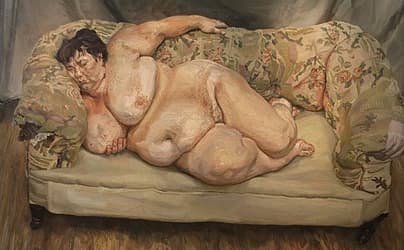
$80-110 million
The $80–110M range is driven by the 2015 $56.2M sale of Benefits Supervisor Resting and Freud’s $86.3M auction ceiling, plus a premium for this work’s iconic scale.
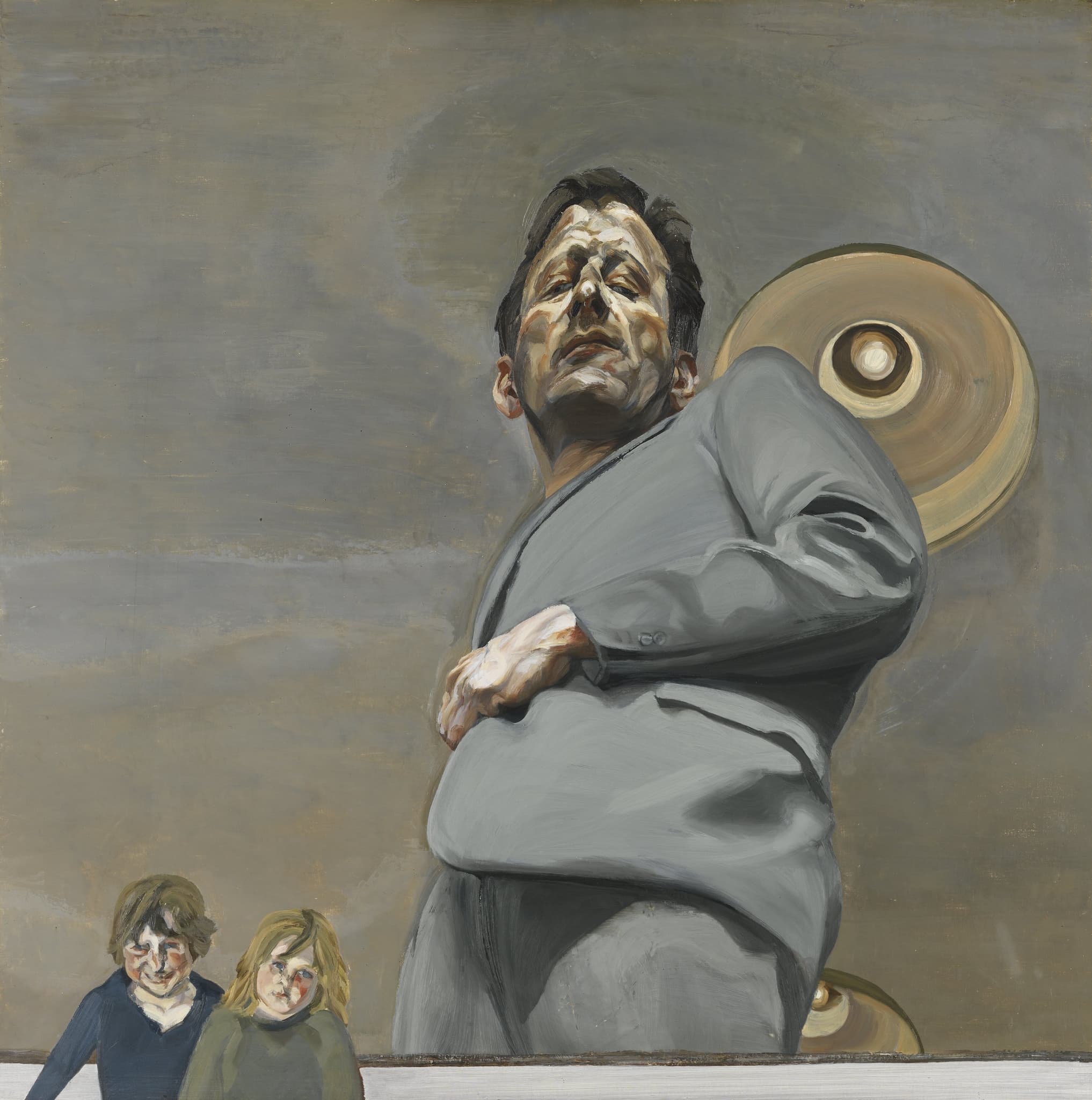
$60-90 million
The $60–90M valuation is anchored to Freud’s $86.3M auction record and elevated by a self‑portrait premium reflecting its museum‑grade, iconic status.
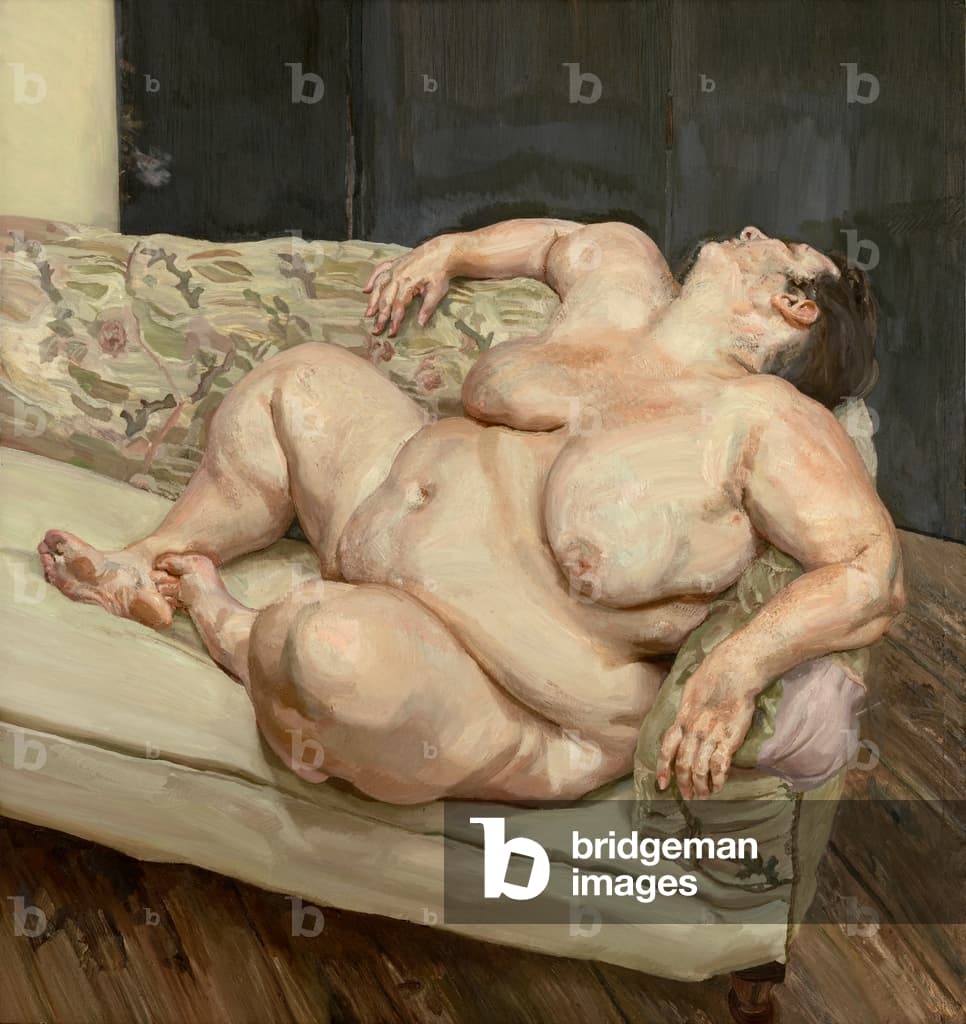
$45-80 million
Anchored to its Christie’s Nov 2015 realized price of $56,165,000, the painting’s $45–80M range reflects market comparables and likely evening‑sale positioning.
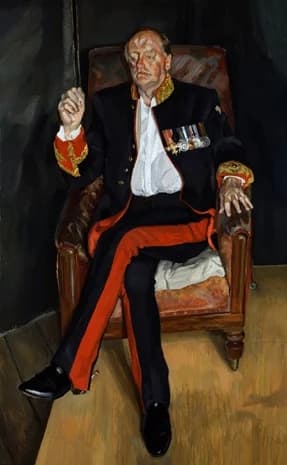
$30-55 million
Its $30–55M valuation is primarily anchored to Christie's Nov 10, 2015 sale that realized $34,885,000, adjusted for market shifts, provenance and sale mechanics.
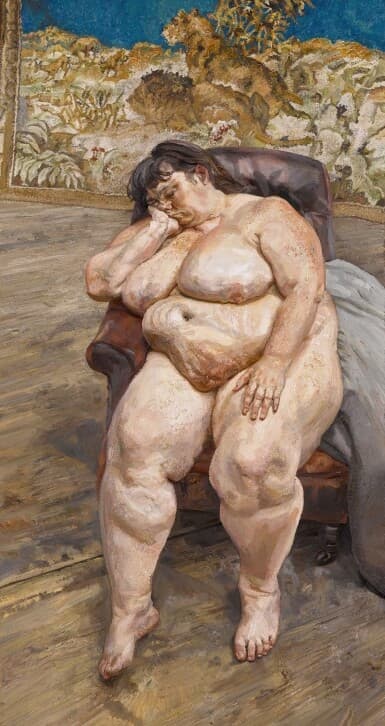
$35-45 million
Valued at $35–45M, the estimate closely tracks the Sotheby’s London realized price of approximately $38.8M on 24 June 2026, reflecting provenance and late‑career comparables.
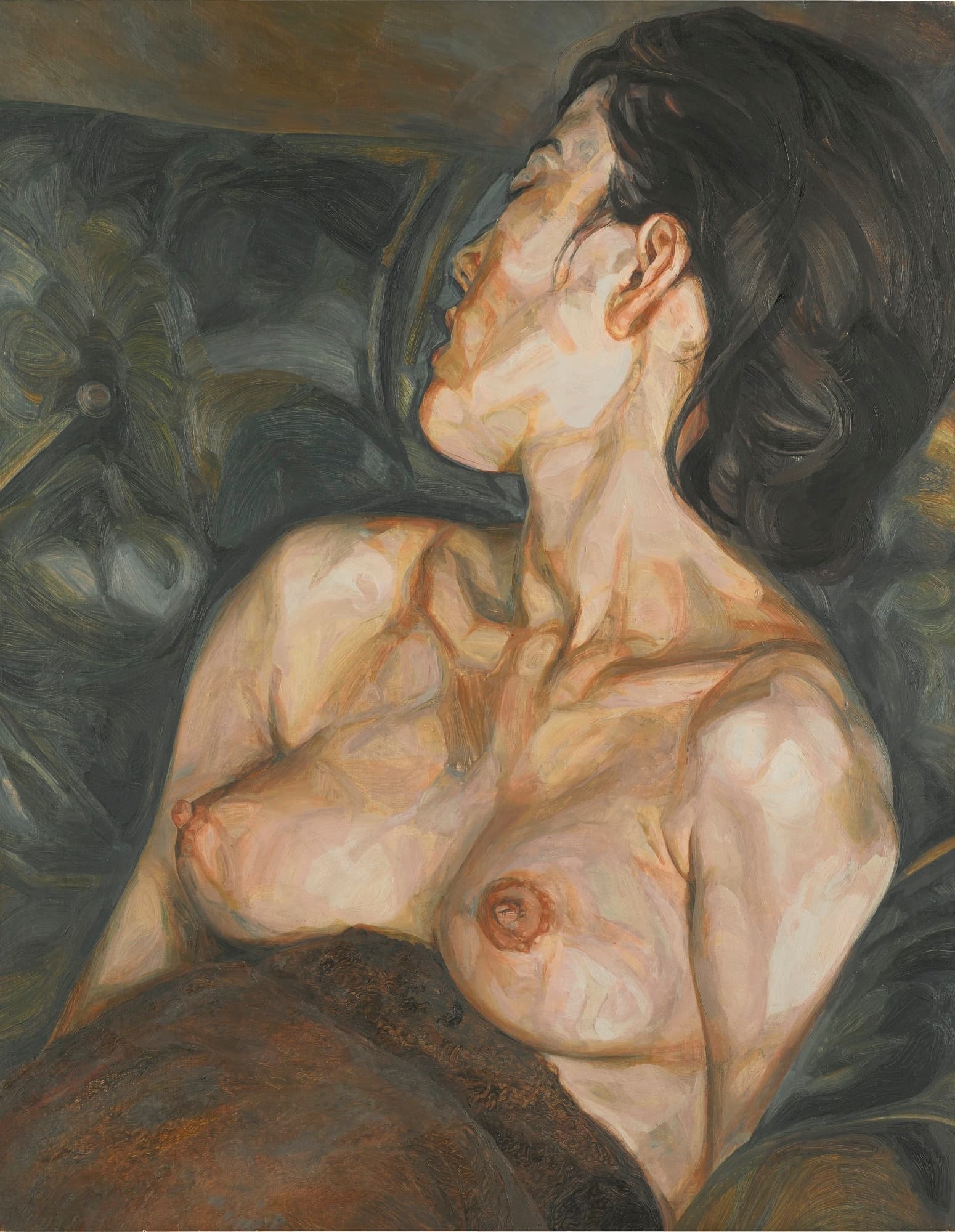
$20-40 million
The $20–40M range is anchored to its documented Sotheby’s London sale (10 Feb 2016) and forecasts a probable $22–30M evening‑sale outcome depending on condition and guarantees.
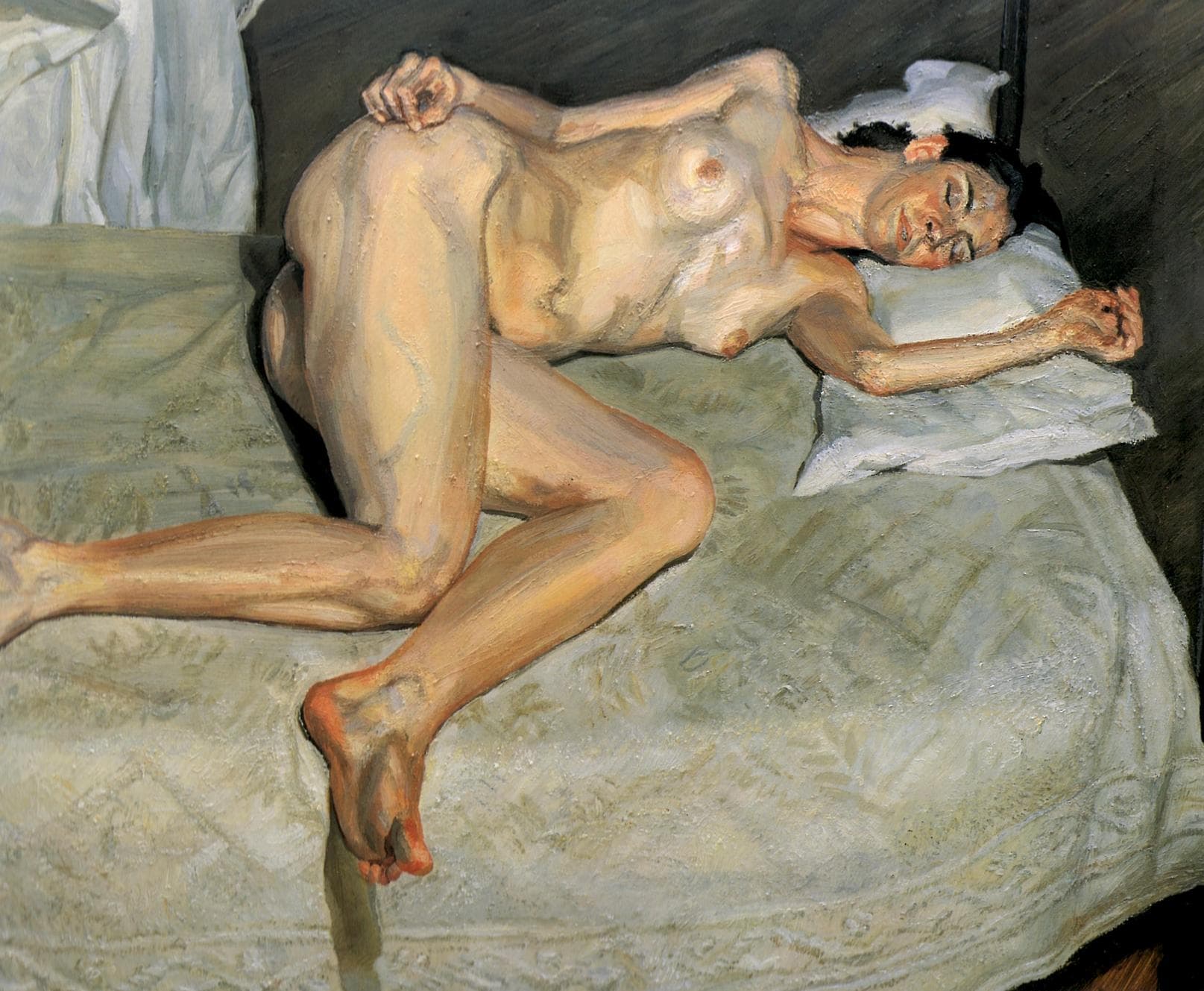
$28-35 million
Placed at $28–35M, the valuation is anchored by its c.$29.83M Sotheby’s London 2018 result and positioned above late heads but below Sue Tilley monuments.
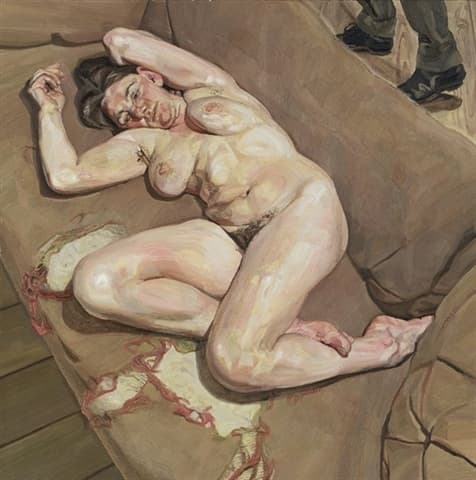
$15,000,000–$35,000,000
Its $15–35M estimate is anchored to Christie’s London realized price of $23,519,891 on 30 June 2008, adjusted for market movement among top Freud portraits.
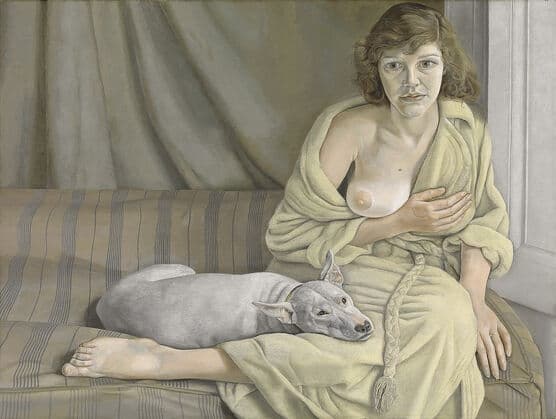
$8-18 million
The $8–18M range reflects mid‑century Freud auction comparables, adjusted upward for Tate provenance, sitter significance, size and anticipated sale strategy.
What Drives Value in Lucian Freud's Work
Late‑career scale, surface and subject (monumental interiors & reclining nudes)
For Freud specifically, the largest, museum‑calibre canvases — multi‑figure interiors and big reclining nudes — set the artist’s ceiling. Large Interior, W11 (after Watteau) reset market expectations in 2022, and the monumental Sue Tilley pictures have anchored multi‑tens‑of‑millions results. Buyers prize the physical presence, dense impasto and compositional complexity unique to Freud’s late practice; those attributes are scarce, highly loanable and therefore command trophy pricing well above his smaller works.
Sue Tilley / named‑sitter series premium
Freud’s recurring portrait series of Sue Tilley (‘Big Sue’) generate a distinct, outsized market effect. The two Benefits Supervisor canvases and related late Sue portraits (e.g., Sleeping by the Lion Carpet) are unusually sought after, scarce in private hands and heavily reproduced — driving concentrated bidder pools. Historical anchors (Benefits Supervisor Resting c. $56.2M in 2015; other Sue results in the high tens of millions) show that named‑sitter series materially lift prices for Freud.
Iconicity & autobiographical self‑portraits
Freud’s image‑recognition effect is strong: a handful of canonical compositions — notably self‑portraits like Reflection with Two Children — carry an autobiographical and scholarly premium. Such works are heavily cited in monographs and retrospectives, making them central to Freud’s critical narrative. Because collectors and institutions prize pictures that define an artist’s persona, these reproduced, narrative‑rich canvases fetch near‑top prices despite sometimes smaller scale, outperforming comparable but less iconic portraits.
Museum/high‑profile provenance and exhibition pedigree
For Freud, who is intensively curated and written about, clear museum ownership or prominent private provenance meaningfully boosts value. Works in the Tate or Thyssen, or those owned by major collectors/dealers (e.g., Paul G. Allen, Lewis Collection, Acquavella) benefit from loanability, catalogue coverage and reduced attribution risk. Examples: Girl with a White Dog (Tate) and Reflection with Two Children (Thyssen) illustrate how institutional lineage and exhibition history translate into higher realised prices for Freud works.
Market Context
Lucian Freud’s auction market sits firmly in the blue‑chip tier: supply of museum‑quality late portraits and nudes has been constrained since his death, and institutions and deep‑pocketed private collectors (notably those assembling major post‑war collections such as the Paul G. Allen sale) drive competition for canonical canvases. The record sale—Large Interior, W11 (after Watteau) at Christie’s New York for $86.265m in 2022—reset expectations, while strong outcomes through 2023–2026 (including multi‑million evening‑sale results and a notable $38.8m benchmark) confirm durable high‑end demand. The market is selective and provenance‑sensitive: condition, exhibition/publication history, guarantees and marquee evening contexts typically determine whether works reach upper‑end, near‑nine‑figure territory or remain in the mid‑seven to low‑eight‑figure band. Overall trajectory: resilient at the trophy end but bifurcated, with mid‑tier material facing greater discipline.