Reflection with Two Children
by Lucian Freud
Study Print Studio
Create a personal study print
Build a companion study sheet around the part of this painting that speaks to you most. Choose a detail, shape an interpretation, and walk away with something personal and display-worthy.
Fast Facts
- Year
- 1965
- Medium
- Oil on canvas
- Dimensions
- 91 × 91 cm
- Location
- Museo Nacional Thyssen-Bornemisza, Madrid
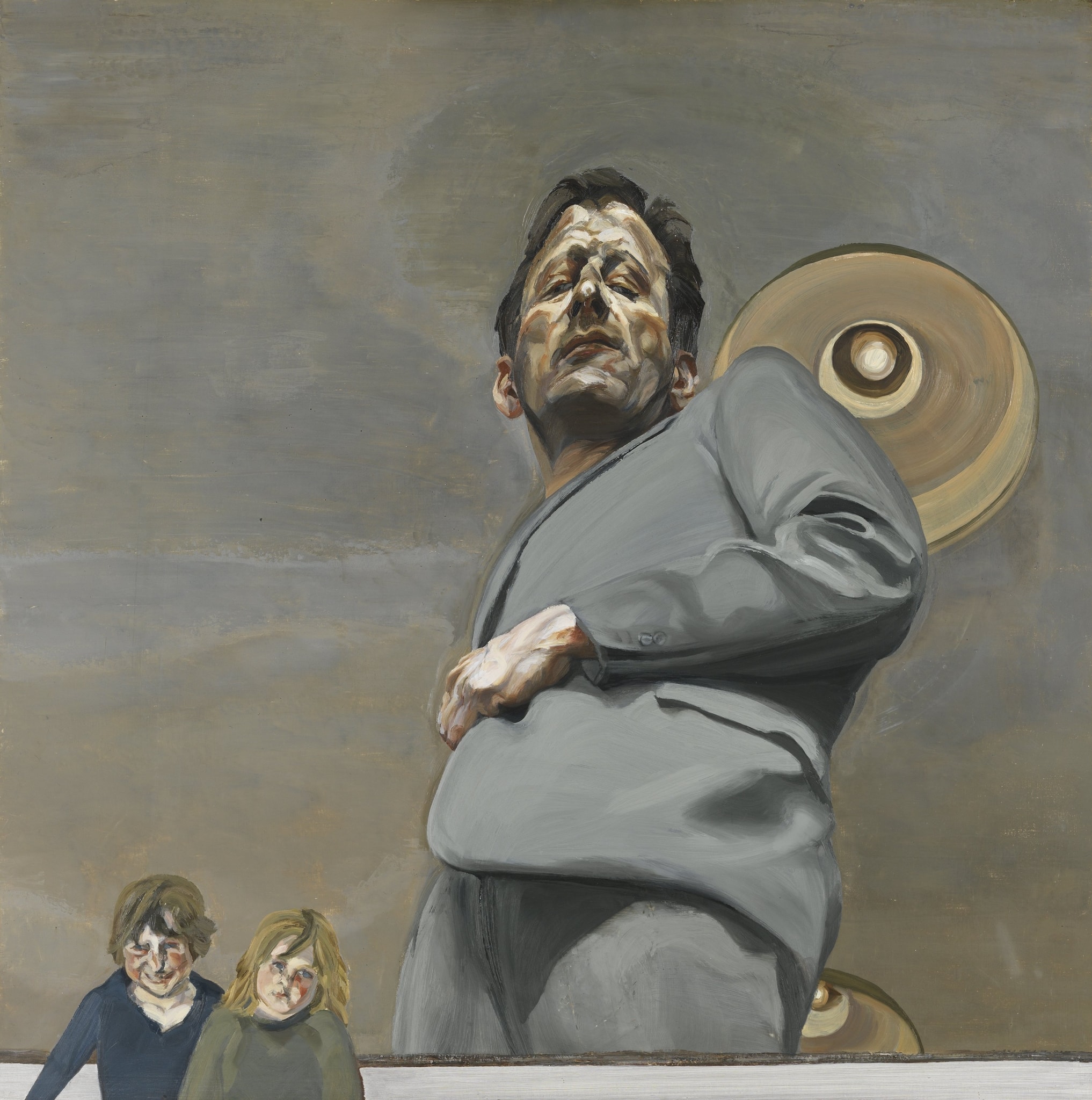
Click on any numbered symbol to learn more about its meaning
Meaning & Symbolism
Explore Deeper with AI
Ask questions about Reflection with Two Children
Popular questions:
Powered by AI • Get instant insights about this artwork
Interpretations
Historiography & Exhibition Context
Source: MFA Boston; National Gallery, London
Comparative Iconography
Source: Museo Nacional Thyssen‑Bornemisza; Egypt Museum (comparative reference)
Materiality & School of London
Source: Museo Nacional Thyssen‑Bornemisza; National Galleries of Scotland
Psychoanalytic/Studio-as-Tribunal
Source: The New Yorker (Peter Schjeldahl); Museo Nacional Thyssen‑Bornemisza
Medium Reflexivity & Authorship
Source: Museo Nacional Thyssen‑Bornemisza; MFA Boston; Studio International
Related Themes
About Lucian Freud
More by Lucian Freud
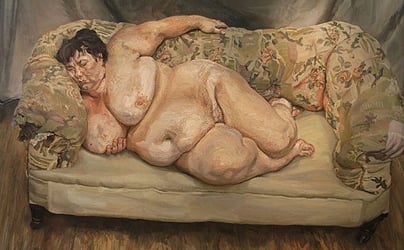
Benefits Supervisor Sleeping
Lucian Freud (1995)
Benefits Supervisor Sleeping is a 1995 oil painting in which Lucian Freud renders a sleeping, unidealized body across a sagging, floral sofa. With dense, tactile brushwork and a close, low vantage, the work asserts <strong>monumental presence</strong> while confronting viewers with the <strong>material truth of flesh</strong> and time’s imprint. It is a late‑century landmark of the School of London’s uncompromising figurative art <sup>[1]</sup><sup>[4]</sup>.
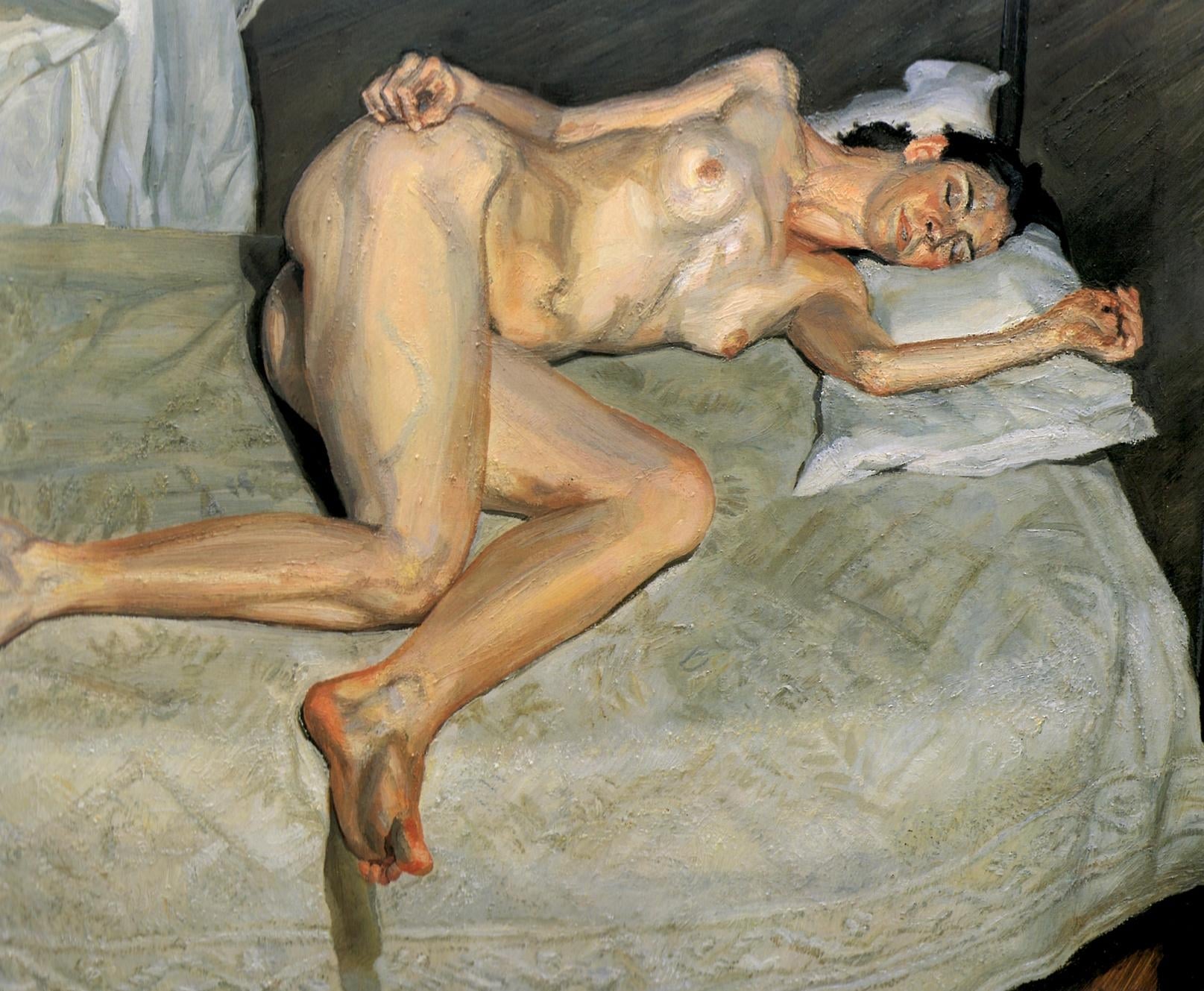
Portrait on a White Cover
Lucian Freud (2002–2003)
Lucian Freud’s Portrait on a White Cover turns the human body into a field of <strong>material truth</strong>, setting warm, bruised flesh against a <strong>cool, worked cloth</strong> that is named in the title. The diagonal sprawl, clenched left hand, and twisted feet make <strong>gravity</strong> and <strong>duration</strong> felt as subjects in their own right <sup>[1]</sup><sup>[2]</sup>.
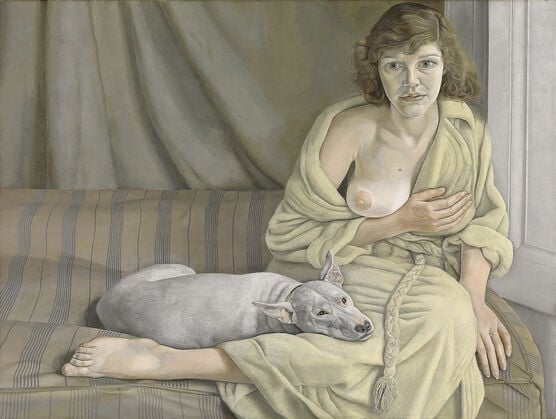
Girl with a White Dog
Lucian Freud (1950–51)
Lucian Freud’s Girl with a White Dog stages a charged quiet: a woman in a parted robe exposes one breast while shielding herself with a hand, as a white dog’s head lies heavy on her lap. The cool, fine-grained paint makes every surface hyper-present—the matte skin, the nap of the robe, the striped sofa—turning domestic calm into <strong>uneasy intimacy</strong> <sup>[1]</sup><sup>[2]</sup>.
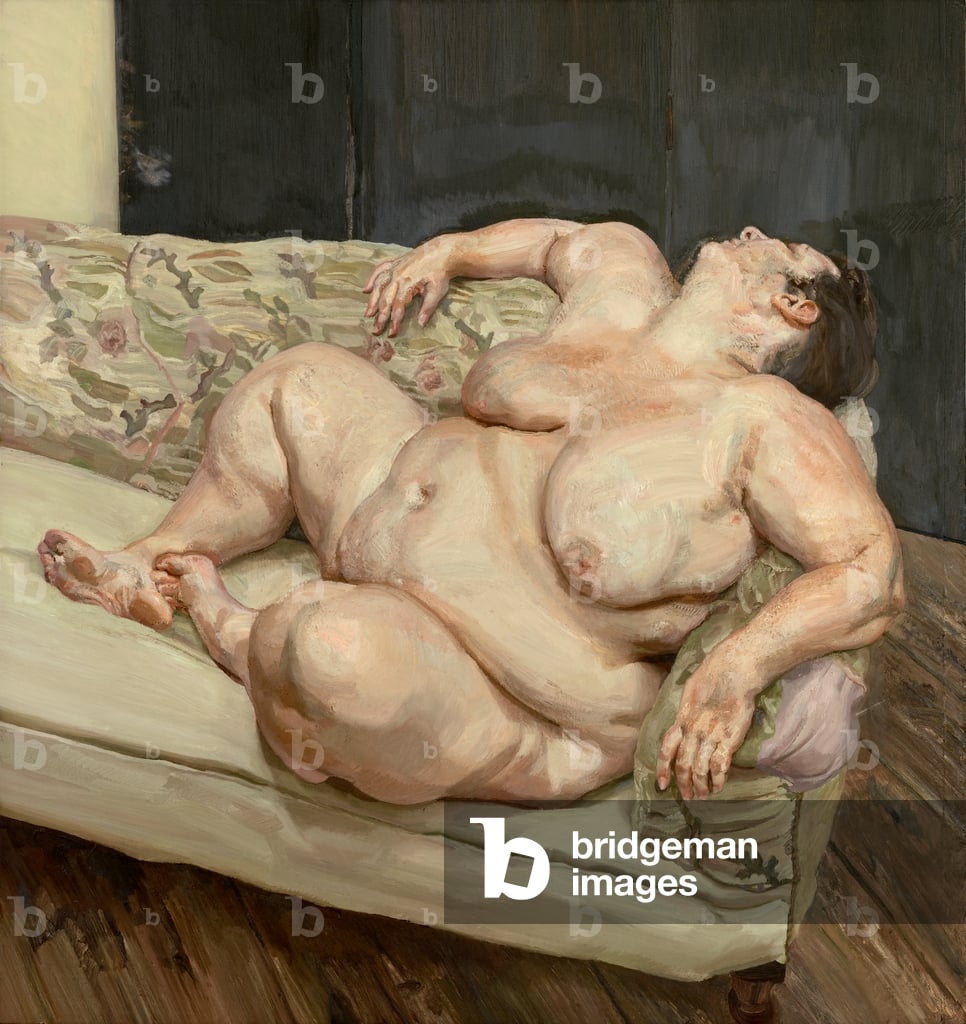
Benefits Supervisor Resting
Lucian Freud (1994)
Benefits Supervisor Resting confronts the reclining‑nude tradition with <strong>unvarnished corporeality</strong> and <strong>quiet dignity</strong>. Sprawled on a sagging floral sofa, the sitter’s tilted head and unarranged limbs shift attention from face to the <strong>landscape of flesh</strong>, rendered in dense, mottled strokes. The humble studio—scuffed wooden floor, dark wall—magnifies the body’s monumental presence rather than flattering it <sup>[1]</sup>.