How Much Is Separation of Light from Darkness Worth?
Last updated: April 22, 2026
Quick Facts
- Methodology
- comparable analysis
Separation of Light from Darkness is inalienable Vatican patrimony and has never been sold; any price is therefore hypothetical. Based on top-tier Old Master comparables and cultural‑replacement logic, a pragmatic hypothetical valuation range is $300 million–$1 billion, reflecting the market ceiling for unique Renaissance masterpieces if they were transferable.
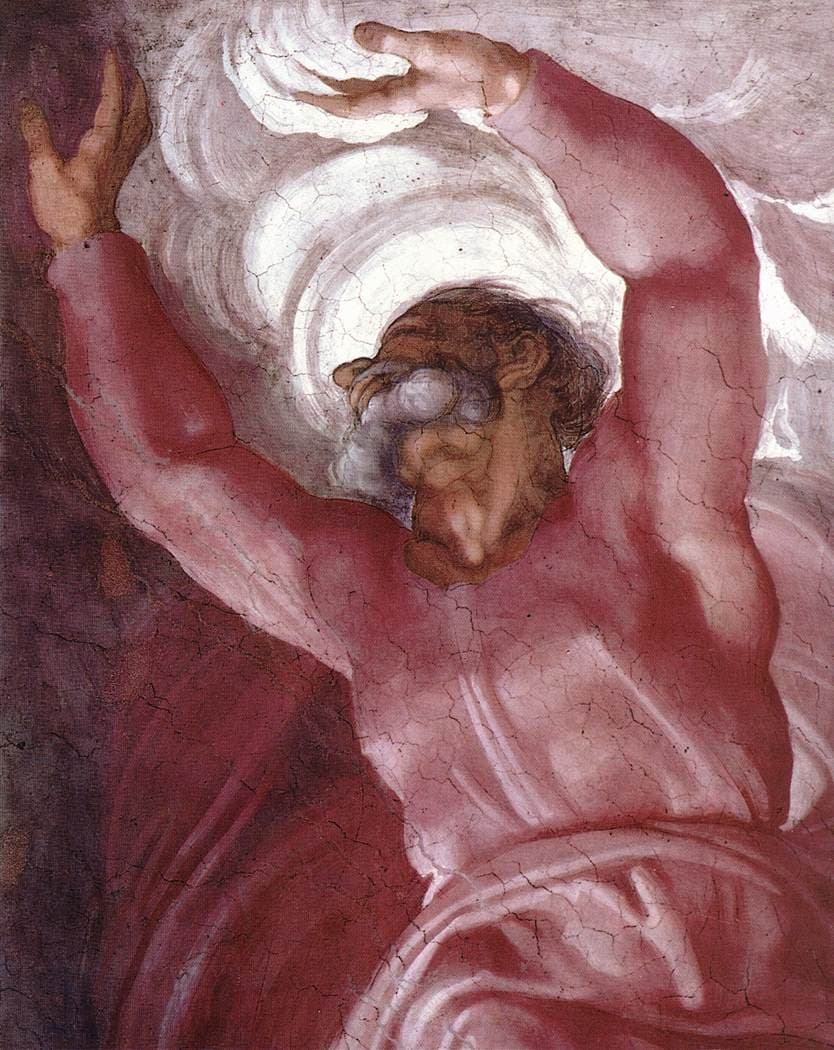
Separation of Light from Darkness
Michelangelo • Fresco (Sistine Chapel ceiling)
View more by Michelangelo →Valuation Analysis
Final hypothetical valuation: Because Michelangelo’s Separation of Light from Darkness is an immovable, publicly held fresco in the Sistine Chapel, it has no sale history and cannot legally be transferred; the numeric range given here is a counterfactual market estimate intended for insurance/replacement or compensatory purposes only. Using a comparables-driven approach that extrapolates from the very highest public‑market outcomes for single‑masterpiece Old Master works (notably Leonardo’s Salvator Mundi) and the realized prices for autograph Michelangelo sheets, the pragmatic hypothetical range is $300 million–$1 billion [1][2].
Key inputs: (a) market ceiling illustrated by exceptionally rare public sales of unique, canonical Renaissance paintings [1]; (b) the strongest directly relevant Michelangelo auction data — drawings and study sheets that have sold in the low tens of millions and a recent record study at Christie’s — which show robust demand for autograph material but on a materially lower transactional scale than a monumental ceiling panel [2]; (c) technical and legal constraints around fresco media and Vatican patrimony that make a real open‑market sale effectively impossible.
Why this wide range: the upper bound reflects what a global private buyer or consortium might, in theory, pay for a uniquely important Renaissance masterpiece if it were legally transferable and presented on a saleable support (the 2017 Salvator Mundi result provides a concrete market ceiling benchmark) [1]. The lower bound reflects a conservative extrapolation anchored to the best‑available Michelangelo sale evidence (high‑quality drawings in the $20–30M range) plus a scarcity/heritage premium and a discount for immovability and legal inalienability [2].
Conservation, legal and moral constraints materially reduce marketability: buon fresco is part of the building fabric, removal is destructive and would be prohibited by the Holy See, Italian/Vatican patrimony rules and UNESCO obligations — these facts mean the work’s real commercial value is effectively zero because it cannot be alienated; the numeric range should therefore be interpreted as a notional heritage/replacement/compensation figure rather than a realizable sale price [3][4].
Practical uses of this estimate: insurers, underwriters, governments or courts that require a monetary proxy for cultural loss or compensation would likely adopt a figure in the hundreds of millions to low billions to reflect historic/cultural replacement costs, lost tourism/reputational value and the unique nature of the object. Significant uncertainty remains — lack of transaction history, political constraints and the impossibility of transfer are the principal sources of variance — so any formal appraisal should be produced by a cultural‑heritage underwriter in consultation with Old Master specialists and Vatican authorities.
Key Valuation Factors
Art Historical Significance
High ImpactSeparation of Light from Darkness is a central panel in Michelangelo’s Sistine Chapel ceiling, one of the defining projects of the High Renaissance and a work of global cultural consequence. Its authorship, date and function within the chapel cycle are undisputed; the mural contributes directly to Michelangelo’s reputation and to Western art history. For valuation, historical significance drives an exceptionally large intangible premium: canonical works by benchmark artists command a scarcity and prestige value that materially elevates any hypothetical market or compensatory appraisal. Institutional collectors and nation‑states treat such works as irreplaceable, which pushes potential valuations far above ordinary Old Master lots.
Rarity & Market Scarcity
High ImpactNo other comparable fresco by Michelangelo exists in the market; the supply of autograph Michelangelo works that could conceivably be sold (mainly drawings and small sculptures) is tiny. Market scarcity therefore amplifies any price discovery event: when a securely attributed, museum‑quality Michelangelo sheet or fragment appears, it can dramatically outperform estimates. However, the scarcity effect is complicated here by immovability: while scarcity normally inflates price, the complete absence of transferability converts scarcity into a heritage premium used for insurance/compensation rather than a realizable sale premium.
Physical & Legal Marketability
High ImpactSeparation of Light from Darkness is executed as a buon fresco integrated with chapel plaster; detaching it would be destructive and is legally and ethically barred by the Holy See and international heritage norms. Vatican ownership, Italian and ecclesiastical patrimony statutes and UNESCO obligations create categorical barriers to export or sale. This factor is the principal determinant of valuation type: because commercial transfer is not feasible, the work’s monetary figure functions as a notional replacement/compensation value rather than a true market price. Any formal valuation must therefore model non‑market losses (cultural, reputational, tourism) rather than standard auction outcomes.
Comparables & Market Ceiling
Medium ImpactTop public‑market comparables (Leonardo’s Salvator Mundi at $450M and the highest‑quality Old Master trophy sales) set an empirical ceiling for what the global market can pay for a singular, saleable Renaissance masterpiece. Direct Michelangelo comparables are limited to drawings (recent records in the low tens of millions), so valuation requires extrapolating from both Michelangelo sheet prices and upper‑end single‑masterpiece sales. That extrapolation produces a wide range to reflect the gap between saleable panel/painting comparables and immovable fresco realities.
Sale History
Separation of Light from Darkness has never been sold at public auction.
Michelangelo's Market
Michelangelo is among the most authoritative and sought‑after artists in art history; however, autograph works offered on the market are almost exclusively drawings, studies and some small sculptures. Recent high‑quality Michelangelo sheets have sold for the low tens of millions (a Christie’s record study in 2026 realized roughly $27.2M), demonstrating strong demand for authenticated material. Because large, iconic painted works by Michelangelo are in situ and held by public institutions, the artist’s market visibility is concentrated in rare paper and minor objects — this produces high volatility and a steep premium for museum‑grade pieces when they appear.
Comparable Sales
Salvator Mundi
Leonardo da Vinci
Record public-auction price for a unique, canonical Old Master masterpiece; establishes the market ceiling for a saleable, single-owner Renaissance masterpiece (useful as an upper-bound comparison despite different medium and ownership).
$450.3M
2017, Christie's New York
~$563.0M adjusted
A Nude Young Man (after Masaccio)
Michelangelo
Autograph Michelangelo drawing sold at auction; a direct artist-level comparable showing realised demand and pricing for Michelangelo autograph works (though drawings differ in medium, scale and market liquidity from a large in-situ fresco).
$21.0M
2022, Christie's Paris
~$23.5M adjusted
Study for a Right Foot (Libyan Sibyl) — red-chalk study
Michelangelo
Recent auction record for an autograph Michelangelo sheet (directly connected to Sistine Chapel subject matter); strongest direct market signal for Michelangelo-authored material though still a small paper work vs. an immovable fresco.
$27.2M
2026, Christie's New York
~$26.9M adjusted
Young Lion Resting (chalk sketch)
Rembrandt van Rijn
Record-level result for a master drawing in the same Old Masters market week; useful as a cross-artist benchmark for demand and top pricing for museum-quality master drawings (context for how drawings vs. monumental immovable works price).
$17.9M
2026, Sotheby's
~$17.7M adjusted
Current Market Trends
The current Old Master market is selective and top‑heavy: institutional and private buyers have rotated toward flight‑to‑quality, favoring museum‑grade, well‑provenanced works. Record results for rare drawings and single‑owner masterpieces have set new ceilings, but the broader market remains narrow; provenance, technical authentication and institutional interest drive premium pricing.