How Much Is The Last Judgment Worth?
Last updated: April 22, 2026
Quick Facts
- Methodology
- extrapolation
The Last Judgment is an in‑situ, Vatican‑owned fresco and has never been sold; any dollar figure is purely hypothetical. Extrapolating from autograph Michelangelo drawing sale records and public trophy‑sale ceilings yields a conservative hypothetical band of approximately $500 million to $2 billion+, but in practical and legal terms the work is effectively priceless.
Valuation Analysis
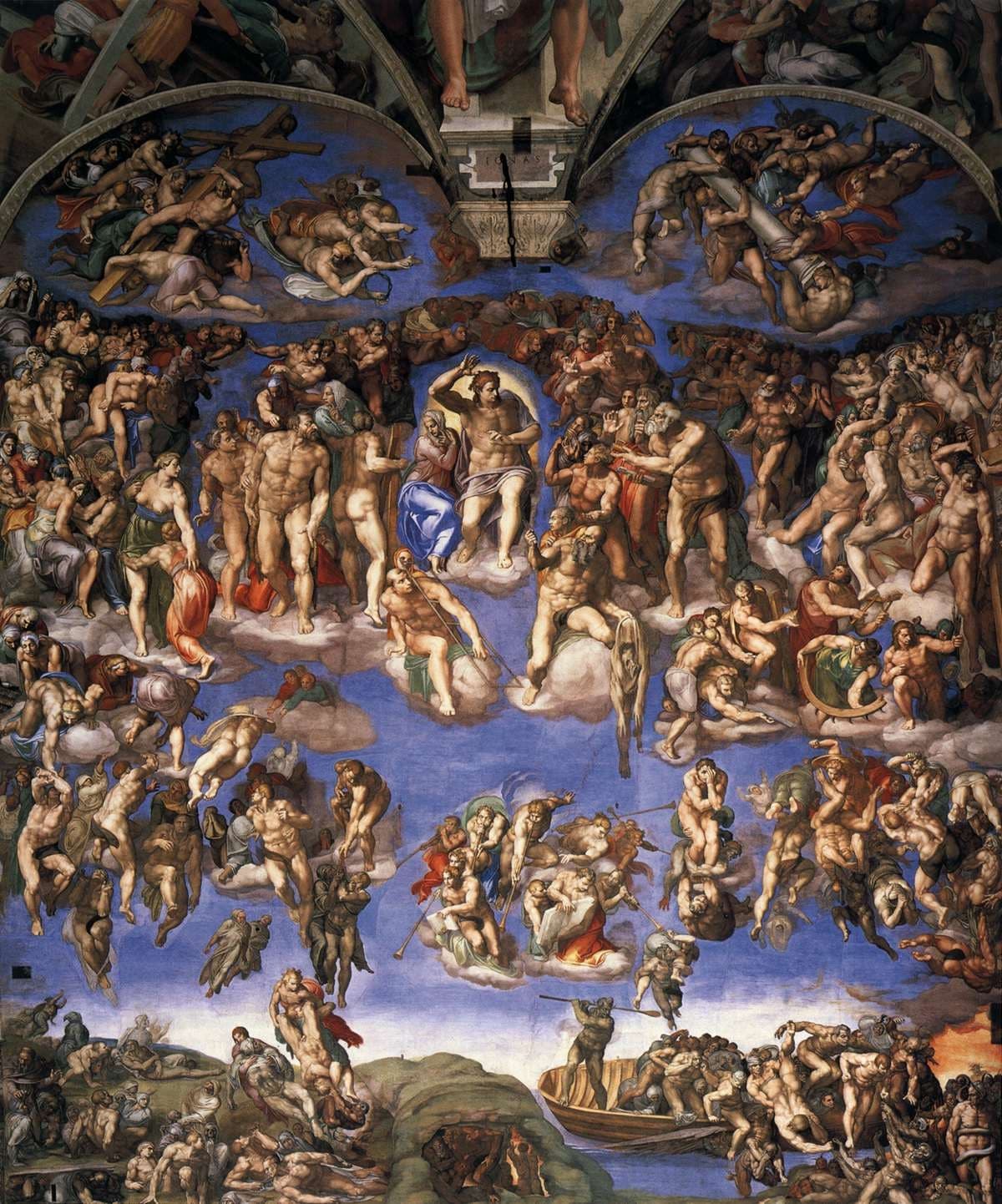
Context and non‑market status. Michelangelo’s The Last Judgment is an in‑situ fresco on the Sistine Chapel altar wall, part of the Vatican’s cultural and liturgical patrimony; it has never been offered for sale and is effectively unsellable under current legal, institutional and ethical norms [1]. Its meaning, scale, and integration into the chapel’s architecture and religious function give it a fixed context that cannot be transferred without grave loss of integrity. The Vatican treats the work as public patrimony and the international conservation community regards detachment or transfer as an exceptional, last‑resort measure; consequently market mechanisms do not apply in any ordinary sense.
Methodology — extrapolation from market ceilings and autograph comparables. Because there is no transactional precedent, I derived a hypothetical value band by extrapolating from two market signals: a public auction ceiling for a saleable, trophy masterpiece and the best available autograph Michelangelo comparables in the portable market. A recently documented red‑chalk study associated with the Sistine program sold at auction for $27.2 million in 2026, providing a contemporary market anchor for autograph Michelangelo material [2]. I applied conservative scaling multipliers (approximately 20× to 80×) to that result — a reasoned way to move from a single sheet to a unique, monumental altar‑wall fresco — and then cross‑checked the derived band against the public ceiling for an iconic saleable masterpiece to keep the high bound within empirically observed trophy sale limits [3].
Hypothetical value band and rationale. The arithmetic above produces a conservative hypothetical band of roughly $500 million to $2 billion+. The low end corresponds to a modest trophy premium above the best portable Michelangelo examples; the high end recognizes the potential for an extraordinary heritage/trophy premium were a legally and politically improbable sale to be contemplated. Key drivers pushing the figure upward are universal recognition, immobility combined with irreplaceability, and the willingness of top‑tier institutions or sovereigns to pay extreme sums for unique cultural assets; constraints that push it downward are the complete lack of marketability and the reputational and legal cost of any transfer.
Caveats and intended use. This estimate is a reasoned, academic extrapolation, not an operational market appraisal. The work’s in‑situ status, the Vatican’s stewardship and international heritage norms make sale effectively impossible; removal would be technically hazardous and would destroy essential contextual value. Insurers and custodial institutions usually address such assets through conservation budgets and risk mitigation rather than market‑price insurance. Treat this band as a theoretical ceiling/floor exercise for comparative purposes only; the correct practical description of The Last Judgment remains “priceless” and inalienable [1][2][3].
Implementation note for use. If this band is to be used for institutional reporting, a formal appraisal would require detailed legal review of Vatican ownership, an assessment of any hypothetical removal scenario (technical feasibility and likely damage), and a stakeholder analysis of potential purchasers (national governments, top global museums, or private sovereign funds). Because the underlying assumptions are extreme and speculative, any lower‑stake uses (insurance budgeting, conservation planning) are better served by cost‑based approaches than by market‑price analogies.
Key Valuation Factors
Art Historical Significance
High ImpactMichelangelo’s Last Judgment ranks among the handful of artworks that define Western art history and the artist’s own legacy. Painted on the Sistine Chapel altar wall in the 1530s–1540s, the fresco is integral to the chapel’s program and to Catholic liturgical space; its iconography, scale, and stylistic innovations have been central to scholarship, pedagogy, and public imagination for centuries. That singular, irreplaceable art‑historical status creates an enormous intangible premium: while it does not translate to a transferable market commodity, it makes the work uniquely valuable in any theoretical valuation and an object of potential sovereign or institutional competition in an imagined sale scenario.
Ownership & Legal Inalienability
High ImpactThe Last Judgment is held by the Vatican and functions within an active religious and museum context; international heritage norms and national/institutional stewardship expectations treat such works as inalienable. Legal, political and reputational barriers to alienation are extremely high: sovereign ownership, canonical considerations, and protective cultural patrimony rules make any transfer practically impossible. Even if removal were technically feasible, the prospective buyer pool and the willingness of the Vatican to contemplate sale are near zero—this factor therefore drastically reduces any realistic marketability and turns monetary estimates into hypothetical thought experiments rather than actionable market valuations.
Market Comparables & Price Ceiling
Medium ImpactThere are no direct sale comparables for an in‑situ altar‑wall fresco of this importance. The best empirical inputs are (a) trophy sales of portable masterpieces (public auction ceilings such as the high‑hundreds‑of‑millions result for a modernly sold Leonardo) and (b) record results for autograph Michelangelo drawings (tens of millions). Scaling those comparables to the fresco context requires applying a scarcity/trophy premium; doing so yields a large but defensible hypothetical band. Because comparables are imperfect and portable, this factor supports a wide valuation range and increases valuation uncertainty.
Conservation, Detachment Risk & Transferability
Medium ImpactPhysically detaching or moving a large fresco is technically possible only under extreme, emergency circumstances and carries high cost and risk of irreversible damage. Conservation practice prioritizes minimal intervention; detachment would compromise context and likely destroy much of the work's integrity and therefore its perceived value. The cost of attempted removal, restoration, and recontextualization would be enormous and would reduce market value, not preserve it. This physical reality constrains hypothetical buyer interest and is a strong downward pressure within any extrapolated valuation.
Sale History
The Last Judgment has never been sold at public auction.
Michelangelo's Market
Michelangelo occupies the absolute top tier of art‑historical stature, but very little autograph material becomes available on the open market. Most public sales are of drawings, studies or small works; recent record auction results for Michelangelo drawings (notably a 2026 sale that achieved $27.2 million) illustrate strong demand for authenticated, museum‑quality sheets but remain orders of magnitude below the hypothetical value of a monumental in‑situ fresco. Museums and sovereign institutions are the primary custodians of large Michelangelo works; supply scarcity and high scholarly scrutiny keep market liquidity extremely limited.
Comparable Sales
Salvator Mundi
Leonardo da Vinci
Public auction ceiling for a single-sale, globally famous masterpiece; provides an empirical upper-anchor for what the market will pay for a saleable 'trophy' work (portable) even though it's not directly comparable to an immovable altar‑wall fresco.
$450.3M
2017, Christie's New York
~$594.4M adjusted
Study for a foot of the Libyan Sibyl (red‑chalk preparatory drawing)
Michelangelo
Same artist and directly related to the Sistine Chapel imagery; record auction for Michelangelo drawings — strongest direct market signal for demand in autograph Michelangelo material, though a small portable sheet versus a monumental fresco.
$27.2M
2026, Christie's New York (Old Master & British Drawings)
~$26.4M adjusted
A nude man (after Masaccio) and two figures behind him (drawing)
Michelangelo
Previous auction high for Michelangelo drawings (pre‑2026) — demonstrates strong prices for museum‑quality, well‑attributed sheets by the artist and helps set a market band for autograph Michelangelo works.
$24.3M
2022, Christie's, Paris
~$26.9M adjusted
Venice: The Bucintoro at the Molo on Ascension Day
Canaletto
Late‑2025 top result for a major Old Master canvas — useful as a category reference for market appetite/price levels for large, canonical historic paintings at auction (but different artist/genre and portable).
$43.9M
2025, Christie's London
Diagram of a marble block
Michelangelo
Example of a lower‑tier Michelangelo sale (small diagram/drawing) — shows the wide spread in prices for artist material (from six‑figure sketches to tens of millions for rare sheets).
$202K
2024, Christie's (April 2024)
~$208K adjusted
Current Market Trends
The Old Masters and High Renaissance segments are supply‑constrained and show selective strength at the very top end: exceptional, freshly attributed works attract competitive bidding while ordinary lots see limited interest. Private sales and institutional stewardship have grown as influential channels. These structural conditions support very high prices for museum‑quality discoveries but do not change the inalienability of immovable, liturgical frescoes.