The Screaming Horse in Guernica
A closer look at this element in Pablo Picasso's 1937 masterpiece
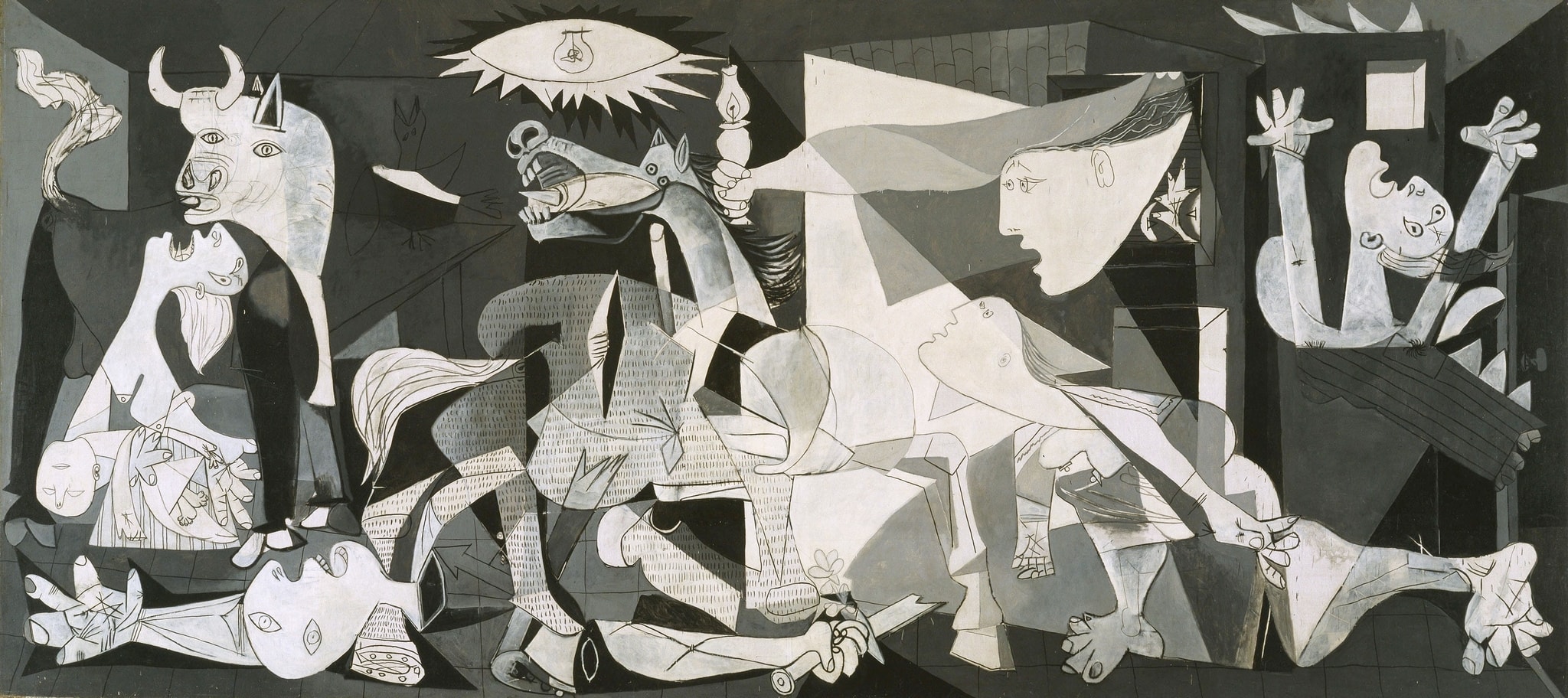
At the heart of Guernica, a rearing, mortally wounded horse throws back its head in a blade‑tongued scream, crystallizing the mural’s terror in a single, unforgettable image. Drawn from Spain’s bullfighting vocabulary and reworked during the frantic weeks after the bombing of Gernika, the horse became Picasso’s clearest vessel for public agony and resistance.
Historical Context
Picasso painted Guernica in spring 1937 for Spain’s pavilion at the Paris World’s Fair, answering the Luftwaffe‑backed destruction of the Basque town of Gernika on April 26. Among the figures he mobilized were the bull and the horse—longstanding Spanish motifs he had mined for years. In Guernica, the central horse adapts a specific bullfight episode: the moment in the tercio de varas when the bull gores the picador’s mount. The Museo Reina Sofía traces the horse’s anguished head directly to this tauromachia source and preserves a cluster of early‑May studies that build the screaming profile seen in the mural 1.
While the pavilion commission and the attack’s shock supplied the work’s urgency, Picasso’s selection of the gored horse provided a culturally legible vehicle for civilian suffering. Preparatory drawings and the evolving canvas concentrated pathos in this figure, now placed beneath the painting’s blazing lamp. Encyclopaedia Britannica underscores both the World’s Fair context and Picasso’s refusal to pin down fixed meanings—an openness that allowed the horse to carry the charge of contemporary atrocity without being locked to a single code 2.
Symbolic Meaning
Picasso’s own remarks set the range for interpreting the horse. In notes from a 1947 conversation, he reportedly called the horse “the people,” pairing it with a brutal, impassive bull—yet in the same breath he warned that “the bull is a bull, the horse a horse,” resisting a one‑to‑one allegory 3. Britannica echoes this deliberate openness, which has nonetheless yielded a durable consensus: the horse embodies civilians’ suffering under modern, state‑sponsored violence 2.
Art historians root that reading in Spanish visual tradition. In bullfighting, the armored horse is the ritual victim; Rachel Wischnitzer shows how Picasso inverts and amplifies this victimhood to forge an antiwar emblem that speaks beyond Spain 7. Herschel B. Chipp’s day‑by‑day account likewise identifies the horse as the painting’s principal bearer of pain, its scream organizing our emotional entry into the scene 6. By channeling the gored‑horse motif into a monumental, monochrome lament, Picasso fuses a specifically Spanish icon with a universal indictment of aerial bombardment and civilian catastrophe. The horse’s knife‑like tongue, speared torso, and strained neck thus signify not myth but the violated body politic—the people pierced by modern war—while remaining elastic enough to accommodate multiple, coexisting meanings 13.
Artistic Technique
Picasso renders the horse in stark grisaille, fracturing head and body into hard, interlocking planes. Dense hatch marks across the torso mimic lines of newsprint, a visual echo of photojournalism that first carried news of the bombing; paint drips at the mouth suggest blood and spittle. The blade‑shaped tongue and flared nostrils sharpen the sensation of a cry, while a spear‑like form pierces the flank 4.
Dora Maar’s step‑by‑step photographs document Picasso repeatedly redrawing the equine head, pushing it to a higher, keening angle under the blazing bulb, and paring away anecdote to intensify the scream’s clarity 5. Preparatory horse‑head sketches held by the Reina Sofía show how the gored profile was distilled into the mural’s central emblem, fixing the horse as the picture’s acoustic and emotional engine 1.
Connection to the Whole
Placed at the canvas’s center beneath the eye‑like light bulb, the horse forms Guernica’s compositional fulcrum. Its rearing body locks into diagonals that bind the fallen soldier below and the lamp‑bearing witness at right, so that the horse’s scream seems to ripple through the scene 4.
Opposed across the left–center axis to the impassive bull, the horse stages a drama of brute endurance versus the violated body politic. This unresolved pairing mirrors the mural’s refusal to settle into a single allegory, even as the horse anchors our reading of its catastrophe. In the World’s Fair setting—an international showcase—such a centrally placed, universally legible victim transformed a Spanish motif into a global antiwar statement 24.
Explore More from This Painting
This detail is one part of Guernica. Use the links below to return to the full interpretation, browse the full set of details, or view the painting's valuation if available.
Sources
- Museo Reina Sofía — Horse Head. Sketch for “Guernica” (tauromachia source and studies)
- Encyclopaedia Britannica — Guernica: Description, History, & Facts
- Reina Sofía — Notes from Jerome Seckler’s 1947 interview with Picasso
- Smarthistory — Pablo Picasso, Guernica (palette, hatching, composition)
- Reina Sofía — Dora Maar, Reportage on the evolution of Guernica (process photos)
- Herschel B. Chipp — Picasso’s Guernica: History, Transformations, Meanings
- Rachel Wischnitzer — “Picasso’s Guernica. A Matter of Metaphor,” Artibus et Historiae 12 (1985)