How Much Is The Assumption of the Virgin Worth?
Last updated: February 18, 2026
Quick Facts
- Methodology
- extrapolation
Titian’s The Assumption of the Virgin has never been traded and is effectively non‑exportable, yet it is a canonical masterpiece of the Venetian Renaissance. Anchored to Titian’s top institutional purchases (£45–50m) and the current Old Master ceiling (Leonardo at $450.3m), and adjusted for the Assunta’s singular art‑historical primacy, we assign a hypothetical, unrestricted international fair‑market value of $200–350 million.
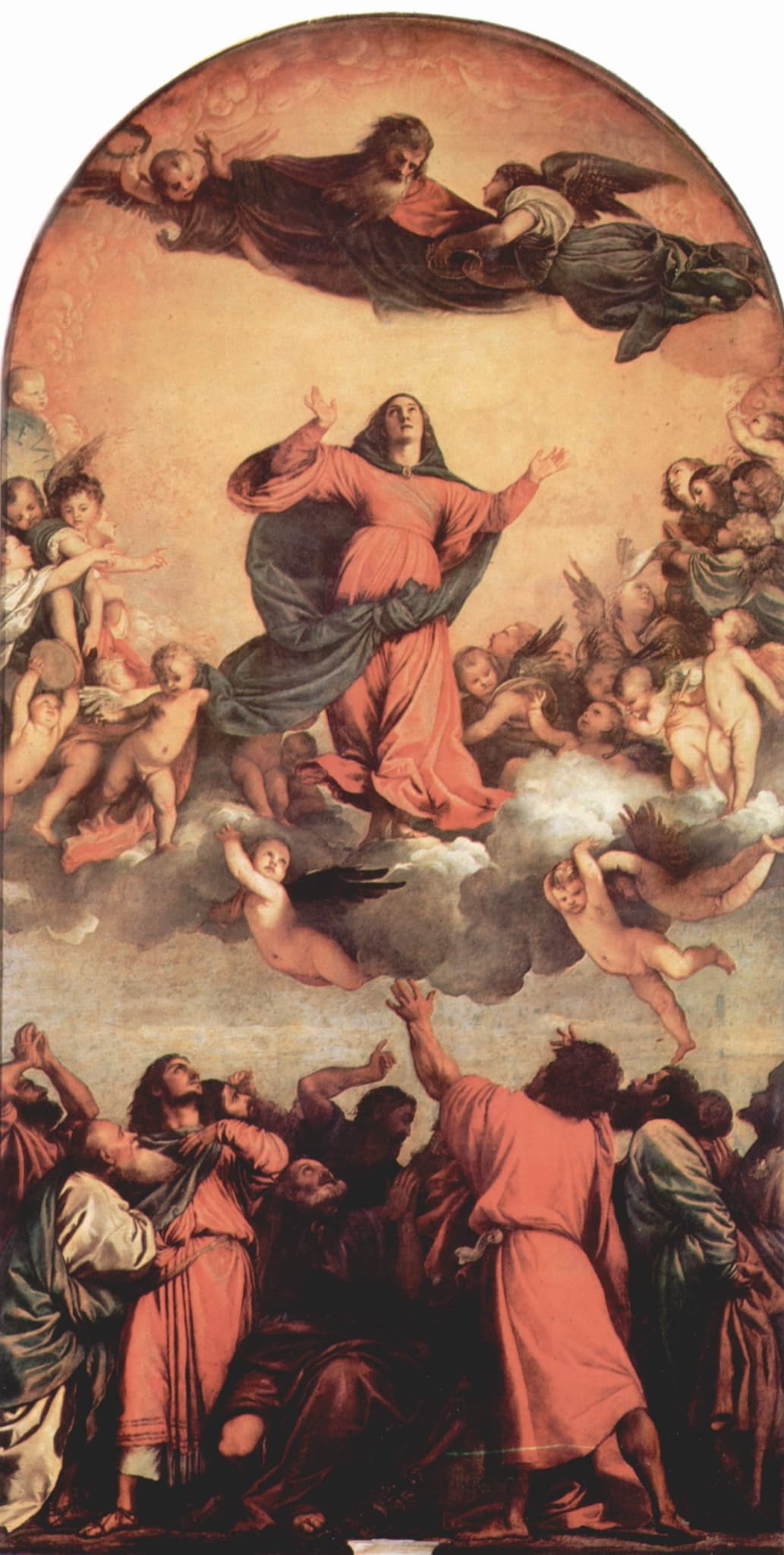
The Assumption of the Virgin
Titian, 1516–1518 • Oil on wood panel
Read full analysis of The Assumption of the Virgin →Valuation Analysis
Overview. The Assumption of the Virgin (1516–1518) is Titian’s monumental, in‑situ altarpiece for the high altar of Santa Maria Gloriosa dei Frari, Venice. It is a cornerstone of Venetian High Renaissance painting and, by scale and ambition, the largest single‑panel painting by Titian. It has never been traded; it remains ecclesiastical/public patrimony and functionally non‑exportable under Italian heritage law [4][5].
Method and benchmarks. Because no sale history exists for this work, we value it by extrapolation from the strongest visible Titian and Old Master price signals. At auction, Titian’s record stands at $22.18m (Christie’s London, July 2, 2024) for a rare, early autograph religious picture with bullet‑proof provenance—confirming deep demand when top material surfaces [1]. The best private/institutional benchmarks are the National Gallery/National Galleries of Scotland’s acquisitions of Diana and Actaeon in 2009 (£50m) and Diana and Callisto in 2012 (£45m)—among the highest confirmed prices for the artist and vital anchors for prime, museum‑grade Titian paintings [2][3].
Positioning the Assunta. Art‑historically, the Assunta eclipses those mythologies: it launched Titian’s preeminence in Venice and is a textbook‑defining public commission central to 16th‑century altarpiece practice [4]. In a hypothetical, unrestricted international sale, its uniqueness argues for a valuation well above prior Titian transactions. At the same time, practical considerations temper the ceiling: the work’s monumental scale and oil‑on‑panel construction introduce conservation and logistics risk that most mythologies or portraits do not carry, moderating price relative to the very top single‑owner, easily movable trophies.
Upper bounds and market context. The ultimate Old Master benchmark remains Leonardo’s Salvator Mundi at $450.3m (2017), which sets a category ceiling for singular Renaissance masterworks with global name recognition [6]. While the Assunta shares category‑defining stature, its in‑situ function and condition/logistics profile imply a discount versus the most portable, universally brand‑recognizable trophies. Balancing these forces, we place the Assunta at $200–350m on an international FMV basis.
Legal reality vs. theoretical value. Under Italy’s cultural‑property code, alienation/export of works of exceptional interest owned by ecclesiastical/public entities is tightly controlled, with state pre‑emption and frequent denial of export. In practice, the Assunta is unsaleable on the open market; any monetary figure is most applicable in insurance/indemnity or extraordinary compensation contexts rather than a realizable auction price [5]. If a transaction were constrained to Italy and subject to state rights, a transactable number could be materially lower than the international FMV. Our $200–350m range therefore represents a disciplined synthesis of art‑historical primacy, best available market comparables, and realistic execution risk in today’s Old Master market [1][2][3][6].
Key Valuation Factors
Art Historical Significance
High ImpactThe Assumption of the Virgin is one of the defining achievements of the Venetian Renaissance and a fulcrum in Titian’s ascent. Commissioned for the Frari’s high altar, it is a public, site‑specific statement of ambition that consolidated a new, monumentally theatrical language of color, light, and movement in sacred painting. Its status as the largest single‑panel work by Titian underscores both its technical audacity and its emblematic role within his oeuvre. In art‑historical literature and museum pedagogy, it serves as a canonical exemplar of 16th‑century Venetian altarpieces. This primacy commands a steep premium over even celebrated Titian mythologies and portraits, positioning the work at, or near, the apex of desirability for any institution or sovereign‑level collection able to pursue it.
Scarcity and Demand
High ImpactAutograph Titian paintings of clear, museum‑level importance are vanishingly scarce on the market. When they do appear with strong provenance and technical backing, competition is robust, as evidenced by the $22.18m auction record in 2024 and high‑profile institutional acquisitions of major mythologies. The Assunta is rarer still: a singular, in‑situ commission of towering reputation. The buyer pool for an unrestricted sale would be narrow but extraordinarily deep—leading museums with exceptional fundraising capacity and a handful of private or sovereign collectors. This supply‑demand imbalance justifies extrapolating far above standard Titian price bands and supports a nine‑figure valuation framework commensurate with the painting’s fame and art‑historical centrality.
Legal and Marketability Constraints (Italy)
Medium ImpactAs ecclesiastical/public patrimony in Italy, the painting is subject to stringent cultural‑heritage controls including ministerial authorization for any alienation, state pre‑emption rights, and likely denial of export licenses for works of exceptional interest. Practically, this renders the Assunta unsaleable on the international open market. These constraints reduce immediate liquidity and, in a domestically constrained scenario, could force a price well below international fair‑market value. However, for valuation purposes (insurance/indemnity, theoretical FMV), the legal regime does not erase intrinsic value. Instead, it creates a bifurcation: a higher international FMV grounded in global comparables and a lower, path‑dependent outcome if any transaction were forced within Italian legal confines.
Condition, Scale, and Logistics
Medium ImpactThe work’s monumental format and support (oil on multiple poplar planks) elevate conservation complexity and transit risk. Its integration into a purpose‑built stone frame and liturgical setting compounds de‑installation challenges, handling costs, and insurability considerations. For a buyer, such factors translate into material execution risk and lifetime stewardship obligations, which can moderate price versus equally important but more portable paintings. Conversely, the sheer impact and rarity of a masterpiece‑scale altarpiece can also heighten trophy appeal for institutions. On balance, we apply a measured discount to reflect logistics and structural risk, while recognizing that these very attributes also reinforce the painting’s singularity and hence its premium status.
Sale History
The Assumption of the Virgin has never been sold at public auction.
Titian's Market
Titian is a blue‑chip Old Master with a long‑established, globally diversified collector and institutional base. Public auction supply is extremely thin; the auction record stands at $22.18m (Christie’s London, July 2, 2024) for an early autograph religious work, resetting the visible ceiling for the artist. The highest confirmed Titian prices remain private/institutional: Diana and Actaeon (2009) and Diana and Callisto (2012) placed at £50m and ~£45m respectively with the UK’s National Gallery/National Galleries of Scotland, underscoring that true masterpieces typically transact outside auction. Demand is selective but deep for top‑tier, well‑provenanced works, with museums, foundations, and a small cadre of private or sovereign buyers driving competition. Visibility around the 450th anniversary of Titian’s death further supports near‑term interest.
Comparable Sales
The Rest on the Flight into Egypt
Titian
Same artist; early religious work with bullet‑proof provenance; current auction record for Titian—establishes the visible auction ceiling for autograph paintings.
$22.2M
2024, Christie's London (Old Masters Part I)
~$22.7M adjusted
A Sacra Conversazione: The Madonna and Child with Saints Luke and Catherine of Alexandria
Titian
Same artist; sacred subject comparable in theme to an altarpiece context; prior auction record—helps map how religious Titian pictures price at auction.
$16.9M
2011, Sotheby's New York
~$24.4M adjusted
Diana and Actaeon
Titian
Same artist; blue‑chip, autograph mythological masterpiece jointly acquired by institutions; one of the highest confirmed Titian prices—key benchmark for prime Titian quality.
$70.8M
2009, Private sale to National Galleries of Scotland & National Gallery, London
~$107.3M adjusted
Diana and Callisto
Titian
Same artist; companion to Diana and Actaeon; institutional acquisition at the very top end—strong proxy for pricing of museum‑caliber Titian masterworks.
$71.5M
2012, Private sale to National Galleries of Scotland & National Gallery, London
~$101.2M adjusted
Venus and Adonis
Titian and Workshop
Same atelier; major Titian subject but with workshop participation—useful as a lower anchor showing how variants/condition/attribution affect price versus prime autograph works.
$13.6M
2022, Sotheby's London
~$15.1M adjusted
The Penitent Magdalen
Titian
Same artist; devotional subject with strong collector recognition—illustrates pricing for autograph but more modest‑scale/iconography works relative to grand altarpieces.
$5.1M
2022, Dorotheum Vienna
~$5.6M adjusted
Current Market Trends
Old Masters remain a supply‑constrained, connoisseurship‑driven segment. After a softer 2024 marked by fewer $10m+ auction lots, 2025 saw renewed trophy‑level confidence, strong sell‑through for best‑in‑class works, and strategic use of guarantees. Recent headline results—from Titian’s 2024 record to record‑setting sales for Canaletto and major Renaissance drawings—confirm that exceptional quality, secure attribution, and provenance can command aggressive bidding. Buyer pools are global and cross‑category, but highly selective; portability, condition, and legal/export status materially influence pricing. In this context, singular, museum‑caliber Renaissance masterworks can justify nine‑figure valuations, while works with workshop participation, weaker condition, or complex logistics trade at significant discounts.
Study print
Study this painting as a print
Pair the full artwork with a museum-style study sheet focused on one meaningful detail.
Sources
- Christie’s Press Office: Old Masters Part I (Titian record, July 2, 2024)
- National Gallery (London): ‘Diana and Actaeon’ secured for the nation (2009, £50m)
- National Gallery (London): ‘Diana and Callisto’ secured for the public (2012, ~£45m)
- Save Venice: Assumption of the Virgin (Titian) – project overview
- Italian Ministry of Culture – Soprintendenza (Alienazione/Export restrictions)
- Christie’s Press Office: Leonardo da Vinci ‘Salvator Mundi’ sold for $450.3m (2017)