How Much Is Venus of Urbino Worth?
Last updated: February 17, 2026
Quick Facts
- Current Location
- Gallerie degli Uffizi
- Methodology
- extrapolation
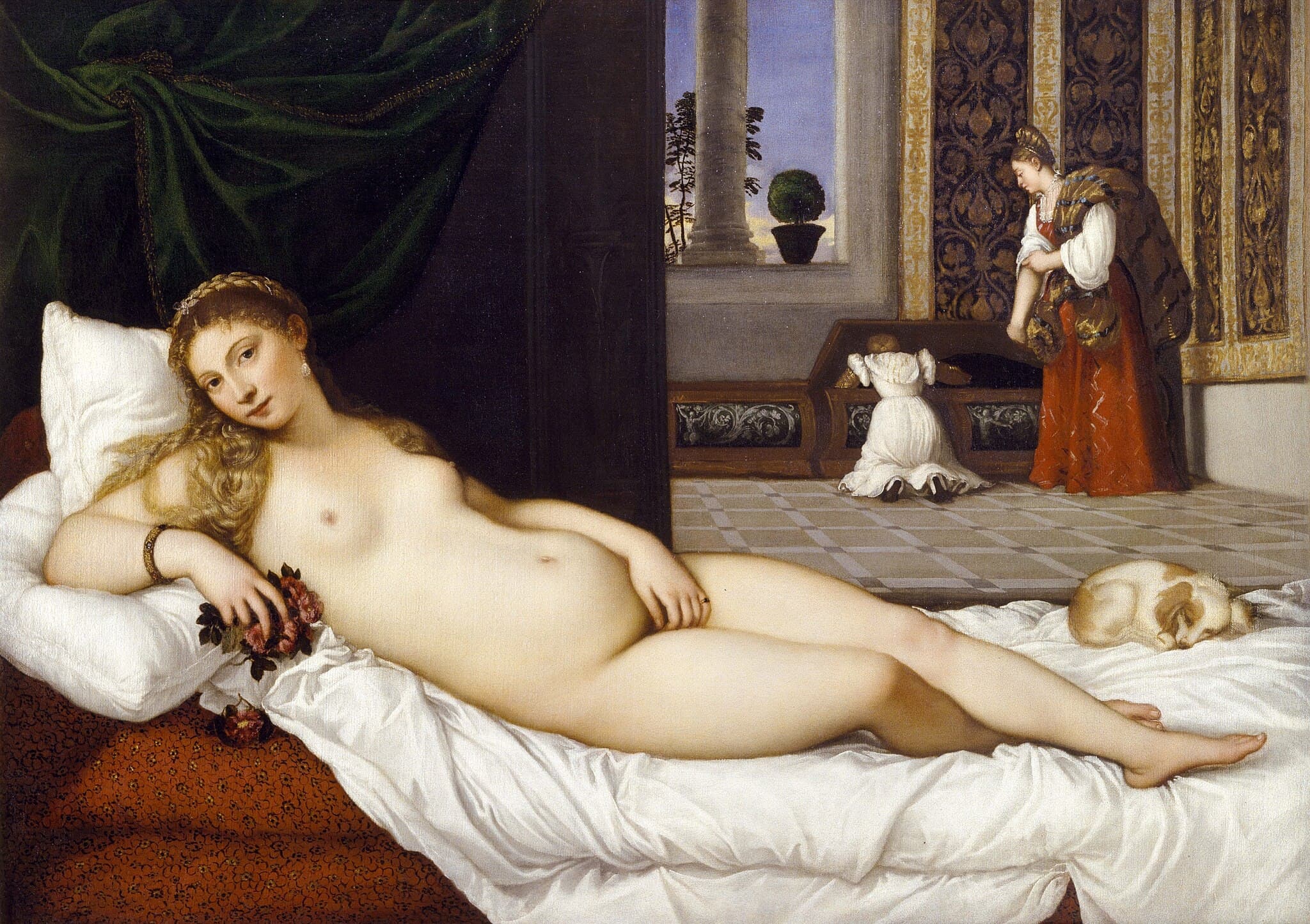
We estimate Titian’s Venus of Urbino at $250–500 million in an unconstrained international sale, reflecting its status as an apex masterpiece and archetype of the reclining nude. In a realistic Italian treaty context with export and deaccession limits, a working range would compress to roughly $150–300 million.
Valuation Analysis
Conclusion: Venus of Urbino stands at the absolute apex of Titian’s oeuvre and of the Venetian Renaissance canon. On a trophy, unconstrained international basis, we assess fair‑market value at $250–500 million. In the legally realistic scenario—an Italian state/treaty negotiation with export/deaccession limits—the pragmatic working band would compress to $150–300 million. The painting is in the Uffizi’s collection, is classed as unloanable, and is effectively inalienable under Italian patrimony law; any figure is therefore hypothetical and framed for insurance or treaty valuation exercises [1][2][3].
How this range was derived: The most probative modern benchmarks for prime autograph Titians in institutional/treaty settings are the National Gallery/National Galleries of Scotland acquisitions of Diana and Actaeon (2009, £50m) and Diana and Callisto (2012, £45m). Indexed forward, these imply c.$100m+ each in today’s dollars and set a robust institutional floor for major mythologies [4][5]. Venus of Urbino exceeds those works in public recognition and art‑historical centrality as the archetype of the reclining nude—arguably the most quoted and studied Titian in a museum collection—supporting a substantial premium over the Diana pair in any setting approximating full market competition [1].
Open‑market and category context: Supply of fully accepted Titians is vanishingly thin. When a prime early work surfaced in 2024 (Rest on the Flight into Egypt), it reset the artist’s auction record at $22.18m, underscoring the bid depth that materializes for top‑quality opportunities even in mixed macro conditions [6][7]. While public auction peaks for Titian remain far below the present estimate, those results reflect available material (smaller scale, early devotional subjects, or workshop participation) rather than demand constraints for a universally iconic masterpiece like the Venus.
What would move the needle: A current, transparent conservation dossier (structural state, surface, lining history, imaging) would refine the top of the range; condition variance can swing Old Master pricing materially. That said, the picture’s unimpeachable provenance (Medici/Uffizi), canonical status, and unmatched subject/scale set—combined with the scarcity of comparable opportunities—justify extrapolating well beyond historical Titian price points. In a treaty negotiation, sovereign‑buyer dynamics typically temper headline figures, hence the $150–300m working band; without those constraints, cross‑category trophy competition could credibly push realization into the $250–500m corridor.
Positioning: Within Old Masters, only a handful of works (e.g., unique Leonardo-level trophies) are plausibly in similar territory. Venus of Urbino belongs to that narrow echelon by virtue of authorship, subject, influence, and fame. The estimate presented here is therefore a deliberate extrapolation above recent Titian transactions, anchored to the Diana comparables as a floor and adjusted for the exceptional status of this painting [4][5][6].
Key Valuation Factors
Art Historical Significance
High ImpactVenus of Urbino is a cornerstone of Renaissance art and the archetype of the reclining nude, directly shaping the trajectory of Western painting (famously echoed by Manet’s Olympia). It encapsulates Titian’s mature mastery—sensuous colorito, psychologically charged presence, and a quintessential Venetian domestic setting. Its fame and centrality to scholarship create a non‑fungible premium relative to other Titian mythologies. Among Titian’s works in museums, few rival its recognizability or art‑historical reach. This depth of cultural capital translates into outsized willingness‑to‑pay from cross‑category collectors and institutions when estimating a hypothetical open‑market outcome.
Rarity and Market Supply
High ImpactFully autograph, first‑rank Titians almost never come to market; most important examples are long in museum collections. The limited modern benchmarks (e.g., the Diana pair) occurred via treaty transactions rather than open auction, and high‑quality pieces that do appear publicly tend to be smaller, earlier, or workshop‑involved. This extreme scarcity acts as a structural amplifier of value. In analogous categories, rare apex works attract deep global competition, expanding price potential well beyond routine Old Master bands. The near‑zero probability of another Titian of equivalent stature surfacing supports a significant scarcity premium in any valuation exercise.
Legal/Export Constraints and Transaction Path
High ImpactThe painting is Italian state property in the Uffizi and is explicitly listed as unloanable; under Italy’s Code of Cultural Heritage (D.Lgs. 42/2004), state museum property is effectively inalienable and export is tightly controlled. This reality funnels any hypothetical disposition into a treaty/sovereign negotiation rather than an open, competitive sale, typically compressing price versus a fully international auction. Hence, while the unconstrained valuation is $250–500 million, a realistic treaty working band is lower ($150–300 million). The legal framework is therefore a primary determinant of achievable pricing modality and bidder depth.
Subject, Scale, and Condition Considerations
High ImpactLarge‑scale mythological nudes by Titian carry the strongest demand multipliers within his market. Venus of Urbino’s composition, scale, and autograph status align with peak collector preference. While the Uffizi retains conservation documentation, the work’s status and continuous institutional care suggest a stable presentation; nonetheless, Old Master pricing is sensitive to surface and structural condition, varnish, and restoration history. A current technical dossier (imaging, lining history, retouch mapping) would calibrate the very top of the range. Absent red flags, the subject/scale premium and the painting’s iconicity dominate valuation inputs.
Market Benchmarks and Trophy Dynamics
High ImpactThe Diana and Actaeon (2009, £50m) and Diana and Callisto (2012, £45m) acquisitions remain the clearest modern price signals for prime Titian mythologies in institutional contexts; indexed to today, they imply c.$100m+ floors. The 2024 Titian auction record ($22.18m) for a small early work confirms bid depth when quality appears. Venus of Urbino’s fame and importance justify extrapolation well beyond these markers in an unconstrained sale. Cross‑category trophy buyers have demonstrated capacity for landmark Old Masters, and the painting’s cultural currency positions it at the top of that cohort.
Sale History
Venus of Urbino has never been sold at public auction. It has been held by Gallerie degli Uffizi.
Titian's Market
Titian is a blue‑chip Old Master with exceptionally limited supply of fully autograph works. The auction record was reset in 2024 at $22.18 million for Rest on the Flight into Egypt, reflecting strong demand when prime material appears. The most informative price points for top‑tier Titian mythologies are institutional: Diana and Actaeon (2009, £50m) and Diana and Callisto (2012, £45m), widely regarded as fair‑market treaty benchmarks. Outside such rarities, confirmed autograph works typically trade from low‑ to mid‑single‑digit millions, with quality, subject, and condition driving variance. Collector demand is global and cross‑category at the apex, but opportunities to buy masterpieces are vanishingly rare, sustaining elevated price expectations for the very best works.
Comparable Sales
Diana and Actaeon
Titian (Tiziano Vecellio)
Same artist; mature mythological nude composition; first‑rank autograph oil jointly acquired by major museums—closest public benchmark for a prime Titian of comparable stature.
$70.0M
2009, National Gallery, London & National Galleries of Scotland (private treaty acquisition)
~$106.4M adjusted
Diana and Callisto
Titian (Tiziano Vecellio)
Same artist; companion to Diana and Actaeon; large‑scale mythological scene with nudes; museum/sovereign context that set modern institutional price points for top Titians.
$71.7M
2012, National Gallery, London & National Galleries of Scotland (private treaty acquisition)
~$101.8M adjusted
Rest on the Flight into Egypt
Titian (Tiziano Vecellio)
Same artist; new auction record (2024). Though smaller and an early devotional/landscape subject, it sets the current open‑market ceiling for Titian at public auction.
$22.2M
2024, Christie's London (Old Masters Part I)
~$22.8M adjusted
Venus and Adonis (Titian and Workshop)
Titian (Tiziano Vecellio) and Workshop
Closely related mythological subject featuring Venus; indicates pricing for compositions in this thematic family when workshop participation is present (useful subject‑matter benchmark).
$13.6M
2022, Sotheby's London (Old Masters Evening Sale)
~$15.1M adjusted
A Sacra Conversazione: The Madonna and Child with Saints Luke and Catherine of Alexandria
Titian (Tiziano Vecellio)
Same artist; formerly the auction record (2011). While a religious subject, it benchmarks top public auction appetite for substantial autograph Titians pre‑2024 reset.
$16.9M
2011, Sotheby's New York
~$24.5M adjusted
Current Market Trends
Old Masters have seen a selective, trophy‑led rebound: correctly estimated, high‑quality works draw deep competition and record prices, while mid‑tier material remains more price‑sensitive. Recent headline results—a record Titian in 2024 and record‑setting Renaissance works in 2025–26—underscore renewed confidence at the top end, even as overall category turnover remains supply‑constrained. Institutions remain active via private/treaty channels, and cross‑category collectors continue to chase culturally resonant masterpieces. In this context, an icon with unmatched name recognition and museum‑caliber stature is positioned to outperform historical comparables in any scenario approximating open‑market competition.
Study print
Study this painting as a print
Pair the full artwork with a museum-style study sheet focused on one meaningful detail.
Sources
- Uffizi Galleries — Venus of Urbino (object page)
- Uffizi Galleries — Unloanable Works (Inamovibili)
- Italy — Code of Cultural Heritage and Landscape (Legislative Decree 42/2004), WIPO Lex
- National Gallery (London) — Diana and Actaeon acquired for £50m (press release, 2009)
- National Gallery (London) — Diana and Callisto acquired for £45m (press release, 2012)
- Christie’s — Old Masters Part I results (Titian record, July 2, 2024)
- Artnet News — Titian sells for a record $22 million (2024)