How Much Is Nebuchadnezzar Worth?
Last updated: May 20, 2026
Quick Facts
- Methodology
- comparable analysis
For a genuine, authenticated William Blake colour monotype Nebuchadnezzar (c.1795) in museum quality, a realistic on‑market valuation if offered would be US$1,000,000–$4,000,000. If the sheet proves to be a later impression, studio copy, or is materially compromised by condition or provenance gaps, expect a substantially lower market outcome and obtain specialist verification before any sale.
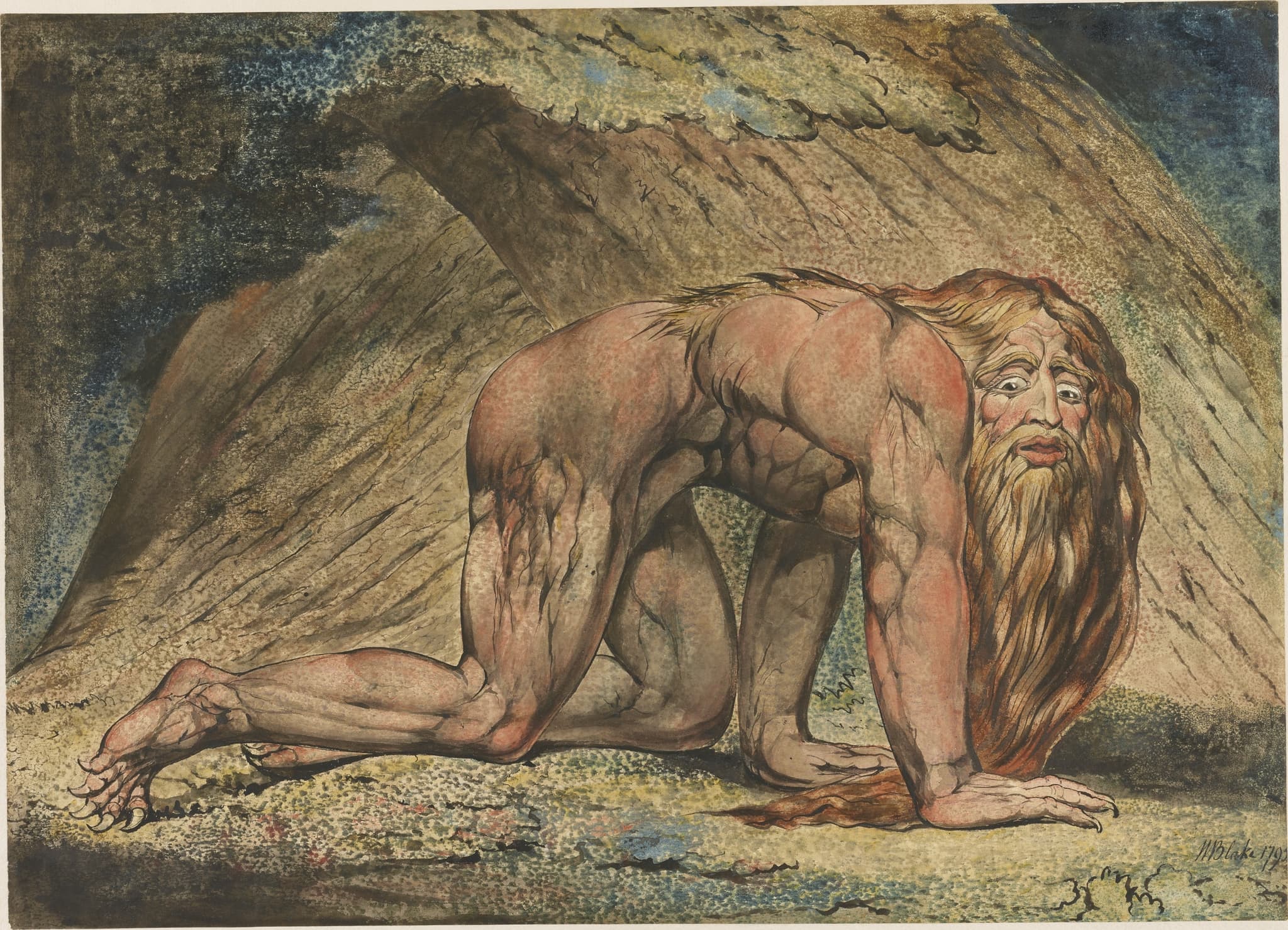
Nebuchadnezzar
William Blake • Colour monotype with ink and watercolour additions
View more by William Blake →Valuation Analysis
Valuation conclusion: Based on comparative market evidence for top‑tier Blake material, the rarity of prime Nebuchadnezzar impressions in public collections, and recent headline results for Blake illuminated books and important sheets, a hypothetical market range of US$1,000,000–$4,000,000 is appropriate for a museum‑quality Nebuchadnezzar brought to auction or private sale. Prime impressions of this composition are held by major institutions and therefore seldom appear on the market; where they do, institutional and high‑net‑worth competition would be expected to drive prices toward the upper end of the range [1].
The ceiling is informed by recent Blake comparables: a complete, hand‑coloured copy of Songs sold at Sotheby’s New York in June 2024 in the multi‑million dollar bracket and demonstrates active institutional demand that would also attend a headline single‑sheet lot [2]. Mid‑six to low‑seven figure results for exceptional Blake material set a realistic upper bound; aggregated market medians for single sheets and prints are lower, reflecting the bifurcated market between premier and secondary examples.
Key value drivers are: the exact impression/state (Butlin identification and any hand retouching), provenance (chain of ownership and exhibition/citation history), and the physical condition (paper integrity, trimming, backing, retouching). A confirmed prime impression with archival provenance and minimal intervention would command a premium; a later impression, workshop copy, or sheet with heavy restoration or provenance gaps would likely be marketed and sold in a substantially reduced bracket (commonly in the low six figures) and should be appraised as a different category.
Practical next steps to refine and realize value: produce high‑resolution recto/verso photos, obtain measurements, provide full provenance and exhibition/citation data, commission a paper conservator’s condition report, and consult Blake specialists at major houses (Sotheby’s/Christie’s Books & Manuscripts or Prints/Drawings departments). If authentic and sale‑ready, a pre‑sale approach and institutional outreach are advised because museums often compete or seek acquisition/loans for canonical Blake sheets; if compromised or of uncertain state, specialist dealers in historic prints are the more appropriate channel.
Caveat: This is a market valuation scenario for a sale‑ready, authenticated museum‑quality impression. Because the best Nebuchadnezzar impressions are institutionally held and public sale examples are rare, any final pricing must follow documentary verification and condition assessment. With those verifications, the US$1,000,000–$4,000,000 range reflects credible auction/private‑sale outcomes in today’s market [1][2].
Key Valuation Factors
Art Historical Significance
High ImpactNebuchadnezzar ranks among William Blake’s most recognisable visionary single‑sheet images and occupies prime cultural capital within his oeuvre. As a large colour monotype with Blake’s characteristic handling of biblical subject matter, the image is frequently cited in scholarship and featured in exhibitions, which reinforces institutional desire to hold such examples. This iconic status elevates market interest and tends to concentrate buyer attention from museums and specialist collectors; that competitive interest is a primary reason why genuine prime impressions command significant premiums relative to less notable or workshop examples.
Rarity & Impression State
High ImpactValue turns crucially on which impression or state the sheet represents. Only a very small number of Nebuchadnezzar impressions are recorded in major public collections, and monotypes often exist in only a handful of original impressions and states. A first/primary impression with Blake’s hand‑colouring or retouching is scarce and highly prized; later studio impressions or copies are far more common and materially less valuable. Precise Butlin/state identification, the presence of Blake’s hand, and whether the sheet is trimmed or complete all materially affect market positioning and the appropriate sales channel.
Provenance & Exhibition History
High ImpactA clear, documented provenance (early collectors such as Butts, nineteenth‑century sale records, notable private or museum ownership) and a history of exhibition/publication significantly increase buyer confidence and price. Provenance reduces attribution risk and attracts institutional bidders; exhibition loans and catalogue citations amplify desirability. Conversely, gaps in ownership history or unresolved attribution materially depress realizable value and may relegate a sheet to specialist dealer sales rather than high‑profile auction rooms.
Condition & Conservation
Medium ImpactPaper condition, presence of tears, repairs, backing, inpainting or heavy conservation interventions have a major effect on market value for works on paper. Clean, unfaded hand‑colouring, intact paper margins and minimal restoration preserve premium pricing; extensive or visible restoration reduces competitive bidding and can shift an item into a lower market segment. A formal condition report from a paper conservator is essential prior to valuation or marketing and will materially influence the final hammer/offer price.
Market Demand & Comparables
Medium ImpactRecent headline sales of Blake illuminated books and prime sheets demonstrate robust institutional demand and set market ceilings; however the market is bifurcated, with top examples achieving mid‑six to low‑seven figures and secondary examples trading in the low‑to‑mid hundreds of thousands. Timing (auction season, institutional interest, anniversaries) and competition among major collectors or museums commonly determine whether a lot reaches the upper bound. Carefully selected comparables (complete hand‑coloured copies, prime monotypes) inform the US$1M–$4M range proposed here.
Sale History
Nebuchadnezzar has never been sold at public auction.
William Blake's Market
William Blake’s market is specialist, scarce and institutionally driven. His output—predominantly works on paper: illuminated books, monotypes, watercolours and prints—appears infrequently at auction, and when prime examples come up they attract strong competition from museums and high‑end private collectors. Recent headline sales for complete, hand‑coloured illuminated books and select sheets have achieved mid‑six to low‑seven figure results, establishing robust ceilings for blue‑chip Blake material. Price dispersion is wide: condition, provenance, completeness and state identification are decisive. For major single sheets like Nebuchadnezzar, specialist auction channels or targeted private sales to institutions are standard practice.
Comparable Sales
Songs of Innocence and of Experience (complete hand‑coloured copy — lot titled “Poems with very wild and interesting pictures”)
William Blake
Top‑tier, complete hand‑coloured copy of Blake’s illuminated Songs — a multi‑million headline Blake sale that sets the market ceiling for museum‑quality Blake material and therefore the upper bound for a prime Nebuchadnezzar if it ever appeared.
$4.3M
2024, Sotheby's New York
~$4.4M adjusted
Songs of Experience (first printing/copy from the Maurice Sendak collection)
William Blake
Recent high‑value sale of a single illuminated book with strong provenance — demonstrates active institutional/collector demand in the mid‑six‑figures to low‑millions for complete, well‑provenanced Blake works and supports a multi‑figure range for important single sheets.
$1.9M
2025, Christie's New York
Representative median sale of William Blake works on paper (MutualArt 12‑month aggregate)
William Blake
Aggregate/median for Blake single sheets and prints in the recent market (low‑to‑mid hundreds of thousands). Useful as a floor/comparable for later impressions, less important states, or examples with compromised condition/provenance, which is a likely outcome if a Nebuchadnezzar impression were not a prime museum state.
$300K
2024, MutualArt (aggregated auction results — 12‑month window)
~$309K adjusted
Current Market Trends
The rare‑books and works‑on‑paper markets have been robust, with recent headline Blake sales lifting visibility and demand. Institutional interest, forthcoming anniversaries, and a limited supply of museum‑quality Blake material sustain a seller’s market for prime examples; however the market remains selective and condition‑sensitive. Timing, specialist auction placement, and provenance documentation materially affect realized prices.
Sources
- Museum of Fine Arts, Boston — Nebuchadnezzar (William Blake)
- Sotheby's — 'Three Poets' sale (William Blake lot), June 26, 2024
- Christie's — Maurice Sendak sale: Songs of Experience (William Blake), June 10, 2025
- MutualArt — William Blake auction results (aggregated market data)
- Google Arts & Culture / Minneapolis Institute of Art — Nebuchadnezzar entry