How Much Is Newton (Isaac Newton) Worth?
Last updated: May 20, 2026
Quick Facts
- Methodology
- comparable analysis
For an original William Blake monotype/hand‑coloured impression of Newton in good condition with secure provenance and catalogue‑raisonné acceptance, my working market estimate is USD $75,000–$350,000. Exceptional provenance, confirmation of a unique Blake hand‑finished state, or museum‑level condition could push the price into the high six figures; later impressions, reproductions, or heavy restoration would reduce value substantially.
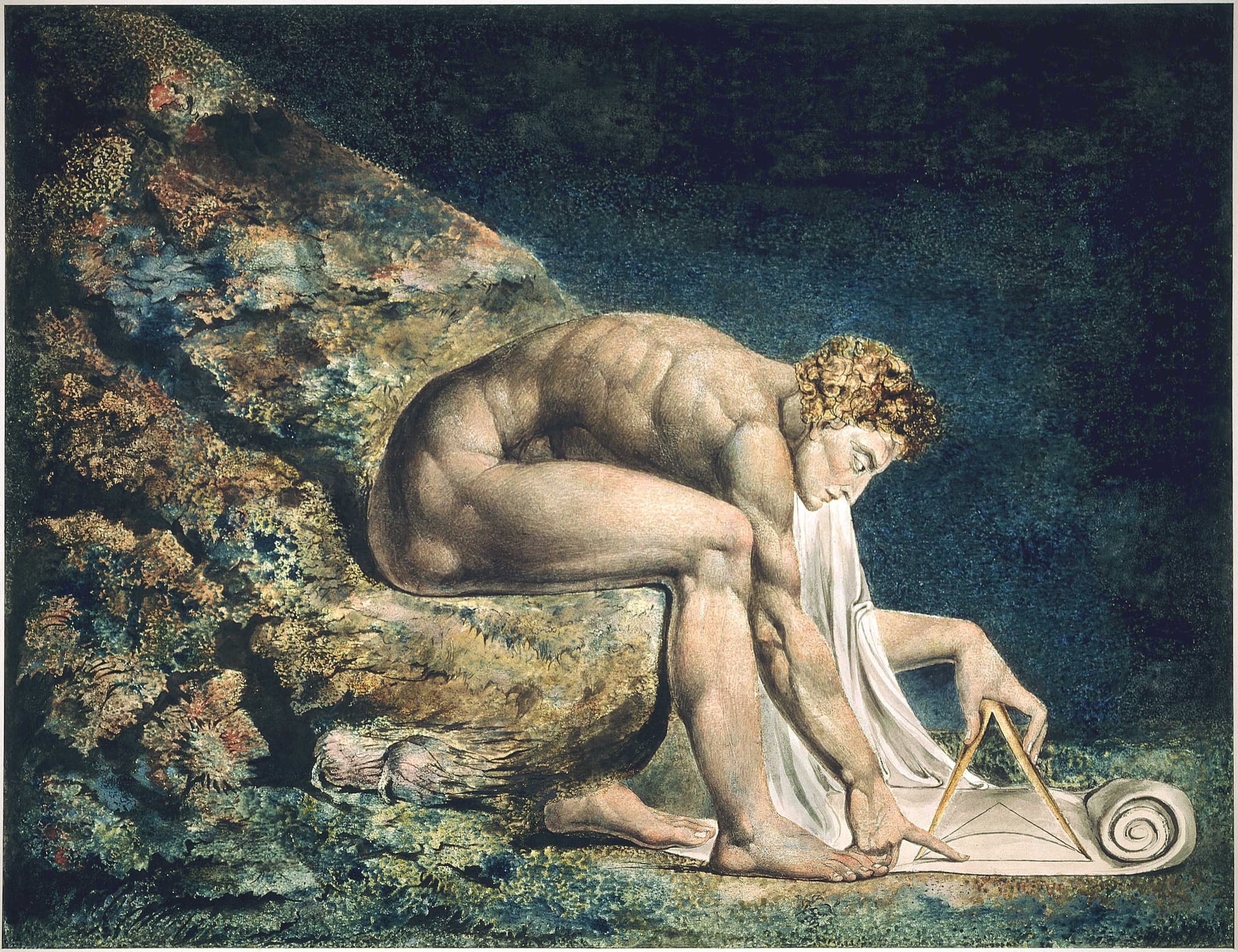
Newton (Isaac Newton)
William Blake • Monotype/colour print with hand finishing (often described as tempera/print)
View more by William Blake →Valuation Analysis
Valuation conclusion: I value a bona fide William Blake monotype/hand‑coloured impression of Newton (Isaac Newton) at a working market range of USD $75,000–$350,000. This band reflects the current market for important single‑sheet Blake plates while allowing for material upside in the rarest, best‑provenanced examples and steep downside for later restrikes or damaged sheets.
Reasoning: Newton is one of Blake’s most iconic allegorical images and is well documented in Blake scholarship; canonical impressions are held in institutional collections, which reduces market turnover and the frequency of modern auction comparables [1]. Because the image exists as monotypes/hand‑finished prints rather than single, unique watercolours in most known examples, typical trade values sit below Blake’s very top watercolours and complete illuminated books, which achieve mid‑ to high‑six and seven‑figure prices. Recent auction comparables for single Blake plates and prints (for example, important colour impressions such as The Tyger) have realized in the low‑to‑mid six‑figures, providing a practical upper bound for a museum‑quality Newton impression absent extraordinary provenance [2].
Comparables and market context: Market evidence shows a bifurcated Blake market: illuminated books and exceptionally rare monotypes can pass into the seven‑figure range, while single plates and smaller drawings typically trade from low five to mid six figures depending on state, rarity and provenance. The Tyger (important single plate) at a Christie’s sale, and high‑value monotype sales recorded in specialist press, anchor my comparable set and justify the $75k–$350k working band for Newton specifically [2][3].
Key conditional factors: The estimate assumes an original Blake impression, stable condition, and credible provenance/citation in Keynes/Butlin/Bentley or the Blake Archive. If the sheet is corroborated as an early, unique Blake monotype with distinguished provenance and exhibition history, expect offers into the high six figures. Conversely, a later impression, reproduction, or heavily restored sheet will typically trade for a small fraction of the band (low five figures or less).
Recommendation: To firm the estimate to a transactionable number, obtain high‑resolution recto/verso images, a conservator’s condition report, and any provenance or catalogue‑raisonné references. With those materials a market specialist or auction house can provide a refined pre‑sale estimate and sale strategy.
Key Valuation Factors
Art Historical Significance
High ImpactNewton is among Blake’s most recognisable allegorical plates, articulating his critique of Enlightenment rationalism and appearing frequently in scholarship and exhibition narratives. Its cultural prominence increases demand among specialist collectors and institutions seeking canonical Blake imagery. Because the composition is emblematic of Blake’s late‑eighteenth/early‑nineteenth century engagement with scientific iconography, it carries outsized curatorial interest relative to many single plates. However, significance alone does not guarantee top‑tier pricing: the medium (monotype/hand‑finished print rather than unique watercolour) and the existence of multiple historic impressions temper the ceiling. In practice, historical importance supports liquidity and buyer interest but must be coupled with rarity, condition and provenance to achieve the highest market prices.
Rarity, Edition and State
High ImpactValue for Newton depends critically on whether the sheet is an original Blake monotype/hand‑finished impression, its state (early vs later reworking), and how many impressions are known. Scholarship indicates a small number of historically produced impressions and at least one canonical institutional impression, which means genuine early states are scarce. A truly unique, artist‑reworked sheet executed by Blake himself (and recorded in Keynes/Butlin/Bentley or the Blake Archive) would command a premium. Conversely, later restrikes, nineteenth‑century reproductions, or workshop copies are significantly less valuable. Clear identification of state and confirmation of Blake’s hand are therefore decisive for placing a specific Newton sheet within the $75k–$350k band or outside it.
Provenance and Exhibition History
High ImpactProvenance and exhibition/publication history materially influence price and market confidence. Sheets with continuous, documented ownership in distinguished private collections or prior exhibition in major institutional shows (and citations in catalogues or the Blake Archive) are more liquid and typically sell for premiums. Presence in a museum collection or long‑term inclusion in a scholarly catalogue de‑risks attribution and attracts institutional and well‑funded private bidders. By contrast, works with unclear ownership, gaps in provenance, or no publication/exhibition record face heavier buyer discounting and lower estimates, even when the technical attribution appears sound.
Condition and Conservation
High ImpactCondition is a dominant price driver for works on paper. For Newton, key considerations include paper tone and stability, foxing or staining, tears and margin loss, prior lined or backed repairs, inpainting or retouching of hand‑colouring, and the integrity of any watermark. Original, fresh hand‑colouring with intact margins and minimal restoration supports the estimate range; conversely, heavy restoration, significant losses, or evidence of intrusive alterations can reduce market value dramatically. A professional conservation report is essential to quantify any required treatment and to support value at the time of sale.
Market Comparables and Collector Demand
Medium ImpactComparables for single Blake plates and monotypes anchor the market range: important single‑sheet prints have fetched low‑to‑mid six‑figures in recent sales, while exceptional monotypes and illuminated books have reached seven figures. Recent auction records for significant Blake plates and illuminated books indicate both strong institutional demand and a bifurcated market. Collector interest is concentrated among institutions, specialist dealers and high‑net‑worth collectors of British Romantic material, especially when exhibition programming raises visibility. These demand dynamics support the $75k–$350k working band while acknowledging upside for rare, well‑provenanced examples.
Sale History
Newton (Isaac Newton) has never been sold at public auction.
William Blake's Market
William Blake occupies a strong, specialist position in the market: highly collectible, widely studied, and sought after by museums and private collectors. The market is bifurcated—unique watercolours and rare, complete illuminated books can command mid‑six to multi‑million dollar prices, while single plates, drawings and later impressions usually trade at lower absolute levels (low five to mid six figures). Blake’s scarcity in the primary market for high‑quality sheets and renewed institutional interest (exhibitions, catalogue projects) sustain demand and price resilience, but valuations depend heavily on medium, state, provenance and condition.
Comparable Sales
The Tyger (first‑issue colour impression)
William Blake
Iconic single‑sheet Blake print; as a single plate/print on paper it is the closest market category to Newton and demonstrates the upper range for important single Blake plates.
$305K
2025, Christie's London
Songs of Experience (1794) — illuminated book (complete copy)
William Blake
Complete illuminated book by Blake; not the same medium as Newton (a single plate) but establishes institutional/collector demand and the high‑end pricing that can apply to top‑provenance Blake material.
$1.9M
2025, Christie's New York
First Book of Urizen (complete illuminated copy)
William Blake
Extremely rare illuminated book sold at auction—provides a historical ceiling for Blake collecting and shows how complete/rare books outstrip single plates like Newton in value.
$2.5M
1999, Sotheby's New York (Whitney sale)
~$4.6M adjusted
‘Poems with very wild and interesting pictures’ (Blake material)
William Blake
High realized for exceptional Blake material in 2024; while not a single Newton‑style plate, this sale helps define the top market for outstanding Blake lots and institutional interest.
$4.3M
2024, Sotheby's New York
~$4.4M adjusted
The Bed of Death (drawing / small work on paper)
William Blake
Small drawing sold in 2025—illustrates the low end of the market for single sheets/plates and how size/condition can depress prices relative to Newton.
$30K
2025, Christie's (New York sale)
Current Market Trends
The market for works on paper and British Romantic material has strengthened with renewed auction activity and major institutional programming. Recent high‑profile sales and touring exhibitions have increased visibility for Blake, supporting demand for museum‑quality sheets. Short‑term interest is likely to be buoyed by centennial/bicentenary programming and selective institutional loans, though buyers remain discriminating about state, provenance and condition.