How Much Is Pity Worth?
Last updated: May 20, 2026
Quick Facts
- Methodology
- comparable analysis
For an authenticated, Blake‑finished large colour print/monotype of Pity in good condition with solid provenance, I estimate an open‑market value of $150,000–$1,500,000. This range is derived by extrapolating from recent high‑end Blake single‑sheet and illuminated‑book sales and adjusted downward because canonical impressions of Pity are held by major museums, so no direct modern open‑market sale exists.
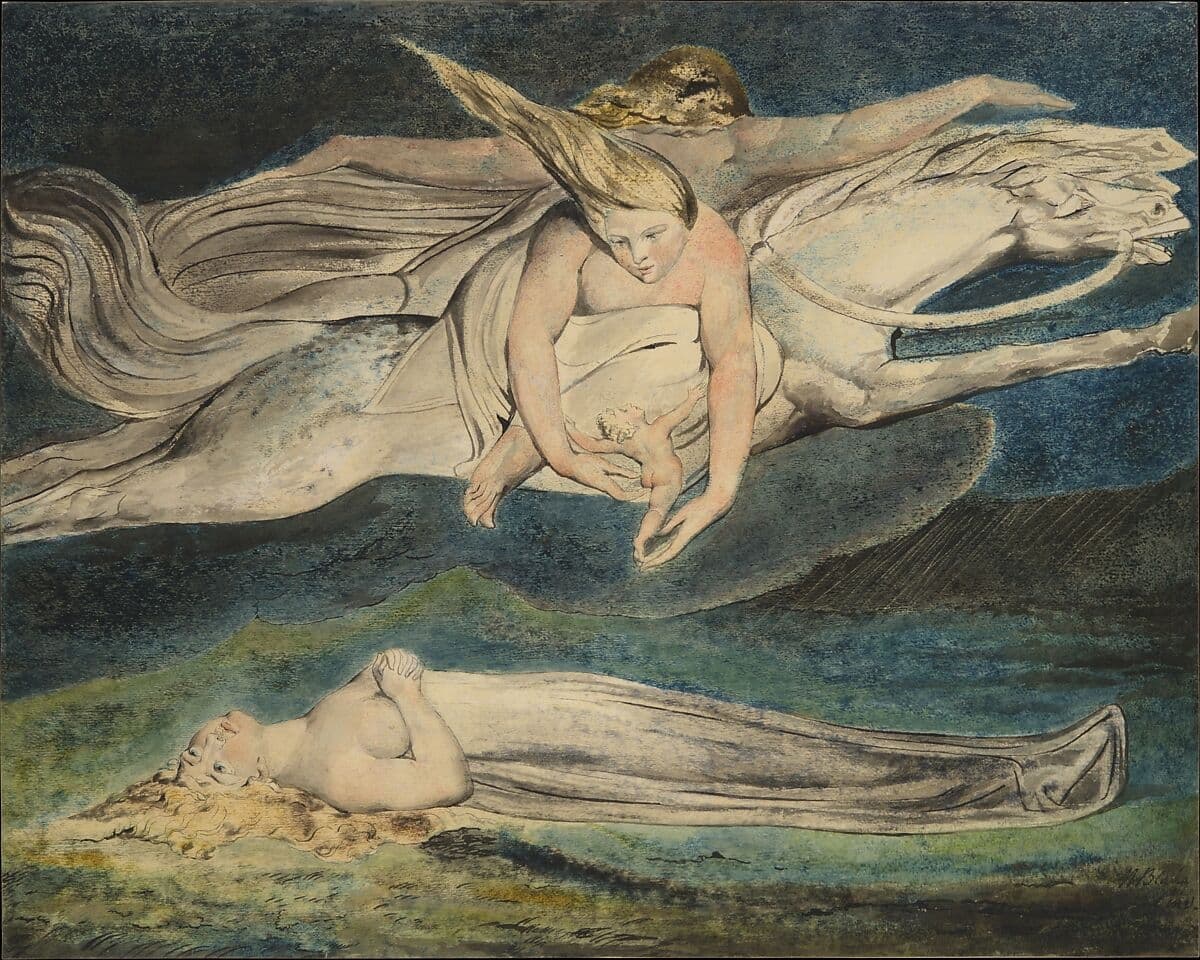
Pity
William Blake • Large colour print/monotype finished in ink and watercolour
View more by William Blake →Valuation Analysis
Final estimate: For an authenticated, finished William Blake large colour print/monotype entitled "Pity" in original state with clear provenance and no major conservation issues, I estimate an open‑market value between $150,000 and $1,500,000. The primary reason for a wide but conservative band is that the canonical impressions of "Pity" are museum‑held (Tate, Metropolitan Museum of Art, Yale, British Museum), and there is no confirmed modern public‑auction sale of an original Blake "Pity" impression to use as a direct market anchor [1].
Valuation is therefore by comparative extrapolation: rare Blake illuminated books and important single‑sheet Blake works have recently realized mid‑six to low‑seven figure prices, demonstrating institutional and collector appetite for museum‑quality material [2][3][4]. These high‑end results set a ceiling for exceptional, fully authenticated material; the mid‑range of my estimate reflects strong single‑sheet comparables, while the low end reflects the probable price for later impressions, ambiguous attribution, or sheets with significant condition problems.
Key value drivers are clear: (a) technical attribution — whether the impression is an original Blake pull/monotype finished by Blake himself or a later impression; (b) state and handling — first pulls and artist‑finished states command premiums; (c) condition — surface abrasion, staining, backing, losses and retouching materially reduce market value; and (d) provenance/exhibition/publication history — institutional or notable private provenance and catalogue raisonné inclusion substantially increase demand and price. A first‑state, Blake‑finished sheet with continuous provenance and exhibition/publication history would sit at the top end; a later impression, studio reproduction, or heavily restored sheet would fall at or below the low end [1].
Market behaviour is instructive: reproductions or later prints of "Pity" trade for nominal sums in small sales (an example reproduction sold for ~£50), illustrating the sharp gulf between authorial Blake impressions and later after‑works [5]. Conversely, institutions historically acquire canonical impressions, making market appearances rare — a sheet entering the market would likely be vetted by major auction houses and attract museum interest, but its final price will turn on the specific technical and provenance evidence presented to buyers and curators.
Recommended next steps to firm this estimate: provide high‑resolution recto/verso images and exact dimensions; obtain a conservator’s condition report; document any labels, collector stamps or exhibition history; check Butlin catalogue/state references and the William Blake Archive for a matrix/state match; and seek an opinion from a recognized Blake scholar or a specialist department at Sotheby’s/Christie’s/Bonhams. With that documentation I can tighten the estimate further and produce a sale‑strategy recommendation. This valuation uses comparable analysis rather than a single recent sale of "Pity" because no modern market sale of an original impression is recorded [1][2][3][4][5].
Key Valuation Factors
Art Historical Significance
High Impact"Pity" belongs to Blake’s larger sequence of finished large‑colour prints/monotypes and is closely linked to his late‑18th/early‑19th‑century prophetic and biblical imagery. Because these works exemplify Blake’s integrated practice of relief printing combined with hand finishing, their authorship is art‑historically important: confirmed Blake finishes (brushwork, palette, handling) materially elevate scholarly interest and market value. Inclusion in scholarly catalogues (Butlin references) and exhibition catalogues increases desirability. In short, if the sheet is authorial and in a recognised state it carries high art‑historical weight, which in turn supports strong institutional demand and premium pricing.
Rarity / Edition
High ImpactOnly a small number of finished Blake large‑colour prints survive; canonical impressions of "Pity" are in institutional collections, making market availability exceptionally limited. The scarcity of Blake‑finished monotypes or unique large‑colour sheets is a primary price driver: unique or near‑unique sheets can command premiums well above later impressions or printed reproductions. Because canonical impressions are museum‑held, any authenticated sheet entering the market would be rare and attract attention from major collectors and institutions, but the lack of market comparables for "Pity" specifically increases valuation uncertainty and thus widens the estimate band.
Condition & Conservation
High ImpactCondition is decisive for works on paper. Key issues include paper integrity (tears, losses), staining/discolouration, fading of watercolour, previous restorations or overpaint, backing and mounting history, and structural stability. Even minor retouching or inpainting can reduce collector confidence and materially lower bids. A formal conservator’s report that documents original surface texture, paint stratigraphy and any restoration is essential; excellent condition with minimal intervention is required to justify prices toward the high end of the estimate band.
Provenance & Exhibition / Publication History
High ImpactClear, continuous provenance — particularly prior ownership by respected collectors or inclusion in museum holdings or major exhibitions — substantially increases market value. Publication in the William Blake Archive, catalogue raisonnés, or exhibition catalogues supports institutional purchasing and bidding. By contrast, absent or uncertain provenance, or provenance tied to undocumented private sales, weakens buyer confidence and reduces the work’s marketability. Because the canonical "Pity" impressions have museum provenance, any market appearance will be judged against that institutional standard.
Market Demand & Comparables
Medium ImpactRecent sales for Blake illuminated books and single‑sheet works show solid institutional demand: high‑quality illuminated copies have realized multi‑million dollars and important single sheets have achieved mid‑six to low‑seven‑figure results. These sales demonstrate that the market will pay premiums for authenticated, well‑provenanced Blake material, but they also show a wide dispersion in pricing depending on rarity, state and provenance. Given the absence of a direct modern sale of an original "Pity" impression, current demand patterns inform a cautious extrapolation to the $150k–$1.5M band.
Sale History
Pity has never been sold at public auction.
William Blake's Market
William Blake’s market is defined by a small number of high‑value transactions for the rarest illuminated books and standout single sheets, plus a larger secondary tier for later impressions and reproductions. Institutions and specialist collectors dominate bidding for museum‑quality items. Provenance, catalogue‑level scholarship, and technical confirmation of Blake’s hand are decisive. Top sales for illuminated books have reached multi‑million dollars in recent years, while important single‑sheet drawings and watercolours have realized mid‑six to low‑seven figures—demonstrating durable institutional demand but also a polarized market where documentation and condition determine premium outcomes.
Comparable Sales
Songs of Innocence and of Experience (hand-coloured copy)
William Blake
Same artist; top-tier, hand-coloured illuminated Blake book showing institutional/private willingness to pay multimillion dollars for rare, fully-authentic Blake material. Useful to set the ceiling of market demand for exceptional Blake rarities.
$4.3M
2024, Sotheby's New York
~$4.4M adjusted
Songs of Experience (first printing, Maurice Sendak provenance)
William Blake
Same artist; rare, high‑provenance Blake illuminated book sold at seven figures in 2025. Indicates strong collector/institutional interest for significant Blake sheets and books—relevant as an upper/comparative benchmark.
$1.9M
2025, Christie's New York
The Grave: The Reunion of the Soul and the Body
William Blake
Same artist and a single-sheet work on paper (drawing/watercolour). Closest market category to a single Blake sheet/colour print; demonstrates that individual Blake sheets can realize mid-six-figures to low-seven-figures depending on quality and provenance.
$953K
2026, Christie's New York
~$925K adjusted
Pity (coloured print, reproduction after Blake)
After William Blake (reproduction)
Directly labelled 'Pity' but explicitly a reproduction/after-work sold cheaply; useful as a cautionary comparable showing the sharp price gulf between original Blake impressions and later reproductions/prints.
$62.5
2025, Burstow & Hewett (Easy Live Auction)
Current Market Trends
Current market conditions favour high‑quality works on paper and prints: demand has been supported by recent exhibitions, renewed scholarship and approaching centenary programming. The market is polarised—top examples outperform while mid‑tier works see variable results—so authorial Blake sheets with strong provenance and condition should attract institutional interest. Auction houses now vet works more rigorously, and institutional buyers are often active participants for rare Blake material.
Sources
- Wikipedia — "Pity (William Blake)" (summary of holdings and Butlin references)
- Fine Books Magazine report on Sotheby’s Blake sale (June 2024)
- Christie’s press — Maurice Sendak sale (Songs of Experience result, June 10, 2025)
- HENI — report on William Blake drawing sale (The Grave, Feb 5, 2026)
- Easy Live Auction / Burstow & Hewett — reproduction sale of a coloured print titled 'Pity' (Feb 5, 2025)