Light-built worlds vs color-built worlds
Both artists make color do structural work. Monet turns atmosphere into the armature that unifies a scene; Matisse lets chromatic fields reorganize reality from within. Seen together, they show two precise ways modern painting teaches us to look.
Comparison frame: When does color make a world (Matisse), and when does the world’s light make the picture (Monet)?
Quick Comparison
| Topic | Claude Monet | Henri Matisse |
|---|---|---|
| What organizes the picture? | Color planes construct space and hierarchy (“construction by colored surfaces”). | An atmospheric enveloppe unifies motif, air, and light. |
| How truth emerges | A decisive chromatic rewrite within a single canvas (e.g., flooding an interior with red). | Serial comparison: many canvases from fixed vantages across hours and weather. |
| Space handling | Decorative flatness; reserves act as drawn lines; objects seem to hover. | Depth collapses via reflection; firm silhouettes vibrate against flicker. |
| Time strategy | Time compressed or suspended inside the picture (handless clock, atemporal studio). | Time distributed across a series; each canvas encodes a distinct state. |
| Lab for seeing | Studio interiors and windows staged to test color’s power. | Authored nature: Giverny’s pond and bridge engineered to test reflection. |
| Role of architecture | Internalized and subordinated to color-built order. | Used as silhouette/armature for atmosphere (Rouen, London, Venice). |
| Color’s function | Expressive and constructive; remakes form and mood. | Optical; records ambient conditions tinting all things. |
| Viewer’s task | Read a color hierarchy that constructs a world. | Read conditions—hour, haze, and light—across variations. |
Shared Ground
Color is not decoration for either artist; it is structure. Matisse states it openly—“the chief function of color should be to serve expression”—and builds rooms from chromatic planes that set hierarchy and mood. Monet arrives at structure optically: color registers the atmosphere binding eye and motif, what Impressionists called the enveloppe. In both, color organizes perception rather than merely naming the local hue of objects.
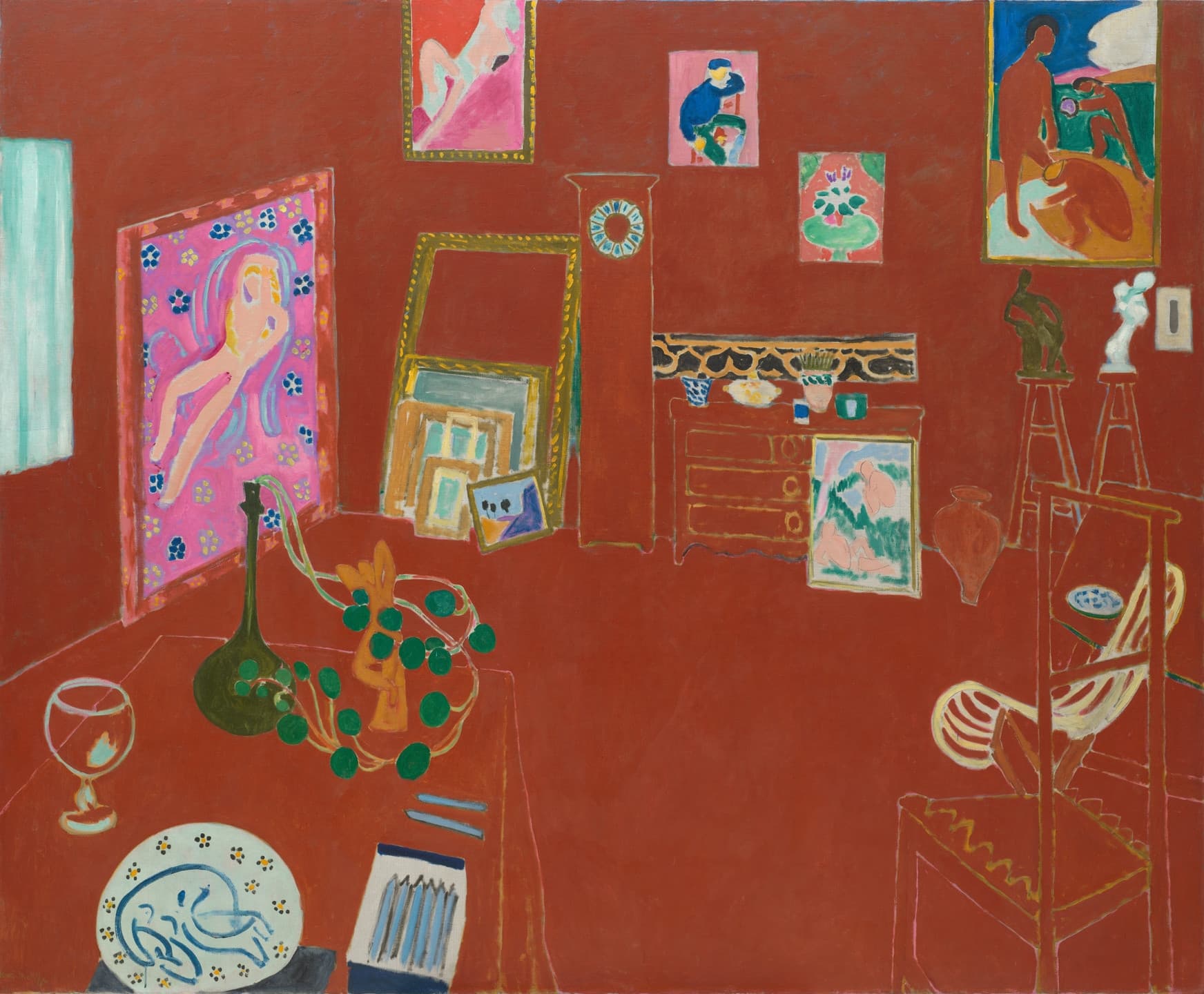
Each also turns a motif into a laboratory. Monet designs Giverny’s water garden and footbridge specifically to observe reflection and the ambiguity of looking down into water and up at sky. Matisse curates his studio as a test site where a dominant field—Venetian red in The Red Studio—can dissolve furniture into reserves while allowing artworks to stand as independent color-islands. This shared commitment to engineered settings clarifies that their pictures are controlled experiments in seeing.
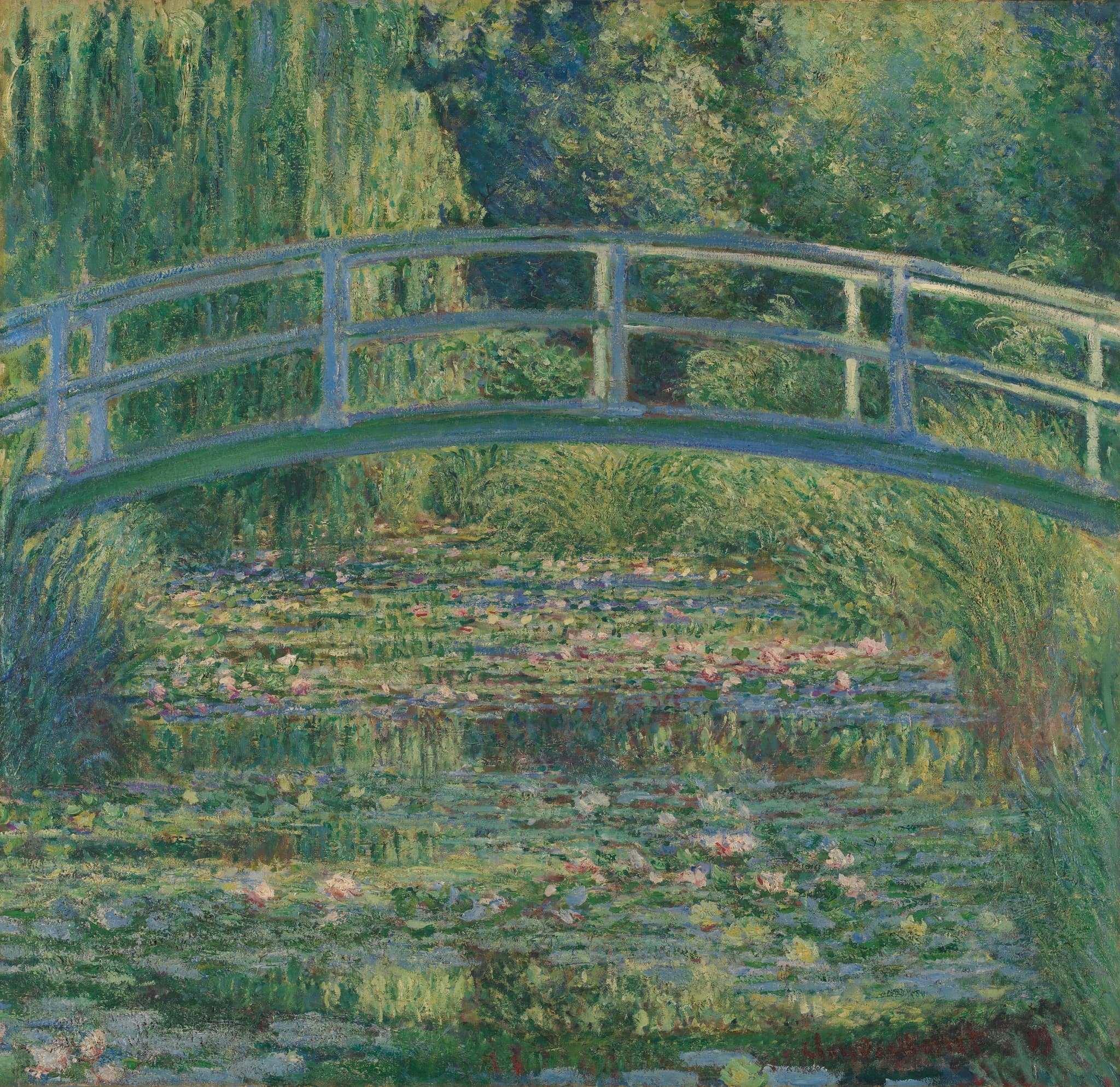
Flatness is a positive choice for both. Monet’s lilies and mirrored willows compress depth into a tremulous surface; Matisse’s broad, near-monochrome fields collapse walls, floors, and furnishings into one continuous plane. Finally, both make time legible. Monet serializes a view—the haystacks, London bridges, Venetian façades—so differences of hour and weather write the image. Matisse often internalizes time, suspending it within a single canvas: a handless clock, a window that glows without casting ordinary shadow. Across these parallels, each artist asks the same question in a different key: how can painting show the experience of seeing, not just the things seen?
Decisive Difference
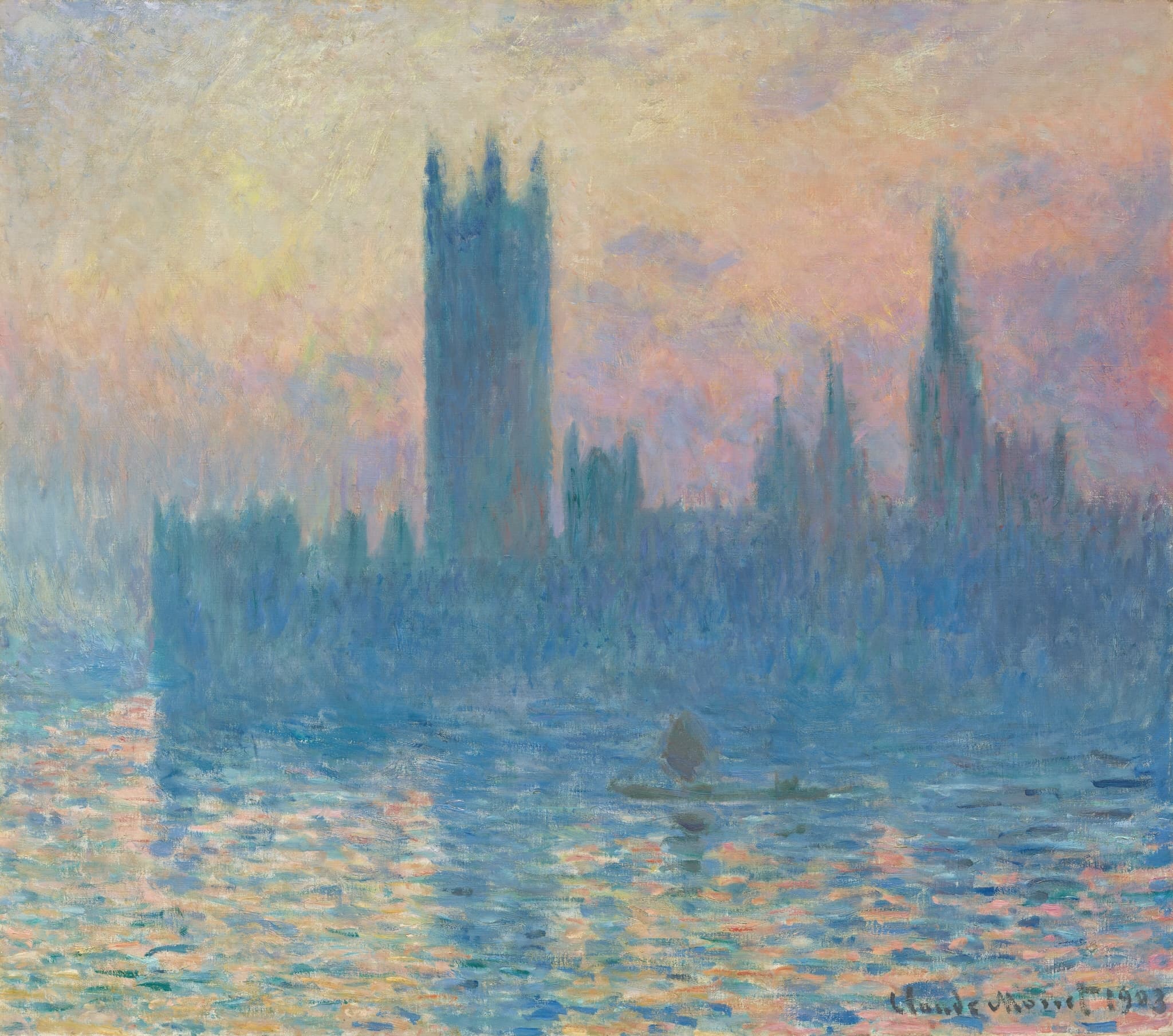
Their decisive split lies in authorship. Monet lets the world’s light author the picture; Matisse lets the painting’s color author the world. Monet fixes a motif and returns to it so that changing atmosphere—fog, sun angle, particulate haze—writes the surface. His bridge or palace is a steady armature; what matters is the envelope that fuses air, water, and stone into one state. In The Water Lily Pond or Houses of Parliament, form holds just enough to let the conditions speak.
Matisse inverts the contract. He reorganizes the motif from the inside so that color itself builds form, depth, and mood. Technical study of The Red Studio shows that the Venetian red was laid late, covering a previously resolved polychrome interior; furniture survives as unpainted reserves, and a clock without hands halts ordinary time. That chromatic decree does not record an external condition; it constructs a new condition and asks the room to obey it. Method follows principle: Monet’s truth accumulates across differences (multiple canvases of one view, often begun on site and calibrated later), while Matisse’s truth often arrives as a single, decisive rewrite within one canvas. Or, put briefly: Monet shows how appearances change; Matisse shows how color changes appearances.
Paired Works
Color builds a room; light builds a pond
Focus question: How does each artist flatten space so that perception—rather than objects—becomes the subject?
The Red Studio vs The Water Lily Pond
Fashion as optics
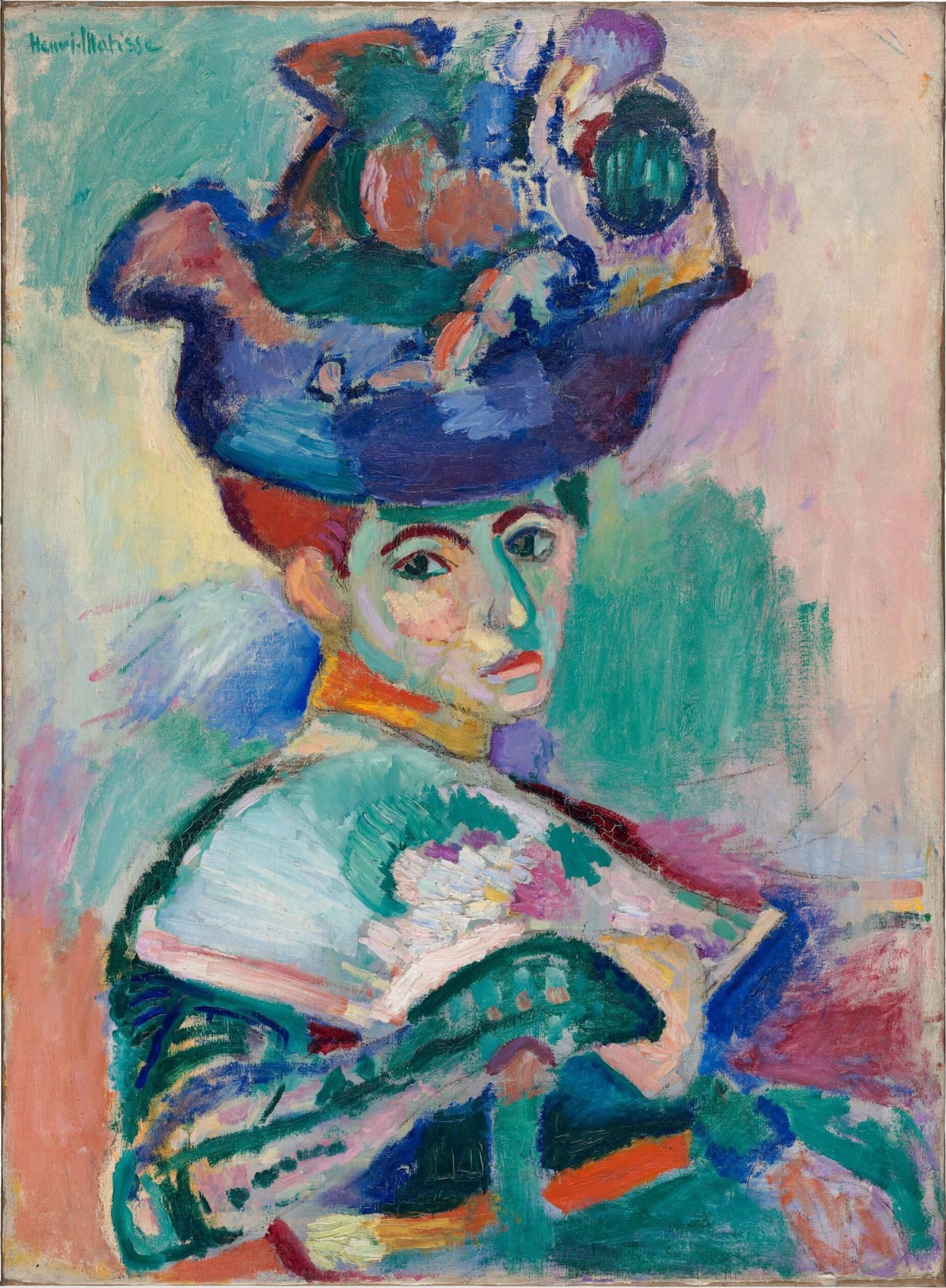
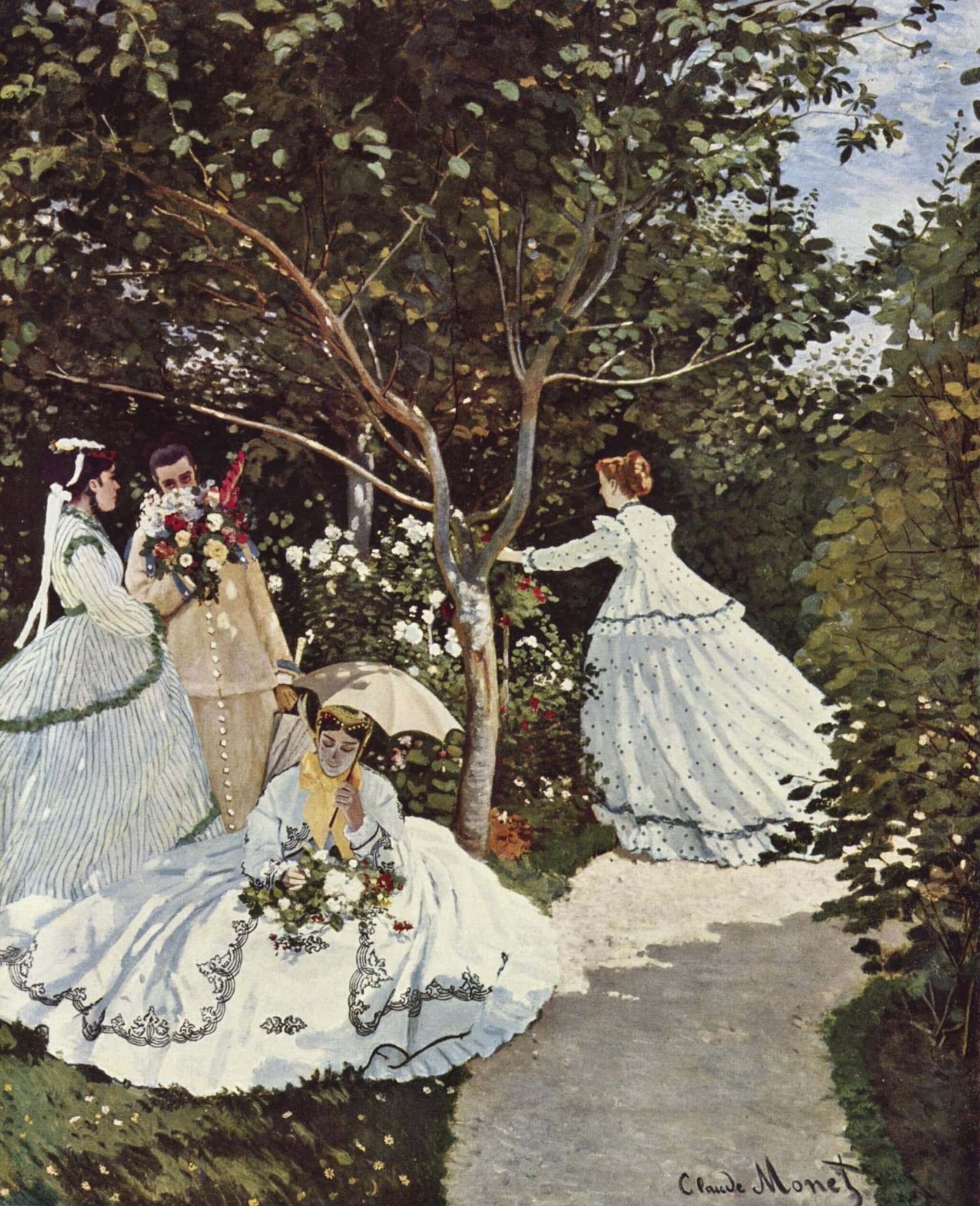
Focus question: Are the dresses carrying identity (Matisse) or carrying light (Monet)?
Woman with a Hat vs Women in the Garden
Time outside, time inside
Focus question: How does each painter let time build the picture?
The Red Studio vs Houses of Parliament
Why This Comparison Matters
Setting Monet against Matisse clarifies two powerful models for modern seeing. Monet’s pictures ask you to read conditions—hour, haze, reflection—so that a bridge, façade, or lily pond becomes a register of time and air. Matisse asks you to accept a world authored by color choices, where a dominant field can suspend time, reorder space, and set meaning.
These approaches still shape how images work today. Design and photography oscillate between observing the given light and constructing a chromatic world from the inside. Once you feel the difference—light-built versus color-built—you start to notice it everywhere: in cinema grading, in interface palettes, even in how a room’s paint changes what you perceive. The comparison does not crown a winner; it gives you instruments. Monet teaches patience with the world’s variability. Matisse teaches responsibility for the choices that make a world. Together they enlarge what “looking” can mean.
Related Links
Sources
- Henri Matisse, Notes of a Painter (1908)
- MoMA: The Red Studio resources and essays
- Scientific imaging of The Red Studio (2022)
- National Gallery, London: The Water-Lily Pond
- National Gallery of Art (USA): Impressionist enveloppe overview
- Getty Publications: Monet’s serial method and exhibition strategies
- Musée d’Orsay: Women in the Garden (process and context)
- Smarthistory: The Red Studio (reserves and structure)
- PNAS (2023): Atmospheric pollution and Impressionist skies
- The Met: Houses of Parliament (Effect of Fog)