Engineered Harmony vs Atmospheric Truth
Both artists turned painting into an optical experiment. Monet makes the envelope of light and air—the hour, haze, and reflection—the agent that builds form. Signac treats perception as constructible, using division of pure hues and measured lines to engineer harmony. Set side by side, they show two disciplined routes to modern vision.
Comparison frame: How do Signac’s “programmed” color harmonies and Monet’s time-bound atmospheres each remake what painting asks our eyes to do?
Quick Comparison
| Topic | Claude Monet | Paul Signac |
|---|---|---|
| Premise of vision | Perception can be designed: divide pure hues, pair complements, and direct line to program affect. | Perception is contingent: light, weather, and hour assemble form in an atmospheric envelope. |
| Working method | Divisionist syntax; planned color chords; later, mosaic-like tiles over stable scaffolds. | Serial canvases in rotation; on-site sessions finished from memory to match conditions. |
| Brushmark and structure | Discrete dots/tiles; clear silhouettes; masts and quays grid intervals. | Vibrating strokes; softened edges; bridges and facades act as armatures for haze. |
| Role of water | Flat plane to measure complements; buoys and hulls anchor chroma. | A second architecture of reflections that rivals solids. |
| Color logic | Chevreul/Rood formalized; avoids palette-mixed grays; optical mixture for luminosity. | High-key mixtures tuned by atmosphere; narrowed value contrast to dematerialize edges. |
| Serial goal | Recalibrate a stable harmony across ports and coasts. | Compare states across hours/seasons; truth emerges across the set. |
| Viewer’s task | Assemble an engineered chord and feel rhythmic order. | Sense time passing and read form through shifting light. |
Shared Ground
Monet and Signac share a conviction that painting is a test of seeing rather than a transcript of things. Both work from nineteenth-century color science—Chevreul’s law of simultaneous contrast and Rood’s chromatics—to build pictures out of juxtaposed, high-chroma notes rather than blended mud. Their broken touch makes the viewer finish some of the mixing with the eye. The result is optical rather than literary meaning: color intervals and edge conditions carry the argument.
Seriality binds them. Each fixes motifs and lets change speak—Monet across hours and seasons (Haystacks, Rouen, London, Venice; the water garden), Signac across ports and coastlines (Saint-Tropez and the Mediterranean). In both cases, truth is comparative: a single canvas points beyond itself to a set of controlled variations. Modernity is not incidental. Monet turns steam, smog, and reflection into atmospheric structure (Gare Saint-Lazare; Houses of Parliament), while Signac makes the modern harbor—its masts, quays, and hulls—a grid for color order. Architecture functions as a visual armature: Monet’s bridges and facades scaffold haze; Signac’s silhouettes and rigging measure chromatic intervals.
Finally, each privileges clarity of optical effect. Palettes run bright; contours soften or snap as needed to serve the experiment. Whether Westminster dissolving at sunset or a Saint-Tropez quay pulsing with complements, both artists use contemporary life to stage the same problem: how a painting can make appearance itself the subject.
Decisive Difference
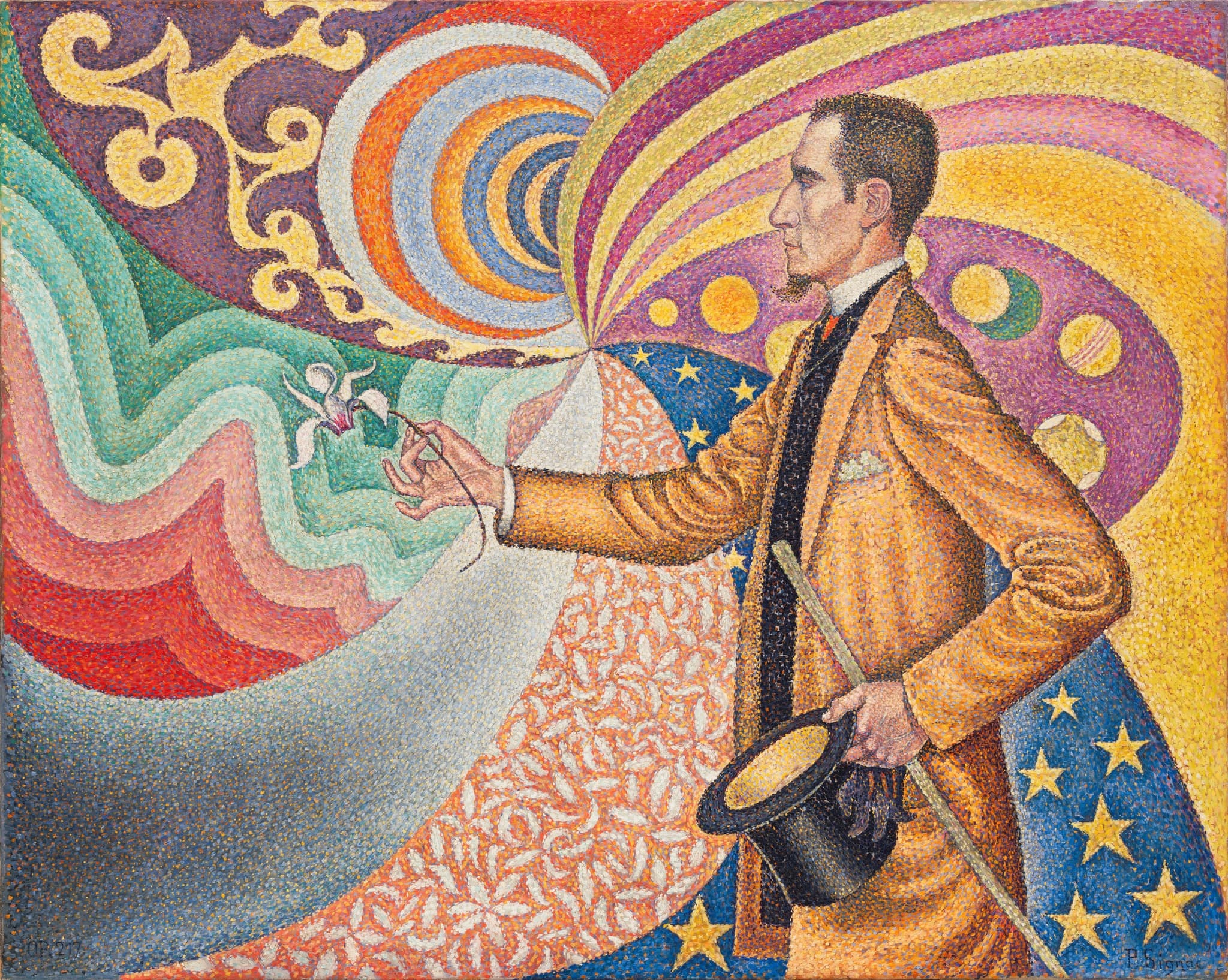
Signac treats vision as a constructed harmony. Building on Divisionism, he places distinct strokes of pure color so the eye performs the mix, trusting complementary pairs to intensify one another. The system is programmatic—articulated in his writings and visualized in practice. Lines and arabesques carry expressive direction (informed by Charles Henry’s psychophysics); dots evolve into larger, mosaic-like tiles that lock into deliberate chords. Portrait of Félix Fénéon is the manifesto image: intellect pictured as a conductor of chroma amid rhythmic, measurable patterns. In the ports of Saint-Tropez, masts, quays, and buoys stabilize space so color can be methodically calibrated. The promise is reliability: follow the method and luminosity, order, and affect will result.
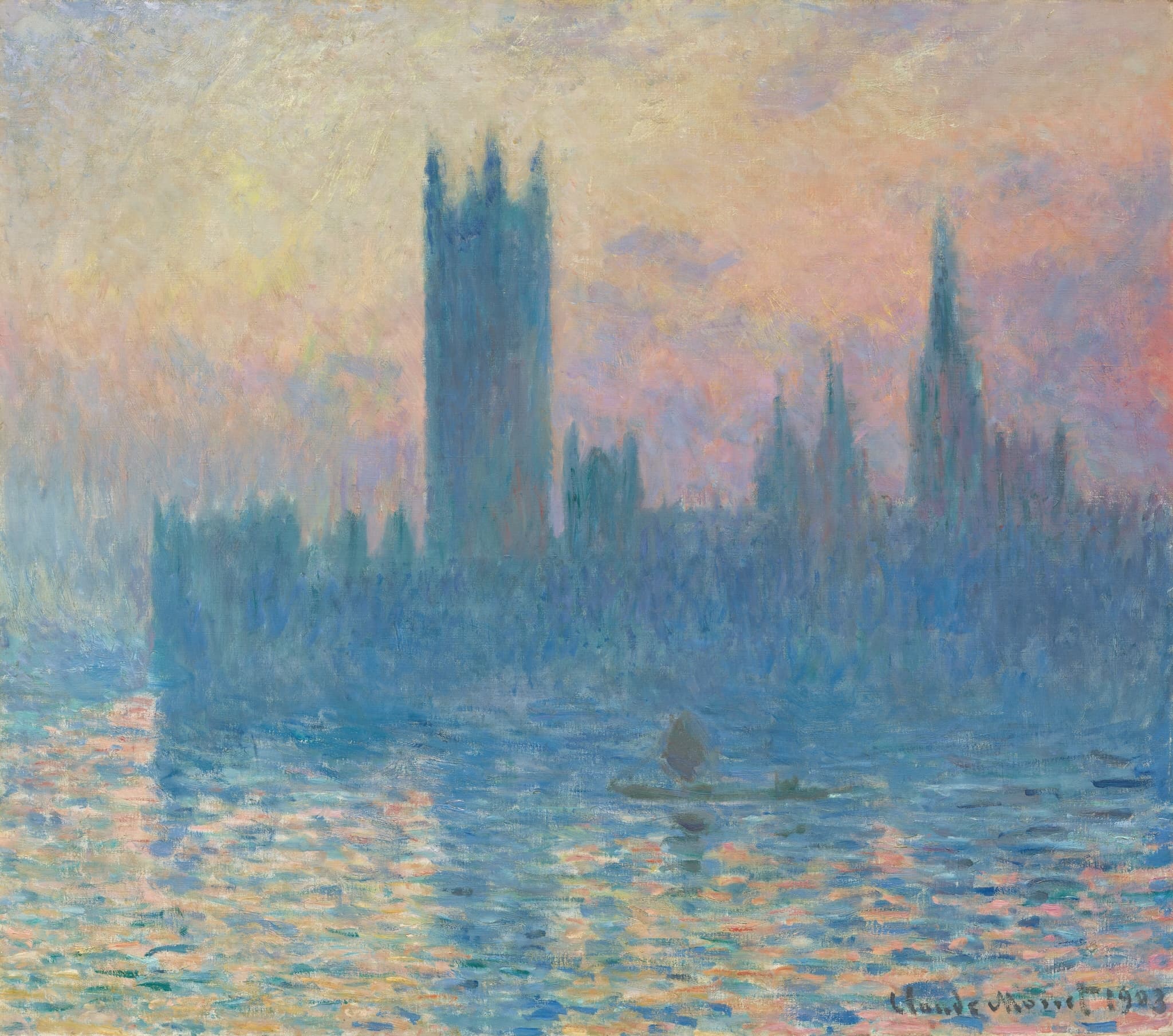
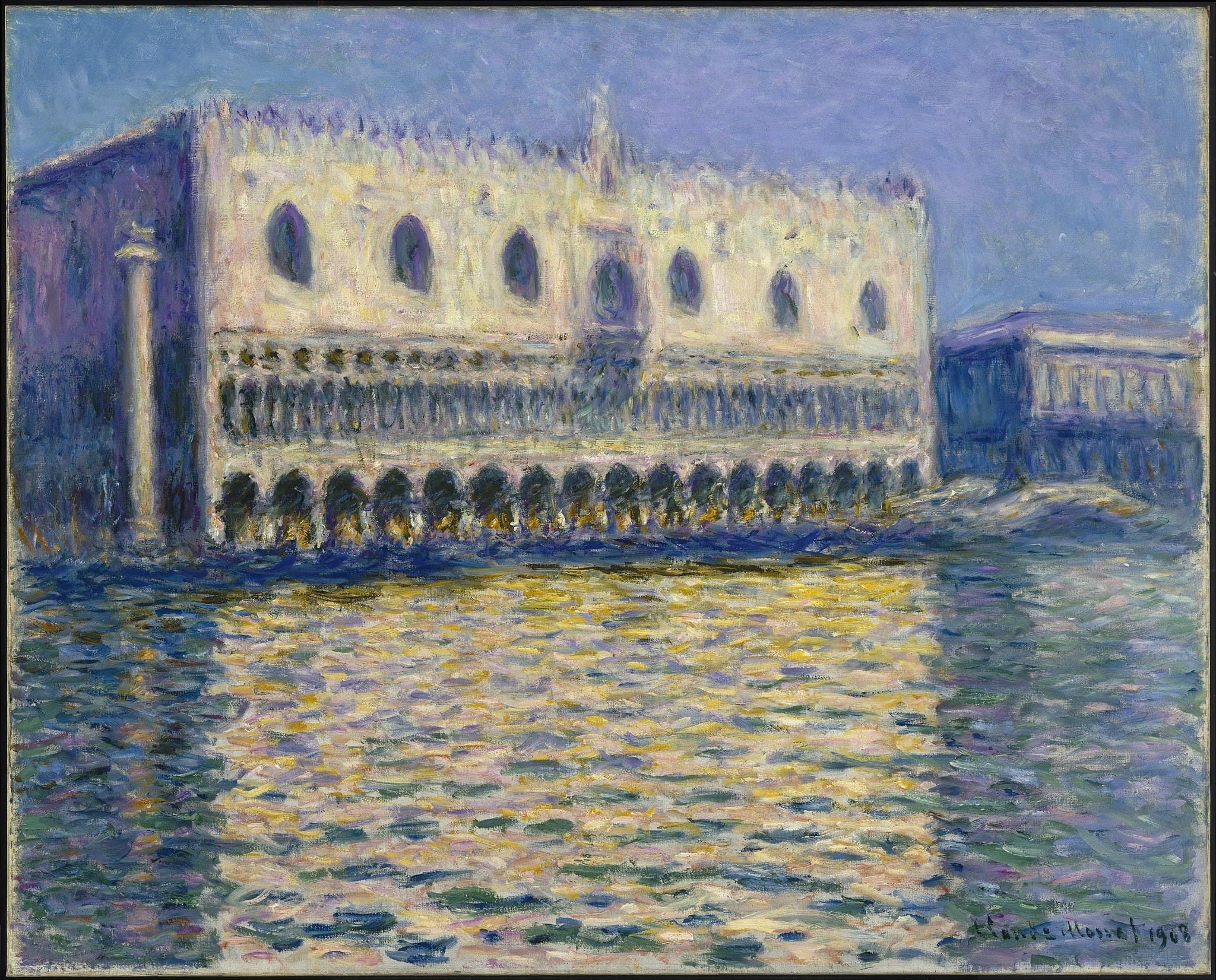
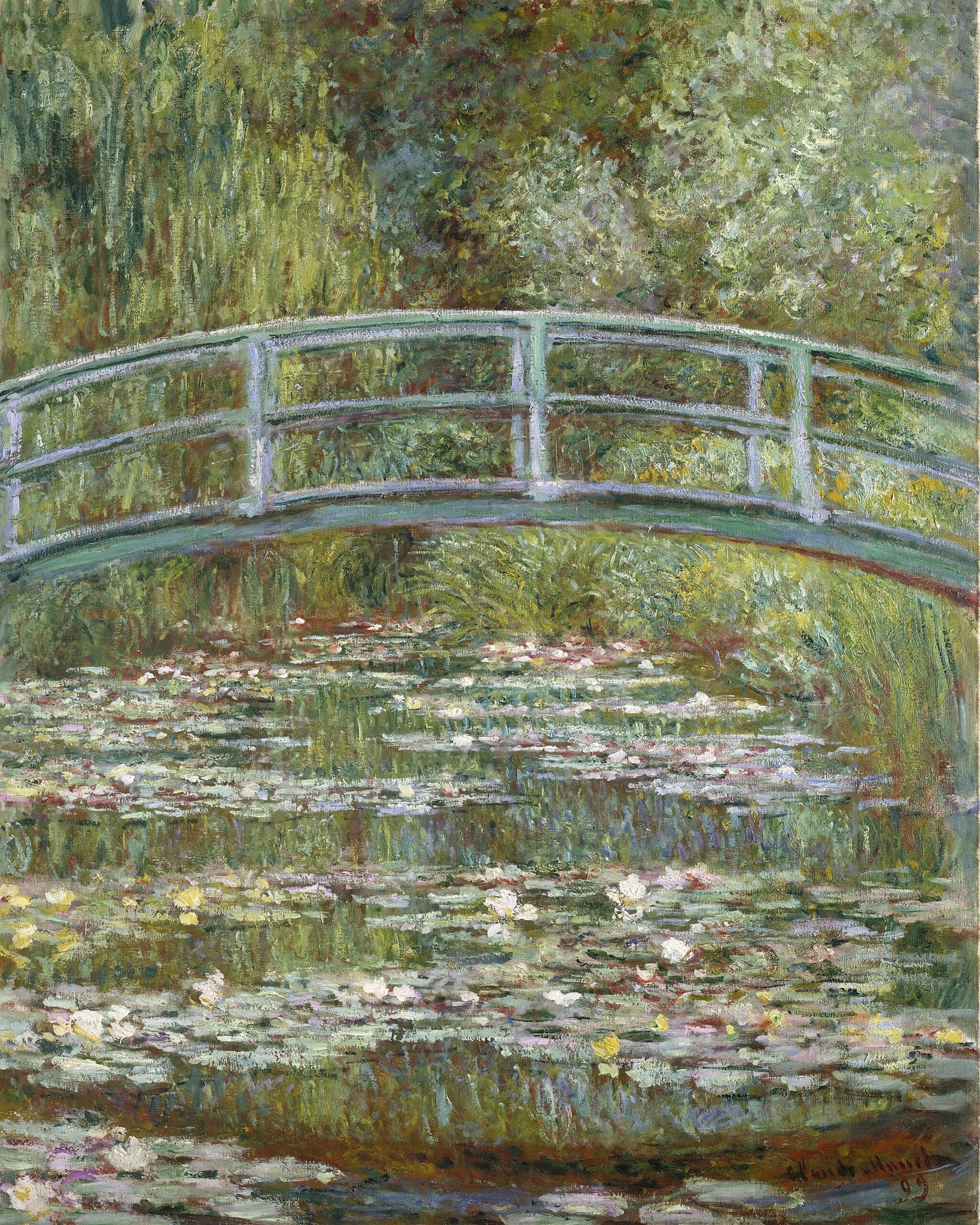
Monet, by contrast, makes vision contingent. He builds the enveloping field—light, air, moisture, glare—in which forms appear and dissolve. Westminster becomes a vibrating silhouette in pollution-tinted haze; Venetian facades and their reflections become interchangeable surfaces; the garden bridge steadies a field where reflection can overtake description. Working in series, he rotates canvases to catch specific hours, then distills them in the studio until the painting reads as a time-bound atmosphere. The promise is fidelity to change: compare canvases and the world’s variability emerges. In short, Signac engineers what color should do; Monet records what light does. One is prescriptive and system-forward; the other empirical and hour-specific. Both are rigorous, but they model fundamentally different beliefs about how pictures make truth.
Paired Works
Program vs Envelope: Power Made Visible
Focus question: How do these pictures turn authority or intellect into optics rather than description?
Portrait of Félix Fénéon vs Houses of Parliament
Water as Grid vs Water as Mirror
Focus question: Is water a surface for measuring color or a medium that unbuilds form?
Saint-Tropez. La Bouée rouge (The Red Buoy) vs The Doge's Palace
Building a Viewing System
Focus question: How does each artist construct a stable device that lets perception play out?
The Port of Saint-Tropez vs Bridge over a Pond of Water Lilies
Why This Comparison Matters
This pairing clarifies two durable modern options for turning perception into subject matter. Signac shows how far a painting can go when color relationships are intentionally engineered: his pictures behave predictably, like well-tuned instruments, and they teach the eye to feel designed intervals. Monet shows what happens when the instrument is the world itself: time, weather, and reflection write the image, and comparison across canvases becomes a method of truth.
Seeing the split helps decode later art and our own habits of looking. When color feels like a system—measurable complements, modular strokes—you are in Signac’s lineage. When form feels atmospheric and time-bound—edges softened, reflections equal to solids—you are in Monet’s. The comparison also reframes modernity: a harbor can be a machine for order; a rail station or a parliament can be a climate event. In both cases, painting becomes a way to think with the eyes, either by designing harmony or by honoring how the world appears and changes.
Related Links
Sources
- Michel Eugène Chevreul: De la loi du contraste simultané des couleurs (1839) – overview
- The Met: Georges Seurat and Neo-Impressionism (overview of Divisionism)
- Paul Signac, From Eugene Delacroix to Neo-Impressionism (1899) – translated excerpts
- MoMA: Paul Signac, Opus 217. Portrait of Félix Fénéon (1890)
- National Gallery of Art, Washington: Monet, The Houses of Parliament, Sunset
- PNAS (2023): Atmospheric pollution and the optics of Impressionist skies
- National Gallery, London: Claude Monet – The Water-Lily Pond
- Musée d’Orsay: Paul Signac, Saint-Tropez. La Bouée rouge
- National Museum of Western Art (Tokyo): Paul Signac, The Port of Saint-Tropez
- The Met: Monet in Venice (1908) – object entry
- National Gallery, London: Claude Monet – The Gare St-Lazare
- Art Institute of Chicago: Monet’s Serial Method (Rouen, Haystacks, etc.)