How to Look: Suspicion or Attunement?
Both painters build panoramas packed with small events that ask the viewer to scan, connect, and infer. Bosch stages a moral continuum where attractive surfaces curdle into ruin. Bruegel orchestrates evenly lit worlds where many small acts add up to a functioning community.
Comparison frame: How do Bosch’s visionary panoramas and Bruegel’s seasonal panoramas teach the eye different habits—suspicion versus attention?
Quick Comparison
| Topic | Hieronymus Bosch | Pieter Bruegel the Elder |
|---|---|---|
| Purpose of looking | Expose seductive error; implicate desire | Train steady, distributed attention; read a community |
| Time model | Eschatological arc: Eden → false delight → Hell | Cyclical months/seasons; labor–feast–rest loops |
| Pictorial engine | Triptych continuity; high horizon; emblematic lures and hybrids | World landscape; even light; dispersed tasks; seasonal air |
| Morality in things | Pleasures become traps; culture inverted into punishment | Customs and tools model social ethics without sermon |
| Causality on the ground | Temptation → compulsion → ruin; cutaways of inner vice | Networks—roads, mills, bridges—link field to parish and market |
| Viewer position | Implicated witness (owls that stare out) | Observant neighbor/guest (dining-room seasons cycle) |
| Lineage and market | Confraternal devotion; visionary allegory | From Bosch‑like prints to peasant/seasonal social mapping |
Shared Ground
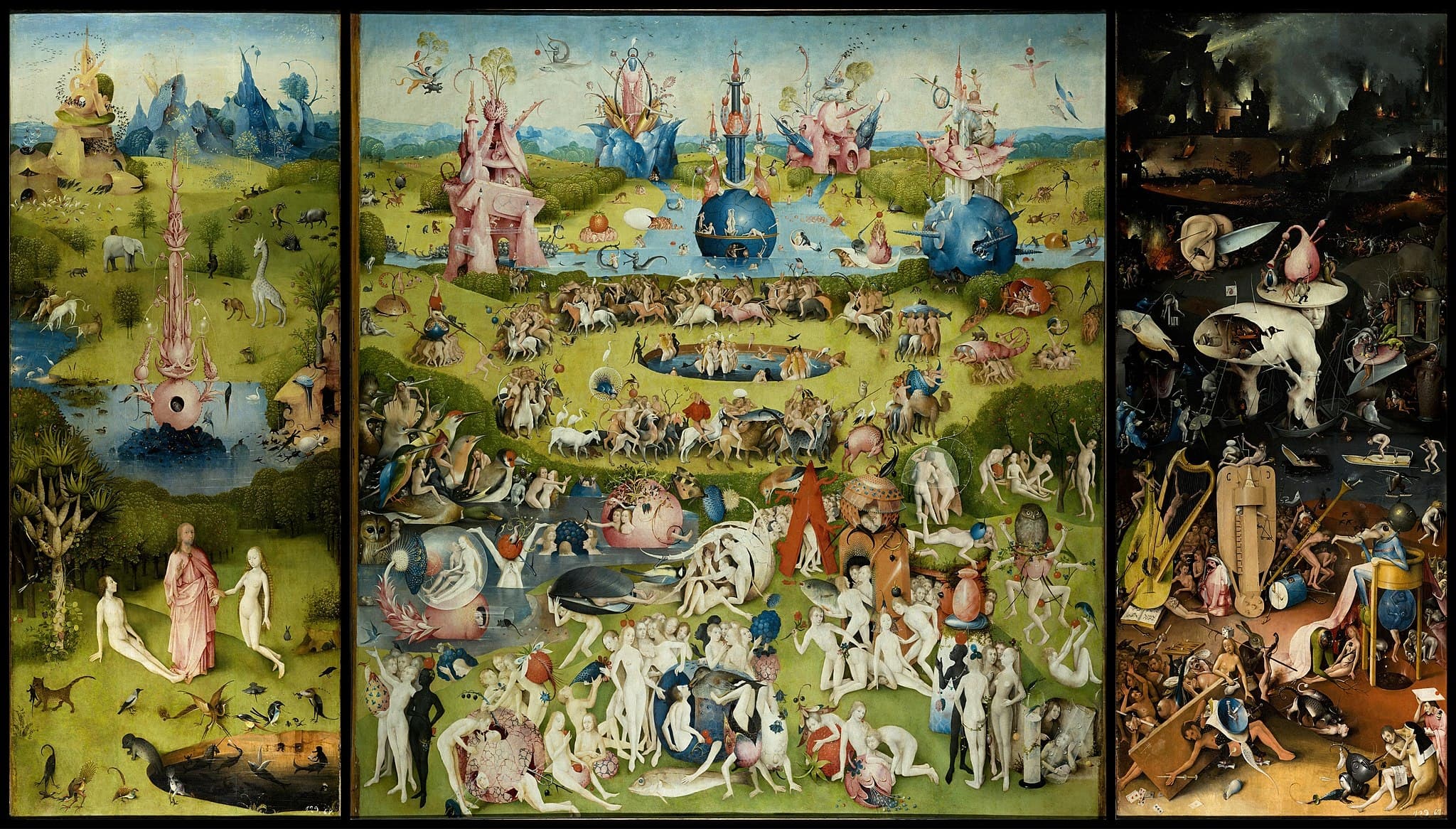
Bosch and Bruegel treat painting as a cognitive instrument. Instead of a single climax, each builds a vista dense with micro-events that require the eye to pan, sort, and infer. Bosch welds Eden, a dazzling world of delights, and Hell into one high-horizon continuum; the hinges of a triptych become syntax for moral cause-and-effect. Bruegel spreads evenly lit activity across fields, villages, and waterways so that meaning accrues through distributed tasks—work, rest, game, trade—seen together.
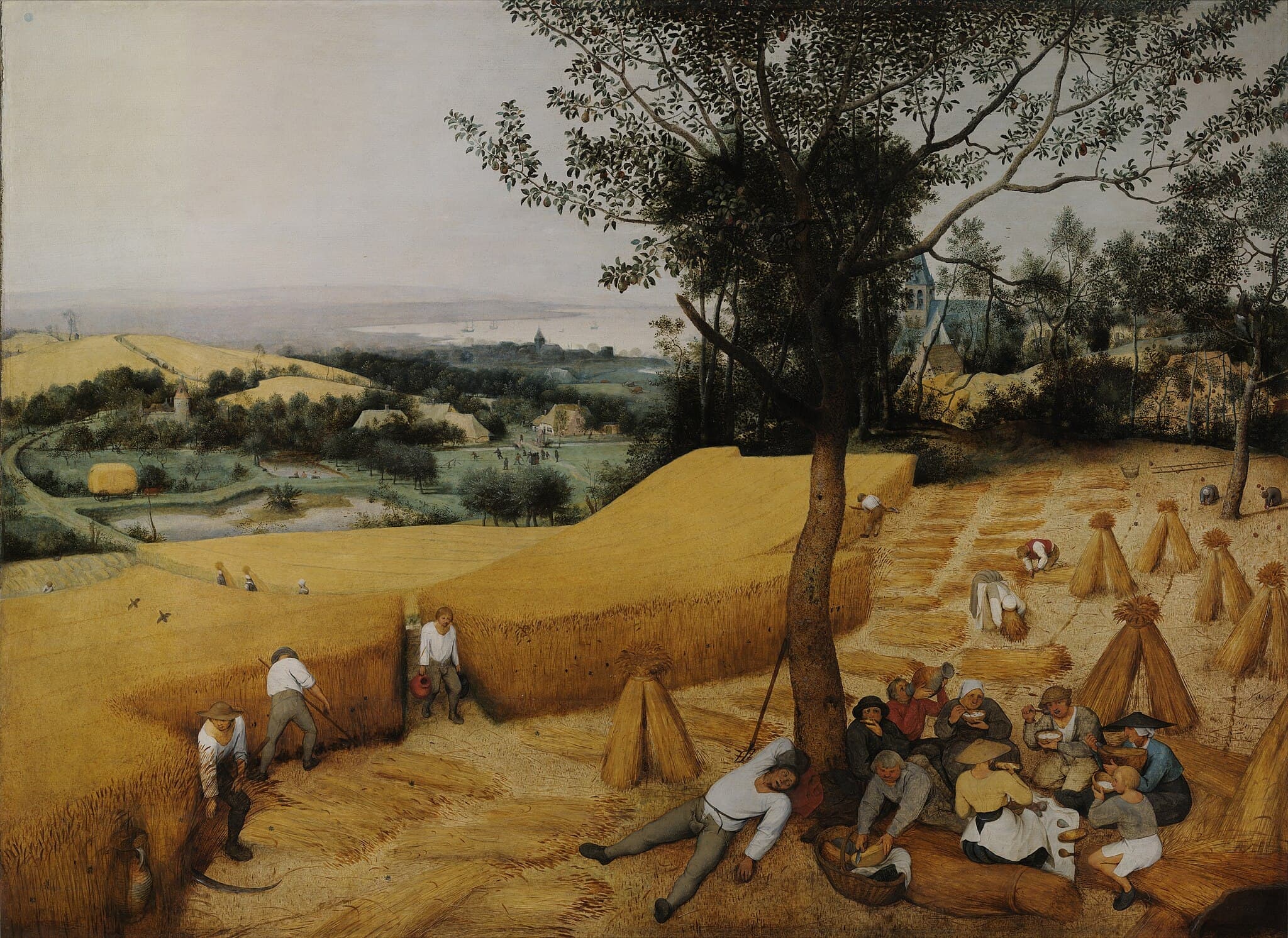
Everyday appetites and labors carry ethical weight in both. Bosch reroutes music, feasting, and play into traps, especially in the Hell of The Garden of Earthly Delights, where culture’s instruments punish the senses they once pleased. Bruegel lets harvests, weddings, and winter chores model a lived order; in The Harvesters, the chain from wheat to bread to road to harbor makes social interdependence visible without a sermon.
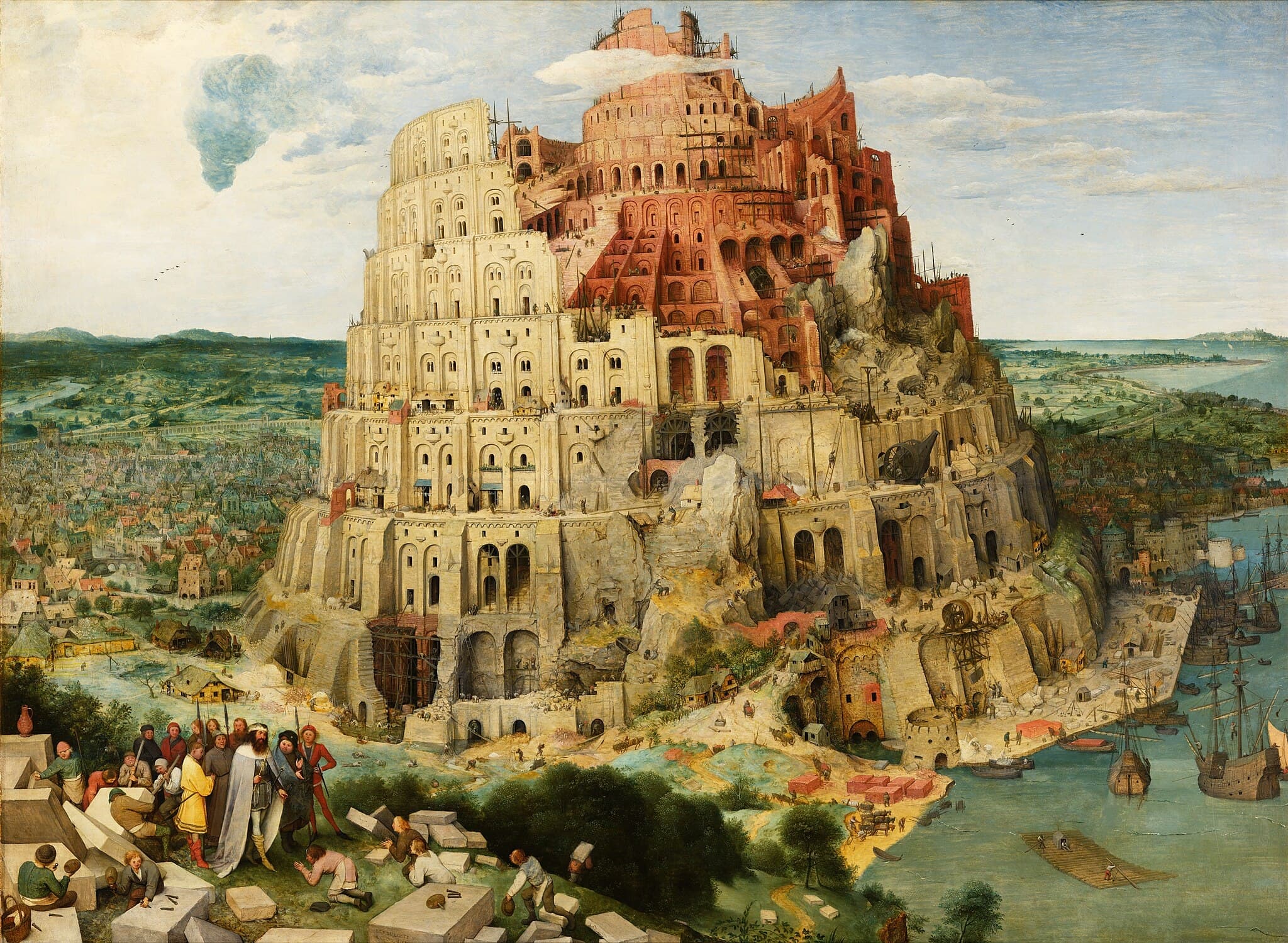
Both are encyclopedists of making. Bosch cuts open bodies and buildings to show inner theaters of vice; Bruegel inventories cranes, hoists, and masonry in The Tower of Babel, turning technology into thought about consequence. A historical bridge binds them: Bruegel designed Bosch-like moral prints for the Antwerp market before redirecting that energy into peasant and seasons panels. The shared ground is not simply “detail”; it is the conviction that a painting can stage a complex system and make viewers think through it.
Decisive Difference
The decisive difference is what looking is for. In Bosch, sight is precarious—easily seduced, morally risky. He designs a continuous Eden → spectacle → Hell so that what first looks like harmony (crystalline fountains echoed by candy-colored pavilions) reveals itself as false paradise. Emblems like the owl—sometimes a sign of compromised knowledge—address the beholder, making the eye complicit. The triptych’s high horizon is a trap and a tutor: scan across it and you experience how attraction mutates into torment. Painting trains suspicion of appearances.
In Bruegel, sight is attunement—patient, distributed attention to a community synchronized by season. He downplays climaxes and privileges rhythms and reciprocity; evenly cast light and breathable space keep many actions equally legible. In The Harvesters or Hunters in the Snow, cause-and-effect reads not as temptation → ruin but as labor → meal → trade; weather and custom are the real protagonists. Commissioned for dining rooms, the Seasons panels position us as observant neighbors learning how small acts knit society to time and place. Where Bosch frames time as an eschatological arc, Bruegel frames it as a cycle; where Bosch implicates, Bruegel inducts. Painting becomes a school for steady looking.
Paired Works
Arc vs Cycle: Edenic Allure and Summer Order
Focus question: What does a high horizon teach—moral cause-and-effect or seasonal interdependence?
The Garden of Earthly Delights vs The Harvesters
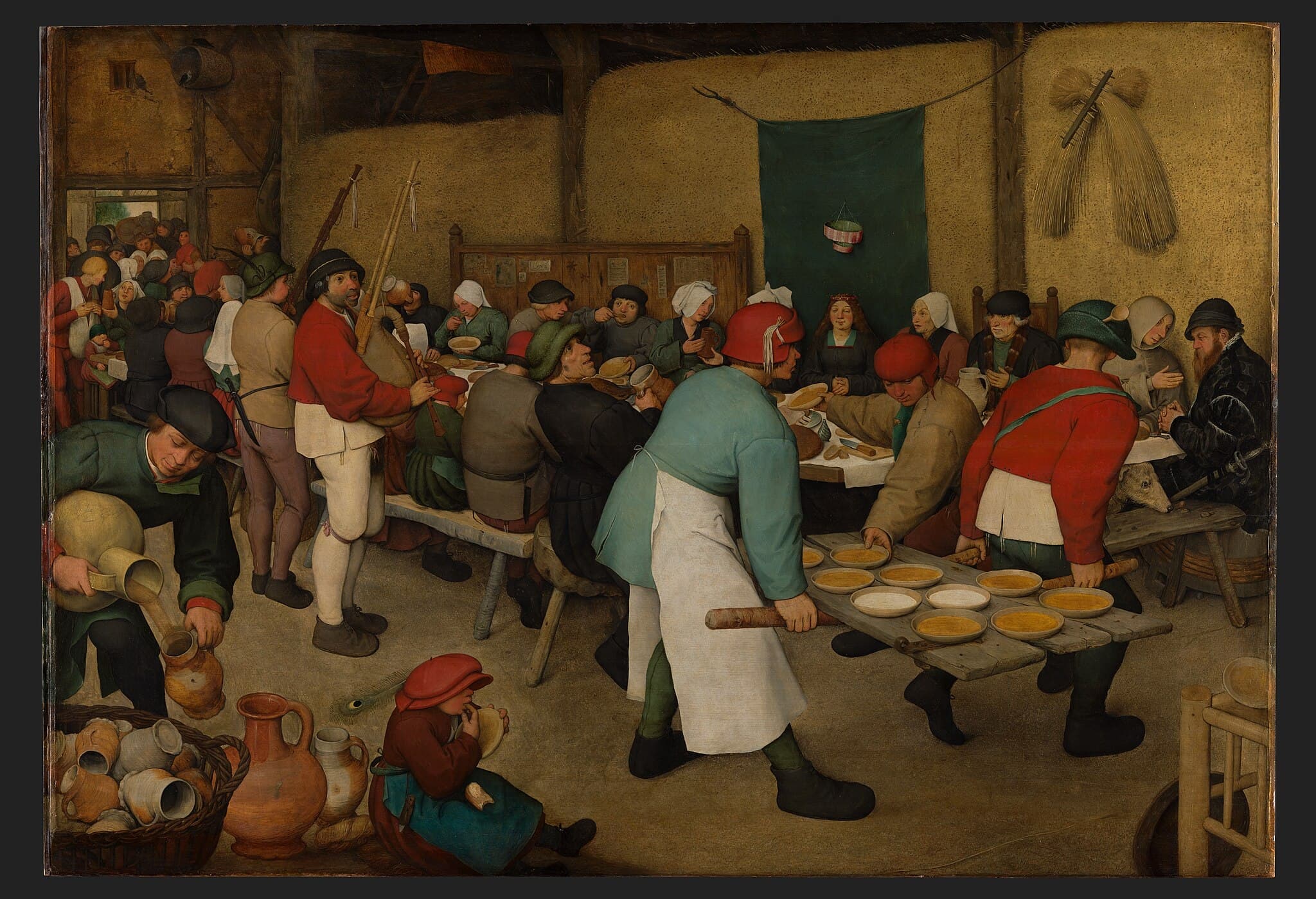
Hay vs Bread: Allegory and Rite
Focus question: When does grain signify vanity and when sacrament-like community?
The Haywain Triptych vs The Peasant Wedding
From Punchline to Atlas of Folly
Focus question: How does moral satire scale from a single boat to a whole village?
Ship of Fools vs Netherlandish Proverbs
When Culture Malfunctions
Focus question: What does failure look like—punishment after pleasure, or collapse built into the plan?
The Garden of Earthly Delights vs The Tower of Babel
Why This Comparison Matters
This pairing clarifies two durable ways pictures make knowledge. Bosch shows how images can seduce and discipline at once: a panoramic spectacle that lures the eye, then reveals the cost of trusting surfaces. Bruegel models a counter-practice: patient attention that reads many small acts in concert, turning landscape into a map of social time. Seeing these together sharpens how we read any crowded image—newsfeeds, dashboards, city views—where meaning lies not in a single headline but in patterns and links.
It also revises a common story about Northern art. Bruegel was marketed early as a “second Bosch,” yet his mature move is not toward weirder allegory but toward seasonal, civic description. The comparison shows a shift from eschatological warning to calibrated endurance—two answers to disorder in the sixteenth-century Low Countries. Learning both habits—suspicion of seductive surfaces and care for distributed evidence—makes us better readers of worlds, past and present.
Related Links
Sources
- Museo del Prado – Bosch, The Garden of Earthly Delights (overview and triptych continuity)
- Smarthistory – Bosch, The Garden of Earthly Delights (moral program; instruments in Hell)
- Kunsthistorisches Museum – Bruegel, The Peasant Wedding (customs, door as tray, bride’s canopy)
- Kunsthistorisches Museum – Bruegel, Hunters in the Snow (Seasons cycle; winter panorama)
- Kunsthistorisches Museum – Bruegel, The Tower of Babel (engineering detail; instability)
- The Metropolitan Museum of Art – Bruegel, The Harvesters (object page; patron and seasonal program)
- The Met Heilbrunn Timeline – Pieter Bruegel the Elder (prints; 'second Bosch'; emphasis on atmosphere)
- Louvre – Bosch, Ship of Fools (satirical micro-allegory)
- Bruegel 2018 – Six Seasons for a Dining Room (display context for the Seasons cycle)
- Encyclopaedia Britannica – Hieronymus Bosch (confraternity context; devotional frame)