Looking as care vs looking as pleasure
Cassatt and Renoir both make modern life—the loge, the café, the parlor, the garden—the place where painting tests perception. Their deepest kinship is an ethics of attention: who looks, who is touched, and how that attention is staged. The decisive split is purpose. Cassatt organizes attention to show work, relation, and agency; Renoir diffuses attention into light so sociability feels continuous, tactile, and pleasurable.
Comparison frame: How do Cassatt and Renoir turn looking into meaning—one as a choreography of care and agency, the other as a bath of light and shared pleasure?
Quick Comparison
| Topic | Mary Cassatt | Pierre-Auguste Renoir |
|---|---|---|
| Deepest shared ground | Modern life used to test seeing (loge, interiors, outings) | Modern leisure used to test seeing (theater, dance, cafés) |
| What looking does | Structures relations and tasks; accountable attention | Envelops bodies in warmth; shared, sensuous attention |
| Preferred composition | Oblique/high vantage, japoniste cropping, patterned planes | Centered masses, pendants/spirals; post‑Italy firmer contours |
| Hands and touch | Hinges of care/instruction (ankle held, page turned, reins gripped) | Joiners of sociability (dance grips, page turns) softened by light |
| Surface and light | Planar emphasis keeps agency legible; pattern clarifies tasks | Luminous “envelope” fuses figure and air into harmony |
| Public/private staging | Public space as negotiated agency (loge, driving, boating) | Public leisure as radiance and display (dance, theater, café) |
| Key late‑19th‑c. pivot | 1890 Japanese print show → steeper views, flattened design | 1881–82 Italy → classicizing ‘Ingresque’ clarity within color |
Shared Ground
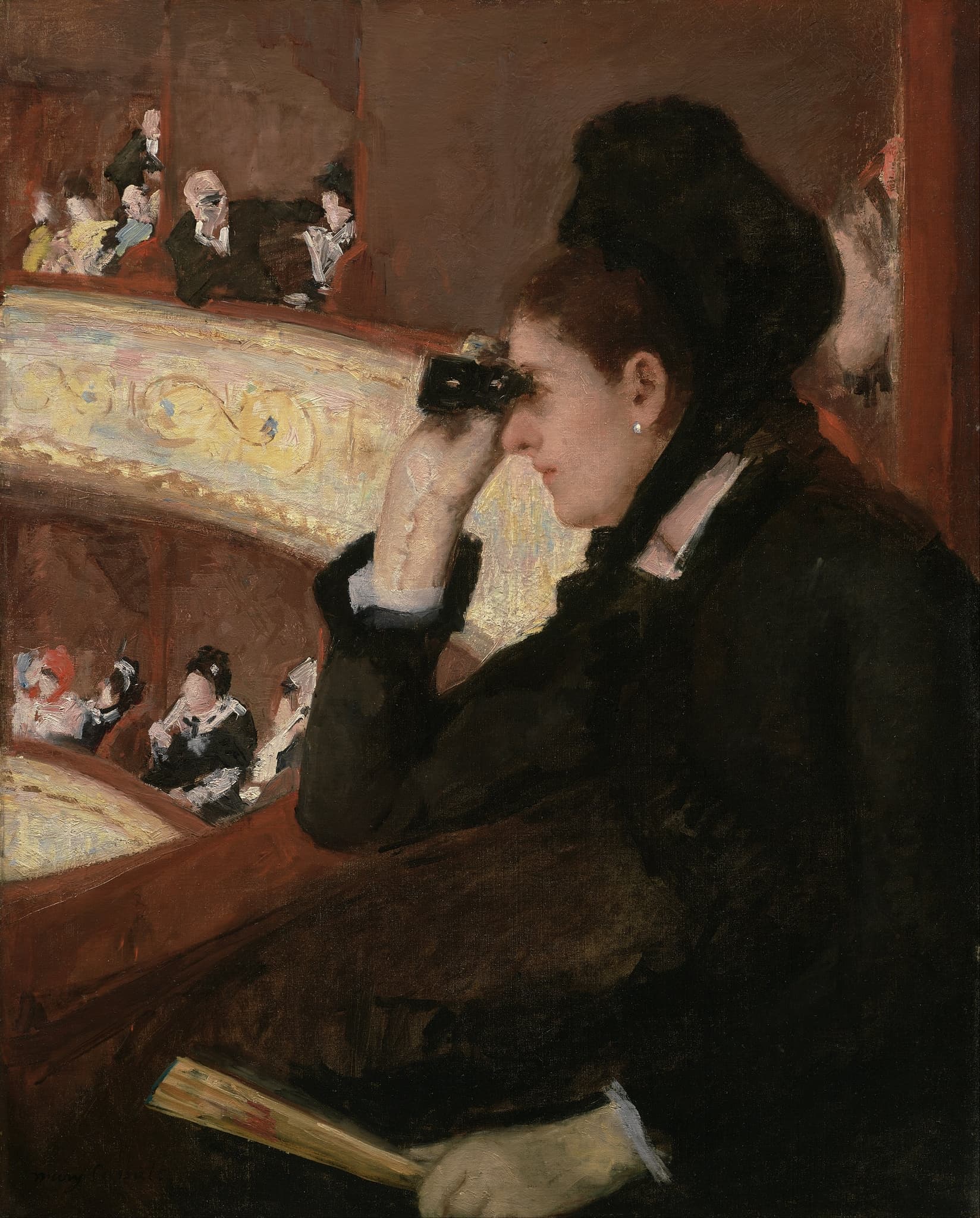
Their common ground is modern life taken seriously. In the 1870s–90s, both turn opera boxes, cafés, gardens, and bourgeois interiors into laboratories for perception—places where painting proves how attention works now. Each builds pictures around small social rituals that organize seeing: watching at the opera, learning at the piano, bathing and being bathed, dancing and being held. Gaze and gesture are choreographed into readable circuits—eyes align with optical devices, hands close on tools, touch completes a loop. The opera loge, a public–private threshold designed both to see and be seen, is a shared crucible for this project.
They also hybridize immediacy and design. Cassatt harnesses japoniste means—cropping, high or oblique vantages, flattened patterned fields—so a moment reads with clarity and purpose. Renoir, by contrast, organizes a luminous “envelope” of color and light into centered pairs and spirals; after Italy he tightens contours without losing chromatic warmth. In both, the apparent instant rests on firm structure: Cassatt’s Summertime and The Boating Party compress space into decisive planes; Renoir’s Dance at Bougival and Young Girls at the Piano bind bodies into rhythmic harmonies. Shared aim, different means: modern life is not anecdote but a testing ground where composition shapes what attention feels like.
Decisive Difference
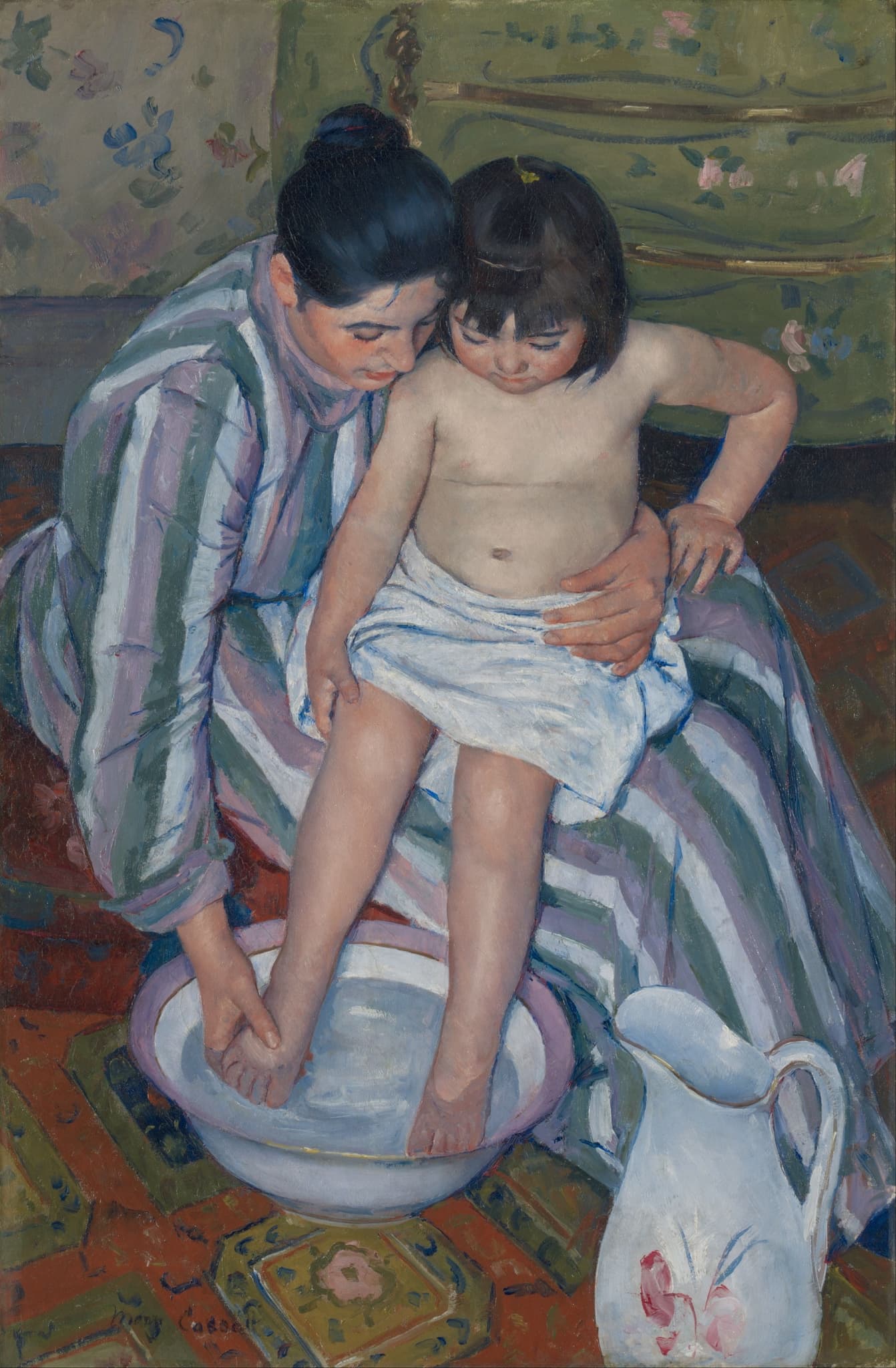
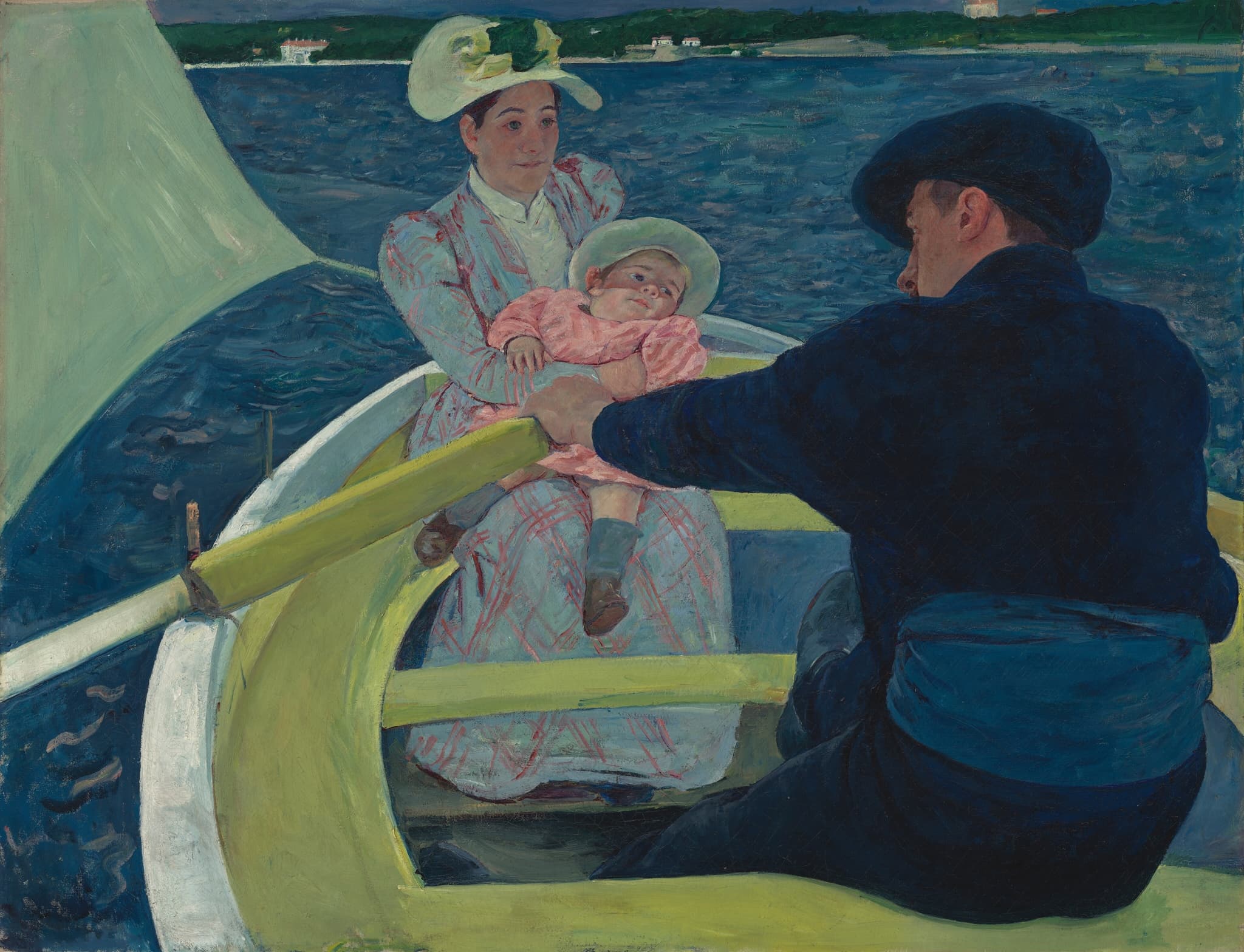
The split is what looking is for. Cassatt treats attention as relational and accountable. Composition assigns a task and protects agency: elevated vantages and tight crops pull us into the work of caregiving, instruction, or self‑possession. In the Loge a woman actively scans the hall with opera glasses while a distant man looks at her; mirrors and steep planes keep us aware of framing and choice. The Child’s Bath builds a closed circuit of touch—hands, ankle, basin—so care becomes visible labor, not sentiment. In The Boating Party, bold arcs of oar and gunwale cradle a mother–child unit inside motion, a geometry of protection that reads as design and as ethic.
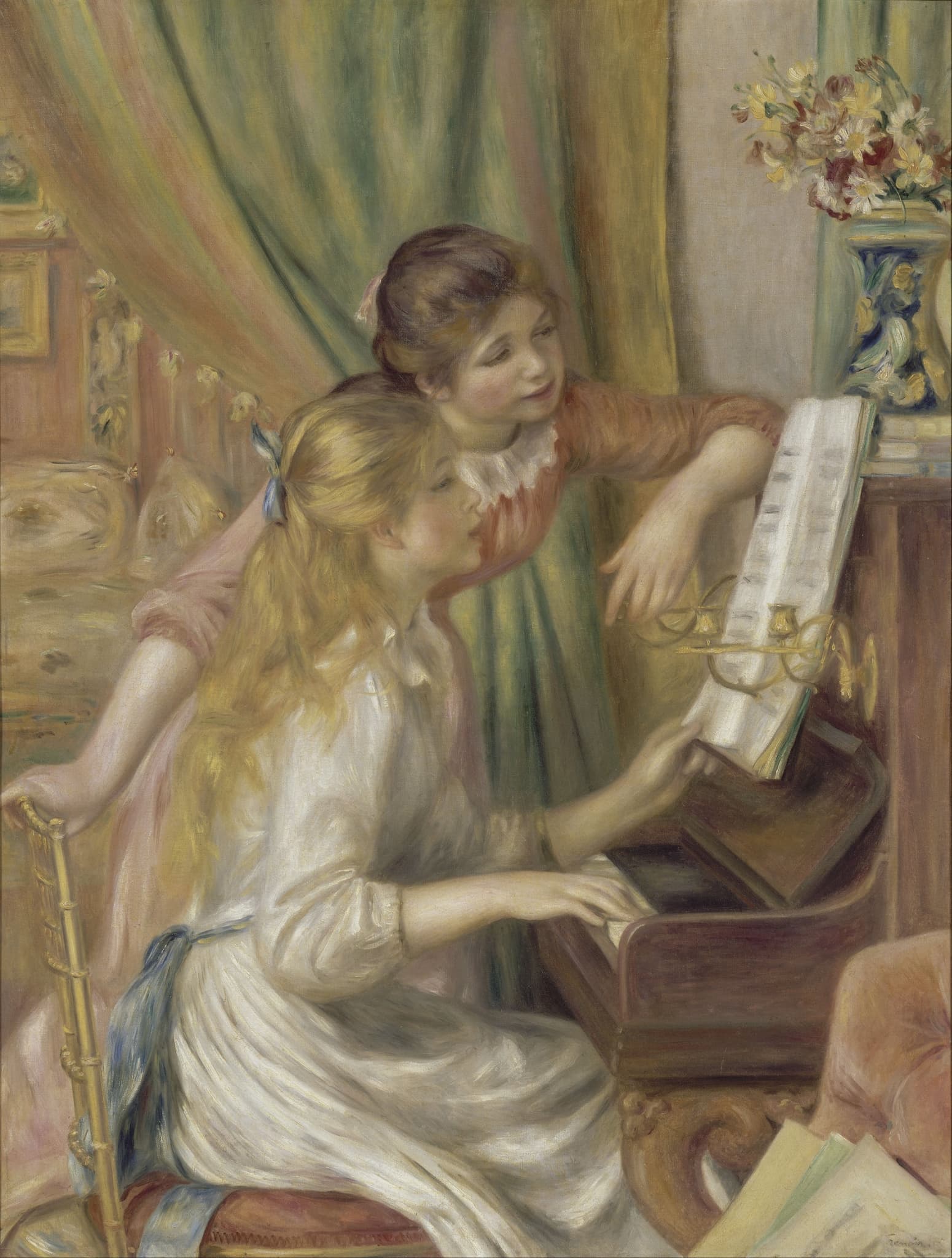
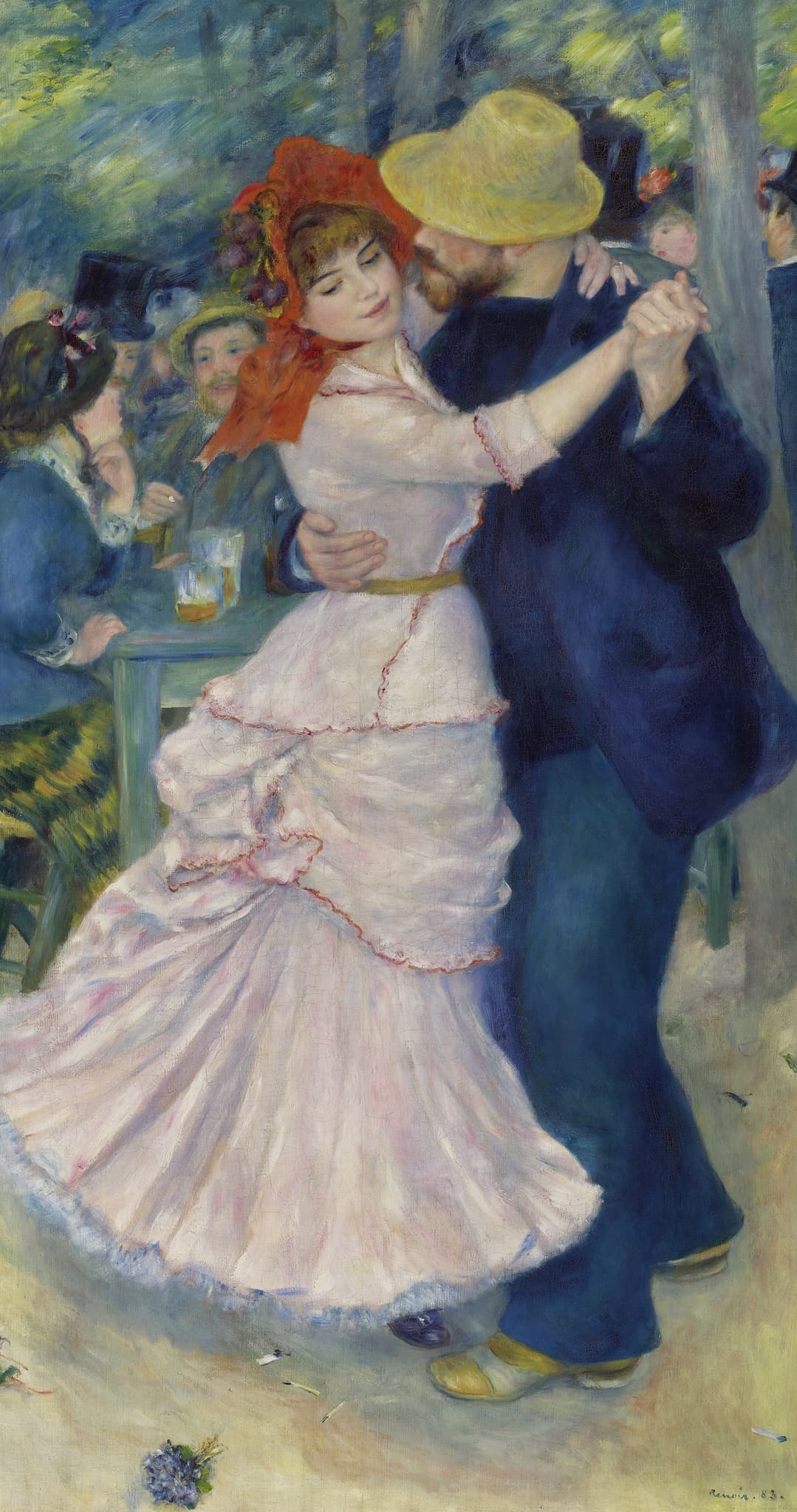
Renoir makes attention feel pleasurable and continuous—an atmosphere that softens edges and fuses people. La Loge turns the theater box into a bath of light where the woman’s satin and the gaslit crowd read as one radiant field; her companion scans the audience, and looking becomes social display. Dance at Bougival seals a couple inside a chromatic vortex (scarlet bonnet against ultramarine jacket), translating touch and tempo into color. Even in his classicizing 1880s, Young Girls at the Piano renders instruction as harmony—pearled color, polished wood, and soft faces in a single envelope. Cassatt’s pictures keep agency crisp; Renoir’s dissolve separation into warmth. Two answers to the same question of perception: structure for care, or light for shared pleasure.
Paired Works
Spectatorship, agency, and the opera box
Focus question: In the loge, who controls the look—and how does paint make that power legible?
In the Loge vs La Loge (The Theatre Box)
Domestic rites: touch versus harmony
Focus question: When interiors monumentalize everyday care or learning, what does each painter ask attention to do?
The Child's Bath vs Young Girls at the Piano
Public leisure in motion
Focus question: What kind of social space does motion create—protection or flirtation?
The Boating Party vs Dance at Bougival
Private self‑regard versus public radiance
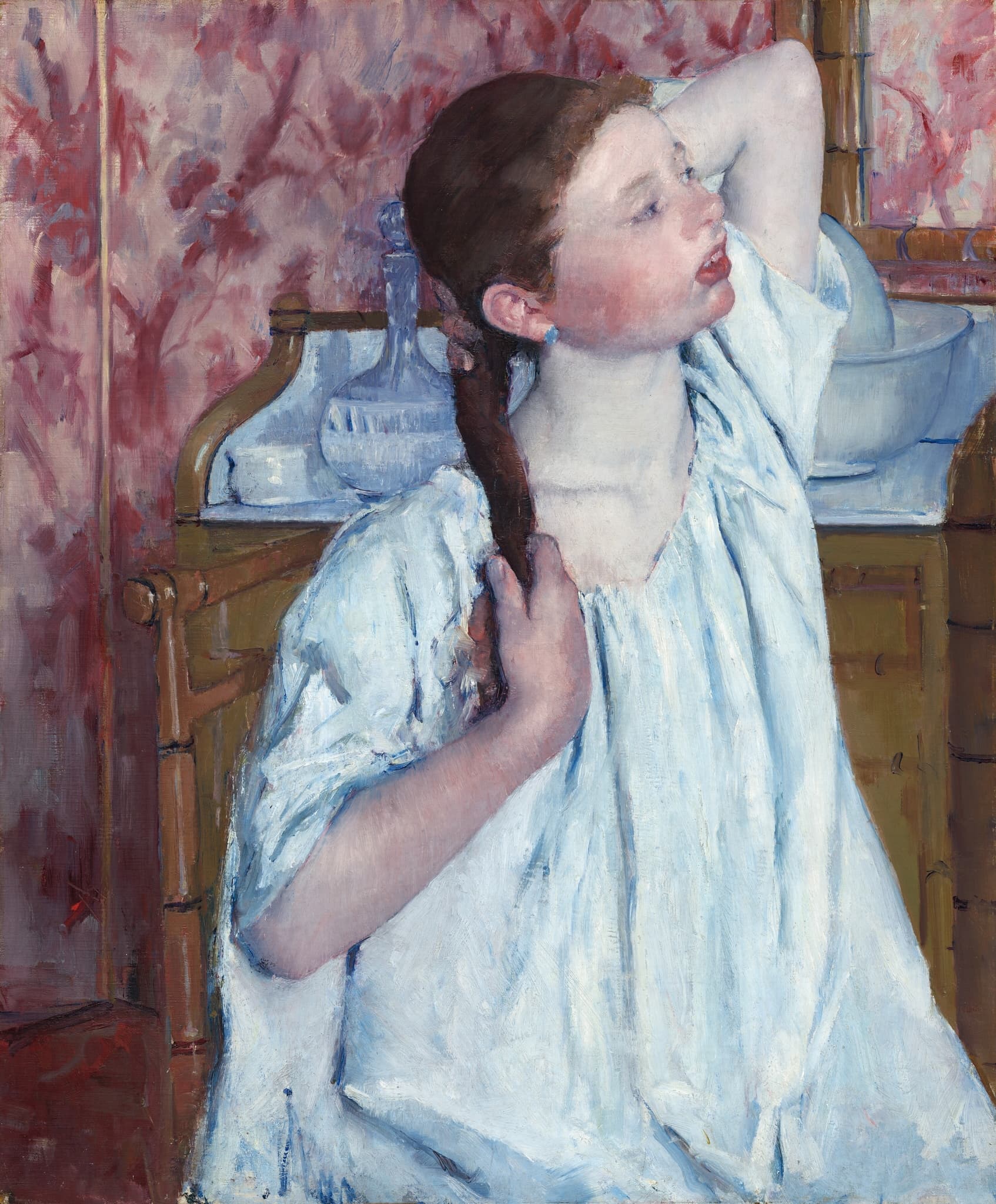
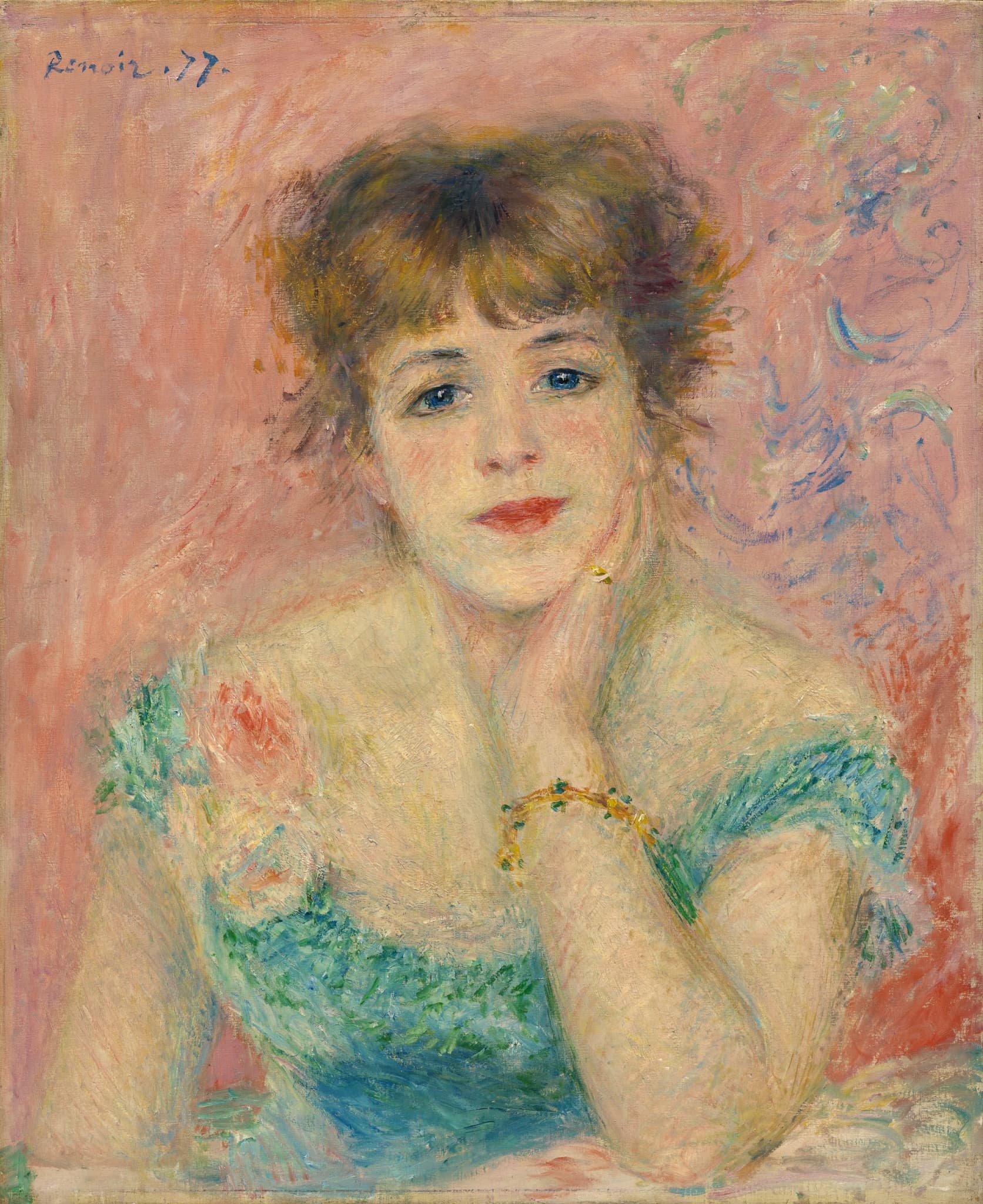
Focus question: What should a modern feminine image deliver—autonomy in action or charisma as presence?
Girl Arranging Her Hair vs Portrait of Jeanne Samary
Why This Comparison Matters
This pairing clarifies what “seeing modern life” can mean. Cassatt shows that looking can be structured—hands, tools, and vantages organize care, instruction, and self‑possession—so images model responsibility as much as sensation. Renoir shows that looking can be enveloping—figures and air melt into chromatic harmony—so images model how sociability feels when it flows. Understanding that split moves Impressionism beyond clichés of sunshine and snapshots: both artists design their immediacy with purpose.
For a reader today, the stakes are practical. In a loge, on a feed, or across a room, pictures teach us how to attend: are we being invited to witness work, or to share a mood? Cassatt’s structures train the eye to respect agency; Renoir’s envelopes train it to register warmth and connection. Holding both models in mind strengthens our own seeing—able to name when attention is asked to care, and when it is asked to join.
Related Links
Sources
- Museum of Fine Arts, Boston — Mary Cassatt, In the Loge (object record)
- The Courtauld — Renoir, La Loge (The Theatre Box) overview
- Art Institute of Chicago — Mary Cassatt, The Child’s Bath (object page)
- Musée d’Orsay — Renoir, Dance in the City (context for 1880s classicizing turn)
- Museum of Fine Arts, Boston — Renoir, Dance at Bougival (object page)
- National Gallery of Art — Mary Cassatt, The Boating Party (object page)
- Smarthistory — Renoir, La Loge analysis
- The Met Heilbrunn Timeline — Mary Stevenson Cassatt (1844–1926)
- The Met Heilbrunn Timeline — Auguste Renoir (1841–1919)
- Publications of the Art Institute of Chicago — Renoir’s Italy trip and ‘Ingresque’ shift
- Terra Foundation — Mary Cassatt, Summertime (context for japoniste structure)
- National Gallery of Art — Mary Cassatt, Girl Arranging Her Hair (object page)