Monsters & the monstrous feminine
Featured Artworks
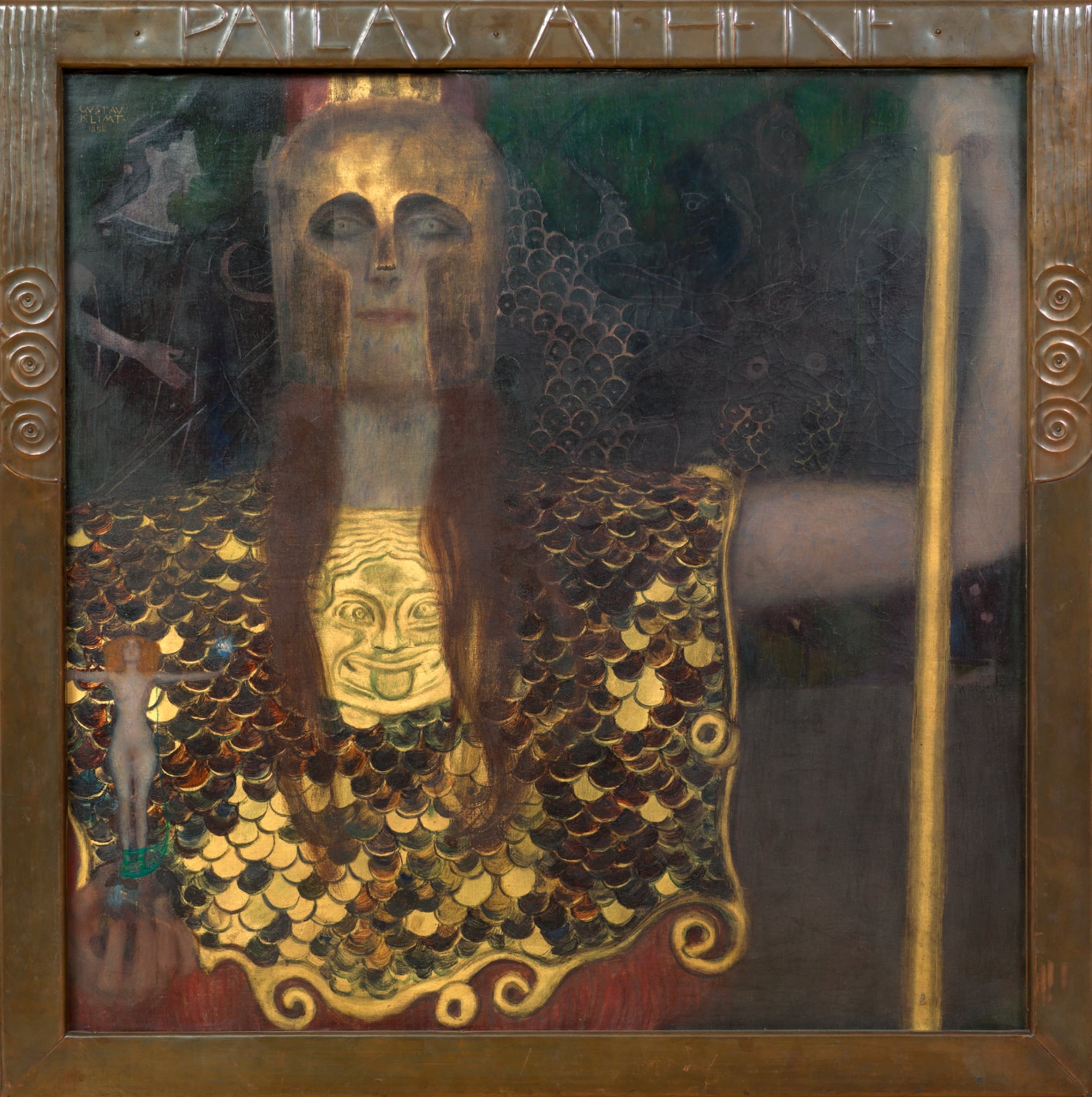
Pallas Athena
Gustav Klimt (1898)
Pallas Athena confronts the viewer as a <strong>frontal icon of power</strong>: helmeted, impassive, and armored in <strong>gleaming scale aegis</strong> crowned by a <strong>gorgoneion</strong>. Klimt fuses archaic authority with modern ornament to proclaim <strong>Vienna Secession</strong> ideals—reason, strategy, and artistic truth held in a single, implacable image <sup>[1]</sup><sup>[2]</sup>.
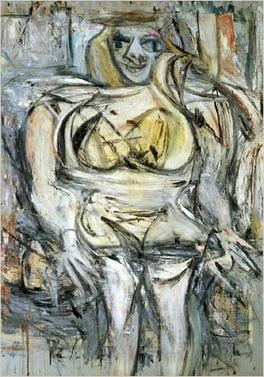
Woman III
Willem de Kooning (1952–53 (often dated 1953))
Woman III stages a face‑off between <strong>figuration and abstraction</strong>: a looming, front‑facing body whose breasts and hips jut forward even as limbs smear into eddies of paint. The mask‑like eyes and toothy grin toggle between <strong>seduction and menace</strong>, while the scraped, turbulent surface asserts painting as a <strong>combat zone</strong> rather than calm depiction <sup>[1]</sup>.