Johannes Vermeer Paintings in London — Where to See Them
London matters for experiencing Johannes Vermeer because, unusually for any single city outside the Netherlands, it offers the chance to see approximately four of his paintings on permanent display across three very different settings: The National Gallery (two paintings), Kenwood House (Iveagh Bequest) (one), and the Royal Collection — normally shown at Buckingham Palace/The Queen’s Gallery (one). That mix lets you compare Vermeer’s treatment of light, color and intimate domestic subjects in the formal museum context of the National Gallery, the domestic grandeur of Kenwood, and the historical framing provided by the Royal Collection.
At a Glance
- Museums
- The National Gallery, Kenwood House (Iveagh Bequest), The Queen's Gallery (Royal Collection)
- Highlight
- See The National Gallery's two Vermeers — intimate masterpieces in central London.
- Best For
- Art lovers seeking intimate Dutch Golden Age paintings and royal collection displays.
The National Gallery
The National Gallery’s two Vermeers let you compare the artist’s handling of light, texture and interior space within a single visit — a rare opportunity because so few Vermeers survive. Seeing them close together highlights subtle shifts in his palette, brushwork and use of costume and props, which helps explain why scholars treat each small compositional change as meaningful for dating and attribution. The Gallery’s long history of study and conservation also means these works have been carefully researched and are shown with interpretive material that ties them into Vermeer’s place in Dutch Golden Age painting.
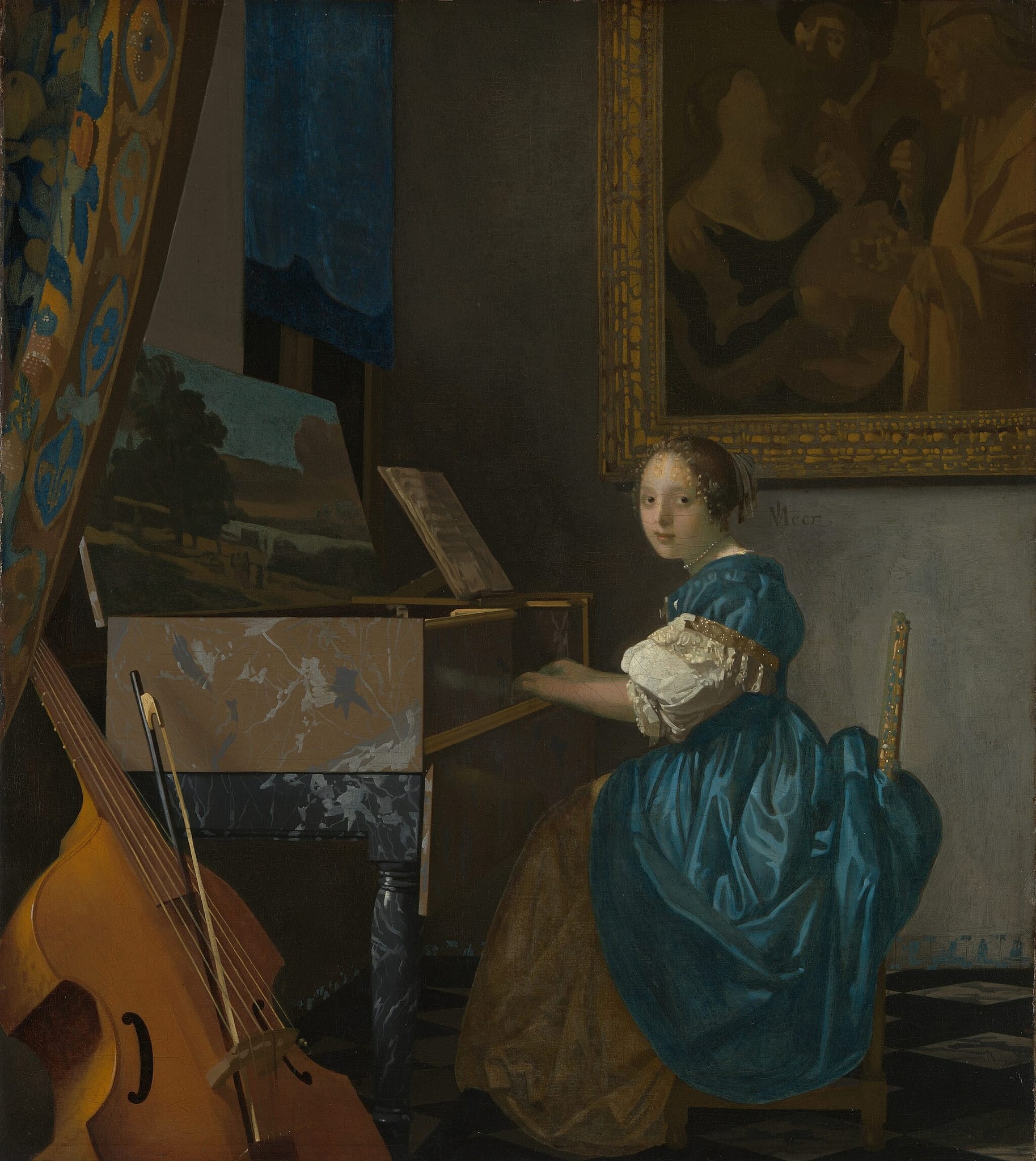
A Young Woman seated at a Virginal
1671
Depicts a quietly focused young woman seated at a virginal, absorbed in music-making within a sunlit, domestic interior. Significant as a demonstration of Vermeer’s mastery of soft northern light, intimate genre subject matter, and subtle psychological presence that elevate an ordinary moment into contemplative stillness. Look for the delicate handling of light on skin and fabric, the fine textural contrasts (wood, cloth, hair), and the careful compositional geometry that directs the eye to the figure and her hands.
Must-see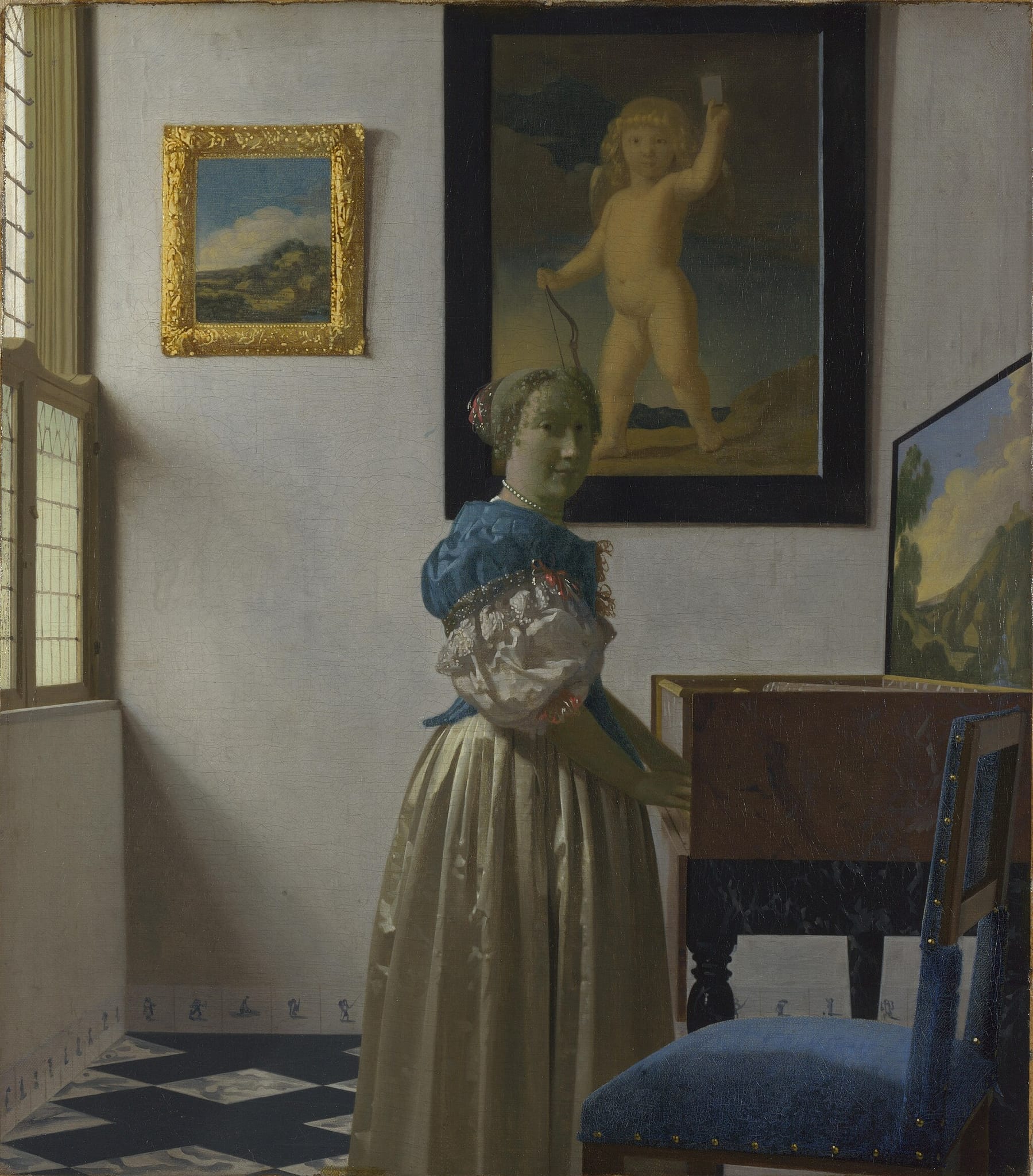
A Young Woman standing at a Virginal
1671
Shows a young woman standing beside a virginal, poised as if about to play or having just finished, captured in a calm domestic scene. Important for how Vermeer varies a familiar musical motif to explore movement, spatial depth, and his signature luminous color palette, turning a simple action into a study of light and presence. Notice the way daylight models volume, the restrained but rich color harmonies, and the compositional balance between figure, instrument, and the surrounding interior details.
Must-seeKenwood House (Iveagh Bequest)
Kenwood’s single Vermeer sits within the Iveagh Bequest, a deliberately intimate collection bequeathed to the public, so the painting is experienced in a domestic, house-like setting rather than a large museum hall. That context mirrors Vermeer’s own focus on quiet, domestic interiors and lets viewers appreciate scale and atmosphere as the collector intended — the work feels integrated with period furnishings rather than isolated behind roped barriers. Kenwood’s restrained display encourages close looking, which is essential for noticing Vermeer’s meticulous handling of light, glazes and small details.
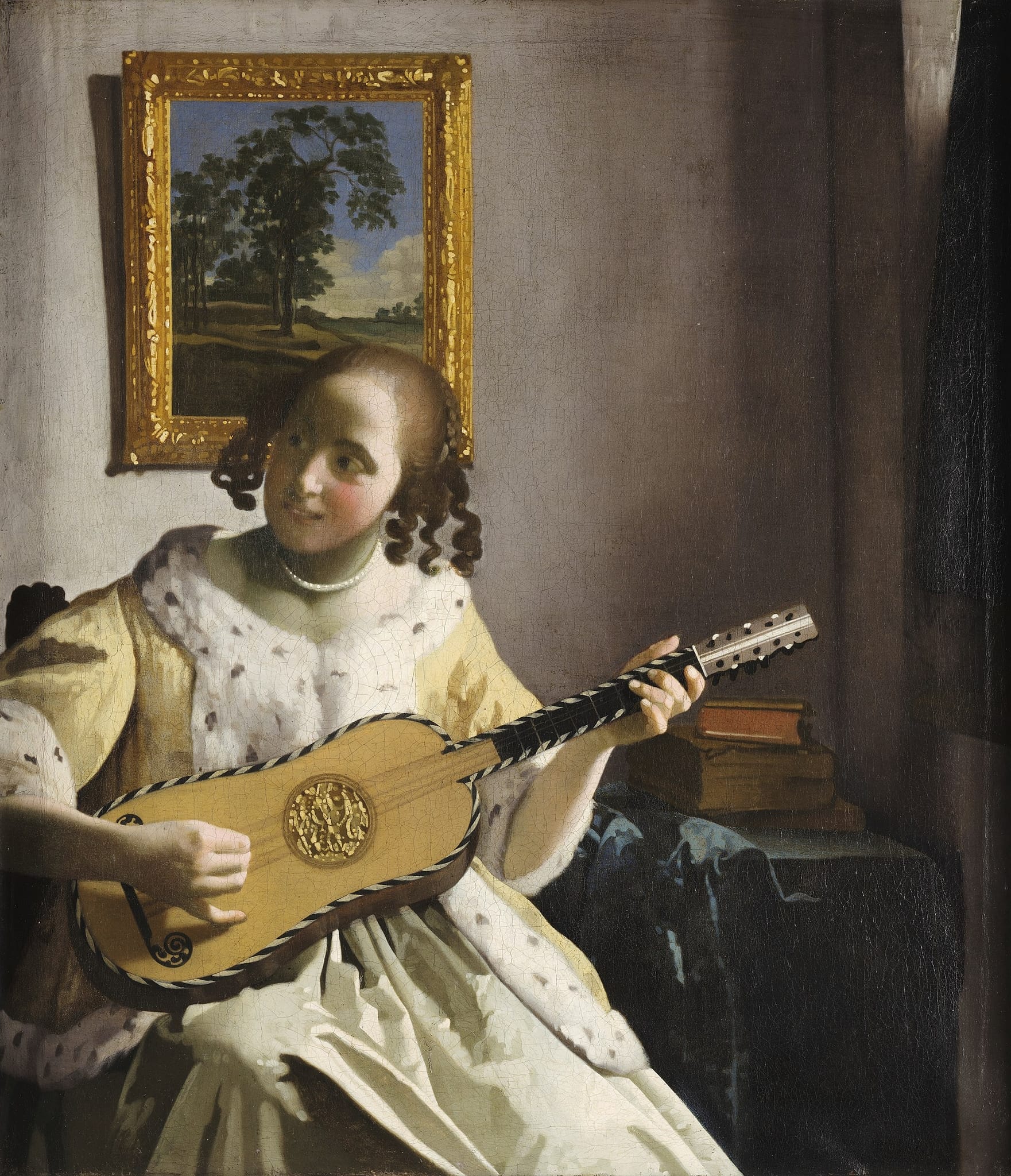
The Guitar Player
1672
A young woman stands in a quiet domestic interior, turned three‑quarter to the viewer as she plays a guitar beneath soft daylight from the left. This late work by Vermeer is significant for its intimate genre subject and for the artist’s refined handling of light, color and texture—transforming an ordinary musical moment into a study of atmosphere and presence. Look closely at the luminous treatment of the yellow jacket and the guitar’s polished surface, the delicate modeling of the hands and face, and the subtle, economical brushwork that creates rich tactile effects.
Must-seeRoyal Collection (displayed at Buckingham Palace / The Queen's Gallery)
A Vermeer in the Royal Collection links the artist to a long provenance of high-status European collecting and lets you see how Vermeer was valued by royal and aristocratic tastes. When the painting is on display at Buckingham Palace or The Queen’s Gallery it is often shown alongside other Dutch and European masterpieces, which places Vermeer in the broader narrative of courtly and connoisseurship contexts rather than only museum chronology. Exhibitions from the Royal Collection are also carefully curated and periodically change, so the painting is sometimes presented with fresh scholarship or as part of themed loans.
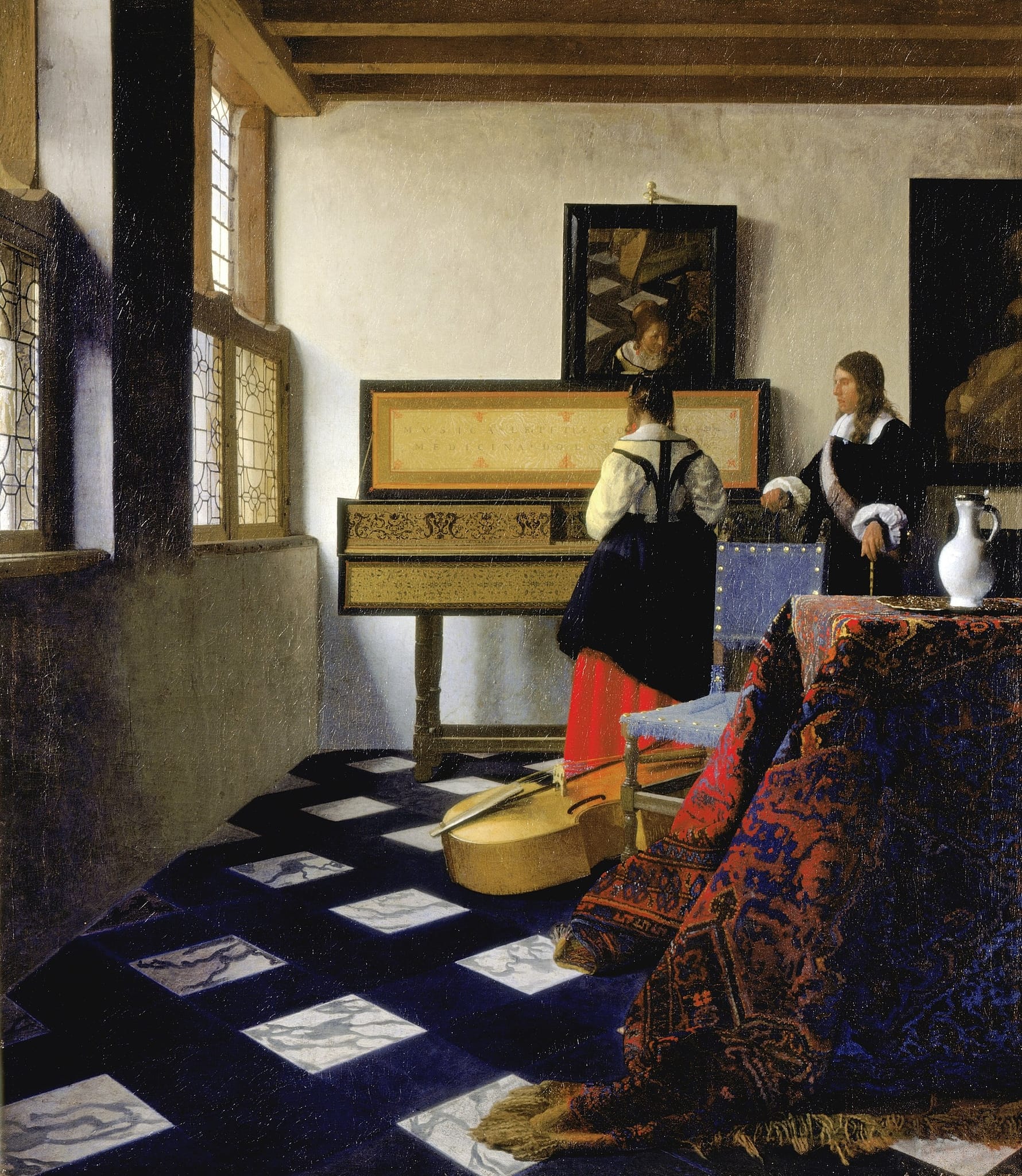
A Lady at the Virginals with a Gentleman (The Music Lesson)
c.1662-1665
A young woman sits at a virginal while a gentleman—her music teacher—stands beside her in a quiet domestic interior, the scene observed through a mirror that subtly redirects the viewer’s gaze. The work is significant as one of Vermeer’s masterly mid-1660s genre paintings in the Royal Collection, notable for its refined handling of light, composition and the suggestion of a tense, possibly flirtatious interaction. Look for Vermeer’s delicate treatment of reflected image in the mirror, the carefully modelled light on textures (the carpet, the instrument, the sitter’s costume), and the calculated spatial depth created by the tiled floor and doorway. ([rct.uk](https://www.rct.uk/collection/themes/exhibitions/masters-of-the-everyday/the-queens-gallery-buckingham-palace/explore-the-exhibition?utm_source=openai))
Must-see