Johannes Vermeer Paintings in New York — Where to See Them
New York matters for experiencing Johannes Vermeer because it houses approximately eight of his works on permanent display across two museums—five at The Metropolitan Museum of Art and three at The Frick Collection—giving you a rare chance to compare his use of light, color and domestic subjects within a single visit. The Met places Vermeers in a broad historical and technical context among Dutch Golden Age masters, while the Frick’s small, intimate galleries allow close, unhurried viewing of his delicate brushwork and quiet narratives.
At a Glance
- Museums
- The Metropolitan Museum of Art, The Frick Collection
- Highlight
- Visit The Met to view its five Vermeers up close.
- Best For
- Art lovers seeking concentrated Dutch Golden Age and intimate masterpiece viewing.
The Metropolitan Museum of Art
The Met matters for experiencing Vermeer because it holds a relatively large group of his paintings in one institution, which lets visitors compare subtle variations in his technique, use of light, and choice of interior motifs across multiple works. The museum places these Vermeers within a broader Dutch Golden Age context, so you can immediately contrast Vermeer’s intimate, quietly luminous interiors with contemporaries in adjacent galleries — revealing what makes his handling of color and perspective singular.
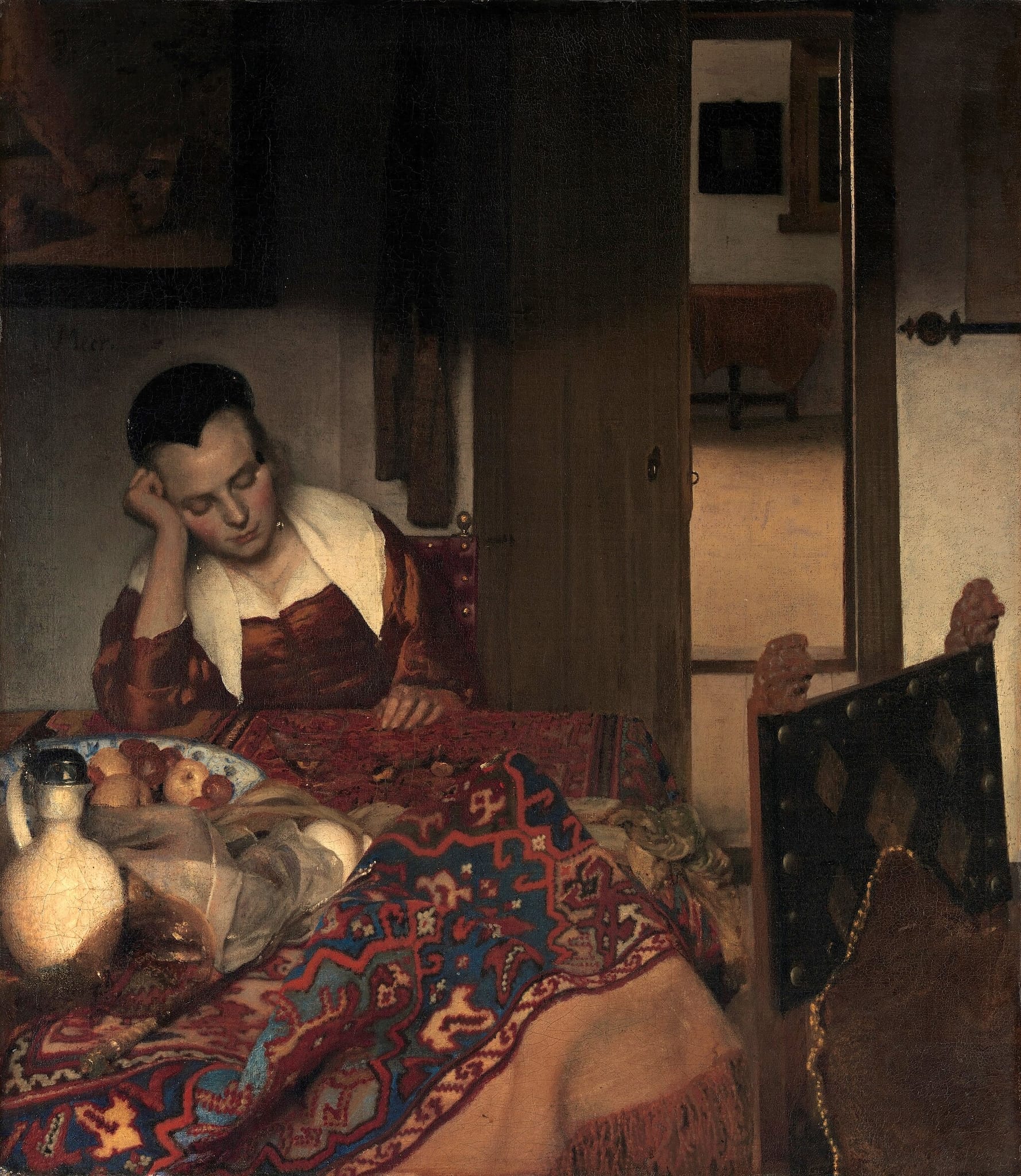
A Maid Asleep
ca. 1656–57
Depicts a young housemaid dozing at a simple table in a quiet domestic interior, her head bowed and hands folded as soft daylight falls across the room. Significant as an intimate genre scene that shows Vermeer’s early mastery of calm, observational realism and psychological stillness. Look for the subtle handling of daylight on fabric and skin, the composition’s careful balance of shadow and illuminated planes, and small domestic details that suggest narrative without drama.
Must-see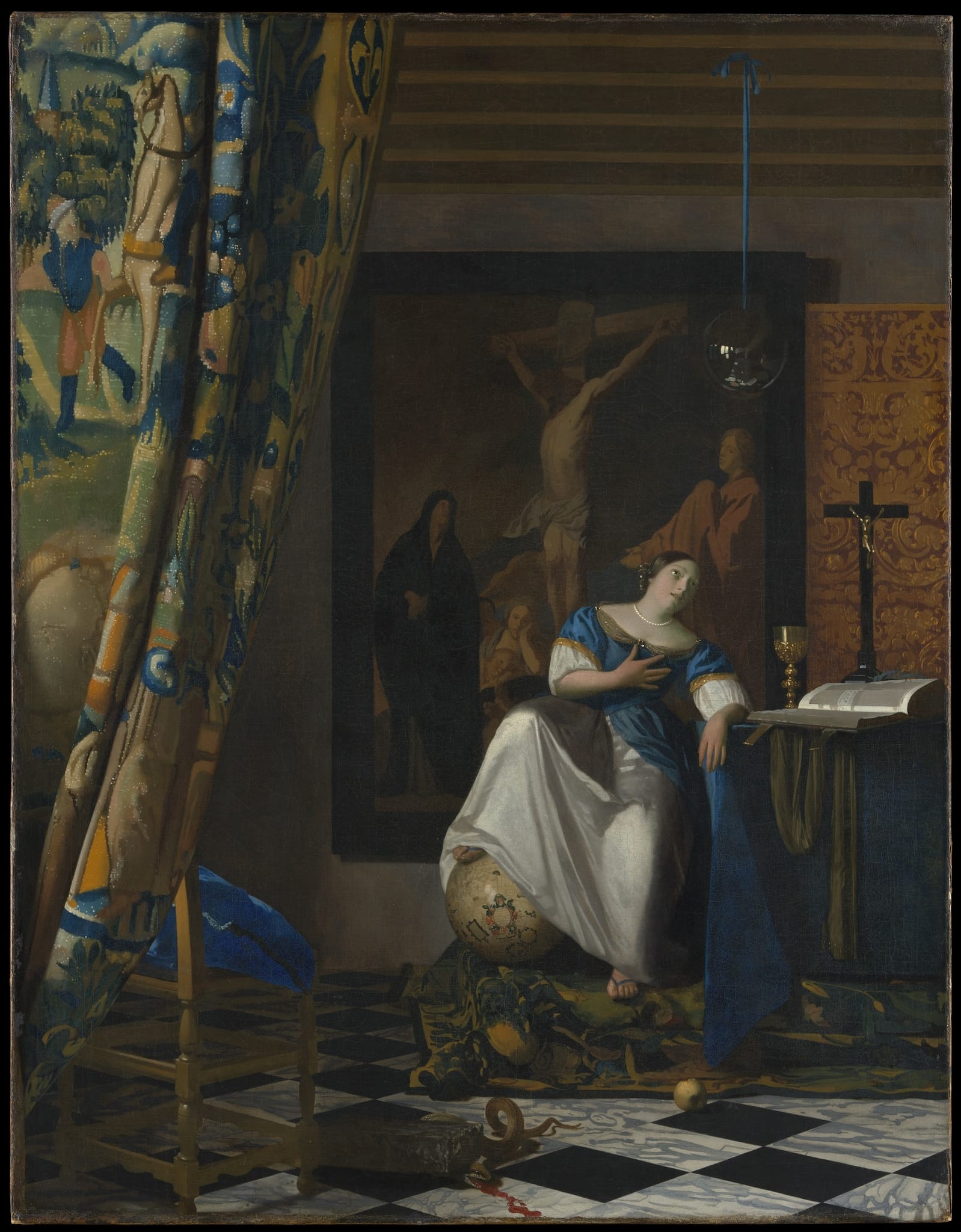
Allegory of the Catholic Faith
ca. 1670–72
A large, carefully organized allegorical composition showing devotional objects and a reverent female figure that together symbolize Catholic doctrine and the Eucharist. This work is important as one of Vermeer’s rare explicitly religious paintings and as a late, highly finished example of his ability to combine symbolic content with spatial and chromatic subtlety. Notice the clustered symbolic props (chalice, host, globe, and crucifix), the controlled palette and luminous modelling, and how light and architecture are used to stage the theological message.
Must-see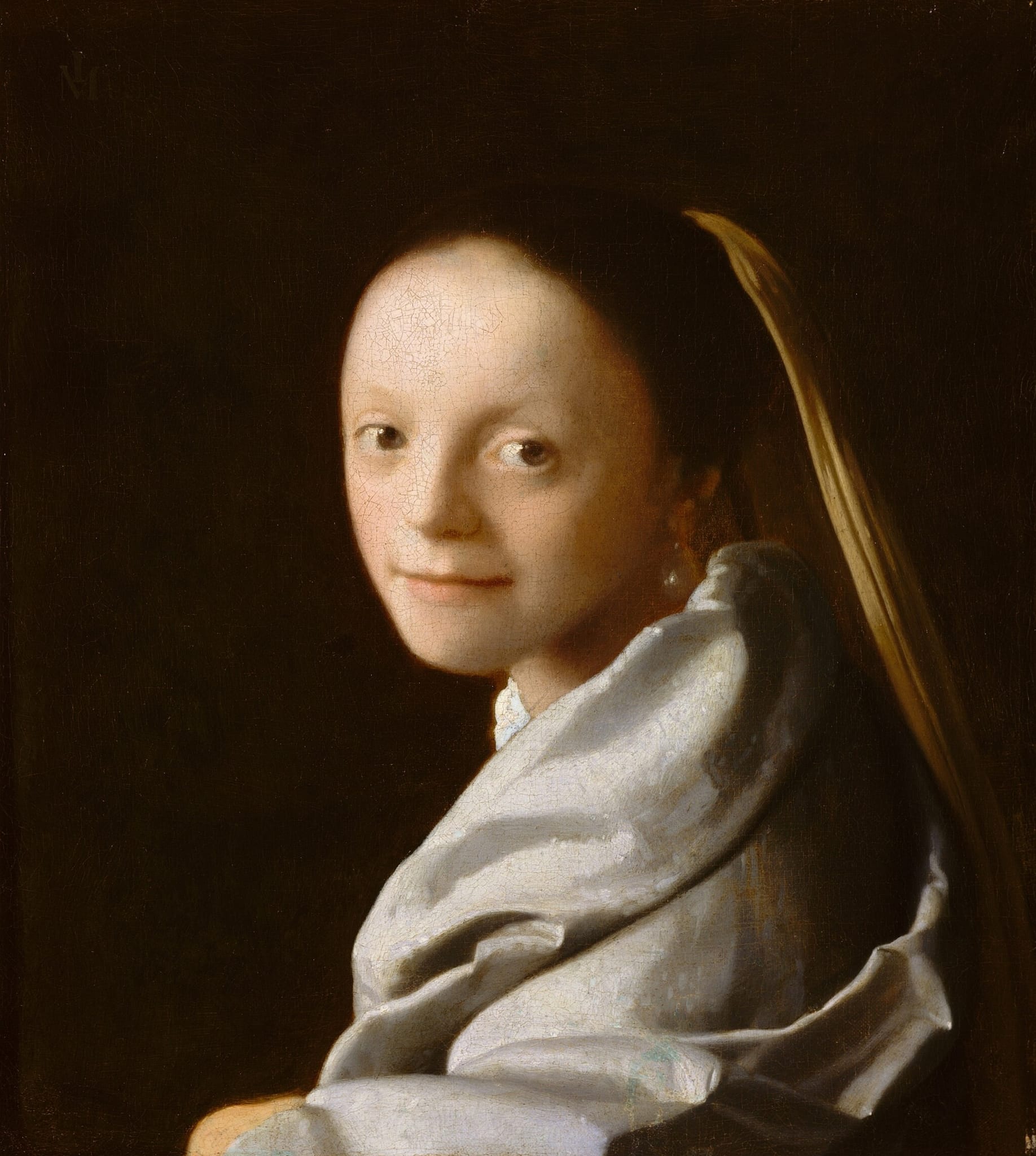
Study of a Young Woman
ca. 1665–67
A close, restrained portrait-like study of a young woman shown against a dark background, rendered with sensitive attention to skin tones and the play of light across her face. Significant as an example of Vermeer’s late approach to concentrated, quietly expressive figure studies that foreground subtle mood and painterly refinement. Look for the delicate gradations of light on the face, the simplicity of the pose, and the way minimal props and a neutral ground focus attention on the sitter’s expression and surface colour.
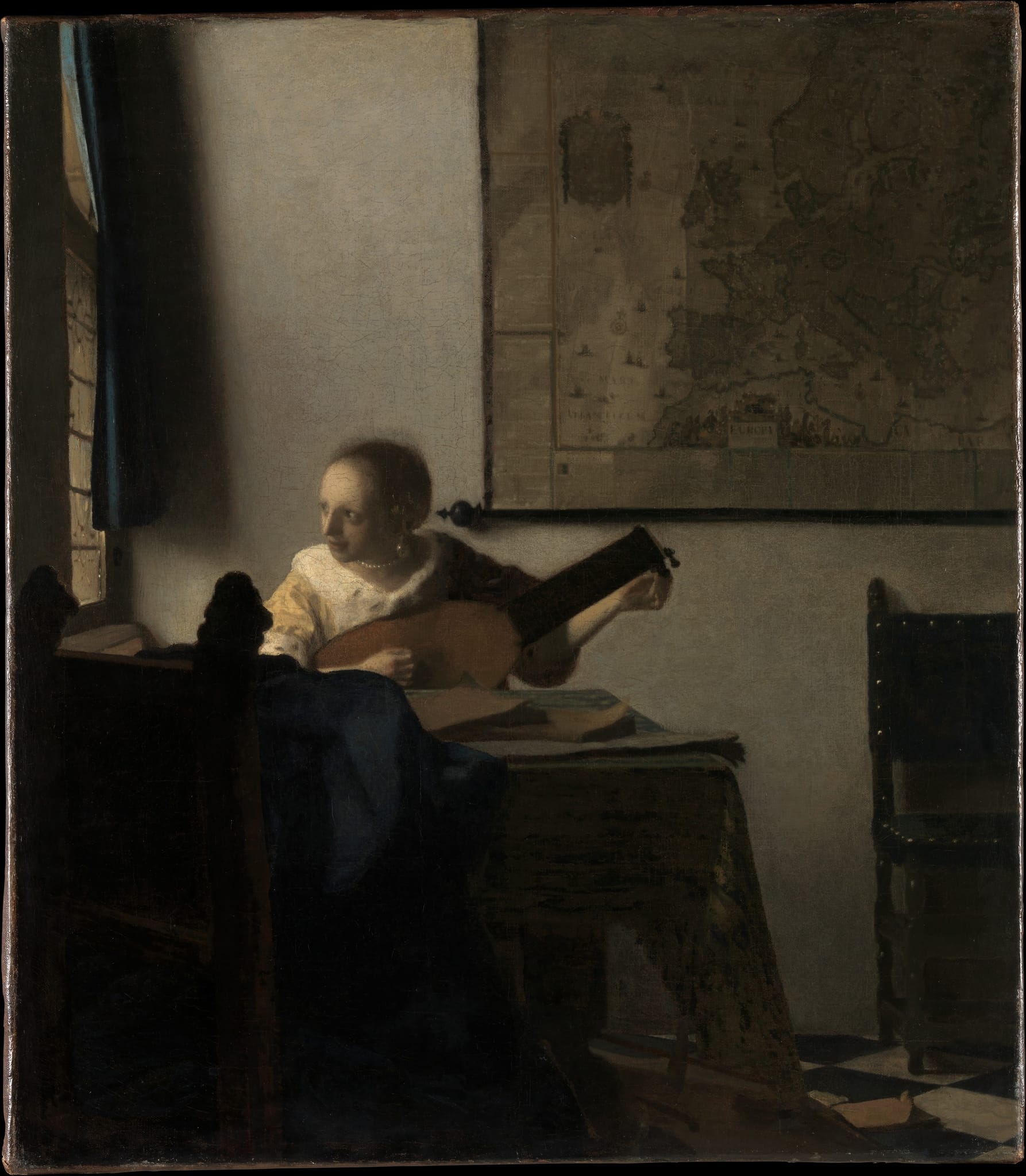
Young Woman with a Lute
ca. 1662–63
Shows a young woman seated, holding or tuning a lute in a sunlit interior, evoking themes of music, courtship and harmony common in Dutch genre painting. The painting is valued for its serene composition, sensuous rendering of textiles and metal, and Vermeer’s ability to suggest a narrative moment through gesture and gaze. Pay attention to the shimmering highlights on the instrument and jewelry, the soft modelling of the face, and how the light from the window structures the whole scene.
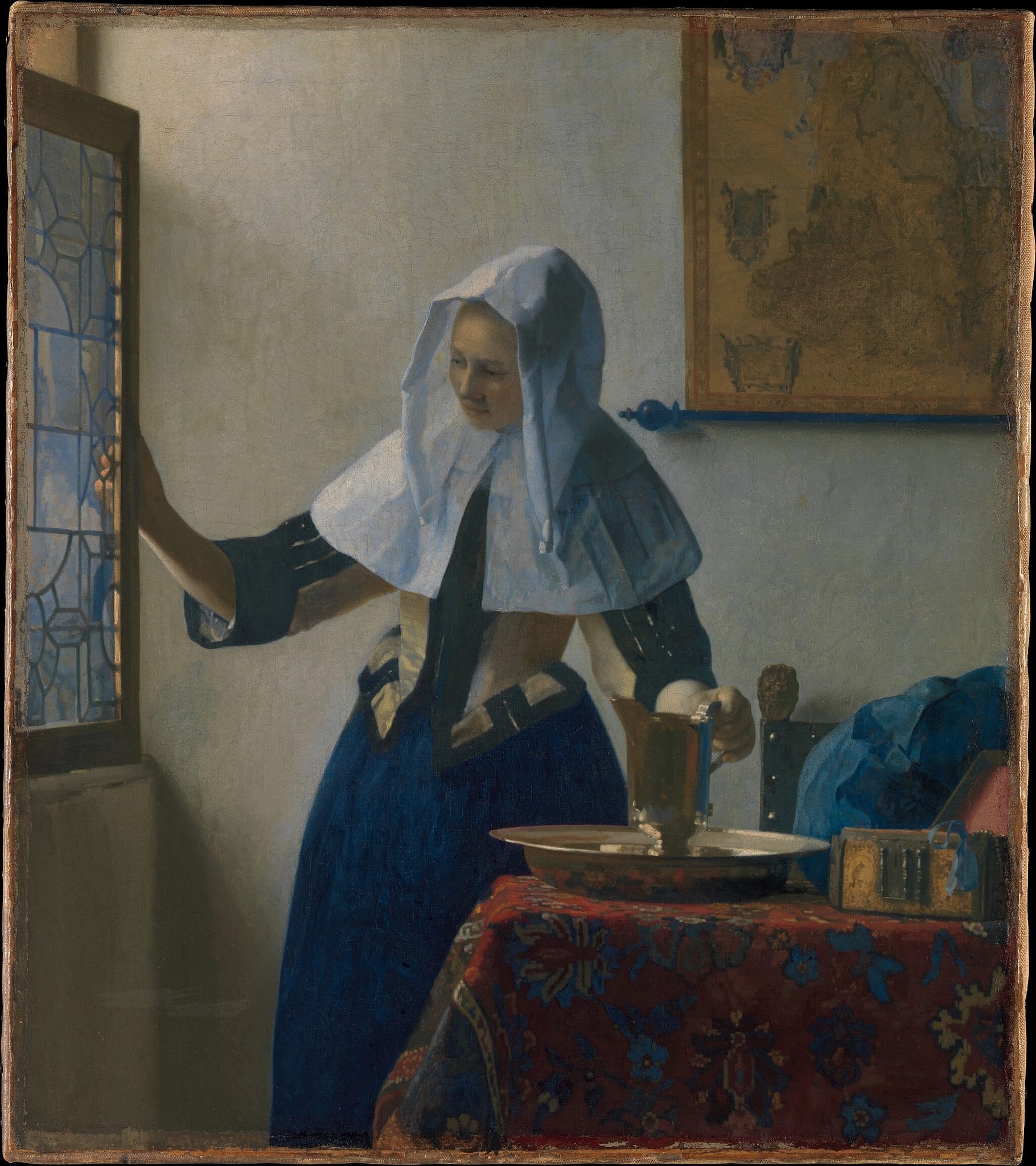
Young Woman with a Water Pitcher
ca. 1662
Portrays a young woman standing by a window as she lifts a polished water pitcher, a quiet domestic scene that balances everyday activity with painterly grace. It’s significant for its pure treatment of light and texture—Vermeer transforms a simple household task into an image of timeless stillness and subtle symbolism (purity, service). Look closely at the luminous whites and blues, the reflective surfaces of the pitcher, and the way the window light models the figure and the room’s tactile details.
Must-seeThe Frick Collection
The Frick is essential for Vermeer lovers because its small, domestic-scale galleries mirror the intimate settings of Vermeer’s pictures, allowing you to experience the paintings at nearly the same human scale that Vermeer intended. Because the Frick displays its Vermeers in a restrained, residential atmosphere (originally a private mansion), each work reads as a centerpiece rather than one object among many, which heightens the sense of quiet presence and lets you appreciate the artist’s meticulous control of light and texture.
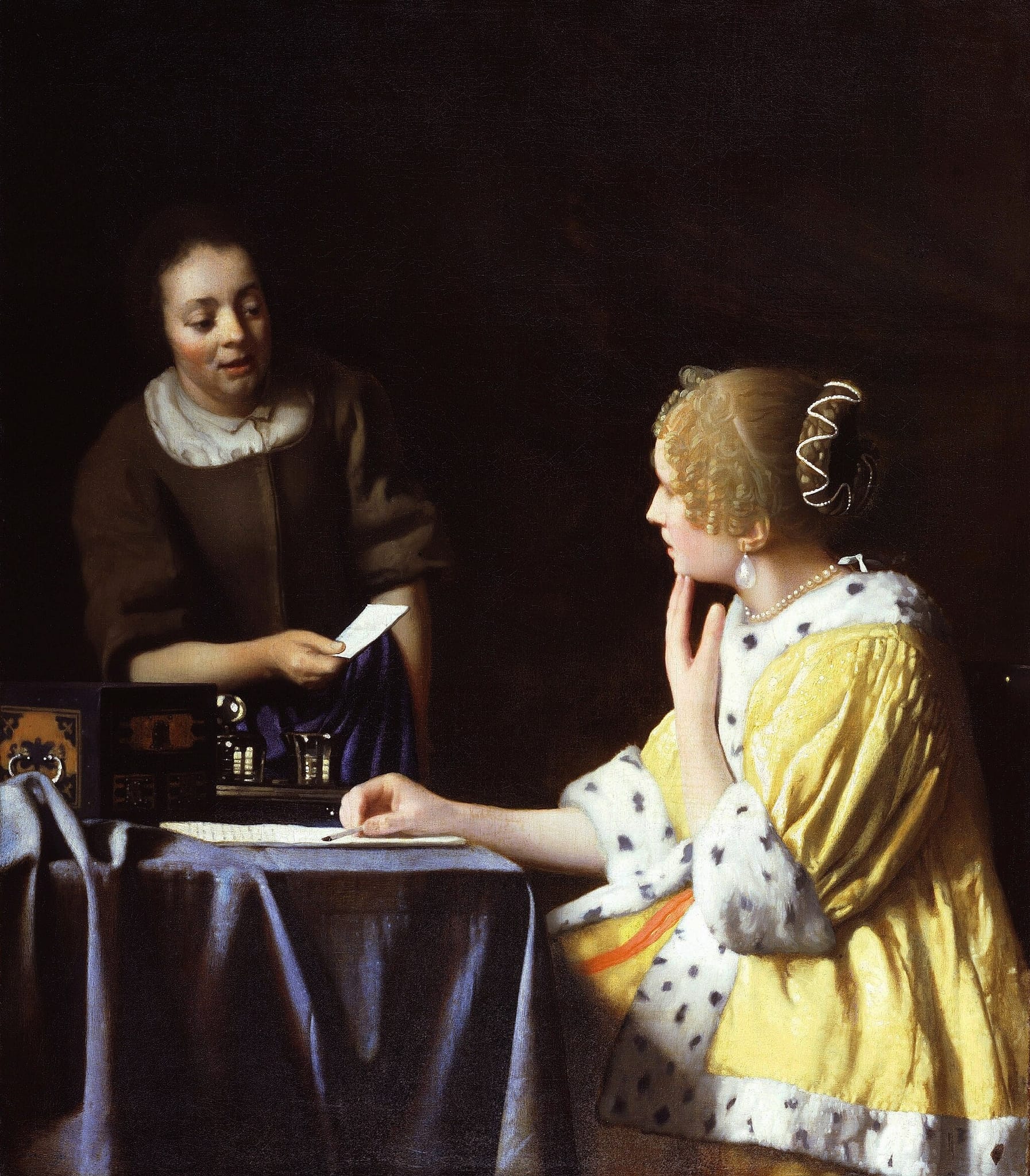
Mistress and Maid
ca. 1664–67
Depicts a finely dressed woman (the mistress) reading a letter while her maid stands by holding a bowl, set in an intimate domestic interior. Significant for its psychological subtlety and Vermeer’s mastery of light and texture, the work invites questions about social roles and private emotion in the Dutch Golden Age. Look for the delicate rendering of fabrics, the interplay of cool and warm light across faces and surfaces, and the careful compositional framing that directs attention to the letter.
Must-see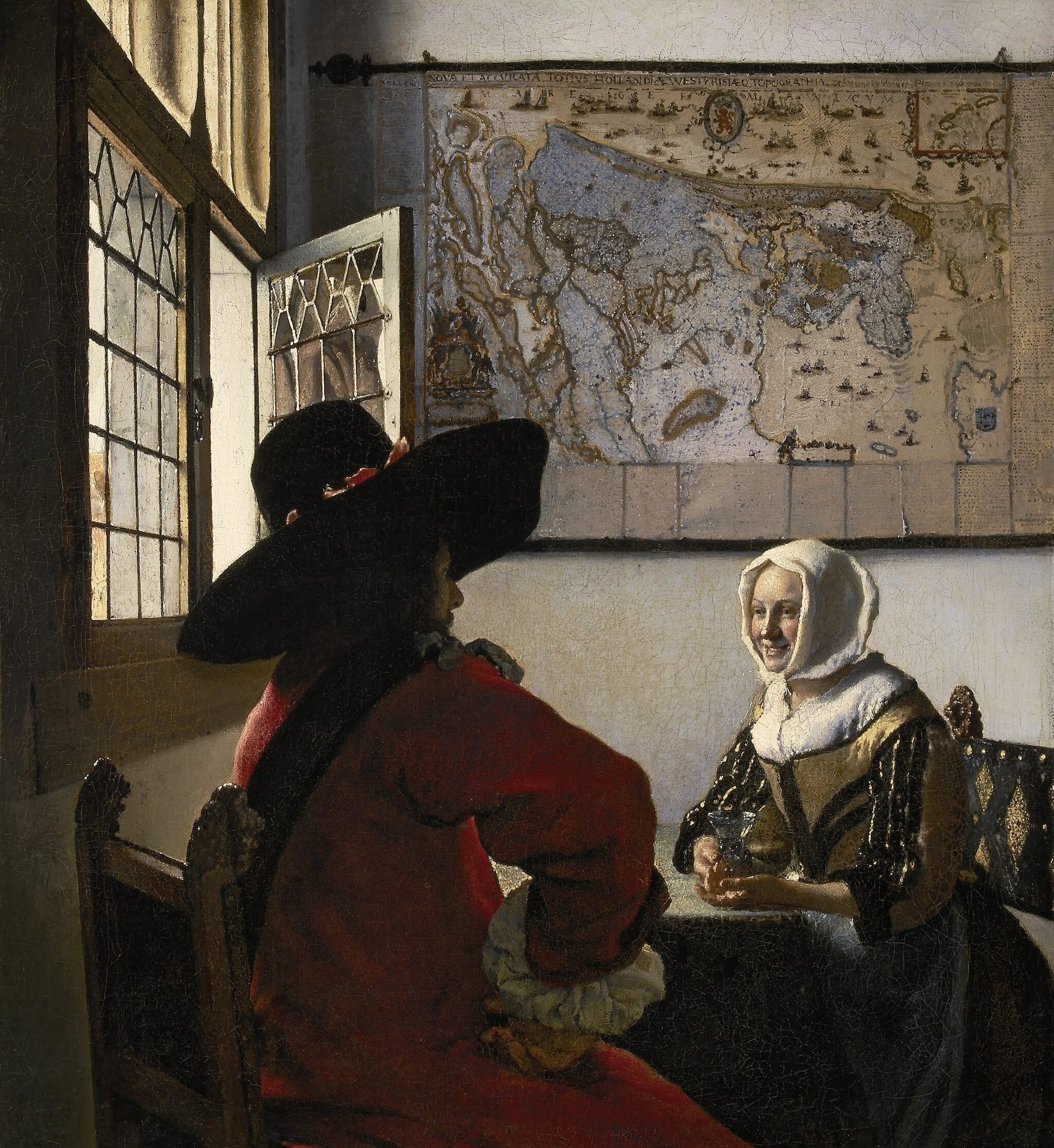
Officer and Laughing Girl
ca. 1657
Shows a jaunty officer leaning across a table toward a smiling young woman, capturing a moment of flirtation within a modest interior. Important as an early example of Vermeer’s genre painting that balances narrative suggestion with compositional restraint, it demonstrates his developing use of color and perspective. Notice the contrast between the officer’s bold costume and the woman’s softer tones, the precise handling of light on metal and glass, and the subtle gestures that create the scene’s social dynamic.
Must-see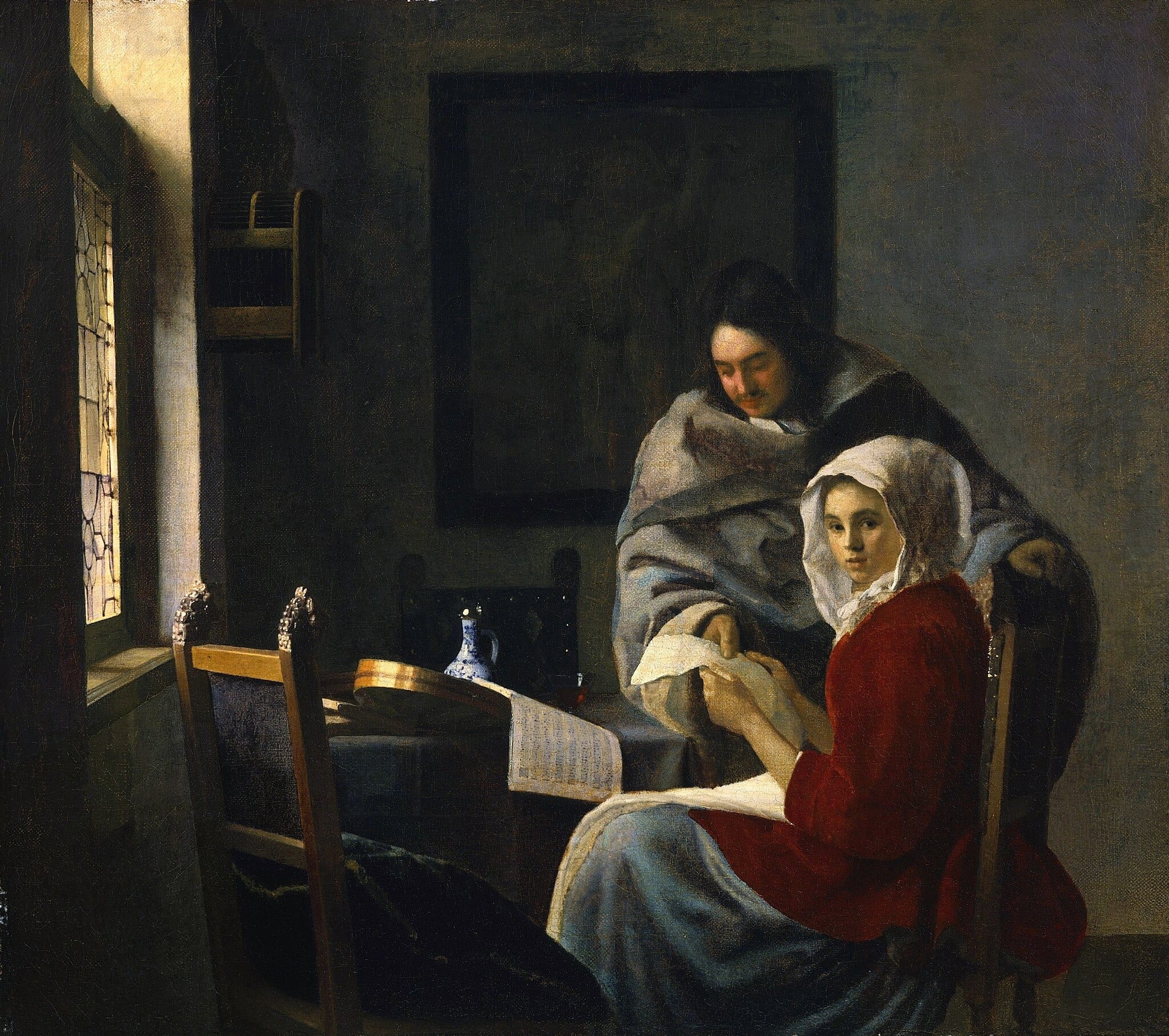
Girl Interrupted at Her Music
ca. 1658–59
Portrays a young woman who has paused at the keyboard as a man (partially visible) reaches toward her, suggesting a momentary interruption in a private musical lesson or courtship. Significant for Vermeer’s sensitive treatment of interior space and the theme of music as both social ritual and intimate exchange, it highlights his skill in capturing stillness and narrative implication. Look for the luminous skin tones, the textured drapery, the careful placement of objects that imply acoustics and distance, and the quiet tension in the figures’ poses and glances.
Must-see