Johannes Vermeer Paintings in Amsterdam — Where to See Them
Amsterdam is one of the few places where you can see approximately four Vermeer paintings on permanent display—all housed in a single museum, the Rijksmuseum. That concentration makes the city especially useful for studying Vermeer’s subtle use of light and domestic detail up close, since the works are presented side-by-side with contextual Dutch Golden Age paintings and conservatorship that highlights their color and technique.
At a Glance
- Museums
- Rijksmuseum
- Highlight
- Visit the Rijksmuseum to view its four Vermeer masterpieces up close
- Best For
- Art lovers seeking Dutch Golden Age masterpieces
Rijksmuseum
The Rijksmuseum is essential for experiencing Vermeer because it brings several of his rare works together within the larger story of the Dutch Golden Age, allowing direct visual comparison with contemporaries and with the domestic and civic contexts Vermeer painted. Its curatorial presentation emphasizes close, contemplative viewing and technical conservation, so visitors can appreciate Vermeer’s subtle handling of light, color (notably his use of expensive pigments), and quiet domestic interiors in a way that single isolated loans often do not permit.
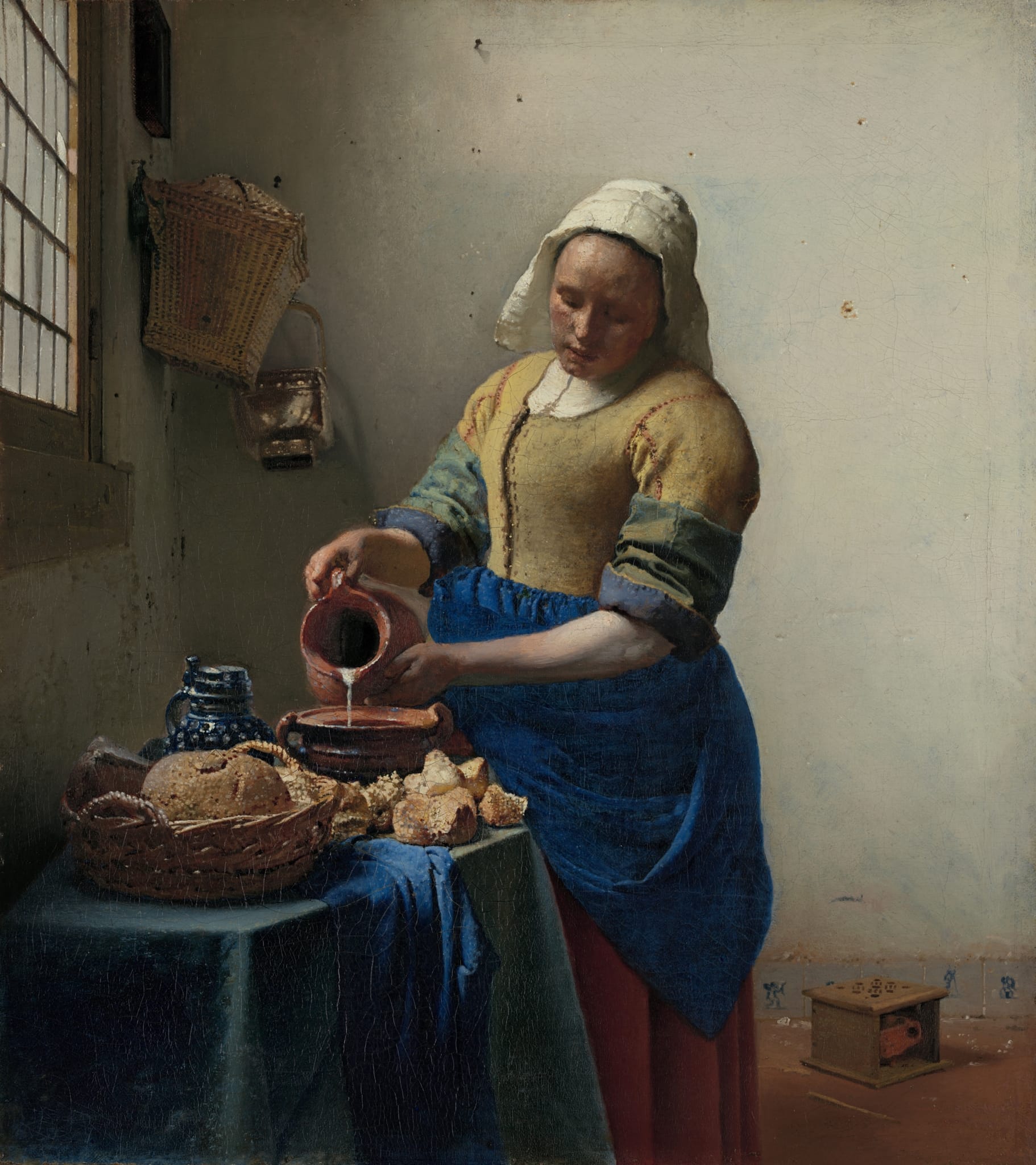
The Milkmaid
c. 1660
A sturdy domestic servant pours milk into a bowl in a sunlit kitchen, surrounded by everyday objects like a basket of bread and a Delft tile panel. Its significance lies in Vermeer’s elevation of a humble, domestic scene into a study of light, texture, and quiet dignity, asserting the importance of ordinary life in Dutch Golden Age painting. Look for the tactile rendering of the bread and milk, the warm shafts of natural light across her figure, and the subtle interplay of color (especially the blue apron and yellow bodice).
Must-see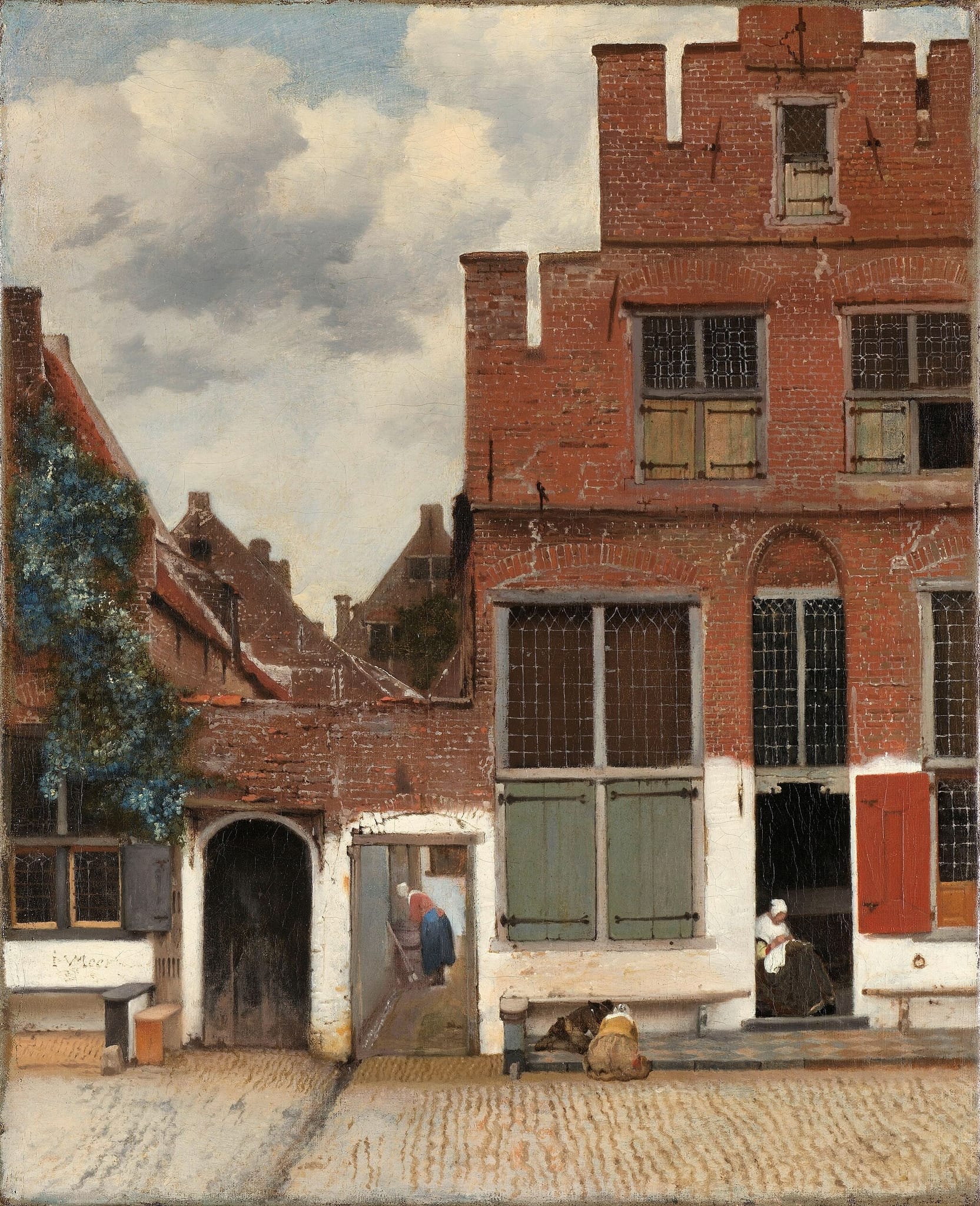
View of Houses in Delft, Known as ‘The Little Street’
c. 1658
A small, intimate street scene shows a row of houses and courtyards on a quiet Delft lane, with figures engaged in everyday activities. The painting is significant as one of Vermeer’s rare outdoor views and for its topographical precision and calm, measured composition that blends documentary detail with painterly order. Notice the careful rendering of brickwork and tiles, the balanced geometric composition, and how light defines surfaces and leads the eye into the narrow courtyard.
Must-see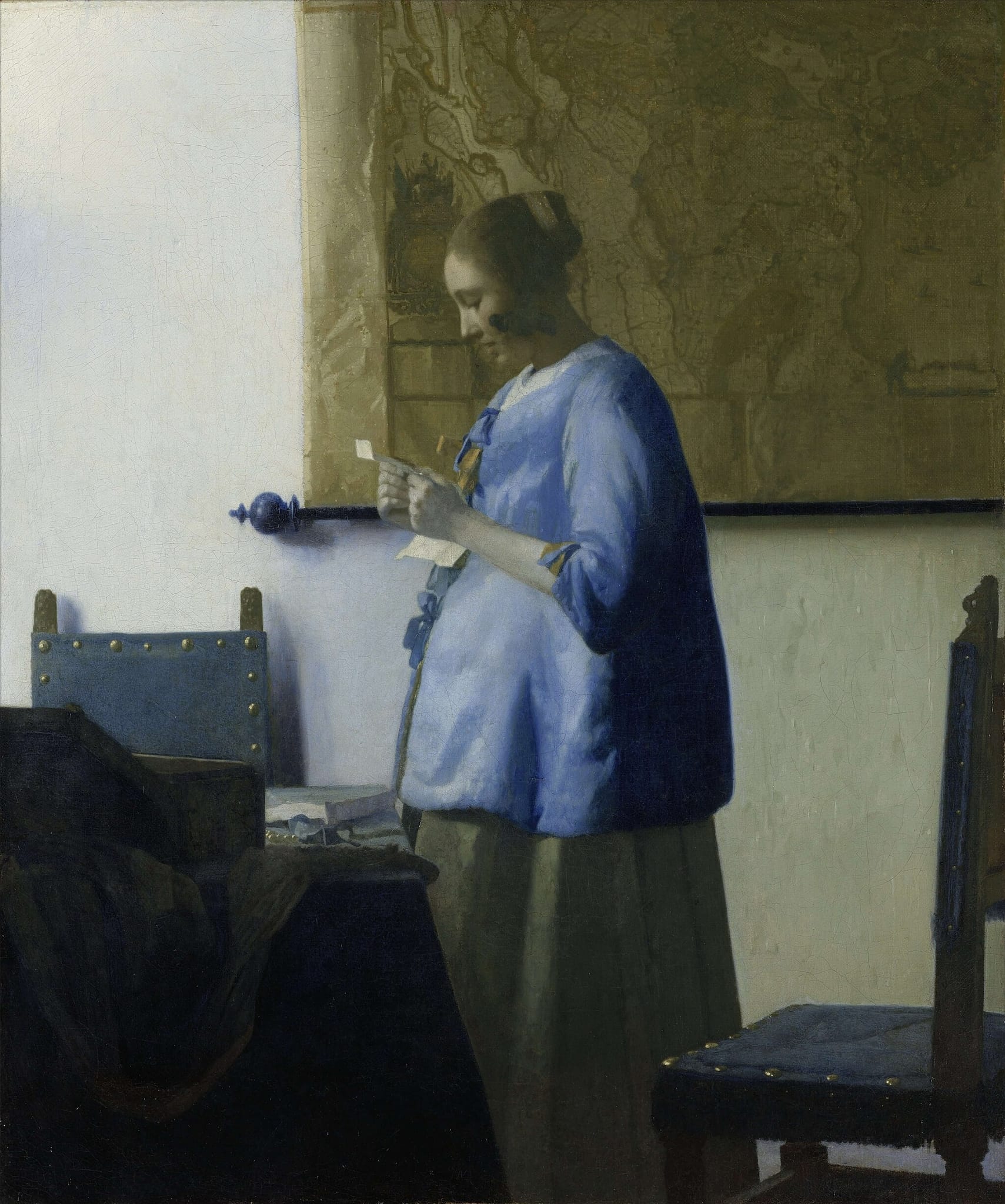
Woman Reading a Letter
c. 1663
A woman stands absorbed as she reads a letter by a window, with a map and a small table nearby suggesting context and status. The work is important for its psychological intimacy and Vermeer’s mastery of capturing a quiet, narrative moment—inviting speculation about the letter’s contents and the subject’s emotions. Pay attention to the delicate modulation of light on her face and hands, the reflective qualities of the window glass, and the compositional balance between figure and interior objects.
Must-see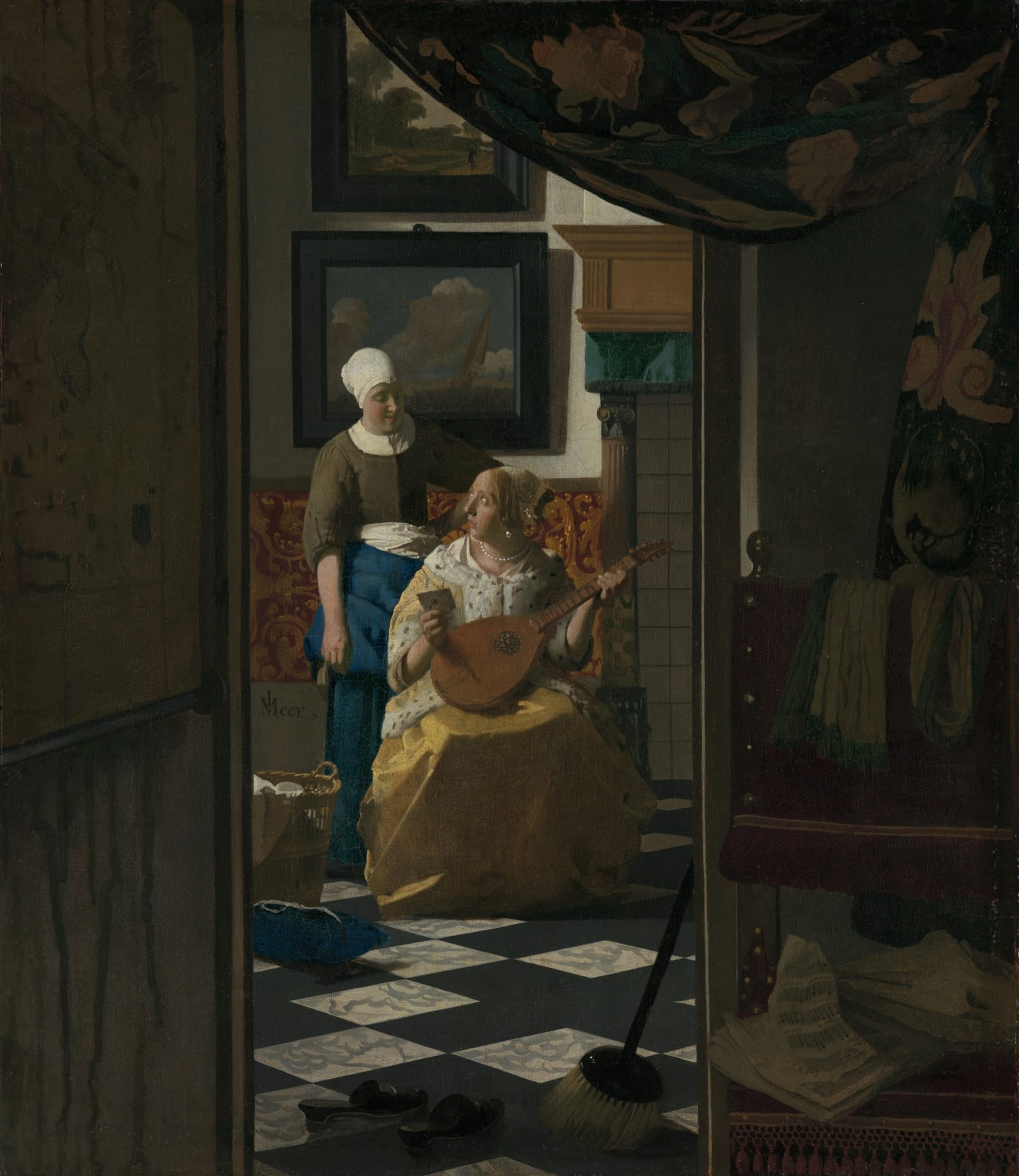
The Love Letter
c. 1669 - c. 1670
Two women converse in a tiled, sunlit room while a maid holds a letter, creating a scene ripe with narrative ambiguity about love, secrecy, or social exchange. This painting is significant for its complex composition, rich symbolism (the letter, music, and open window), and Vermeer’s refined use of color and light to suggest mood and relationship. Look for the interplay of patterned textiles and tiles, the subtle gestures and glances that imply a story, and the soft, diffused light that models faces and surfaces.