Johannes Vermeer Paintings in The Hague — Where to See Them
The Hague matters for experiencing Johannes Vermeer because the city’s Mauritshuis displays approximately three of his paintings on permanent view. With all three concentrated in one compact museum, you can study Vermeer’s handling of light, texture and domestic intimacy up close while seeing them in the immediate context of Dutch Golden Age painting.
At a Glance
- Museums
- Mauritshuis
- Highlight
- See Vermeer's Girl with a Pearl Earring at the Mauritshuis.
- Best For
- Lovers of Dutch Golden Age art and intimate museum experiences.
Mauritshuis
The Mauritshuis is home to three crucial works by Vermeer — the luminous Girl with a Pearl Earring (the museum’s most famous attraction), the rare cityscape View of Delft (Vermeer’s only major urban panorama), and the earlier mythic/figure picture Diana and Her Companions — making the museum one of the few places where you can compare his intimate, portrait-like tronie, his unique approach to light in a landscape/city view, and an early, more narrative experiment in one short visit. Seeing Girl with a Pearl Earring and View of Delft in the Mauritshuis’s compact, carefully lit galleries clarifies how Vermeer modulated scale, composition and light across very different subjects; the contrast between the tiny, psychologically intense head-and-shoulders portrait and the measured, architectural sweep of the Delft view is especially instructive. ([mauritshuis.nl](https://www.mauritshuis.nl/en/explore/the-collection/artworks/girl-with-a-pearl-earring-670/?utm_source=openai))
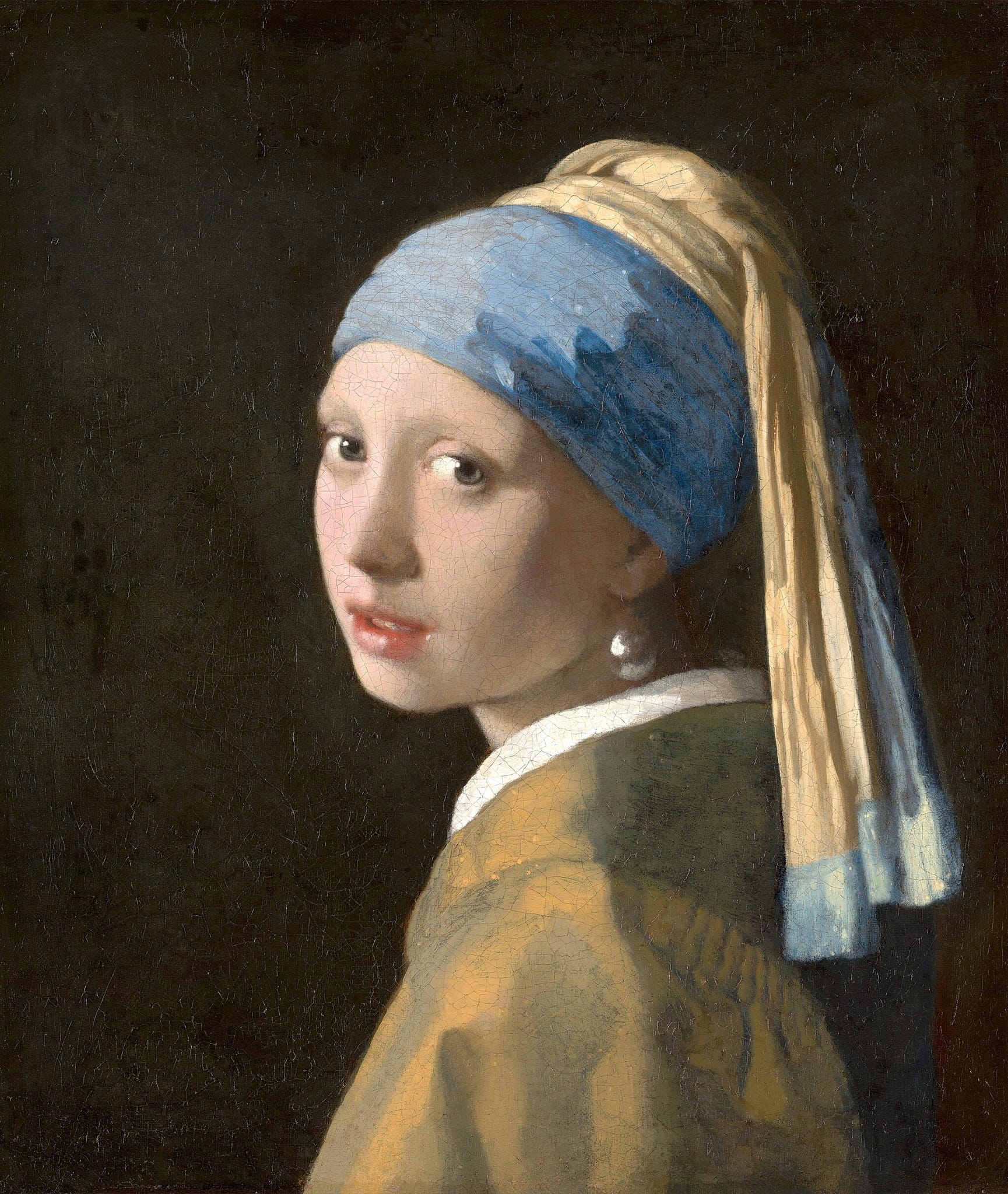
Girl with a Pearl Earring
c. 1665
A life‑size tronie of a young girl turning toward the viewer, wearing an exotic blue and gold turban and a large pearl earring. It is significant as an iconic example of Vermeer’s mastery of light, intimacy, and the ‘tronie’ genre that emphasizes character and effect over portraiture. Look for the soft, luminous modeling of her face, the subtle catchlights in the eyes and pearl, and the delicate transitions between warm and cool tones that create the painting’s arresting immediacy.
Must-see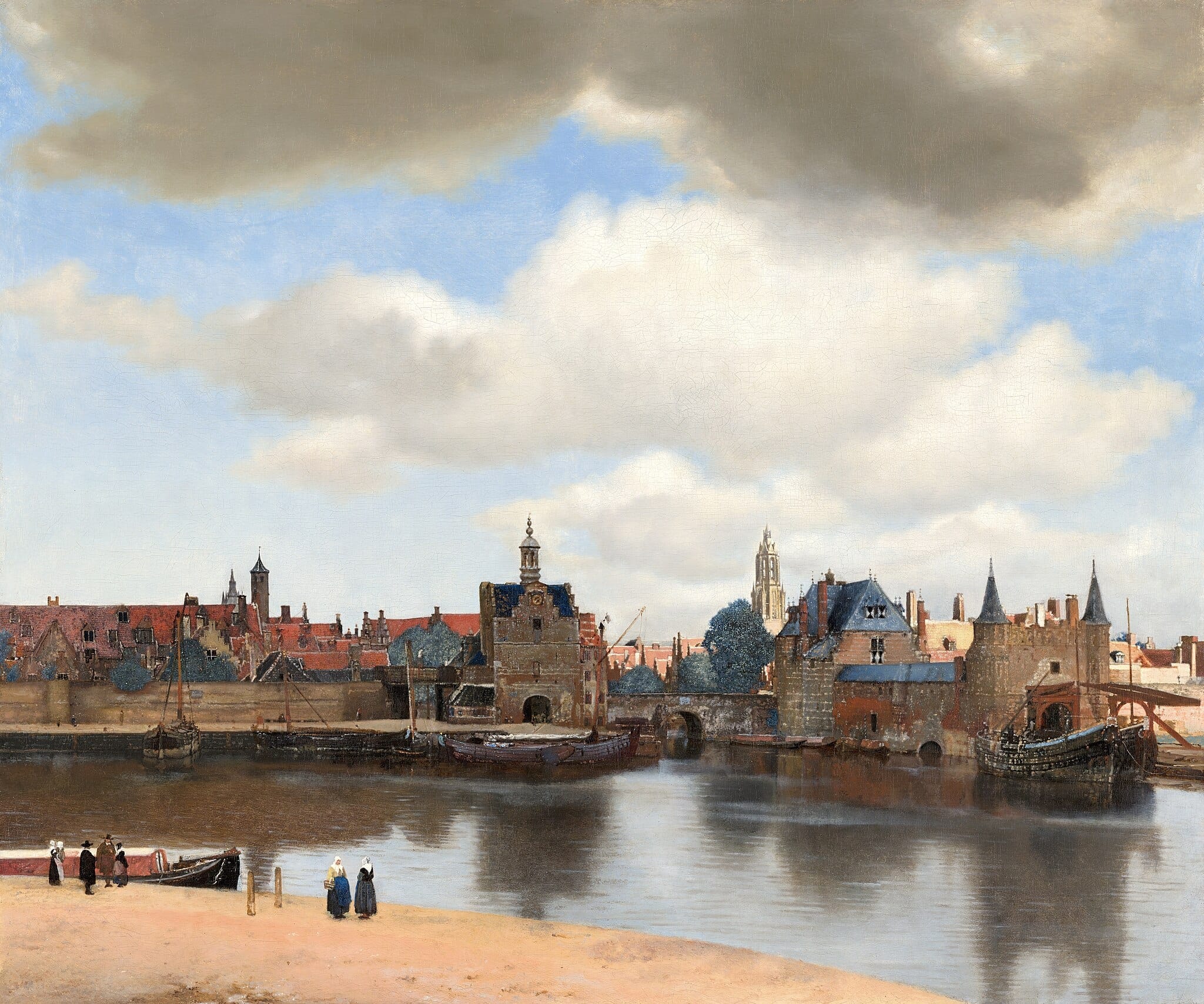
View of Delft
c. 1660-1661
A wide, sunlit cityscape showing Delft’s quays, boats, and skyline under a pale sky, rendered with meticulous perspective and atmospheric clarity. This work is significant as one of the few large-scale urban views by Vermeer and a celebrated achievement in balancing topographical accuracy with painterly mood. Notice the precise linear perspective leading the eye into the scene, the shimmering reflections in the water, and the way tiny, carefully painted figures give scale and life to the composition.
Must-see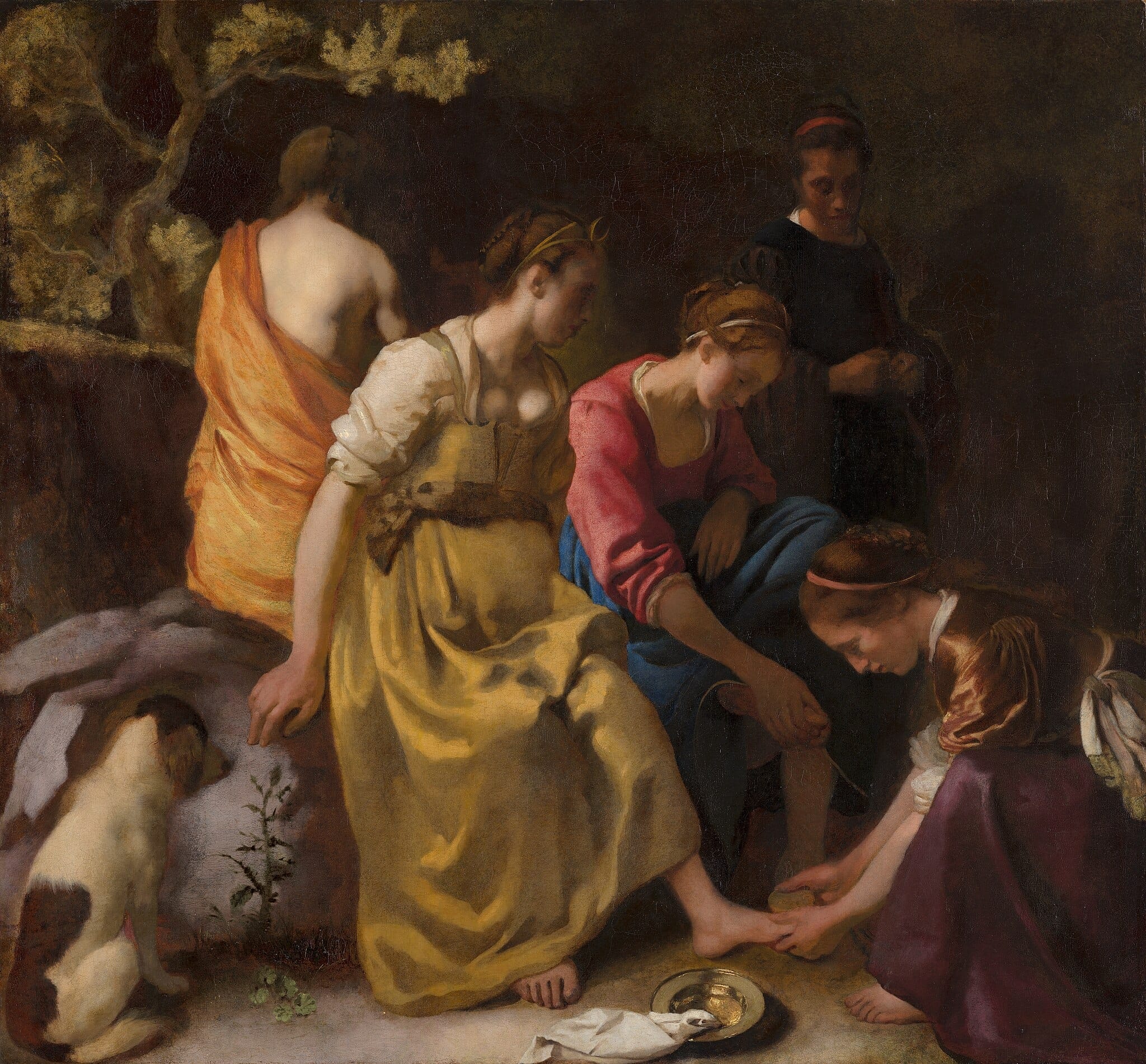
Diana and her Nymphs
c. 1653-1654
A mythological composition depicting the goddess Diana seated with her nymphs in a woodland setting, identifiable by the presence of a small stag and Diana’s crescent attribute. It is significant as an early, unusual subject for Vermeer that demonstrates his facility with narrative, classical iconography, and color harmonies beyond his later domestic interiors. Look for the careful arrangement of figures around Diana, the interplay of shadow and soft daylight across fabrics and skin, and the restrained classical gestures that signal the story without theatrical excess.