Peter Paul Rubens Paintings in Madrid — Where to See Them
Madrid matters for experiencing Peter Paul Rubens because you can see approximately six of his paintings on permanent display across just two institutions: the Museo Nacional Thyssen-Bornemisza (3 paintings) and the Real Academia de Bellas Artes de San Fernando — Museo de la Academia (3 paintings). Having these works concentrated in two complementary settings lets you compare Rubens’s technique and themes side‑by‑side — the Thyssen’s museum‑scale presentation and the Academia’s historical, academic context reveal different facets of his portraiture, religious and mythological practice.
At a Glance
- Museums
- Museo Nacional Thyssen-Bornemisza, Real Academia de Bellas Artes de San Fernando (Museo de la Academia)
- Highlight
- See Rubens' dynamic Baroque masterpieces at the Thyssen and Academia.
- Best For
- Baroque art lovers and European Old Master enthusiasts.
Museo Nacional Thyssen-Bornemisza
The Thyssen matters for experiencing Rubens because its small, carefully chosen group of Rubens works is presented within a concentrated survey of Northern and Southern European painting, which highlights how Rubens’ blend of Flemish color and Italianate composition influenced collectors across Europe. Seeing his canvases here alongside Spanish Golden Age and Italian Baroque paintings lets you compare Rubens’ vivacity of brushwork and palette directly with the Spanish painters who collected and responded to him, clarifying his role as a crossroads figure in seventeenth‑century taste. The museum’s intimate galleries make it easier to focus on Rubens’ handling and compositional drama without the visual overwhelm of larger national collections.
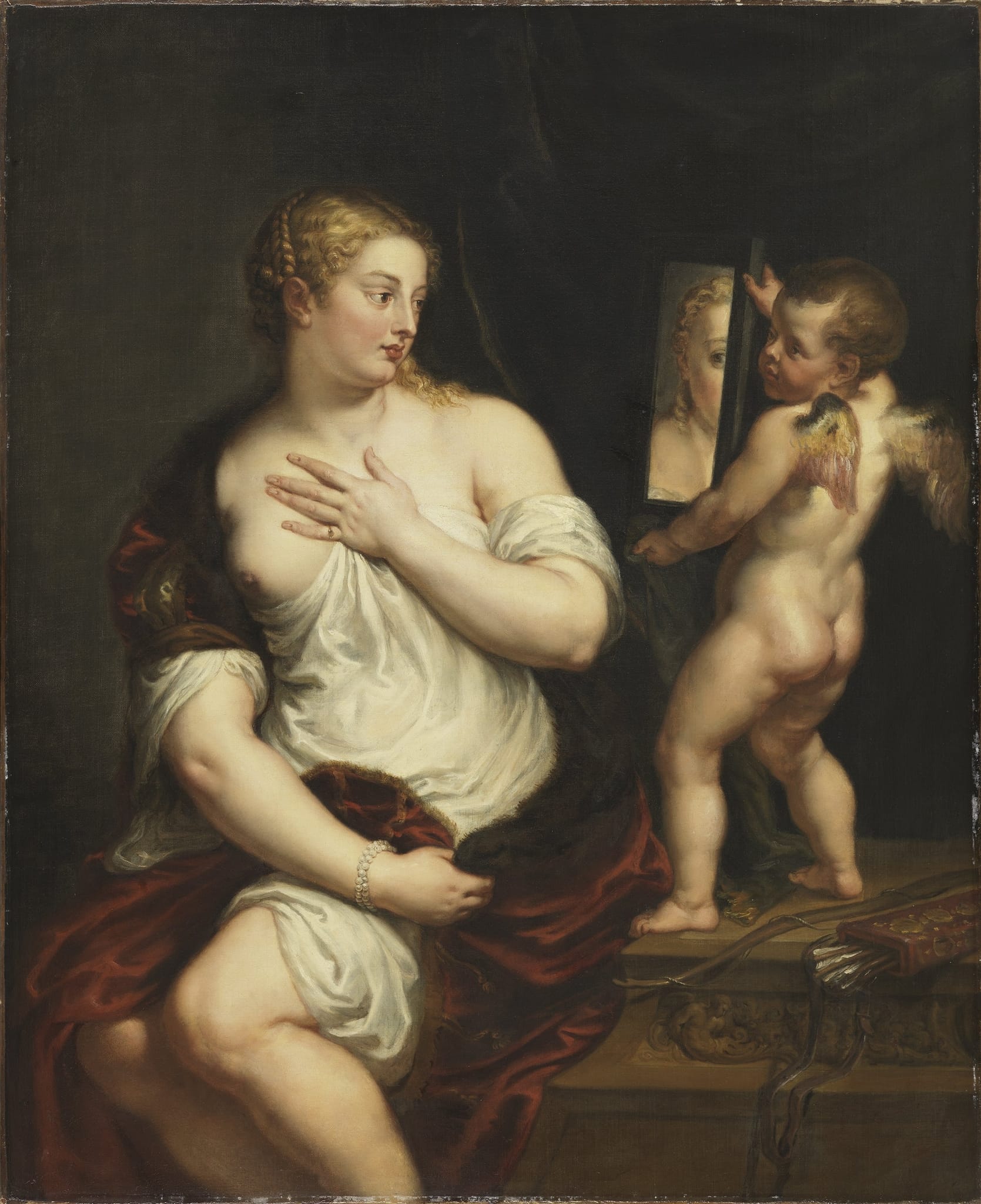
Venus and Cupid
c. 1606-1611
A sensuous half-length depiction of Venus attended by Cupid, showing the goddess gazing into a mirror held by the child while rich crimson drapery and warm flesh tones create an intimate, tactile scene. The painting is significant as an example of Rubens’s early Baroque synthesis of Venetian colour and dynamic Flemish modelling, reflecting his study of Titian and other Italian sources. Viewers should look for the lively brushwork in the flesh and fabrics, the contrast between cool background shadows and warm foreground skin, and the subtle jewelry and pearl that emphasize Venus’s status and texture. ([artsandculture.google.com](https://artsandculture.google.com/asset/venus-y-cupido-0000/JAGgmBEdRGR9OA?utm_source=openai))
Must-see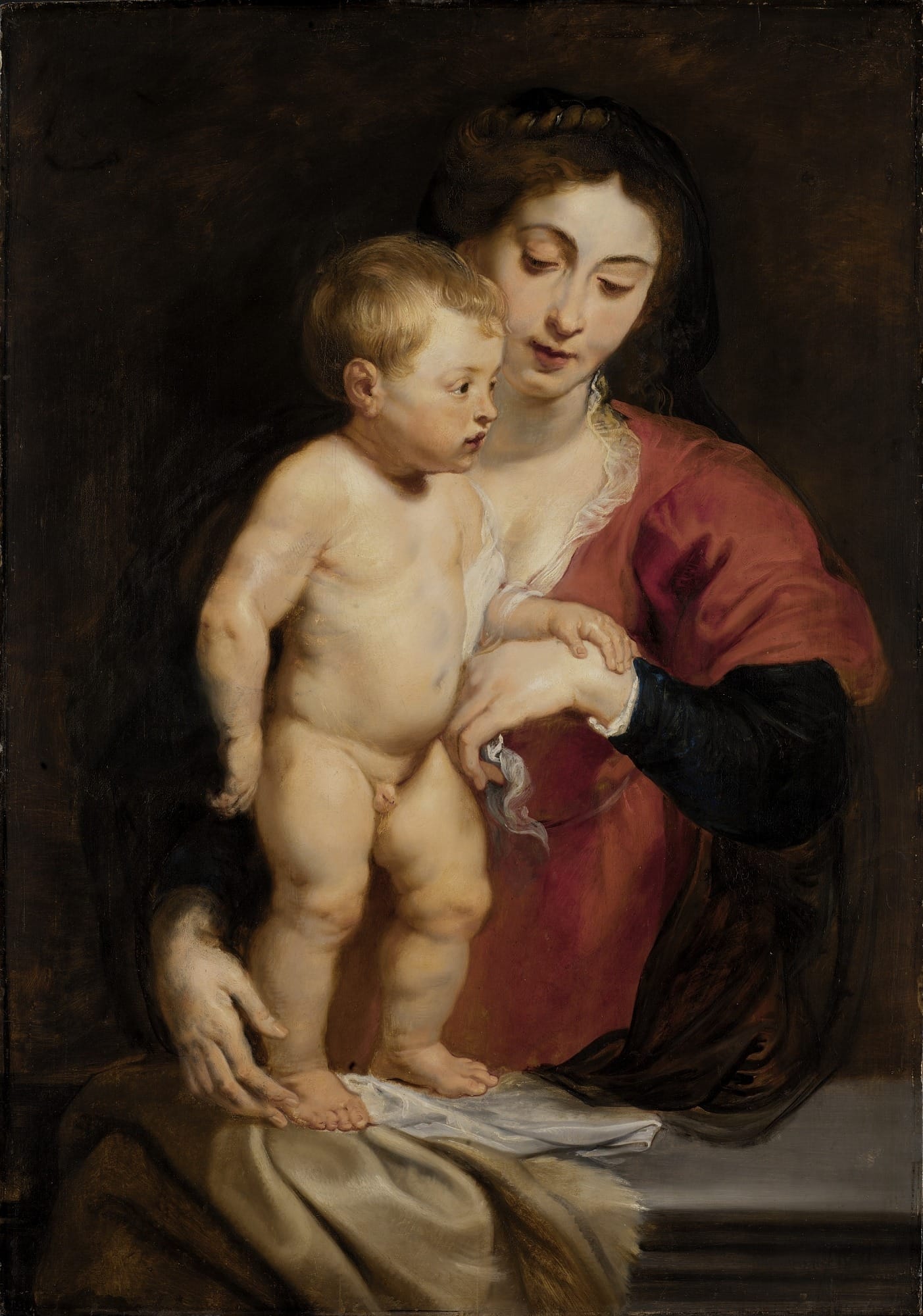
The Virgin with the Child Blessing
c. 1610
A devotional half-length image of the Virgin holding the Christ child who raises his hand in a traditional gesture of blessing, rendered with Rubens’s warmth and tender humanism. The work is important for its intimate scale and for showing Rubens’s ability to combine piety with naturalism—making sacred subjects feel immediate and emotionally accessible. When viewing, note the affectionate interaction between mother and child, the sculptural modelling of their faces and hands, and how light is used to focus attention on the child’s blessing gesture and the Virgin’s serene expression. ([museothyssen.org](https://www.museothyssen.org/sites/default/files/document/2017-03/wine_web.pdf?utm_source=openai))
Must-seeReal Academia de Bellas Artes de San Fernando (Museo de la Academia)
The Academia is important for Rubens because its Rubens paintings are part of a collection with direct historical links to the Spanish court and to the Academy’s role in teaching and conserving canonical Old Master works — a context that illuminates how Rubens was received, studied, and copied in Spain. The museum’s presentation emphasizes provenance, copies, and preparatory drawings in the same institution, so you can appreciate not only the finished Rubens canvases but also how Spanish artists and institutions engaged with his compositional models and workshop practice. This makes the Academia especially revealing for understanding Rubens’ impact on Spanish academic taste and painterly training.

San Agustín entre Cristo y la Virgen
1615
Saint Augustine is shown positioned between the Virgin Mary and the crucified Christ, creating a triangular devotional grouping that emphasizes his role as a mediator between human faith and divine grace. The painting is significant as an early-17th-century example of Rubens’s assimilation of Italian compositional clarity with Flemish colorism and was used in the Academy for devotional and pedagogical study. Look for the strong diagonals and color contrasts that guide the eye from Augustine’s contemplative face up to Christ and across to the luminous Virgin, and notice Rubens’s tactile handling of flesh and drapery which animates the theological drama.
Must-see