Peter Paul Rubens
Biography
Themes in Their Work
Where to See Peter Paul Rubens's Paintings
Explore Peter Paul Rubens's works on display in museums around the world.
Compare Peter Paul Rubens
Most Expensive Peter Paul Rubens Paintings
Explore ranked valuations of Peter Paul Rubens's most valuable works →
Featured Artworks
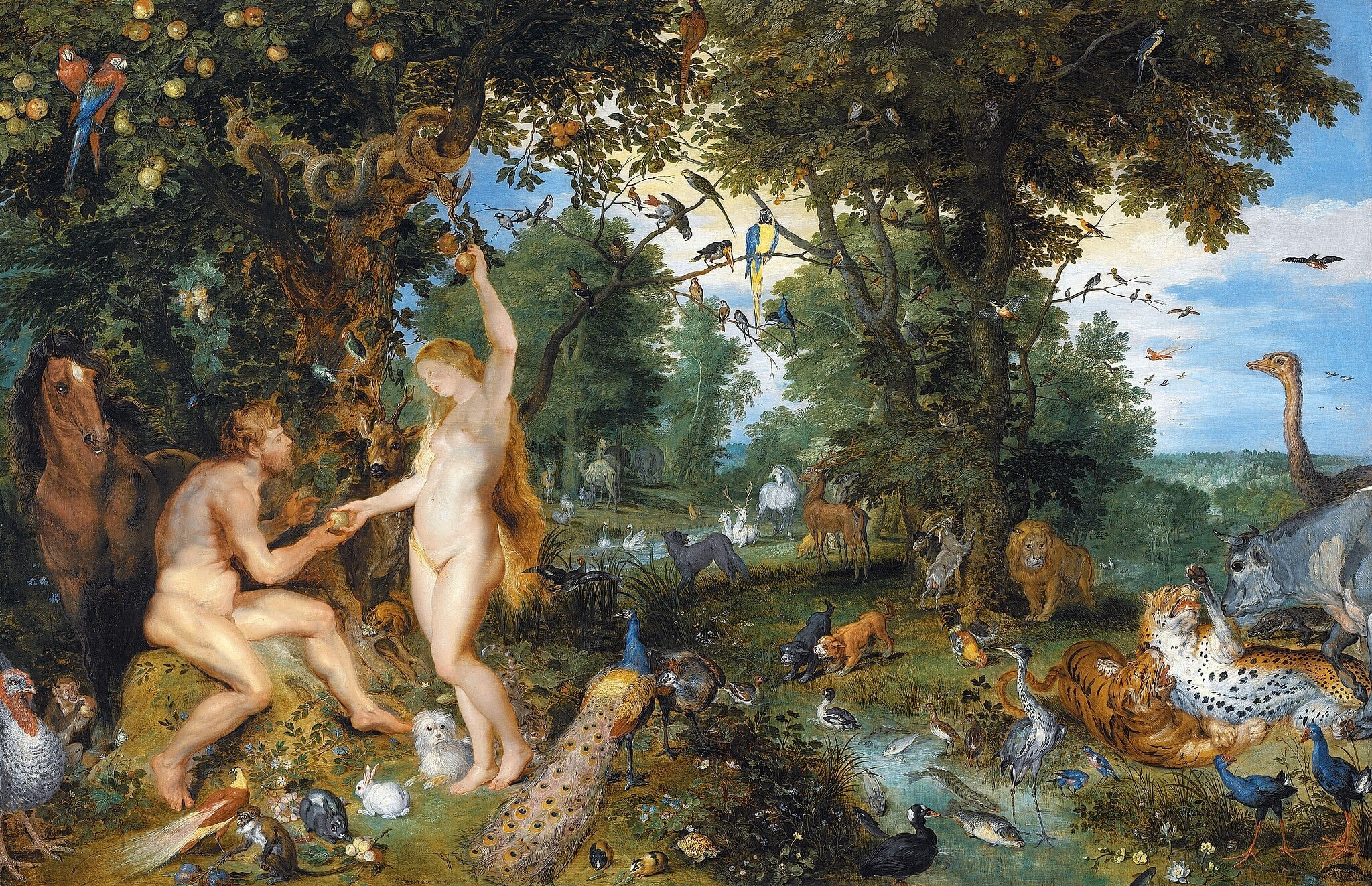
The Garden of Eden with the Fall of Man
Peter Paul Rubens (c. 1615)
<strong>The Garden of Eden with the Fall of Man</strong> stages the instant Eve passes the forbidden fruit to Adam as the serpent coils above and a teeming paradise encircles them. The panel fuses Peter Paul Rubens’s dramatic nudes with Jan Brueghel the Elder’s encyclopedic fauna and flora, turning Eden into a lush theatre of temptation and consequence <sup>[1]</sup>. Light isolates Eve’s raised arm and golden hair while predators stir at the margins, signaling paradise in the act of unraveling.
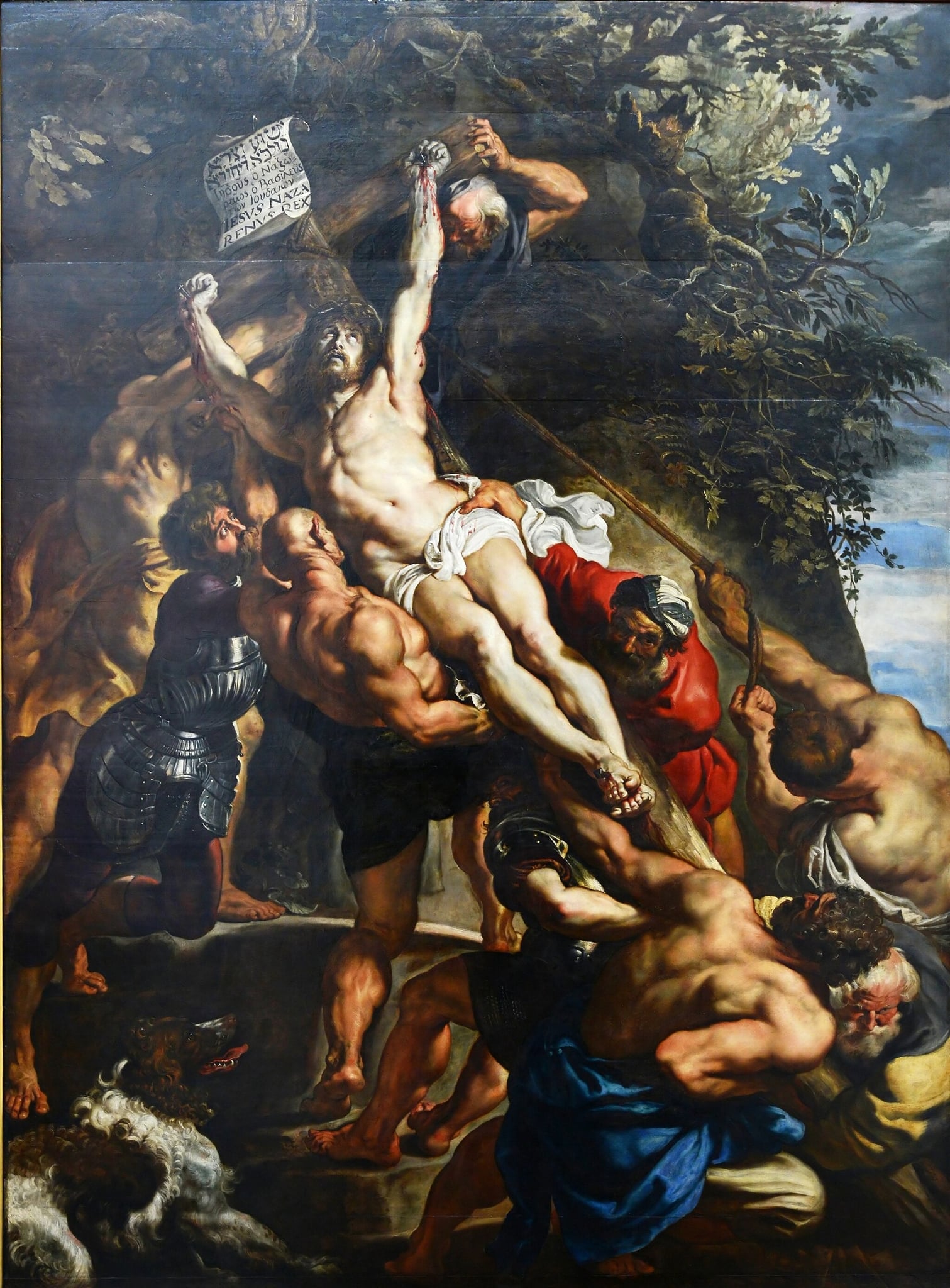
The Elevation of the Cross
Peter Paul Rubens (1609–1610)
A single, surging diagonal drives The Elevation of the Cross as straining executioners heave the timber while Christ’s pale body becomes the calm, radiant fulcrum. Rubens fuses muscular anatomy, flashing armor, taut ropes, and storm-dark landscape into a Baroque crescendo where <strong>divine light</strong> confronts <strong>human violence</strong> <sup>[1]</sup><sup>[3]</sup>.
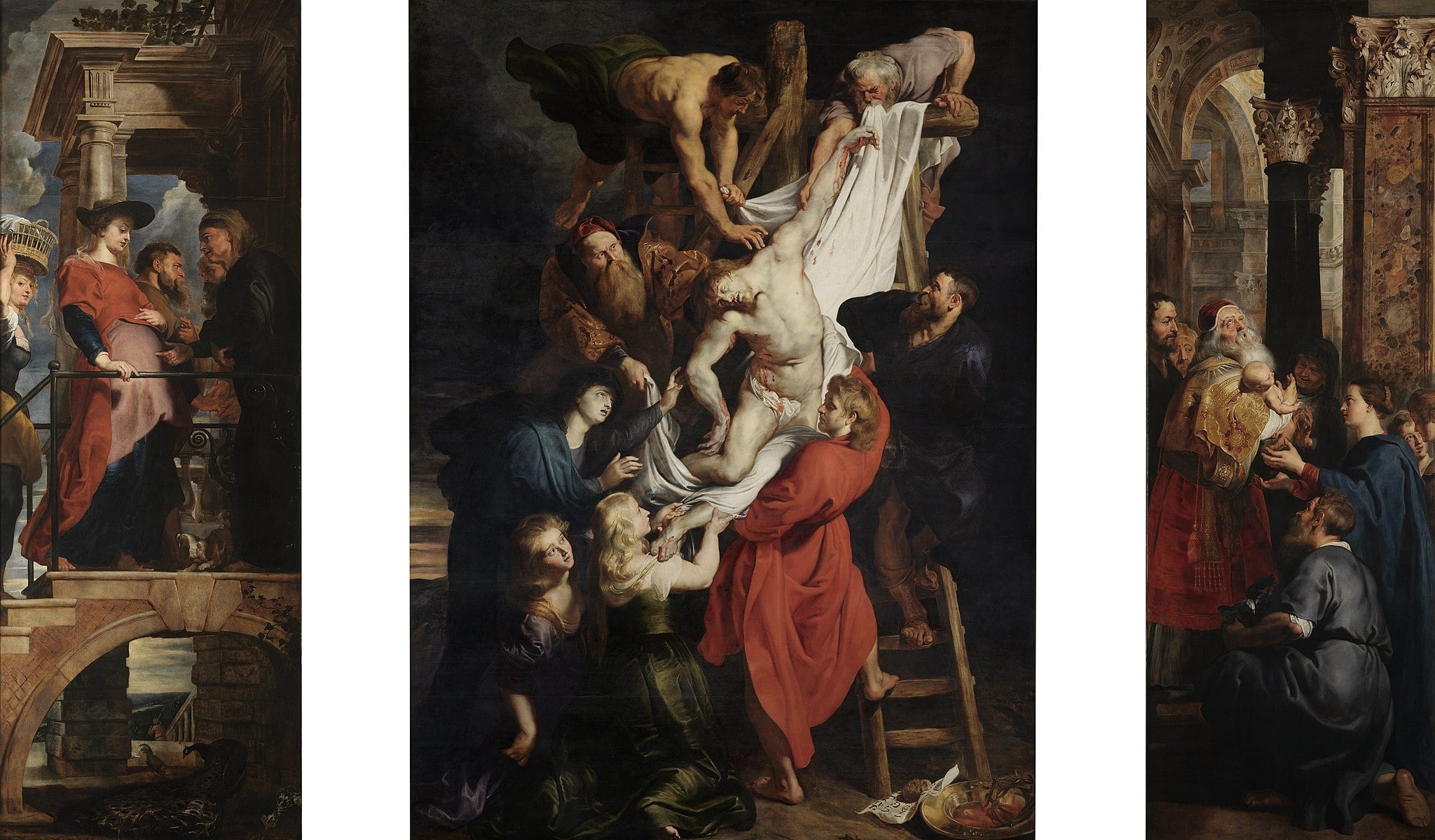
The Descent from the Cross
Peter Paul Rubens (1611–1614)
At night beneath a black sky, The Descent from the Cross stages a solemn transfer of Christ’s body along a luminous <strong>white shroud</strong> that cuts diagonally across the scene. The flanking wings—<strong>The Visitation</strong> and <strong>The Presentation in the Temple</strong>—frame the central tragedy with beginnings and revelation, turning the triptych into a single arc from Incarnation to Redemption. Rubens fuses <strong>Baroque chiaroscuro</strong> with tender, communal gestures to make grief a shared act of devotion.