Moving the body, repositioning the mind
Both artists served Habsburg power, studied in Italy, and transformed Titian’s lessons into courtly languages of seeing. Rubens turns painting into devout theater that acts on the body. Velázquez builds optical situations that make you aware you are seeing—and who is authorized to see. Their contact in Madrid (1628–29) ties these approaches into one lineage.
Comparison frame: How do Rubens’s persuasive altarpieces and Velázquez’s reflexive court pictures reengineer the viewer’s role in seeing?
Quick Comparison
| Topic | Diego Velazquez | Peter Paul Rubens |
|---|---|---|
| What painting is for | Persuasion through drama and devotion | Inquiry into seeing, status, and representation |
| Viewer’s role | Bodily empathy guided by clear diagonals and liturgical sightlines | Positional awareness via mirrors, thresholds, and circulating gazes |
| Compositional engine | Serpentine figure chains; programmatic diagonals | Tonal masses; soft edges; geometry of doorways and sightlines |
| Light and space | Chiaroscuro staging doctrinal contrasts; altar-distance legibility | Naturalistic air and multiple light sources; reflexive studio space |
| Power and court | Allegorical myth-making for rulers and Church | Humanized hierarchy that still encodes protocol |
| Italian inheritance | Venetian color amplified into Baroque splendor | Titian filtered into tonal realism and optical puzzles |
| Signature example | The Elevation of the Cross | Las Meninas |
| Artist’s status claim | Learned pictor doctus, diplomat, workshop leader | Noble professional; studio and self become the subject |
Shared Ground
Rubens and Velázquez stand at the center of Baroque court culture, each converting the act of looking into a shaped experience. Both trained in Italy and absorbed the prestige of Titian—coloristic richness, the primacy of paint’s touch—then translated it for northern Europe and Madrid. Their patrons asked painting to do heavy lifting: proclaim dynastic legitimacy, stage devotion, and articulate the dignity of the arts at court. Each artist delivered by designing not just images but viewing conditions.
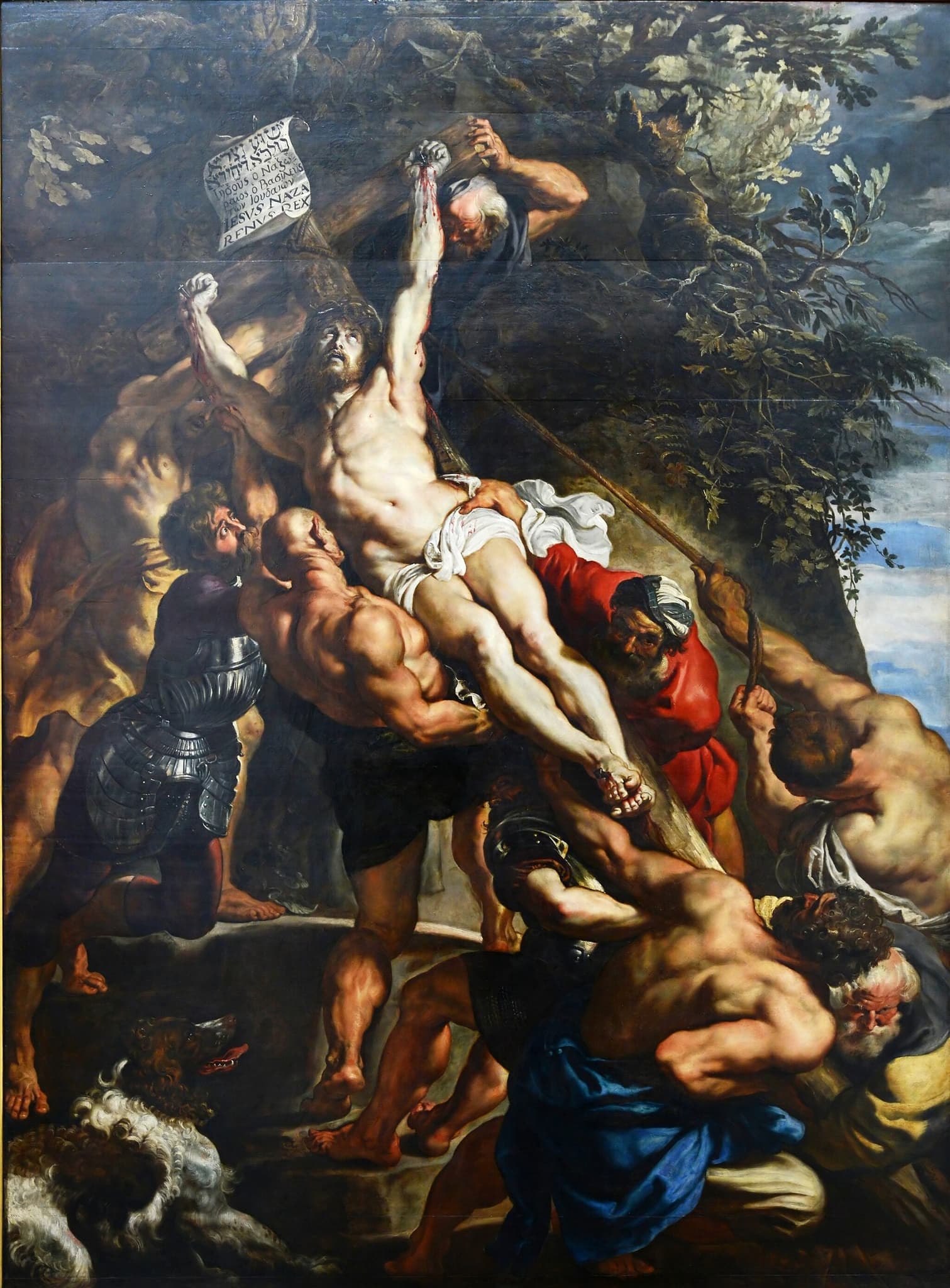
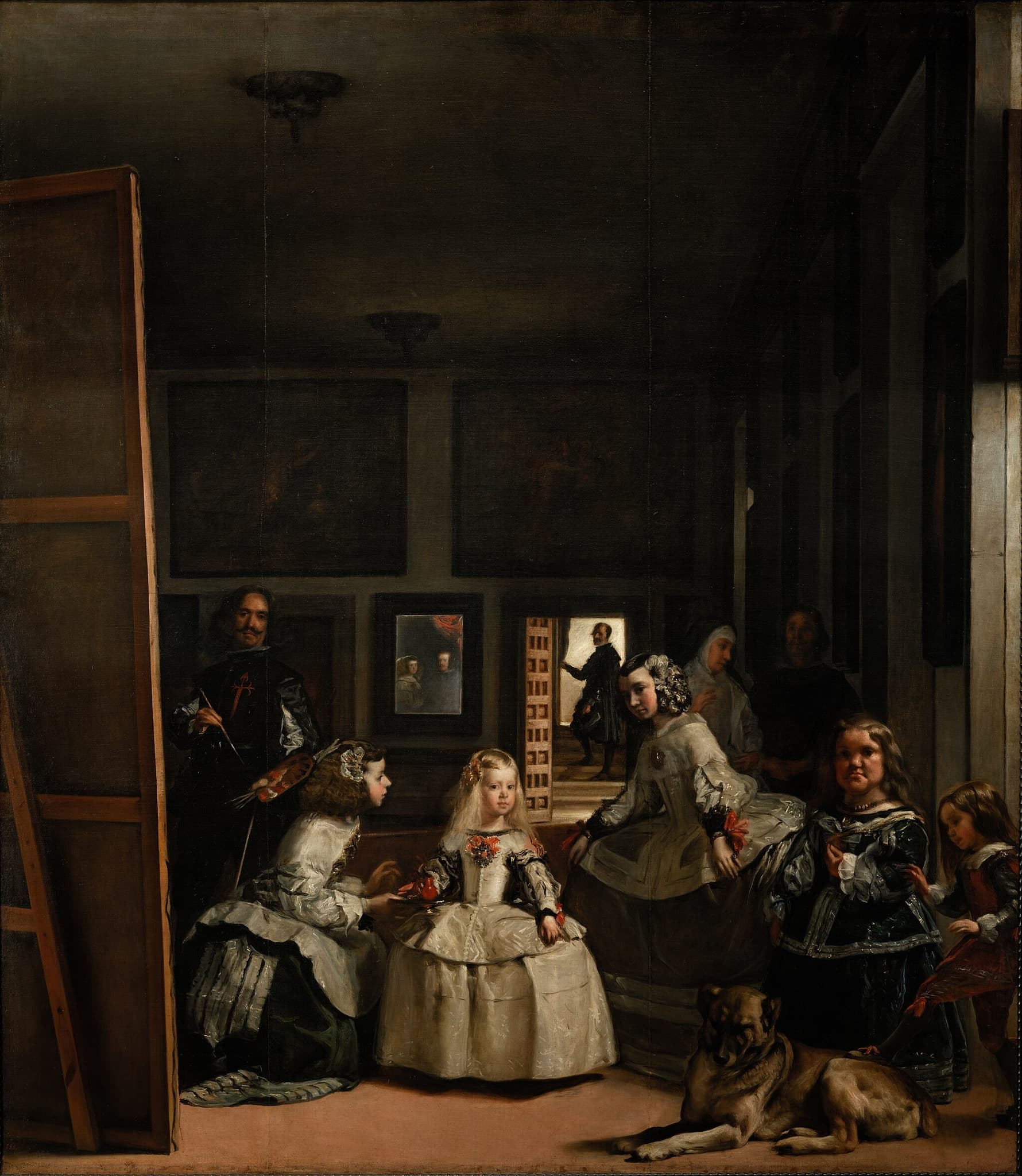
In Antwerp, Rubens’s large altarpieces align composition with the liturgy. The Elevation of the Cross, built around a commanding diagonal, reads at altar distance and pulls viewers bodily upward into the drama. In Madrid, Velázquez turns the studio itself into subject. Las Meninas folds painter, Infanta, dwarfs, and the reflected monarchs into one ecology of gazes, so that the viewer occupies the sovereign’s position inside the scene. The back wall even includes pictures after Rubens’s mythologies, a quiet acknowledgment of a shared lineage and of painting’s intellectual stakes.
Both also argued for the status of painting. Rubens fashioned himself as a learned gentleman and diplomat who could author entire cycles of political allegory. Velázquez, through court service culminating in knighthood, made his own presence and workspace part of the subject, elevating painting from manual craft to an instrument of thought. Their brief, documented contact in Madrid (1628–29) tied these ambitions together and spurred Velázquez’s first trip to Italy soon after.
Decisive Difference
Their split lies in what they think painting should do to the viewer. For Rubens, painting is persuasive theater. He engineers bodies, diagonals, and chiaroscuro to convert belief and political message into felt motion. In The Elevation of the Cross, straining executioners and a single, surging diagonal stage the ascent of Christ as a physical and spiritual act; the composition tells you where to look and how to feel, synchronizing viewers’ bodies with devotional time. In state commissions such as the Medici cycle, allegorical personifications press arguments with immediate clarity. The effect is centripetal: forces converge on a doctrinal or princely claim that compels assent.
Velázquez treats painting as a thinking device about perception and rank. In Las Meninas the mirror, the backlit doorway, and the painter’s self-portrait choreograph a reflexive loop: who sees whom, from where, and under what authority? The Surrender of Breda turns victory into magnanimity through restrained gesture and aerial realism rather than allegorical thunder. His tonal masses and circulating air keep images open, so attention moves laterally—between gazes, thresholds, and reflections—rather than being driven toward a single climax. In short: Rubens directs what and how you feel; Velázquez makes you notice how you see, and what power structures that act of seeing implies.
Paired Works
Stage vs studio
Focus question: How does each painting choreograph the viewer—through bodily motion or positional awareness?
The Elevation of the Cross vs Las Meninas
Myth and making
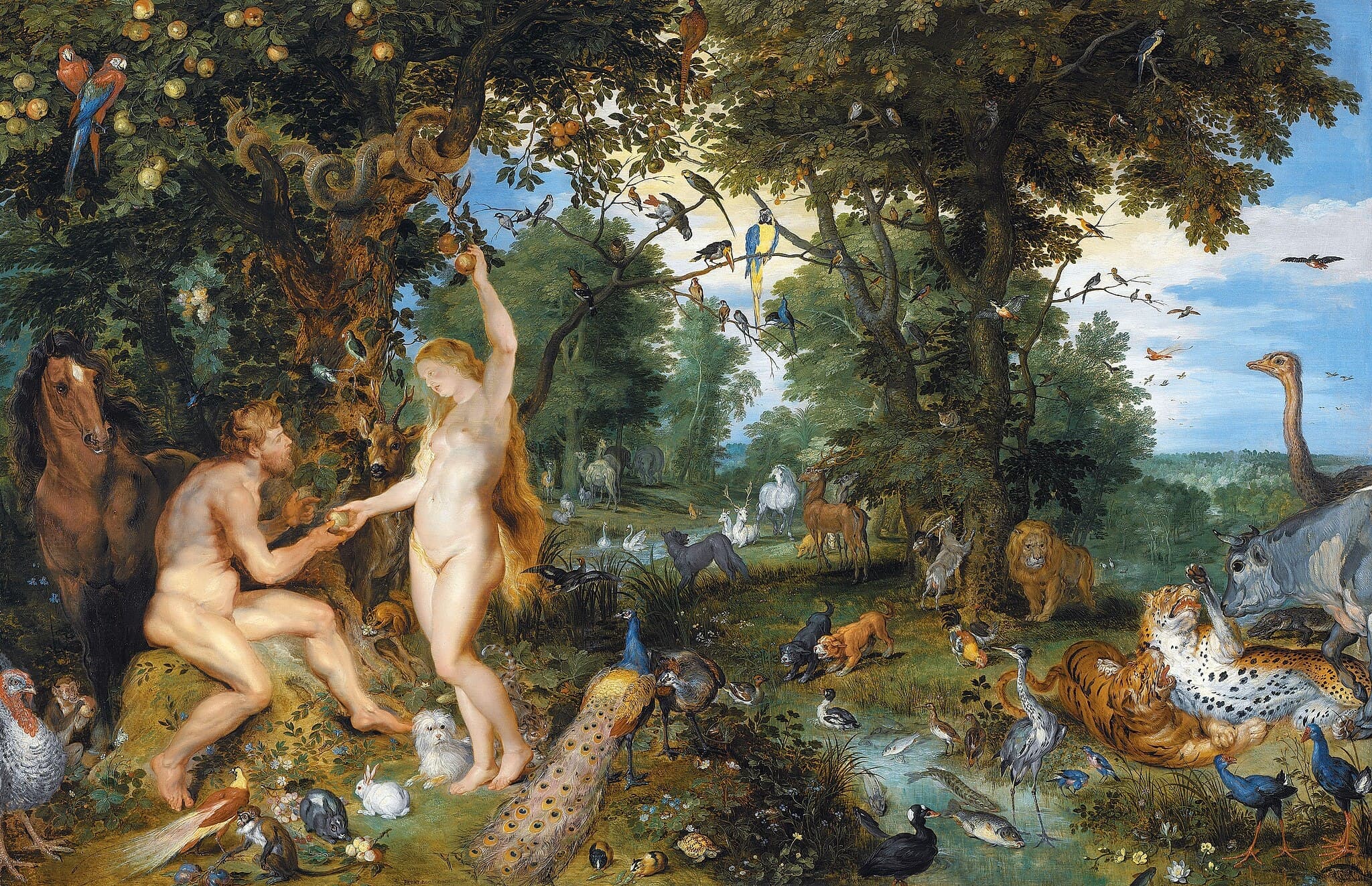
Focus question: Do myths deliver moral theater or a layered parable about how images are made and judged?
The Garden of Eden with the Fall of Man vs The Spinners (Las hilanderas, The Fable of Arachne)
Painting as statecraft
Focus question: How do their histories persuade on behalf of power?
Henri IV Receives the Portrait of Marie de’ Medici vs The Surrender of Breda (Las Lanzas)
Why This Comparison Matters
This pairing clarifies two durable answers to what images are for. Rubens shows how composition, light, and scale can move bodies and bind belief—skills still used by public monuments, political imagery, and mass spectacle. Velázquez shows how images can think about seeing and power, anticipating modern self-reflexive media from photography to film: mirrors, off-screen space, and viewer placement as meaning.
Understanding their split helps decode visual rhetoric today. When a picture channels you toward a single, emotive climax, it is working in a Rubensian key. When it makes you aware of where you stand—and how status or authorship enters the frame—it is closer to Velázquez. Both approaches remain active in museums, advertising, and screens. Learning to recognize them is a way to read not only Baroque art, but also the systems of attention that govern contemporary life.
Related Links
Sources
- Museo del Prado – Las Meninas (The Family of Felipe IV)
- Museo del Prado – Velázquez encyclopedia entry
- Khan Academy – Rubens, The Elevation of the Cross
- Mauritshuis – The Garden of Eden with the Fall of Man
- Museo del Prado – The Spinners (Las hilanderas)
- Louvre – To the Glory of a Queen of France (Medici Cycle)
- Encyclopaedia Britannica – Peter Paul Rubens
- Artsy – The centuries of people in Las Meninas (on the Order of Santiago cross)