Martyrdom & sacrifice
Featured Artworks
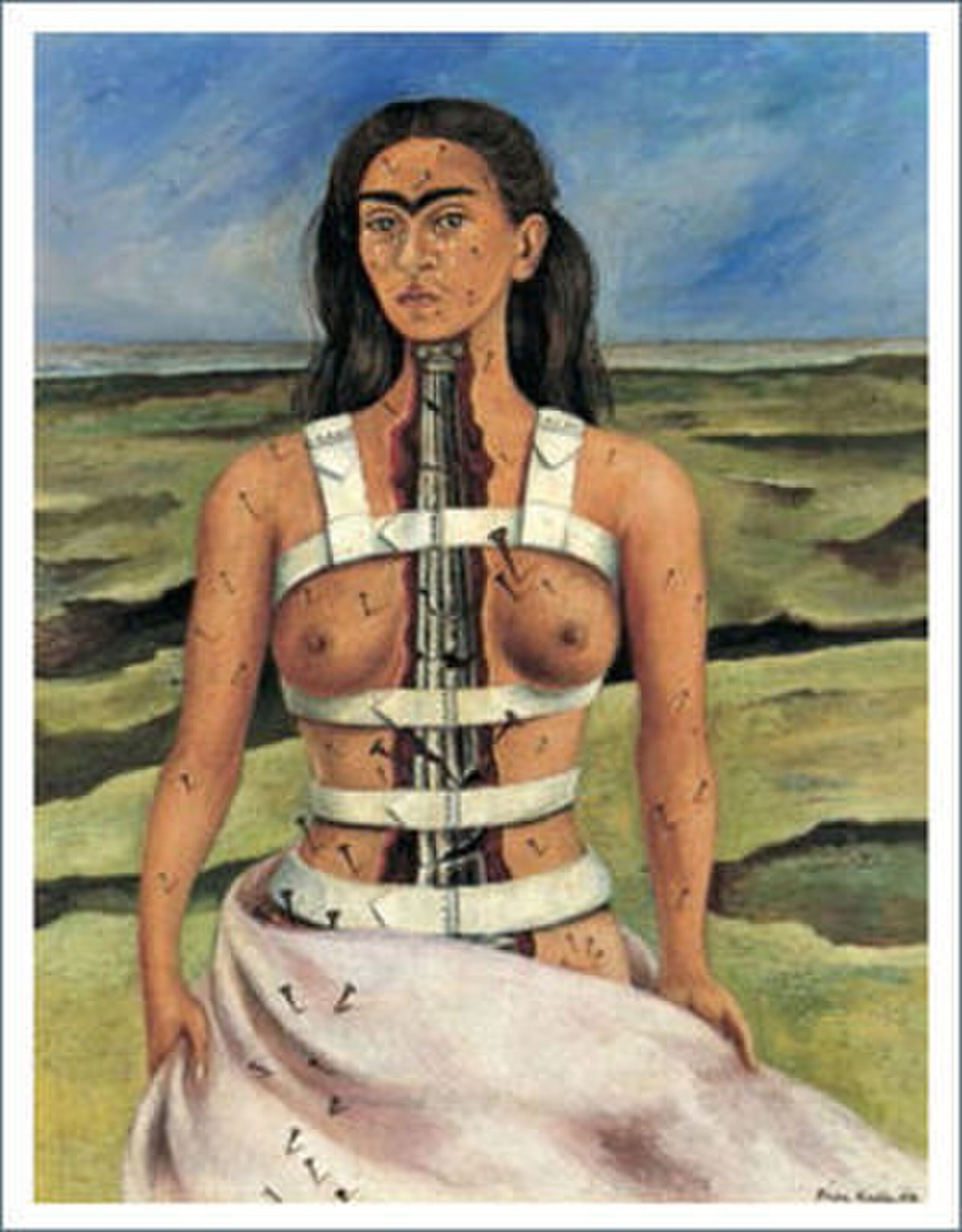
The Broken Column
Frida Kahlo (1944)
The Broken Column presents a frontal self-image split open to expose a shattered classical spine, mapping <strong>chronic pain</strong> across the body with nails while a white <strong>medical corset</strong> both supports and imprisons. Against a cracked, barren landscape, Kahlo’s steady gaze transforms injury into <strong>endurance</strong> and self-possession <sup>[1]</sup><sup>[2]</sup>.
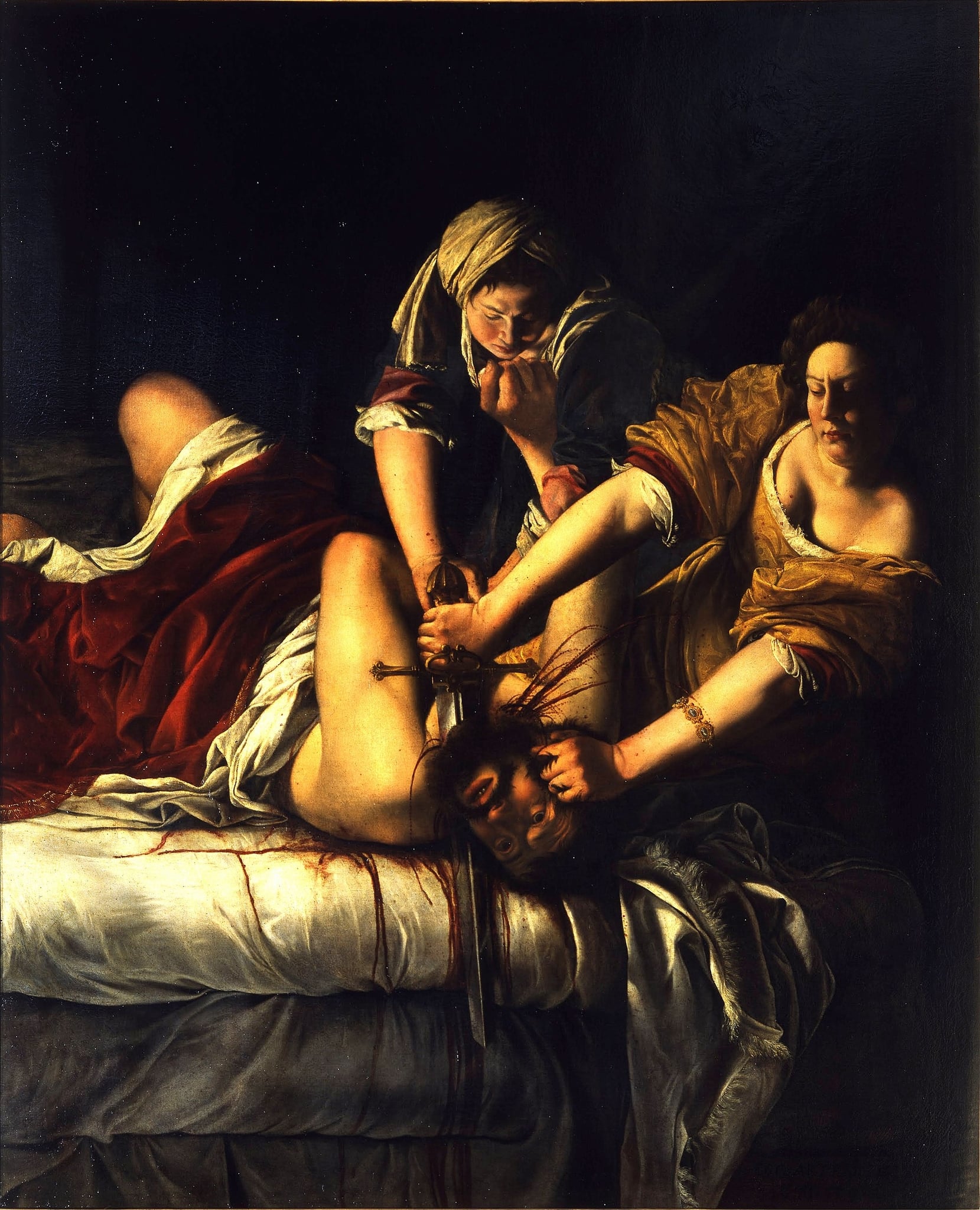
Judith Slaying Holofernes
Artemisia Gentileschi (c. 1612–13)
Artemisia Gentileschi’s Judith Slaying Holofernes hurls us into the fatal instant when Judith and her maid overpower the Assyrian general. In a void of darkness, a hard light chisels out straining arms, a heavy sword, and blood darkening the white sheets—an image of <strong>justice enacted through female collaboration</strong> <sup>[1]</sup><sup>[2]</sup>.
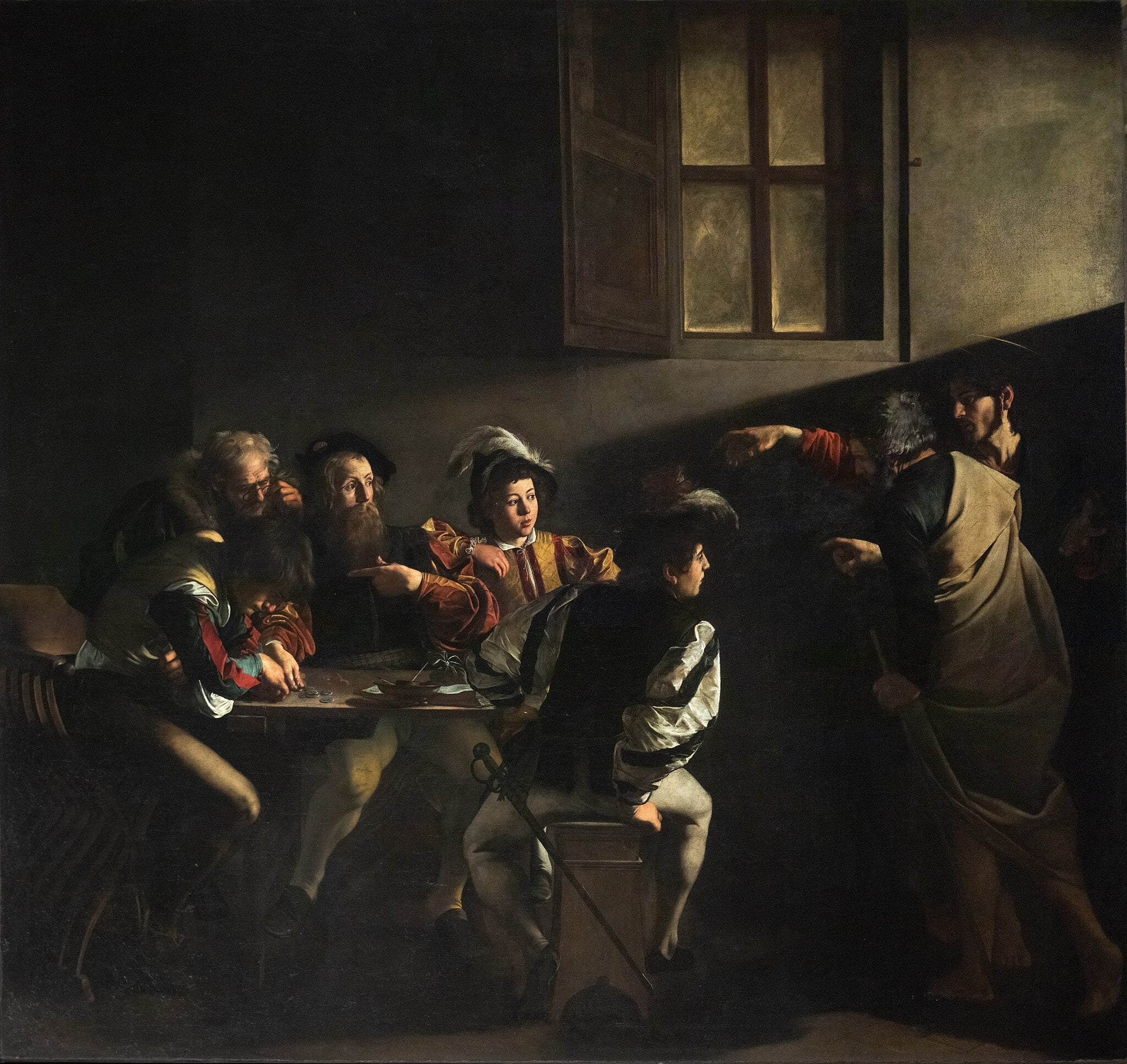
The Calling of Saint Matthew
Caravaggio (1599–1600)
Caravaggio’s The Calling of Saint Matthew stages the instant when <strong>divine grace</strong> pierces ordinary life. A diagonal <strong>beam of light</strong> and Christ’s <strong>Sistine‑echoing hand</strong> single out Matthew at a money table, suspending time between hesitation and assent <sup>[2]</sup><sup>[3]</sup>. The painting fuses Baroque <strong>tenebrism</strong> with contemporary dress to dramatize conversion as a public, present-tense event <sup>[1]</sup><sup>[2]</sup>.
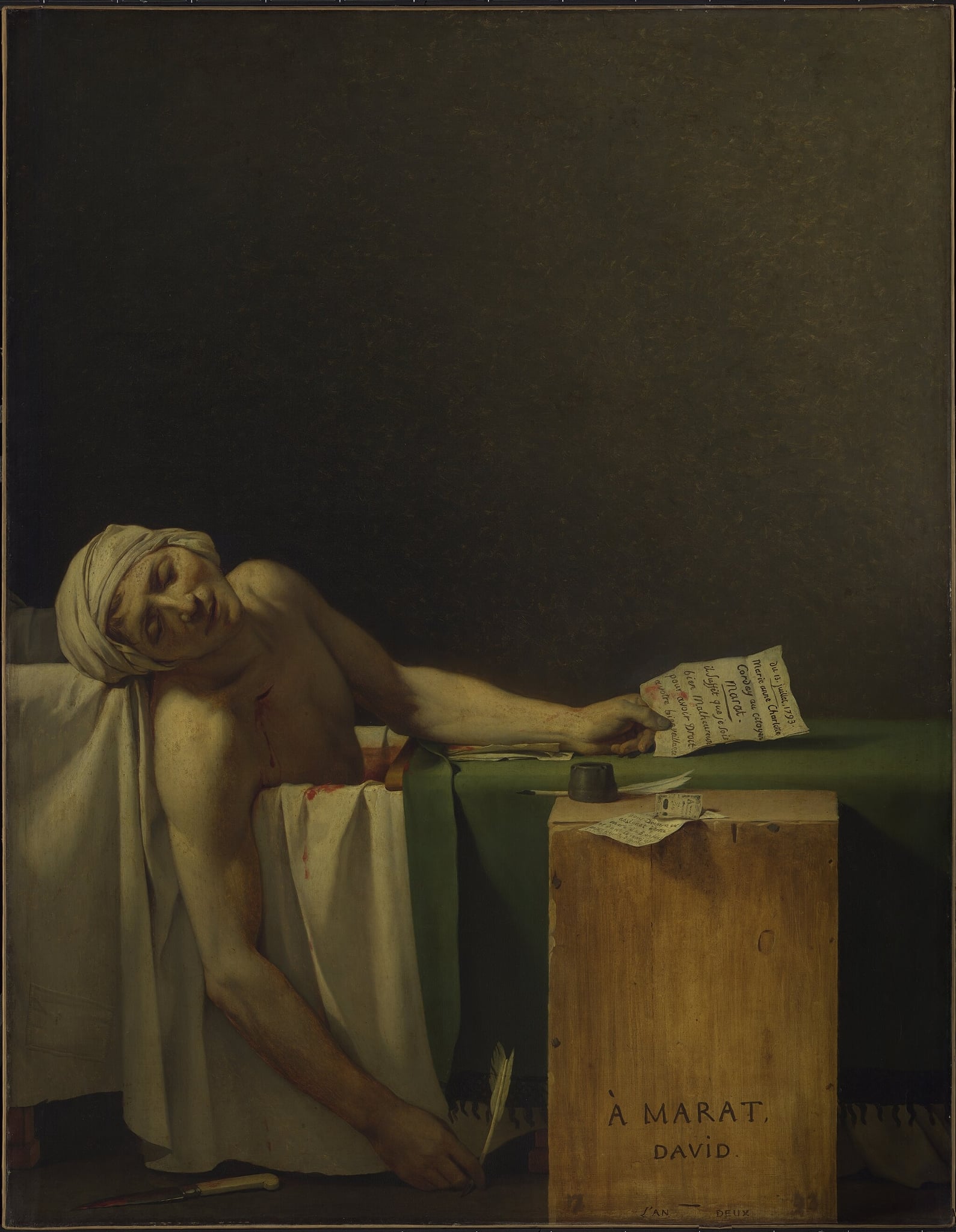
The Death of Marat
Jacques-Louis David (1793)
<strong>The Death of Marat</strong> turns a private murder into a <strong>secular martyrdom</strong>: Marat’s idealized body slumps in a bath, a pleading letter in his hand, a quill slipping from the other beside a bloodied knife and inkwell. Against a vast dark void, David’s calm light and austere geometry elevate humble objects—the green baize plank and the crate inscribed “À MARAT, DAVID, L’AN DEUX”—into civic emblems <sup>[1]</sup><sup>[2]</sup><sup>[3]</sup>.
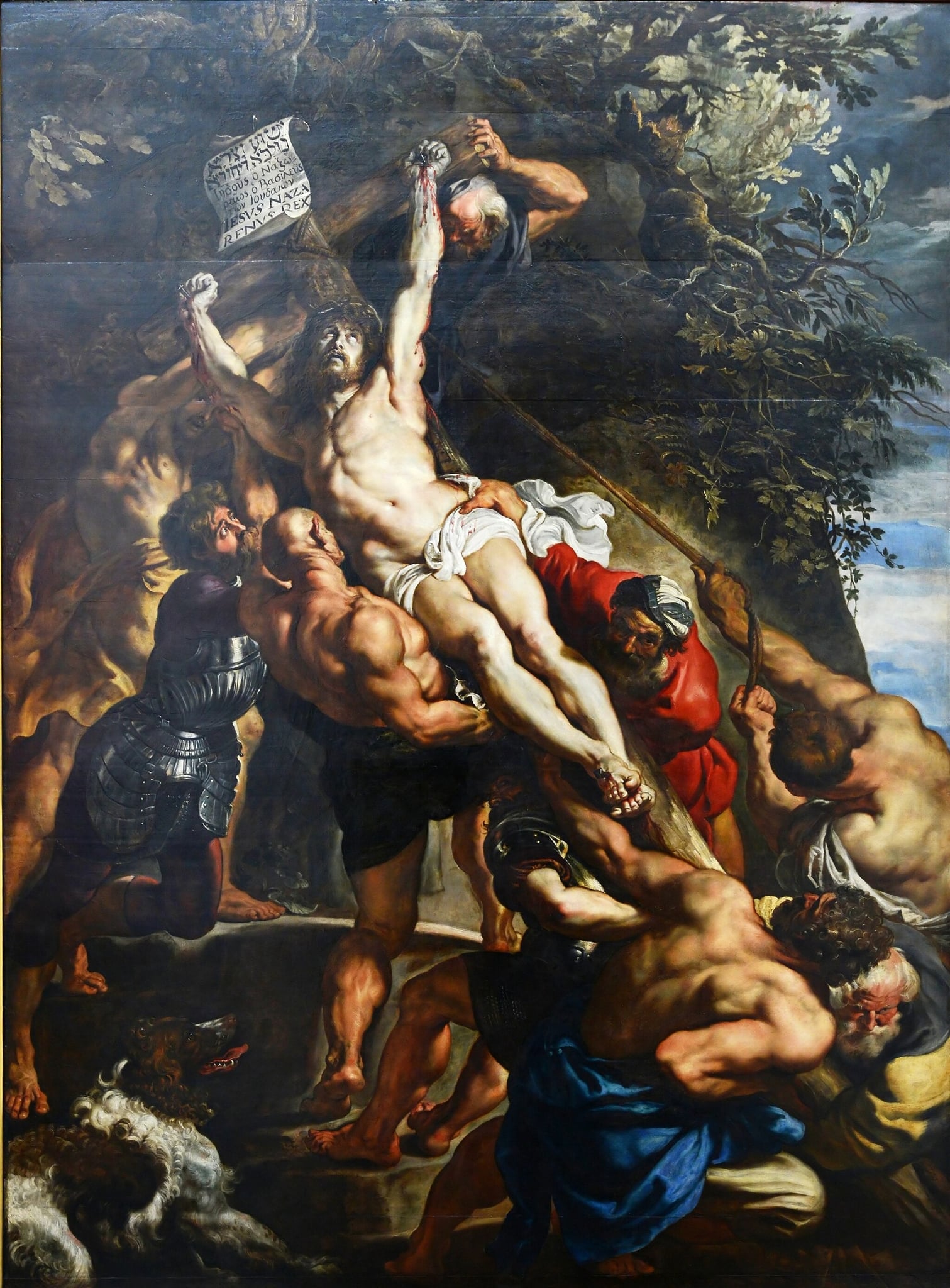
The Elevation of the Cross
Peter Paul Rubens (1609–1610)
A single, surging diagonal drives The Elevation of the Cross as straining executioners heave the timber while Christ’s pale body becomes the calm, radiant fulcrum. Rubens fuses muscular anatomy, flashing armor, taut ropes, and storm-dark landscape into a Baroque crescendo where <strong>divine light</strong> confronts <strong>human violence</strong> <sup>[1]</sup><sup>[3]</sup>.
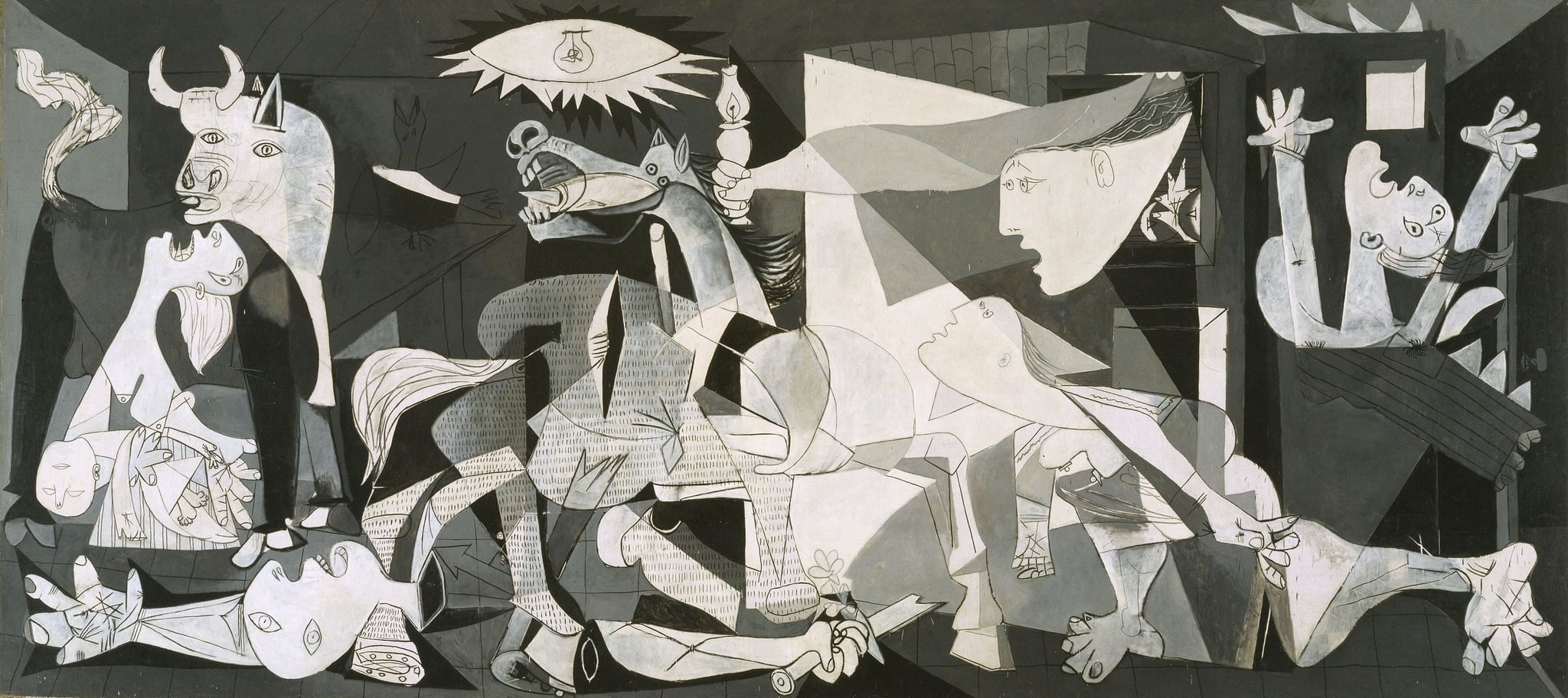
Guernica
Pablo Picasso (1937)
Guernica is a monumental, monochrome indictment of modern war, compressing a town’s annihilation into a frantic tangle of bodies, beasts, and light. Across the canvas, a <strong>shrieking horse</strong>, a <strong>stoic bull</strong>, a <strong>weeping mother with her dead child</strong>, and a <strong>fallen soldier</strong> stage a civic tragedy rather than a heroic battle. The harsh <strong>electric bulb</strong> clashes with a fragile <strong>oil lamp</strong>, turning the scene into a stark drama of terror and witness.
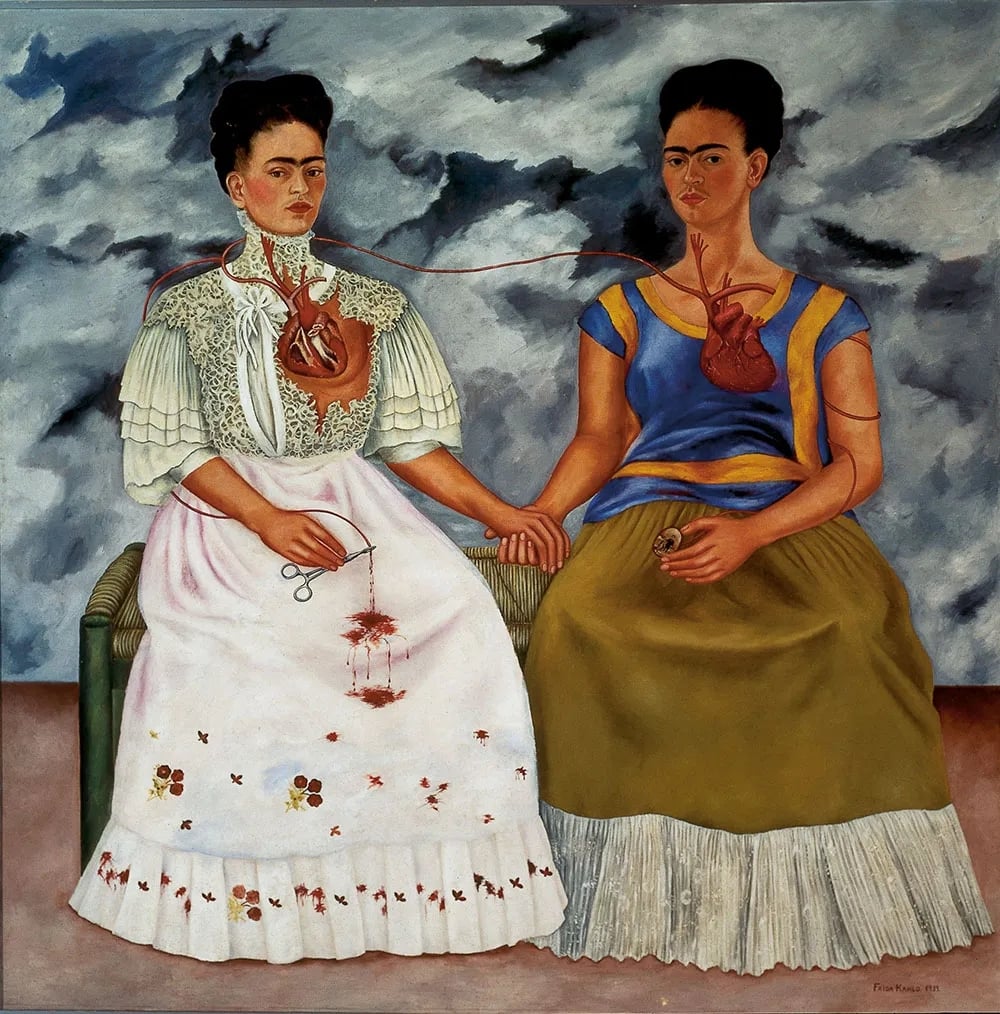
The Two Fridas
Frida Kahlo (1939)
The Two Fridas presents a doubled self seated under a storm-charged sky, their opened chests revealing two hearts joined by a single artery. One Frida in a European dress clamps the vessel with a surgical <strong>hemostat</strong> as blood stains her skirt, while the other in a <strong>Tehuana</strong> dress steadies a locket and the shared pulse. The canvas turns private injury into a public image of <strong>dual identity</strong> and endurance <sup>[1]</sup><sup>[2]</sup>.
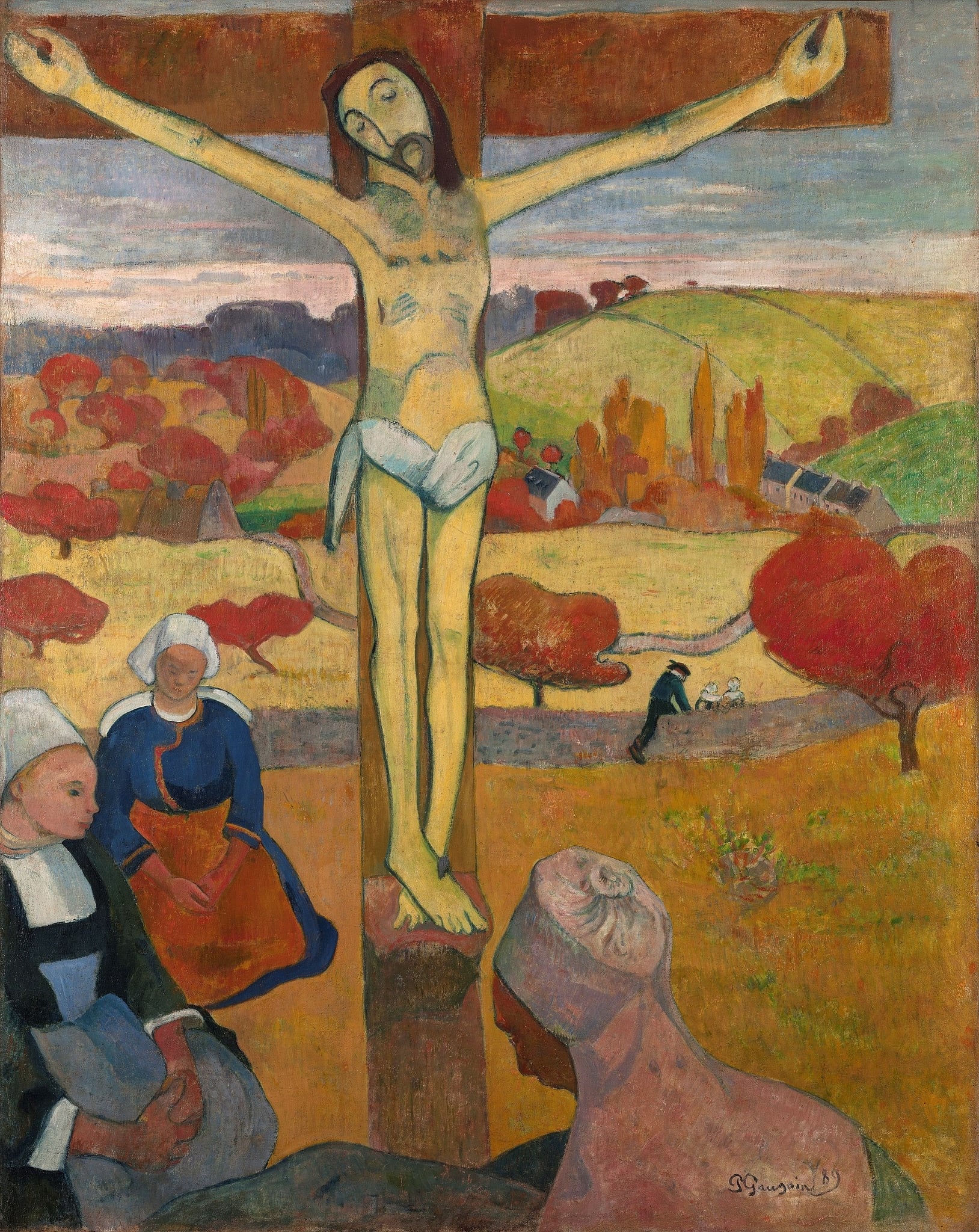
The Yellow Christ
Paul Gauguin (1889)
Paul Gauguin’s The Yellow Christ (1889) fuses sacred narrative with everyday Brittany, rendering a lemon‑<strong>yellow</strong> Christ in a rural autumn landscape. Through <strong>Synthetist</strong> color and <strong>Cloisonnist</strong> contours, the work declares spiritual meaning over naturalism, placing devotion among kneeling Breton women beneath a banded, hope‑tinged sky <sup>[1]</sup><sup>[3]</sup>.
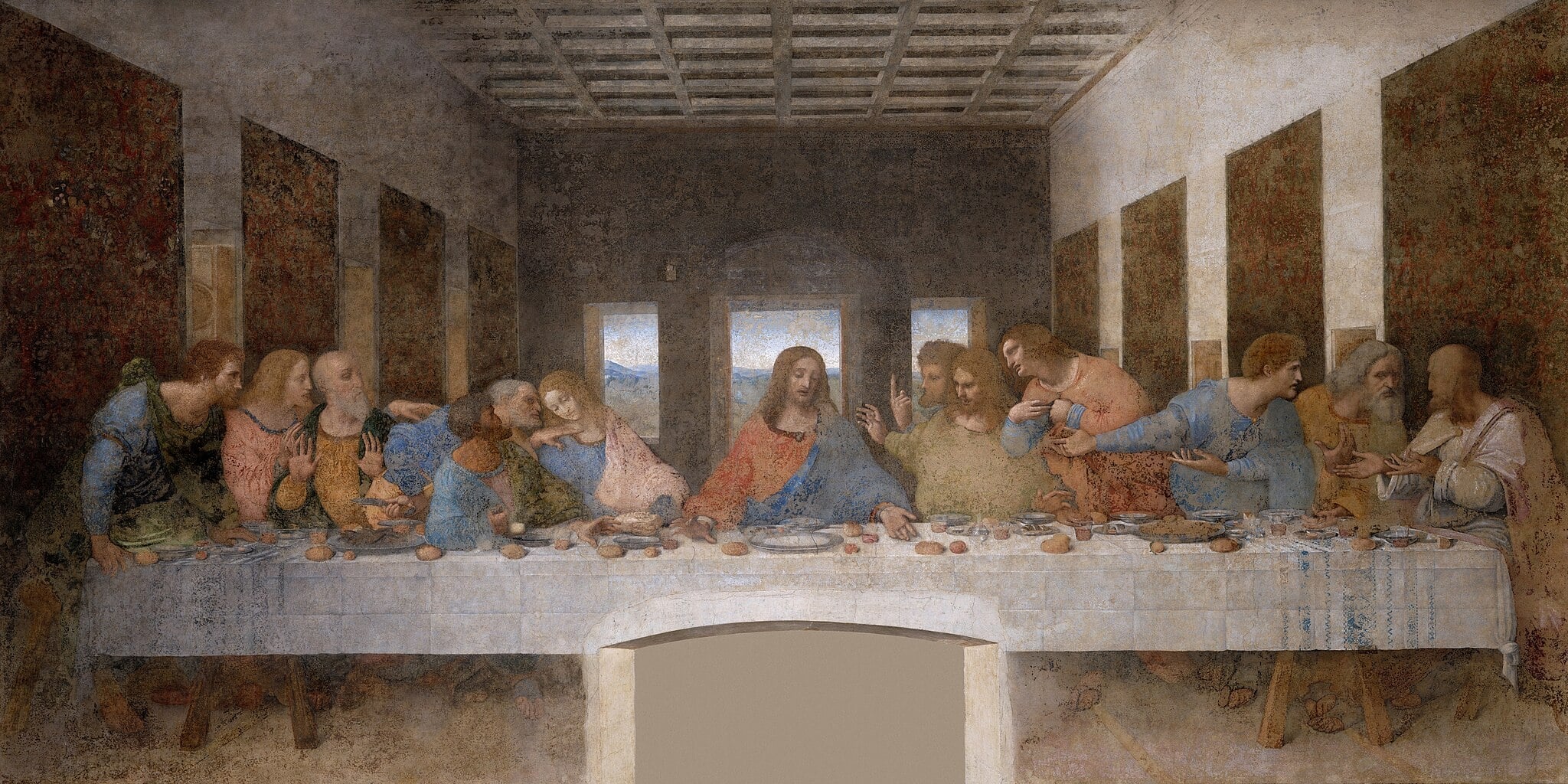
The Last Supper
Leonardo da Vinci (1495–1498)
Leonardo da Vinci’s The Last Supper captures the instant after Christ declares a coming betrayal, freezing divine calm amid human tumult. At the center, Christ’s <strong>triangular stillness</strong> aligns with a one‑point perspective that funnels all space to his head, while bread and wine announce the <strong>Eucharist</strong>. Four flanking trios surge outward in shock, doubt, and protest, with Judas recoiling in shadow and clutching a <strong>purse</strong> of silver <sup>[1]</sup><sup>[3]</sup>.
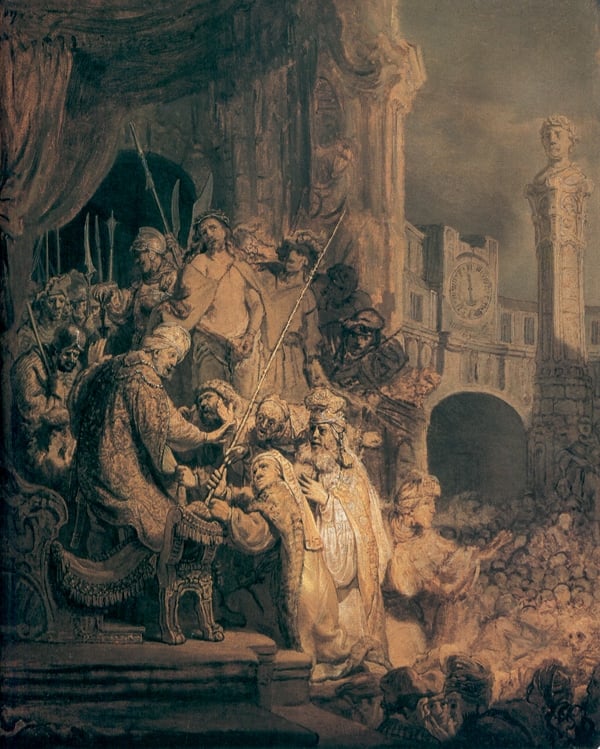
Ecce Homo
Rembrandt van Rijn (1634)
Rembrandt van Rijn’s Ecce Homo turns a Gospel episode into a <strong>public ritual of power</strong>. Under a heavy canopy, Pilate elevates himself above a seething crowd and gestures toward the bound Christ, while civic architecture and antique statuary proclaim <strong>earthly authority</strong> over <strong>innocent suffering</strong> <sup>[1]</sup><sup>[2]</sup>. Light isolates the principals and treats the rest as a turbulent mass, converting a show trial into a meditation on refusal of mercy.
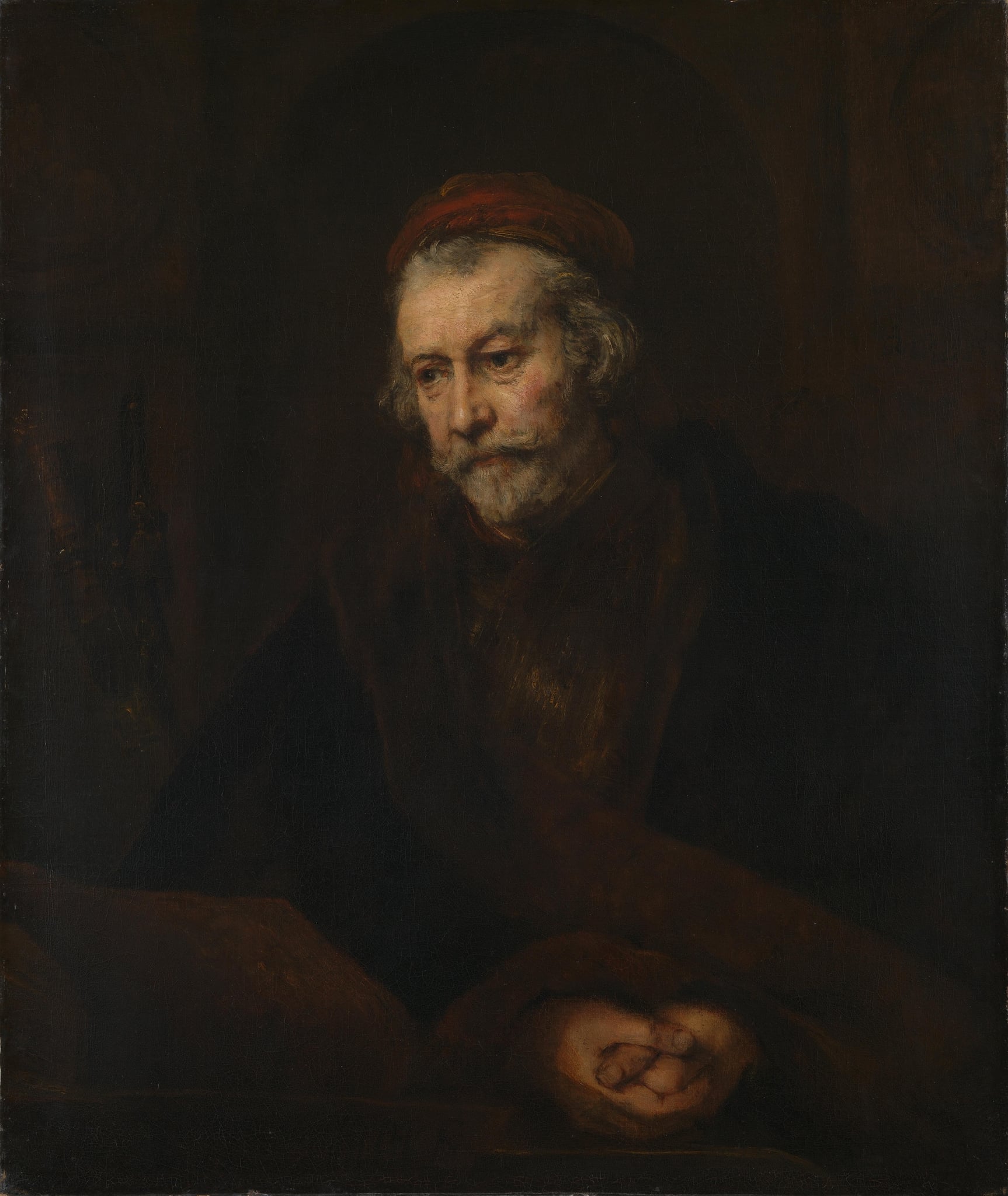
An Elderly Man as Saint Paul
Rembrandt van Rijn (1659 (probably))
Rembrandt’s An Elderly Man as Saint Paul stages a profound meditation on <strong>thought joined to faith</strong>, cupping light around a weathered face and folded hands that hover above a scholar’s book. A veiled <strong>sword</strong> and faint <strong>roundel of the Sacrifice of Isaac</strong> deepen the painting’s argument that conviction, text, and trial cohere in Pauline wisdom <sup>[1]</sup><sup>[2]</sup>.
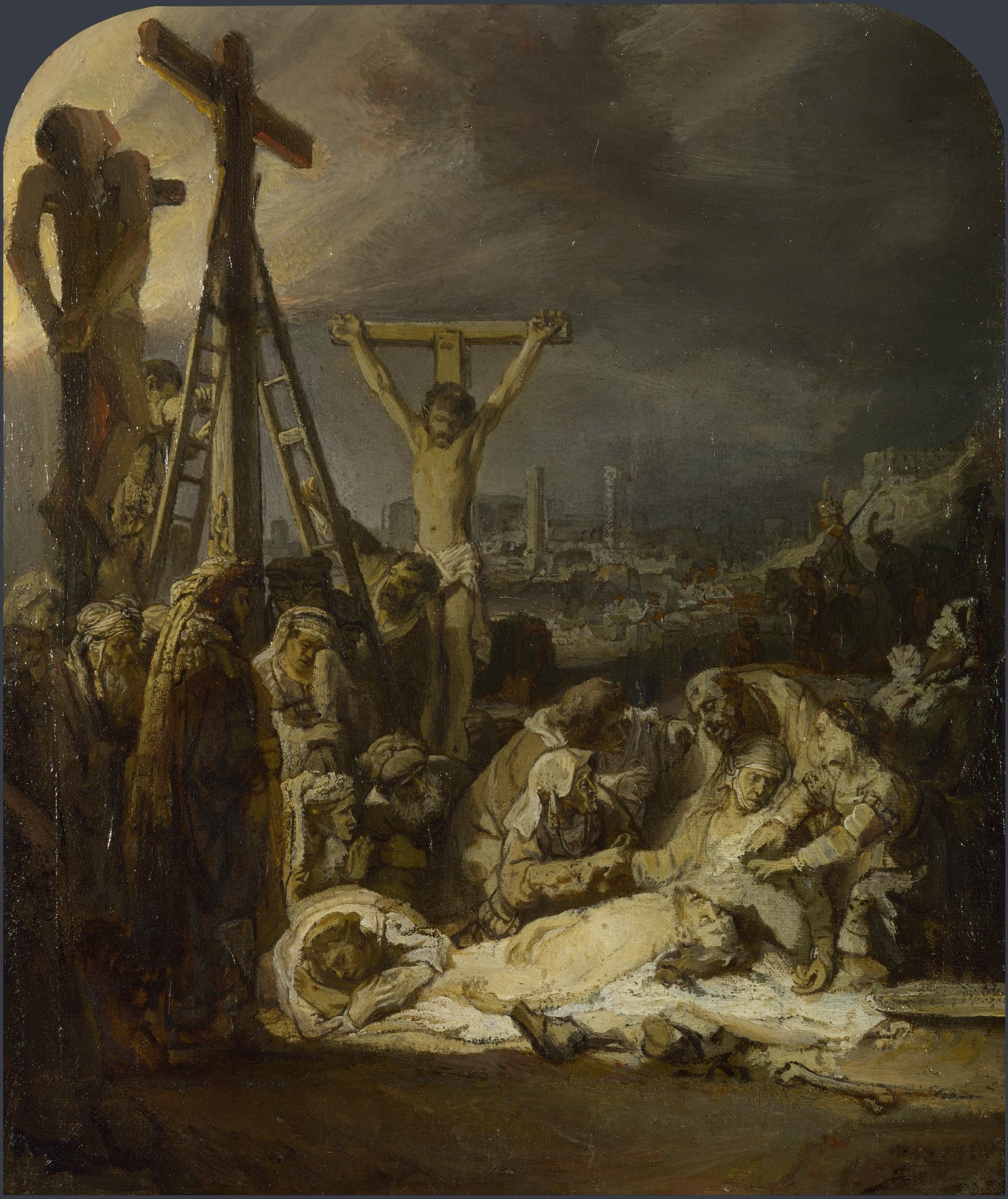
The Lamentation over the Dead Christ
Rembrandt van Rijn (about 1635)
In The Lamentation over the Dead Christ, Rembrandt van Rijn gathers grief and hope into a single <strong>grisaille</strong> blaze of light. Christ’s diagonal, pallid body on a white shroud draws mourners into a tight arc, while ladders, crosses, and the silhouetted thieves still crown the hill under a storming sky <sup>[1]</sup>.