Titian Paintings in London — Where to See Them
London is one of the best cities to see Titian in person: about 14 of his paintings are on permanent display across three institutions — ten at the National Gallery, one at The Wallace Collection, and three at Apsley House (The Wellington Collection). What makes London distinctive is that you can study a large, concentrated group of works at the National Gallery alongside intimate, differently hung examples in a grand historic house and a private-collection setting, giving a fuller sense of how his paintings functioned both in museums and in period interiors.
At a Glance
- Museums
- National Gallery, The Wallace Collection, Apsley House (The Wellington Collection)
- Highlight
- Must-see Titian masterpieces at the National Gallery
- Best For
- Art lovers seeking Renaissance color and portraiture
National Gallery
The National Gallery’s collection of about ten Titian paintings matters because it presents works from across the painter’s mature career, letting you compare his evolving use of color, paint handling, and scale side‑by‑side. Seeing large mythological canvases and formal portraits in the same visit highlights how Titian adapted Venetian colorito to very different subjects and how his techniques influenced later European portrait and history painting.
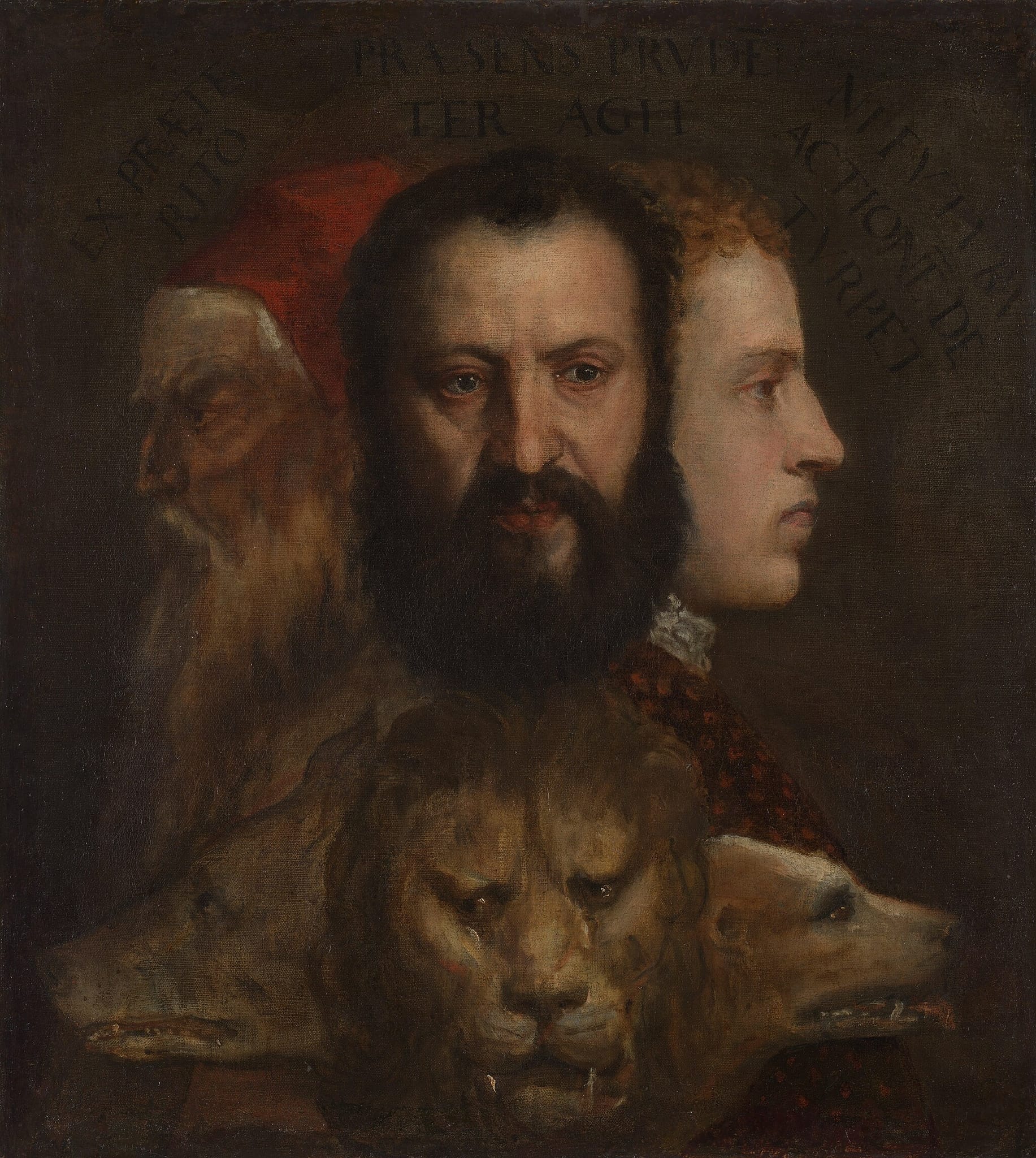
An Allegory of Prudence
about 1550
Depicts three human heads (youth, maturity, old age) looking in different directions above three animal heads (a wolf, a lion, and a dog) with a skull and the inscription linking past, present and future. Significant as one of Titian’s late, philosophically charged works—often read as a meditation on the passage of time, wisdom and dynastic memory—which combines portrait-like likenesses with allegory. Look for the expressive, weathered faces, the scumbled late-painting surface, and the way Titian contrasts the animals’ physicality with the ambiguous human gazes.
Must-see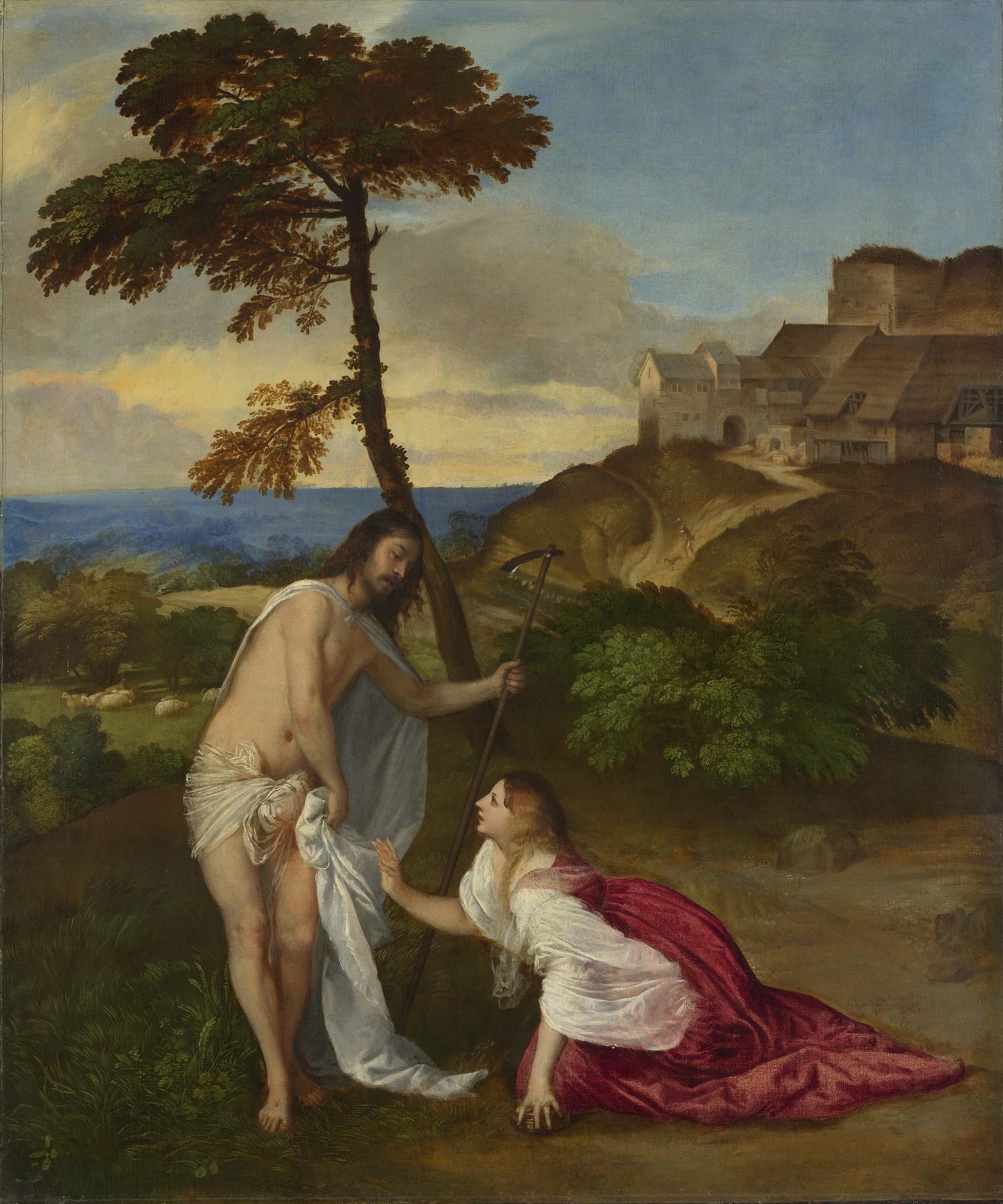
Noli me Tangere
about 1514
Shows the risen Christ, partially robed, rebuking Mary Magdalene’s impulse to touch him as she recognizes him in a garden scene. Important as an early example of Titian’s ability to combine devotional intimacy with spatial clarity, marking his development under Bellini and Giorgione’s influences. Notice the poised gesture of Christ, the tender yet restrained emotion on Mary’s face, and the luminous handling of landscape and light that frames the encounter.
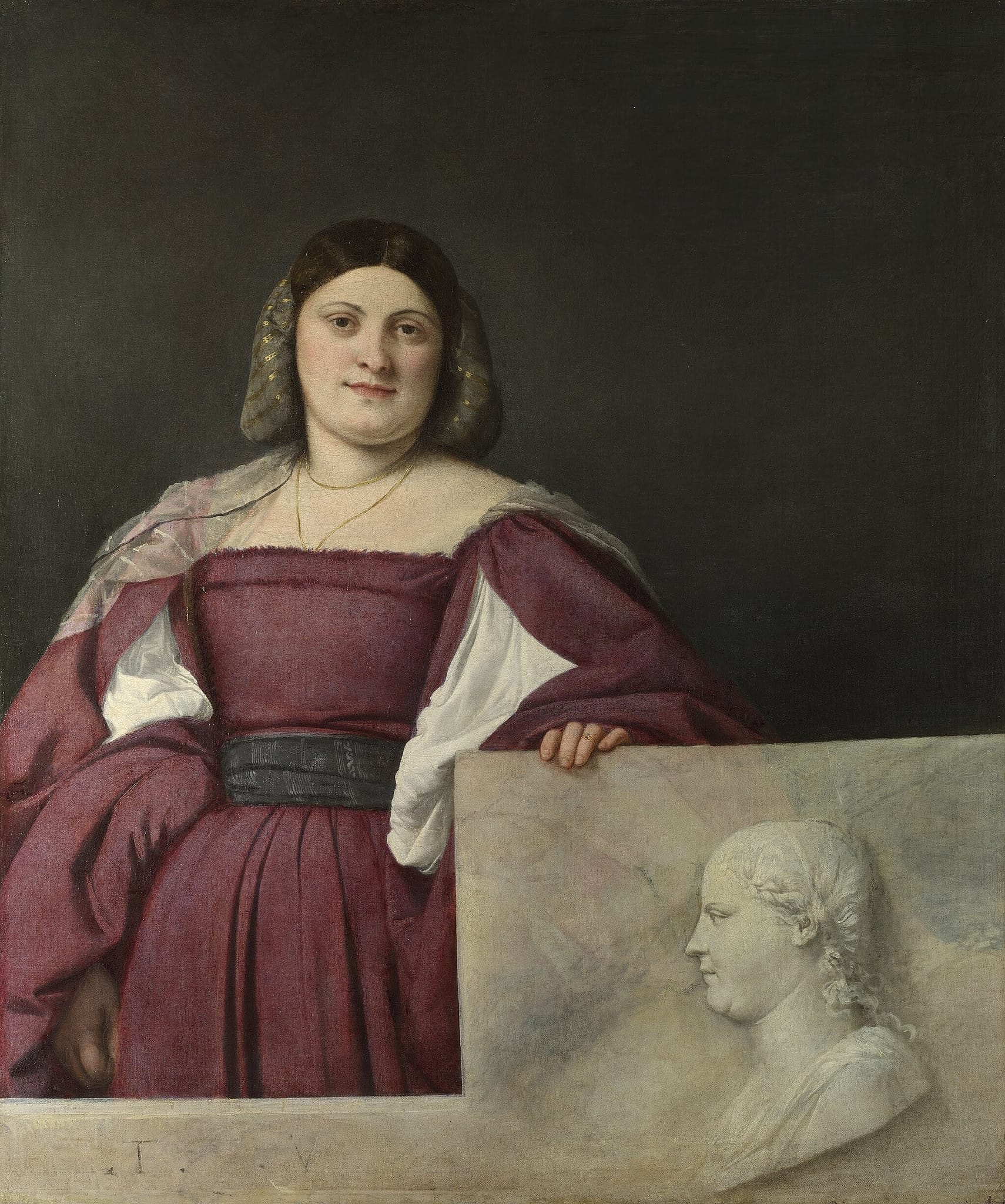
Portrait of a Lady ('La Schiavona')
about 1510-12
A three-quarter portrait of a Venetian woman shown against a dark background, holding a relief-like sculpted profile on the parapet — the element that gave the picture its nickname. Significant for its enigmatic combination of portrait and sculptural motif, and for how Titian negotiates sitter individuality with timeless monumentality. Look at the subtle modeling of skin, the elegant hands, and the carved medallion which invites questions about identity, commemoration and status.
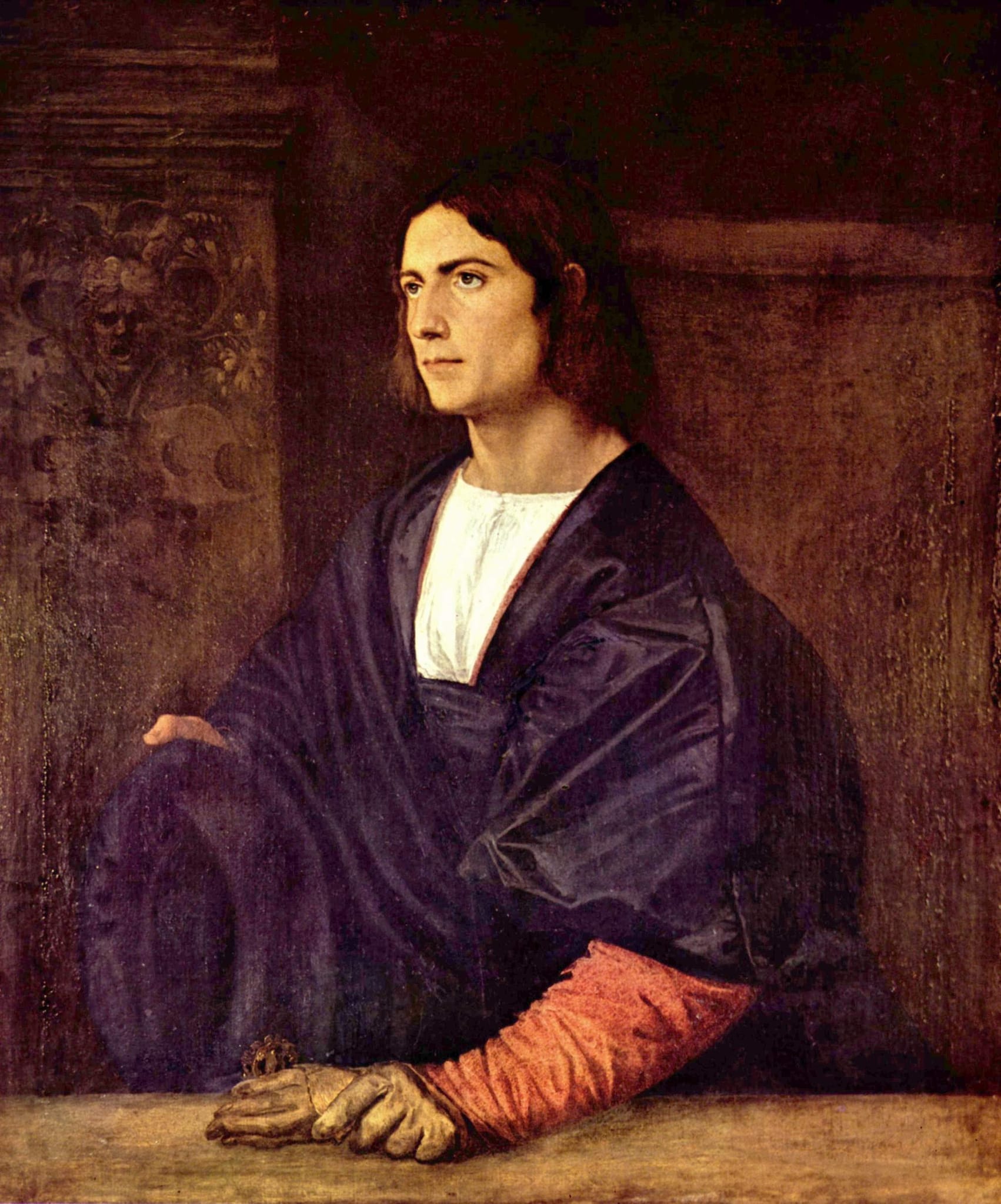
Portrait of a Young Man
about 1515-20
An intimate half-length portrait of a young man in contemporary dress, rendered with a direct, psychologically acute presence. Significant as an example of Titian’s early mastery of characterization—he gives the sitter a vivid individuality without overt symbolism. Focus on the confident brushwork, the sitter’s penetrating gaze, and the careful attention to textures (hair, flesh and fabric) that create a lifelike immediacy.
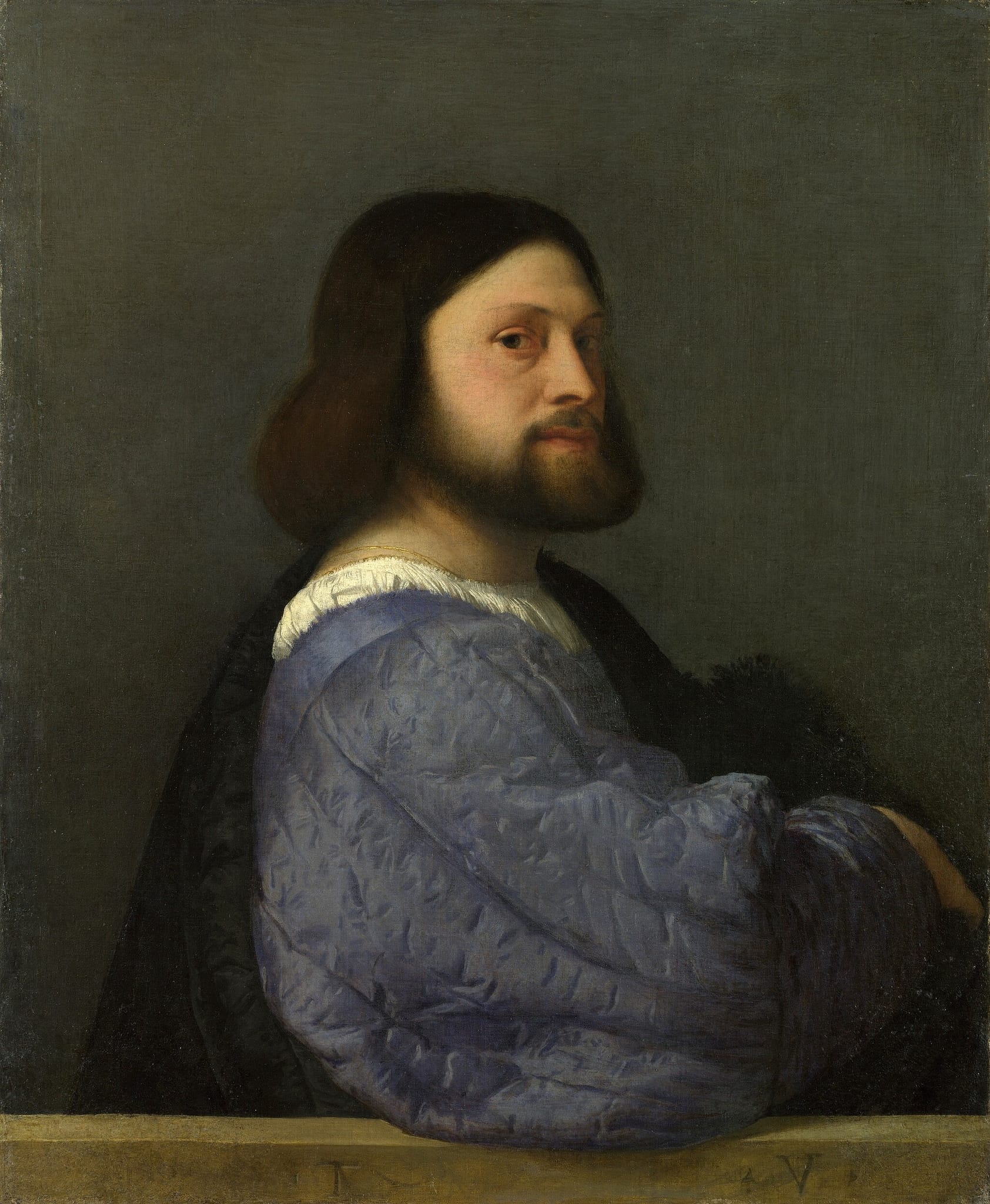
Portrait of Gerolamo (?) Barbarigo
about 1510
A stately portrait of a man—traditionally identified (with some uncertainty) as Gerolamo Barbarigo—shown in three-quarter view with sober clothing and a calm, authoritative bearing. Important for illustrating Titian’s early approach to dignified civic portraiture in Venice and for how he balances likeness with idealized presence. Look for the reserved palette, the incisive modeling of the face, and the way the sitter’s posture and hands convey rank and temperament.
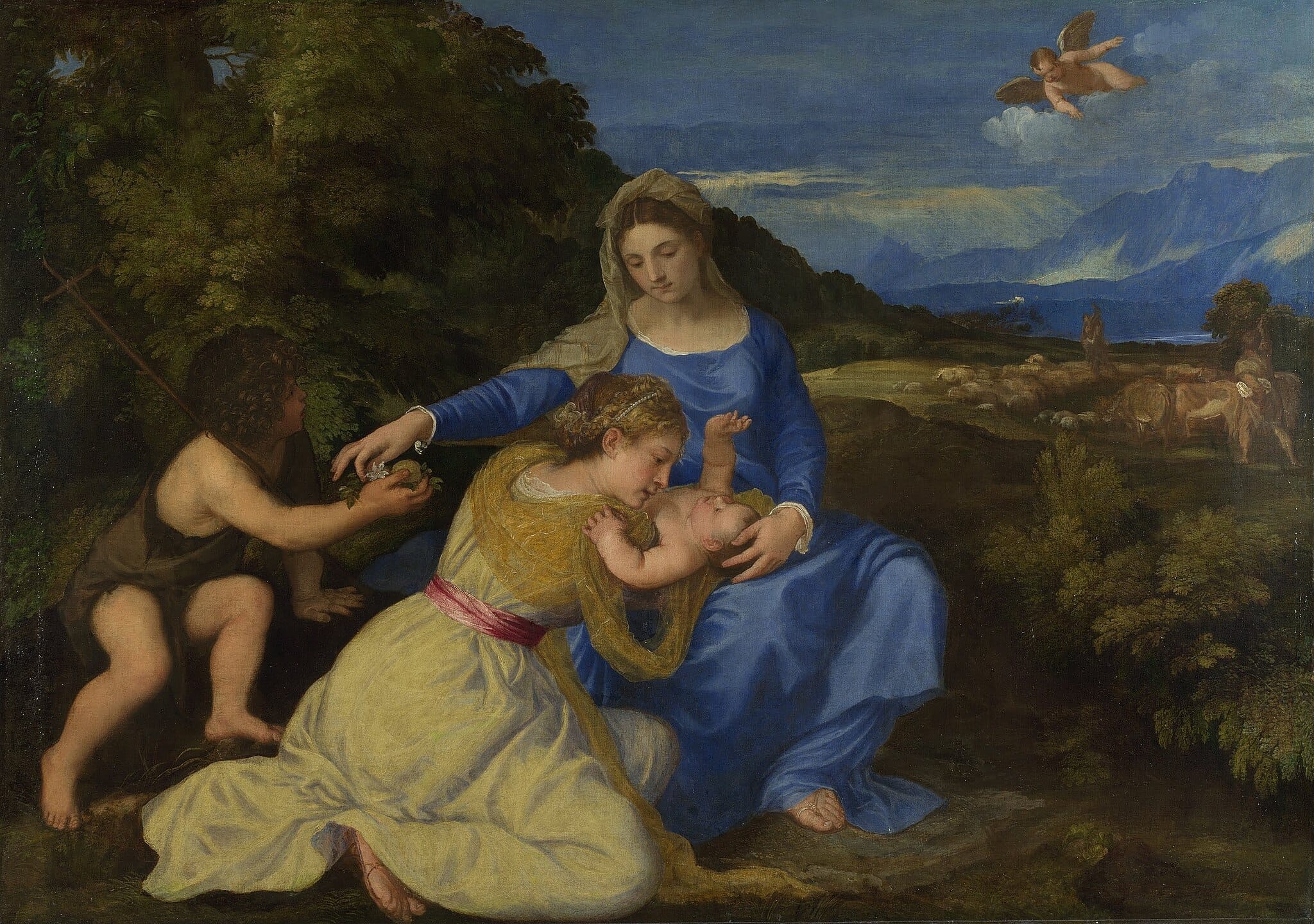
The Aldobrandini Madonna
about 1532
A tender compositional grouping of the Virgin, Child and saints, reunited with a lively landscape and a luminous golden light. Significant as a mature religious painting where Titian fuses rich color, soft atmosphere and a sense of devotional intimacy, often admired for its warm palette and compositional harmony. Notice the warm, saturated colors, the affectionate interaction between mother and child, and Titian’s fluid brushwork that unifies figures and setting.

The Holy Family with a Shepherd
about 1510
Shows the Virgin and Child accompanied by Saint Joseph and a humble shepherd in a pastoral setting, blending sacred subject matter with everyday humanity. Significant as an early work that demonstrates Titian’s interest in naturalism and in bringing sacred figures into believable, approachable space. Look for the careful group interaction, the gentle handling of light across faces, and the naturalistic details that place the holy family amidst ordinary life.

The Rest on the Flight into Egypt
about 1512?
Depicts the Holy Family paused during their escape into Egypt—often shown with the sleeping Christ and a contemplative, sheltered mood amid a serene landscape. Significant for Titian’s early experimentation with narrative compression and landscape as emotional setting, showing his debt to Venetian landscape traditions. Observe the tranquil landscape framing the figures, the quiet intimacy between Mary and the child, and the tonal harmonies that fuse figure and nature.
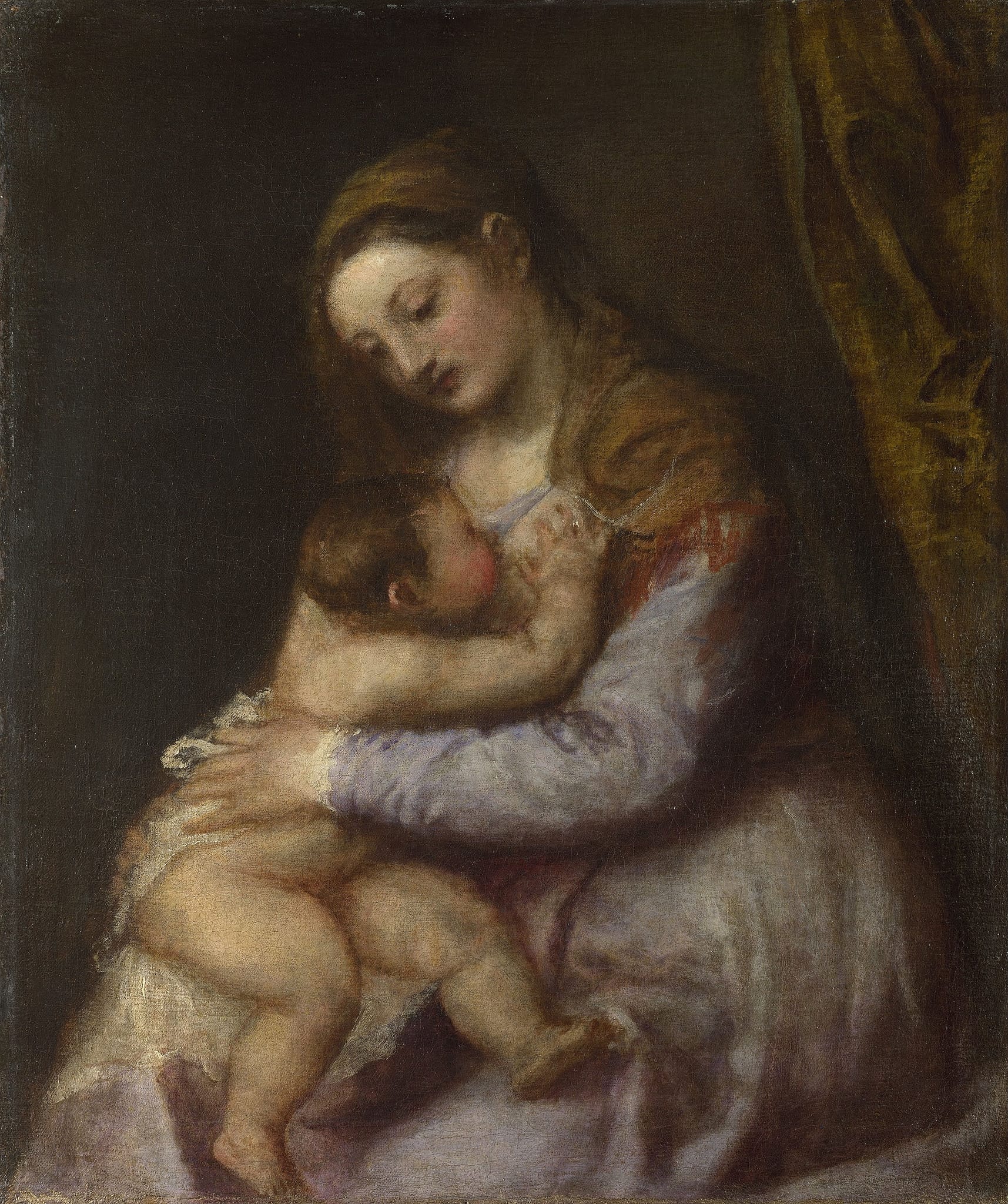
The Virgin suckling the Infant Christ
about 1565-75
An intimate nocturnal or dusk scene of the Virgin breastfeeding the Christ child, painted late in Titian’s career with loose, expressive brushwork and deep, rich tones. Significant as a late devotional image that emphasizes physical tenderness and human vulnerability, while showcasing Titian’s late palette and painterly facture. Look closely at the textured, economical strokes, the warm accents of flesh against dark drapery, and the emotional directness conveyed with minimal detail.
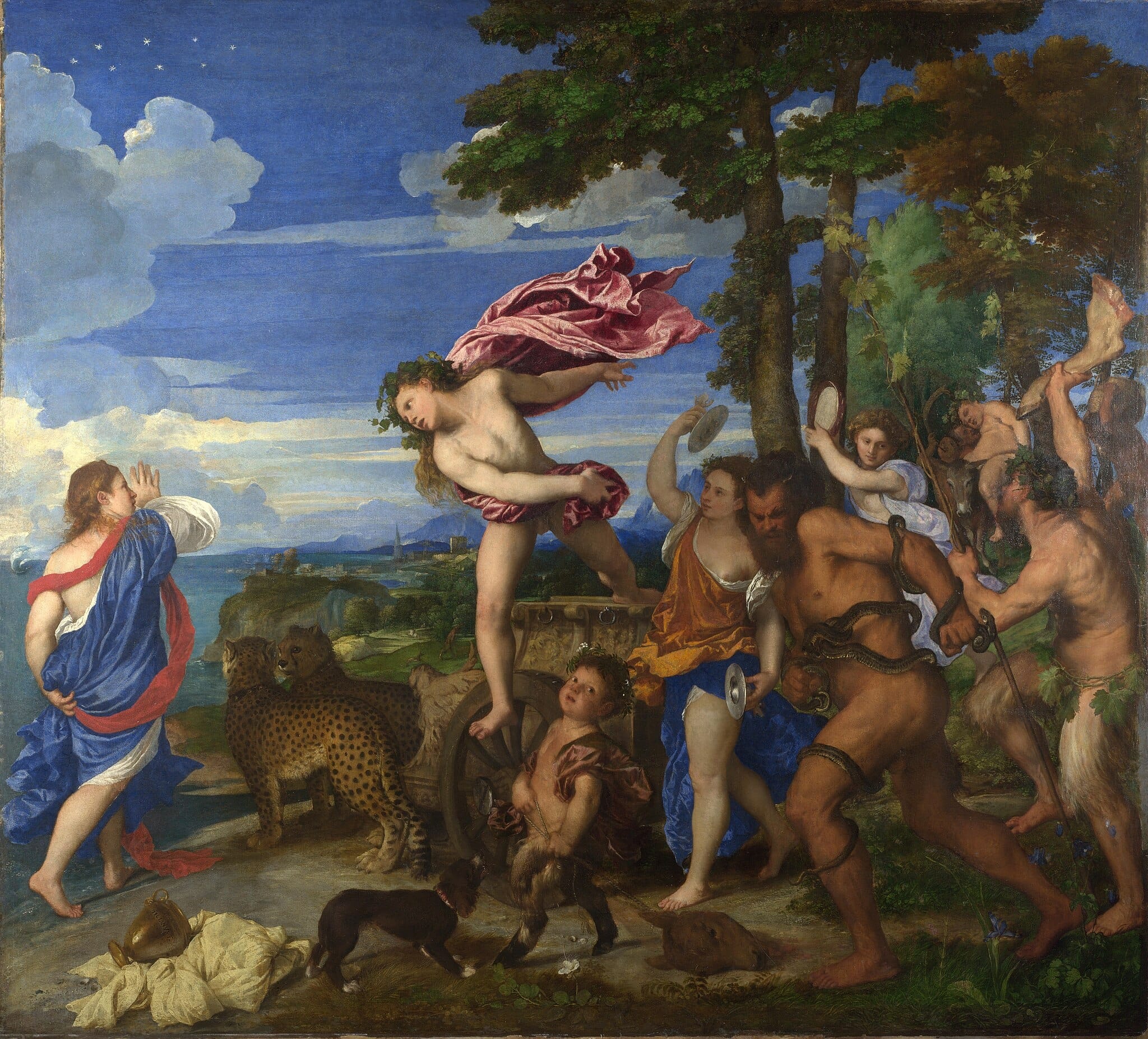
Bacchus and Ariadne
1520-23
A mythological scene showing the moment Bacchus leaps from his chariot to pursue and crown Ariadne, set against a vivid Mediterranean seascape populated by a riot of figures and a frenzied procession. One of Titian’s most celebrated masterpieces, prized for its brilliant color, dynamic composition and the dramatic interplay between movement and stillness. Look for the electric blue sky, the striking diagonal of Ariadne’s thrown arms, the vivid rendering of costume and animals, and Titian’s masterful use of color to heighten emotion and narrative momentum.
Must-seeThe Wallace Collection
Having a single Titian in the Wallace Collection makes that picture a concentrated, intimate presence within a historic private collection—you experience the work in a domestic, salon setting similar to how aristocratic collectors displayed Old Masters. That context emphasizes Titian’s collectible status in Britain and lets you study fine details, technique and surface texture without the large crowds that surround major museum masterpieces.

Perseus and Andromeda
1556
Titian’s Perseus and Andromeda shows the mythic moment when the hero Perseus swoops in to rescue the chained Andromeda from a sea-monster, the composition pairing the nude, illuminated figure of Andromeda with the darker, armored Perseus. It’s significant as one of Titian’s late ‘poesie’ for Philip II—an ambitious, poetic cycle in which he experimented with dramatic lighting, rich color, and compositional revisions—and demonstrates his masterly handling of the female nude and narrative compression. Viewers should look for Titian’s layering of paint and pentimenti (changes he made during painting), the contrast between Andromeda’s pale flesh and the stormy background, and the dynamic diagonal from Perseus to the monster that focuses the drama. ([wallacelive.wallacecollection.org](https://wallacelive.wallacecollection.org/eMP/eMuseumPlus?module=collection&objectId=64901&service=ExternalInterface&utm_source=openai))
Must-seeApsley House (The Wellington Collection)
The Wellington Collection’s three Titians are significant because they reflect how the Duke of Wellington and his contemporaries acquired and displayed top Venetian masterpieces—these works were prized trophies that shaped elite British taste. Housed within the state rooms, the paintings are experienced as part of a historic, ceremonial interior, which reveals how Titian’s portraits and grand pictures functioned as symbols of prestige and lineage.

Danaë
1553
Depicts the myth of Danaë receiving Zeus as a shower of gold: the reclining nude is bathed in warm, luminous light while a servant gathers the coins and Cupid or a putto often appears nearby. The work is significant as a mature example of Titian’s Venetian colorism and sensual, painterly treatment of mythological subjects that influenced later Baroque artists. Viewers should look for the rich, layered glazing of the flesh tones, the contrast between soft skin and silken drapery, and the way light models volume and suggests erotic tension.
Must-see
Portrait of a Lady Known as Titian's Mistress
A half-length portrait of an elegantly dressed woman whose identity remains uncertain; she meets the viewer’s gaze with a composed, slightly enigmatic expression. The painting is important for showing Titian’s skill at conveying psychological presence and at elevating a sitter through sumptuous color and nuanced handling of textiles. Notice the subtle modeling of the face, the luxurious treatment of costume and jewelry, and how loose, confident brushstrokes animate hair and fabric.
Must-see