Titian Paintings in Venice — Where to See Them
Venice houses approximately five Titian paintings on permanent display spread across four institutions: Museo Correr (0), Palazzo Ducale/Doge’s Palace (3), Scuola Grande di San Rocco (2), and Ca' Pesaro (0). What makes Venice essential is that his works here aren’t tucked away in neutral galleries but integrated into the city’s civic and religious fabric—seeing the three canvases in the Doge’s Palace and the two in the Scuola lets you experience Titian in the architectural and ceremonial contexts he painted for.
At a Glance
- Museums
- Museo Correr, Palazzo Ducale (Doge's Palace), Scuola Grande di San Rocco, Ca' Pesaro (International Gallery of Modern Art)
- Highlight
- See Titian masterpieces at the Doge's Palace and Scuola Grande di San Rocco
- Best For
- Art and Renaissance enthusiasts interested in Venetian masterpieces
Museo Correr
Even though the Museo Correr holds no paintings by Titian, it’s essential for understanding the civic, political, and visual environment that shaped his career in Venice. The museum’s collections of maps, civic regalia, prints, and drawings — plus reconstructions of period rooms — show how Titian’s public and ceremonial commissions related to Venetian state imagery and display. Visiting Correr lets you see the material culture and institution-building that informed how Titian’s portraits and altarpieces were conceived and received.
Palazzo Ducale (Doge's Palace)
The Doge’s Palace is a direct window into the environment of Titian’s important public and state patronage: the palace walls and ceremonial spaces framed the kind of official imagery — portraits, allegories, and religious scenes — that Titian produced for Venetian institutions. Seeing Titian’s works (the three paintings noted) in the palace lets you compare them within the very architectural and political setting for which similar works were created, illuminating scale, iconography, and the relationship between artist and state. The palace also shows how Titian’s paintings functioned alongside works by his contemporaries in shaping civic identity.
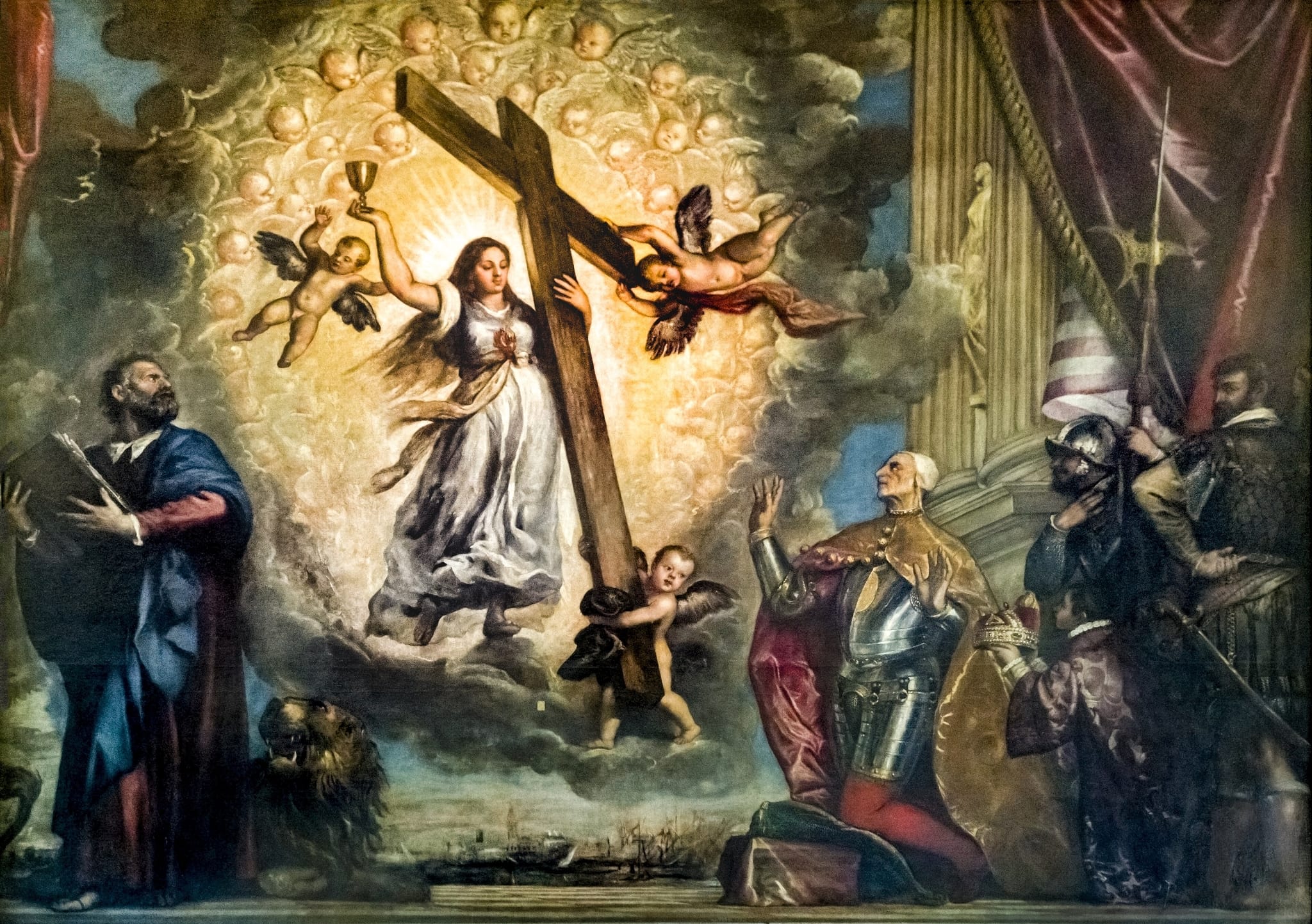
Doge Antonio Grimani Kneeling Before the Faith
1555
Shows Doge Antonio Grimani kneeling in humble devotion before an allegorical figure of Faith, who descends from the heavens bearing a chalice and cross while putti and rays of light surround her. Significant as a late votive/allegorical work connecting the private piety of a former doge with the civic-religious identity of Venice, it also demonstrates Titian’s mature handling of color, atmosphere, and symbolic program. Look for the contrast between the earthly, somber robes of the Doge and the luminous, warm tones and soft modeling of Faith and the heavenly light that unifies the composition.
Must-see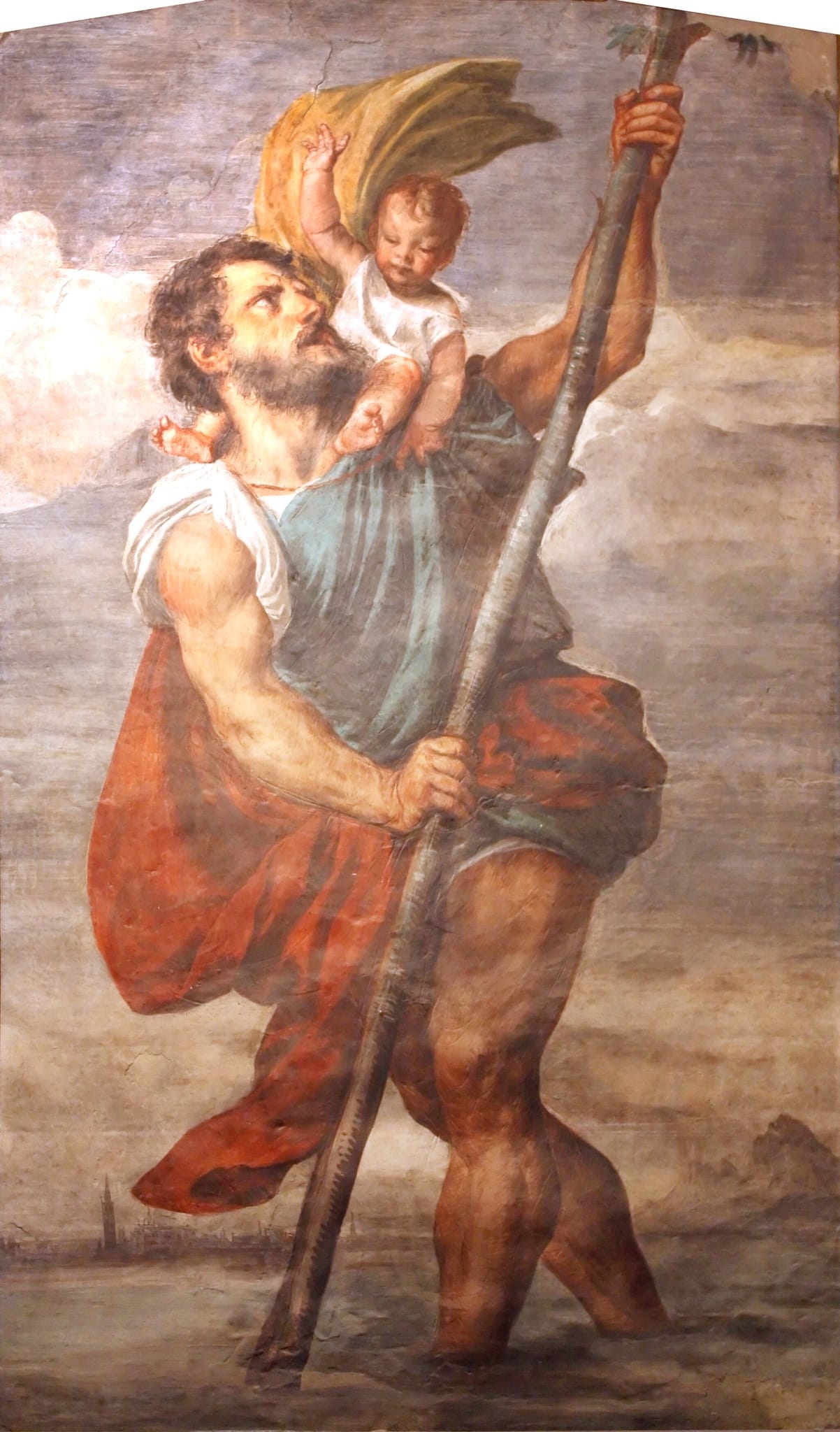
San Cristoforo
1523
Depicts Saint Christopher bearing the Christ Child across water, a traditional subject that emphasizes strength, protection, and the saint’s role as patron of travelers. The work is important as an example of Titian’s early- to mid-career fresco work in Venice, showing his ability to combine monumental figure design with lively coloring and expressive draughtsmanship. Viewers should notice the powerful, sculptural mass of Saint Christopher, the small yet radiant Christ Child, and how Titian balances physical weight with a luminous, atmospheric background.
Must-see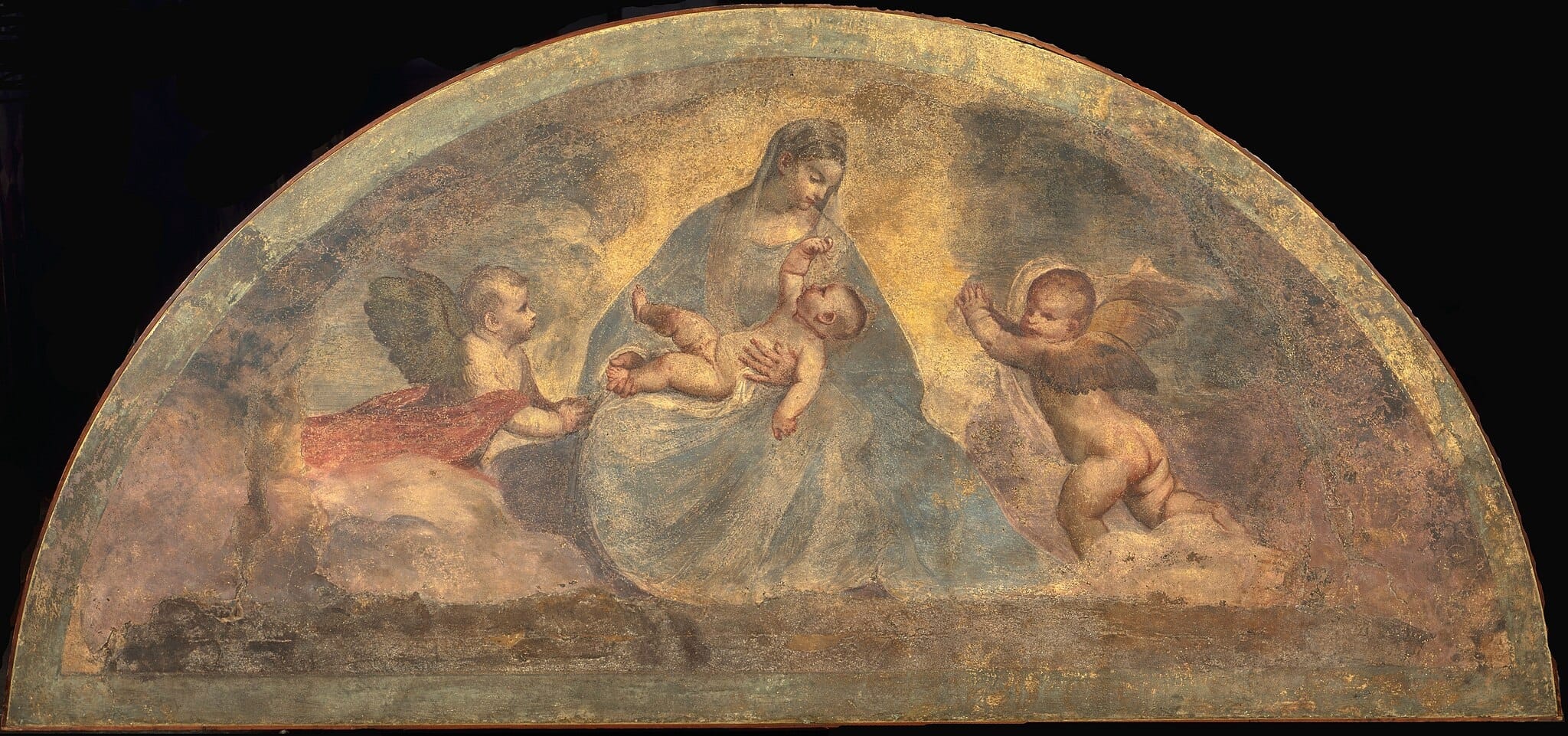
Virgin and Child with Two Angels
Represents the Virgin Mary tenderly holding the Christ Child while two angels attend, a devotional image that emphasizes intimacy and maternal love rather than grandiosity. Its significance lies in Titian’s sensitive blending of tender human emotion with rich Venetian colorism and soft, tactile brushwork that influenced later Venetian devotional painting. Pay attention to the warm flesh tones, the subtle interaction and eye contact between mother and child, and the delicate, quietly active gestures of the accompanying angels.
Scuola Grande di San Rocco
Although San Rocco is primarily famed for Tintoretto, the presence of two Titian paintings there gives a revealing contrast: Titian’s coloristic and painterly approach can be read against the dramatic, narrative program of the Scuola’s walls. Placed within this devotional confraternity setting, Titian’s works demonstrate how his handling of color, surface, and devotional intimacy functioned in active liturgical and confraternal spaces in Venice. The juxtaposition helps you appreciate different ways major Venetian masters addressed sacred subjects for communal devotion.
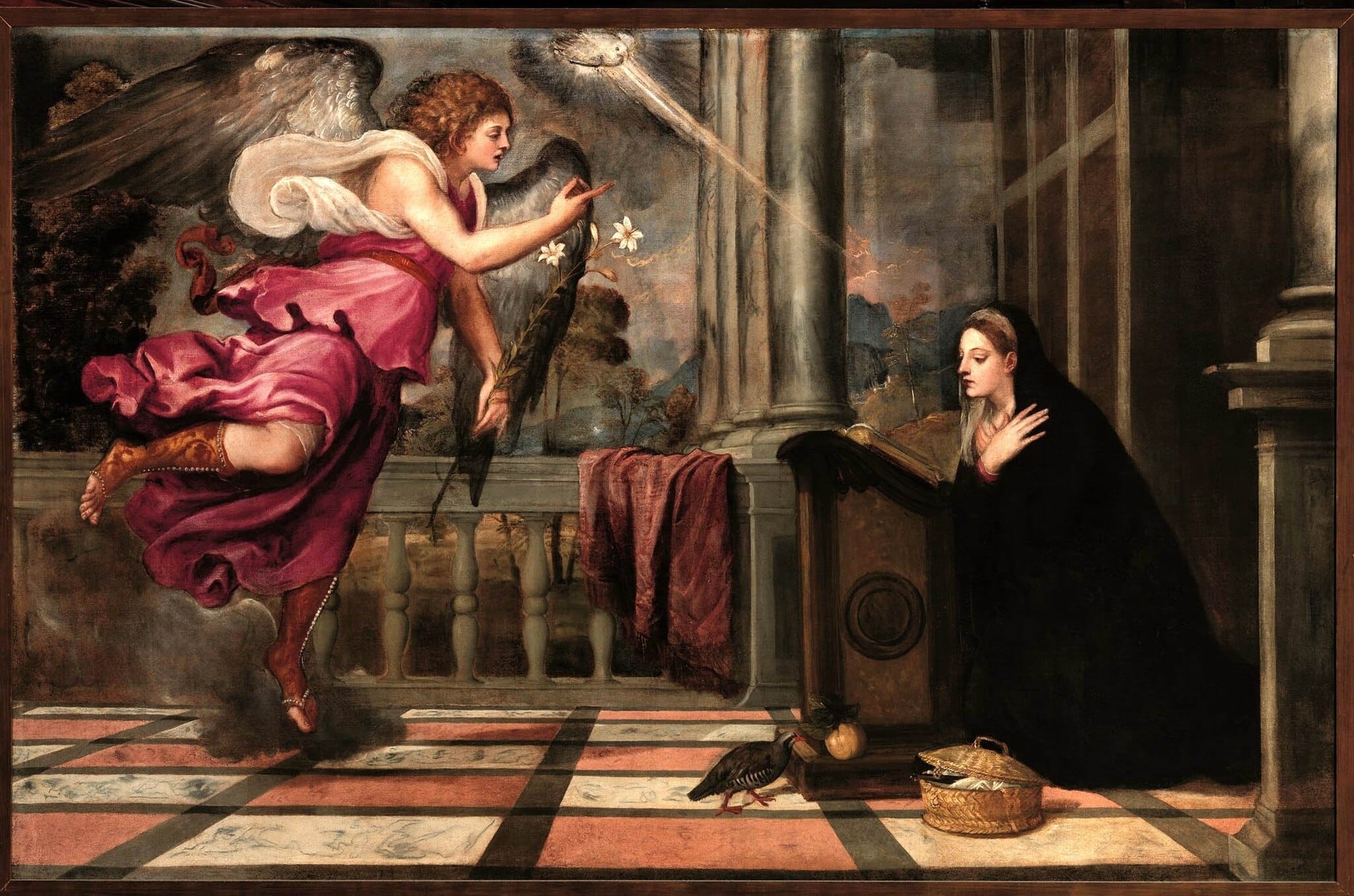
Annunciation
c.1540
Titian’s Annunciation shows the angel Gabriel appearing to the Virgin Mary at the moment of the Incarnation, rendered with a warm, Venetian palette and a graceful diagonal composition that guides the eye from the angel to Mary. It is significant for Titian’s mature handling of color and atmosphere, which heighten the scene’s spiritual intimacy and drama. Viewers should look for the subtle shifts of light on fabric and skin, the expressive hand gestures that convey recognition and assent, and the rich, layered glazing that creates depth and a sense of divine presence.
Must-see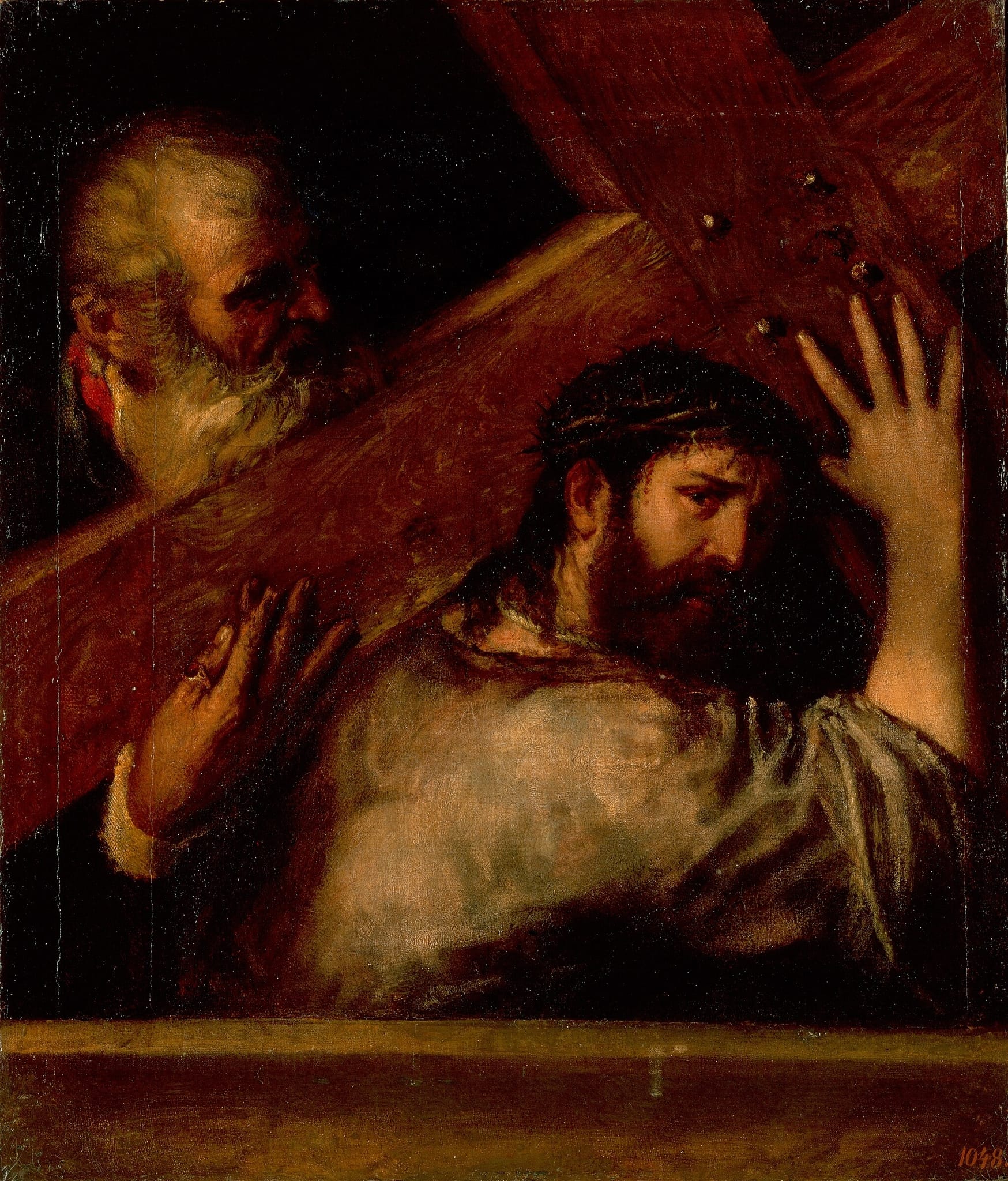
Christ Carrying the Cross
c.1505
This early work depicts Christ bearing the cross en route to Calvary, surrounded by a compact group of figures whose faces register cruelty, indifference, and sorrow. Important as an example of Titian’s formative years, the painting shows his borrowing from Venetian masters while already experimenting with psychological immediacy and dramatic grouping. Notice the concentrated emotional expressions, the strong contrasts of light and shadow that model the forms, and the way Titian uses color and brushwork to focus attention on Christ’s weary dignity.
Must-seeCa' Pesaro (International Gallery of Modern Art)
Ca’ Pesaro contains no works by Titian, but it matters because it traces how later centuries in Venice collected, interpreted, and displayed artistic achievement — including the legacy that allowed Titian to be canonized as a model for modern painters. The museum’s modern and 19th–20th-century collections show responses to Titian’s color, brushwork, and compositional strategies, so you can see his influence filtered through later aesthetic movements and Venice’s evolving museum culture.