Titian Paintings in Madrid — Where to See Them
Madrid matters for experiencing Titian because, though only about two of his paintings are on permanent display, they sit in the compact, easily walkable museum circuit of the city and reflect Spain’s long historical ties to the artist through Habsburg patronage. Those two works are housed at the Museo Nacional Thyssen-Bornemisza (the Real Academia de Bellas Artes de San Fernando currently has none on display), so you can study key examples of Titian’s technique without hunting through a large national collection.
At a Glance
- Museums
- Museo Nacional Thyssen-Bornemisza, Real Academia de Bellas Artes de San Fernando
- Highlight
- See Titian masterpieces at the Museo Nacional Thyssen-Bornemisza
- Best For
- Art lovers focused on Renaissance and European masterworks
Museo Nacional Thyssen-Bornemisza
Although smaller in number than the Prado, the Thyssen’s two Titian paintings matter because they present the artist in a different curatorial context: the gallery places Titian alongside other Venetian and Northern European painters in a collection organized to highlight stylistic contrasts and collecting histories. That juxtaposition helps visitors see Titian’s colorism and handling of paint against works that influenced or responded to him, and the museum’s intimate galleries let you study brushwork and surface glazing up close in ways that larger, busier rooms sometimes do not.
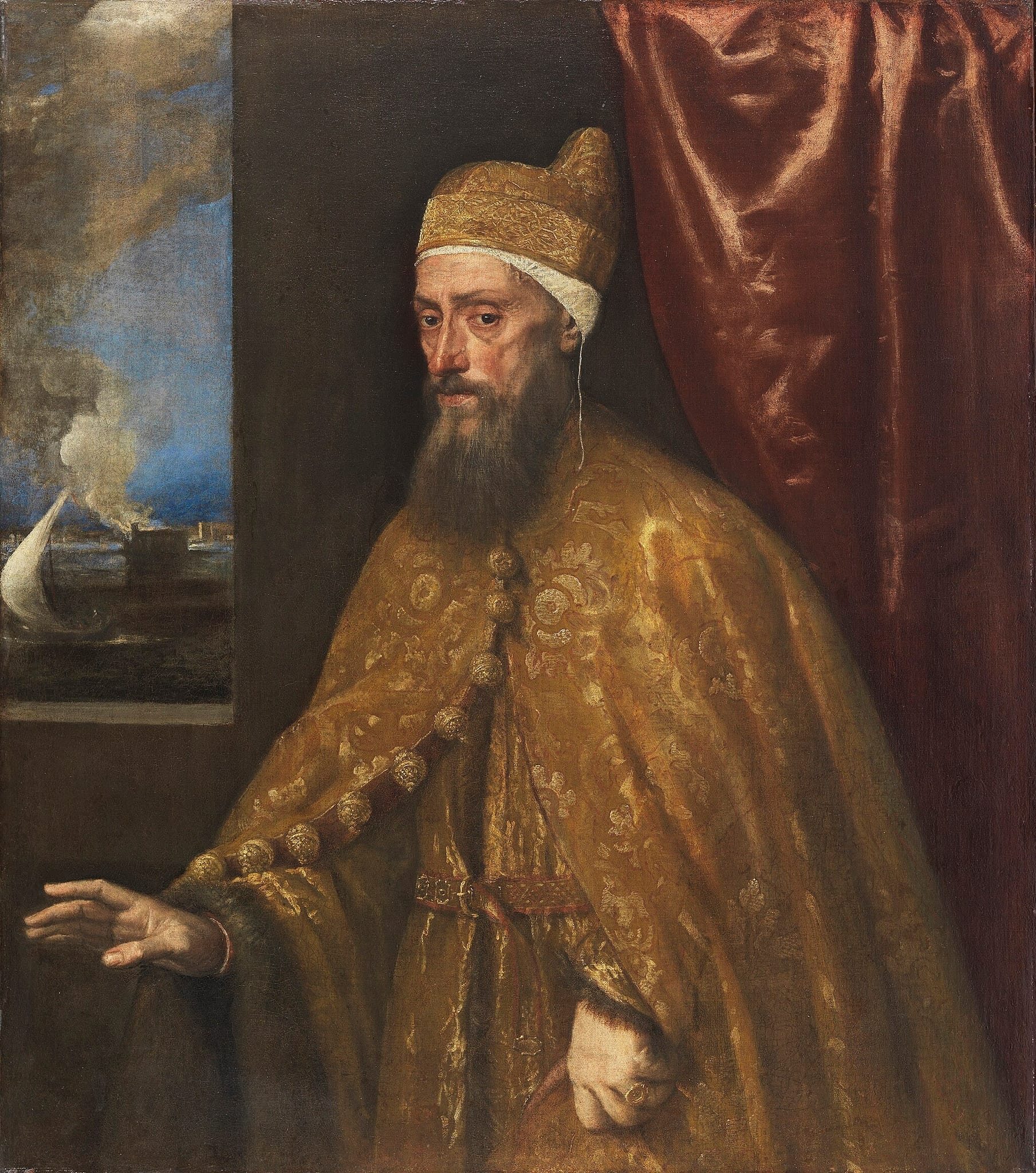
Portrait of the Doge Francesco Venier
c.1554-1556
Titian presents Doge Francesco Venier in full ceremonial dress — the corno ducale, rich robes and chain — as a dignified, civic figure rather than an idealized ruler. The work is significant as an example of Titian’s mastery of Venetian state portraiture, conveying authority through color, texture and presence rather than elaborate setting. Look closely at the handling of fabrics and metal (the fur, the brocade and the chain), the subtle modeling of the face and the calm, measured gaze that together create the sitter’s public persona.
Must-see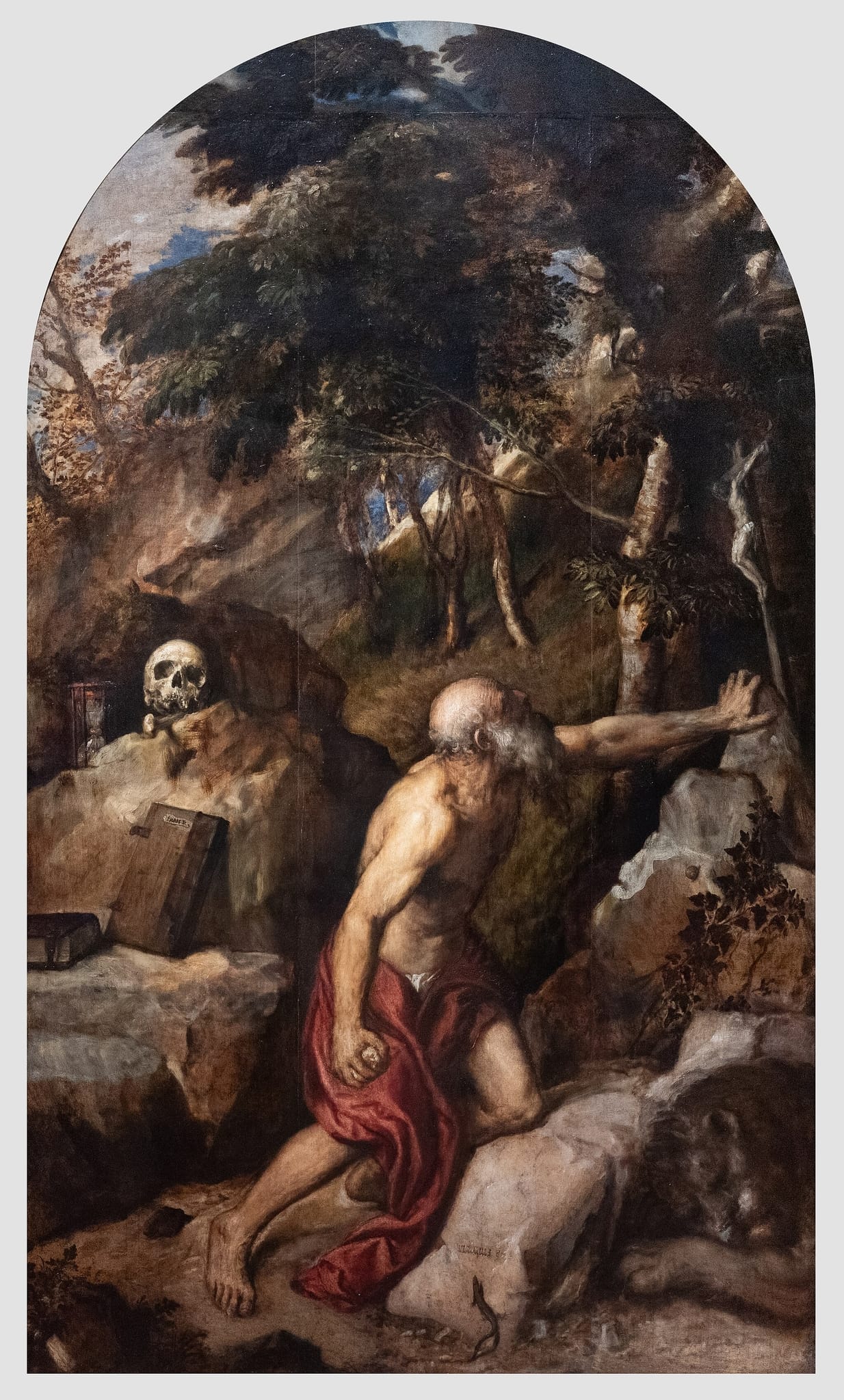
Penitent Saint Jerome
c.1575
This late Titian painting shows Saint Jerome in solitary penitence — a gaunt, aged figure beside the traditional skull, book and crucifix, absorbed in prayer or study. It’s important as an example of Titian’s late, expressive religious work: the artist emphasizes spiritual intensity through a pared-down composition and vigorous, textured brushwork rather than precise detail. Notice the dramatic contrasts of light and shadow, the tactile application of paint on skin and drapery, and the emotional rawness in Jerome’s hands and face that convey inner struggle and devotion.
Must-seeReal Academia de Bellas Artes de San Fernando (Museo de la Real Academia)
Even though the Academy’s permanent collection currently holds no paintings by Titian, the institution matters for experiencing Titian’s place in Spain because it preserves the documentary, pedagogical and technical lineage that kept Titian’s reputation alive at the Spanish court. The Academy’s drawings, prints, copies, archives and its historical displays show how Titian’s compositions and coloristic solutions were studied, copied and taught to generations of Spanish painters (including those who shaped Madrid’s Golden Age), so the visit gives crucial context for understanding Titian’s influence in Spain rather than additional autograph paintings.