Titian Paintings in Florence — Where to See Them
Florence displays approximately eight Titian paintings on permanent view across three museums—practically all of them at the Gallerie degli Uffizi (8 paintings), while the Museo Nazionale del Bargello and the Museo di Palazzo Vecchio currently show none. That concentration at the Uffizi makes Florence special for experiencing Titian: you can see a small but coherent selection in one place, allowing direct comparison of his handling of colour, brushwork and different commission types without having to hop between cities.
At a Glance
- Museums
- Gallerie degli Uffizi, Museo Nazionale del Bargello, Museo di Palazzo Vecchio
- Highlight
- See Titian masterpieces at the Uffizi Gallery
- Best For
- Renaissance art lovers and history enthusiasts
Gallerie degli Uffizi
The Uffizi matters for experiencing Titian because it preserves a concentrated group of his works within the Medici and Florentine collecting traditions, so you can see how Titian’s colorito and portraiture were received and displayed alongside works by his Venetian and Florentine contemporaries. Viewing his paintings in the Uffizi lets you compare his handling of oil, scale and court portrait conventions directly with paintings by Titian’s rivals and admirers in nearby galleries, which clarifies why his approach to color and surface was revolutionary for Italian painting. The Uffizi’s long display history also shows how provenance and Grand Duchy collecting shaped the modern reputation of Titian.
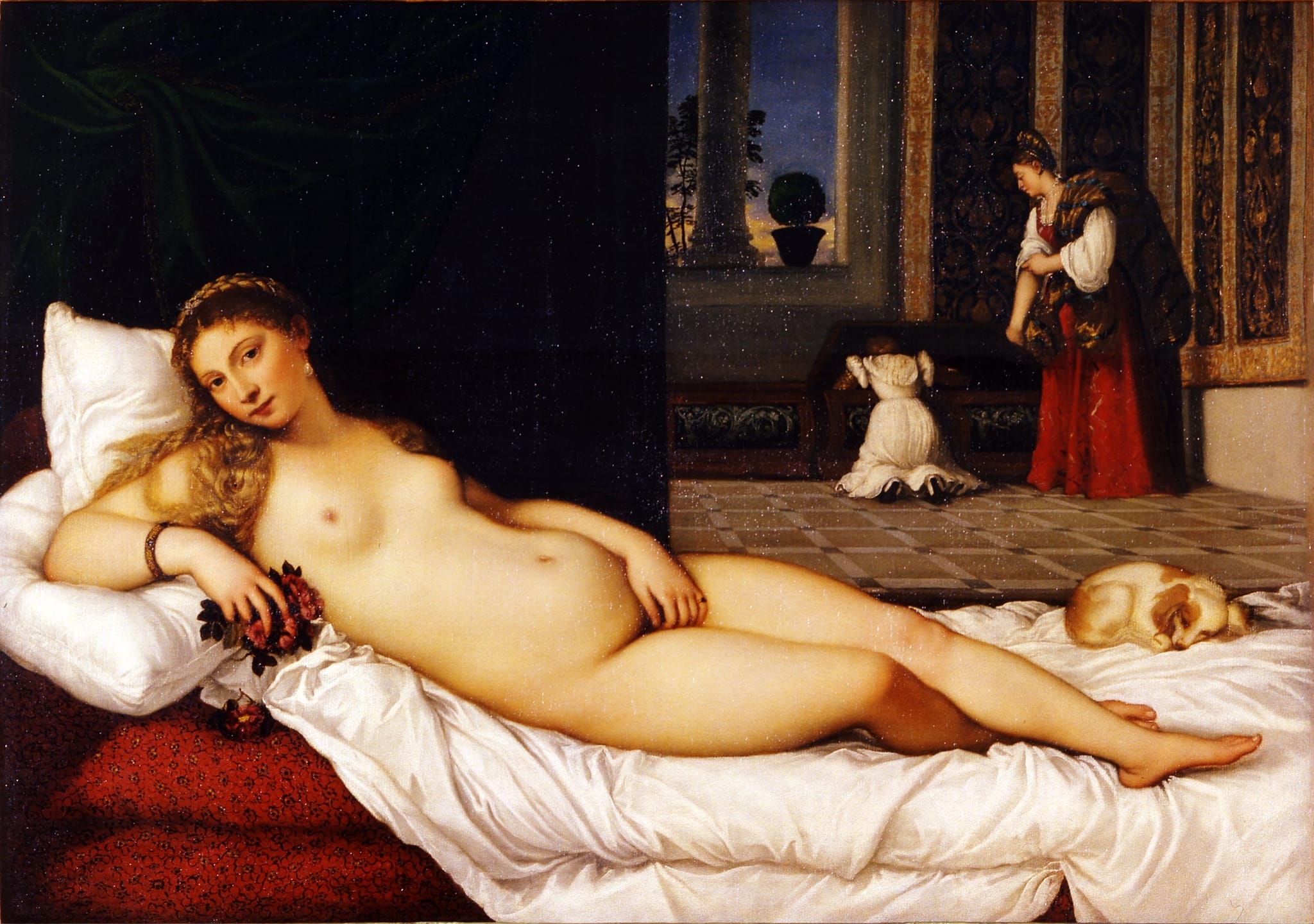
Venus of Urbino
1538
Depicts a reclining nude Venus in an interior domestic setting, returning the viewer’s direct, intimate gaze while a maid and a child appear in the background. Significant as a landmark of Venetian colorism and the erotic yet composed portrayal of marital love and idealized femininity for a ducal audience. Look for Titian’s warm, sensuous brushwork, the glancing light on flesh, the little dog at her feet (symbol of fidelity), and the rich arrangement of fabrics and the background figures that reframes the nude as part of household life.
Must-see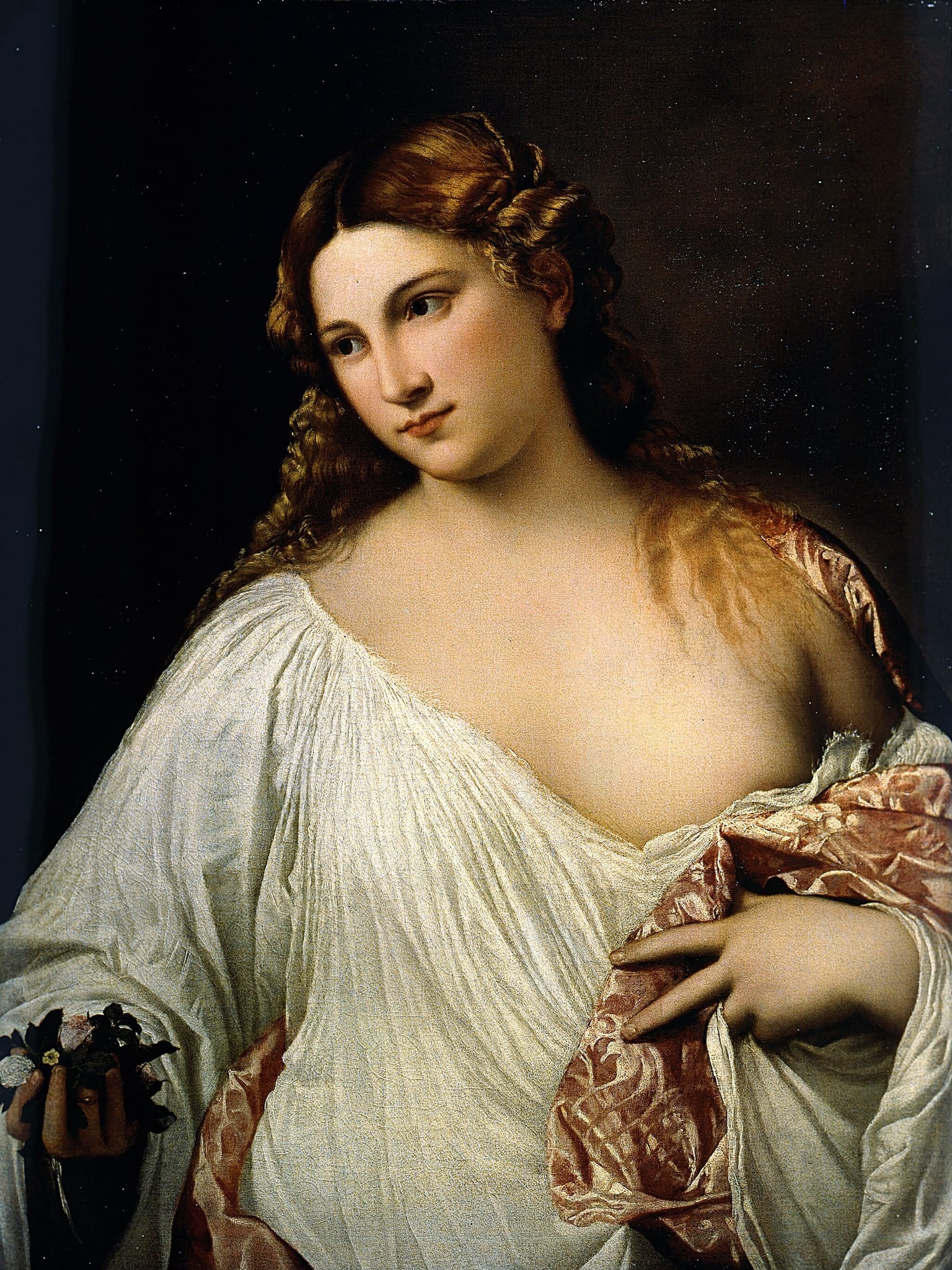
Flora
1517
Shows a young woman, half-turned, holding flowers and draped in translucent, luxurious fabric — an emblematic celebration of spring and feminine beauty. Important as an early example of Titian’s poetic portrait-genre blending mythic and realistic qualities, influencing later representations of idealized women. Notice the soft handling of skin and hair, the luminous color transitions, the detailed flowers (symbolizing fertility and renewal), and the subtle, almost portrait-like individuality of the sitter’s face.
Must-see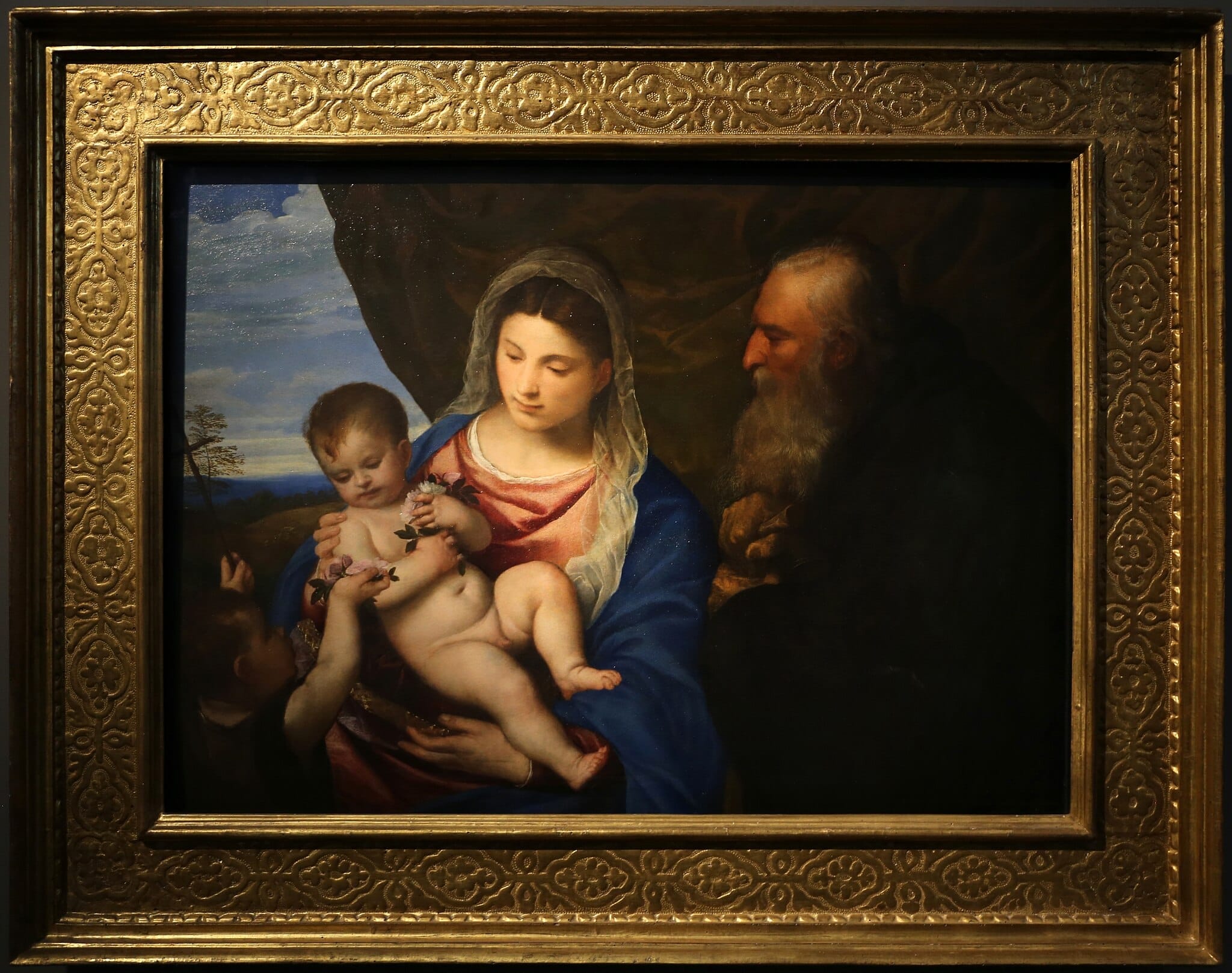
Madonna of the Roses
c.1530
Presents the Virgin and Child surrounded by roses and attendants in a devotional, tender scene that balances celestial grace with human intimacy. Significant for Titian’s mature use of color and atmospheric space to intensify emotional warmth in religious painting. Observe the rosy palette that links the Virgin to the flower symbolism, the gentle modeling of the Christ child, and the loose, expressive brushwork that creates a soft, devotional glow.
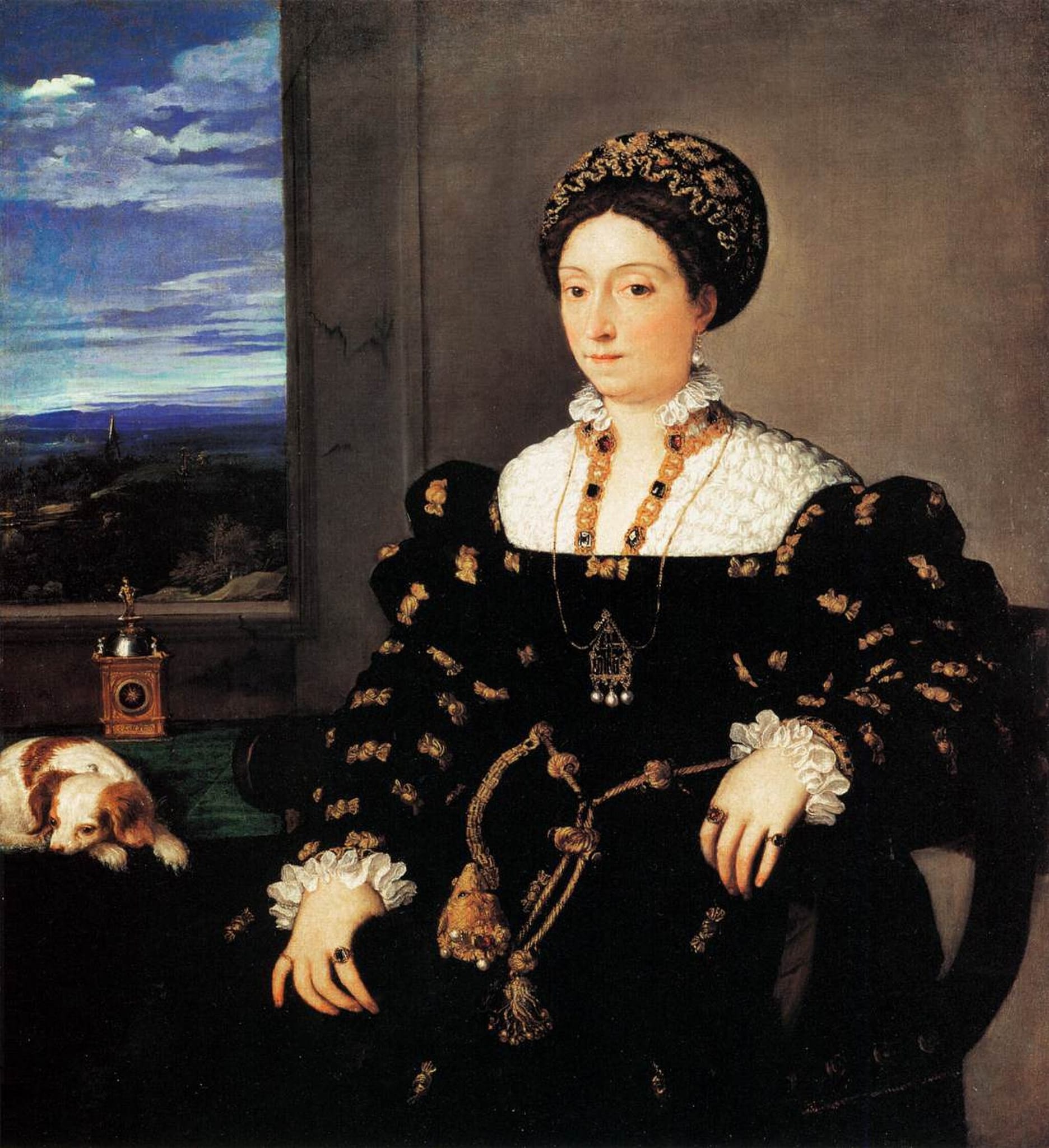
Portrait of Eleonora Gonzaga, Duchess of Urbino
c.1537
A formal portrait of Eleonora Gonzaga showing her dignified pose, sumptuous costume, and jeweled accoutrements that signal status and virtue. Significant as an example of Titian’s ability to convey social rank and character through color and texture rather than rigid formality. Look for the exquisite rendering of fabrics and jewelry, the calm but incisive facial expression, and how Titian uses warm tones to flatter and individualize the sitter.
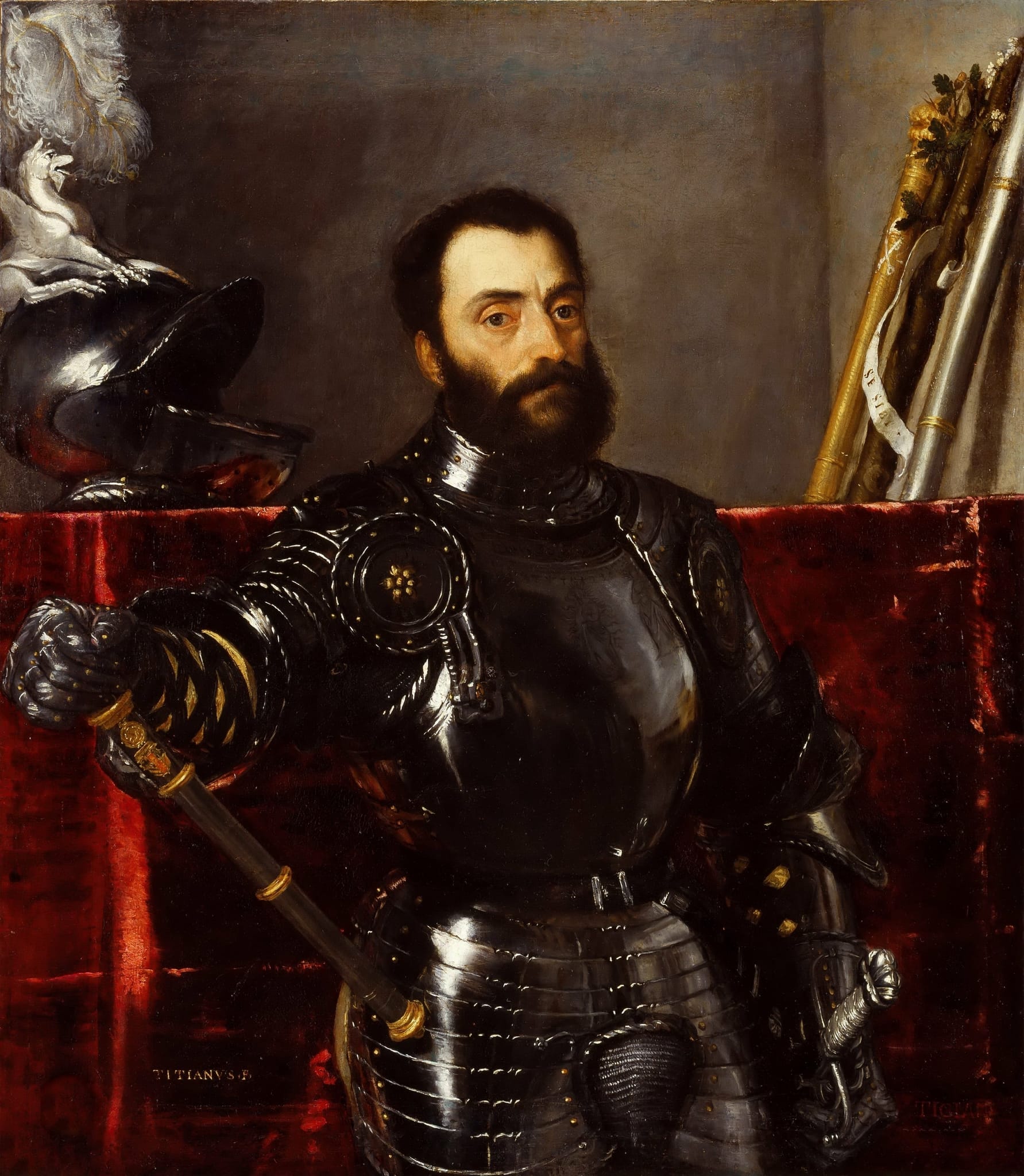
Portrait of Francesco Maria della Rovere
c.1537
Depicts the Duke Francesco Maria della Rovere in armor and regalia, presenting authority, military power, and ducal identity. Important because Titian captures both the public role and the psychological presence of a ruling figure, contributing to the rise of grand ducal portraiture. Attend to the contrast between the reflective metal of the armor and the textured fabrics, the confident posture, and the controlled palette that emphasizes gravitas and nobility.
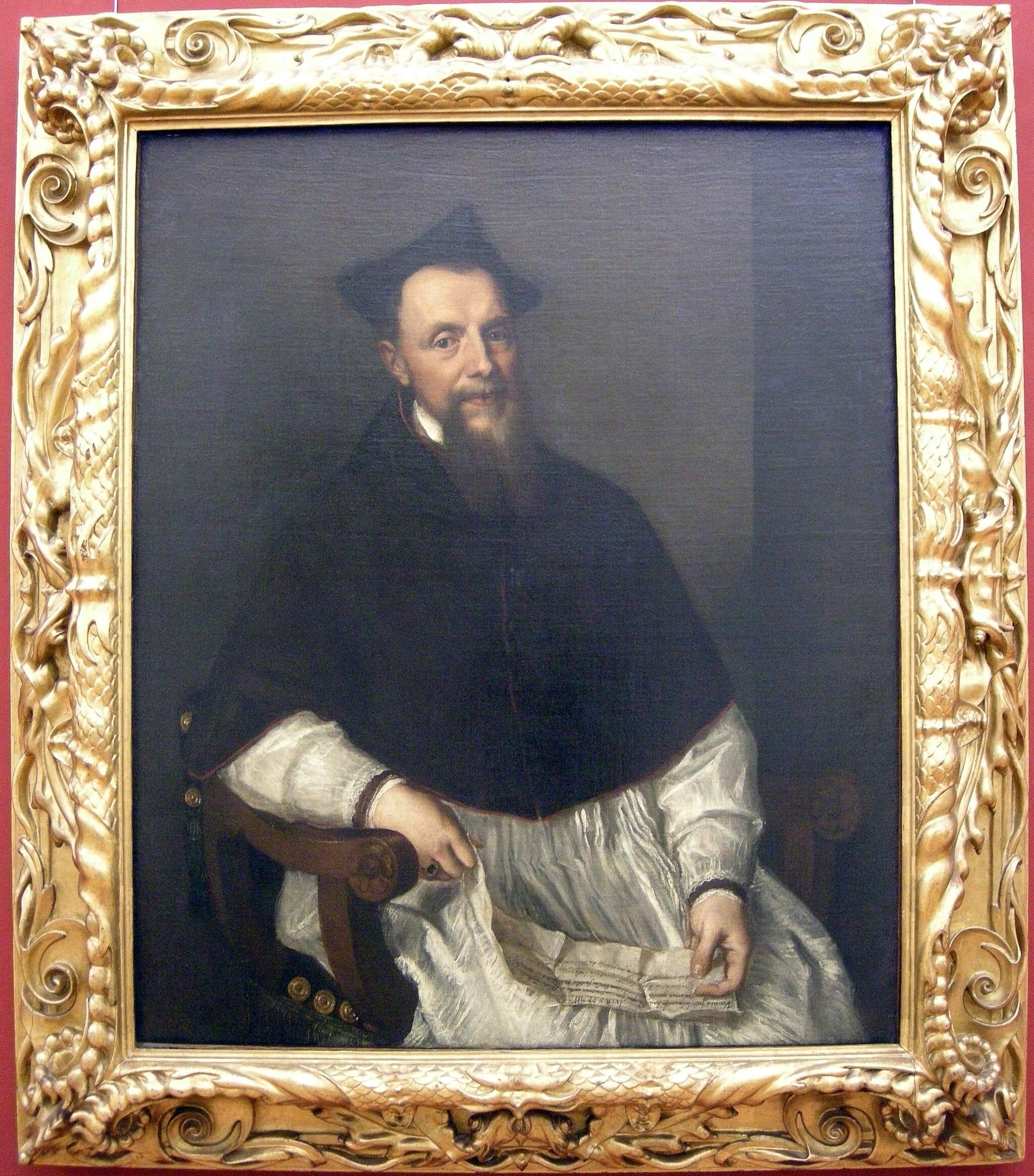
Portrait of the Bishop Ludovico Beccadelli
1552
A restrained, close-up portrait of Bishop Ludovico Beccadelli emphasizing his clerical dignity and contemplative character. Significant for Titian’s late-career economy of paint and expressive realism that communicates age, status, and personality with minimal detail. Look for the textured surfaces, the expressive treatment of the face and hands, and the subtle use of shadow to model the sitter’s features and spiritual seriousness.
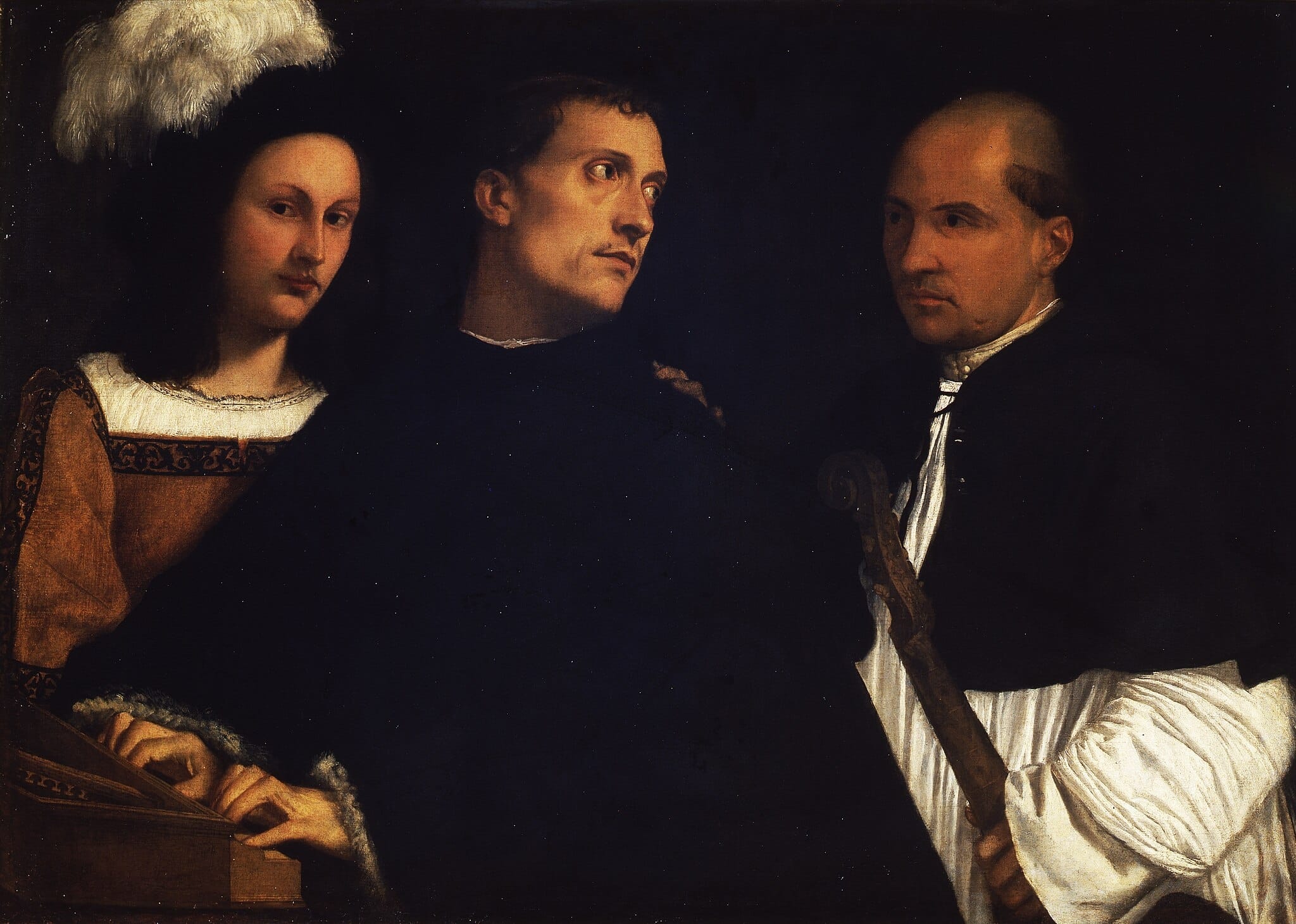
Il Concerto
1510-1511
Shows an intimate musical scene—figures gathered in a room playing and listening to music—blending portraiture and genre elements in a poetic domestic tableau. Notable for Titian’s early experimentation with narrative ambiguity and mood, where music becomes a vehicle for exploring human interaction and sensibility. Notice the arrangement of figures that leads the eye in a gentle arc, the interplay of gestures and glances, and Titian’s warm, layered color that unifies the scene.
Must-see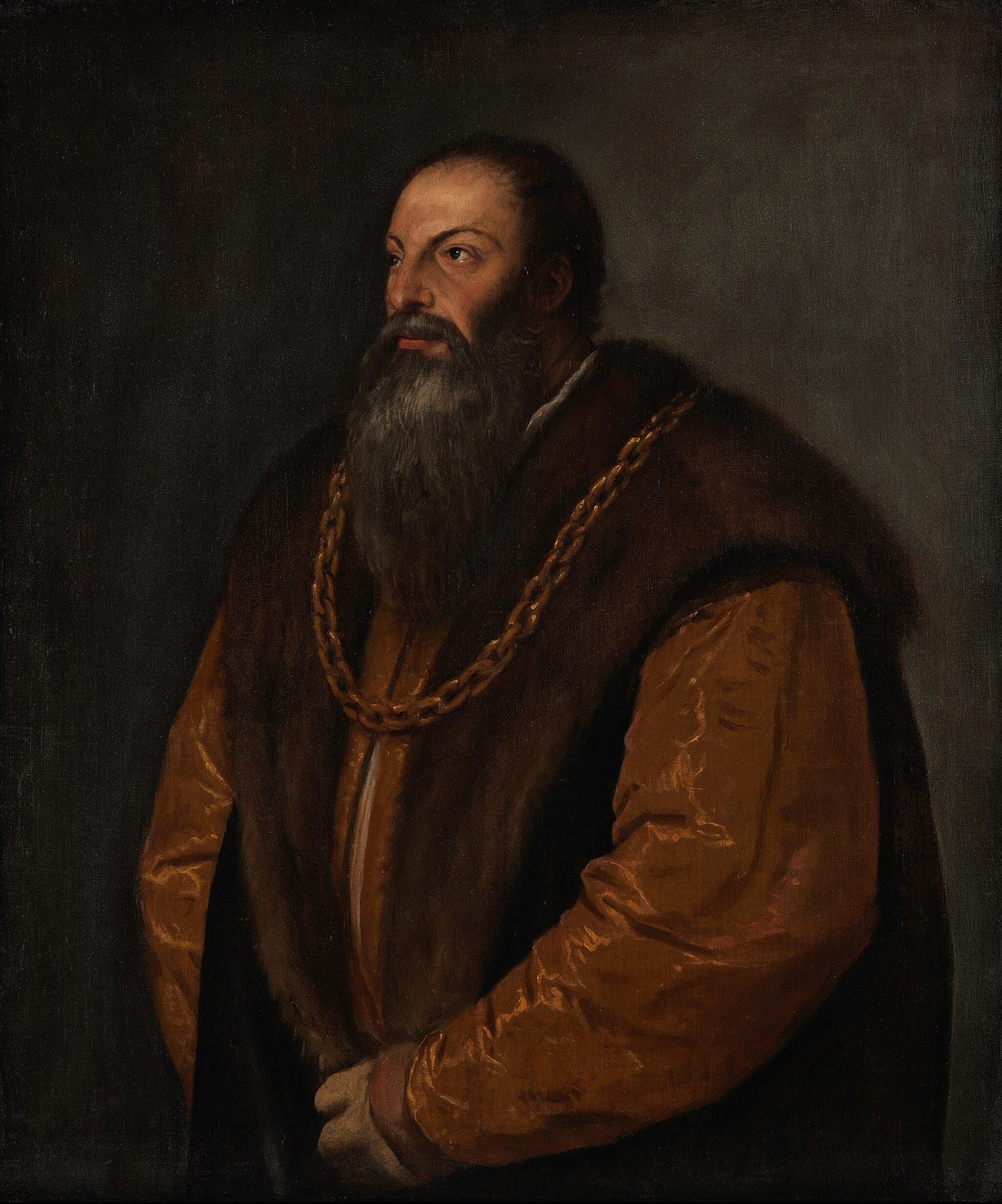
Portrait of Pietro Aretino
1545
A penetrating likeness of the writer and provocateur Pietro Aretino, rendered with psychological insight and a frank, unidealized realism. Significant because Titian captures Aretino’s sharp intellect and abrasive personality, producing one of the most famous artist-writer collaborations of the period. Look at the intense, alert eyes, the textured treatment of beard and skin, and the restrained background that focuses attention on the sitter’s character and expression.
Museo Nazionale del Bargello
Although the Bargello has no paintings by Titian, it is important for understanding Titian because it concentrates on sculpture, decorative arts and early Renaissance draftsmanship that represent the sculptural and anatomical ideas circulating in Florence — ideas Titian encountered and responded to when Venetian painters engaged with Florentine art. The museum’s strong holdings in portrait sculpture and three-dimensional practice help visitors appreciate how Titian’s portrait compositions and his modeling of flesh were read against sculptural standards of the period, illuminating why his painted surfaces often aimed for sculptural presence.
Museo di Palazzo Vecchio (Museo del Palazzo Vecchio)
Palazzo Vecchio matters for Titian studies despite holding no paintings by him because it preserves the civic and courtly environment of Florence where Titian’s reputation circulated: civic portraiture, official ceremonial imagery, and decorative programs here provide a direct sense of the political and representational frameworks that shaped commissions across Italy. Seeing the rooms, official portrait types, and documentary inscriptions in situ makes it easier to understand how Titian’s court portraits for emperors and princes functioned differently from Florentine civic images, and why Florentine collectors later sought his work.