Vincent van Gogh Paintings in Paris — Where to See Them
Paris is the most efficient place to get a focused look at Van Gogh’s late style: approximately 9 paintings are on permanent display, all in one stop at the Musée d’Orsay. Seeing them together lets you track his leap from Paris experiments to the blazing color and urgency of Arles, Saint-Rémy, and Auvers without crisscrossing the city. In a single visit, you can compare brushwork, palette, and subject shifts across these pivotal years.
At a Glance
- Museums
- Musée d'Orsay
- Highlight
- See Van Gogh’s self-portraits at the Musée d'Orsay.
- Best For
- Art lovers seeking Impressionist and Post-Impressionist masterpieces in a world-class setting.
Musée d'Orsay
Orsay’s Van Gogh holdings let you follow his late trajectory across Arles, Saint-Rémy, and Auvers in one sweep, including touchstones like Starry Night Over the Rhône, Bedroom in Arles, The Church at Auvers, and the second Portrait of Dr. Gachet. Seeing these side‑by‑side with neighboring Post‑Impressionists makes his radical color and brushwork choices—and how they diverged from peers—immediately legible. The collection emphasizes how quickly his style intensified in the last two years of his life.
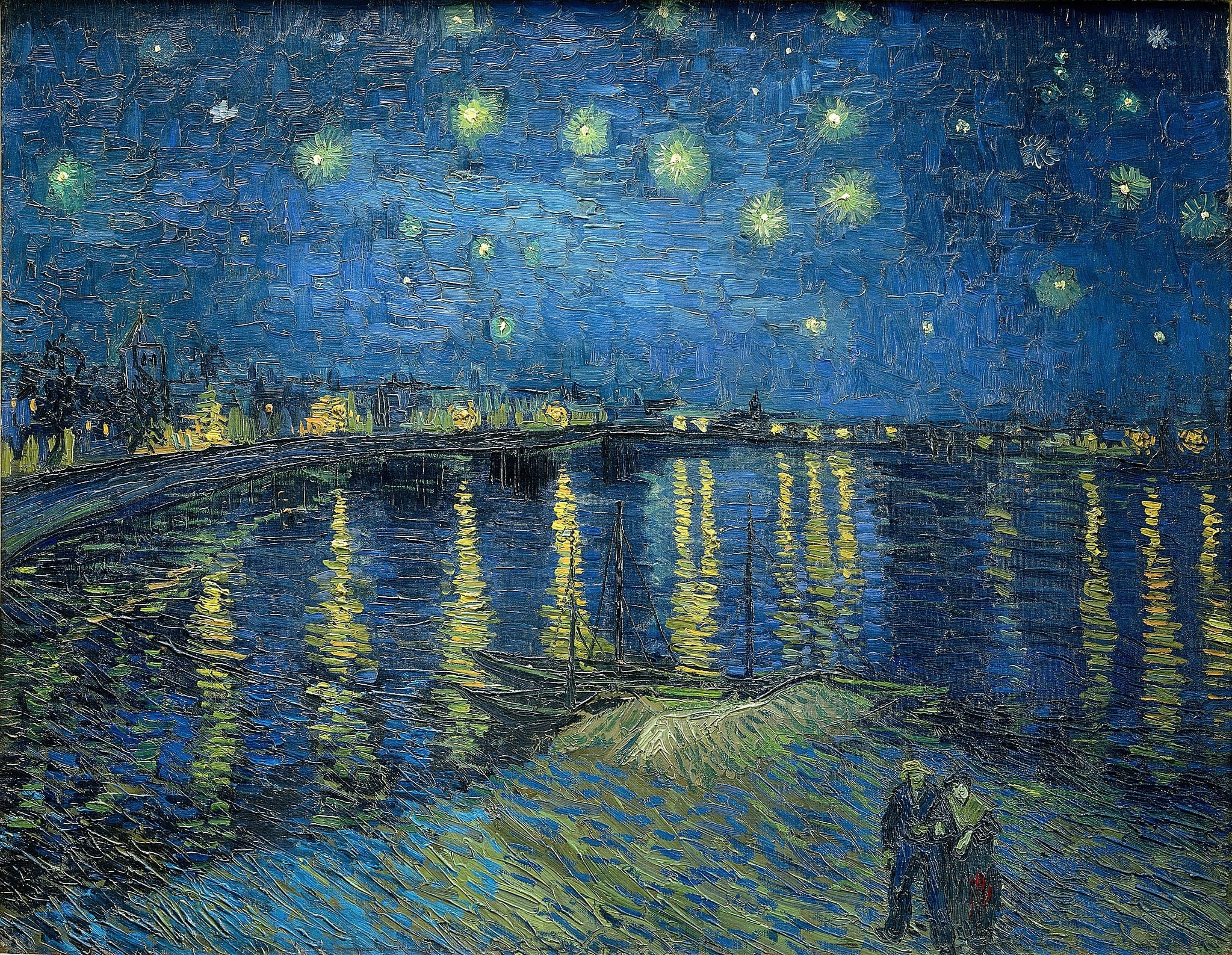
Starry Night Over the Rhône
1888
Van Gogh paints the Rhône at night in Arles, with gaslights shimmering across the water and a couple strolling in the foreground. A key nocturne from his Arles period, it explores how artificial and celestial lights transform color; notice the thick cobalt-and-amber impasto and the crisscrossing reflections anchoring the composition. ([en.wikipedia.org](https://en.wikipedia.org/wiki/Starry_Night_Over_the_Rh%C3%B4ne?utm_source=openai))
Must-see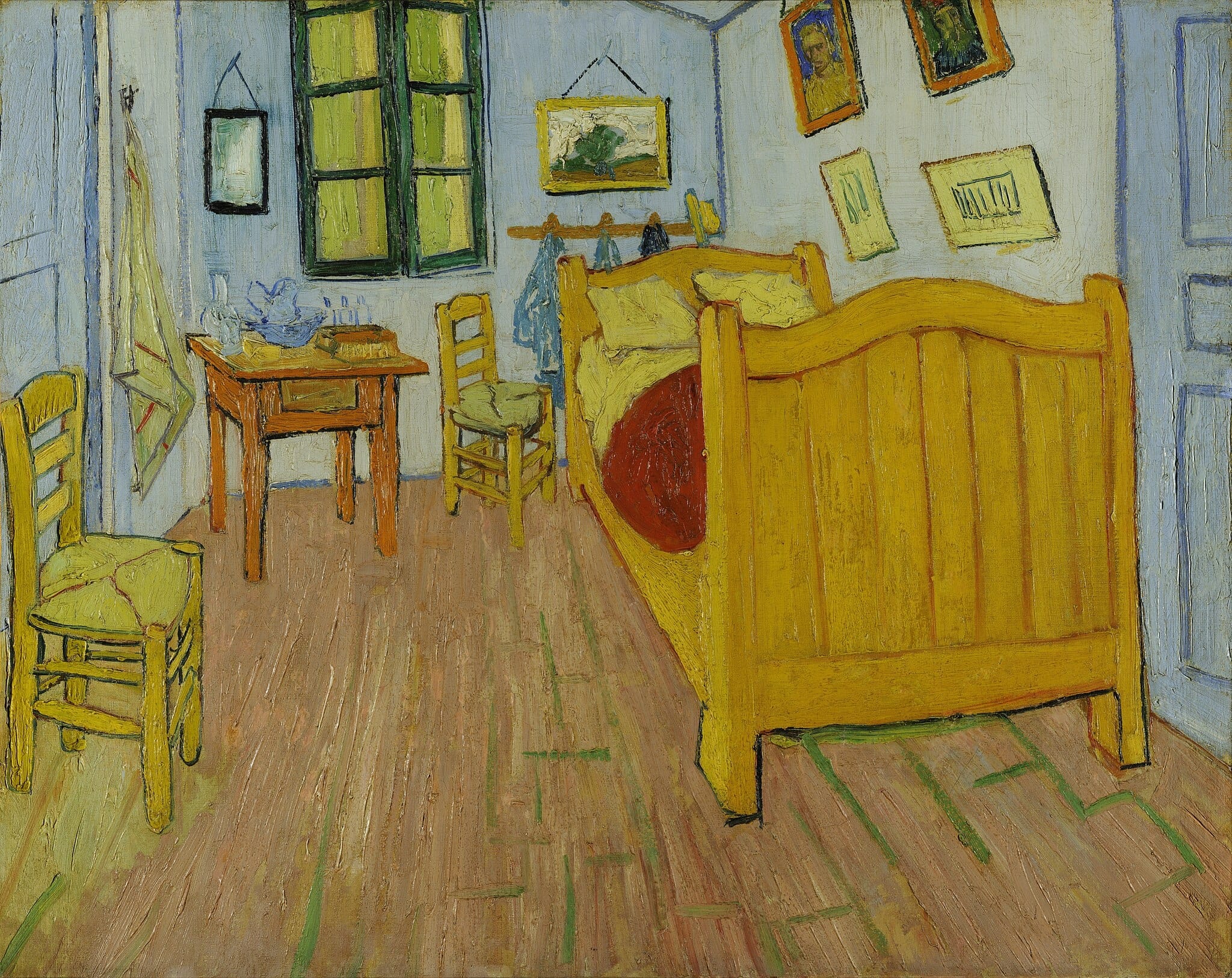
Bedroom in Arles
1889
This is Van Gogh’s third version of his bedroom, a distilled portrait of personal space with tilted perspective, simple furniture, and vibrating complementary colors. Its significance lies in how color, not shadow, conveys rest and stability; look for the skewed lines, the two chairs, and the deliberately flattened planes that make the room feel immediate and intimate. ([en.wikipedia.org](https://en.wikipedia.org/wiki/Bedroom_in_Arles?utm_source=openai))
Must-see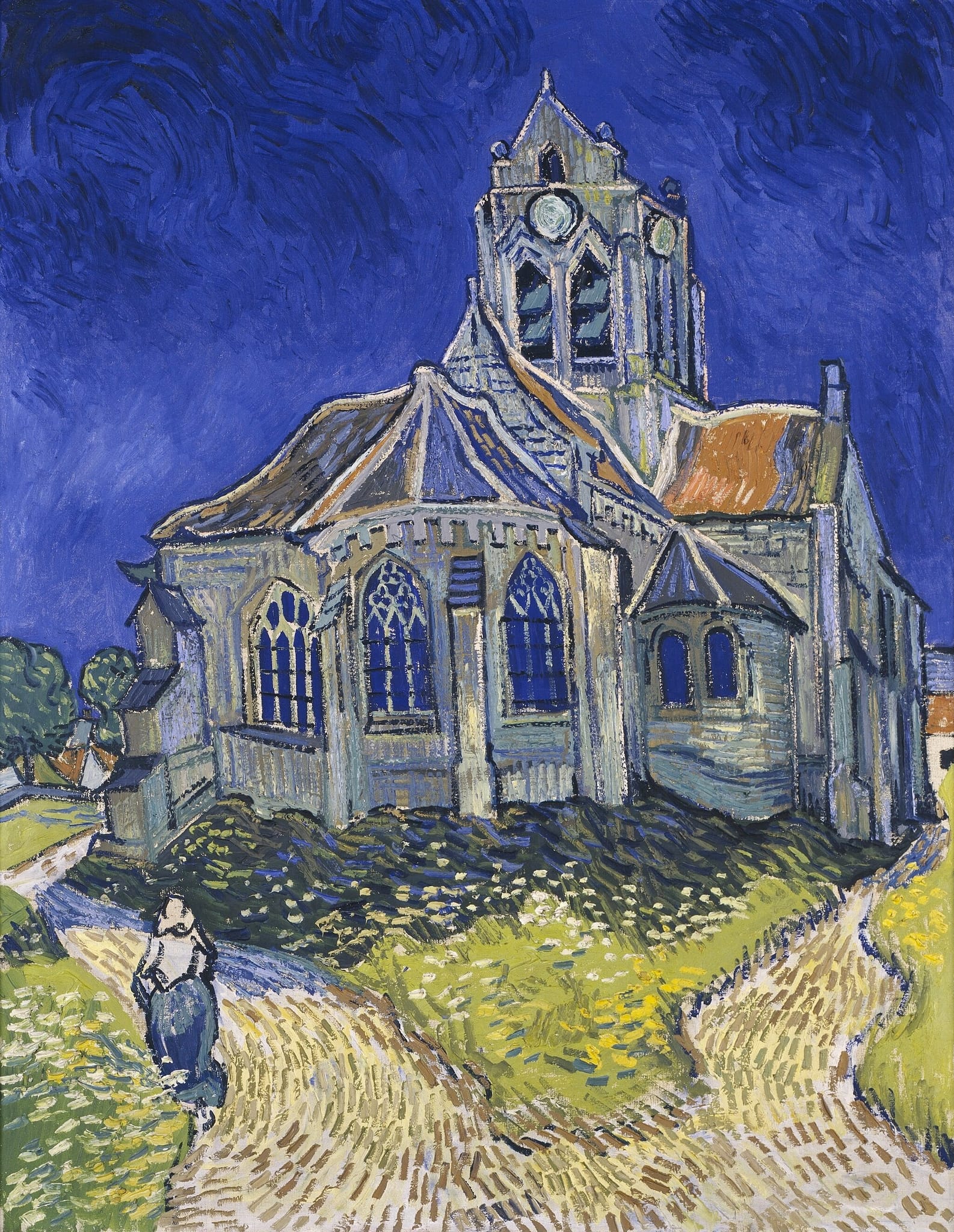
The Church at Auvers
1890
The village church in Auvers-sur-Oise wavers under undulating outlines, set between diverging paths and a saturated blue sky. Painted in his final months, it exemplifies Van Gogh’s late, expressive distortions—watch how the cobalt blues, inky shadows, and rhythmic brushwork give the building a restless, almost living presence. ([en.wikipedia.org](https://en.wikipedia.org/wiki/The_Church_at_Auvers?utm_source=openai))
Must-see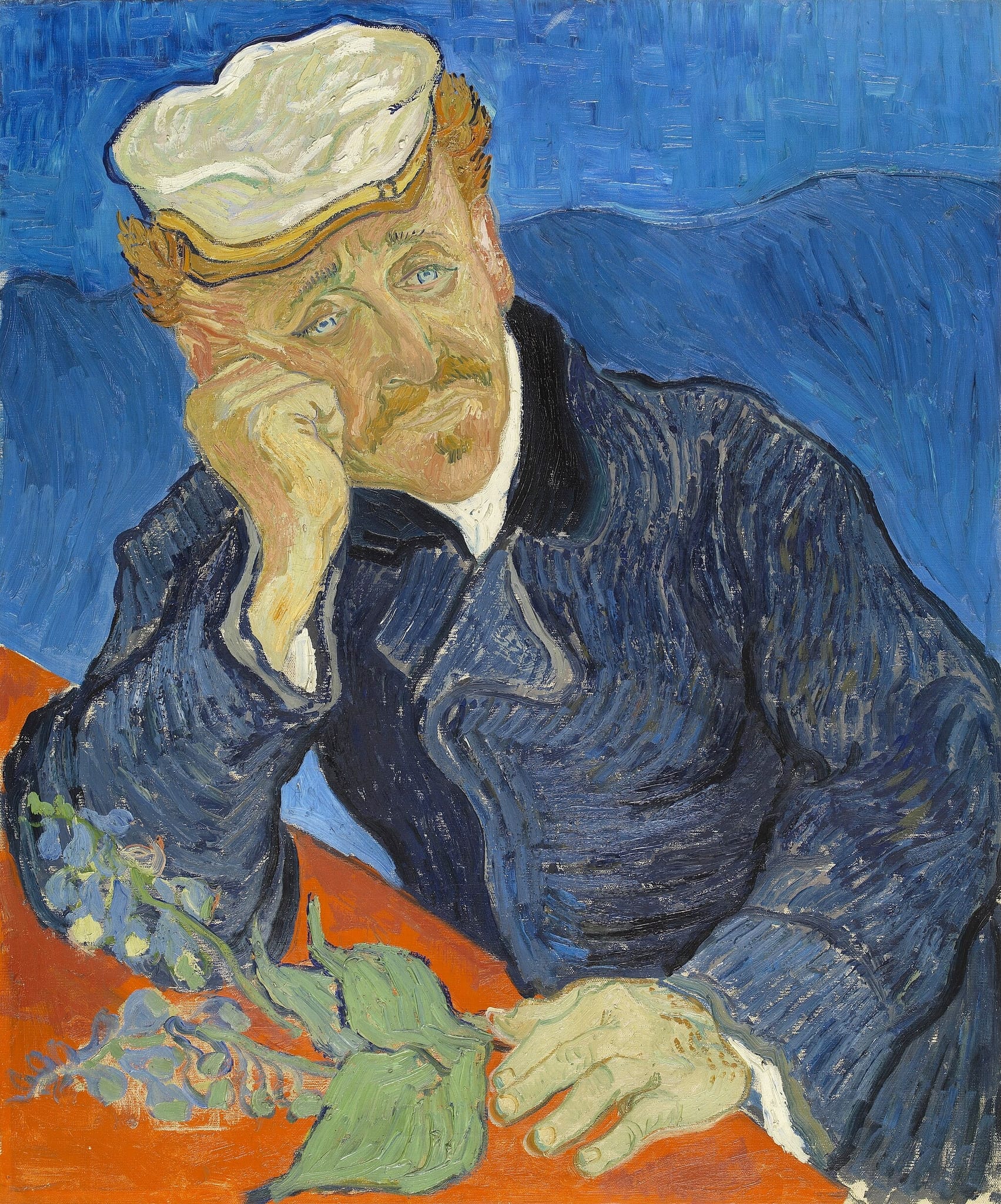
Portrait of Dr. Gachet
1890
Gachet, the physician who cared for Van Gogh in Auvers, leans his head on his hand in a modern, psychologically charged pose. Orsay holds the second painted version; focus on the melancholic expression, the sinuous contour lines, and the cool blue tonality that deepen the portrait’s mood. ([en.wikipedia.org](https://en.wikipedia.org/wiki/Portrait_of_Dr._Gachet))
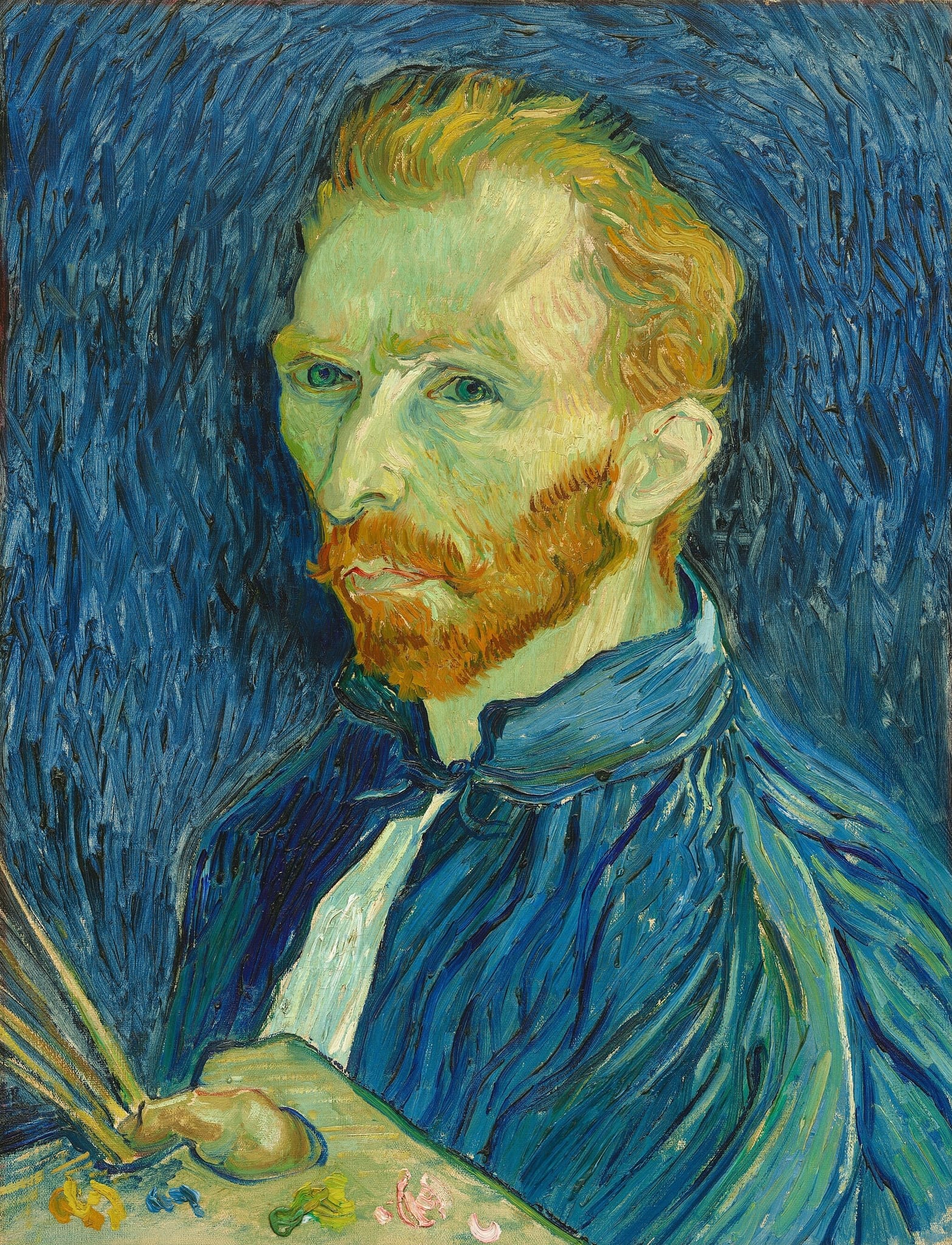
Self-Portrait
1889
Painted during his Saint-Rémy stay, Van Gogh fixes us with a steady gaze amid a vortex of blue-green strokes. It’s among his last self-portraits and a manifesto of brushwork-as-voice—look for the short, directional strokes that radiate around the head and the high-key palette that makes the face emerge from the turbulent ground. ([art.rmngp.fr](https://art.rmngp.fr/en/library/artworks/vincent-van-gogh_autoportrait_huile-sur-toile_1889?utm_source=openai))
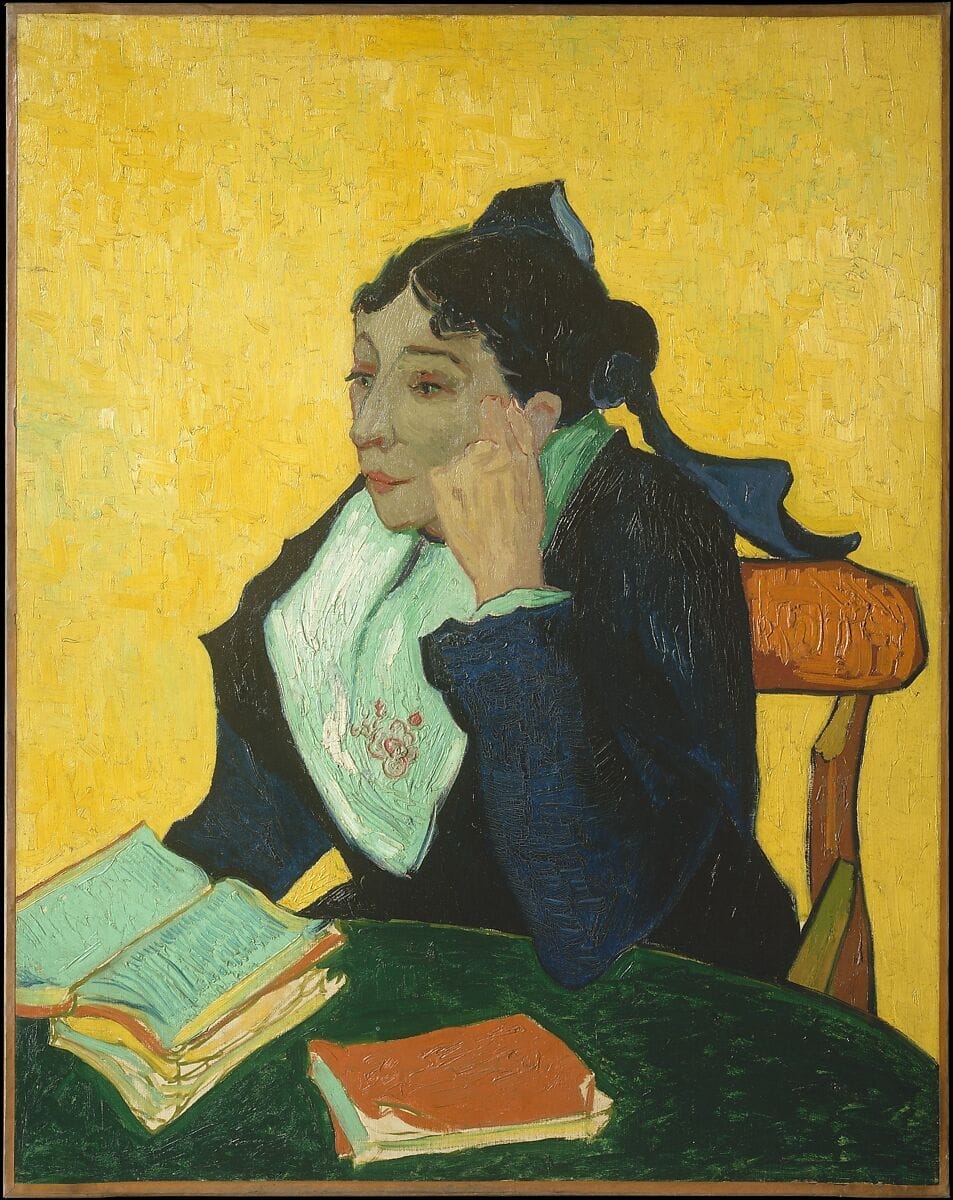
L'Arlésienne
1888
Madame Ginoux of Arles sits in profile, reduced to clear contours and flat color, in a portrait Van Gogh said he “knocked off in one hour.” This first, thinly painted version on coarse burlap anticipates his interest in character over likeness—notice the economy of detail, the graphic silhouette, and the matte surfaces that keep the figure crisp. ([musee-orsay.fr](https://www.musee-orsay.fr/en/artworks/larlesienne-14058?utm_source=openai))
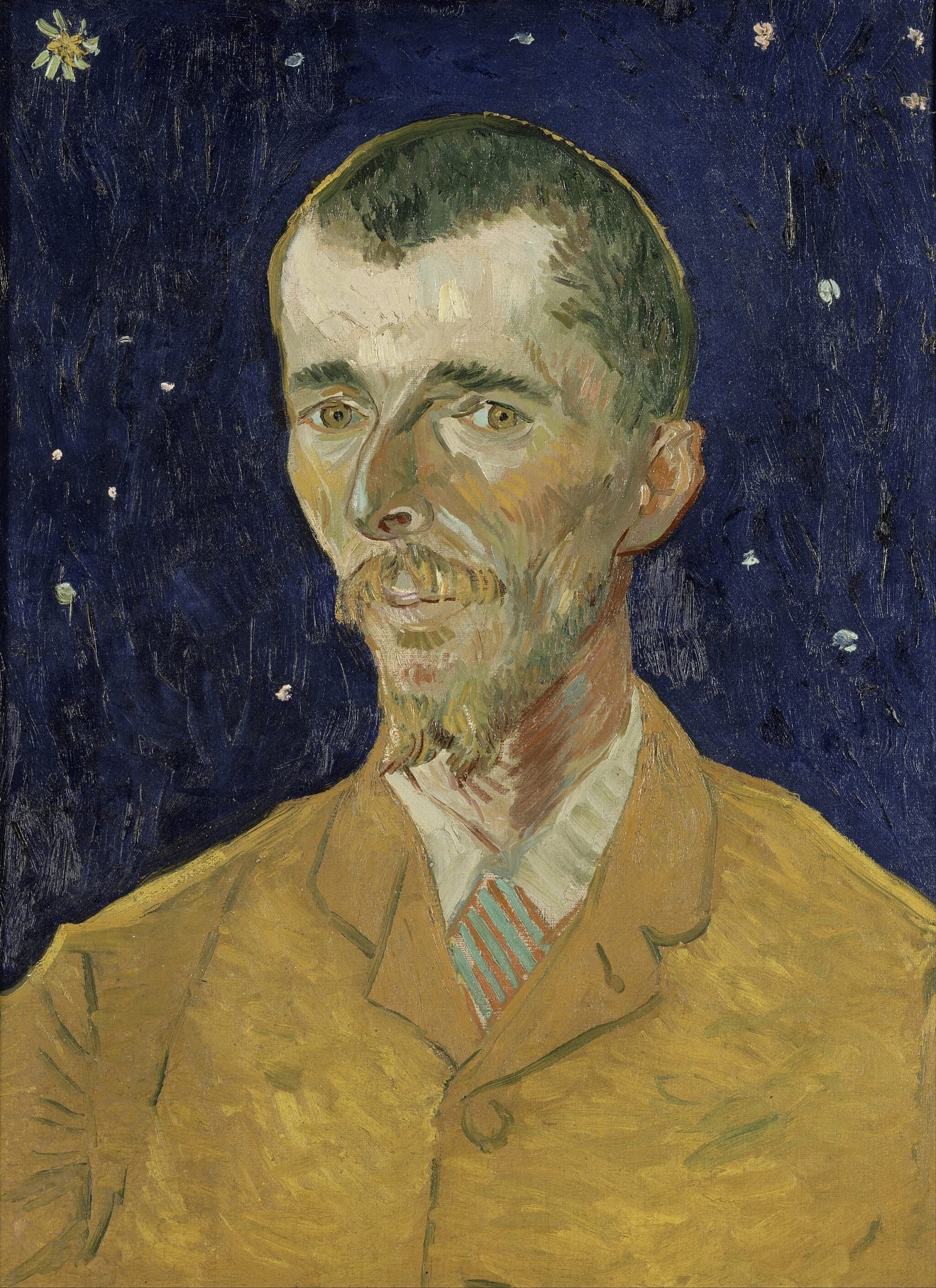
Eugène Boch
1888
Van Gogh portrays his friend as “the poet,” the head set against a deep ultramarine sky pricked with star-like lights. The painting signals his belief that portraits should capture inner life; watch for the simplified planes of the face, the intense complementary blues and yellows, and the celestial backdrop that elevates the sitter. ([fr.wikipedia.org](https://fr.wikipedia.org/wiki/Portrait_d%27Eug%C3%A8ne_Boch))
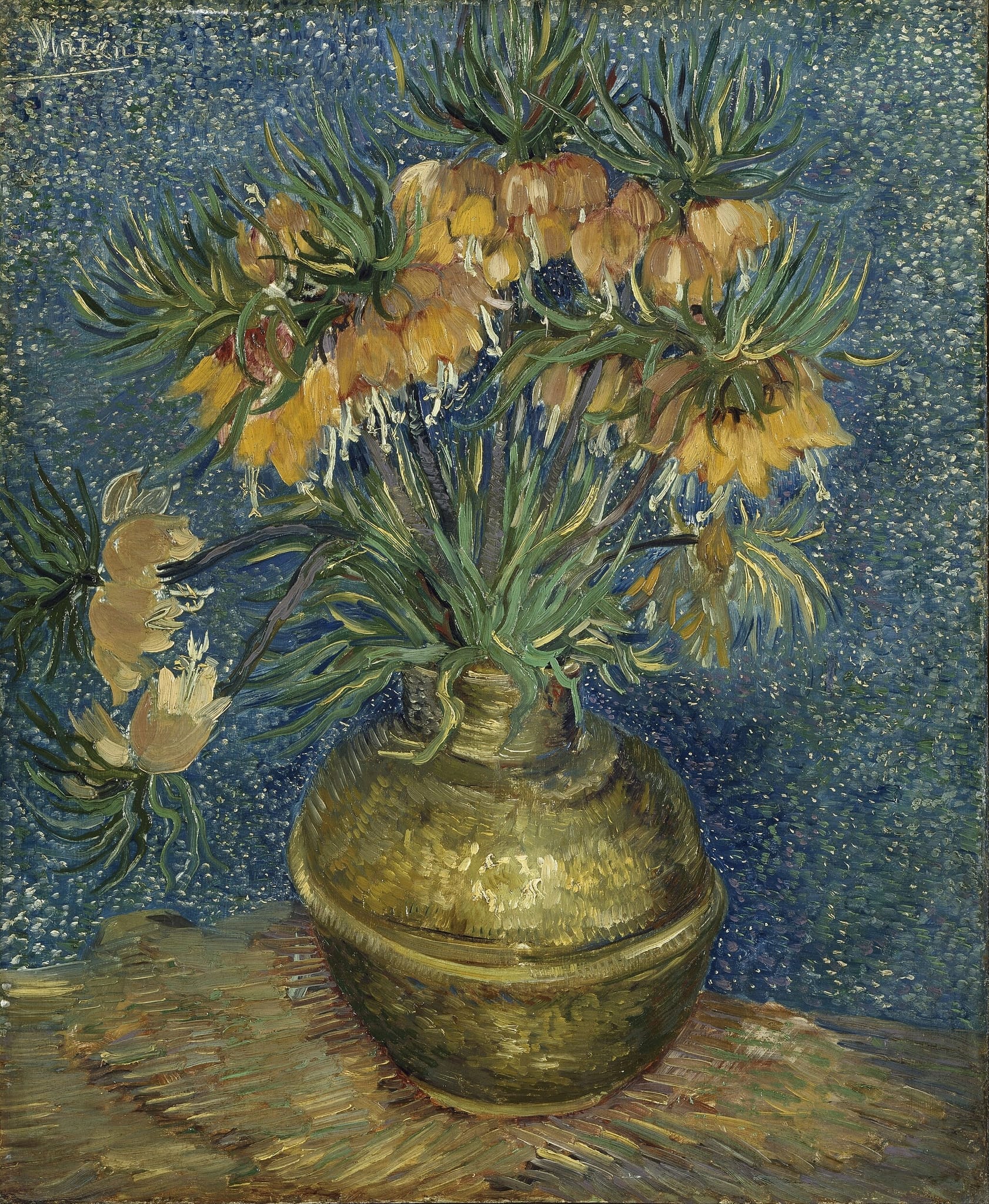
Imperial Fritillaries in a Copper Vase
1887
A blaze of orange fritillaries erupts from a copper vase, the flowers haloed by stippled complementary hues. Created in Paris as he absorbed Impressionist color, it shows him testing chromatic vibration—look for the pointillist-like dots around the bouquet and the hot orange-copper against cool blues that make the flowers pulse. ([en.wikipedia.org](https://en.wikipedia.org/wiki/Imperial_Fritillaries_in_a_Copper_Vase?utm_source=openai))