Vincent van Gogh Paintings in Amsterdam — Where to See Them
Amsterdam is the best single city to see Vincent van Gogh in depth: about 33 of his paintings are on permanent display across two museums. The Van Gogh Museum anchors the visit with 29 canvases spanning his early Dutch years through Arles and Saint-Rémy, while the Rijksmuseum adds four pivotal works that situate him within the Dutch tradition. With both institutions a short tram ride apart, you can trace his artistic evolution in a single day.
At a Glance
- Museums
- Van Gogh Museum, Rijksmuseum
- Highlight
- Spend a day at the Van Gogh Museum's unparalleled collection of 29 works.
- Best For
- Van Gogh enthusiasts and art lovers seeking a focused, world-class museum experience.
Van Gogh Museum
This is the core place to experience Van Gogh’s evolution, from early Dutch earth tones to the high‑key color and urgent brushwork of his final years. Its holdings let you read his letters alongside key canvases, so you can trace specific experiments with color, composition, and technique across periods and places.
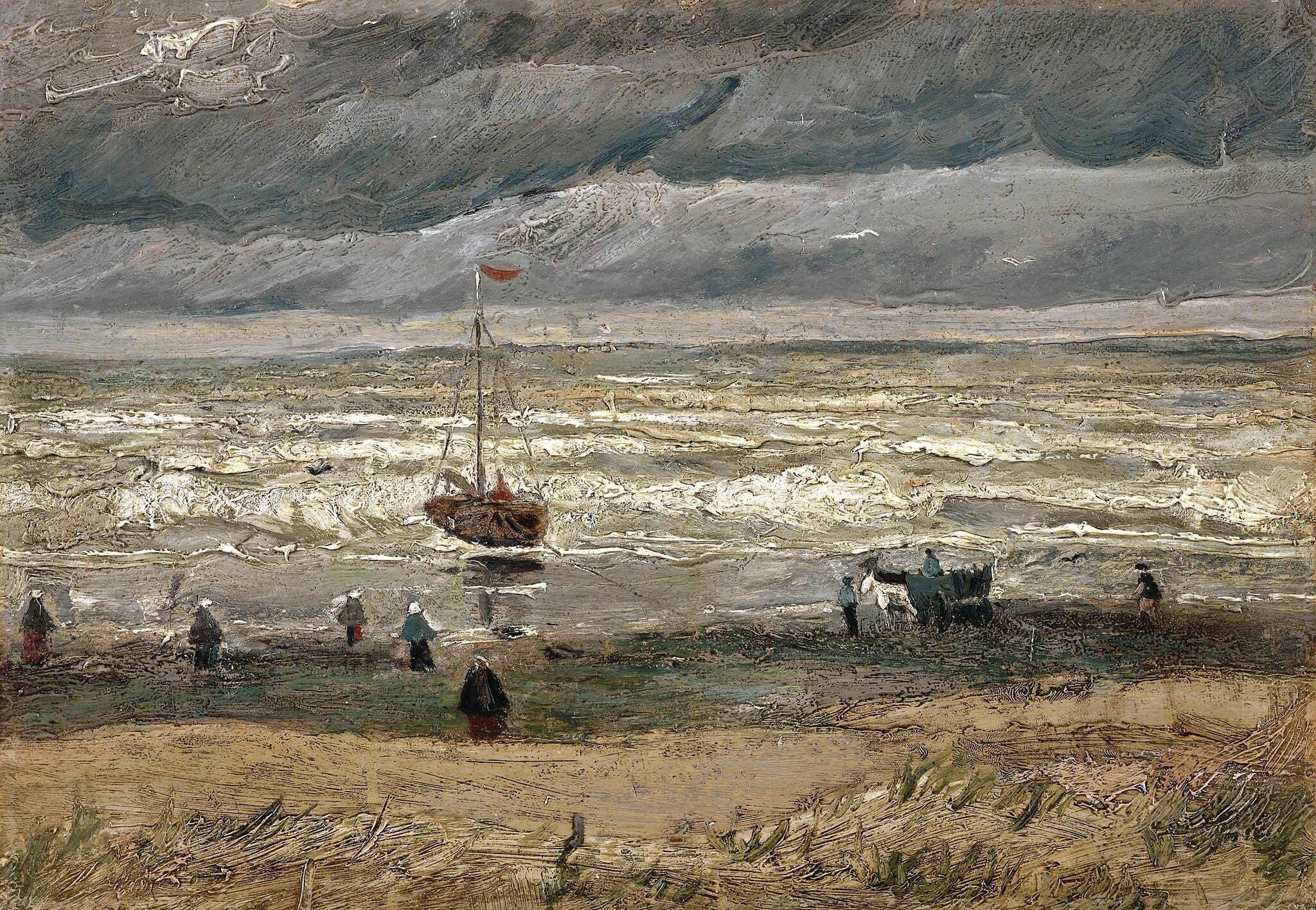
View of the Sea at Scheveningen
1882
A stormy North Sea heaves under a slate sky while fishing boats and figures struggle along the beach. This early Hague-period oil shows Van Gogh’s gritty realism and already vigorous brushwork; wind-blown sand is literally embedded in the paint. Look for the hurrying silhouettes and the whitecaps whipped up with quick, foamy strokes.
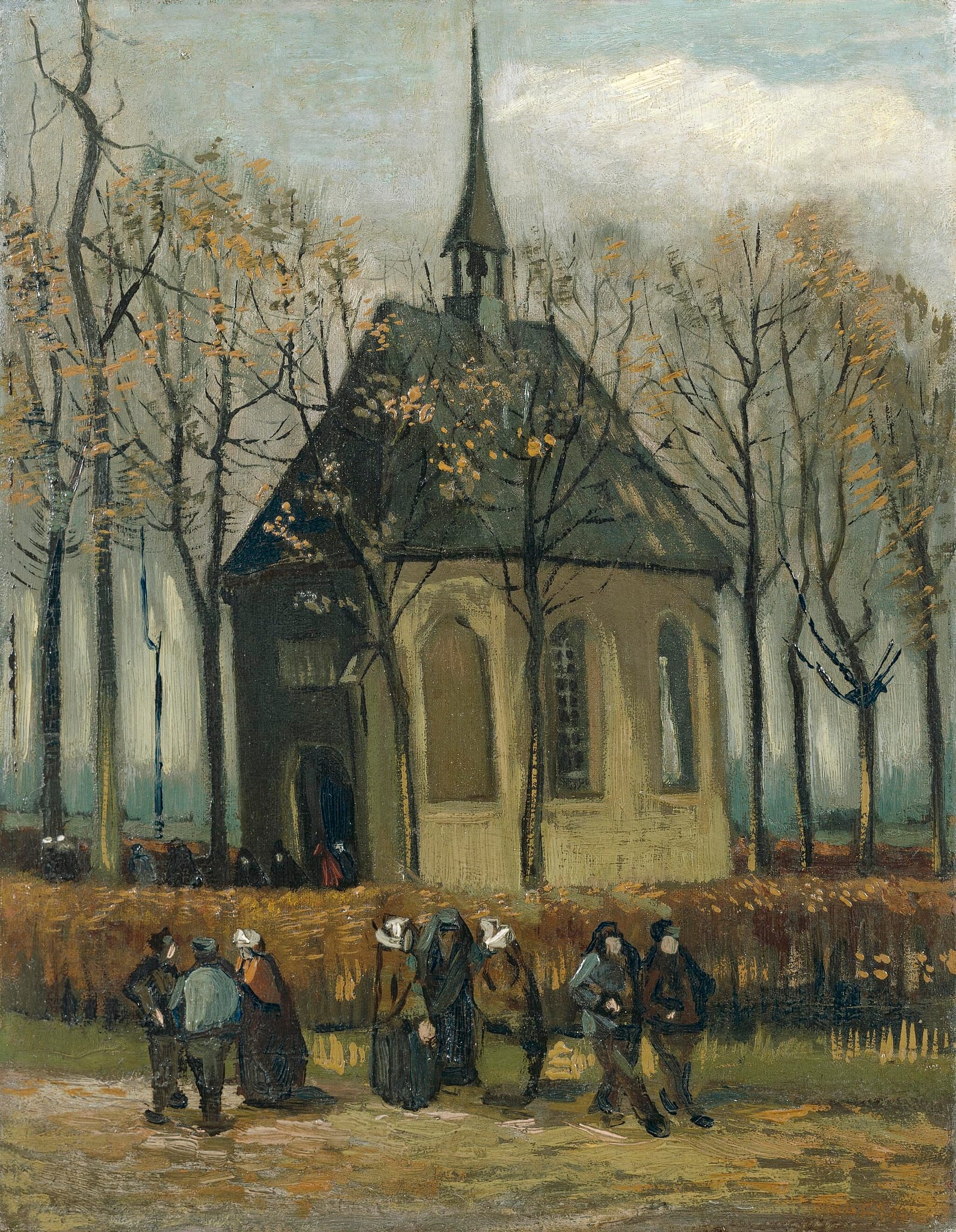
Congregation Leaving the Reformed Church in Nuenen
1885
Parishioners file from the small church where Van Gogh’s father preached, under bare trees in autumnal light. He reworked the painting after his father’s death, turning it into a personal image of mourning and faith. Notice the sober palette, the low church spire, and the poignant cluster of black-clad figures.
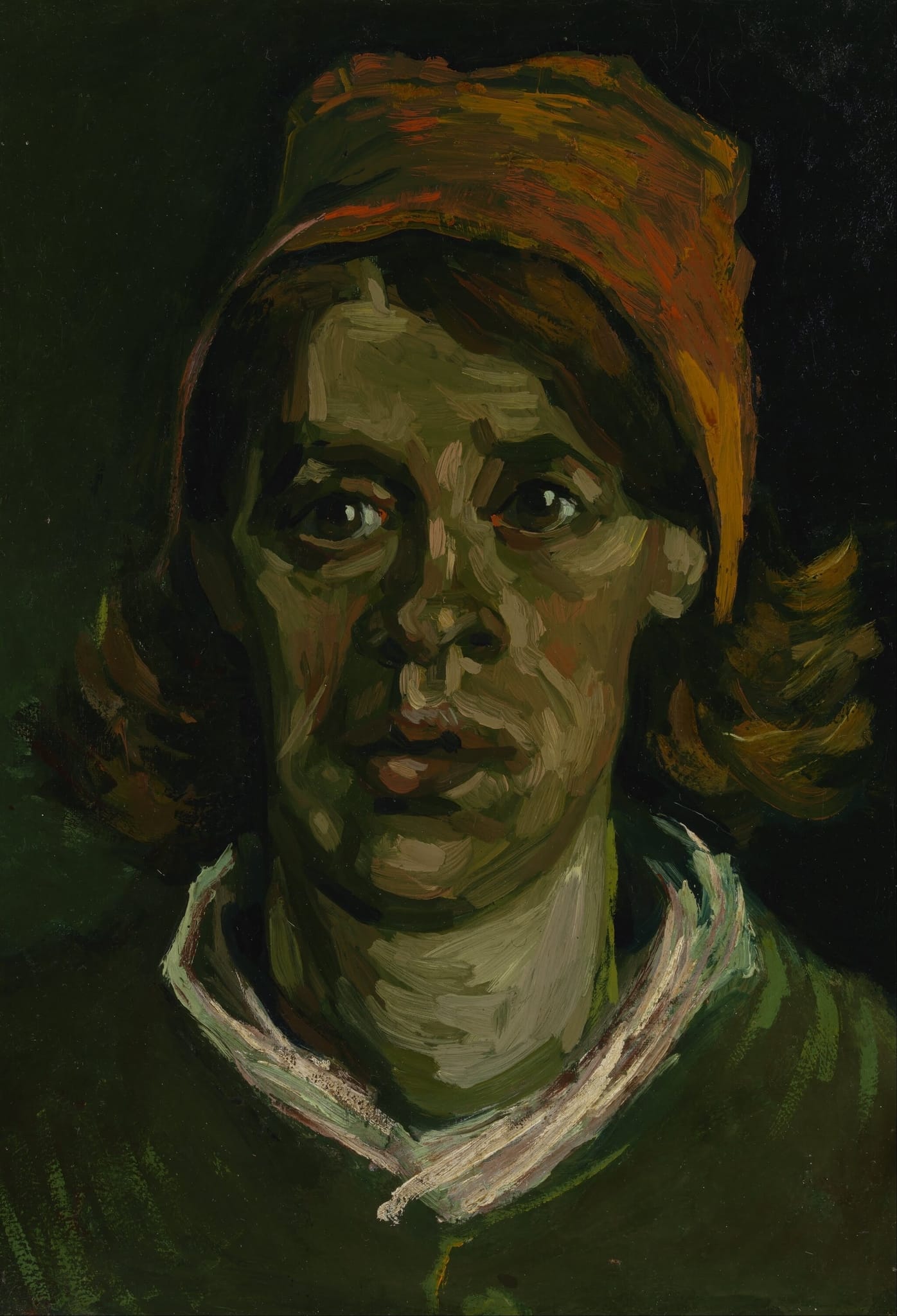
Head of a Woman
1885
A peasant woman’s head emerges from a dark ground, her features modeled with earthy greens and browns. One of many studies for The Potato Eaters, it shows Van Gogh’s search for honest character rather than prettiness. Watch the directional light and the coarse, sculptural brushwork around the cheekbones and bonnet.
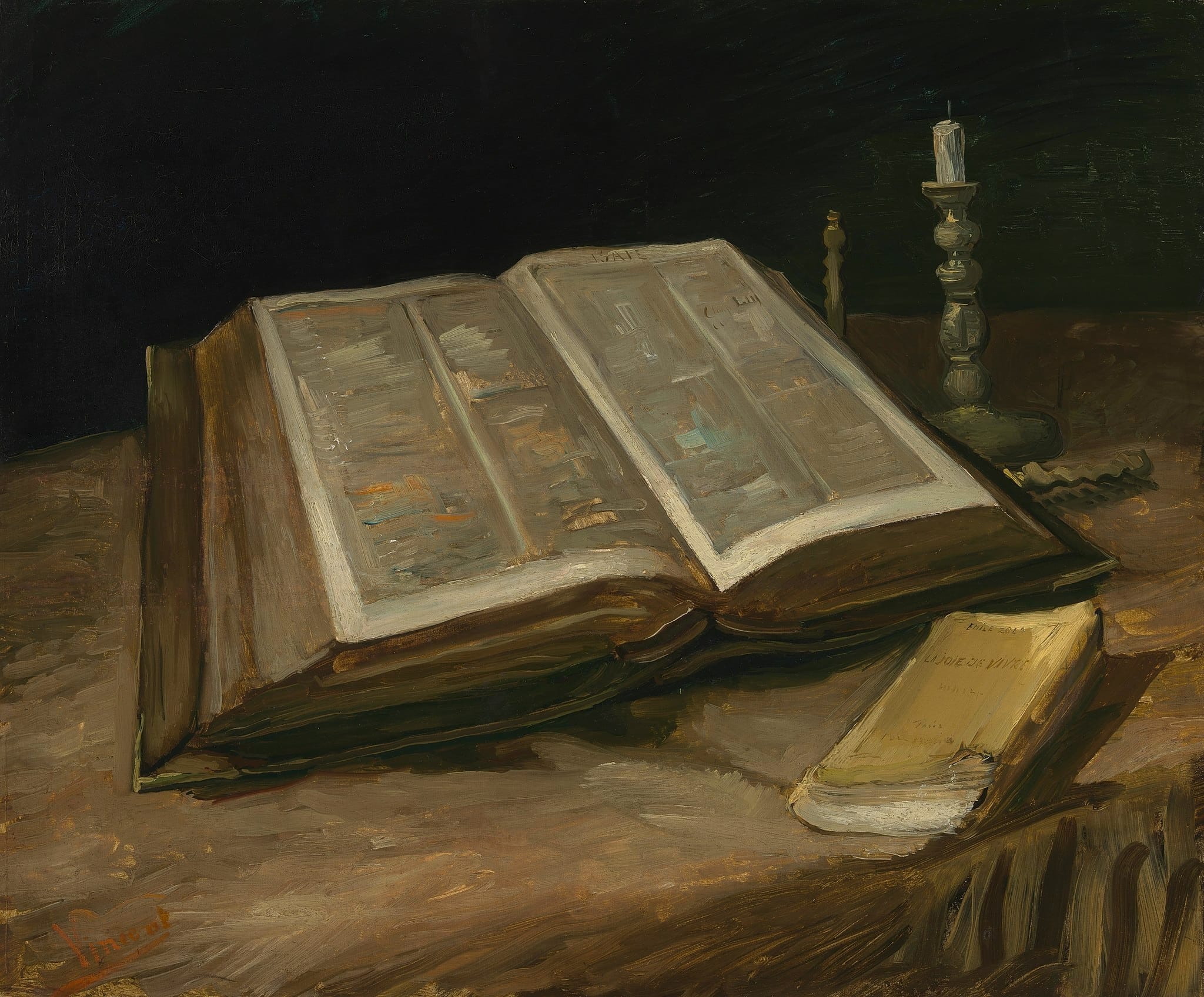
Still Life with Bible
1885
An open family Bible dominates the table beside an extinguished candle and Émile Zola’s novel. Painted soon after his father’s death, it contrasts religious tradition with modern literature. Look for the thick, dark tones and the telling juxtaposition of worn leather, wax, and yellowed pages.
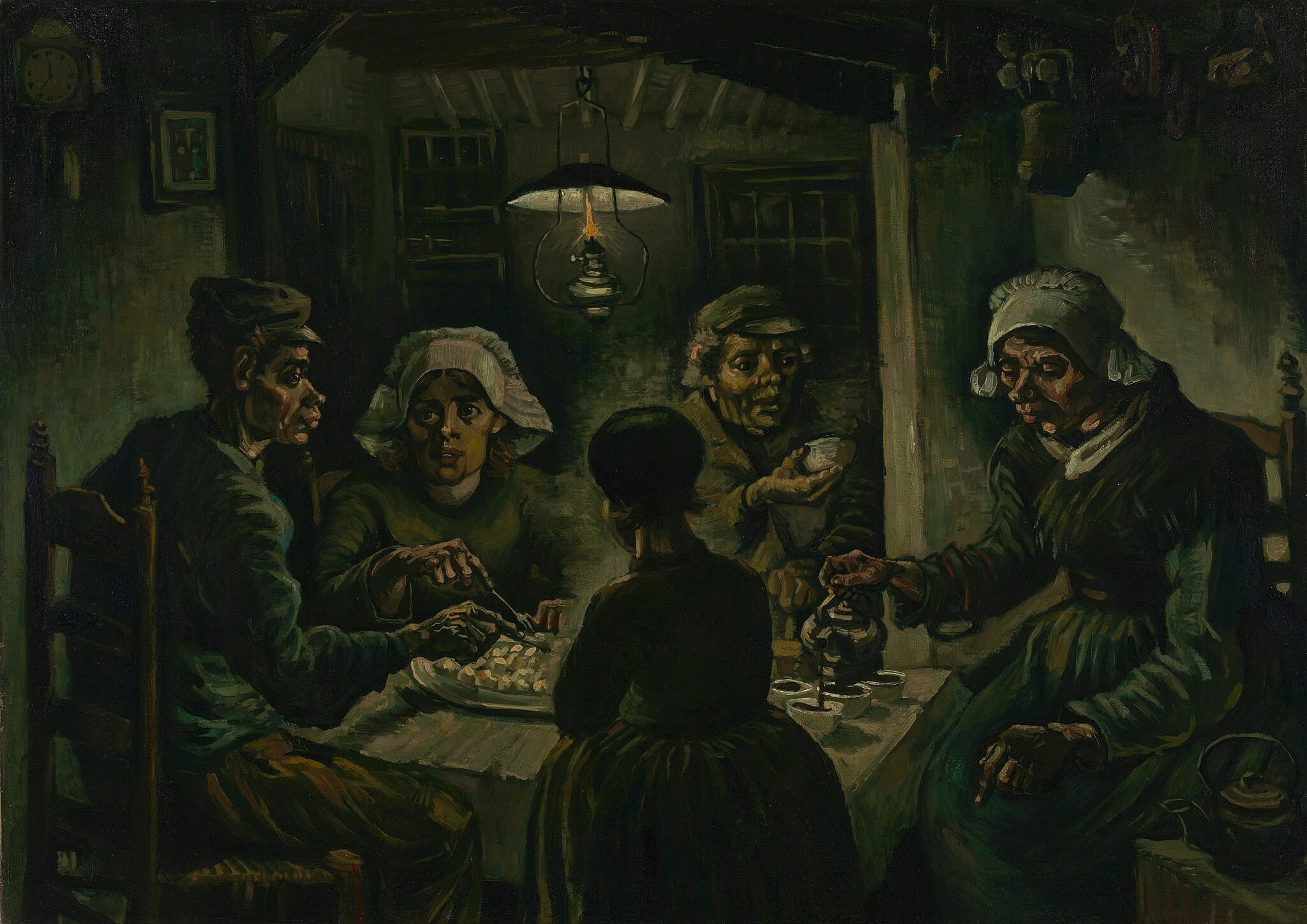
The Potato Eaters
1885
A family of peasants gathers beneath a single lamp to share potatoes and coffee, their bony hands and faces lit from above. Van Gogh aimed for truth over beauty, honoring labor and humble meals. Notice the earthy palette, the expressive hands, and the smoky atmosphere around the lamp.
Must-see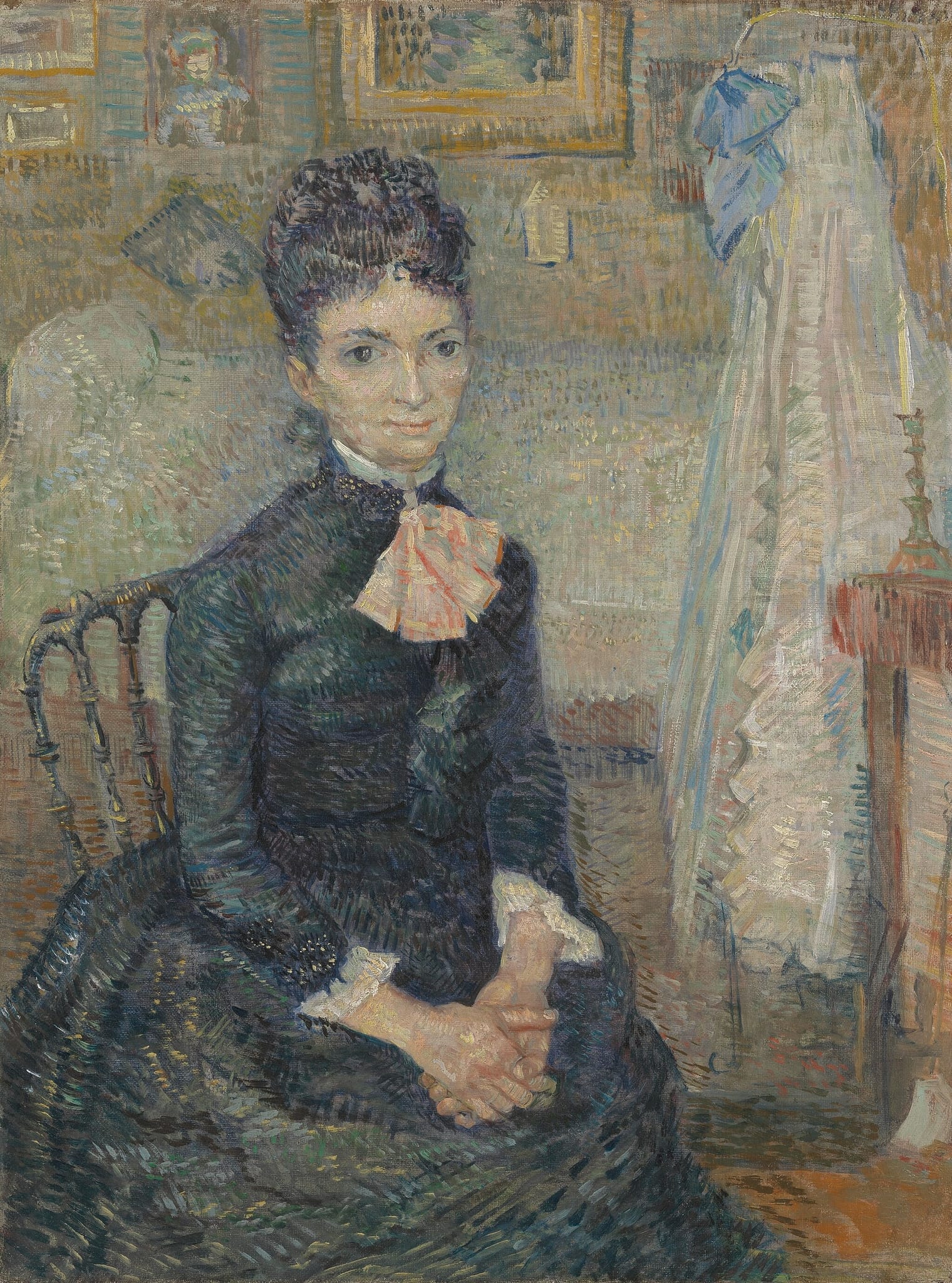
Portrait of Léonie Rose Charbuy-Davy
1887
A fashionable young woman is presented half-length against a lively, patterned ground. Painted in Paris, the portrait sparkles with high-key color and broken strokes influenced by Impressionism and Neo-Impressionism. Look for how complementary colors enliven her complexion and hat.
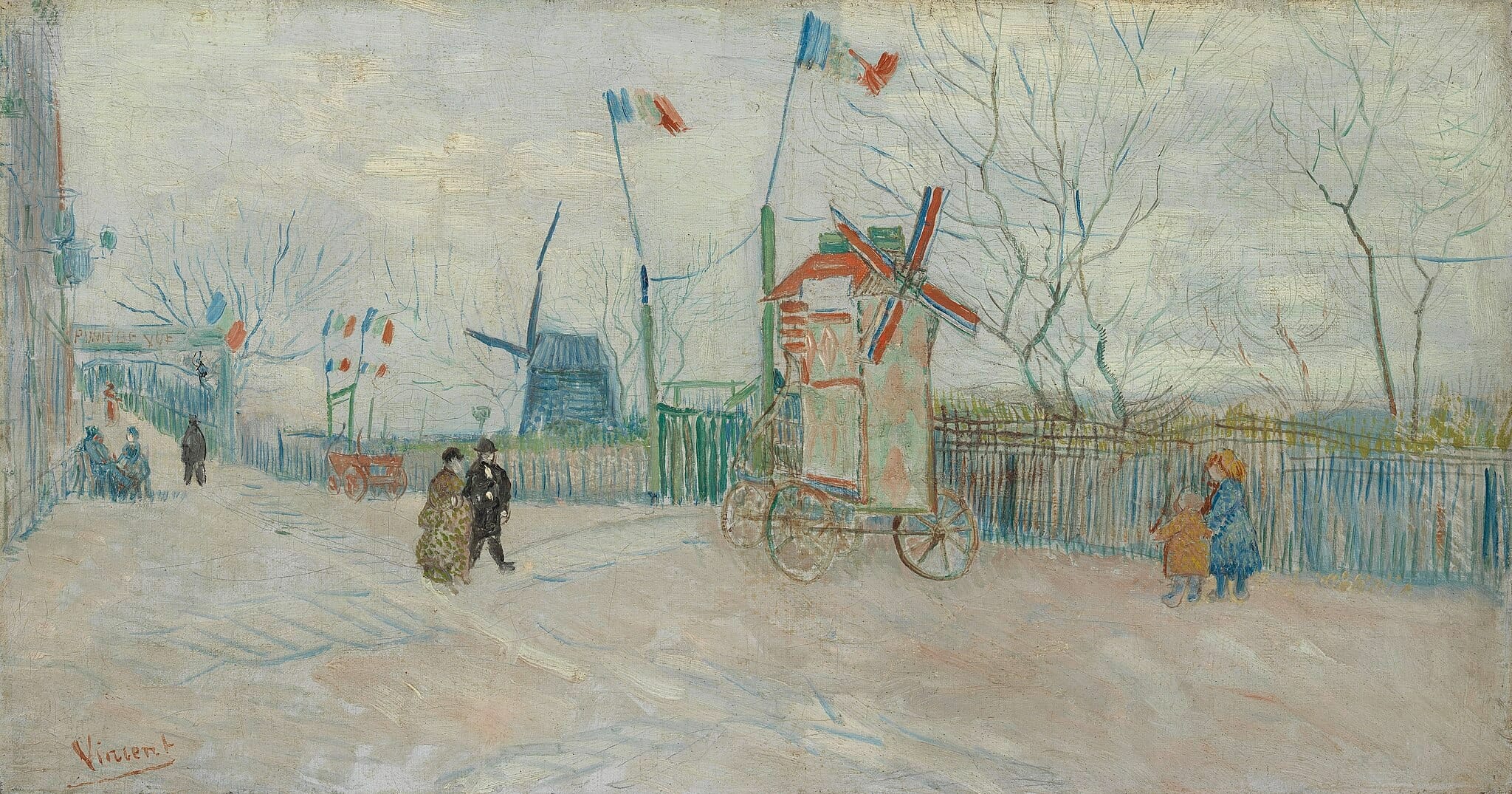
Impasse des Deux Frères in Montmartre
1887
A steep little lane in Montmartre angles between fences, workshops, and windmills under a fresh Paris sky. Van Gogh turns an everyday backstreet into a play of diagonals and dabs of color. Watch the receding perspective and the flickering strokes that suggest movement and urban life.
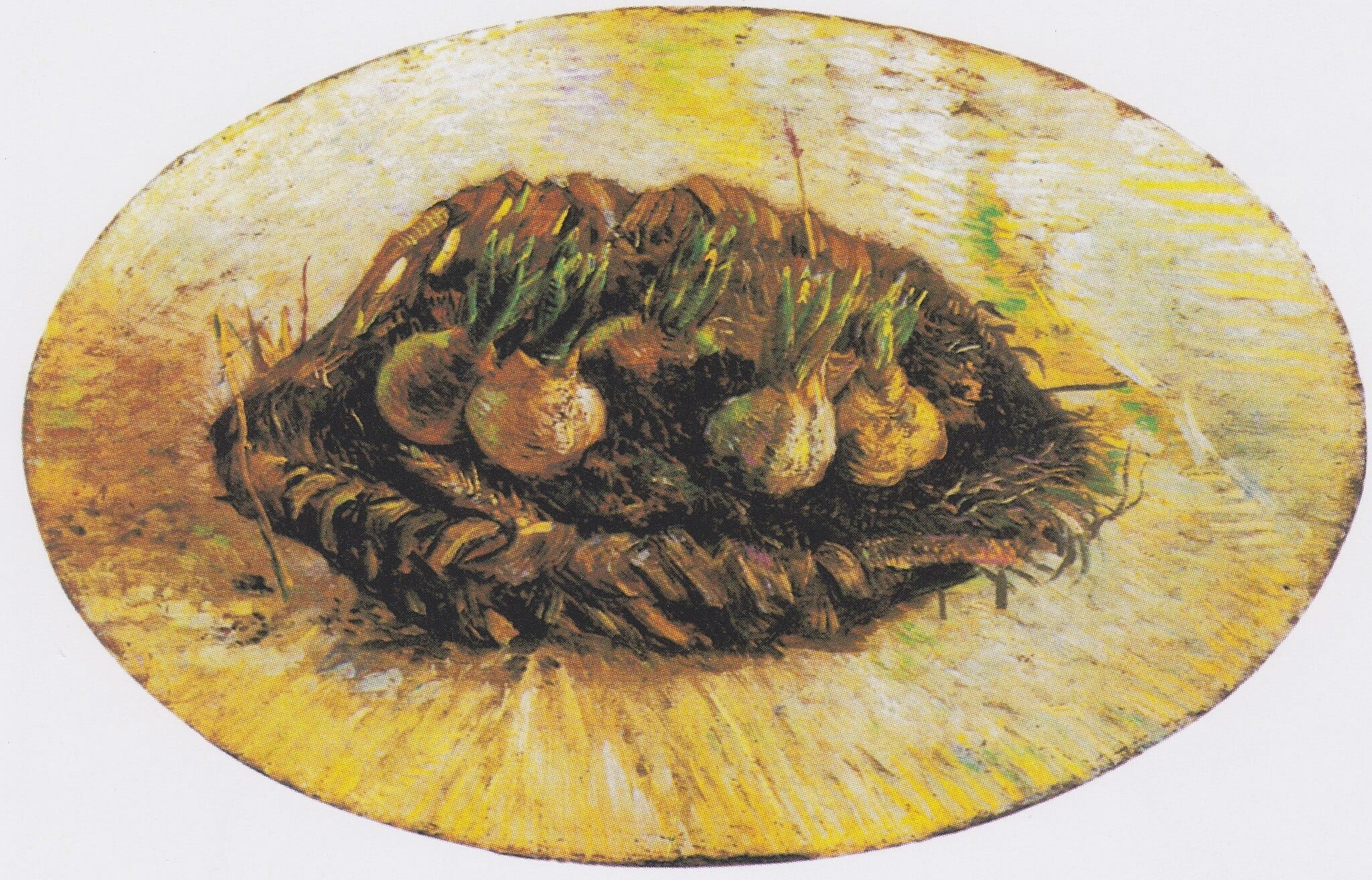
Basket of Hyacinth Bulbs
1887
A wicker basket brims with hyacinth bulbs, their papery skins and shoots rendered with crisp light. The subject celebrates seasonal renewal while showing Van Gogh’s Parisian interest in brighter color. Look for the tender blues and violets offset by warm browns and greens.
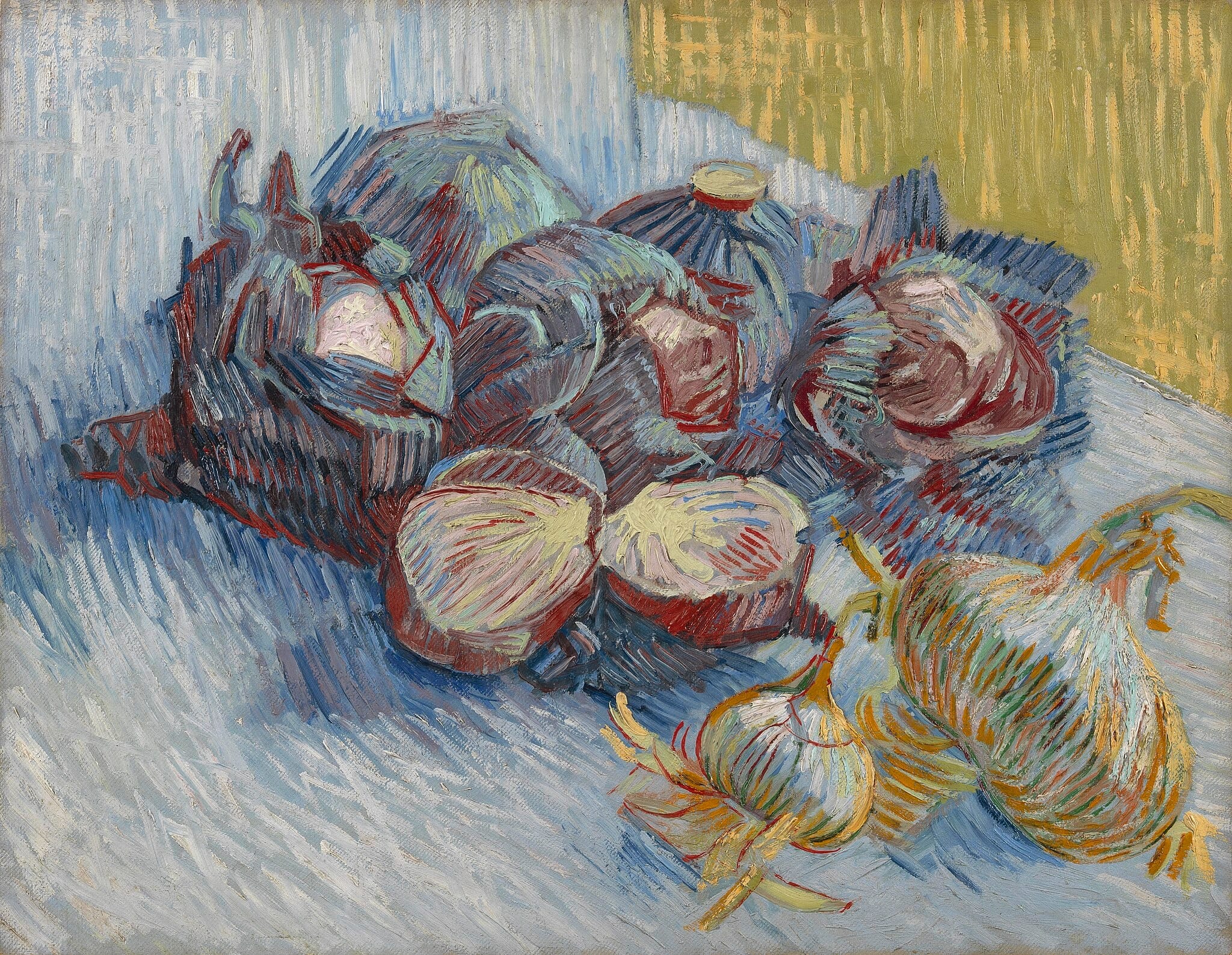
Red Cabbages and Onions
1887
Purple cabbages and pale onions sit on a tabletop, their textures modeled by swift, curving strokes. The painting pits complementary hues to make the vegetables glow. Notice the sheen on the cabbage leaves and the subtle cast shadows that anchor each form.
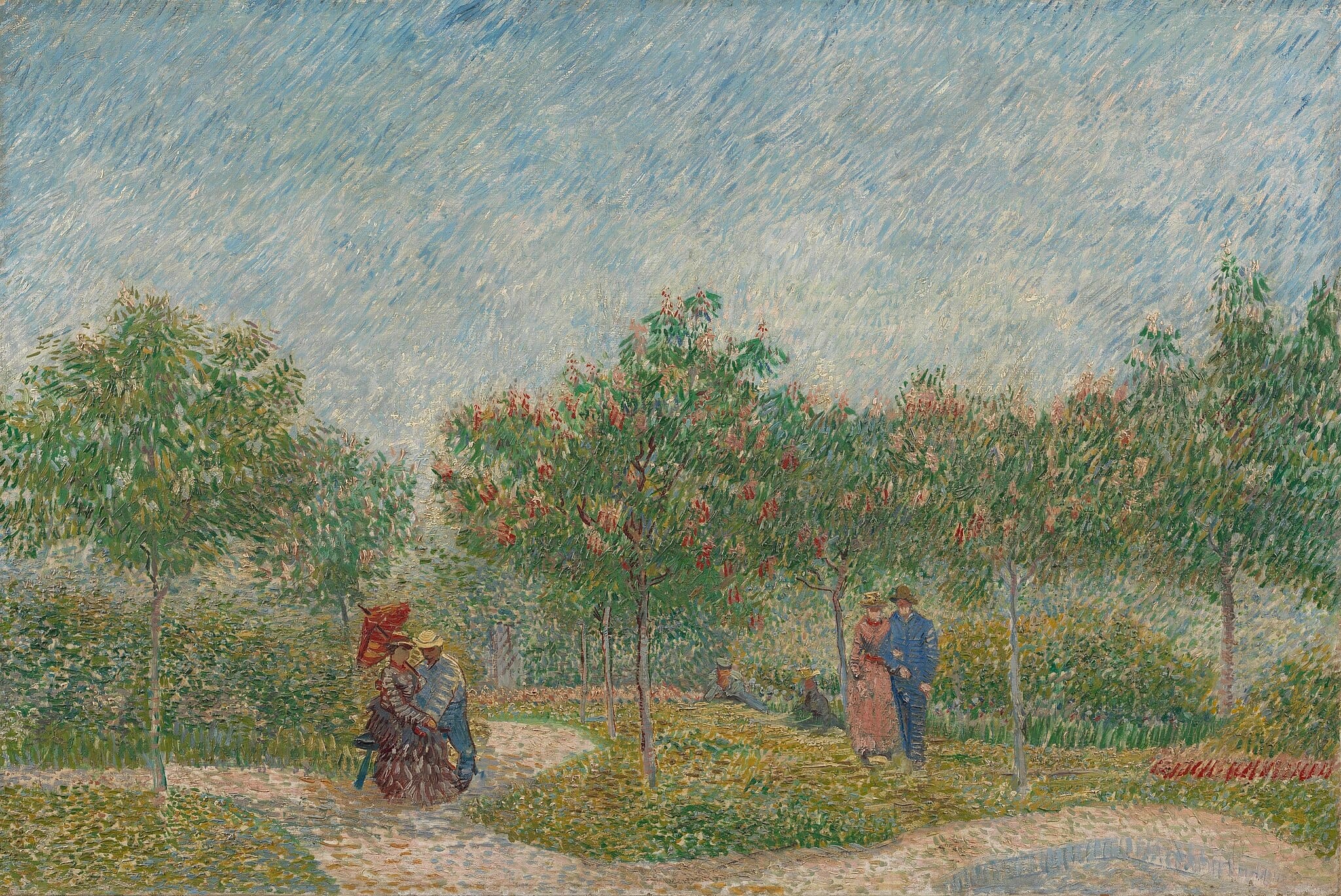
Garden with Courting Couples: Square Saint-Pierre
1887
Elegantly dressed pairs stroll among trees and flowerbeds on a Montmartre square. Van Gogh adapts divisionist touches and a pastel Paris palette to convey modern leisure. Look for the rhythmic repetition of couples and the light broken into small, sparkling strokes.
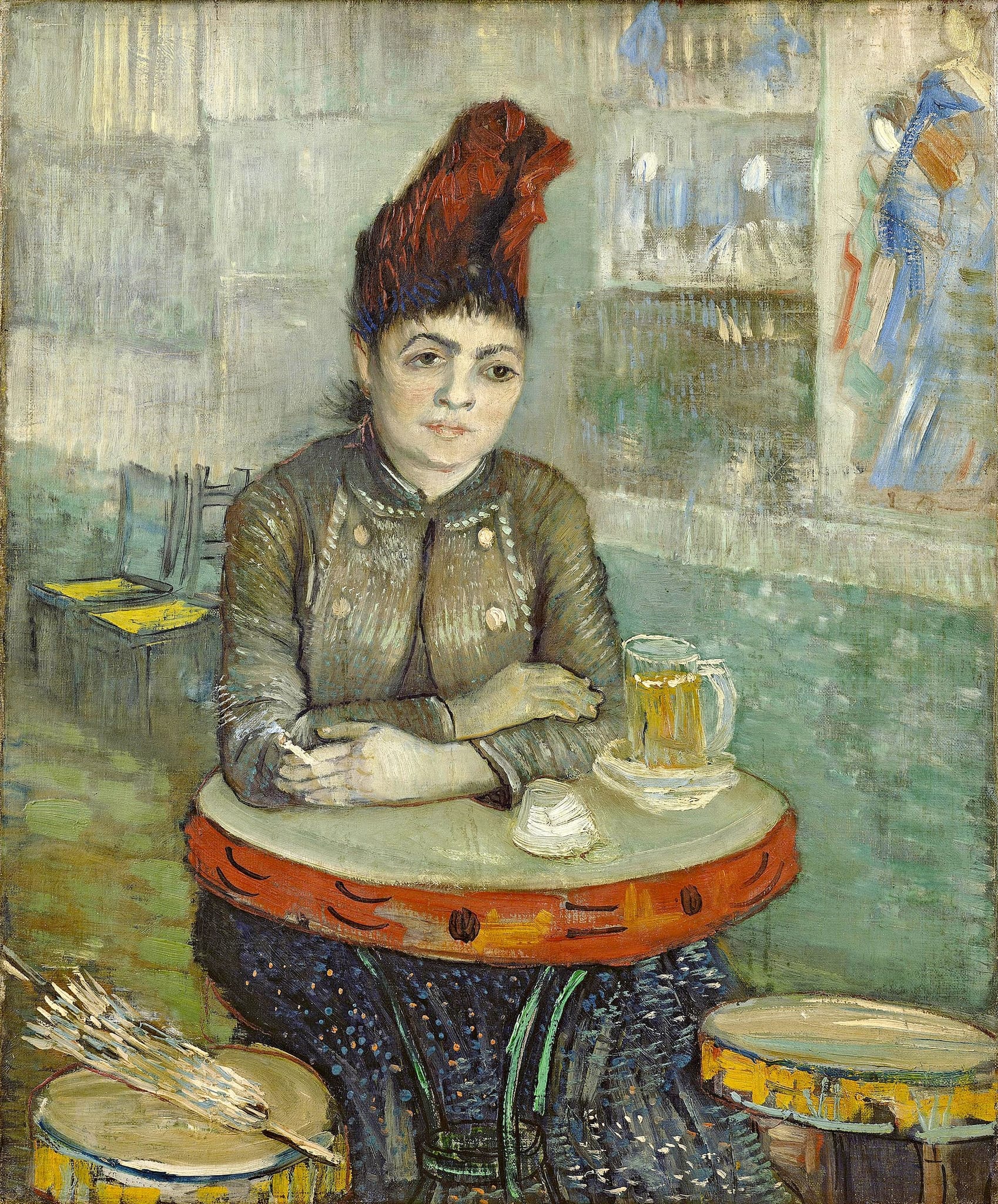
In the Café: Agostina Segatori in Le Tambourin
1887
The café owner and former artists’ model sits at a table with a drink, framed by Japanese prints on the wall. It records Van Gogh’s Paris circle and his fascination with Japonisme. Watch the confident contouring of her figure and the decorative backdrop that flattens space.
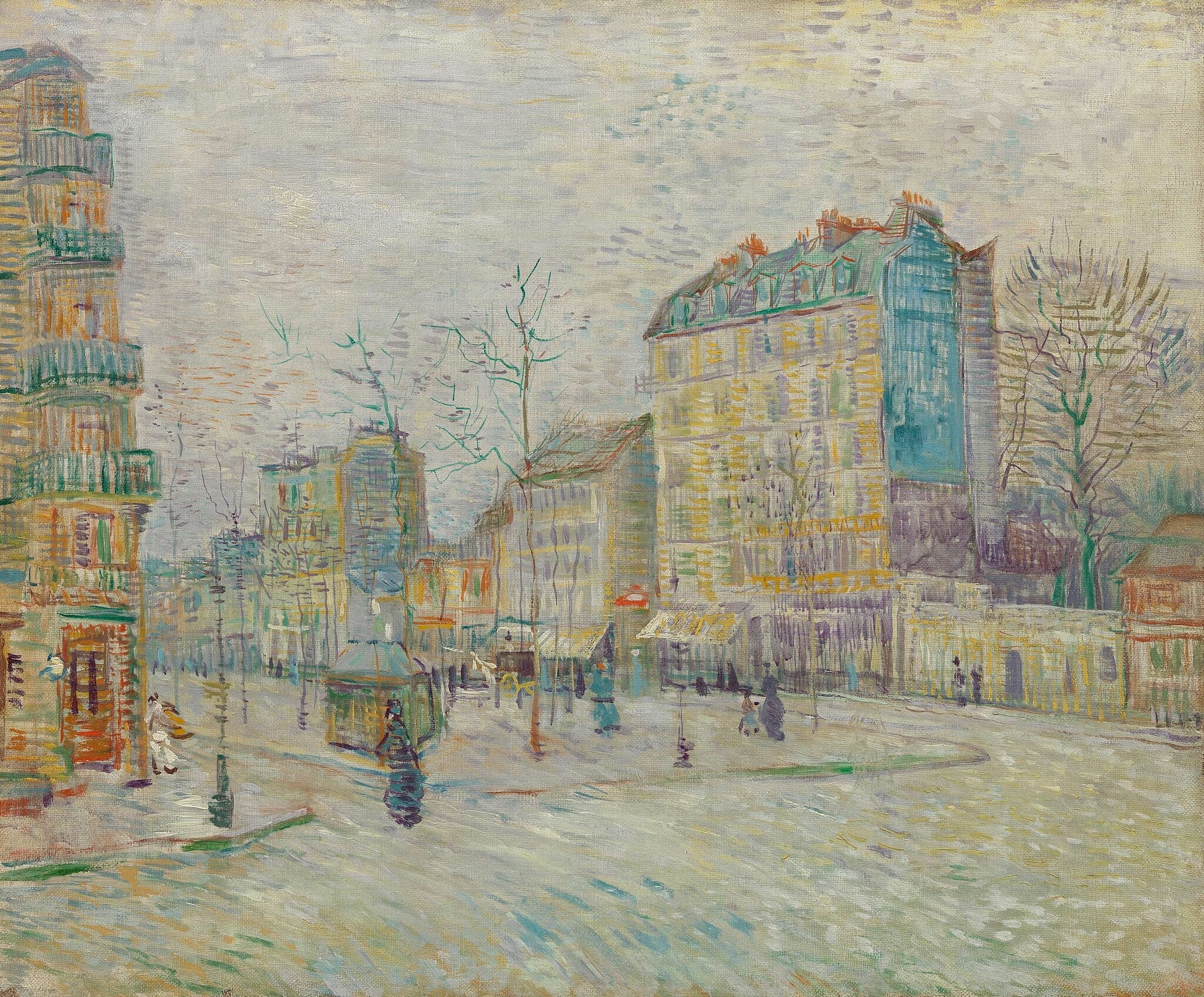
Boulevard de Clichy
1887
A broad Paris boulevard unfolds in luminous patches of color, dotted with carriages and passersby. The composition captures modern bustle while experimenting with divisionist brushwork. Notice the flicker of light on pavements and the airy blues that open the distance.
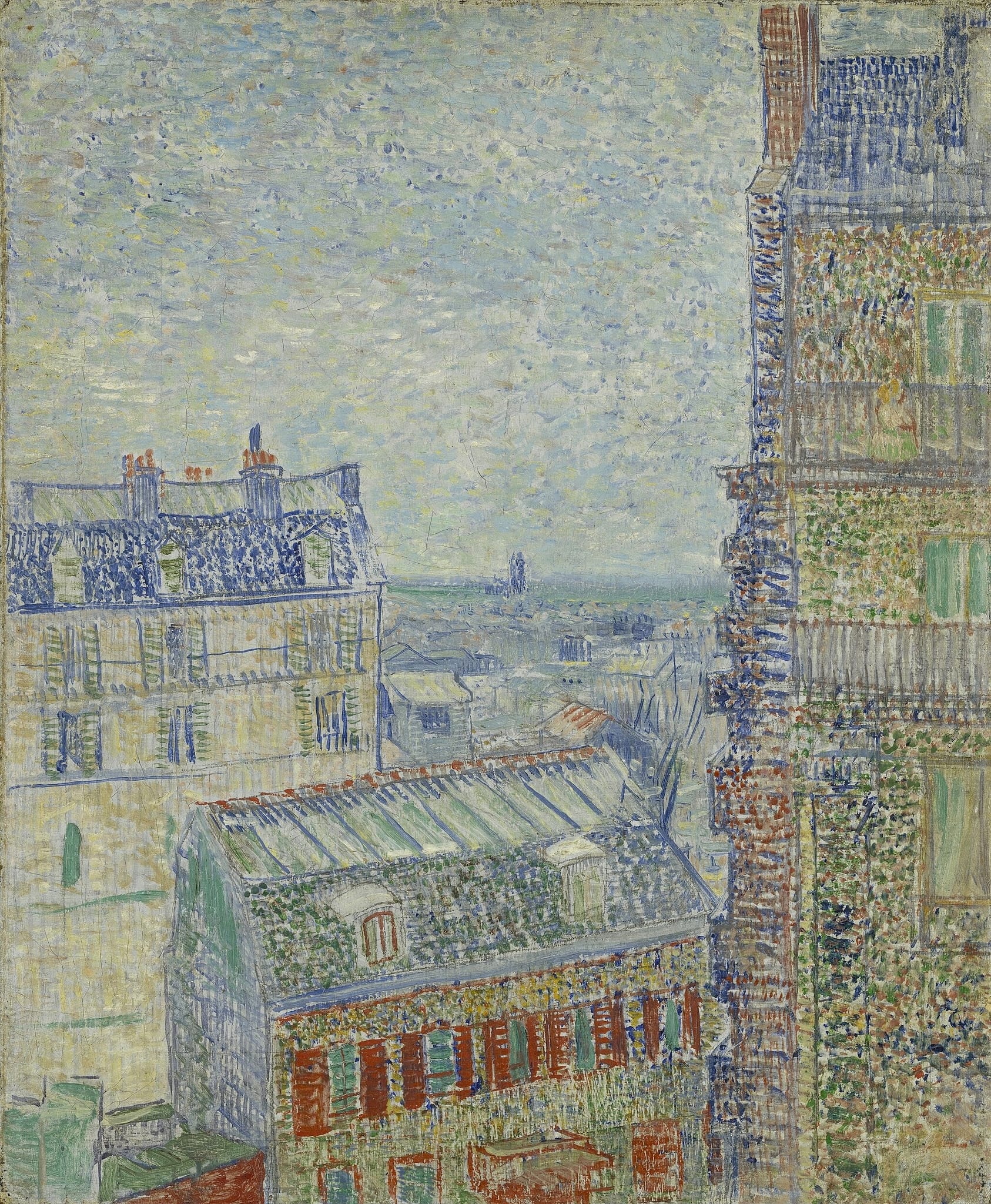
View from Theo's Apartment
1887
Rooftops, chimneys, and distant city haze are seen from the Lepic hill in Montmartre. Van Gogh turns an everyday outlook into a study of atmosphere and layered space. Look for the cropped rooflines and silvery light modulated by small, varied strokes.
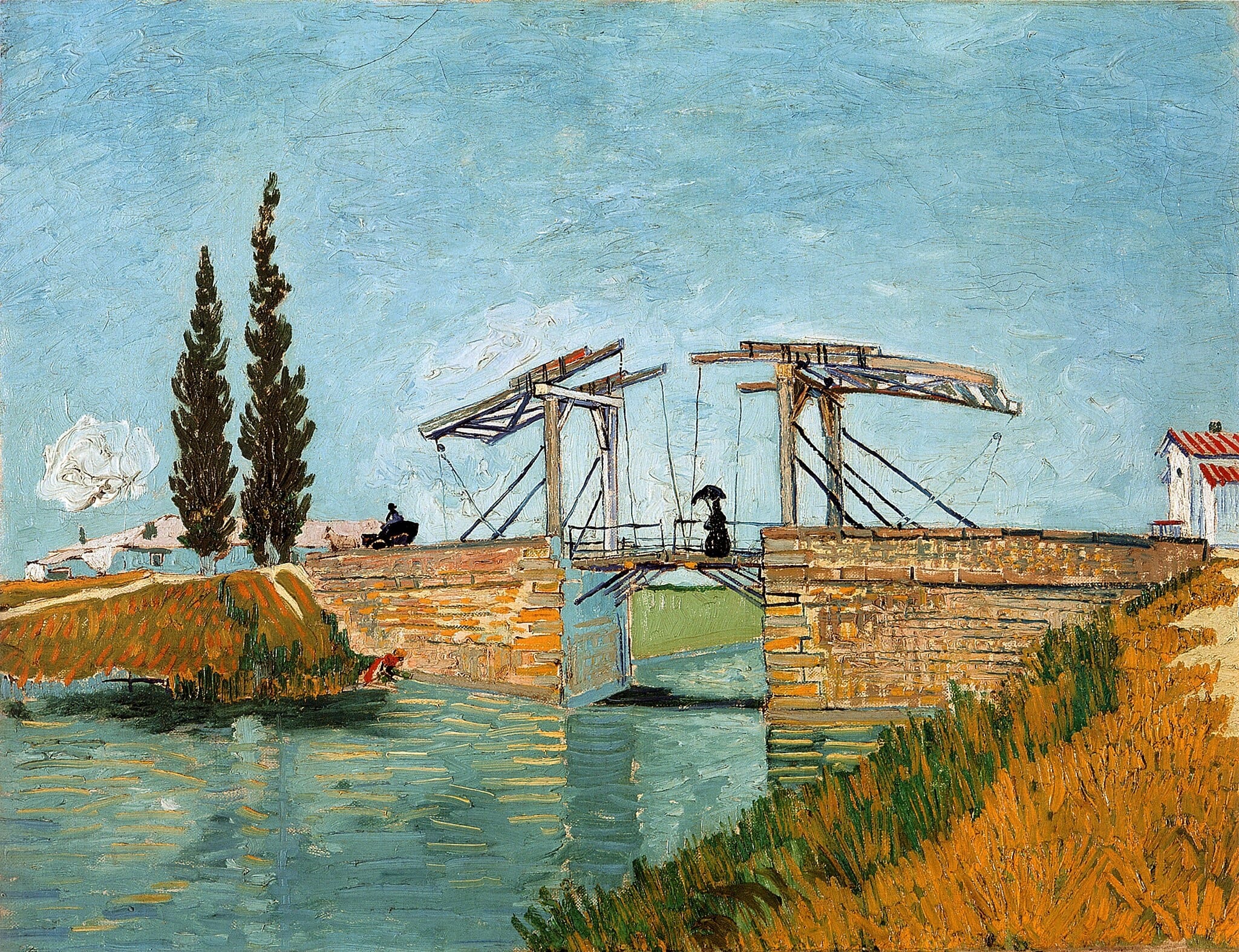
The Langlois Bridge
1888
A sunlit drawbridge near Arles spans a canal where washerwomen work, its geometry crisp against a blue sky. The clear contours and flat colors reflect Van Gogh’s love of Japanese prints. Watch the strong horizontals and their reflections stitching the scene together.
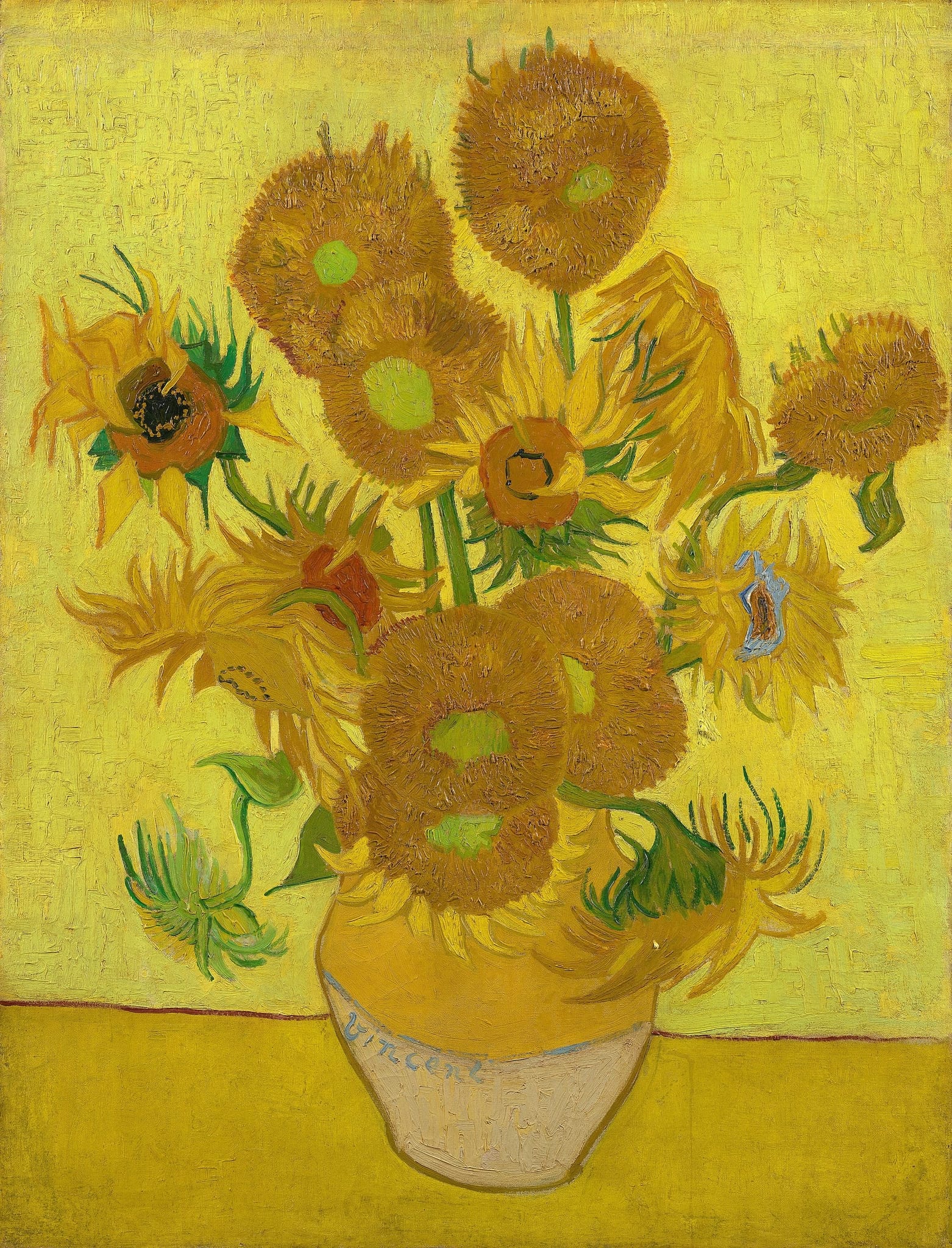
Sunflowers
1889
A blazing bouquet of sunflowers fills a simple vase, yellow upon yellow with accents of orange and green. Painted as a proud emblem of friendship and artistic ambition, it became one of Van Gogh’s icons. Notice the thick impasto, the individuality of each bloom, and the bold signature on the vase.
Must-see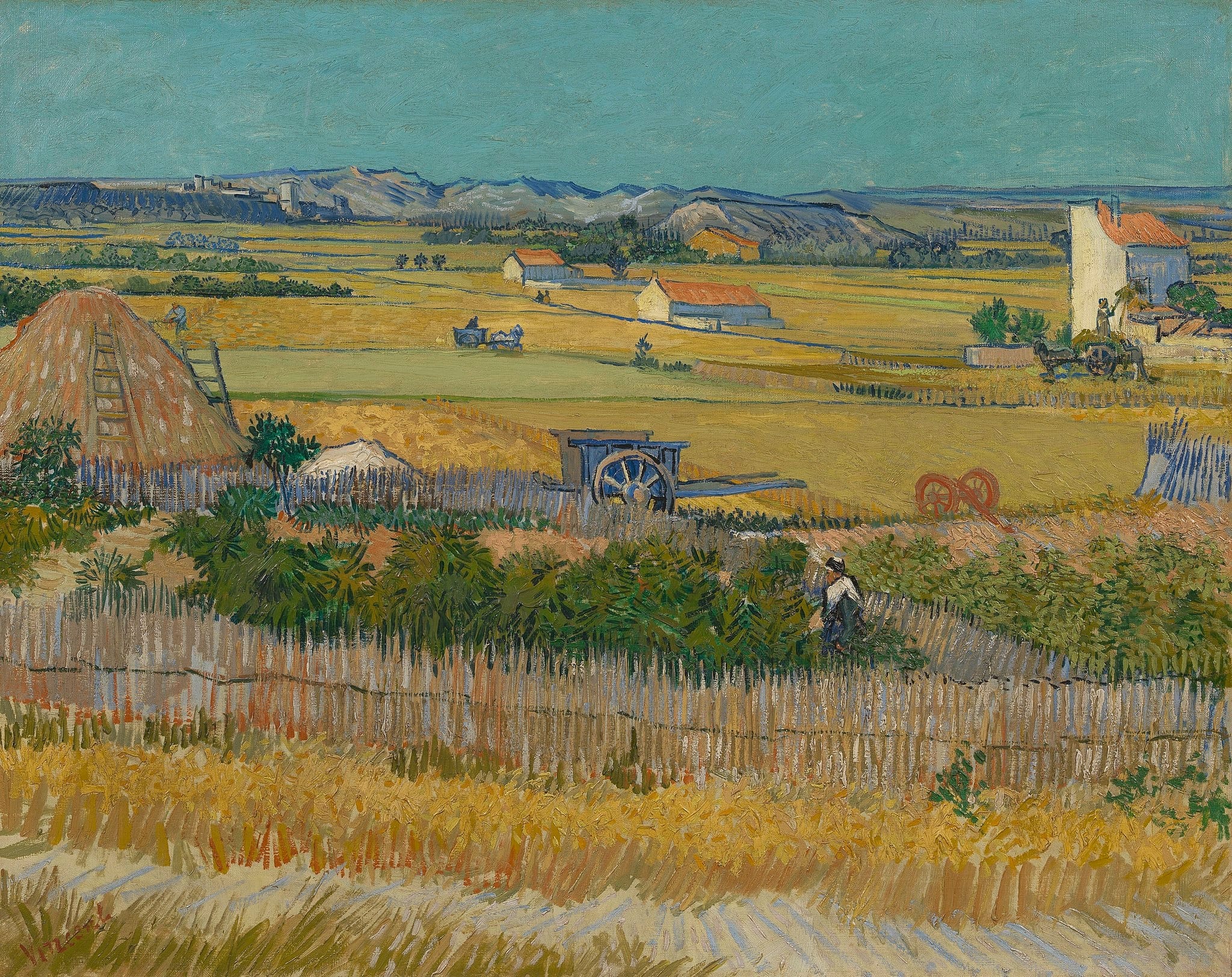
The Harvest
1888
Fields outside Arles spread like a golden patchwork under a brilliant summer sky, dotted with farms and stacks. Van Gogh exalts rural labor with radiant color and strong contours. Look for the interlocking fields and the distant blue of the Alpilles anchoring the horizon.
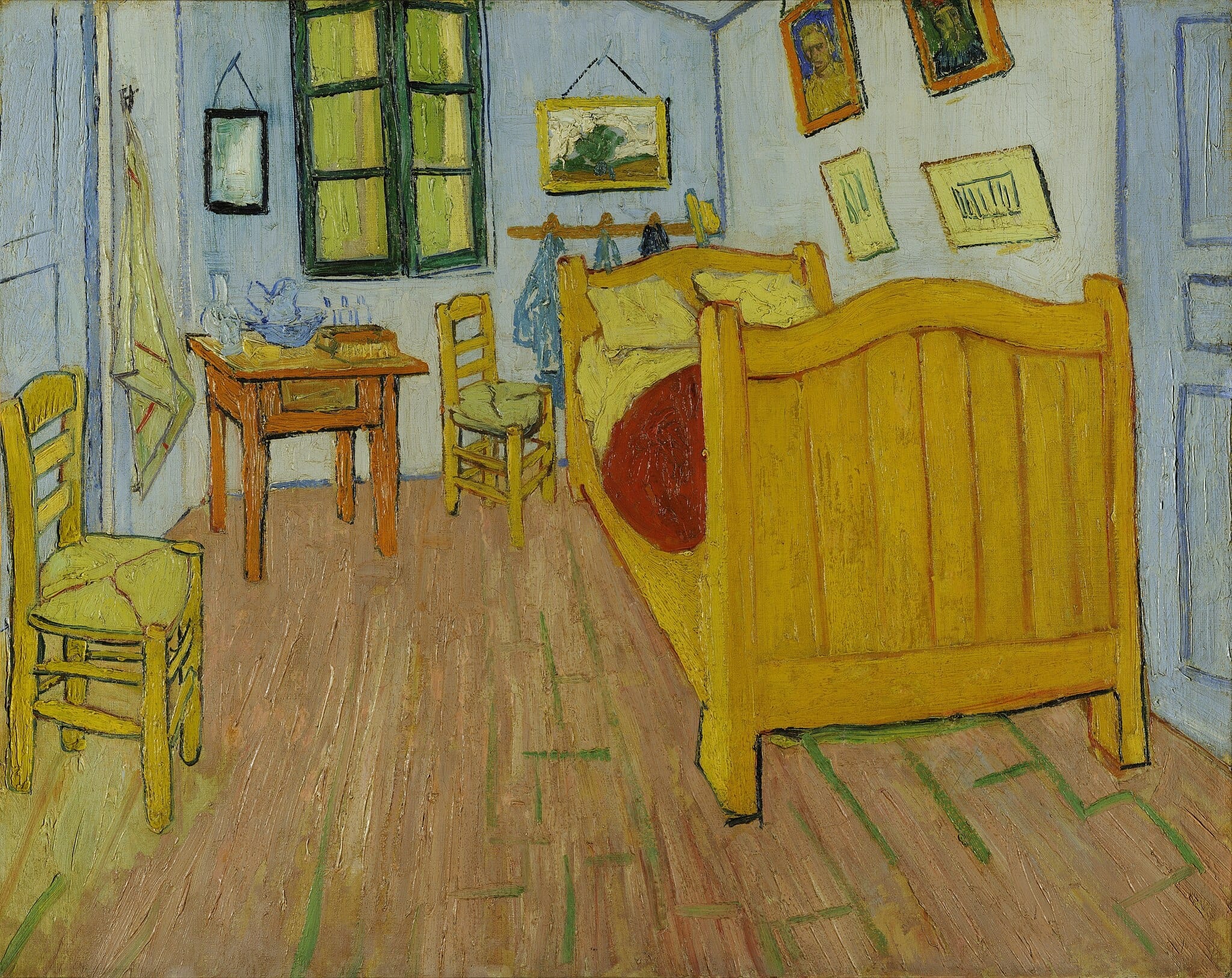
The Bedroom
1888
Van Gogh’s bedroom in the Yellow House is shown with simplified forms and tilted perspective to suggest calm and rest. Color does the emotional work: blues and violets set off the red bed and honey-colored wood. Watch the paired chairs, the portraits on the wall, and the deliberate outlines.
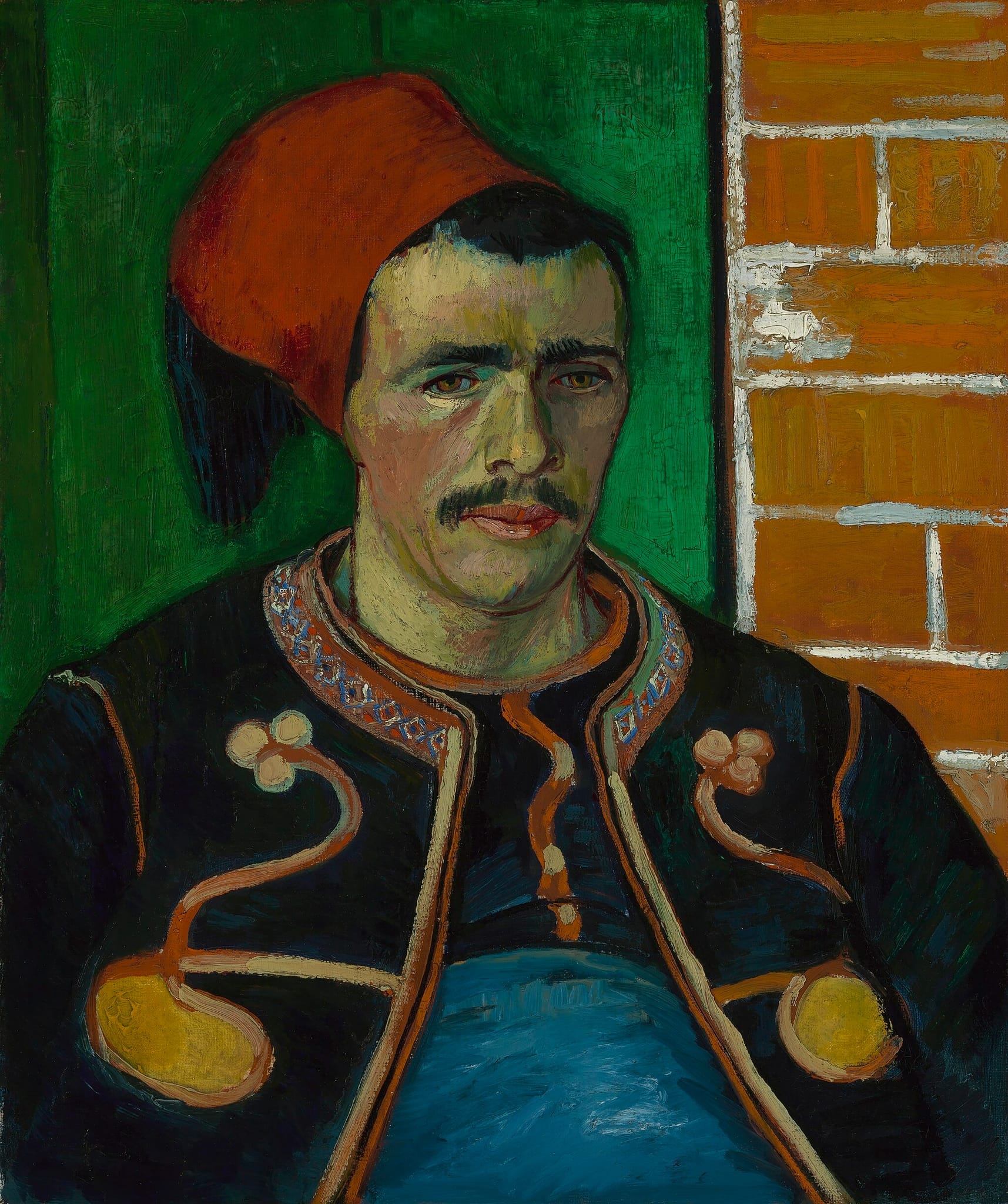
The Zouave
1888
A North African French soldier sits frontally in a vivid uniform, set against a patterned wall. Van Gogh relishes the clash of hot reds and greens to heighten intensity. Notice the tight framing, the firm outlines, and the decorative backdrop that flattens depth.
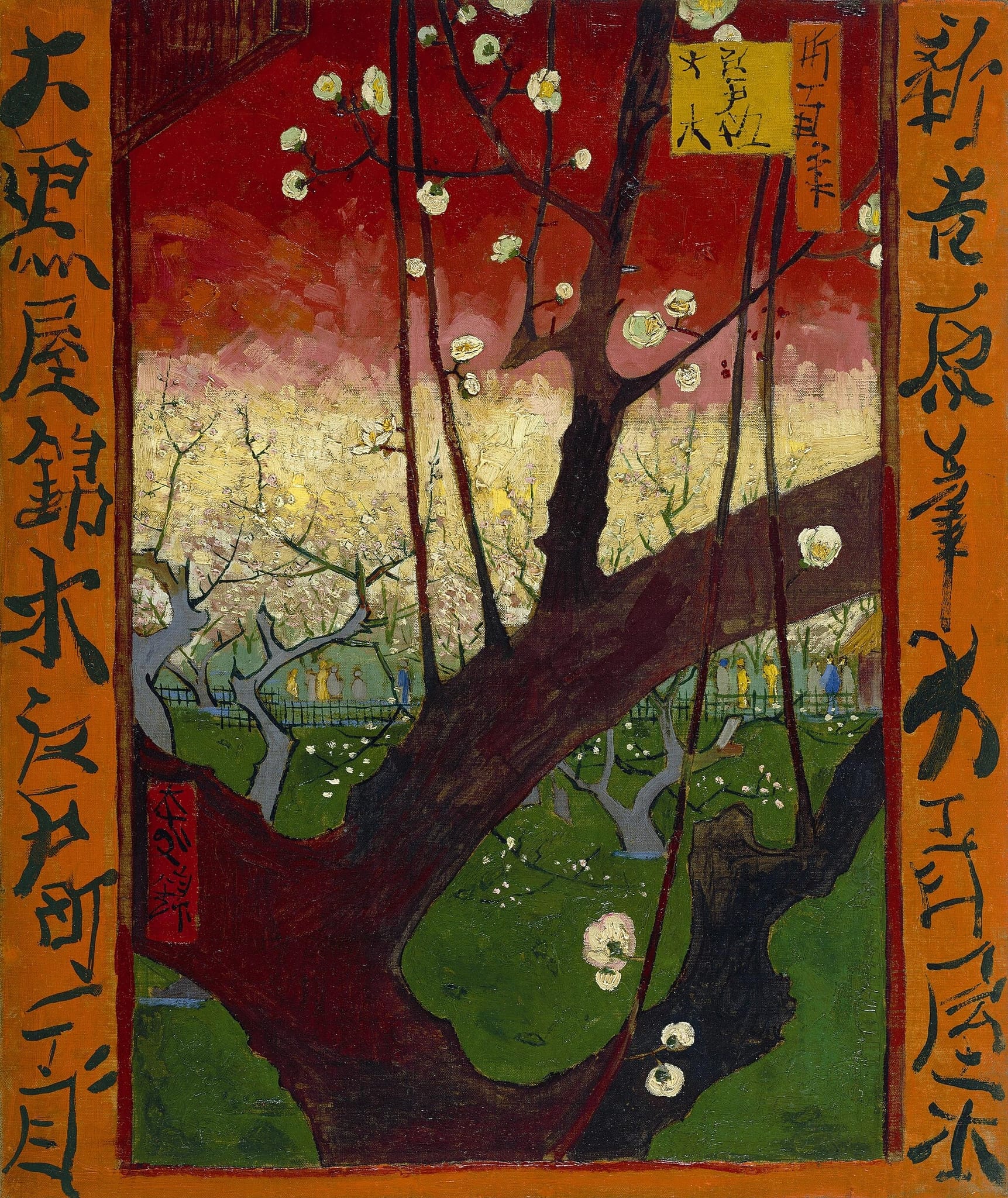
Flowering Plum Orchard (after Hiroshige)
1887
After Hiroshige’s famous print, blossoming branches arch over a walkway, bordered with ornamental cartouches. Van Gogh translates ukiyo-e clarity into oil with bold outlines and saturated color. Look for the decorative border and the simplified, poster-like planes.
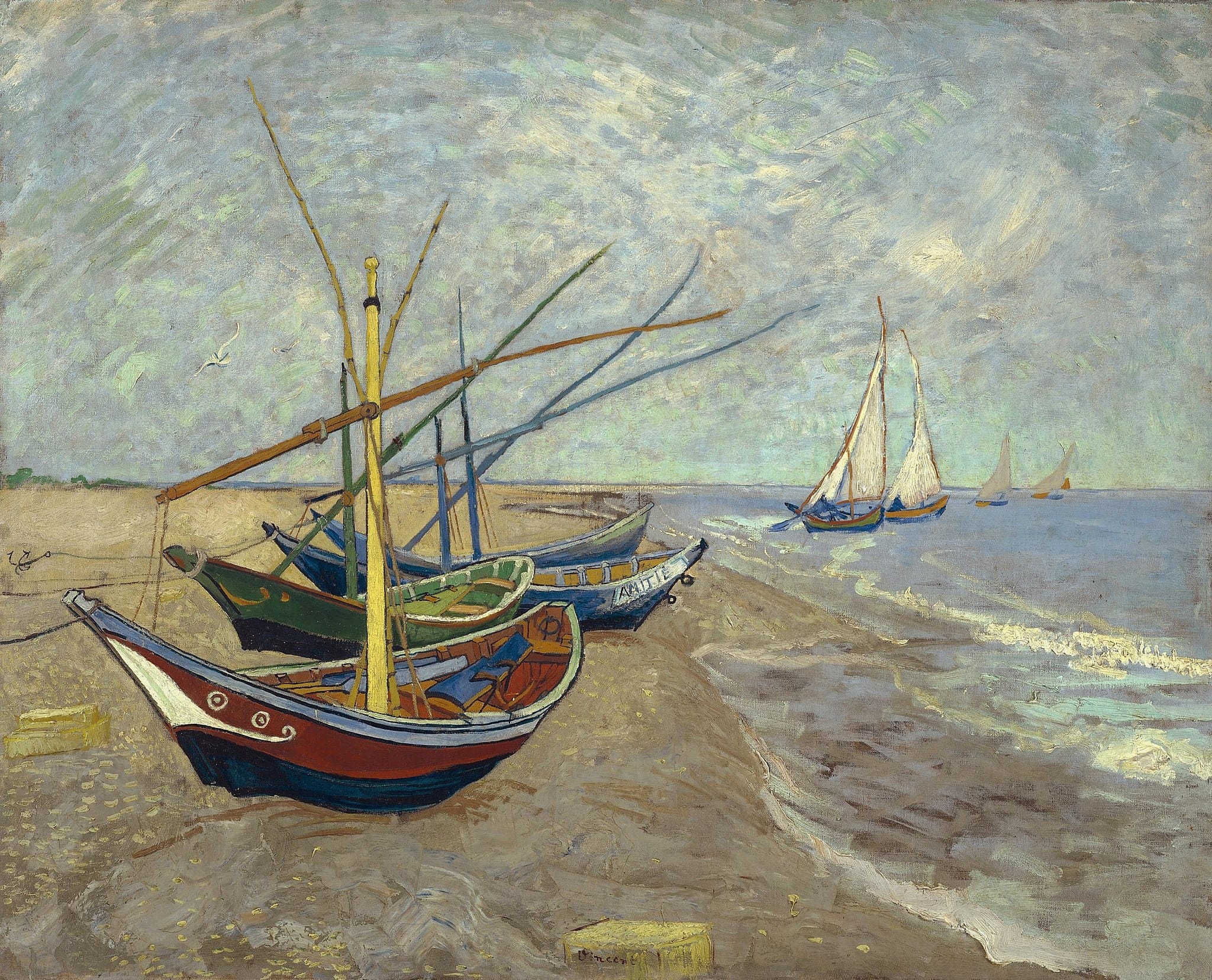
Fishing Boats on the Beach at Les Saintes-Maries-de-la-Mer
1888
Painted on the Mediterranean coast, brightly colored boats rest on pale sand under a windy sky. The scene combines spontaneity with careful line, from rigging to hull patterns. Watch the crisp profiles of the boats and the lively, wind-swept brushwork.
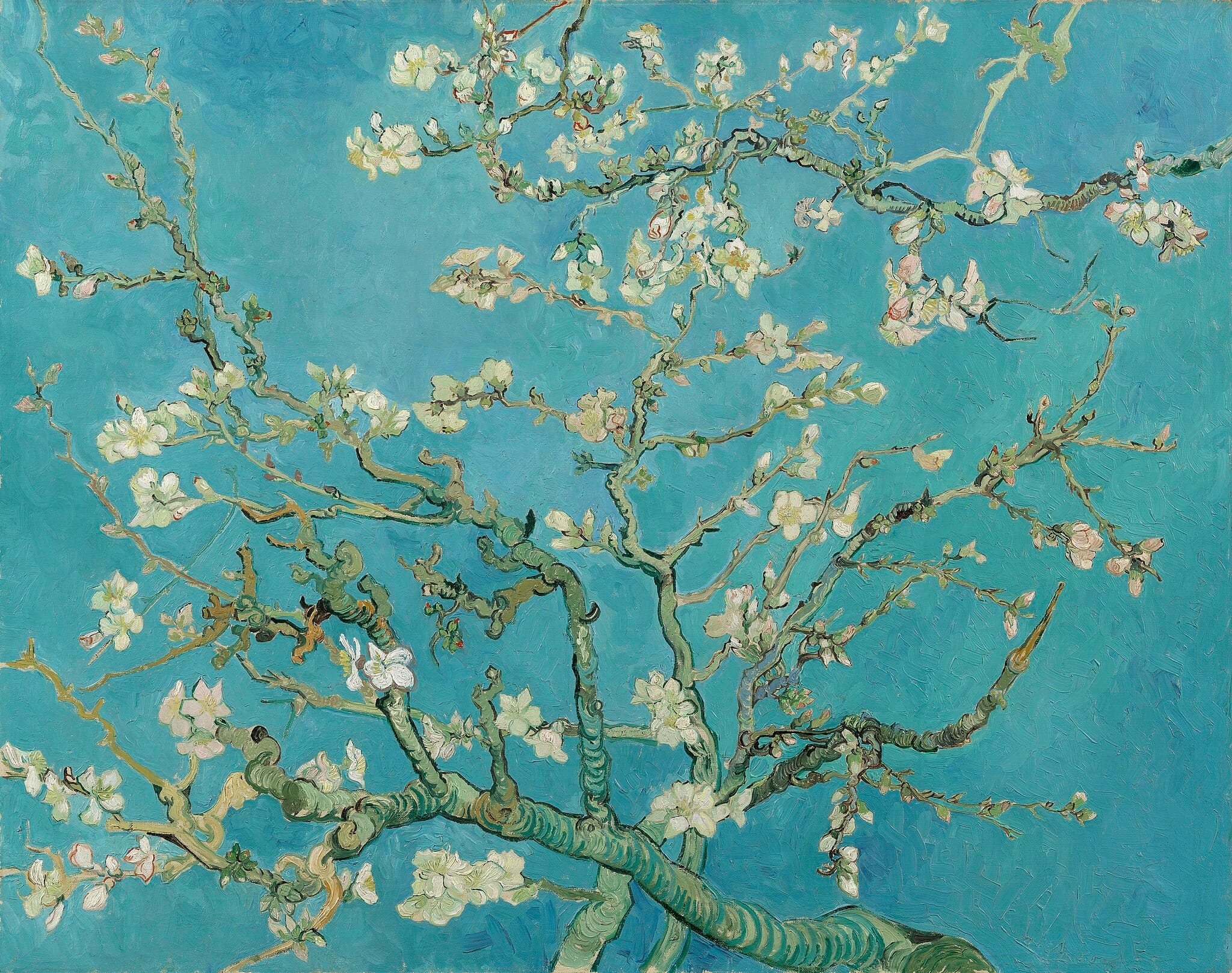
Almond Blossom
1890
Delicate white blossoms spread across a flat blue sky, painted to celebrate his nephew’s birth. The image fuses hope with Japanese-inspired clarity and cropping. Notice the dark contours of the branches and the serene, enamel-like background.
Must-see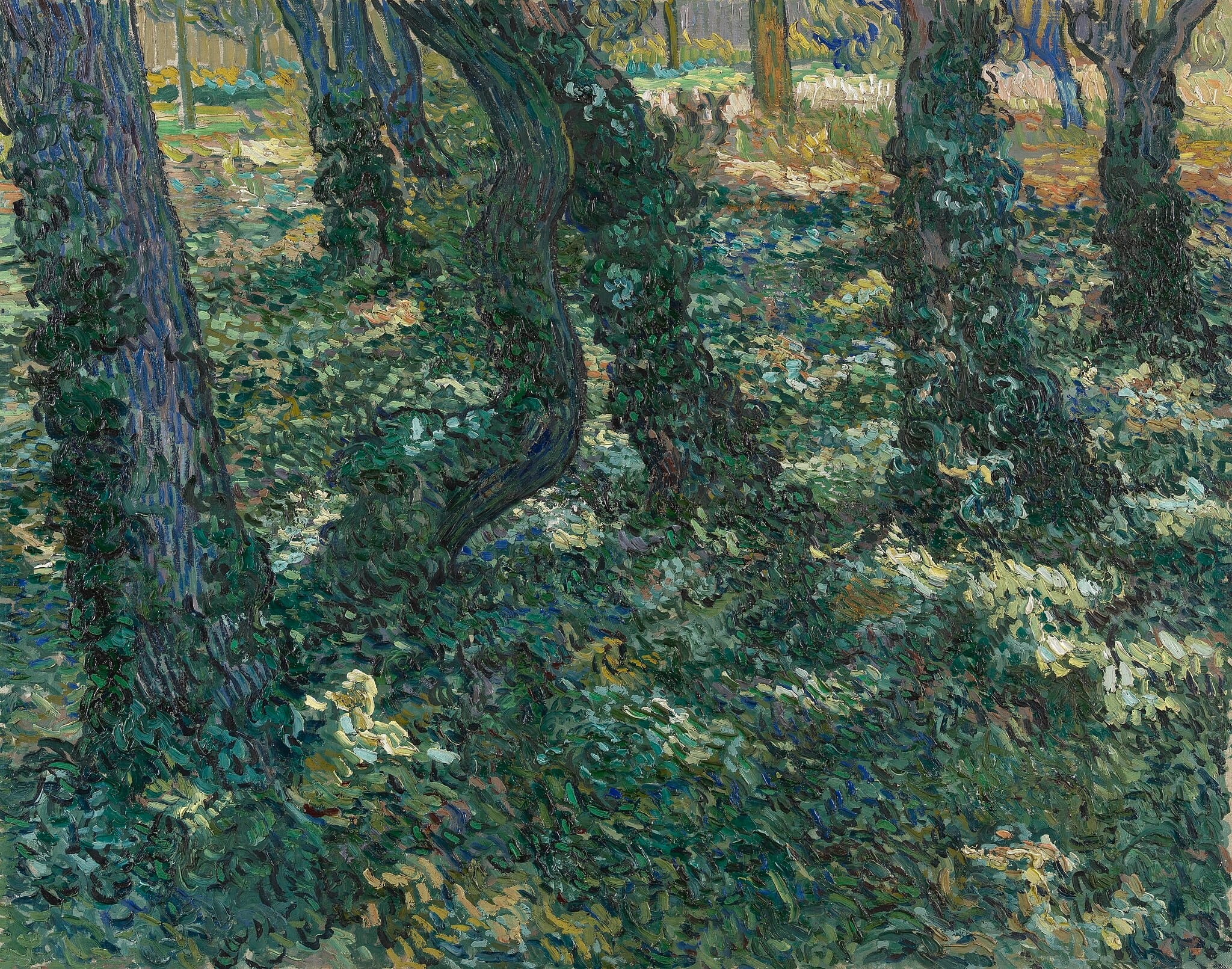
Undergrowth
1889
A tangle of grasses, flowers, and tree trunks fills the canvas with vibrating greens and blues. Made at Saint-Rémy, it turns a forest floor into an immersive pattern of color and rhythm. Look for the sinuous trunks and the short, parallel strokes that make the vegetation quiver.
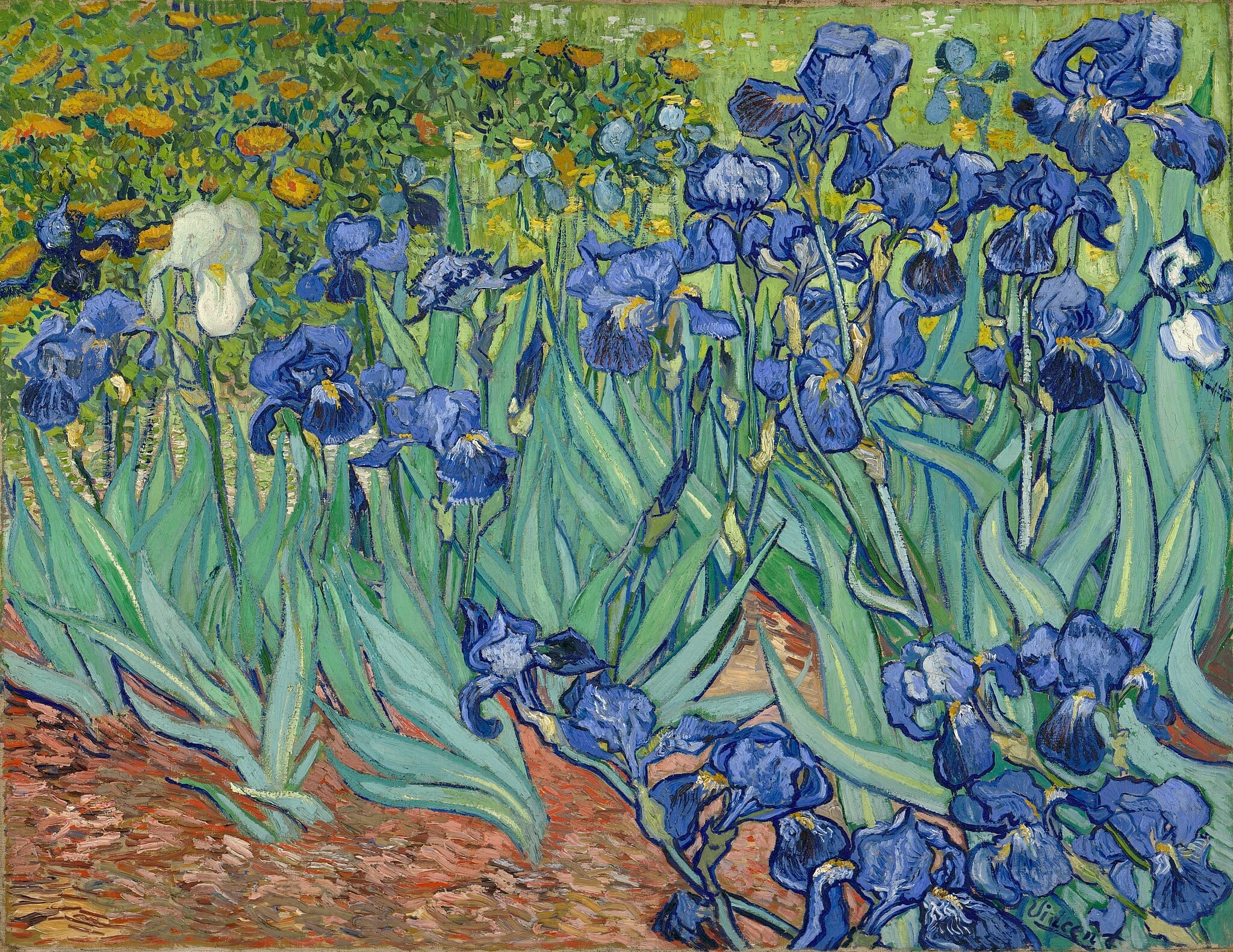
Irises
1890
A spray of irises bursts from a vase, their violet petals flaring against a bright ground. The bold contrasts and heavy outlines show his late, decorative style. Watch the curling petals, thick impasto, and the play of purple against yellow.
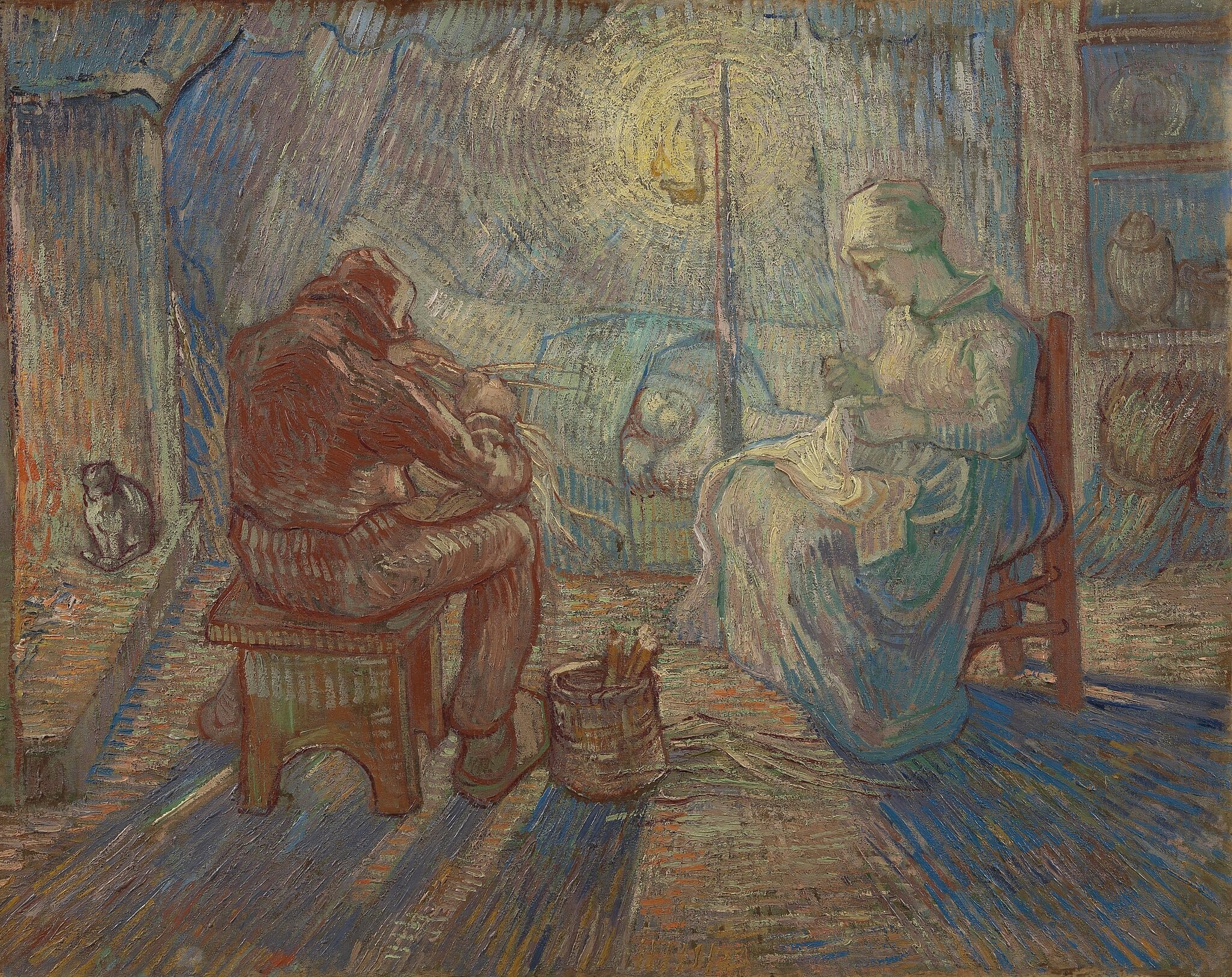
Evening (after Millet)
1889
Adapting a print after Millet, Van Gogh reimagines peasants at day’s end as a symphony of deep blues, oranges, and greens. It honors rural dignity while transforming the source with expressive color. Notice the long silhouettes, the glowing sky, and the energetic strokes binding form and light.
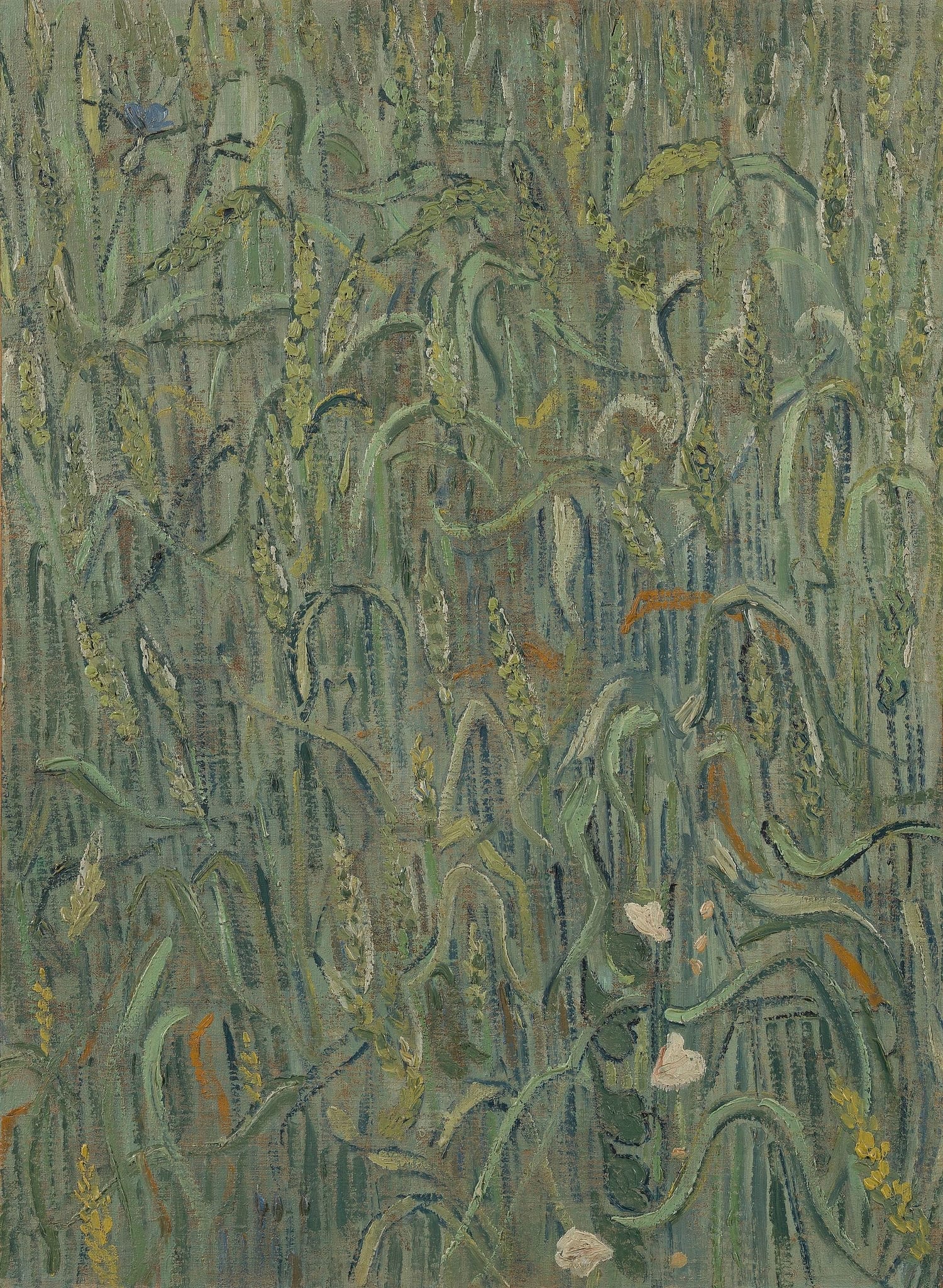
Ears of Wheat
1890
A close-up still life of cut wheat heads lies across the canvas like a golden frieze. Painted in Auvers, it abstracts nature into bold shapes and textures. Look for the thickly loaded strokes and the cool background that makes the stalks blaze.
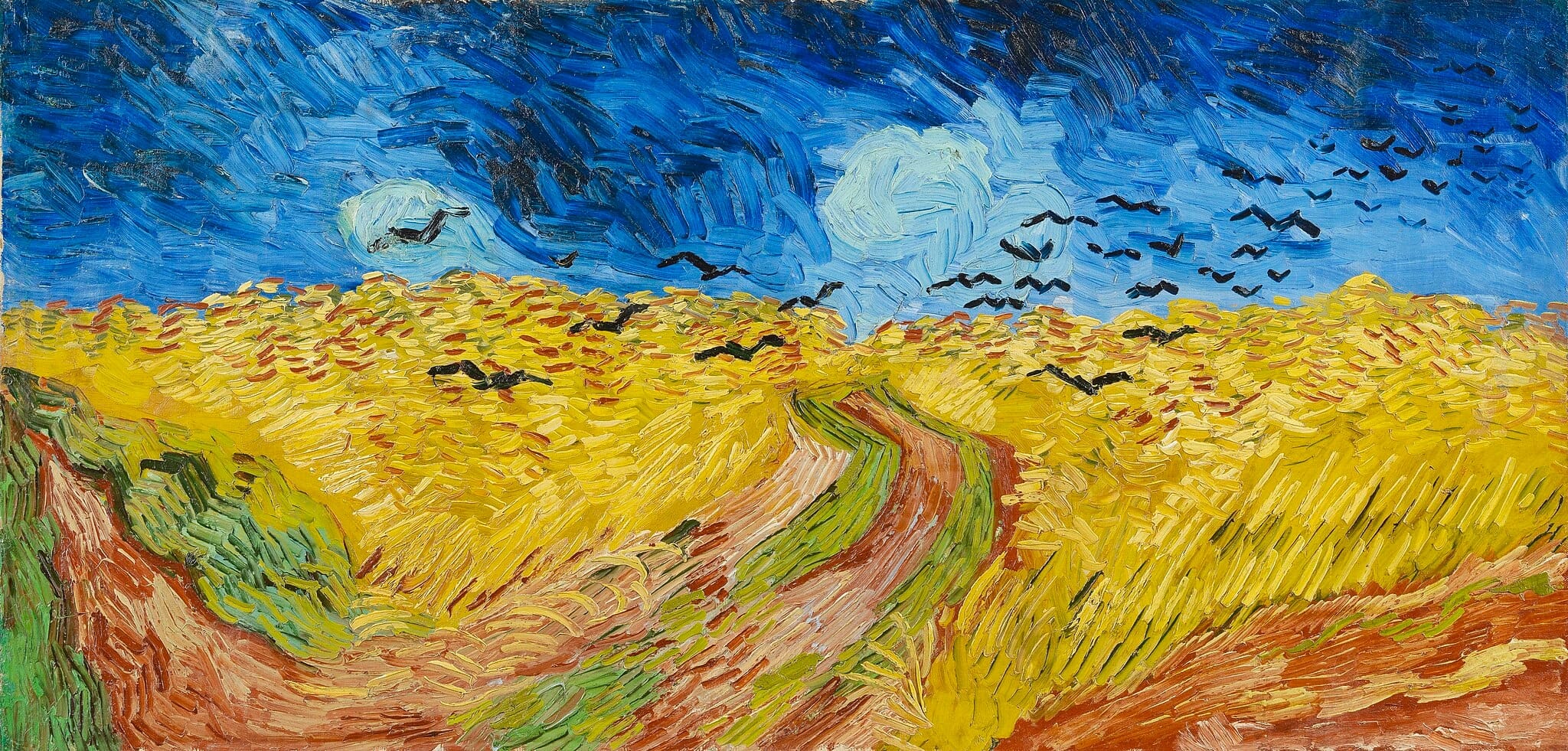
Wheatfield with Crows
1890
A high horizon presses a dark, turbulent sky onto a yellow field, with crows scattering over a forked path. Among his last works, it condenses drama into color and movement rather than narrative. Watch the thrust of the brushwork and the path that leads nowhere.
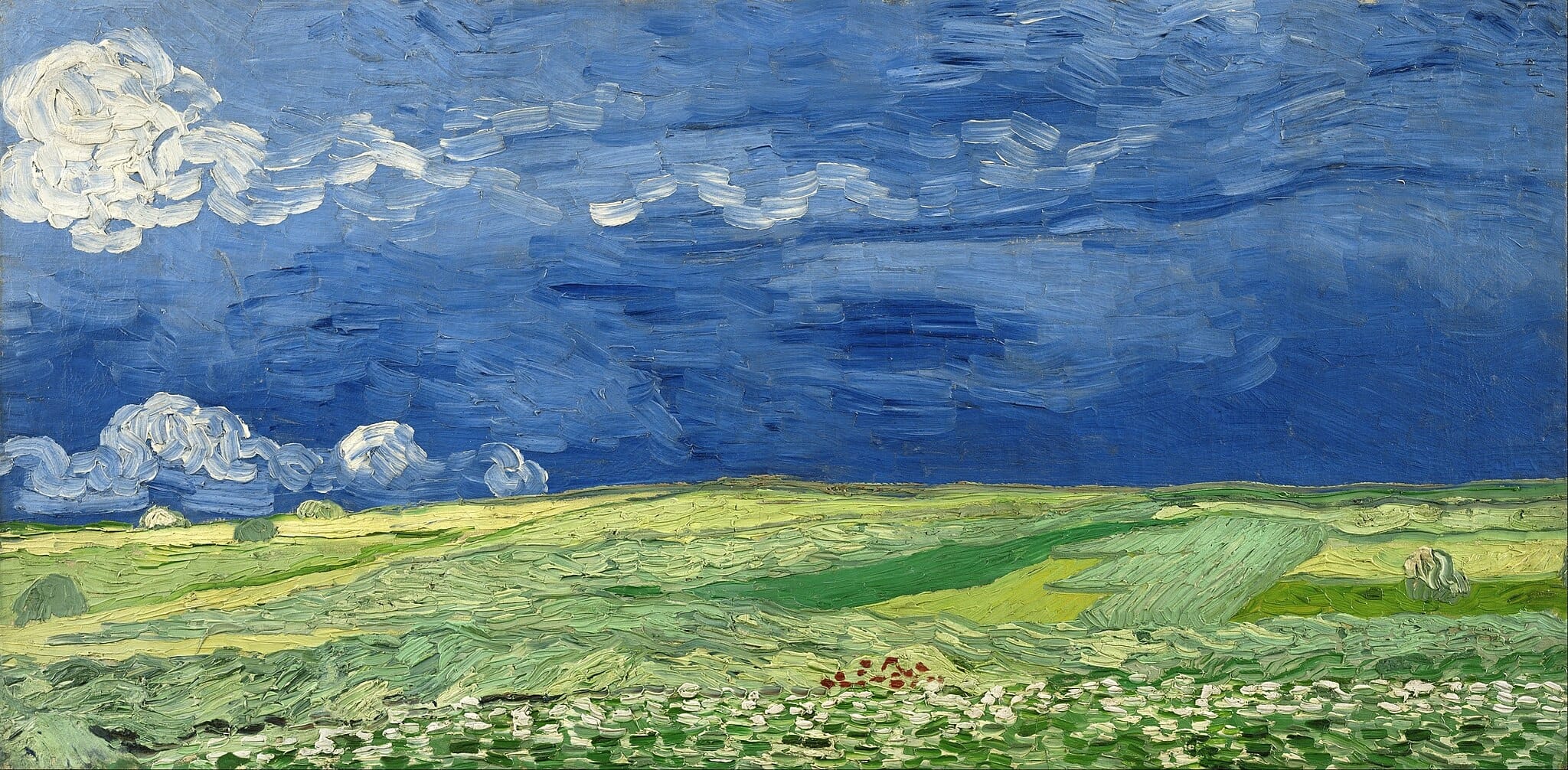
Wheatfield under Thunderclouds
1890
An immense wheatfield is set under a brooding, blue-black sky, almost entirely stripped of anecdote. Van Gogh pushes toward modern simplicity and mood through pure color. Notice the panoramic format and the charged boundary where gold meets storm.
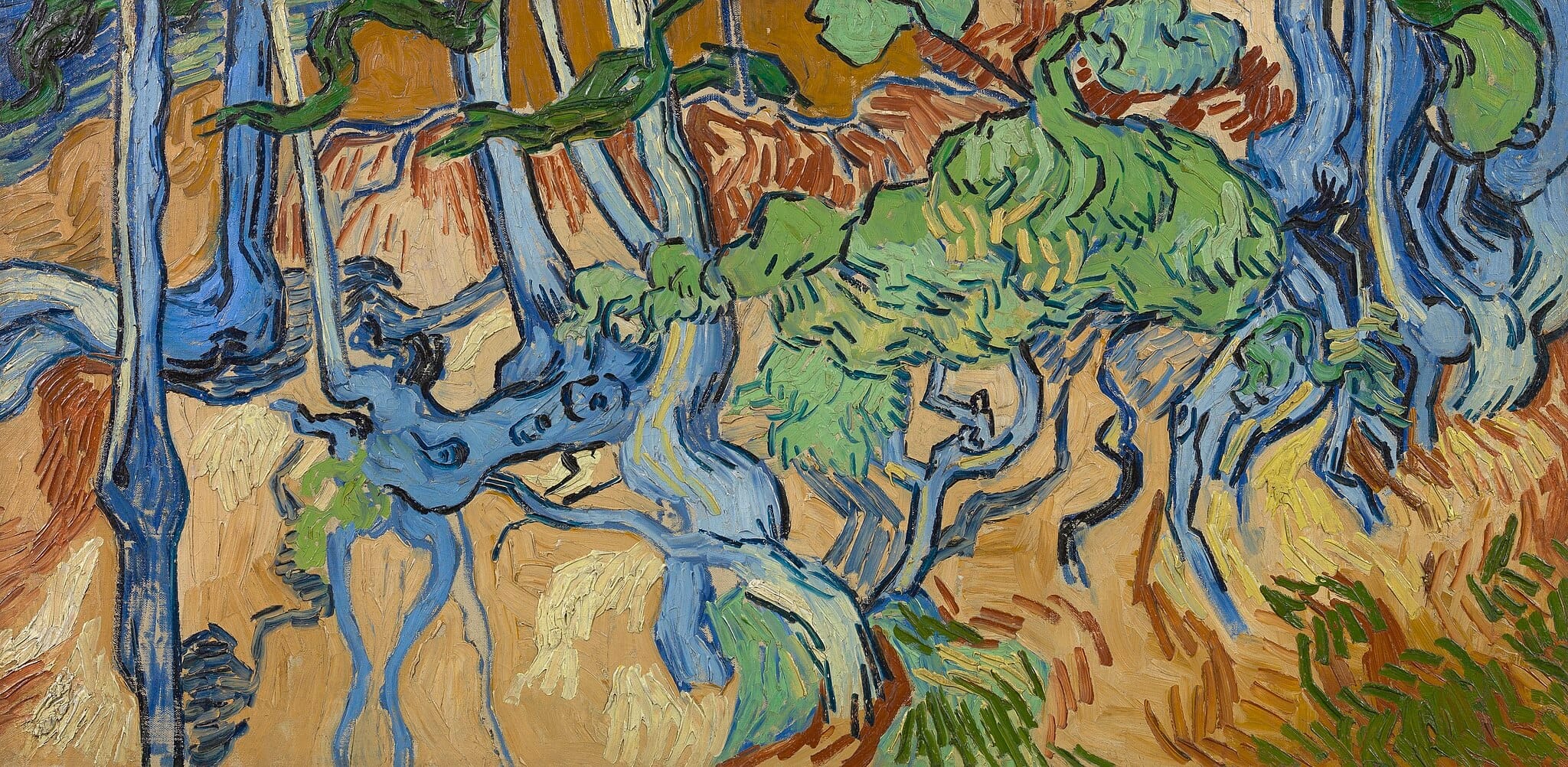
Tree Roots
1890
A tangle of exposed roots and trunks fills the frame, cropped so tightly it verges on abstraction. Probably from his final days in Auvers, it radiates nervous energy and radical modernity. Look for the knotted rhythms and acid blues and greens.
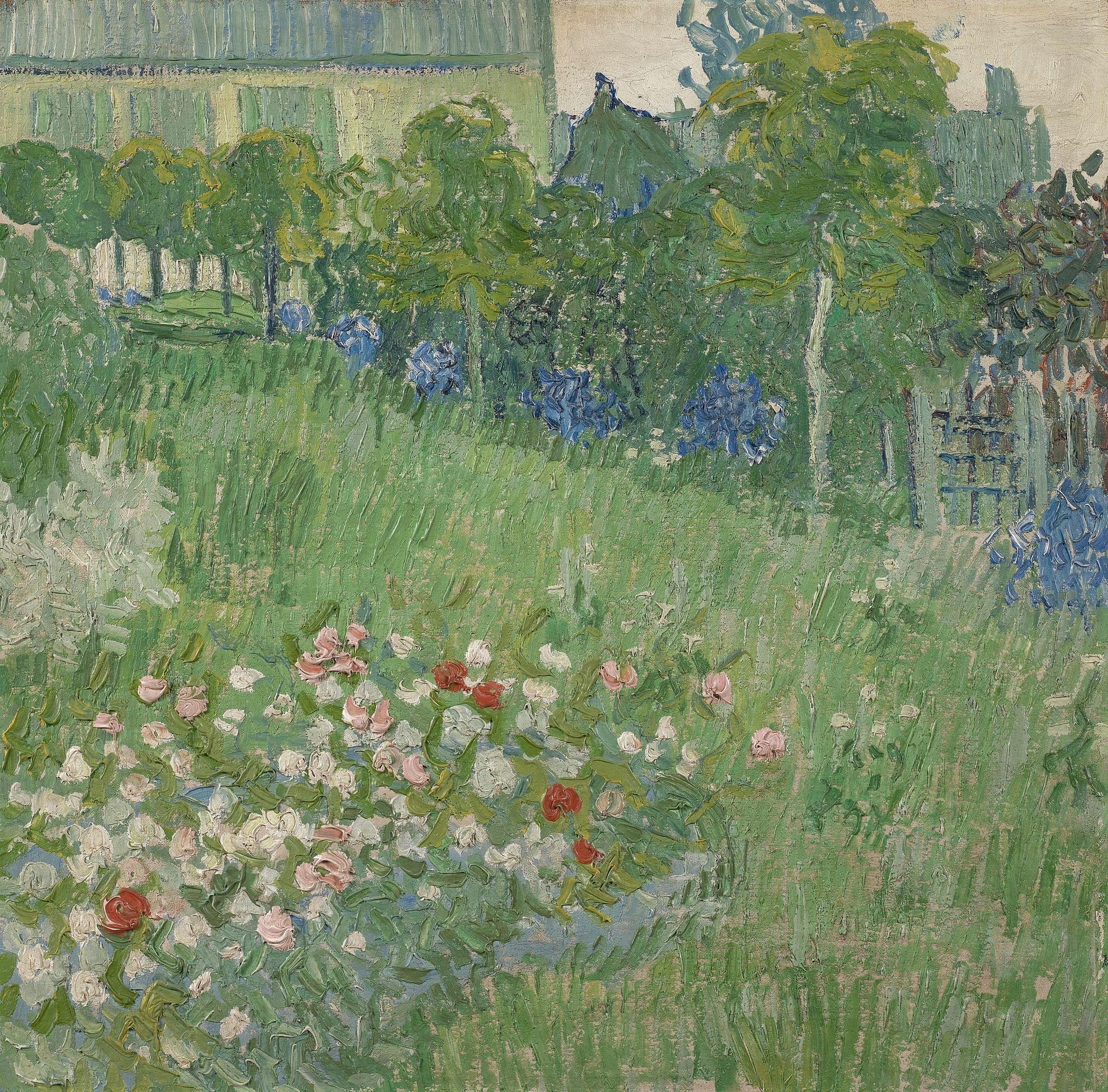
Daubigny's Garden
1890
The painter Daubigny’s garden in Auvers is shown as a lush enclosure of paths, borders, and trees under soft evening light. Van Gogh pays homage to a predecessor while exploring decorative pattern and deep greens. Watch the layered hedges, the meandering path, and the quiet, twilight harmonies.
Rijksmuseum
Seeing Van Gogh here matters for context: his few works are placed within four centuries of Dutch art, letting you compare his color and psychology directly with Rembrandt’s chiaroscuro and the Hague School’s realism. That juxtaposition sharpens how radically he broke with—and reinterpreted—the Dutch tradition.
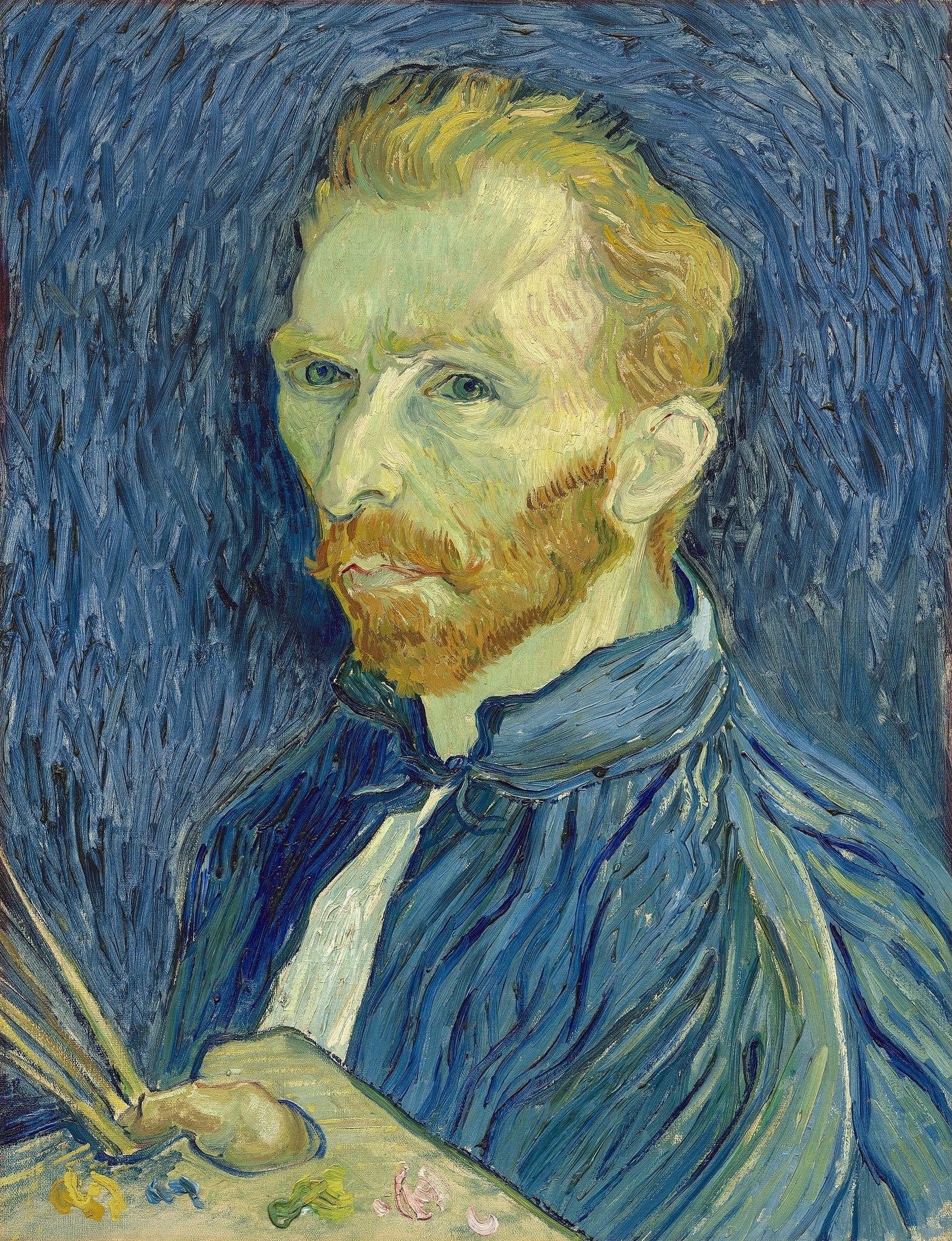
Self-portrait
1887
Van Gogh presents himself bust-length in a brown coat and grey hat, using rhythmic, high-key brushstrokes to test the new Parisian colourism he had just embraced. Painted in 1887, it’s significant as an affordable stand-in for hired models and a laboratory for his evolving style—confident, modern, and self-aware. Look closely at the vibrating strokes around the face and hat, where contrasting hues animate the surface. ([rijksmuseum.nl](https://www.rijksmuseum.nl/en/collection/object/Self-portrait--72f97ac66c33f86b161cd51d62f7d365))
Must-see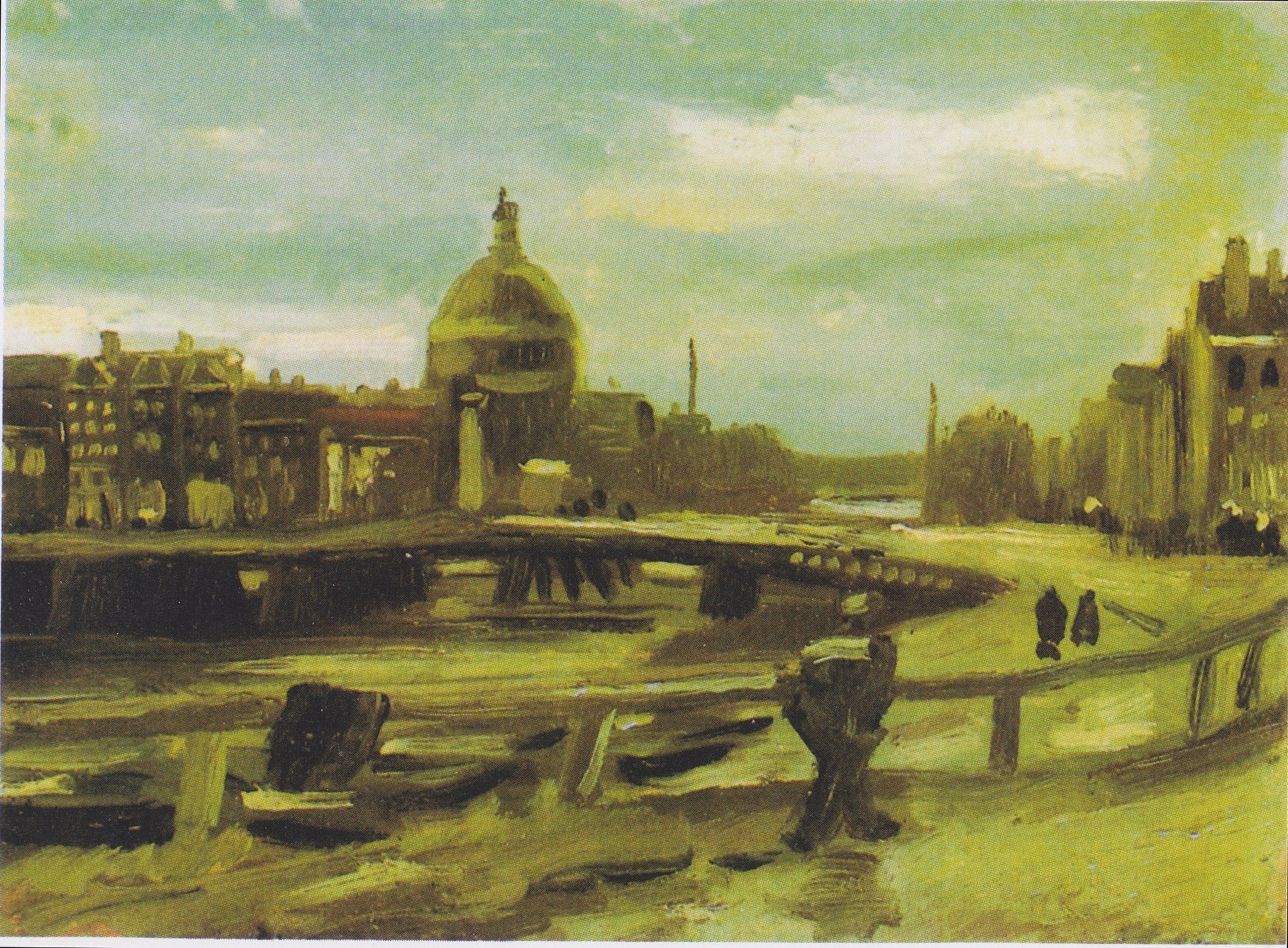
The Singel near the Lutheran Church in Amsterdam
1885
This small panel captures the Singel canal and the domed Lutheran Church, dashed off with quick strokes during Van Gogh’s October 1885 visit to see the newly opened Rijksmuseum. It’s significant as a rare urban view from his early Dutch period, showing how old-master inspiration (Hals and Rembrandt) spurred him to looser handling on the spot. Watch for the brisk, sketch-like brushwork and the economy of colour that still evokes watery light and city bustle. ([rijksmuseum.nl](https://www.rijksmuseum.nl/en/collection/object/The%2BSingel%2Bnear%2Bthe%2BLutheran%2BChurch%2Bin%2BAmsterdam--36b6b173d8e26073592095ed2f15108f))
Must-see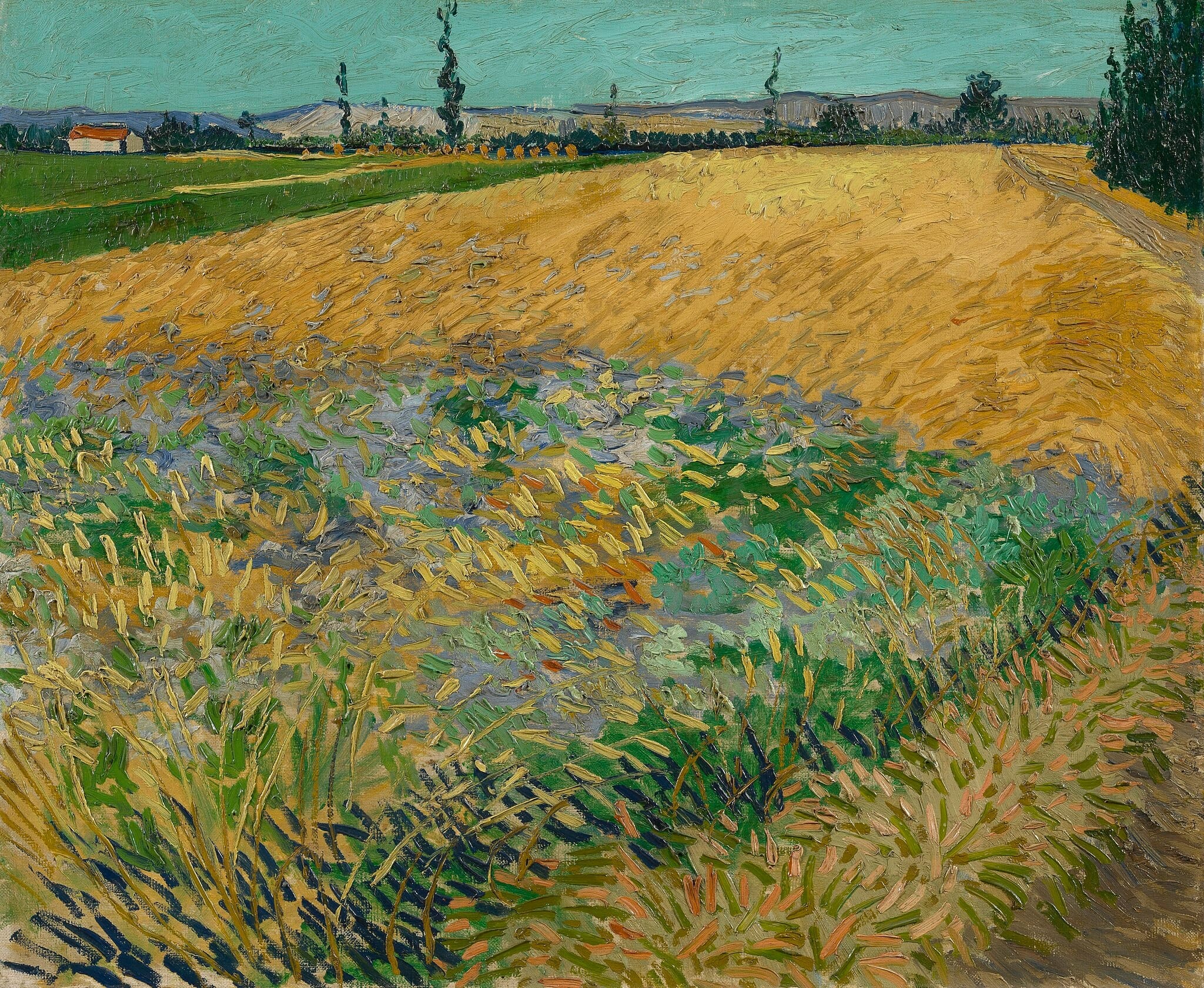
Wheatfield
1888
Painted in Arles in 1888, the scene lets the yellow wheat dominate beneath a high horizon, with intensified blues in sky and distant hills heightening the chromatic clash. It’s significant as part of his southern quest for blazing colour contrasts and simplified, monumental motifs. Note the saturated yellows, the firm directional strokes in the grain, and how the compressed sky amplifies the field’s intensity. ([rijksmuseum.nl](https://www.rijksmuseum.nl/en/collection/object/Korenveld--8ea35a6f35721839ca3e3375f1b7748c))
Must-see