How Much Is Antibes Worth?
Last updated: May 15, 2026
Quick Facts
- Insurance Value
- $30.0M (Assistant estimate (replacement value methodology, ~15% above high estimate))
- Methodology
- comparable analysis
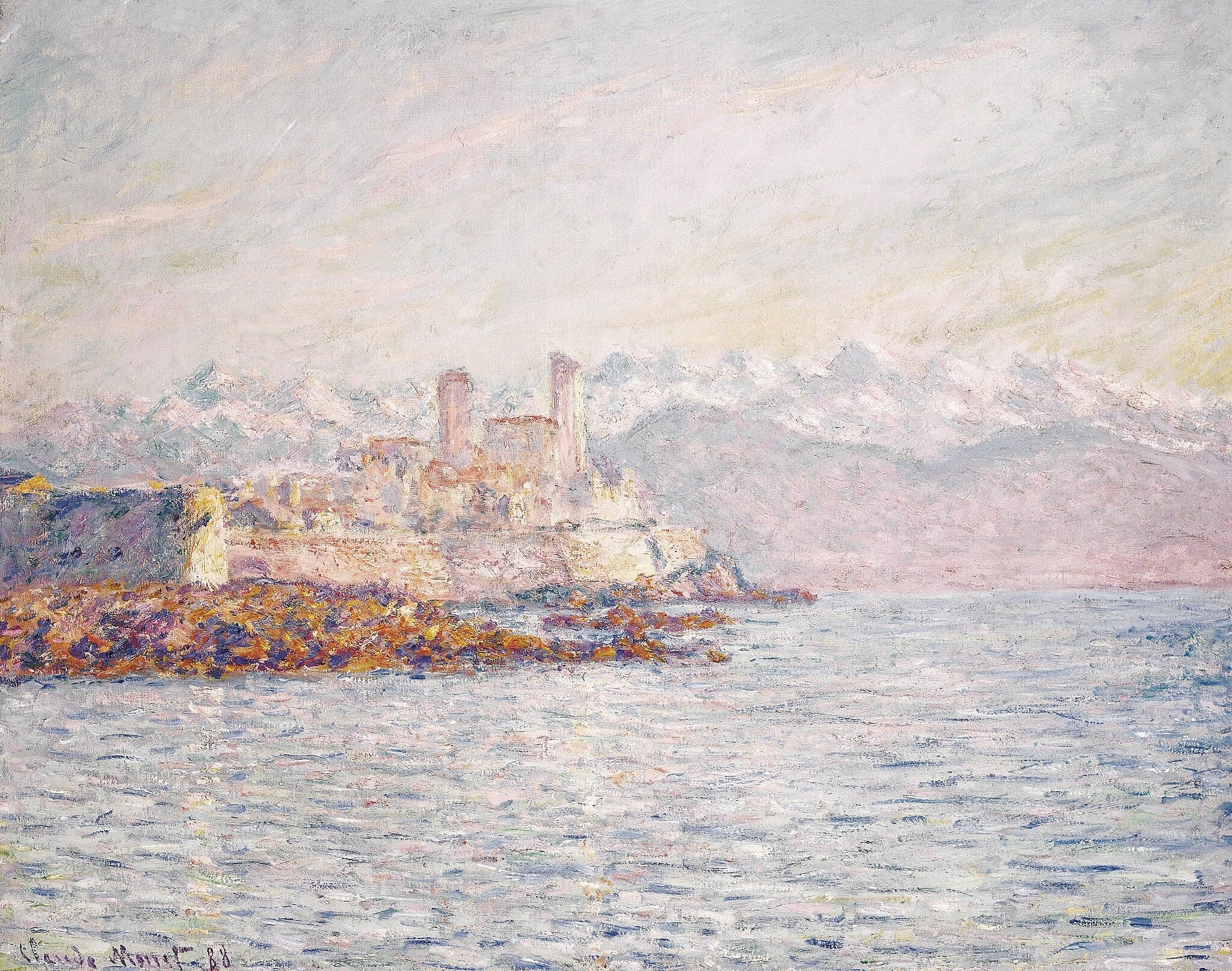
Based on recent sales of closely comparable Monet Antibes canvases and 1888 landscapes of similar scale, the Courtauld’s Antibes (1888, 65.5 × 92.4 cm) would command roughly $18–26 million if hypothetically brought to market. This places it at the upper end for Mediterranean-period Monets, below marquee series like Haystacks, Water Lilies, and Poplars but supported by museum-grade provenance and strong visual appeal.
Valuation Analysis
Conclusion: A prudent fair-market estimate for Claude Monet’s Antibes (1888), The Courtauld Gallery (65.5 × 92.4 cm), is $18–26 million. This range reflects direct Antibes-series comparables, same-year landscape benchmarks, and Monet’s current market hierarchy, while recognizing the painting’s distinguished, long-standing museum provenance and exhibition appeal [1].
Comparable sales: The most probative comp is Antibes vue de la Salis (1888; ~65.7 × 92.8 cm), which realized $13.34 million with premium at Sotheby’s New York on November 16, 2021—a nearly identical subject, date, and format to the Courtauld canvas [2]. A strong same-year landscape benchmark, Moulin de Limetz (1888), sold for $21.685 million at Christie’s New York in May 2024, underscoring that luminous late‑1880s Monets of mid-format scale can clear the low‑twenties when the subject and color are compelling [4]. These data points, together with the Courtauld painting’s quality and institutional cachet, support a mid‑teens floor with credible upside into the mid‑twenties.
Position within Monet’s market: Monet’s top tiers remain his grand, serial motifs—Haystacks, Water Lilies, Poplars, Rouen, and the London/Thames views. The artist’s record stands at $110.7 million (Meules/Haystacks, 2019) [3]. Recent results reaffirm this hierarchy: a Poplars canvas brought $30.78 million in 2023, and a mid-format Haystacks made $34.8 million in 2024—benchmarks that help frame the premium paid for marquee subjects relative to Mediterranean coastals [5][6]. Within this context, the Antibes series consistently sits a notch below the absolute top, but the best examples are highly desirable and exhibition-friendly, supporting outcomes in the high‑teens to mid‑twenties for works of this size and quality.
Key assumptions and sensitivities: This estimate assumes excellent condition consistent with long-term museum care; robust literature and exhibition presence as reflected by The Courtauld’s documentation; and a well‑managed, fully marketed sale. Upside toward the high end would be driven by exceptional chromatic impact, crisp atmospheric effect, and comprehensive scholarship; downside risk (compressing into the mid‑teens) would stem from more subdued palette or any meaningful condition/literature gaps. Given the Courtauld’s ownership, a sale is hypothetical, but the object’s museum-grade stature would be a positive signal to bidders rather than a discounting factor [1].
Key Valuation Factors
Art Historical Significance
High ImpactPainted in 1888 during Monet’s Mediterranean campaign, Antibes captures the artist’s pursuit of intense coastal light and atmospheric nuance, a pivotal extension of his serial practice. The Antibes group is a well-studied, exhibition-friendly chapter that bridges the late 1880s outdoor campaigns and the 1890s series that command peak prices. While not as universally recognized as Haystacks or Water Lilies, the best Antibes canvases are celebrated for their crystalline light, azure sea, and lyrical brushwork—qualities that resonate strongly across museum and private contexts. This specific painting’s long presence at The Courtauld enhances its scholarly footing, making it a referenceable touchstone for the Mediterranean period.
Subject and Series Positioning
Medium ImpactMonet’s market is series- and subject-driven. Antibes is typically valued below the most iconic cycles (Haystacks, Poplars, Rouen Cathedral, London/Thames, and the grand Nymphéas). However, Mediterranean coastal views retain broad appeal, and works with luminous color, clear structure, and engaging horizon lines are strong performers. Direct auction evidence for near-identical Antibes compositions around 65 × 93 cm points to results in the mid‑teens, with quality examples climbing into the low‑twenties. The Courtauld canvas, by size and date, sits squarely within this sweet spot and benefits from the visual freshness and salability of the Antibes motif.
Provenance and Institutional Ownership
High ImpactThe painting’s bequest by Samuel Courtauld and its long-term home at The Courtauld Gallery confer exceptional credibility. Prestigious provenance, unassailable title, and stable institutional stewardship are powerful confidence builders for high-end buyers. While deaccession is unlikely, the hypothetical scenario would carry a positive quality signal rather than a liquidity penalty. Museum-grade ownership often correlates with thorough documentation and exhibition history, elements that can support aggressive bidding. In competitive evening-sale contexts, such provenance can be decisive when multiple bidders are weighing similar works, justifying a premium within the indicated range.
Scale, Palette, and Condition
High ImpactAt 65.5 × 92.4 cm, the painting occupies Monet’s efficient, highly commercial mid-format, which is broadly attractive to both private and institutional buyers. The Antibes series is prized for radiant Mediterranean light; examples with saturated blues, crisp silhouettes, and balanced composition tend to outperform. Assuming excellent condition typical of long museum care—with stable surface, minimal restoration, and intact color saturation—the work would likely clear a mid‑teens floor and compete into the low‑to‑mid twenties. Any condition compromises, conversely, would compress the result toward the lower end of Antibes comparables.
Sale History
Antibes has never been sold at public auction.
Claude Monet's Market
Claude Monet is a perennial blue‑chip cornerstone with deep global demand. His auction record stands at $110.7 million (Meules/Haystacks, Sotheby’s New York, 2019), with multiple results above $50 million for marquee series. Recent seasons reaffirm the hierarchy: Poplars and select Haystacks and Water Lilies works often achieve $30–75 million, while strong but non‑marquee subjects cluster in the teens to low‑twenties depending on size, palette, condition, and provenance. Liquidity is robust in tightly curated evening sales, with guarantees frequently employed at the top end. Collectors prize works with luminous color, clear serial identity, exemplary condition, and ironclad provenance; competition remains intense for such lots.
Comparable Sales
Antibes vue de la Salis
Claude Monet
Direct Antibes-series canvas (1888) at virtually identical scale (~65 x 93 cm); same subject, period, and coastal light conditions.
$13.3M
2021, Sotheby's New York
~$15.7M adjusted
Antibes, le fort
Claude Monet
Another 1888 Antibes variant; same artist, year, subject and typical horizontal format used across the Antibes series.
$9.3M
2011, Sotheby's New York
~$13.2M adjusted
Moulin de Limetz
Claude Monet
Same year (1888) and comparable mid-format landscape; luminous, high-key palette from Monet’s late‑1880s outdoor campaigns.
$21.7M
2024, Christie's New York
~$22.3M adjusted
Peupliers au bord de l’Epte, temps couvert
Claude Monet
Iconic 1891 Poplars series; similar mid-size, plein‑air river landscape from the early 1890s, providing an upper benchmark for non‑Water Lilies/Parliament subjects.
$30.8M
2023, Sotheby's New York
~$32.6M adjusted
Meules à Giverny (Haystacks)
Claude Monet
Prime 1890s series work at comparable mid-format scale; establishes premium tier for highly coveted motifs by the same artist.
$34.8M
2024, Sotheby's New York
~$35.8M adjusted
Current Market Trends
The top end of the Impressionist market remains selective but firm, with best‑in‑class, well‑documented works by canonical names commanding strong prices. Monet continues to anchor the category: headline results in 2023–2024 for Poplars and Haystacks reasserted the premium for marquee motifs, while quality late‑1880s landscapes demonstrated steady depth in the low‑to‑mid tens of millions. Supply has been comparatively tight, so freshness to market and institutional‑grade provenance can unlock bidding momentum. Overall, the data point to a quality‑led market: masterpieces and visually compelling, mid-format works by Monet perform strongly; secondary examples or softer subjects face pricing discipline.
Study print
Study this painting as a print
Pair the full artwork with a museum-style study sheet focused on one meaningful detail.
Sources
- The Courtauld Gallery – Collection record: Monet, Antibes (1888), P.1948.SC.276
- Seydoux & Associés – Market note on Sotheby’s Nov 16, 2021 (Antibes vue de la Salis, $13.34m w/p)
- Sotheby’s – Monet’s Meules sells for $110.7m (artist record), May 14, 2019
- Antiques and the Arts Weekly – Monet’s Moulin de Limetz sells for $21.6m, May 16, 2024
- Sotheby’s – New York Sales, November 2023 Results (includes Poplars $30.78m w/p)
- Sotheby’s – New York Sales May 2024 Highlights (Meules à Giverny $34.8m w/p)