How Much Is Still Life Worth?
Last updated: May 14, 2026
Quick Facts
- Insurance Value
- $16.0M (Appraiser's estimate based on comparable sales and replacement risk)
- Methodology
- comparable analysis
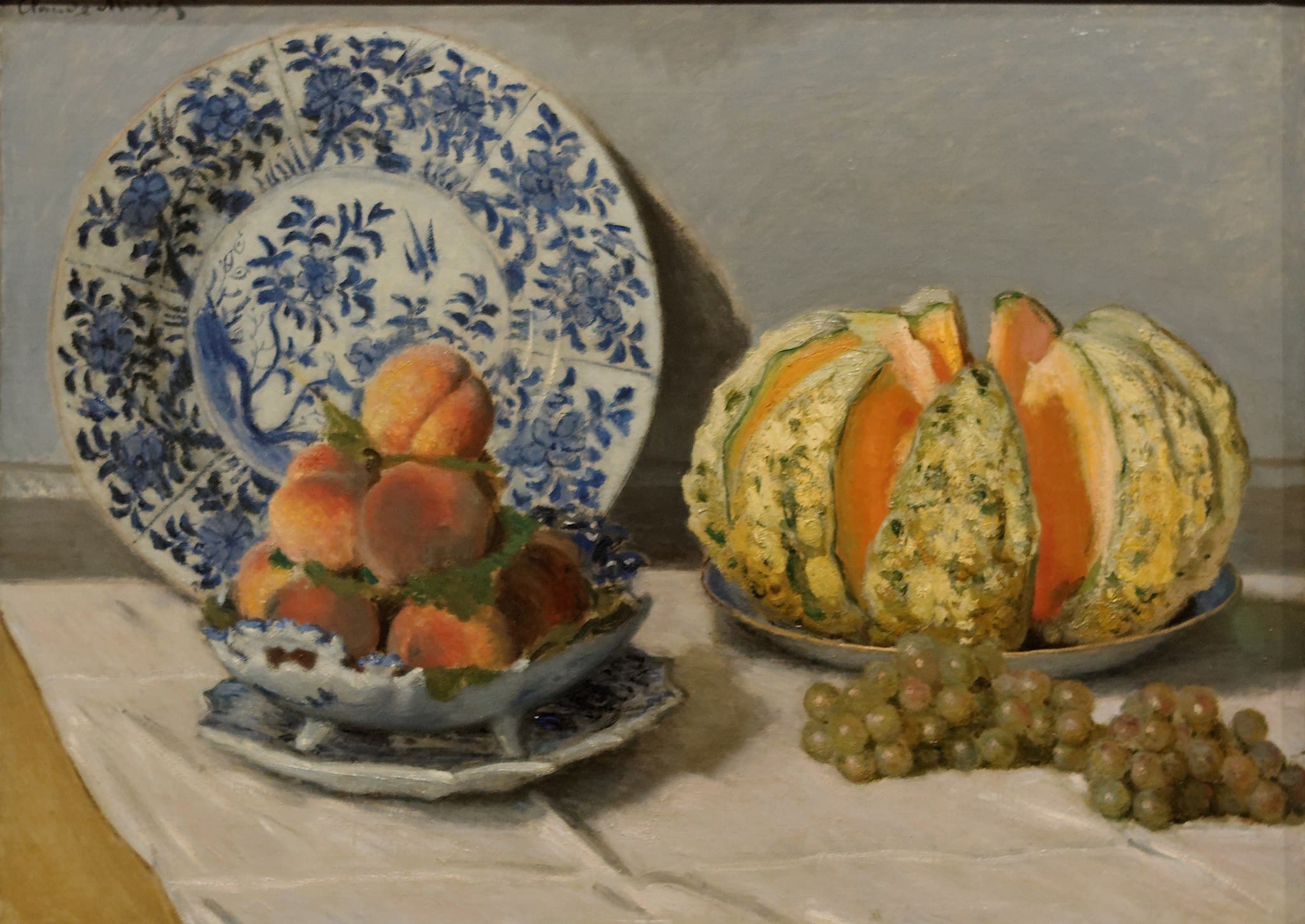
Claude Monet’s Nature morte au melon (Still Life with Melon), 1872 (Wildenstein 245; Calouste Gulbenkian Museum), would command $8–14 million at auction today. The range is anchored by recent Monet still-life comparables and supported by the artist’s robust blue-chip market. For insurance, a replacement value of $16 million is appropriate.
Valuation Analysis
Conclusion: Nature morte au melon (Still Life with Melon), 1872 (approx. 53 × 73 cm; Wildenstein no. 245), in the Calouste Gulbenkian Museum, would realize $8–14 million at auction in today’s market, with private-sale potential around $9–15 million and a recommended insurance value of $16 million. This view synthesizes directly comparable Monet still-life results, the painting’s early date and institutional provenance, and the current depth of demand for prime Impressionist works.
Method and key comparables: Monet’s still lifes form a recognized but secondary tier relative to his headline series. Recent, closely aligned benchmarks bracket the expected outcome: Fleurs dans un pot (Roses et brouillard), 1878, achieved $10.4 million with premium at Sotheby’s New York (May 12, 2021) [2], while the fruit still life Le panier de pommes, 1880, brought $4.8 million with premium at Christie’s New York (Nov 17, 2022) [3]. Given the Gulbenkian work’s earlier Argenteuil-period date (1872), museum-level provenance, and publication in the Wildenstein catalogue, it should trade toward the upper half of the still-life band—hence the $8–14 million guidance.
Positioning within Monet’s market: The upper limit is capped by the strong subject hierarchy that rewards Monet’s marquee series (Water Lilies, Haystacks, Rouen, London/Venice). Recent results reaffirm this: Christie’s sold a Water Lilies work for $74,010,000 in Nov 2023 [4], and Monet’s auction record remains the $110.7 million Meules (Sotheby’s, 2019) [5]. These bellwethers underscore robust demand for the very top tier, while establishing a clear pricing spread to secondary subjects like still life. The Gulbenkian painting is nevertheless a desirable early canvas, well-documented and widely reproduced in institutional contexts [1].
Why the Gulbenkian painting merits the range: The 1872 date places the work in Monet’s early, commercially favored Argenteuil period; still lifes from this era are less abundant than later examples and can show lively brushwork and sophisticated color. Museum stewardship and inclusion in catalogues/exhibitions build buyer confidence around attribution and condition norms, supporting liquidity and competitive bidding. On that basis, an evening-sale placement in New York or London would reasonably achieve the stated range.
Insurance and sensitivities: Replacement cost typically sits above likely hammer to reflect rarity, search costs, and transaction risk. A $16 million insurance value is well calibrated to the mid-to-upper auction expectation. Upside catalysts include exceptional surface quality on inspection and prominent exhibition/literature history beyond current citations; downside risks center on condition (e.g., heavy lining, overcleaning) or constrained sale channels. Identification and institutional holding are well established through Gulbenkian/Google Arts & Culture materials [1].
Key Valuation Factors
Art Historical Significance
High ImpactPainted in 1872, Nature morte au melon sits within Monet’s early Argenteuil-era output, a period prized for its freshness of color and rapidly modernizing brushwork. While still life is a secondary subject in Monet’s oeuvre, early examples are comparatively scarcer and often display an experimental, high-chroma palette that presages the fully fledged Impressionist language. The work is recorded in the Wildenstein catalogue and held by a major institution, reinforcing scholarly acceptance. This confluence—early date, refined technique, and secure art-historical placement—supports competitive demand and positions the painting at the upper end of Monet’s still-life subset.
Provenance and Institutional Stewardship
High ImpactLong-term residence in the Calouste Gulbenkian Museum adds significant credibility. Museum holdings often benefit from rigorous curatorial oversight, publication, and exhibition history, which collectively enhance transparency and buyer confidence. When institutionally held works enter the market, they tend to command a premium for clean title, strong documentation, and perceived conservation standards. Even if this painting remains hypothetical as a deaccession scenario, the Gulbenkian name and the work’s catalogue raisonné status reduce attribution risk and meaningfully support the estimate.
Subject, Scale, and Aesthetic Appeal
Medium ImpactStill lifes by Monet are a recognized but secondary category compared with his signature landscapes and grand series. Within that category, fruit compositions generally price below the most luxurious floral examples. The painting’s moderate size (circa 53 × 73 cm) is commercially attractive—large enough for presence, manageable for collectors—and the 1872 palette and touch likely provide the clarity and luminosity sought by buyers. These attributes warrant a position above routine fruit still lifes but below standout florals or iconic landscape subjects, guiding an $8–14 million outcome.
Market Liquidity and Timing
Medium ImpactMonet remains one of the most liquid blue-chip names, with sustained demand across geographies. Recent sales underscore depth at the top (Water Lilies and series works) and measured, selective competition for non-trophy subjects. In this climate, fresh, institutionally provenanced Monets priced correctly tend to clear efficiently. The subject hierarchy keeps ceilings in check for still lifes, but the artist’s overall momentum and collector base should readily support a high–single-digit to low–eight-figure result for a quality 1872 canvas.
Sale History
Still Life has never been sold at public auction.
Claude Monet's Market
Claude Monet is a foundational blue-chip artist with deep global demand across private collectors and institutions. His auction record stands at $110.7 million for Meules (Sotheby’s, 2019), and marquee series works such as Water Lilies have continued to transact between roughly $45 million and $75 million in recent seasons. Results in 2023–2025 reaffirm the stratified but resilient market: top-tier series command very high prices, strong landscapes achieve mid-to-high eight figures, and well-selected secondary subjects (including still lifes) occupy a disciplined but liquid band from the mid-seven to low-eight figures. Monet’s liquidity, brand recognition, and museum-level presence make him a reliable anchor in the Impressionist segment.
Comparable Sales
Fleurs dans un pot (Roses et brouillard)
Claude Monet
Same artist and genre (still life), late-1870s date close to 1872; similar mid-size oil on canvas. A strong floral still life that sets the upper band for Monet still lifes.
$10.4M
2021, Sotheby's New York
~$12.2M adjusted
Le panier de pommes
Claude Monet
Same artist and subject type (fruit still life), close in scale and slightly later (1880). A direct, conservative baseline for fruit still lifes.
$4.8M
2022, Christie's New York
~$5.3M adjusted
Matinée sur la Seine, temps net
Claude Monet
Same artist; strong, sought-after Seine series landscape that demonstrates current blue-chip demand for Monet just below the marquee series. Useful as an upper bracketing comp for subject hierarchy.
$18.4M
2024, Christie's London
~$19.0M adjusted
Moulin de Limetz
Claude Monet
Same artist; high-quality landscape with institutional provenance (Nelson-Atkins deaccession) showing market depth for strong but non-trophy Monet subjects. Serves as an upper bound versus a still life.
$21.7M
2024, Christie's New York
~$22.3M adjusted
Le bassin aux nymphéas
Claude Monet
Same artist; marquee Water Lilies series sets the top tier of Monet pricing and illustrates the subject premium relative to still lifes.
$74.0M
2023, Christie's New York
~$78.5M adjusted
Current Market Trends
The Impressionist and Post-Impressionist segment has remained selective but stable at the top, with blue-chip works by canonical names continuing to attract competitive bidding. Following a more cautious 2024, the category benefited from renewed trophy supply and institutional provenance in 2025, reinforcing confidence. Within Monet’s market, the subject hierarchy is pronounced: Water Lilies, Haystacks, Rouen, and London/Venice series lead, while early-period landscapes follow, and still lifes price below those tiers. Priced appropriately and well presented, strong still-life examples have cleared in the $5–12 million range recently, with earlier, institutionally documented works like the 1872 Gulbenkian canvas positioned toward the upper end of that band.
Study print
Study this painting as a print
Pair the full artwork with a museum-style study sheet focused on one meaningful detail.
Sources
- Google Arts & Culture (Calouste Gulbenkian Museum): Monet, Natureza-morta (1872)
- Rehs Galleries blog: Sotheby’s NY, May 12, 2021 results (Monet, Fleurs dans un pot at $10.4m w/p)
- The Art Newspaper: Christie’s NY, Nov 17, 2022 sale coverage (Monet, Le panier de pommes at $4.8m w/p)
- Christie’s Press: 20th Century Evening Sale, Nov 9, 2023 (Monet, Le bassin aux nymphéas at $74,010,000)
- Sotheby’s: Monet’s Meules sells for $110.7m (artist record), May 14, 2019