How Much Is Danaë Worth?
Last updated: July 8, 2026
Quick Facts
- Last Sale
- $23.6M (2026, Sotheby's, London)
- Methodology
- recent sale
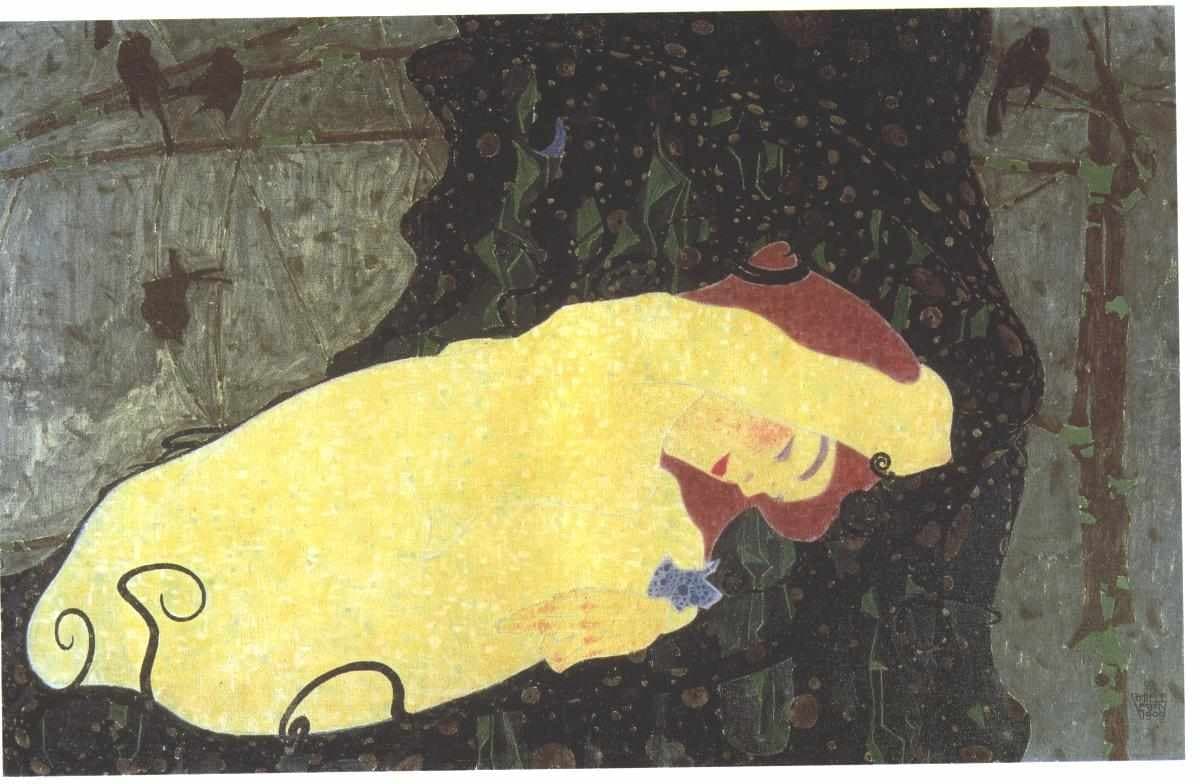
Anchored to the Sotheby’s London public sale of Danaë (24 June 2026) which realized approximately USD 23.61M (with premium), I place a final market valuation for Egon Schiele’s Danaë (1909) at USD 20–28 million. The estimate reflects the work’s scale, museum‑quality provenance (Lewis Collection), exhibition history and the current pricing for top‑tier Schiele oils.
Valuation Analysis
Valuation conclusion: I set a market value range of USD 20,000,000 – 28,000,000 for Egon Schiele’s Danaë (1909), anchored to the recent Sotheby’s London sale on 24 June 2026 that realized approximately USD 23,611,723 including buyer’s premium [1]. That auction result provides a primary, market‑validated anchor and demonstrates buyer appetite for large, well‑provenanced early Schiele oils.
Key rationale: Danaë is a large‑scale 1909 oil from Schiele’s early mature period, a moment when his figurative language matured into the spare, intense nudes and mythic themes collectors prize. The June 2026 lot was offered from the Lewis Collection with a notable exhibition/loan history; those provenance and exhibition credentials materially uplifted competitive demand and directly inform the valuation band. The painting’s size and subject place it squarely in the segment of Schiele oils that trade at the high end of the market.
Comparables and ceiling: The current ceiling for Schiele oils remains the 2011 Sotheby’s London result for Häuser mit bunter Wäsche (Vorstadt II), which is the artist’s auction record and establishes the market top‑end for the very rare, canonical works [2]. Danaë’s 2026 result sits well below that historic ceiling but firmly within the “major museum‑quality” tier. Secondary comparables — high seven‑figure to low‑eight‑figure oil and works‑on‑paper sales in recent seasons — corroborate the segmentation of values (top museum‑quality oils vs. less canonical oils and sheets).
Why the range: The lower bound (USD 20M) reflects a conservative floor closely tied to the realized price, allowing for modest market movement, seasonal differences, and potential buyer‑specific premiums. The upper bound (USD 28M) reflects the upside if the picture is presented with enhanced exhibition momentum, a fresh catalogue‑raisonné citation, immaculate condition and an aggressive guarantee/consignment strategy in a blue‑chip sale season. Condition problems, unresolved provenance questions or legal provenance risk would justify downward adjustments from the lower bound; conversely, additional institutional endorsements could push realizations above the upper bound.
Practical recommendation: To maximize value, consign to a top international house with a fresh condition report, full provenance file and a short exhibition run pre‑sale. Secure and publish catalogue‑raisonné references and institutional loans where possible to reduce buyer risk. Use the 24 June 2026 Sotheby’s result as the primary comparable when negotiating estimates, guarantees or private‑sale offers [1].
Key Valuation Factors
Art Historical Significance
High ImpactDanaë (1909) dates to Schiele’s formative mature period and treats a canonical mythic subject that positions the work within both Viennese modernist discourse and the Klimt/Schiele dialogue. As a large-scale oil of a nude subject executed at a stylistically decisive moment, the painting has intrinsic scholarly importance; such pictures are scarce and therefore command premium collector and institutional interest. If the composition is confirmed as an autograph, illustrated in the catalogue raisonné and cited in major monographs, its standing within Schiele’s oeuvre becomes elevated, directly increasing market value and institutional interest.
Provenance & Exhibition History
High ImpactThe work offered in 2026 came from the Lewis Collection with a record of institutional loans and prior exhibition history; these provenance elements materially improve marketability and lower buyer risk. Long‑term, well‑documented ownership and visible museum loans are primary drivers of high levels of bidder confidence in the secondary market. Conversely, unresolved ownership questions, gaps in provenance or prior withdrawal history can deter top bidders or depress estimates; clear provenance that includes museum loans typically supports a premium over comparable lots without such history.
Condition & Medium
Medium ImpactAs an oil on canvas, technical condition (varnish, lining, inpainting, surface abrasion, stretcher/toning) significantly affects realisable price. A pristine or professionally conserved canvas will attract competitive bidding at top houses; significant restoration, structural problems, or non‑original relining can reduce value materially (sometimes by 20–40% depending on severity). A formal condition report and visible high‑resolution images are essential pre‑sale materials and commonly required by major houses to sustain the high estimate band.
Market Comparables & Liquidity
High ImpactTop Schiele oils are relatively rare on the market; liquidity is centred at major auction houses and among established private collectors and institutions. Recent high‑profile sales (Sotheby’s 2026 Danaë; 2011 record sale) re‑anchor values for similar works and show that museum‑quality oils can clear the high seven to mid‑eight‑figure range. Works on paper remain more plentiful and trade at lower levels, reinforcing the premium for large, canonical oils. Market liquidity is therefore strong for only the very best Schiele oils; lesser works may face longer sell‑through times and lower bids.
Sale History
Sotheby's, London
Sotheby's, London
Christie's, New York
Dorotheum, Vienna
Egon Schiele's Market
Egon Schiele is a blue‑chip artist within Viennese Expressionism; his output is limited by his short career and top‑tier oils are scarce. The market is bifurcated: exceptional oils with museum provenance and canonical subjects achieve high‑seven to mid‑eight figures, occasionally approaching the artist’s record, while works on paper trade more frequently in the mid‑six to low‑seven‑figure range. Provenance, exhibition history and catalogue‑raisonné citation are decisive price drivers, and restitutions/provenance litigation have recently influenced availability and buyer caution.
Comparable Sales
Danaë
Egon Schiele
Same work — direct primary comparable: large, museum-quality Schiele oil with long Lewis Collection provenance and exhibition history.
$23.6M
2026, Sotheby's, London
Häuser mit bunter Wäsche (Vorstadt II)
Egon Schiele
Artist auction record for a major oil — benchmark for the very top tier of Schiele oils (similar medium and museum-level importance, larger historic significance).
$39.6M
2011, Sotheby's, London
~$56.5M adjusted
Ich liebe Gegensätze (1912)
Egon Schiele
High seven-figure result for a museum-quality work on paper with strong provenance — shows demand for canonical Schiele compositions even off-canvas.
$11.0M
2023, Christie's, New York
~$11.6M adjusted
Knabe in Matrosenanzug (Boy in a Sailor Suit) (1914)
Egon Schiele
Early-period painted portrait sold in 2025 — similar date range and subject-scale but lower realized level (smaller/less iconic than Danaë).
$4.2M
2025, Christie's, London
Crouching Nude, back view (1917)
Egon Schiele
Strong European sale for a top drawing — useful to compare medium premium and collector appetite for museum-quality Schiele sheets outside London/New York.
$3.7M
2025, Dorotheum, Vienna
Current Market Trends
As of mid‑2026 the high end for Modern/Austrian Modernist works remains selective: top museum‑quality lots continue to perform well, while broader Modern/Impressionist segments are more price‑sensitive. Institutional exhibitions and high‑profile provenance stories (restitutions) have concentrated demand on a small number of blue‑chip lots, keeping liquidity strong for marquee works but muted for lesser examples.