How Much Is Portrait of Wally Worth?
Last updated: July 7, 2026
Quick Facts
- Insurance Value
- $90.0M (Assistant estimate (replacement value via comparable analysis; no public insurer figure))
- Methodology
- comparable analysis
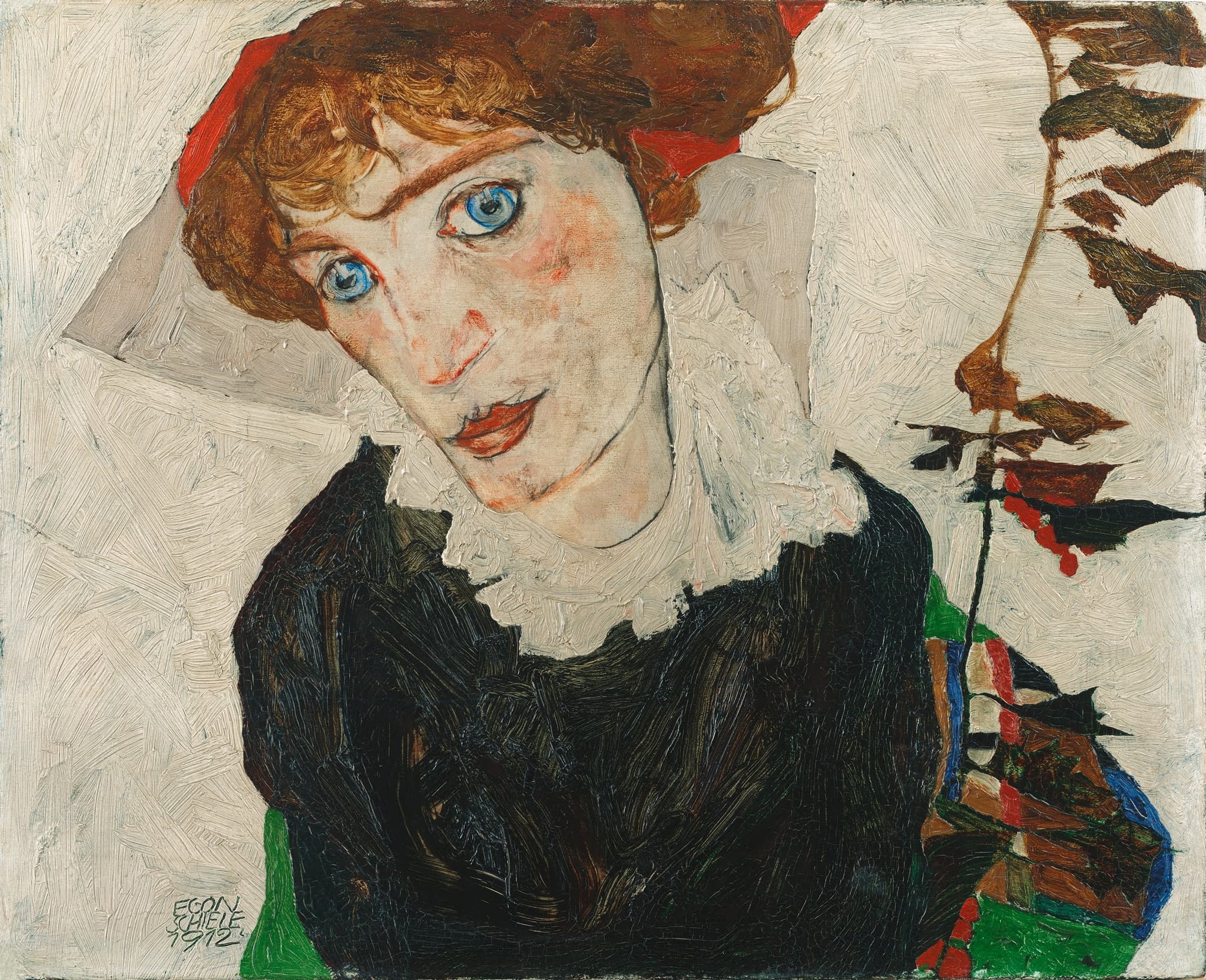
Hypothetical fair market value for Egon Schiele’s Portrait of Wally is estimated at $55–75 million. This range sits above the artist’s inflation-adjusted auction record, reflecting the work’s iconic status, 1912 peak-period date, central subject (Wally Neuzil), and unparalleled cultural notoriety.
Valuation Analysis
Overview. Egon Schiele’s Portrait of Wally (1912) is one of the artist’s most recognized images, depicting Wally Neuzil—his companion and muse—at the height of his Expressionist breakthrough. The painting is held by the Leopold Museum Private Foundation (Vienna) and is not a market candidate, but it has been meticulously published and exhibited; the museum’s catalogue entry confirms the work’s details and display status [1].
Provenance and legal context. The work became the focal point of a landmark U.S. restitution case when it was seized in New York in 1997; in 2010 the Leopold Museum agreed to pay $19 million to the heirs of Lea Bondi Jaray to resolve the matter, after which the painting was returned to Vienna [2]. This history, now resolved, is inseparable from the painting’s renown and adds to its cultural weight and name recognition.
Method and benchmarks. This valuation is derived from comparable analysis within Schiele’s top-tier market. The artist’s painting auction record remains the 2011 sale of Häuser mit bunter Wäsche (Vorstadt II) at roughly $40 million with fees—equivalent to the mid‑$50 millions today after inflation [3]. Recent blue‑chip signals include the 2026 sale of Danaë at approximately $23.6 million, underscoring disciplined but robust demand for major Schiele oils in today’s market [4]. On paper, best‑in‑class 1912 sheets have tested eight figures—e.g., Ich liebe Gegensätze at $10.99 million (Christie’s, 2023)—demonstrating the premium for peak‑period imagery and providing a lower bound for an iconic oil [5].
Positioning Portrait of Wally. Wally is both a canonical 1912 portrait and a signature image whose public profile exceeds that of most Schiele works to come to market. Against the artist’s benchmarks, it warrants a premium over typical prime‑period oils. The principal moderating factor is physical: it is a small oil on panel (32 × 39.8 cm), whereas the highest-price Schiele paintings at auction have tended to be larger canvases (notably cityscapes). Balancing these elements, a hypothetical fair market range of $55–75 million is supported by: (i) the painting’s art-historical centrality and biography-defining subject; (ii) the inflation‑adjusted record price context; (iii) sustained demand for A‑plus Viennese Modernist masterworks; and (iv) the work’s extraordinary name recognition.
Additional considerations. Final pricing would be sensitive to a current condition report (panel stability, surface/varnish, retouch) and sale architecture (timing, venue, guarantee, and global outreach). As a replacement indicator for insurance scheduling, an upper‑tier value above FMV is warranted; we note $90 million as a pragmatic replacement proxy based on scarcity and irreplaceability. All figures are hypothetical and intended for orientation; a formal appraisal would require direct inspection and primary documentation.
Key Valuation Factors
Art Historical Significance
High ImpactPainted in 1912, Portrait of Wally sits at the very center of Schiele’s peak Expressionist period and depicts Wally Neuzil, the artist’s intimate companion and essential muse. The composition’s direct gaze, compressed format, and piercing color harmonize the traits that define Schiele’s most celebrated portraits. It is among the artist’s most reproduced and discussed images, frequently featured in scholarship and exhibitions. This degree of canonical status is rare even within Schiele’s oeuvre and materially elevates demand. Collectors and institutions pay premiums for works that both encapsulate an artist’s language and carry singular biographical resonance; Wally meets both criteria, supporting a valuation at the top of the artist’s market.
Rarity and Supply Dynamics
High ImpactMasterpiece-grade Schiele oils from 1910–1915 are exceptionally scarce in private hands; many are locked in institutions. Supply at auction is thin and sporadic, with multi-year gaps between offerings of comparable quality. When such works surface, they command intense competition, often transcending price references set by less iconic subjects or later periods. Portrait of Wally’s combination of period, subject, and fame is rarer still—few equivalents exist that can rival its name recognition. Scarcity both constrains opportunities to buy and concentrates bidder focus when an opportunity arises, exerting upward pressure on price versus more frequently traded blue-chip categories.
Provenance and Restitution History
High ImpactThe painting’s extensively documented provenance and the landmark 1997–2010 U.S. restitution case—resolved by a $19m settlement—have made Wally the emblem of Nazi-era art restitution cases [2]. While legal disputes can depress values when unresolved, a fully settled, widely publicized case can enhance a work’s cultural salience and market confidence, provided the ownership narrative is clear. Wally’s notoriety has expanded its recognition far beyond the core Schiele audience, reinforcing its status as a museum-caliber icon. That combination—clean, concluded resolution plus extraordinary public profile—supports pricing at a substantial premium to typical Schiele portraits with quieter histories.
Condition, Medium and Scale
Medium ImpactThe work is an oil on wood panel, 32 × 39.8 cm—an intimate scale that accentuates psychological intensity but generally commands less than large-scale canvases in headline bidding. Panel stability, surface condition, and any retouch or structural work would be decisive fine-tuners at this level. In the absence of a current condition report, our range assumes sound, exhibition-ready condition consistent with the Leopold Museum’s presentation [1]. The small format is the primary moderating factor offsetting the subject’s fame; nonetheless, for a canonical image, scale discounts are often partially neutralized by demand from trophy-focused collectors and institutions.
Market Benchmarks and Demand
Medium ImpactSchiele’s painting auction record stands at about $40m (2011), equivalent to the mid‑$50m range today [3]. Recent market evidence indicates disciplined, yet solid, demand for major oils (e.g., Danaë at ≈$23.6m in 2026) [4], while best 1912 works on paper have fetched up to ~$11m [5]. Against these anchors, Portrait of Wally—an image more famous than most Schiele works to have sold—merits an upward extrapolation above the inflation-adjusted record. Our $55–75m range reflects the confluence of icon status and scarcity, balanced by small scale and normal condition caveats; under ideal sale conditions, it could challenge or surpass the artist’s public auction benchmarks.
Sale History
U.S. Attorney SDNY / Leopold Museum settlement
Legal settlement (compensation to heirs) to retain the work; not a market sale.
Egon Schiele's Market
Egon Schiele is a top-tier Austrian Expressionist whose prime-period oils are coveted by leading private collectors and institutions. The artist’s painting auction record is roughly $40 million (Sotheby’s London, 2011, Houses with Laundry [Suburb II]), which inflates to the mid‑$50m range today. Recent seasons show disciplined pricing but healthy depth for masterworks: Danaë achieved about $23.6m in 2026, and best-in-class works on paper have reached eight figures (e.g., Ich liebe Gegensätze at $10.99m in 2023). Supply remains tight, with many masterpieces in museums. Overall demand skews toward peak-period, exhibition-proven examples with impeccable provenance, where bidding is most competitive and prices can exceed historical references.
Comparable Sales
Häuser mit bunter Wäsche (Vorstadt II) [Houses with Laundry (Suburb II)]
Egon Schiele
Same artist; prime-period (1914) oil painting establishing the auction record for Schiele; blue‑chip benchmark for top oils, though subject/scale (large townscape) differ from the intimate Wally portrait on panel.
$39.6M
2011, Sotheby's London
~$55.0M adjusted
Dämmernde Stadt (Die kleine Stadt II) [City in Twilight (The Small City II)]
Egon Schiele
Same artist; prime 1913 oil from the peak years; major recent painting benchmark. Different subject (cityscape) and larger format than Wally but directly indicative of demand for top early‑1910s oils.
$24.6M
2018, Sotheby's New York
~$30.5M adjusted
Triestiner Fischerboot (Trieste Fishing Boat)
Egon Schiele
Same artist; same year as Wally (1912) and an oil; smaller, intimate format. Useful for bracketing smaller 1912 oils, albeit a marine subject rather than a portrait.
$14.0M
2019, Sotheby's London
~$17.1M adjusted
Danaë
Egon Schiele
Same artist; iconic early (1909) figure painting with marquee provenance and exhibition history; recent top-tier result demonstrating current demand for masterpiece oils near Wally’s calibre (different subject and earlier style).
$23.6M
2026, Sotheby's London
~$23.1M adjusted
Ich liebe Gegensätze (I Love Antithesis)
Egon Schiele
Same artist; 1912 work on paper sold in an evening sale. Different medium, but it shows robust demand for best 1912 material and provides a lower bound relative to a prime 1912 oil portrait.
$11.0M
2023, Christie's New York
~$11.2M adjusted
Current Market Trends
The Modern segment—especially early 20th‑century Austrian–German Expressionism and Vienna 1900—continues to benefit from a flight to quality. Buyers concentrate capital on museum-caliber works with ironclad provenance and strong exhibition histories, while guarantees and global marketing deepen bidding for true trophies. Restitution-driven provenance clarity has brought fresh material to market and heightened due diligence standards. Pricing for top Modern names remains resilient and rational: masterpiece-grade works command premiums, whereas secondary examples clear at disciplined levels. In this context, iconic, peak-period Schiele paintings are well positioned to outperform broader indices when (and if) they come to market.
Study print
Study this painting as a print
Pair the full artwork with a museum-style study sheet focused on one meaningful detail.
Sources
- Leopold Museum Online Collection: Egon Schiele, Portrait of Wally Neuzil (1912)
- U.S. Attorney SDNY Press Release: Settlement in the 'Portrait of Wally' Case (July 20, 2010)
- HENI News: Egon Schiele—Häuser mit bunter Wäsche (Vorstadt II) sets painting auction record (2011)
- The Art Newspaper: Sotheby’s London sale of the Joe Lewis Collection (includes Schiele’s Danaë) (June 25, 2026)
- Christie’s: November 2023 Marquee Week results (includes Schiele, Ich liebe Gegensätze at $10.99m)