How Much Is Triestiner Fischerboot (Trieste Fishing Boat) Worth?
Last updated: July 8, 2026
Quick Facts
- Last Sale
- $14.3M (2019, Sotheby's London)
- Methodology
- recent sale
This is the same Triestiner Fischerboot (1912, oil & pencil on canvas) that sold at Sotheby’s London on 26 Feb 2019 for £10.7M (≈ $14.3M), which is the definitive market datum. Anchoring to that realized price and adjusting for present market movement, condition, provenance and sale route yields a practical working range of USD $10,000,000–$18,000,000.
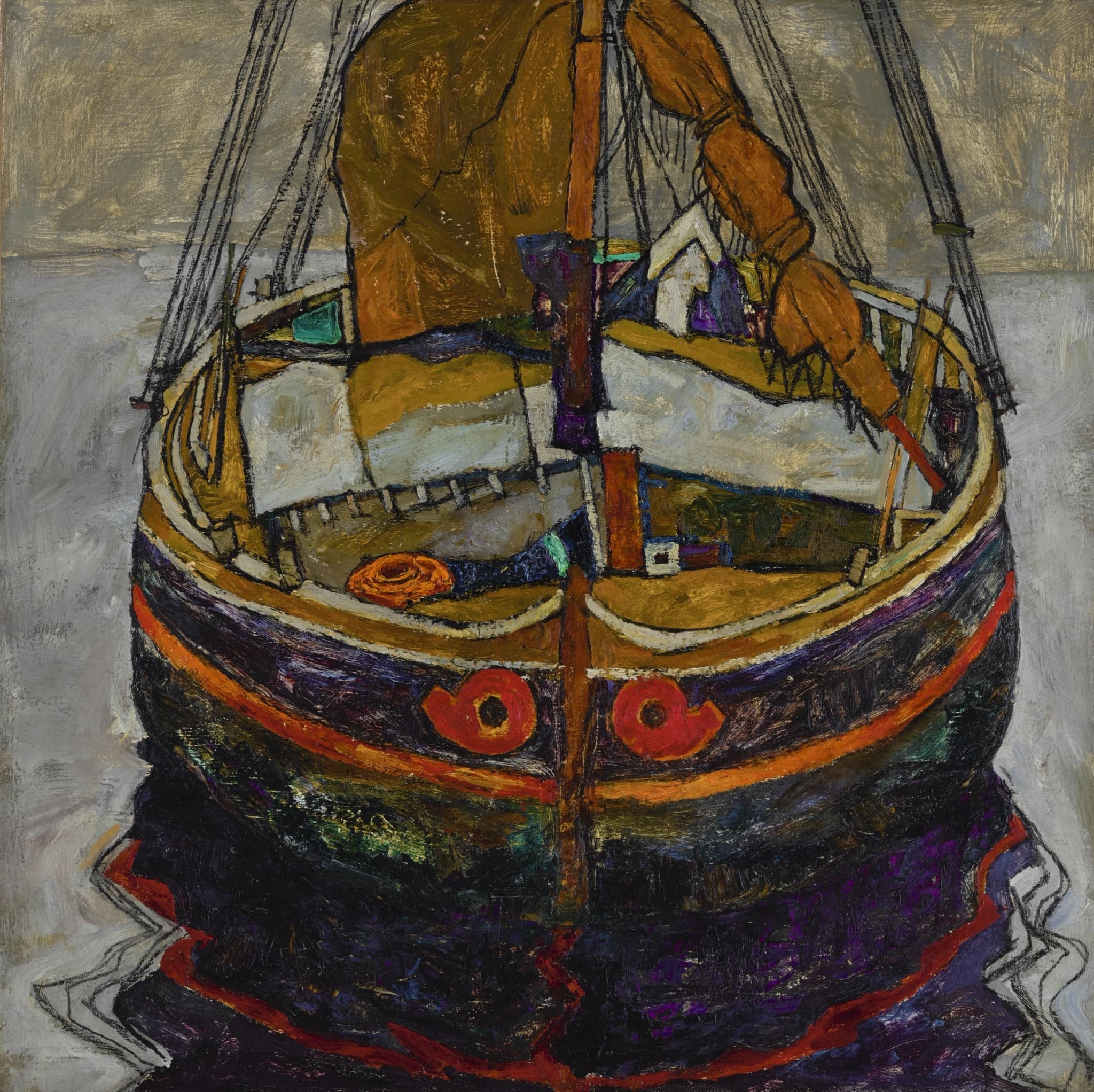
Triestiner Fischerboot (Trieste Fishing Boat)
Egon Schiele, 1912 • Oil and pencil on canvas
View more by Egon Schiele →Valuation Analysis
Anchor and approach: The valuation is anchored to the painting's public, evening‑sale result at Sotheby’s London on 26 February 2019 when Triestiner Fischerboot realized £10.7 million (including buyer’s premium), approximately $14.3M USD — the single, definitive market datum for this exact object [1]. Because this is the identical work offered fresh to market with published provenance and exhibition history, the most reliable methodology is to start from that realized price and then make reasoned adjustments for condition, market movement, sale strategy and any provenance/legal matters.
Comparables and market context: Comparable evidence supports a mid‑to‑high‑teens million anchor: major museum‑quality Schiele oils have continued to perform strongly (see later single‑owner results and the artist’s historical high‑end record) while works on paper trade in a separate, often lower band. The painter’s auction dynamics since 2019 — including high‑profile single‑owner and restituted‑work sales — indicate continued appetite for well‑documented oils but also greater provenance scrutiny [2].
Adjustments: The working range of $10M–$18M reflects downward adjustment scenarios (poor condition, significant restoration, or unresolved provenance/restitution questions) and upward scenarios (impeccable, stable condition; museum‑quality provenance; strong pre‑sale promotion in an evening sale or a competitive private treaty with institutional interest). Practically, material condition issues or legal encumbrances can reduce realizable value substantially (often >20–40% depending on severity), while a top‑tier sale environment, guarantees and multiple competing bidders can push proceeds above the 2019 result.
Sale route and market timing: Evening auctions at major houses in London or New York historically extract the highest prices for Schiele oils if the lot is presented as fresh to market with full documentation. A well‑managed private treaty or single‑owner sale can also meet or exceed auction results if there is institutional interest and confidentiality needs; guarantees and third‑party underwriting change risk dynamics and can compress or expand expected outcomes.
Conclusion and recommended next steps: For the same physical object in the same condition and with the same clear title/provenance as the 2019 lot, start valuation at the $14.3M realized price and expect a practical working range today of $10M–$18M depending on the variables above. Before marketing or finalizing an insurance figure, obtain a condition report, high‑resolution images (recto/verso/UV/IR/X‑ray), and full provenance documentation; if you provide those materials I can run nearer‑term comparables and propose a sale strategy aligned to the price objective and likely buyer pool [1][2].
Key Valuation Factors
Art Historical Significance
High ImpactTriestiner Fischerboot dates from 1912, a pivotal year in Schiele's mature output. While Schiele’s market is dominated by portraits and nudes, oils are rarer and therefore more sought after when offered with scholarship and exhibition history. The work’s combination of date, medium (oil on canvas) and the catalogue/literature history presented by Sotheby’s increases the painting’s cultural and institutional interest. Although the subject (a fishing boat) is not among the artist’s most iconic motifs, the piece’s museum‑quality presentation and clear link to Schiele’s Trieste period make it of genuine art‑historical importance and support a premium relative to run‑of‑the‑mill works on paper.
Provenance & Exhibition History
High ImpactClean, documented provenance and a strong exhibition/publication trail materially lift value. The Sotheby’s catalogue listed early ownership (Heinrich Böhler), acquisition by Galerie St. Etienne circa 1962 and continued private ownership until 2019; that continuity and published bibliography reduce buyer risk and justify the 2019 result. Conversely, gaps in ownership, lack of export documentation or wartime provenance lacunae would be value‑reducing. Full provenance papers, bills of sale, and exhibition citations should be assembled and verified before sale or insurance valuation.
Condition & Conservation
High ImpactCondition is a primary value driver for oils: canvas integrity, original paint layer stability, restoration history, relining, overpainting and visible losses are all critical. A painting in stable, original condition with minor conservation will retain or slightly increase the 2019 anchor; significant restorative intervention, unstable paint, or major overpainting can reduce realizable value by a material percentage (often 20–40% or more depending on severity). Obtain a full conservation report including UV, raking light, IR and X‑ray imaging to quantify any technical concerns before marketing.
Market Comparable & Recent Sale
High ImpactThe painting’s own 2019 Sotheby’s sale is the single most important comparable and anchors valuation. Secondary comparables such as high‑end single‑owner sales and the artist record provide range context (they set ceilings rather than direct expectations). Adjustments to the 2019 result should consider inflation, market cycles and how buyer appetite for Viennese modernism has evolved since 2019. For the same object in same condition and clear title, the market supports a mid‑to‑high‑teens million band today.
Sale Method & Market Conditions
Medium ImpactSale route — London/NY evening auction, single‑owner sale, or private treaty — affects final proceeds. Evening auctions at leading houses typically produce the strongest competitive bidding, while private treaty can secure institutional buyers or confidentiality. Guarantees and third‑party underwriting shift risk and can compress seller upside or guarantee a minimum. Current market trends (two‑tier market, provenance sensitivity) mean timing and house selection should be strategic to maximize return.
Sale History
Sotheby's London (Impressionist & Modern Evening Sale)
Sotheby's London
Sotheby's London (Lewis Collection)
Christie's New York (restituted works sale)
Egon Schiele's Market
Egon Schiele is a blue‑chip, internationally collected Austrian Expressionist. Drawings and works on paper constitute the bulk of market volume, but large and well‑provenanced oils are rare and command the highest prices. The artist’s auction record and marquee sales place top oils in the multi‑tens of millions; more typical high‑quality oils and important canvases trade in the mid‑to‑high single‑digit to mid‑seven‑figure range. Provenance, exhibition history and condition create wide dispersion in prices; well‑documented oils from Schiele’s key periods consistently outperform undocumenteds.
Comparable Sales
Triestiner Fischerboot (Trieste Fishing Boat)
Egon Schiele
Exact same painting — definitive market datum (oil on canvas, 1912; offered fresh to market with strong provenance and literature).
$14.3M
2019, Sotheby's London
~$18.1M adjusted
Häuser mit bunter Wäsche (Vorstadt II)
Egon Schiele
Artist auction record and a large, canonical oil — sets the top‑end ceiling for Schiele oils and demonstrates collector willingness at the highest tier.
$39.8M
2011, Sotheby's London
~$57.4M adjusted
Danaë (1909)
Egon Schiele
Museum‑quality Schiele oil sold in a high‑profile single‑owner sale — closely relevant in medium and quality to Triestiner (early‑period oil). Adjusted here to 2025 for comparability.
$23.6M
2026, Sotheby's London (Lewis Collection)
~$23.0M adjusted
Ich liebe Gegensätze (1912)
Egon Schiele
Same year (1912) and a strong result at Christie’s — useful for market sentiment around Schiele's 1912 output, though medium (work on paper) and scale differ from the oil.
$11.0M
2023, Christie's New York (restituted works sale)
~$11.7M adjusted
Selbstbildnis (1910)
Egon Schiele
Restituted work on paper sold strongly in 2023 — indicates collector demand for Schiele but is less comparable due to medium/scale.
$2.8M
2023, Christie's New York (restituted works sale)
~$3.0M adjusted
Stehende Frau (Dirne) (1912)
Egon Schiele
Another 1912 work sold in the same 2023 sale tranche — supportive for market direction on 1912 material, but medium/scale make it a secondary comp.
$2.7M
2023, Christie's New York (restituted works sale)
~$2.9M adjusted
Current Market Trends
The market for Viennese modernism in 2024–26 is two‑tiered: sustained strength for museum‑quality, well‑provenanced masterworks and caution for mid‑market lots and works with provenance/legal questions. High‑profile single‑owner sales and blockbuster Klimt results have buoyed top‑end demand, while restitution scrutiny and pricing discipline temper some segments.