How Much Is The Nude Maja Worth?
Last updated: May 22, 2026
Quick Facts
- Methodology
- comparable analysis
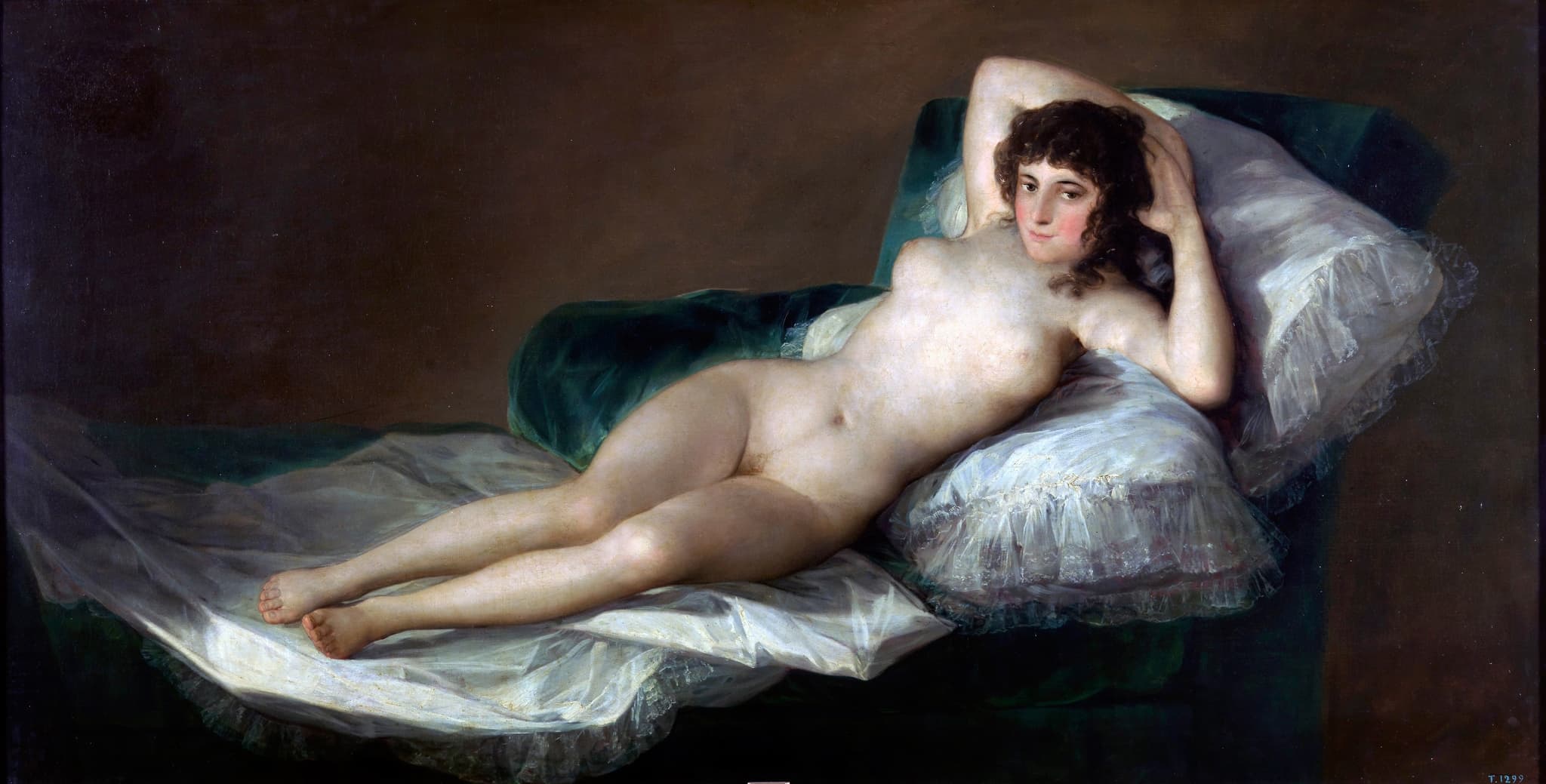
We estimate Francisco Goya’s The Nude Maja at $300–450 million on a hypothetical replacement/indemnity basis. The figure reflects its apex art-historical importance, iconic cultural status, and the scarcity of true Goya masterpieces, triangulated against top Old Master trophy benchmarks.
Valuation Analysis
Work and status. The Nude Maja (La maja desnuda, c.1797–1800; oil on canvas) is one of Goya’s most famous paintings and a defining image of Western art. It is in the Museo Nacional del Prado, Madrid, and functions as a pendant to The Clothed Maja [1]. As a Spanish state treasure in a national museum, it is not a market object; any figure is therefore a hypothetical indemnity/replacement valuation rather than a liquidity-tested price.
Legal context and valuation framework. Spain’s Historical Heritage Law 16/1985 places stringent constraints on public patrimony, effectively rendering works like The Nude Maja inalienable and non-exportable [2]. In such cases, valuation relies on cross-artist comparables for museum-caliber Old Master trophies, adjusted for the work’s singular renown and a “museum masterpiece” premium.
Comparables and placement. Goya’s modern auction record stands at $16.42 million for a pair of 1805 portraits—an excellent but far-from-canonical example—demonstrating that auction precedents understate the value of his greatest works due to supply scarcity [3]. Recent Old Master benchmarks for truly emblematic paintings include Botticelli’s Portrait of a Young Man Holding a Roundel at $92.2 million [4], Canaletto’s Bucintoro at $43.9 million [6], and Titian’s Rest on the Flight into Egypt at $22.18 million [7]. The category’s absolute ceiling is Leonardo’s Salvator Mundi at $450.3 million [5]. Given The Nude Maja’s canonical status, cultural notoriety, and pendant relationship, a placement near the top end of the Old Master spectrum is justified. We therefore synthesize a range of $300–450 million.
Why near the top? The Nude Maja is uniquely modern for its date—a direct, non-mythological nude that challenged convention and provoked censorship, making it not just a masterpiece but a cultural touchstone [1]. Its fame extends well beyond the art world, producing brand-level recognition few Old Masters command. The hypothetical premium reflects world-class demand for singular, museum-grade objects and the near impossibility of acquiring a Goya of comparable significance.
Pairing note and sensitivities. If valued together with The Clothed Maja, an inseparable display and interpretive pair, the combined indemnity value would plausibly command a significant pairing premium, with a defensible band in the mid-to-high hundreds of millions (e.g., c.$600–800 million) in a theoretical context [1]. As with any masterpiece, condition and technical stability could refine this range; no red-flag issues are publicly reported by the Prado. The market for top Old Masters remains selective but robust for true trophies, supporting the high-end placement of this estimate [6][7].
Key Valuation Factors
Art Historical Significance
High ImpactThe Nude Maja stands at the apex of Goya’s oeuvre and the Western canon: an audacious, non-mythological nude that broke with convention and anticipated modernity. Its direct gaze and absence of classical pretext mark a pivotal departure from Enlightenment-era decorum, while its documented entanglement with censorship amplifies its historical weight. Within Goya’s corpus it sits alongside only a handful of works—The Clothed Maja, The Third of May 1808, and the Black Paintings—in combining innovation, notoriety, and lasting cultural resonance. Few Old Masters are as instantly recognizable to a global public, and that ubiquity, coupled with unparalleled scholarly consensus about its importance, supports a valuation at the very top of the category.
Cultural Iconography and Notoriety
High ImpactBeyond scholarship, The Nude Maja functions as a cultural phenomenon. It has been reproduced, debated, and symbolically contested for over two centuries, enlarging its audience to include viewers who may not otherwise engage deeply with Old Masters. This broad brand-like recognition is rare in pre-19th century art and adds measurable demand-side pressure in a hypothetical market. Its pendant relationship to The Clothed Maja magnifies the image’s fame through the enduring dialogue between the two works. For trophy buyers—private or institutional—cultural notoriety compounds art-historical merit to justify a premium well above standard Old Master price bands.
Legal/Patrimony Status and Marketability
High ImpactAs property of the Spanish State in the Prado, the painting is effectively inalienable and non-exportable under Spain’s Historical Heritage Law. This precludes a real auction scenario, so the estimate represents a replacement/indemnity value inferred from top-tier comparables rather than a tested market price. Paradoxically, the legal status enhances its landmark aura and underscores extreme scarcity: no collector can obtain a true substitute. In valuation terms, that pushes the work toward a ‘museum masterpiece’ premium in hypothetical contexts. Any real-world transaction would require an extraordinary legal framework and intergovernmental coordination, but the intrinsic value benchmark remains relevant for insurance and policy planning.
Scarcity and Artist Market Depth
High ImpactAutograph Goya paintings appear infrequently, and canonical masterworks almost never. The artist’s current auction record—$16.42 million for a strong pair of portraits—reflects the absence of blue-chip, museum-grade paintings at auction rather than demand limits for a summit-level Goya. Cross-artist Old Master trophies have set formidable benchmarks in the 2020s, demonstrating deep global demand for singular masterpieces. Against that backdrop, a work as celebrated as The Nude Maja would command a multiple of Goya’s auction record and slot near the top of the Old Master continuum, consistent with how the market capitalizes artist-defining icons with broad cultural resonance.
Pendant to The Clothed Maja (Pairing Premium)
Medium ImpactThe Nude Maja is conceptually and historically tied to The Clothed Maja. When assessed as an inseparable pair, the set creates a narrative and formal dialogue that is central to their fame and scholarship. In comparable markets, true pendants frequently command a premium above the sum of their parts because collectors and institutions value the preservation of the set, its unique curatorial impact, and its augmented audience appeal. In a hypothetical indemnity context, pairing plausibly lifts aggregate value into the mid-to-high hundreds of millions, with the single-picture valuation here representing a conservative, stand-alone benchmark for The Nude Maja.
Sale History
The Nude Maja has never been sold at public auction.
Francisco Goya's Market
Francisco Goya is a foundational figure bridging late 18th‑century classicism and the emergence of modern sensibilities. The supply of autograph paintings is thin, and canonical works almost never appear. His current auction record is $16.42 million (Christie’s New York, 2023) for a pair of portraits, a ceiling that mainly reflects limited availability of top-grade works rather than demand. Below the rare oil paintings, Goya’s drawings and print series (Caprichos, Disasters, Disparates, Tauromaquia) form a deep, globally collected market with robust liquidity for early, high-quality impressions and strong provenance. Institutional demand remains steady, and private collectors compete aggressively for best‑in‑class material, though the step-change to nine-digit pricing is reserved for singular, museum-caliber masterworks like The Nude Maja.
Comparable Sales
Pair of portraits (Doña María Vicenta Barruso Valdés; and Doña Leonora Antonia Valdés de Barruso)
Francisco Goya
Same artist; oil on canvas from a closely contemporary date (1805 vs. c.1797–1800); establishes the current auction ceiling for Goya paintings in today’s market.
$16.4M
2023, Christie's New York
~$17.4M adjusted
Portrait of a Young Man Holding a Roundel
Sandro Botticelli
Benchmark for a museum‑caliber Old Master trophy at auction in the 2020s; illustrates pricing for universally recognized masterpieces when marketable.
$92.2M
2021, Sotheby's New York
~$108.8M adjusted
Salvator Mundi
Leonardo da Vinci
Absolute upper bound for Old Master paintings at auction; useful as a ceiling reference for an icon‑level, museum masterpiece.
$450.3M
2017, Christie's New York
~$589.9M adjusted
The Rest on the Flight into Egypt
Titian
Recent record for Titian, a top‑tier Old Master; demonstrates where blue‑chip Renaissance paintings are transacting today.
$22.2M
2024, Christie's London
~$22.8M adjusted
Venice, the Return of the Bucintoro on Ascension Day
Canaletto
Major Old Master record in 2025; signals strong trophy demand at ~$40–45m for best‑in‑class works in the category.
$43.9M
2025, Christie's London
Portrait of the Young Duke of Alba (rediscovered)
Francisco Goya
Same artist; shows recent pricing for lesser, rediscovered Goya oils. Useful to illustrate the gulf between ordinary Goya material and a canonical masterpiece.
$556K
2025, Dorotheum, Vienna
Current Market Trends
Old Masters have shown a flight to quality: while middle-market material remains selective, true trophies have drawn intense bidding and record prices. Notable benchmarks since 2021 include Botticelli at $92.2 million and a 2025 Canaletto record at ~$43.9 million, underscoring renewed appetite for masterpiece-level works. A 2024 Titian record further confirms depth at the top end. Against this backdrop, cross-artist comparables and the rarity of canonical Goya paintings justify placing The Nude Maja near the upper tier of the Old Master price spectrum. Macroeconomic volatility has not deterred demand for singular, museum-grade icons, which continue to command premium valuations.
Sources
- Museo del Prado – The Naked Maja (La maja desnuda)
- Spain’s Historical Heritage Law 16/1985 (BOE)
- Christie’s – Old Masters sale (Jan 25, 2023) sets Goya record at $16.42m
- Sotheby’s – Botticelli’s Portrait of a Young Man Holding a Roundel achieves $92.2m
- Guinness World Records – Most expensive painting sold at auction (Salvator Mundi)
- Christie’s – Classic Week led by Canaletto’s record-breaking masterpiece (July 2025)
- Christie’s – Titian, The Rest on the Flight into Egypt achieves new record (July 2024)