Most Expensive Francisco Goya Paintings
Francisco Goya’s oeuvre occupies a singular market standing where historical significance, provocative subject matter, and rarity converge to make his canvases intensely collectible. Leading the roster is the searing The Third of May 1808, often estimated between $500–700 million, a masterpiece whose political power and cultural resonance place it among the most valuable works by any Old Master. Equally coveted are darker, psychologically charged paintings like Saturn Devouring His Son ($120–180 million) and the enigmatic Maja pair—La Maja Desnuda ($100–150 million) and La Maja Vestida ($50–150 million)—whose scandalous history and sensual realism fuel demand. Portraiture and courtly groupings such as The Family of Charles IV ($100–150 million) and haunting images of solitude like The Dog (Perro semihundido, $100–150 million) combine provenance with unmistakable artistic voice. Military scenes—The Second of May 1808 ($50–150 million)—and grand allegories like The Colossus ($30–100 million) or Witches’ Sabbath ($30–100 million) attract collectors for their narrative and rarity, while prints such as The Sleep of Reason Produces Monsters remain prized despite a lower price band ($75,000–140,000) for their pivotal place in Goya’s legacy.
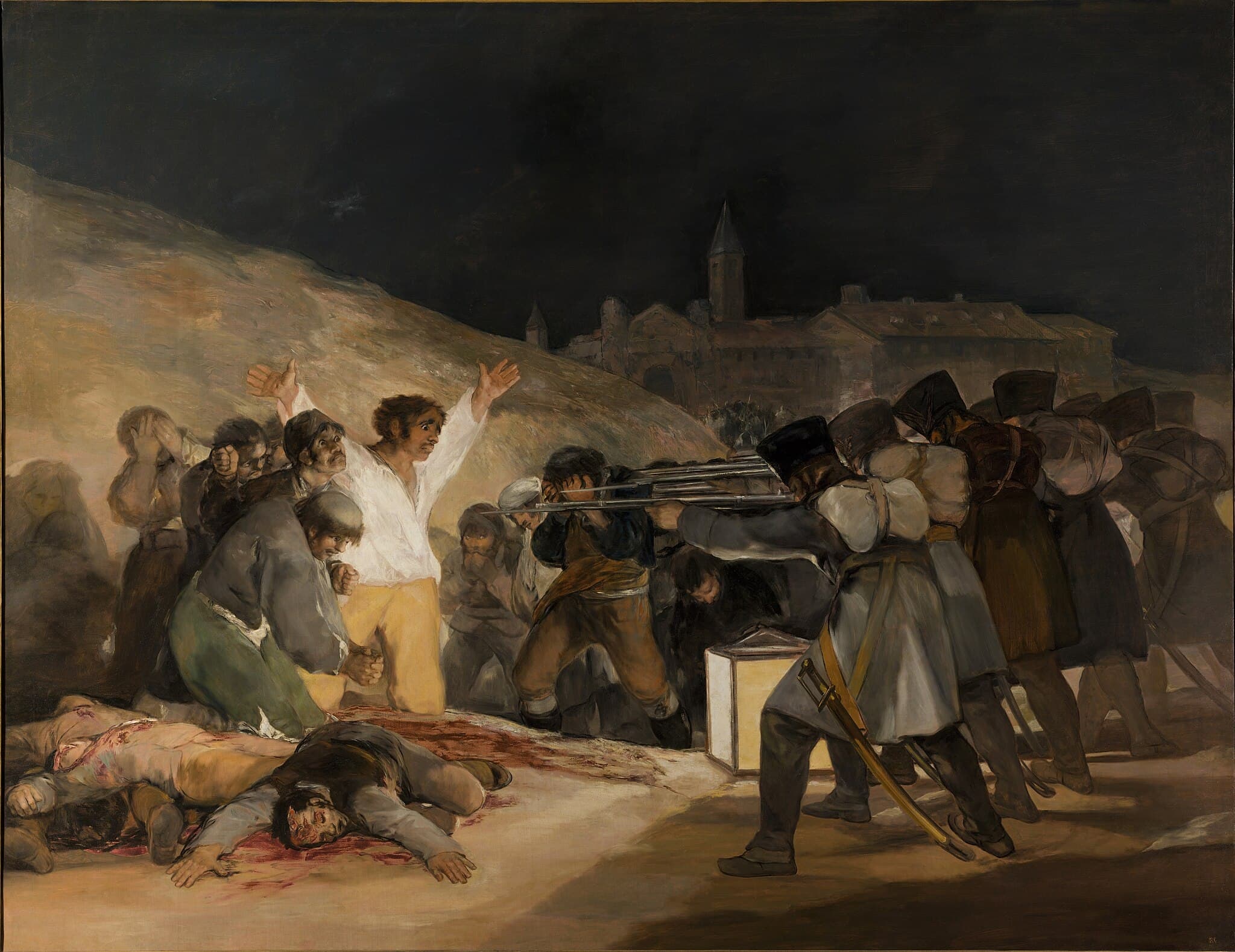
$400 million–$1.0 billion
Though legally inalienable in Spain, a forced or indemnity sale would place The Third of May 1808 at an unprecedented $500–700M, rivaling all-time global art‑market records.
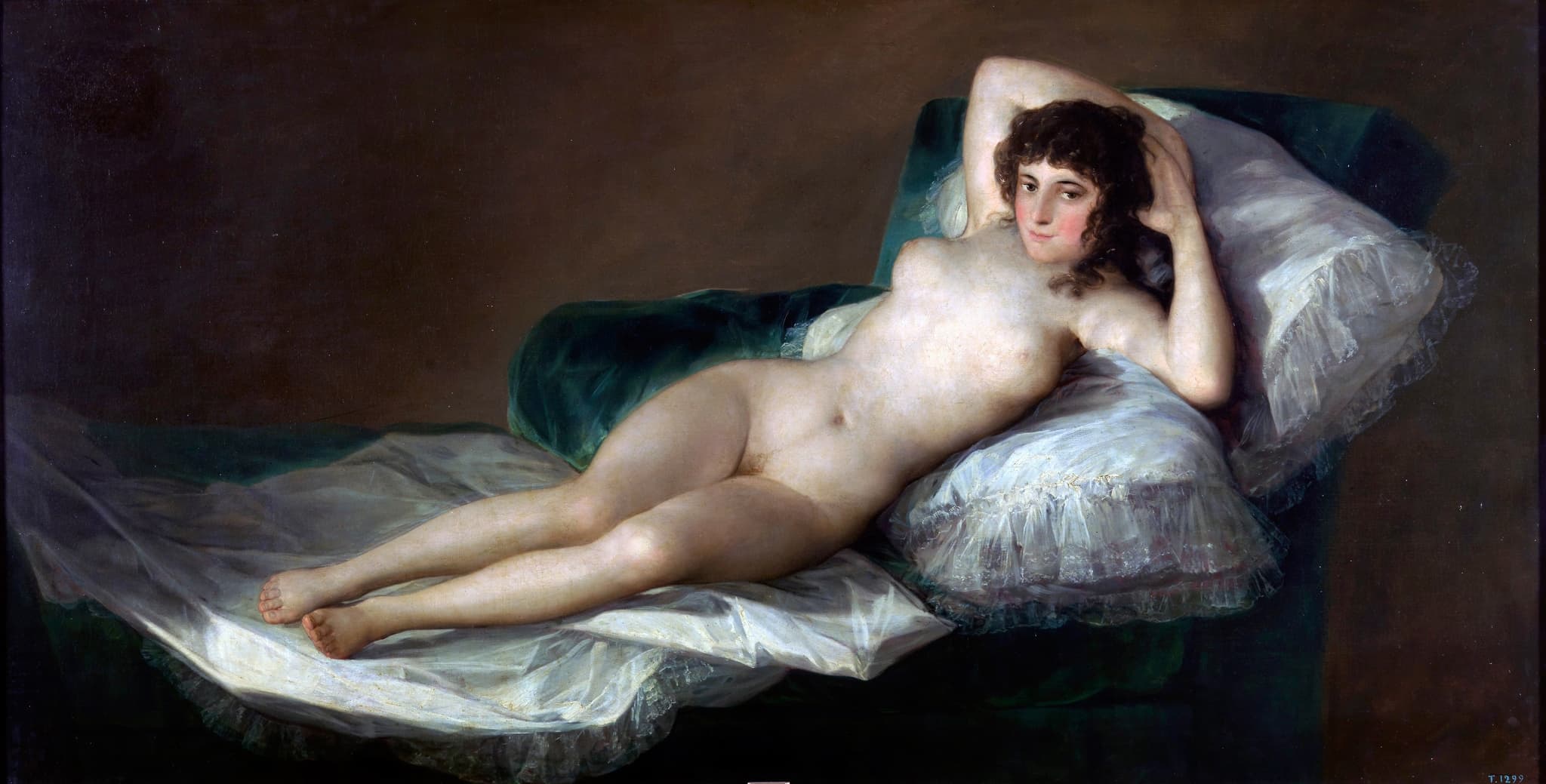
$300-450 million
We estimate Francisco Goya’s The Nude Maja at $300–450 million on a hypothetical replacement/indemnity basis.
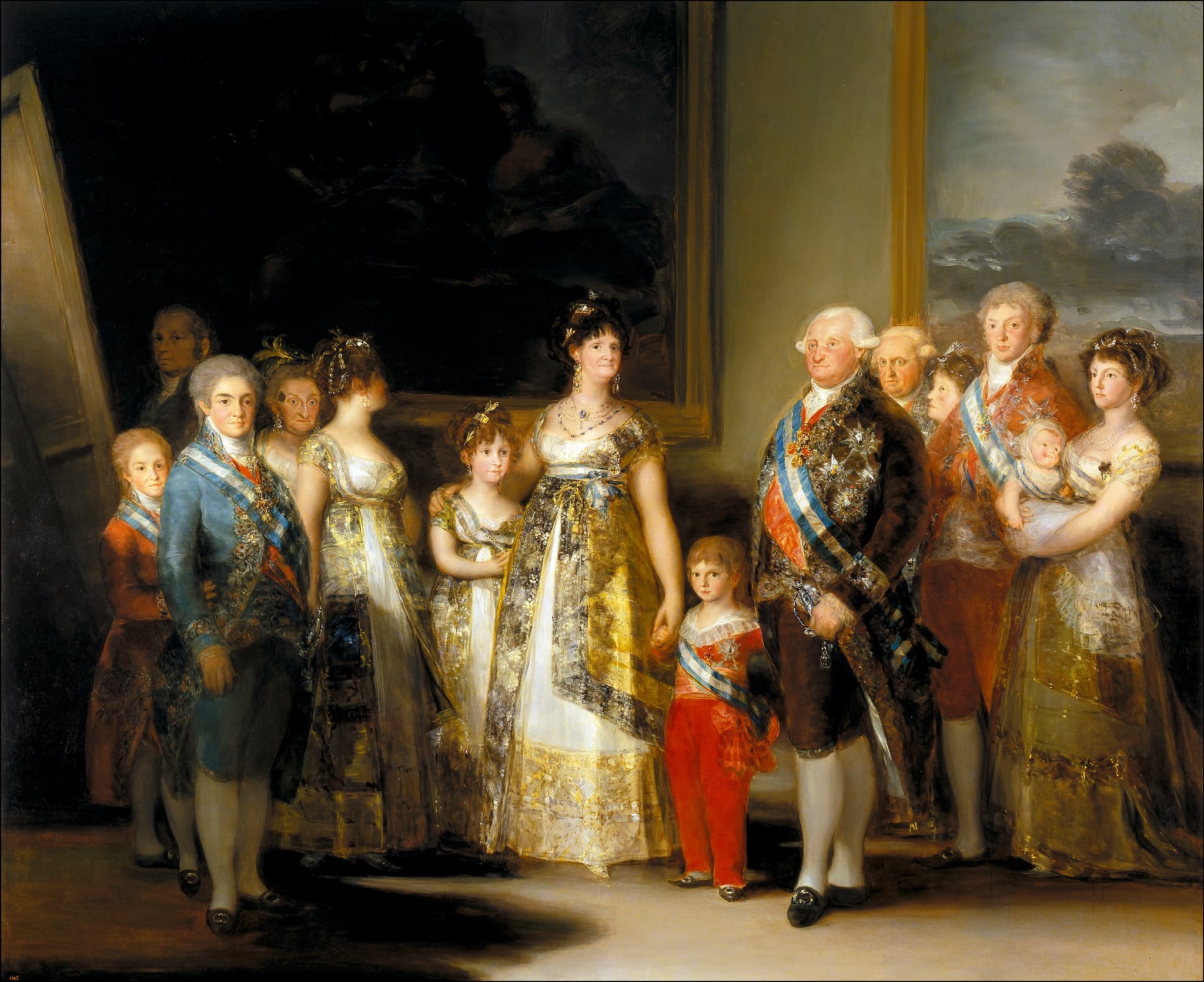
$150-300 million
Charles IV of Spain and His Family is a canonical masterpiece by Francisco Goya, commissioned for the Spanish court and held by the Museo del Prado.
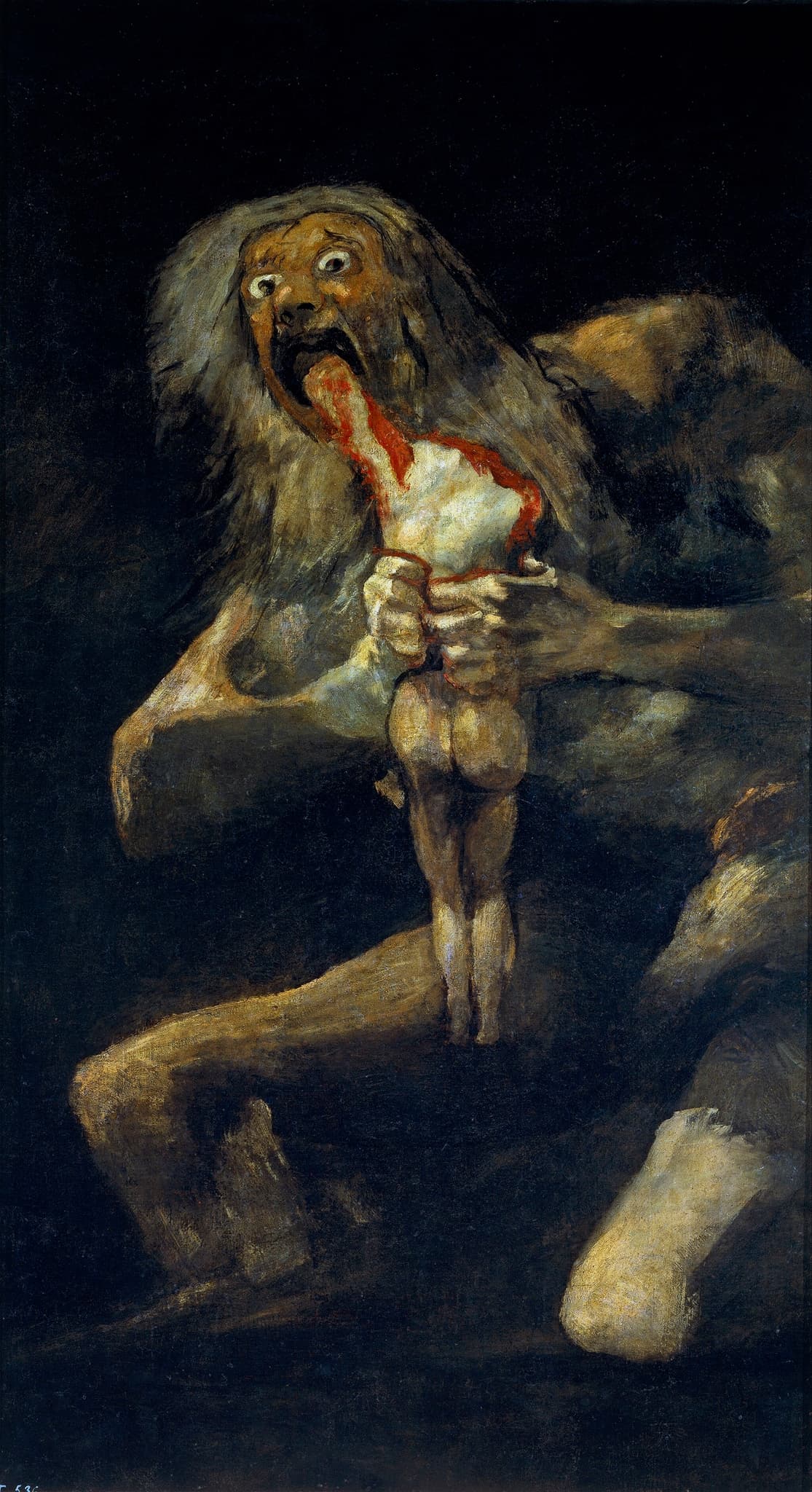
$120-180 million
In an unconstrained international sale Goya’s Saturn Devouring His Son is projected at $120–180M—well above Goya’s auction record—while its mural transfer and condition constrain marketability.
$50-150 million
La Maja Vestida, effectively non‑market under Spanish patrimony at the Prado, would—if lawfully transferable and in top condition—command a hypothetical $50–150M in trophy‑buyer markets.
$100-150 million
The Family of Charles IV, held by the Prado and subject to patrimony controls, is theoretically valued at $100–150M as a canonical, trophy‑grade Old Master.
$50-150 million
The Second of May 1808 is effectively off‑market at the Prado; a state‑approved monetization would conservatively place it at $50–150M reflecting rarity and institutional demand.
$100-150 million
The Dog (Perro semihundido) is a Prado-held national treasure; its theoretical $100–150M valuation is conditional on legal clearance, conservation status, and political willingness to monetize.
$100-150 million
La Maja Desnuda is a Prado-held national treasure and not legitimately for sale; on a hypothetical open market it would be reasoned at $100–150M due to rarity and trophy demand.
$30-100 million
El Coloso’s market value is attribution‑sensitive: $30–100M if accepted as autograph Goya in museum condition, but likely well under $5M if a follower/studio work.
$30-100 million
Witches’ Sabbath, one of Goya’s Black Paintings and Prado‑held, would hypothetically fetch $30–100M on the open market due to canonical status and extreme scarcity.
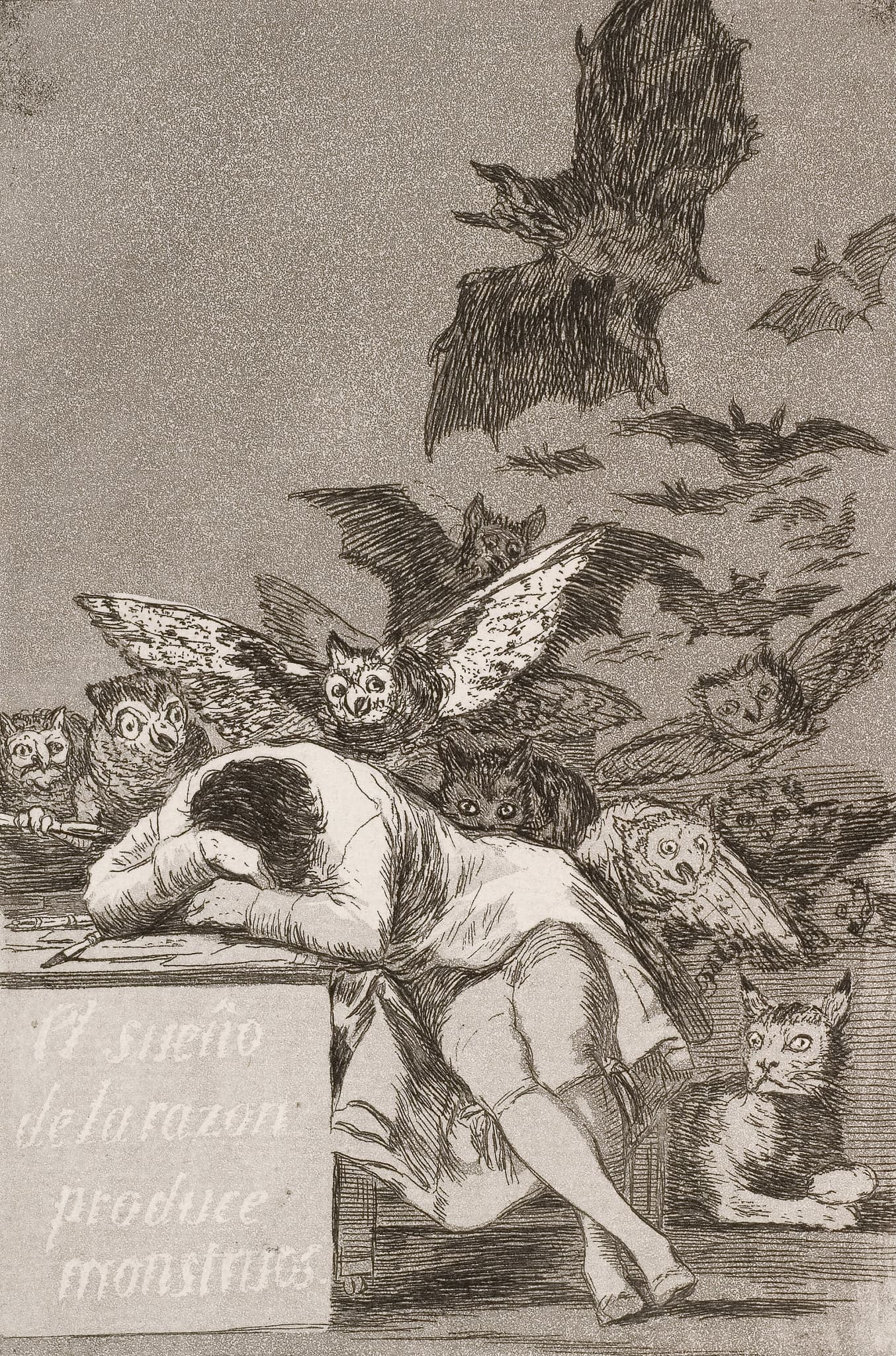
$75,000–140,000
A lifetime first‑edition (1799) impression of The Sleep of Reason Produces Monsters in strong condition has a fair‑market range of $75,000–140,000, based on recent Plate 43 auction results.
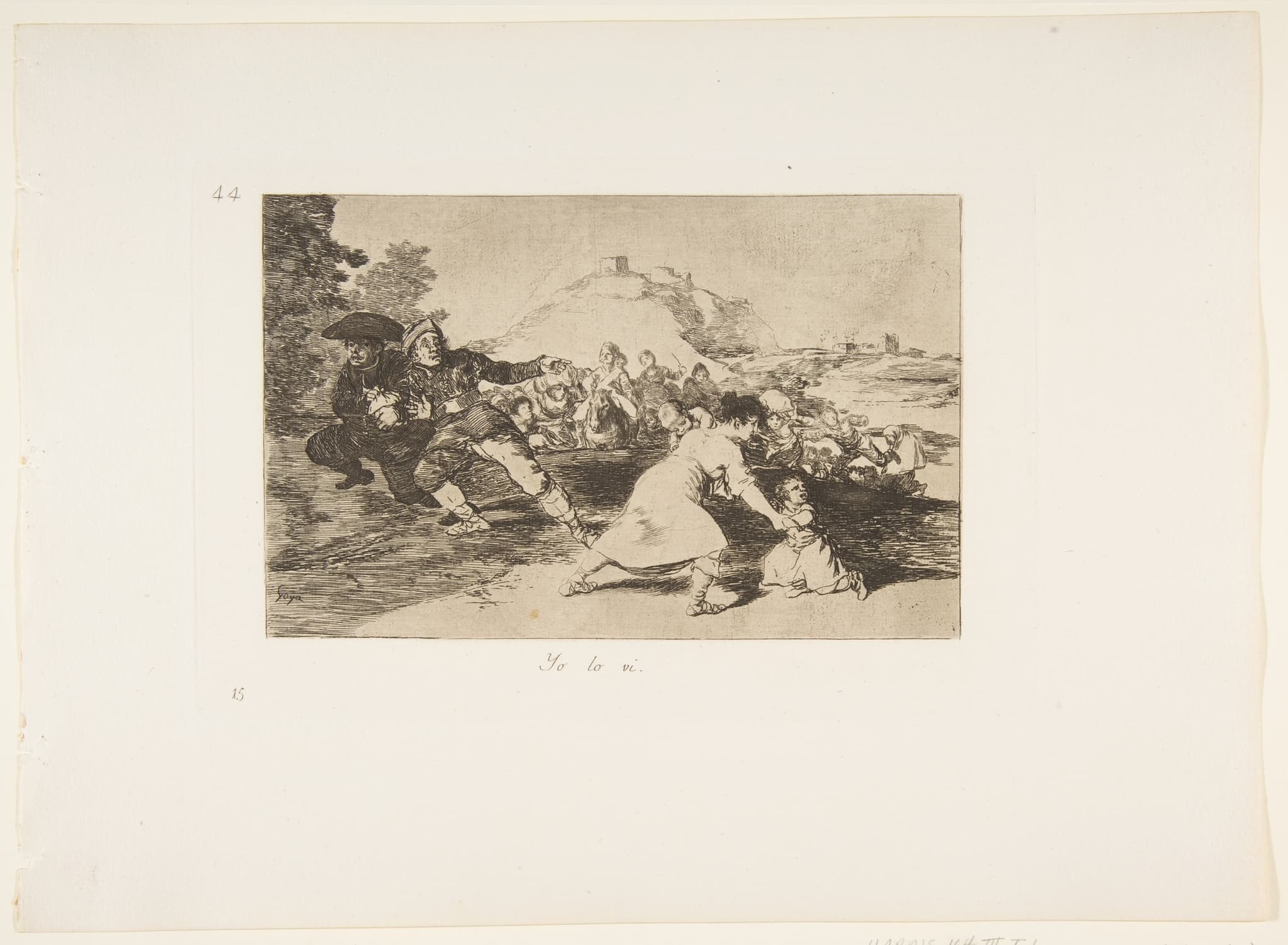
$4,000–9,000
Fair market value for a single-plate impression of Goya’s The Disasters of War, Plate 44: Yo lo vi is estimated at $4,000–9,000, assuming a later 19th-/early 20th-century posthumous edition in very good condition with full margins.
What Drives Value in Francisco Goya's Work
Iconicity & Reproducibility (Signature Images)
For Goya, certain compositions function as cultural emblems—The Third of May 1808, Saturn Devouring His Son, La Maja Desnuda, The Dog and El Coloso are instantly recognizable worldwide. That recognizability creates a trophy premium disproportionate to normal auction comparables: institutions and states pay for emblematic images that confer curatorial and diplomatic capital. In practice these pictures command hypothetical nine‑figure valuations because their image‑value drives demand beyond technical or market benchmarks.
Institutional Custody & Spanish Patrimony (Marketability vs. Scarcity)
Most of Goya’s top works reside in the Museo Nacional del Prado and are protected by Spanish patrimony law (e.g., Third of May, Family of Charles IV, Black Paintings). Prado ownership both elevates perceived authenticity and makes real market sale highly improbable; this legal inalienability transforms price formation into theoretical, insurance or state‑level negotiation scenarios and inflates scarcity premia while suppressing practical liquidity.
Medium, Edition & Format (Prints vs Mural/Oils and Transfers)
Goya’s market separates prints (Los Caprichos) from large oils/murals. Plate 43, The Sleep of Reason Produces Monsters, is valued by edition/state and impression quality—first‑state lifetime pulls command low‑to‑mid six figures—whereas canonical oils (Black Paintings, history canvases) are museum‑grade trophies. Transferred murals (Saturn, The Dog, Witches’ Sabbath) carry specific conservation/condition premiums or discounts that buyers weigh against their iconic status, producing atypical pricing dynamics.
Attribution & Technical History (Critical for Certain Works)
Attribution certainty and the technical dossier materially move value for contested pieces. El Coloso’s fluctuating attribution history demonstrates how IRR/X‑ray, pigment analysis and catalogue‑raisonné consensus can change market perception by an order of magnitude. Likewise, the 19th‑century detachment and restorations of the Black Paintings directly influence bidder appetite; robust technical reports from the Prado substantially increase realizable prices versus disputed or poorly documented works.
Market Context
Francisco Goya is a blue‑chip Spanish Old Master whose market is top‑heavy and supply‑constrained: most canonical oils are museum‑held and protected by patrimony/export rules, so public trade is rare. The auction record for a Goya oil is $16.42 million (Christie’s New York, Jan 25, 2023), while a standout drawing reached $3.196 million that year and major print sets typically sit in the mid‑five to mid‑six‑figure range. Institutional and sovereign collectors remain the primary bidders, and recent activity—muted trophy supply in 2024 followed by a mid‑market rebound and renewed depth since 2025—has reinforced competitive demand for fresh, museum‑quality works. Valuations therefore rely on scarce public benchmarks, exhibition history and provenance, with singular masterpieces commanding outsized premiums when they appear.
Study prints from famous works by Francisco Goya
Curated print bundles pairing the full artwork with a close reading of one meaningful detail.
