How Much Is Knight (Part 9) Worth?
Last updated: April 29, 2026
Quick Facts
- Insurance Value
- $15.0M (Appraiser's replacement-cost estimate derived from comparable auction results and rarity)
- Methodology
- comparable analysis
Indicative market value for Gustav Klimt’s Knight (Part 9), the full-scale Stoclet Frieze cartoon at the MAK, is $6–12 million in a hypothetical top-tier auction. This reflects its exceptional importance within Klimt’s works on paper—large, elaborately worked, and directly tied to a key commission—while remaining below the pricing of gold-period oils. A prudent insurance/replacement value is set around $15 million.
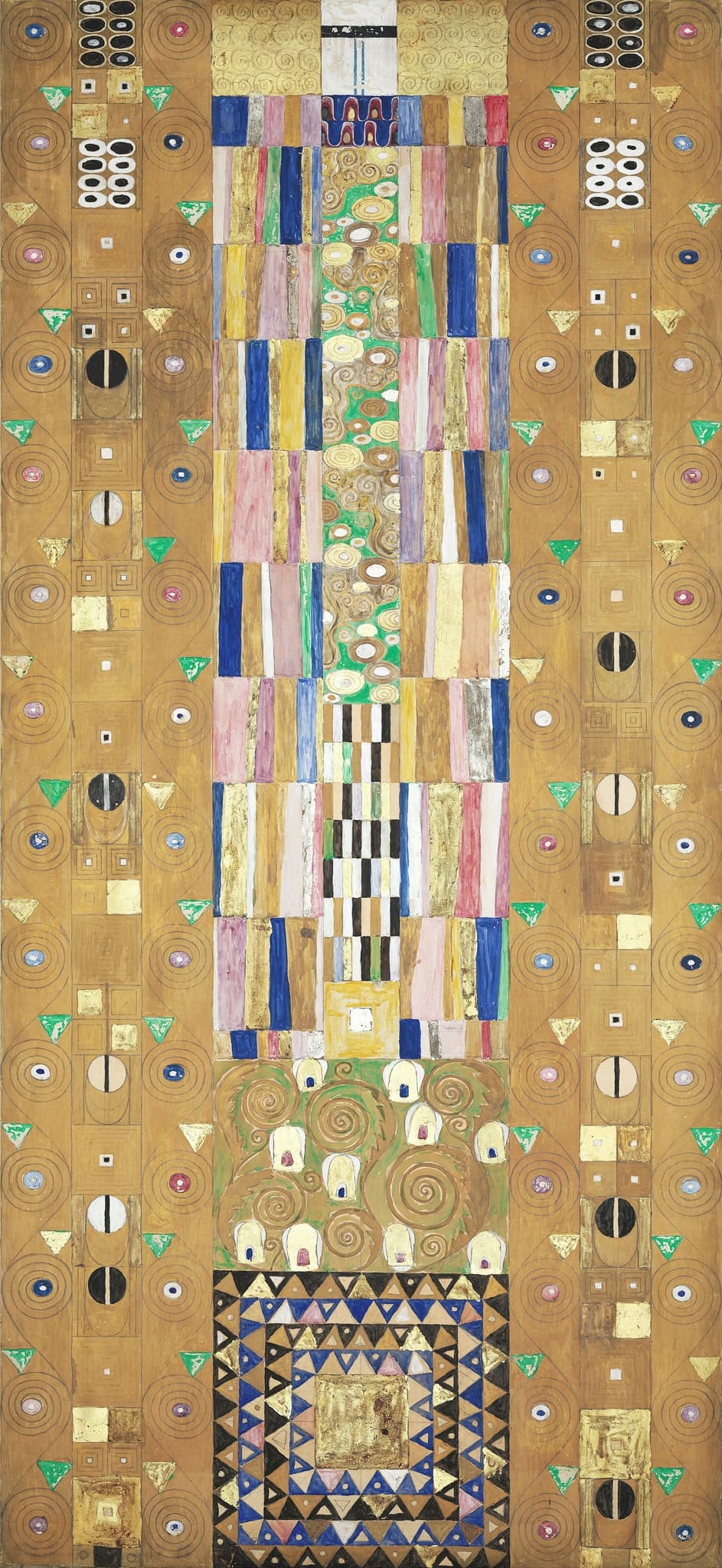
Knight (Part 9)
Gustav Klimt, 1910–1911 • Chalk, pencil, gouache with bronze, silver, gold, and platinum on transparent and drafting papers (full-scale cartoon for mosaic)
Read full analysis of Knight (Part 9) →Valuation Analysis
Conclusion: We estimate Gustav Klimt’s Knight (Part 9) (1910–11), the full-scale cartoon for the Stoclet Frieze held by the MAK, at $6–12 million in a hypothetical major international auction, with a prudent insurance/replacement value of roughly $15 million. This range reflects the work’s exceptional status among Klimt’s works on paper—monumental in scale, richly worked with gouache and metallics, and directly tied to one of the artist’s most significant decorative commissions—while recognizing the substantial gap that persists between drawings/gouaches and Klimt’s gold‑period oils.
Object and significance: Knight (Part 9) is documented by the MAK/Google Arts & Culture entry as a full‑scale cartoon in chalk, pencil, gouache with bronze, silver, gold and platinum on transparent and drafting papers, measuring 197 × 89.9 cm (Inv. MAL 226-9) [1]. As a key component of the Stoclet Frieze project, it occupies a rarefied tier within Klimt’s works on paper: conceptually complete, technically complex, and directly tied to a canonical commission. These attributes place it well above routine figure studies and most graphite/chalk drawings.
Market anchors: Klimt’s brand remains among the strongest in Modern art. In November 2025, Sotheby’s achieved $236.4 million (incl. premium) for Portrait of Elisabeth Lederer, resetting the artist’s record and the Modern‑art auction record, with additional Klimt landscapes bringing $86.0 million and $68.3 million the same night [2]. Earlier recent benchmarks include Insel im Attersee at $53.2 million (Sotheby’s New York, 2023) and Birch Forest at $104.6 million (Christie’s New York, 2022) [3][4]. While these are oils, they define the upper ceiling and speak to depth of global demand for top‑tier Klimt.
Works on paper context and scarcity: Direct public auction analogues for MAK’s full‑scale Stoclet cartoons are lacking, underscoring acute scarcity. Typical high‑quality Klimt drawings have recently realized mid‑ to high‑six figures; for example, a colored, heightened Judith II study made €520,000 at Dorotheum (May 2024) [5]. Knight (Part 9) would trade at a substantial premium to such studies due to its scale, finish, metallic media, and direct Stoclet linkage—yet still a large discount to gold‑period oils. Our $6–12 million range reflects that position within the oeuvre hierarchy.
Risk/upsides and venue: Condition is a key swing factor for works on paper of this complexity (multi‑sheet joins, adhesives, and potential metallic oxidation). Legal/export status and selling venue (Vienna vs. London/New York/Hong Kong) can influence the buyer pool and price discovery. Overall market conditions remain supportive for blue‑chip Modern masterpieces amid a “flight to quality,” following a 2025 rebound in high‑end auction liquidity [6]. Against this backdrop, a museum‑caliber, Stoclet‑related cartoon could attract strong institutional and private competition within our indicated range.
Key Valuation Factors
Art Historical Significance
High ImpactKnight (Part 9) is an integral full‑scale cartoon from the Stoclet Frieze, among Klimt’s most important decorative commissions. As a finished working design for a landmark project of the Viennese Secession, it sits at the apex of Klimt’s works-on-paper hierarchy. The cartoon communicates the artist’s synthesis of symbolism, ornament, and figuration at full architectural scale, revealing compositional decision-making not visible in typical studies. Its direct tie to a canonical ensemble—still in situ at the Palais Stoclet—gives it scholarly and exhibition value beyond ordinary drawings. Taken together, these factors make it a museum-grade work of unusually high significance within Klimt’s non‑oil production.
Medium, Scale, and Materials
High ImpactAt nearly two meters tall, the cartoon’s scale and complexity are extraordinary for a work on paper. Klimt’s use of gouache and precious metallics (bronze, silver, gold, platinum) elevates it far above graphite studies in both visual impact and material prestige. Such media are central to Klimt’s golden‑period vocabulary, aligning it closely with the language of his most prized oils. The labor and planning evident in a full‑scale, multi‑sheet cartoon amplify its rarity and desirability. This medium/scale combination justifies a multi‑million‑dollar valuation, even as it remains discounted to oil‑on‑canvas masterpieces due to material category norms and conservation sensitivities.
Rarity and Market Scarcity
High ImpactFull‑scale Stoclet Frieze cartoons are exceptionally scarce on the market and, in practice, are institutional holdings seldom offered publicly. The absence of directly comparable public auction sales cuts both ways: it introduces pricing uncertainty, but it also heightens scarcity value if an example surfaces. In a market where blue‑chip Modern material has grown more selective, demonstrably rare works linked to major commissions can command premiums. Given Klimt’s high demand and constrained supply, a Stoclet cartoon would likely draw intense competition from institutions and private collectors specializing in Viennese Secession, supporting a value far above routine drawings and in the low‑eight‑figure range.
Condition and Conservation
Medium ImpactWorks of this type typically comprise multiple joined sheets with historic adhesives and light‑sensitive media. Metallic paints can darken or tarnish, and mounts or earlier interventions may affect stability and display options. A recent, detailed condition report (paper acidity, joins, retouching, mounting, light‑exposure history, and metallic stability) would be decisive in calibrating the estimate. Excellent, stable condition could support the top end—or even a stretch above—while significant condition complexities or display limitations would push value toward the lower bound. Because conservation risks directly affect insurability and long‑term exhibition potential, they have a measurable impact on pricing.
Legal/Export and Sale Venue
Medium ImpactAs a museum work in Austria, deaccession would be rare and potentially subject to governance, ethical, and export considerations. Cultural‑property restrictions or export‑license requirements can limit the buyer pool or determine where the sale can be held, influencing competition and price discovery. Conversely, positioning at a marquee Evening sale in London or New York typically maximizes global bidding and visibility. Pre‑sale strategies—provenance vetting, scholarly positioning, and institutional outreach—can mitigate frictions and optimize demand. These legal/venue factors don’t change the intrinsic art‑historical value but can move the realized price materially within the estimated range.
Sale History
Knight (Part 9) has never been sold at public auction.
Gustav Klimt's Market
Gustav Klimt is a blue‑chip Modern master with sustained global demand. The artist’s market ceiling was reset in November 2025 when Portrait of Elisabeth Lederer realized $236.4 million at Sotheby’s, alongside two Klimt landscapes at $86.0 million and $68.3 million the same night. Other recent benchmarks include Lady with a Fan at roughly $108 million (Sotheby’s London, 2023) and Birch Forest at $104.6 million (Christie’s New York, 2022). While finished gold‑period oils command eight‑ and nine‑figure prices, works on paper are more selective, with strong studies often in the mid‑ to high‑six figures and the most important, colored or gold‑heightened sheets reaching into the multi‑million range.
Comparable Sales
Sitzende von vorne (Studie für "Judith II")
Gustav Klimt
Same artist and medium category (work on paper); strong finished study with color/heightening, though far smaller and without metallics or direct Stoclet link. Anchors the upper range for typical Klimt drawings.
$566K
2024, Dorotheum Vienna
~$581K adjusted
Insel im Attersee (Island in the Attersee)
Gustav Klimt
Same artist; blue‑chip oil sold in the current cycle. Not a medium match but establishes contemporary demand and the brand’s upper pricing environment against which a major Klimt work on paper would be discounted.
$53.2M
2023, Sotheby's New York
~$56.4M adjusted
Birch Forest
Gustav Klimt
Same artist; museum‑level oil from a landmark collection. Serves as a ceiling/brand anchor for Klimt market strength in the recent period; pricing for the cartoon would sit far below this oil benchmark.
$104.6M
2022, Christie's New York
~$115.8M adjusted
Dame mit Fächer (Lady with a Fan)
Gustav Klimt
Same artist; late masterpiece portrait that set the European auction record in 2023. Not a medium match but reflects peak late‑period Klimt demand relevant to appetite for iconic, exhibition‑quality works.
$108.4M
2023, Sotheby's London
~$115.0M adjusted
Portrait of Elisabeth Lederer
Gustav Klimt
Same artist; 2025 artist and Modern-art auction record. While an oil portrait (not a medium match), it defines the current absolute ceiling and confirms exceptional global demand for Klimt at the very top tier.
$236.4M
2025, Sotheby's New York
Blumenwiese (Blooming Meadow)
Gustav Klimt
Same artist; eight‑figure landscape from the same 2025 marquee sale as the record portrait. Provides another brand‑level anchor within the most recent market context.
$86.0M
2025, Sotheby's New York
Current Market Trends
After a selective 2023–2024 period, the high end of the auction market rebounded in 2025, with Modern art benefiting from a pronounced flight to quality. Collectors favored museum‑caliber, brand‑name works with strong provenance and clear art‑historical narratives. Within this context, scarcity amplified pricing power, especially for fresh‑to‑market masterpieces. For Viennese Secession material, liquidity is deepest at the top: iconic Klimts in oil have achieved record levels, and exceptional works on paper tied to landmark projects can command multi‑million results. Buyers remain disciplined, however; condition, venue, and export considerations materially affect outcomes for works on paper and preparatory cartoons.
Study print
Study this painting as a print
Pair the full artwork with a museum-style study sheet focused on one meaningful detail.
Sources
- MAK / Google Arts & Culture – Knight (Part 9) object entry
- The Art Newspaper – Klimt record at Sotheby’s New York (Lauder Collection), Nov 2025
- Sotheby’s – The New York Sales May 2023 results (includes Insel im Attersee at $53.2m)
- Christie’s Press – Paul G. Allen Collection: Birch Forest results
- Dorotheum – Top price for Klimt drawing, May 22, 2024
- Art Basel & UBS – The Art Market Report 2025 (market rebound and flight to quality)