How Much Is Dance (La Danse) Worth?
Last updated: March 30, 2026
Quick Facts
- Methodology
- extrapolation
Assuming the reference is the large canonical 1909–10 La Danse (a museum‑held masterpiece), it is effectively not for sale; a hypothetical market valuation for that autograph masterpiece is USD $100–300 million. If instead the object is a full‑scale autograph studio variant in private hands, expect USD $50–200 million; smaller studies or uncertain attributions fall into much lower bands.
Valuation Analysis
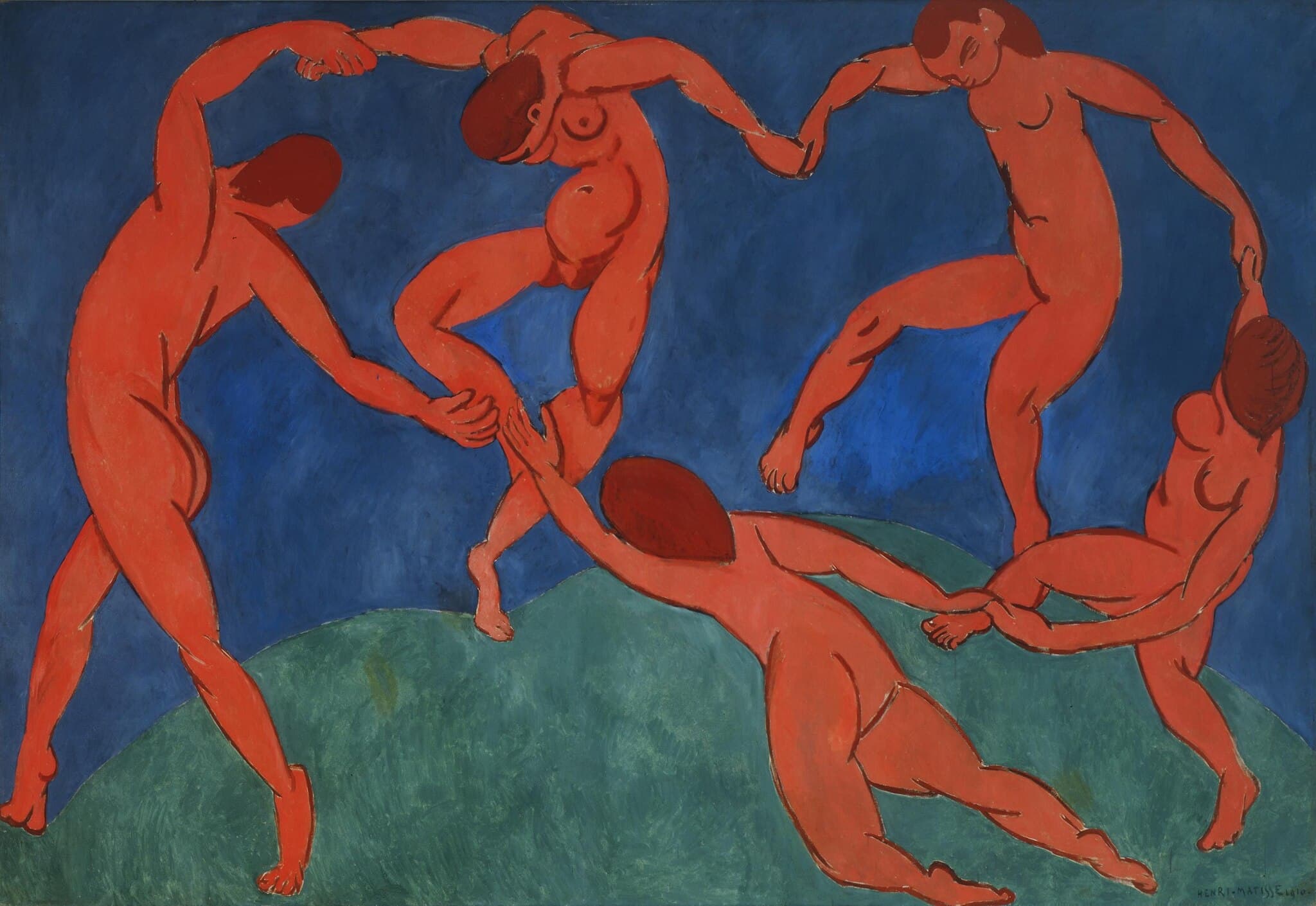
Scope and headline: This valuation treats "Dance (La Danse)" as the large, canonical composition (c.1909–10) or an equivalent museum‑quality, full‑scale autograph variant. The canonical Shchukin/Hermitage composition and the related Dance (I) study (MoMA) are museum‑held and rarely — if ever — offered on the open market. Because there is no recent open‑market sale for the canonical composition, the estimate below is a hypothetical market valuation derived by extrapolating from top public comparables, institutional scarcity, and trophy‑sale dynamics [1][3].
Comparable benchmarks: The most relevant public benchmark is the May 2018 Christie’s Rockefeller sale, when a top‑quality Matisse (Odalisque couchée aux magnolias) achieved $80,750,000 — demonstrating the high end of what marquee Matisse oils can realize from a single‑owner, trophy consignment [2]. Other strong mid‑market Matisse sales (multi‑millions to tens of millions) provide a graduated ladder; a canonical La Danse would sit above the ladder because of its unique iconographic and historical weight.
Why $100–300M: The $100M lower bound is deliberately conservative relative to the Rockefeller benchmark and reflects La Danse’s exceptional art‑historical standing: it is a foundational modernist image with few true peers in 20th‑century painting. The $300M upper bound recognizes trophy‑sale mechanics — concentrated bidder competition among institutions and ultra‑high‑net‑worth buyers, strategic guarantees, and the premium paid for global cultural centrality. The band is wide because the realized price would be highly sensitive to absolute authentication certainty, pristine condition and conservation history, clear and unencumbered title, and the political/legal feasibility of transfer from any public collection.
Alternate scenarios: If the work is a full‑scale but later autograph studio version with strong provenance and publication, expect USD $50–200M. An important oil study or smaller autograph variant typically trades in the USD $1–50M band. If attribution is uncertain or the work is a workshop copy, the market may value it below USD $1M. Each scenario demands separate, targeted forensic and provenance work to narrow the range significantly.
Next steps to refine: to tighten this estimate to within ~±10–20% provide high‑resolution recto/verso photography, exact dimensions, full provenance (ownership, invoices, exhibition histories, catalogue references), and any conservation reports. Commission technical analysis (X‑ray, infrared reflectography, pigment and canvas weave testing) and consult Matisse specialists or the catalogue raisonné author(s). Note: if the canonical Hermitage/Shchukin example is intended, practical marketability is effectively nil without extraordinary legal/political developments; the valuation above remains a hypothetical market price, not a prediction of a likely sale [1][2].
Key Valuation Factors
Art Historical Significance
High ImpactLa Danse (1909–10) is one of Henri Matisse’s most emblematic compositions: a public, scholarly and curatorial touchstone that encapsulates his exploration of rhythm, color and simplified figuration. As a defining image of early 20th‑century modernism it carries cultural weight well beyond a typical atelier painting. That centrality means buyers (museums and private collectors) pay a substantial premium for a true autograph example because the work is not merely decorative but a piece of art‑historical patrimony. This significance drives scarcity value — there are no direct market substitutes with the same combination of fame, provenance and pictorial centrality, which is a primary upward driver of the $100–300M hypothetical band.
Provenance & Exhibition History
High ImpactSecure, early provenance (notably the Shchukin commission chain, subsequent institutional accession, and high‑profile exhibitions and publications) materially increases market value. Works with continuous, well‑documented provenance and frequent inclusion in major exhibitions or monographs command both scholarly validation and collector confidence. The Rockefeller Christie’s lot shows how single‑owner, museum‑quality consignments can escalate pricing; by contrast, gaps in ownership, contested wartime transfers, or absent exhibition histories depress buyer willingness and therefore price. A fully documented, published history is essential to justify moving from the lower bands into the $100M+ territory.
Authenticity & Condition
High ImpactAutograph attribution by leading Matisse scholars and confirmatory technical analysis (pigment chemistry consistent with 1909–10, canvas weave and thread count, IR/X‑ray concordant with known working methods) are prerequisites for top‑tier pricing. Condition and any invasive restoration (relining, heavy retouching, structural damage) can materially reduce market value; conversely, exceptionally well preserved canvases fetch premiums. Undisputed authenticity and clean condition move a work from speculative status to investible, museum‑quality status — the difference between low‑millions and the $100M+ signaled in this valuation.
Market Comparables & Demand
High ImpactPublic auction record‑setting results for major Matisse paintings set the observed ceiling for the market envelope; trophy consignments (single‑owner sales, museum deaccessions or major estates) produce the most relevant comparables. The 2018 Rockefeller sale established a public benchmark that the hypothetical La Danse would be expected to exceed because of its unique cultural position. Demand among institutions, sovereign buyers and deep‑pocket private collectors for canonical modernist works remains robust, and scarcity of comparable masterpieces amplifies competitive bidding, which is why top comps drive the extrapolated $100–300M range.
Legal/Title & Cultural Heritage Constraints
High ImpactA canonical La Danse associated with major national collections (e.g., the Shchukin legacy / Hermitage) is subject to export controls, national patrimony law and complex repatriation issues. Legal encumbrances, contested wartime provenance or homeland retention laws can make a work effectively unsellable in commercial markets, collapsing practical value regardless of theoretical market demand. Even when a work is provably authentic and in excellent condition, unresolved legal or diplomatic constraints impose enormous market risk, reducing the likelihood of open sale and therefore affecting how pricing is underwritten by buyers and houses.
Sale History
Dance (La Danse) has never been sold at public auction.
Henri Matisse's Market
Henri Matisse is a canonical modern master whose work consistently ranks among the most desirable in 20th‑century art markets. Public auction results demonstrate strong demand for high‑quality oils (top public prices have reached the high tens of millions), while works on paper and prints provide more accessible entry points with robust secondary markets. Supply of museum‑quality autograph Matisse canvases is extremely limited, which concentrates buyer interest on rare offerings and supports premium pricing for top examples. Institutional exhibition programs and scholarship continue to reinforce long‑term market interest.
Comparable Sales
Odalisque couchée aux magnolias
Henri Matisse
Top public‑market Matisse painting from a trophy Rockefeller collection; establishes the open‑market ceiling for major Matisse oils.
$80.8M
2018, Christie's New York
~$100.9M adjusted
Figure et bouquet (Tête ocre)
Henri Matisse
Recent high‑quality Matisse oil sold in 2025; a strong-market example of what museum‑quality but non‑canonical oils fetch today.
$32.3M
2025, Christie's New York
Léda et le cygne (triptych)
Henri Matisse
Mid‑20th‑century Matisse triptych from a major (Pritzker) collection; shows mid‑market outcomes for notable but non‑canonical compositions.
$10.4M
2025, Sotheby's New York
Oceanie, le ciel (screen print)
Henri Matisse
Record result for a Matisse screen print (2025); useful to show strength in works on paper/prints but less directly comparable to a large oil painting.
$5.0M
2025, Christie's New York
Current Market Trends
The market for major modernist masters has been selective since 2023–2025: overall global sales softened but demand for exceptional, museum‑quality works remains resilient. Trophy single‑owner consignments and institutional sales continue to set price benchmarks. Macro volatility and legal/political constraints (notably in cross‑border transactions) are increasing the premium buyers pay for certainty — clear provenance, clean title and technical validation — which benefits works like a fully authenticated La Danse.