Most Expensive Henri Matisse Paintings
Henri Matisse’s most expensive paintings occupy a singular market standing, prized as watershed moments in modern art and sought after by museums and deep-pocketed collectors alike for their color, innovation, and provenance. At the pinnacle sits The Red Studio, estimated between $260–340 million, a commanding statement of compositional daring whose scarcity and exhibition history drive astronomical valuations. Works like Dance (La Danse) and Woman with a Hat—valued respectively around $100–300 million and $120–180 million—embody Matisse’s revolutionary Fauvist palette and remain highly collectible because they encapsulate pivotal stylistic shifts. Major canvases such as Le Bonheur de Vivre, Music, and Portrait of Madame Matisse (The Green Stripe) each carry $100–150 million price tags, reflecting both museum desirability and the premium placed on canonical works that reshaped 20th-century painting. Even pieces with wider ranges—The Dessert: Harmony in Red ($50–150 million), Odalisque couchée aux magnolias ($85–125 million), The Pink Studio ($30–100 million), and Blue Nude (Souvenir de Biskra) ($20–50 million)—command attention for their provenance, condition, and exhibition records, making Matisse’s oeuvre a linchpin of the high-end art market.
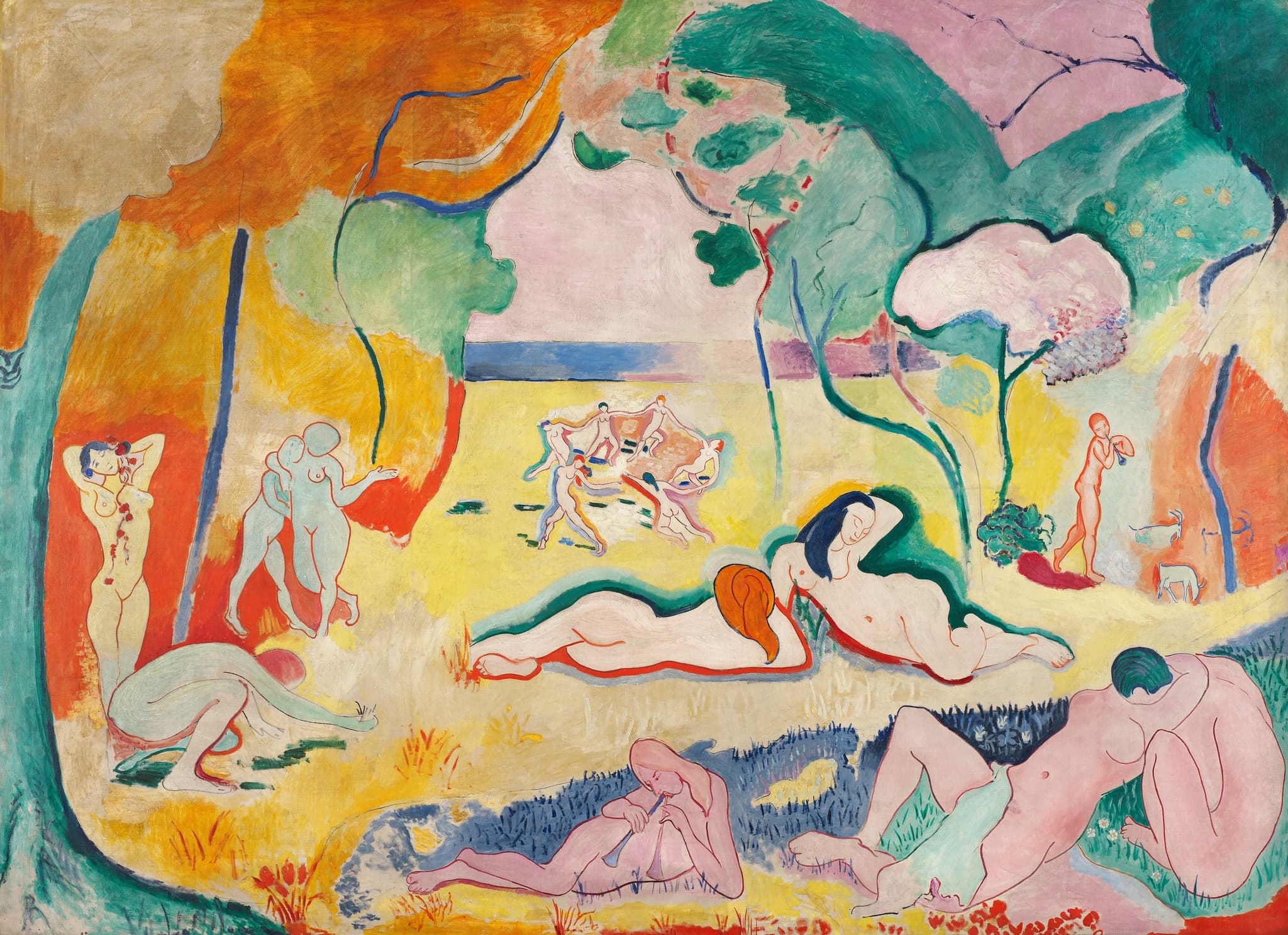
$200-400 million
Henri Matisse’s Le bonheur de vivre (Joy of Life), 1905–06, is a canonical Fauvist masterpiece at the Barnes Foundation that has never been publicly sold.
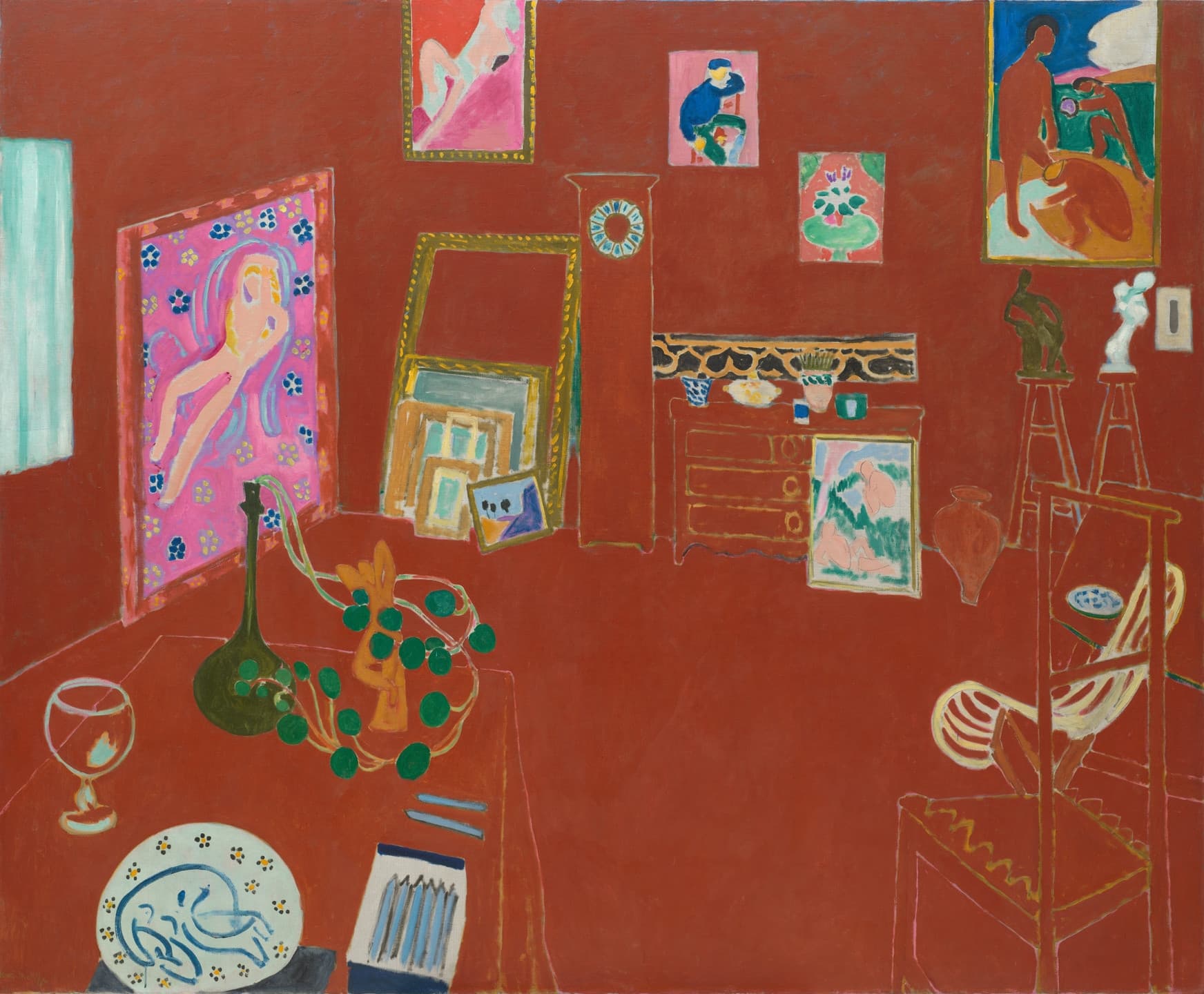
$260-340 million
Valued at $260–340M as a trophy‑level, textbook Matisse masterpiece—an extrapolation far above his $80.75M auction record due to absolute scarcity and museum stature.
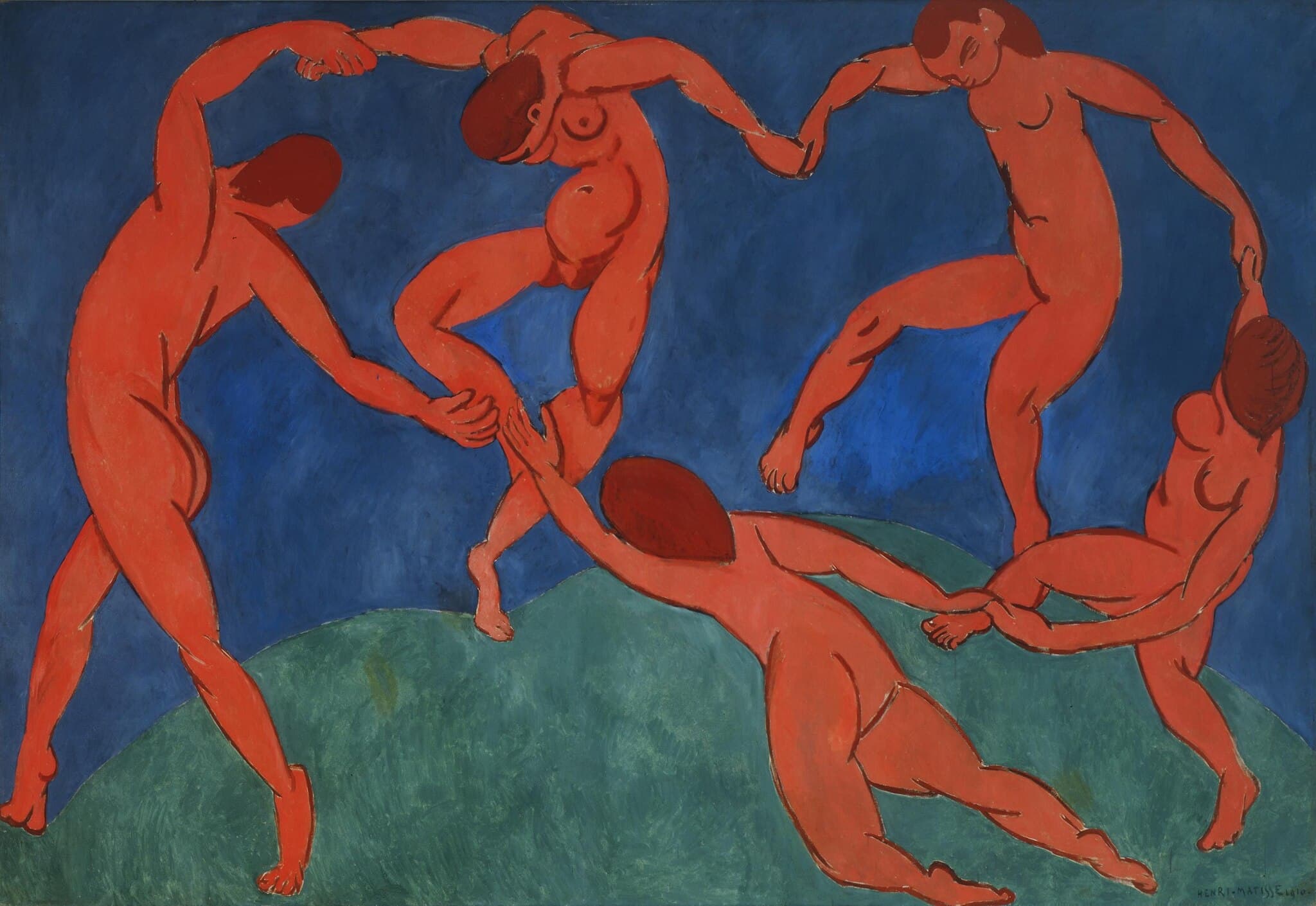
$100-300 million
The canonical 1909–10 La Danse is effectively unsellable; its hypothetical $100–300M estimate reflects museum ownership, while full‑scale private variants would command $50–200M.
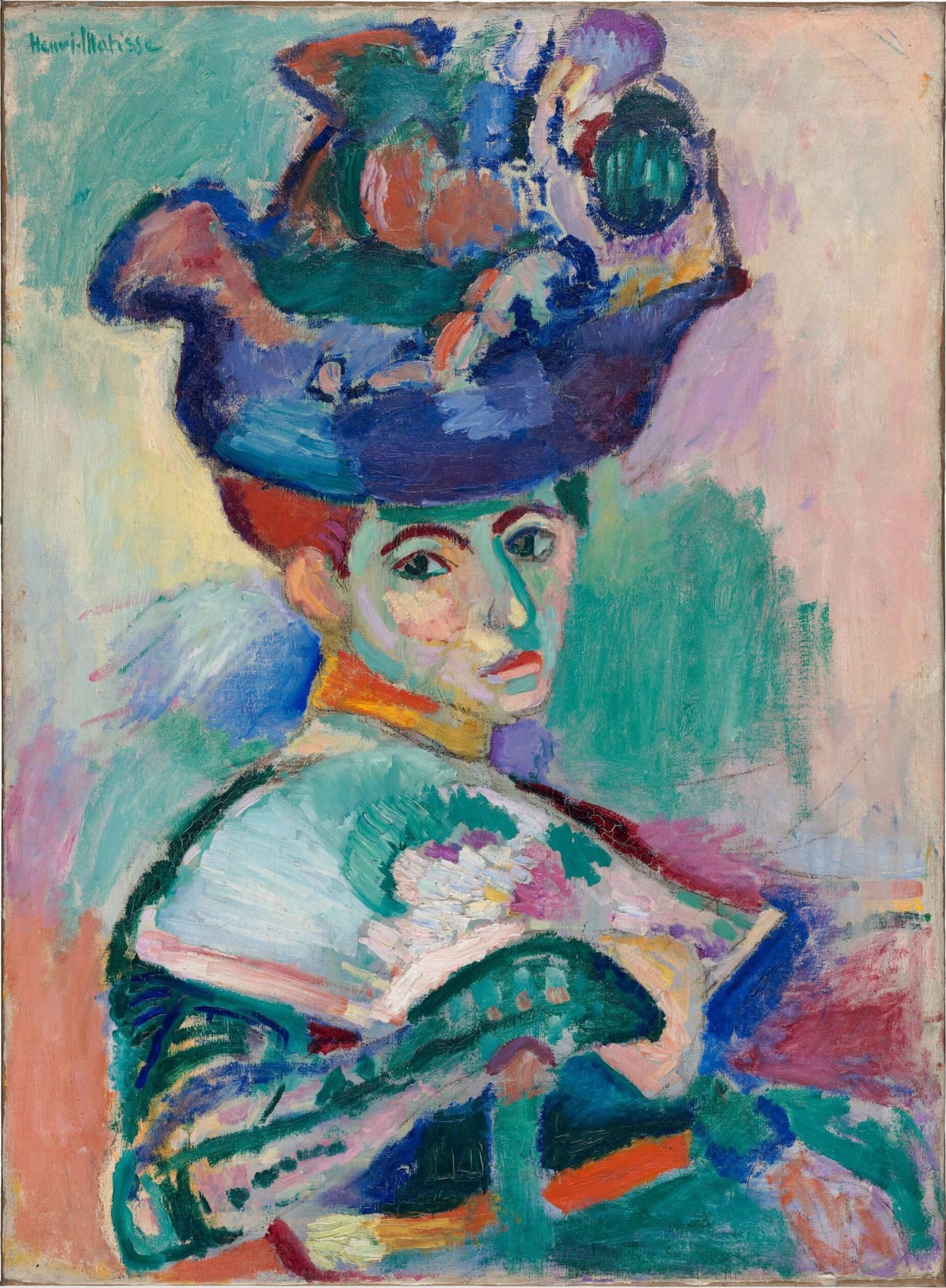
$120-180 million
Its $120–180M estimate extrapolates above Matisse’s $80.75M record, reflecting Woman with a Hat’s singular 1905 Fauvist importance, impeccable provenance and extreme market scarcity.
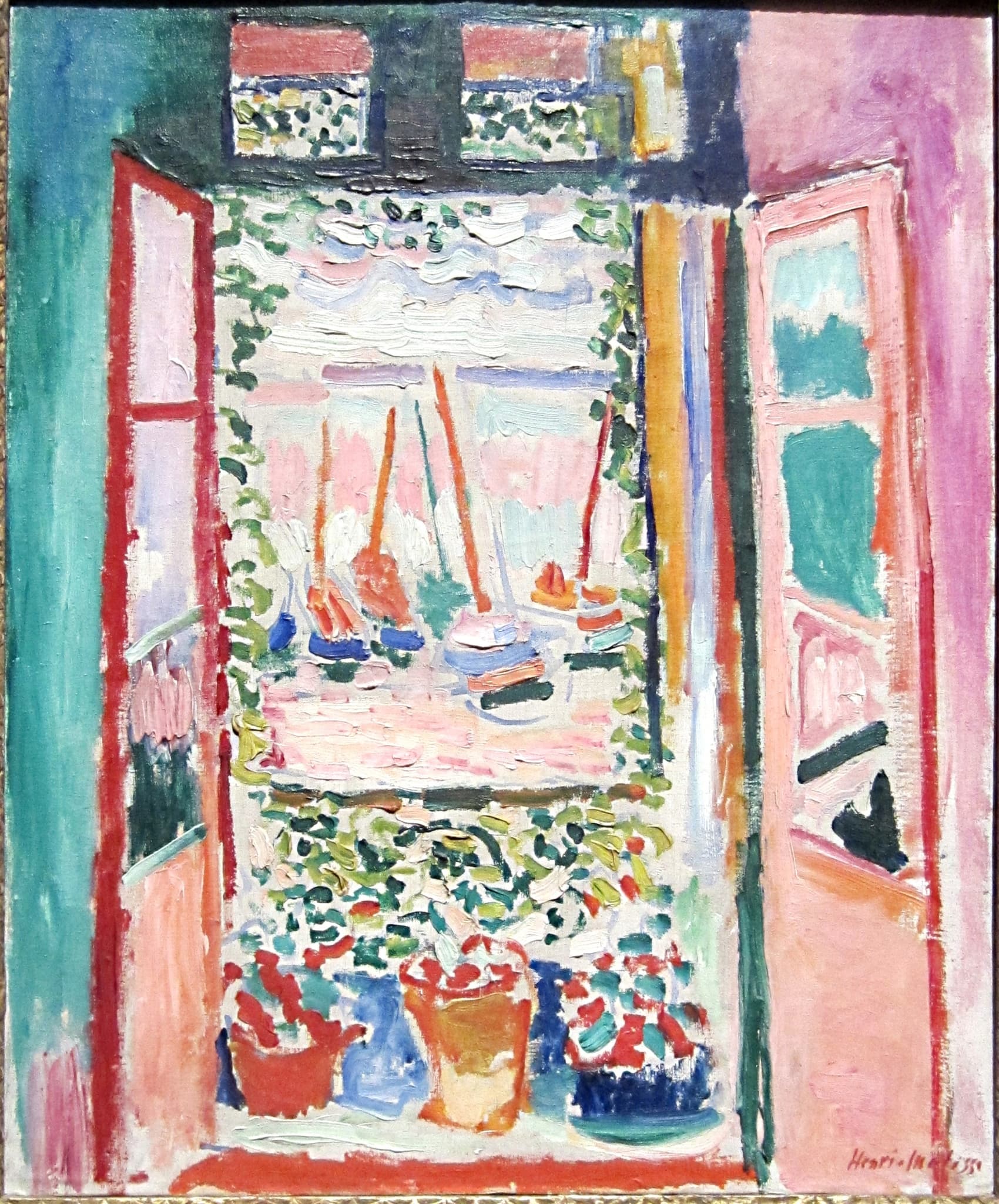
$120-180 million
Open Window, Collioure (1905) is a canonical Fauvist masterpiece by Henri Matisse, long held by the National Gallery of Art.
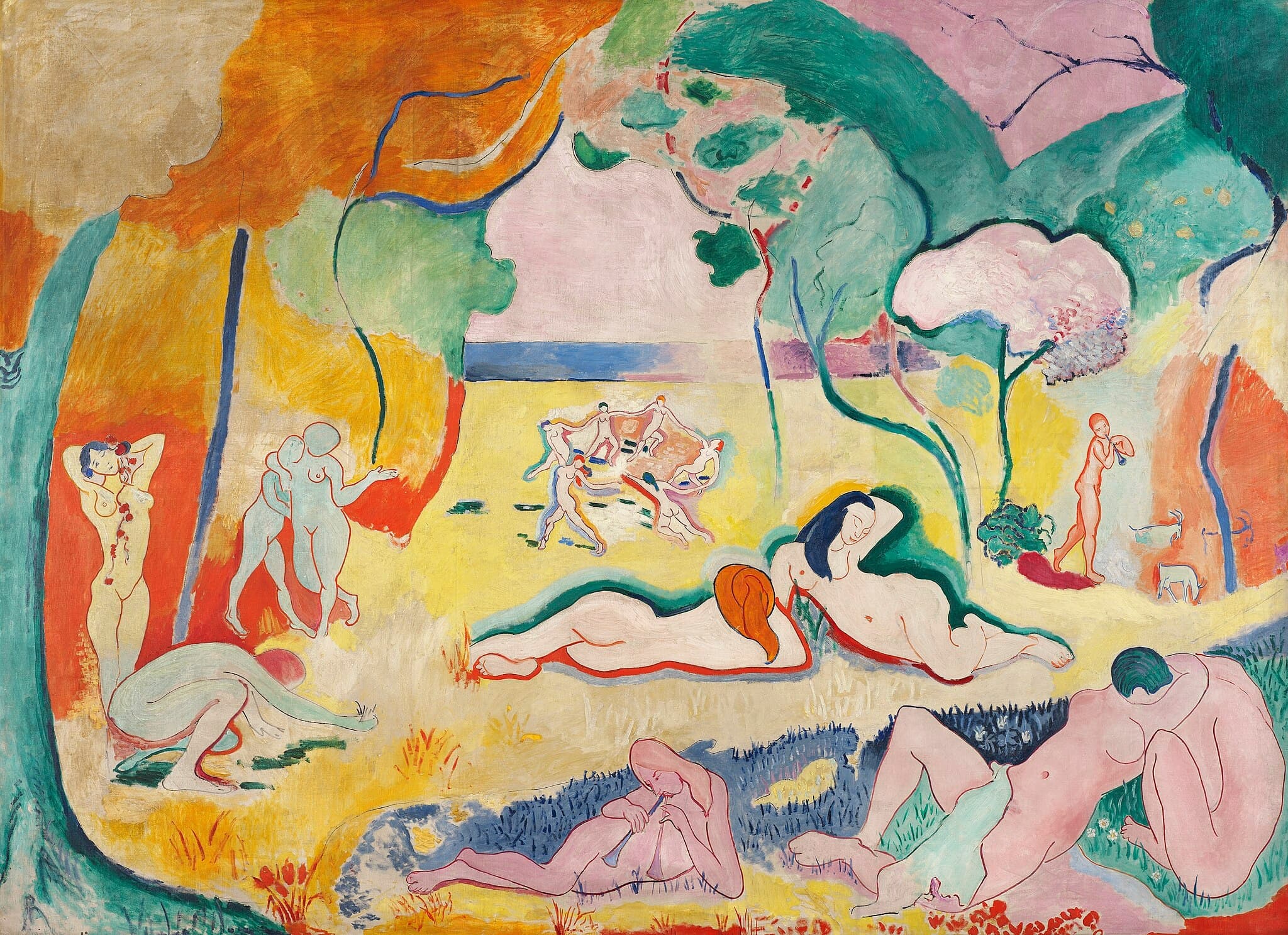
$100-150 million
As a canonical 1905–06 museum‑held Fauvist trophy, Le Bonheur de Vivre’s defensible $100–150M valuation rests on institutional ownership and near‑total market scarcity.
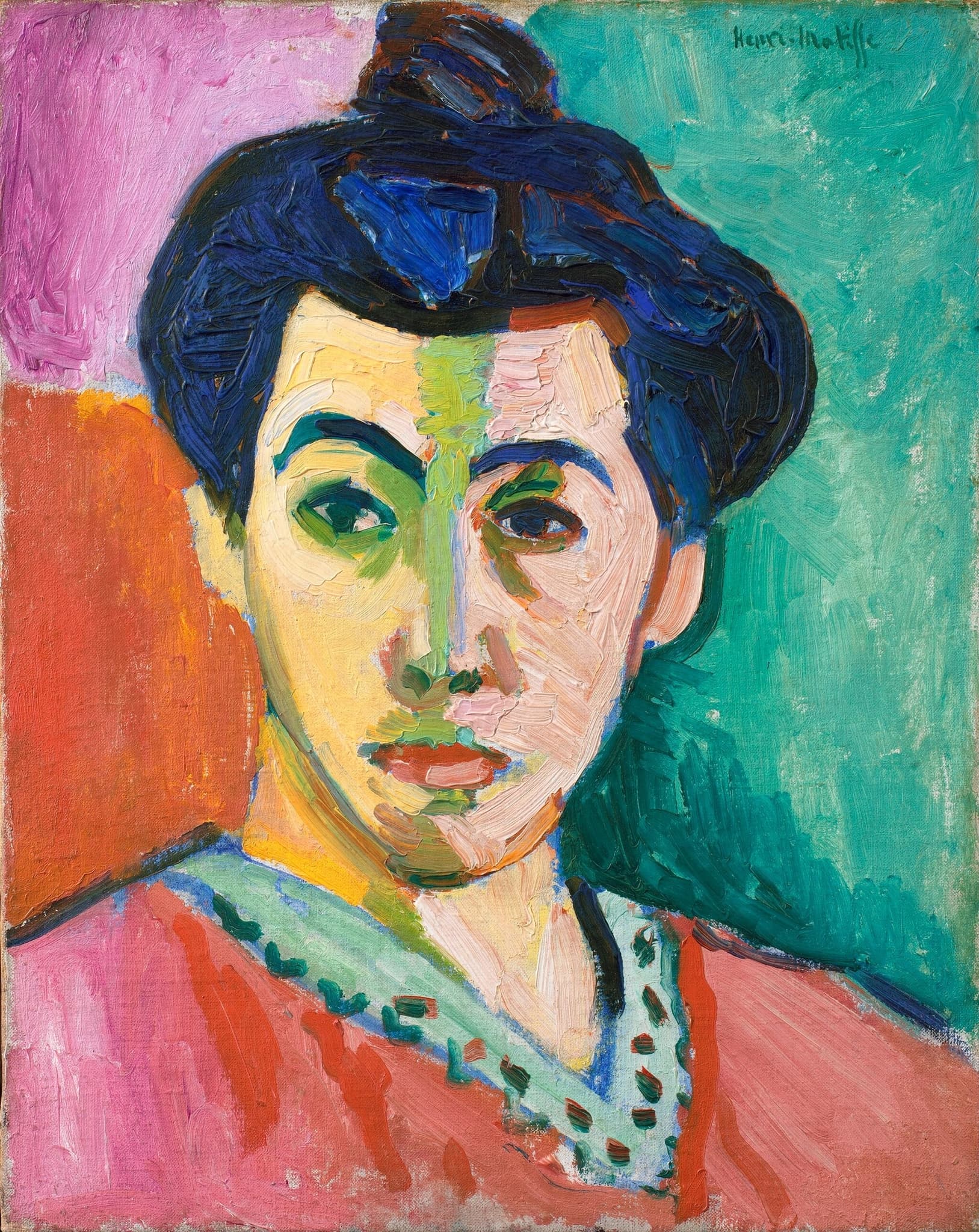
$100-150 million
The Green Stripe’s $100–150M range reflects its iconic 1905 status and the extreme rarity of museum‑quality Matisse portraits appearing on the open market.
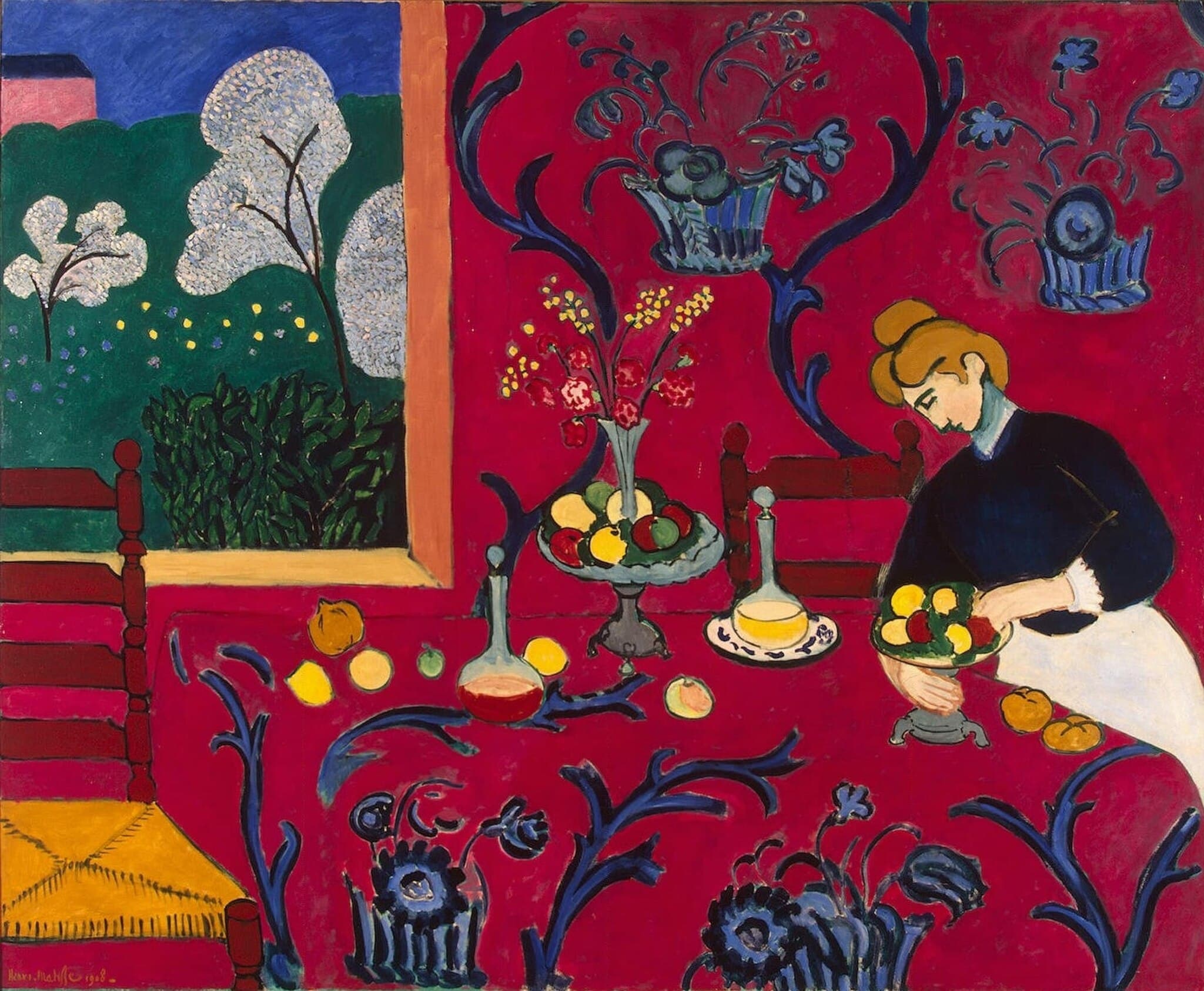
$50-150 million
The Red Room is effectively off‑market (Hermitage); its $50–150M hypothetical reflects canonical status but substantial condition, provenance and legal/export constraints.
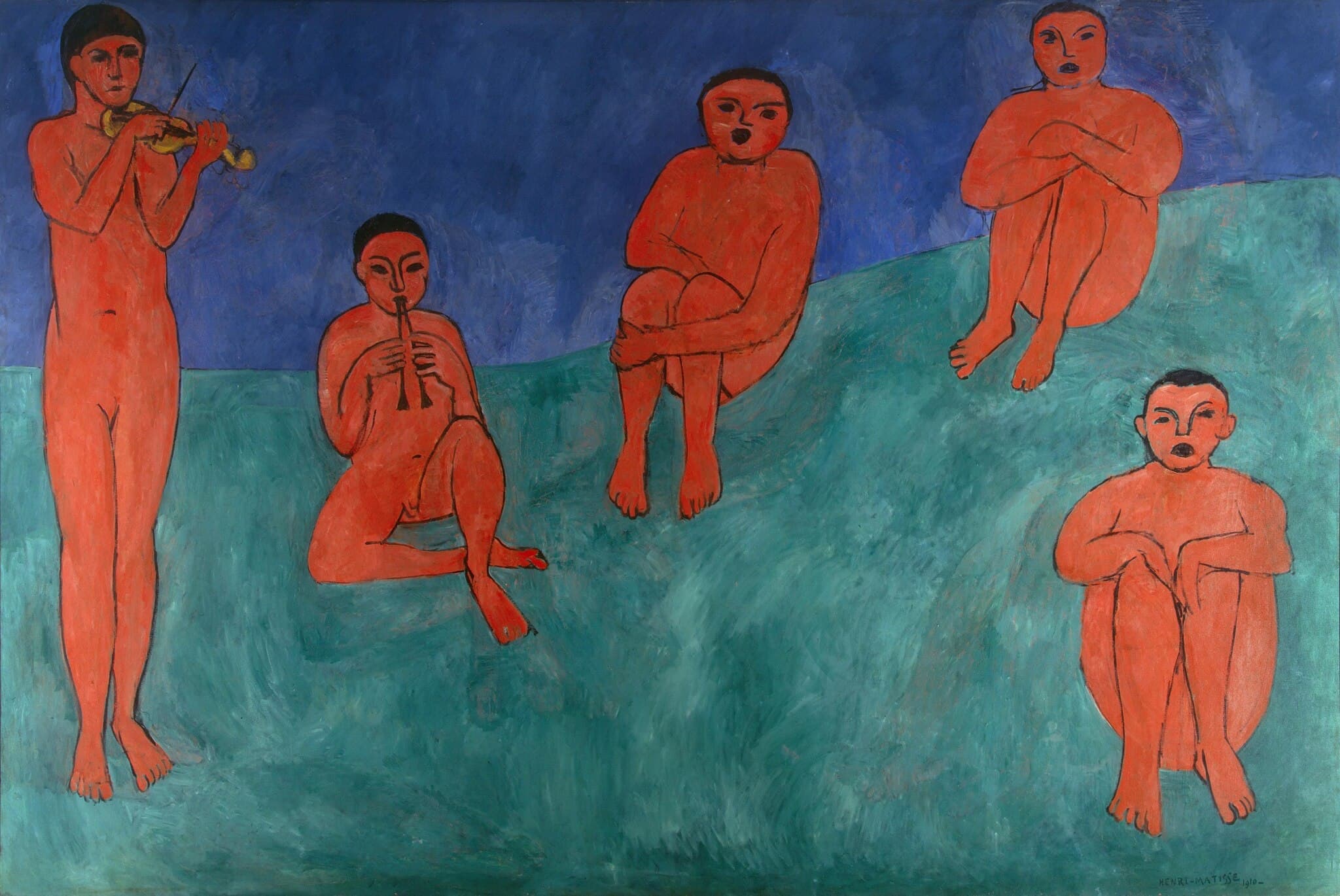
$100-150 million
If the monumental 1910 La Musique were marketable, its $100–150M estimate hinges on Shchukin‑era provenance, scale and Hermitage‑level rarity.
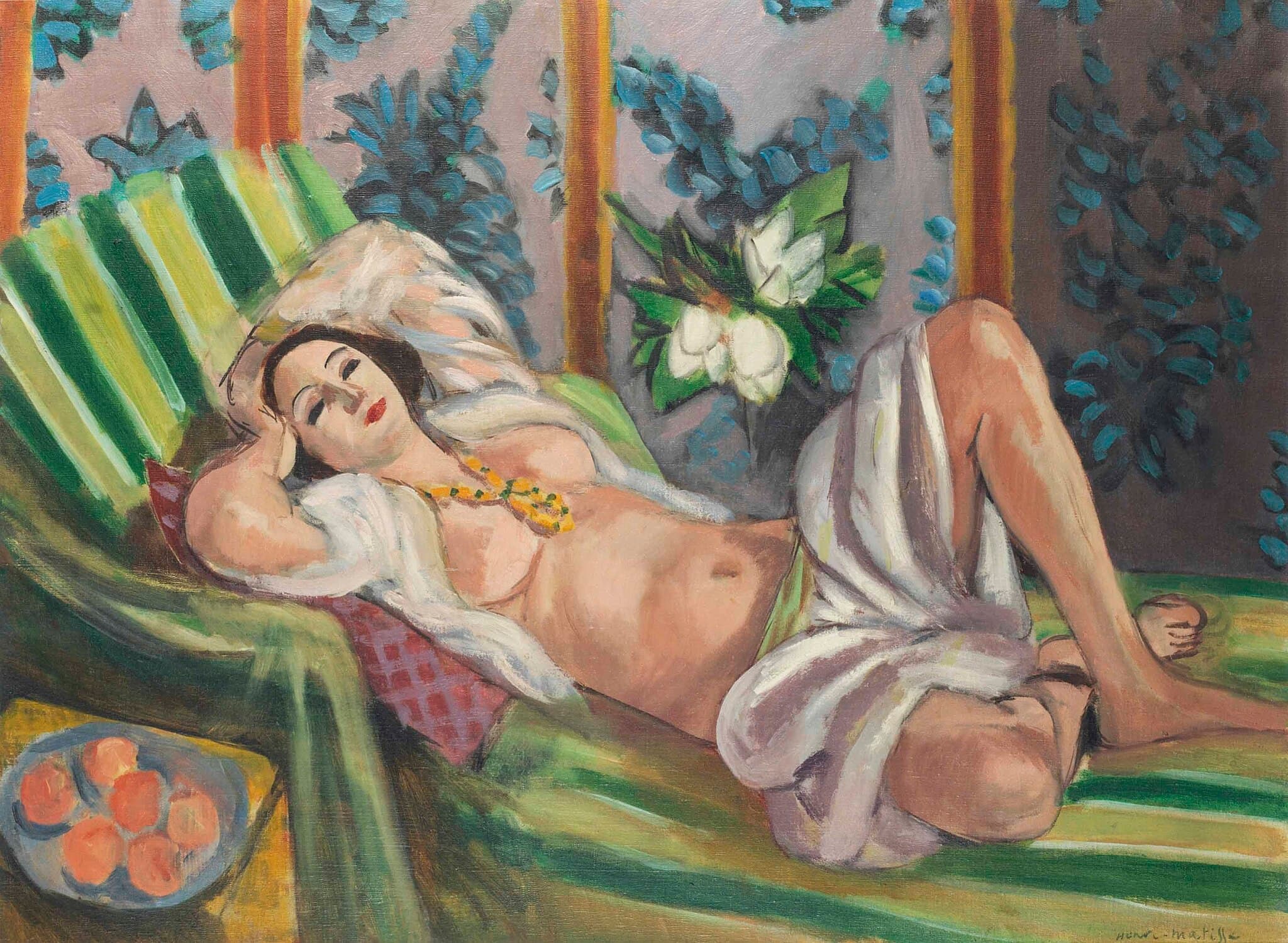
$85-125 million
Anchored to the identical composition’s $80.75M Christie’s 2018 sale, Odalisque couchée aux magnolias is placed at $85–125M assuming clean title and attribution.
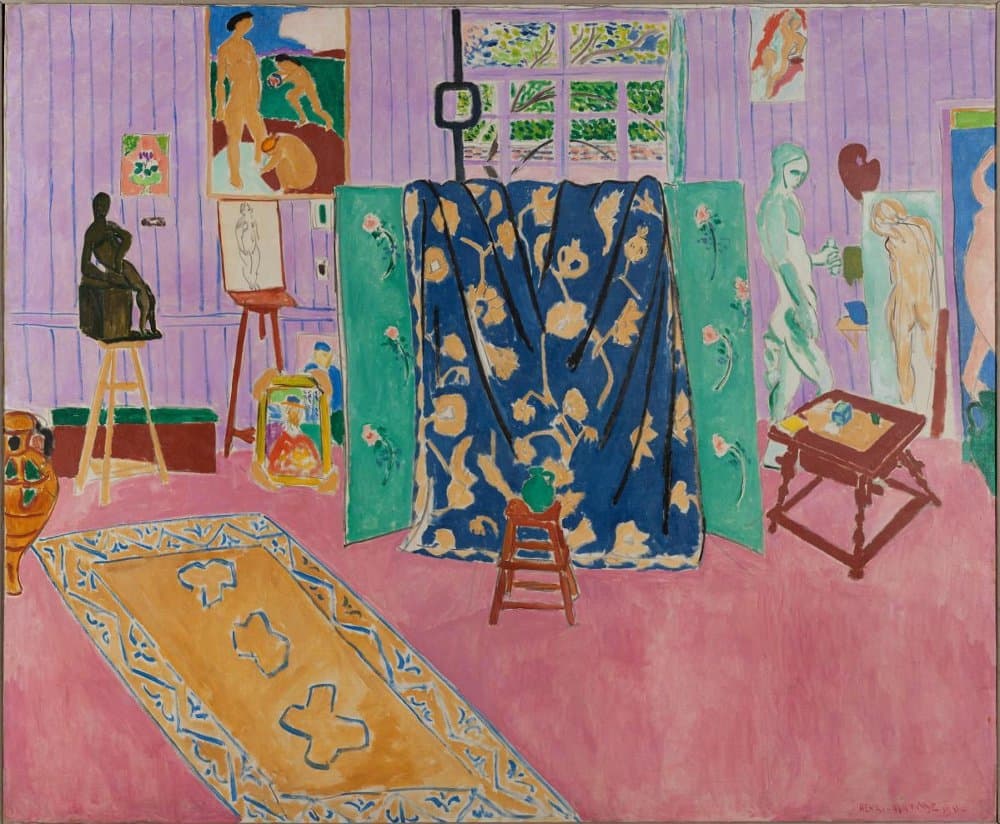
$30-100 million
With Shchukin→Pushkin institutional provenance, an autograph 1911 Pink Studio is pegged at $30–100M, contingent on condition, exhibition history and state‑ownership legalities.
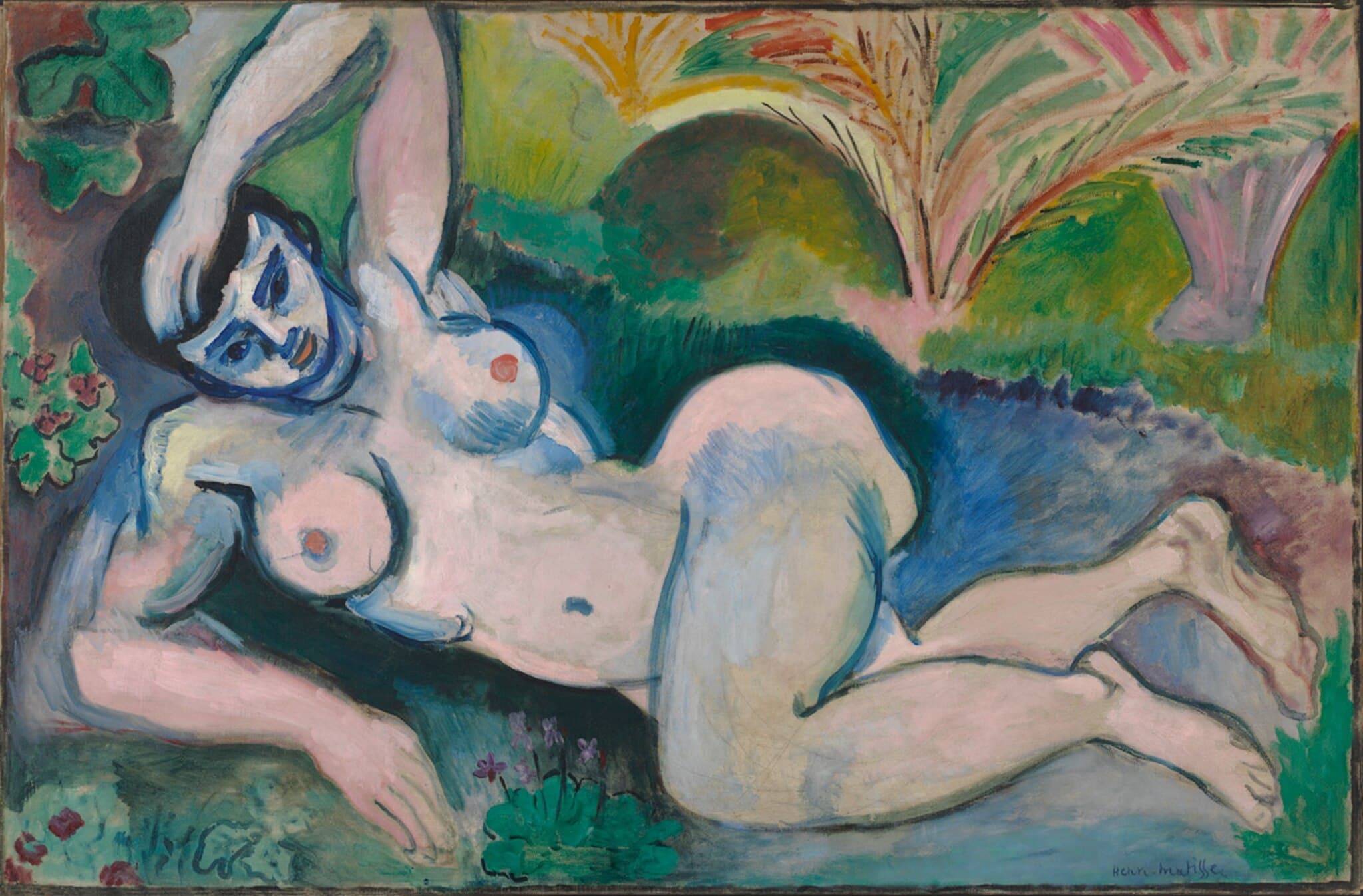
$20-50 million
As a Cone Collection museum‑held 1907 Fauve nude, Blue Nude’s $20–50M market range reflects institutional ownership and relative rarity among early Matisse nudes.
What Drives Value in Henri Matisse's Work
Canonical breakthrough works and iconic motifs
For Matisse, certain single images function as identity anchors—The Red Studio, La Danse, Le Bonheur de Vivre, Woman with a Hat and The Red Room are repeatedly reproduced, taught and exhibited. Those autograph, epoch‑defining canvases carry cultural capital that routinely pushes them above ordinary auction bands. When such a canonical work is transferable it attracts institutional rivalry and trophy premiums that can far exceed Matisse’s public auction ceiling, driving nine‑figure or cross‑artist trophy pricing.
Provenance tied to key early patrons and major institutions
Matisse’s market is highly sensitive to specific chains of ownership: Shchukin, the Steins, the Cone sisters, Rockefeller and major museums (MoMA, Barnes, Hermitage/Pushkin, SFMOMA) materially uplift value. These provenances signal early patronage, publication and exhibition histories unique to Matisse scholarship. Conversely, works locked in state or national collections (Hermitage/Pushkin) face export, deaccession and geopolitical constraints that can blunt or even nullify commercial realizations despite high theoretical demand.
Program/series identity (Shchukin decorative cycle, 1911 interiors, Odalisques)
Paintings that belong to a recognized Matisse programme—La Danse/La Musique (Shchukin decorative commission), the 1911 studio interiors (The Red Studio, The Pink Studio), or the mature odalisque series—carry additive value because collectors and institutions prize completeness, narrative context and inter‑work relationships. A single programmatic work can command a premium when its counterparts are in rival collections, since buyers seek the curatorial and scholarly leverage that comes from owning a decisive element of a known cycle.
Authentication, cataloguing and Matisse‑specific conservation issues
Matisse’s market reacts strongly to catalogue‑raisonné inclusion, scholar sign‑off and technical confirmation (pigment chemistry, IR/X‑ray). Attribution certainty converts a Matisse from speculative to museum‑quality pricing. At the same time, material vulnerabilities—documented pigment instability (e.g., cadmium/yellow issues), relinings and historic restorations—are common in Matisse canvases and can produce steep discounts. Clean technical dossiers therefore are a prerequisite for commanding top‑tier valuations.
Market Context
Henri Matisse remains a blue‑chip pillar of twentieth‑century art: his auction record is $80.75 million (Christie’s, 2018), and recent seasons—including a $32.26 million sale in November 2025 and strong results for important bronzes—underscore renewed top‑end demand after a soft 2023–24. Museums, foundations, family offices and UHNW collectors (with growing Asian participation) concentrate capital on museum‑quality, well‑provenanced canvases, driving competitive bidding when rare masterpieces surface. Supply of canonical oils is extremely limited, so provenance, condition and institutional exhibition history command premiums; private sales and guaranteed consignments continue to set benchmarks. Overall demand is selective but resilient: the market rewards instantly recognizable, scholarship‑backed trophies and can push prices well beyond artist‑specific auction norms.