How Much Is Portrait of Madame Matisse (The Green Stripe) Worth?
Last updated: March 30, 2026
Quick Facts
- Methodology
- comparable analysis
If authentic and freely marketable, the 1905 Portrait of Madame Matisse (The Green Stripe) would reasonably be valued at approximately $100–$150 million. This range is driven by its iconic Fauvist status, extreme rarity of museum-quality Matisse portraits appearing on the market, and high-end auction anchors for the artist.
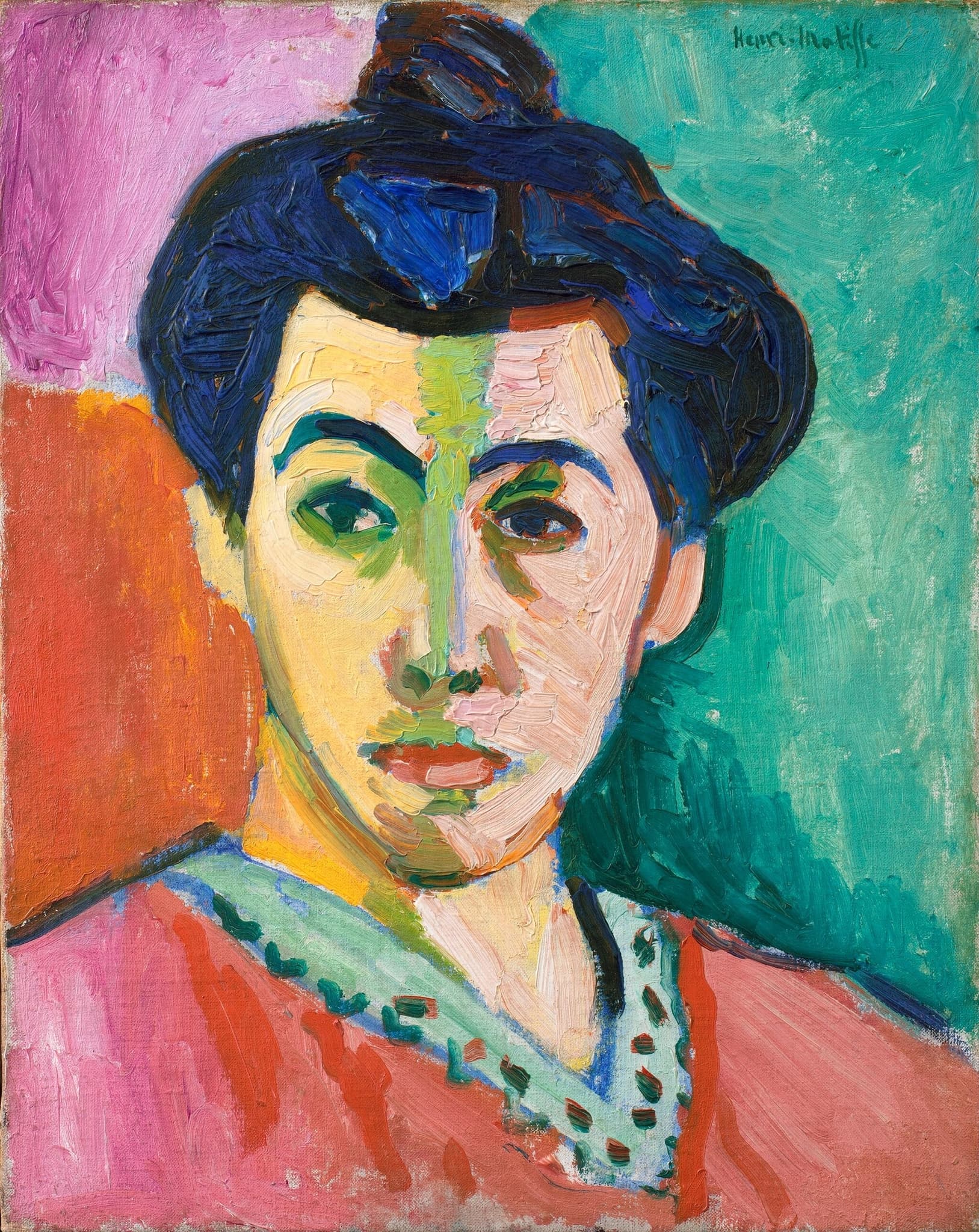
Portrait of Madame Matisse (The Green Stripe)
Henri Matisse, 1905 • Oil on canvas
View more by Henri Matisse →Valuation Analysis
Final valuation: An authentic, museum‑quality 1905 Portrait of Madame Matisse (La Raie Verte / The Green Stripe) offered on the open market today would reasonably be estimated at $100–$150 million. The work is small in scale (≈40.5 × 32.5 cm) and is held by the Statens Museum for Kunst (SMK), accession KMSr171, which explains its absence from modern sales records and underscores its rarity as a fresh-to-market offering [1].
Comparable anchor and rationale: The principal market anchor is Henri Matisse’s Odalisque couchée aux magnolias, sold at Christie’s Rockefeller sale for $80.75M in May 2018 — a proven, high‑water mark for museum‑quality Matisse oils and an essential reference for top‑end pricing [2]. Adjusting that context for the present market, and factoring that the Green Stripe is one of Matisse’s most emblematic and historically significant early Fauvist portraits, the realistic low end moves above the 2018 realized figure; the upper end reflects the premium a true canonical, fresh example could command in a competitively marketed evening sale or a heated private‑treaty auction with guarantees.
Upward and downward pressures: Upward pressures include the painting’s canonical status in Fauvism, its ubiquity in art‑historical literature and reproductions (which increases demand), and the extreme scarcity of comparable museum‑quality portraits reaching market. Downward pressures would include any condition or restoration issues, unresolved provenance or legal encumbrances, national patrimony/export restrictions, and a weaker market environment or absence of third‑party guarantees—any of which could materially depress realizations.
Sale mechanics and marketability: Achieving the top of the range would likely require a marquee evening auction (single‑owner or single‑collection sale) with institutional interest, strong provenance documentation, and likely a guarantee or third‑party backstop. A private treaty to a major museum or collector could also realize a price within this range but would hinge on market competition and the buyer pool’s institutional objectives.
Recommended next steps to firm the valuation: confirm current legal status and SMK acquisition terms, obtain a recent condition/conservation report and technical imaging, and solicit off‑the‑record underwriting/opinion from leading evening‑sale specialists at Christie’s/Sotheby’s. With those items in hand the range can be narrowed and a sale strategy selected.
Key Valuation Factors
Art Historical Significance
High ImpactPortrait of Madame Matisse (The Green Stripe) is an iconic 1905 Fauvist portrait and a milestone in Matisse’s career; the vertical green stripe is one of early 20th‑century modernism’s most recognizable motifs. Its cultural and scholarly prominence materially increases desirability among major museums and blue‑chip collectors. Works that are canonical within an artist’s oeuvre routinely command premiums because they represent irreplaceable milestones in art history, influence exhibition programming, and attract institutional bidding that can outstrip private‑market expectations. The painting’s role in textbooks and exhibitions magnifies both demand and the perception of uniqueness.
Rarity & Market Availability
High ImpactThis specific canvas has been in institutional hands (SMK) for decades and has not circulated in the modern secondary market, which creates acute scarcity. High‑quality Matisse oils of canonical importance rarely appear; when they do, competitive bidding among museums and deep‑pocketed private collectors pushes prices upward. Scarcity combined with high recognition multiplies value beyond what might be expected for a work of its physical size. Conversely, institutional ownership typically means deaccession and export constraints that can reduce practical marketability and therefore potential buyers and price — a factor that must be confirmed.
Provenance & Ownership
High ImpactThe painting’s provenance (Stein collection → Christian Tetzen → SMK acquisition) is well documented, which reduces attribution risk and supports high valuation. Clean, museum‑grade provenance increases buyer confidence and facilitates underwriting/guarantees. However, institutional ownership also brings acquisition conditions, donor restrictions, or national patrimony laws that could prevent sale or export; such legal encumbrances materially lower marketability and therefore price. Verifying SMK’s accession paperwork and any associated covenants is essential to final pricing.
Condition & Conservation
Medium-high ImpactCondition can materially influence price for works of this scale: varnish discoloration, overpainting, panel or canvas issues, or previous restorations could lower realizations despite the work’s importance. Technical imaging (X‑ray, IR reflectography), pigment analysis and a conservator’s report are required to rule out major condition discounts. For a museum‑quality work, even minor condition notes are often accepted by buyers, but significant restoration history or structural instability can knock tens of percent off an otherwise premium estimate.
Comparable Sales & Demand
High ImpactTop‑end auction anchors for Matisse — notably the $80.75M Odalisque (Christie’s, 2018) — establish the market ceiling for exceptional oils and provide a direct reference for buyer appetite at the highest levels. Recent single‑owner sales and guarantees continue to drive selective strength for museum‑quality moderns. Demand for canonical Matisse pieces remains strong among institutions and private collectors, especially when accompanied by exhibition histories and scholarly attention. Sale vehicle (evening sale vs private treaty), marketing, and guarantee structures will significantly affect final price within the provided range.
Sale History
Portrait of Madame Matisse (The Green Stripe) has never been sold at public auction.
Henri Matisse's Market
Henri Matisse is firmly in the top tier of 20th‑century modern artists; his prime oils and major cut‑outs command institutional and blue‑chip collector interest and have produced multi‑tens‑of‑millions results at auction. The auction record is anchored by the Christie’s 2018 Rockefeller sale, and the market is characterized by selective liquidity: museum‑quality, well‑provenanced works perform best, while prints and works on paper provide greater liquidity at lower price bands. Market activity is driven by marquee single‑owner consignments, exhibition histories, and guarantee support.
Comparable Sales
Odalisque couchée aux magnolias
Henri Matisse
Top-tier, museum-quality Matisse oil sold at major evening sale — provides the principal market ceiling/anchor for high‑end Matisse oils; later-period odalisque subject but same artist and medium.
$80.8M
2018, Christie's New York (Rockefeller sale)
~$102.9M adjusted
Les coucous, tapis bleu et rose
Henri Matisse
Major single-owner sale of a canonical Matisse canvas — demonstrates willingness to pay tens of millions for museum‑quality works and is a strong historical comparable (earlier sale; adjusted to 2025 dollars).
$46.4M
2009, Christie's Paris (Yves Saint Laurent / Pierre Bergé sale)
~$69.2M adjusted
Bouquet / Vase chinois (Getty example)
Henri Matisse
Mid‑market Matisse oil sold in 2022 — useful for gauging demand and pricing for smaller/less canonical oils in recent market conditions; helps define the lower/mid tier of the market.
$5.1M
2022, Christie's New York
~$5.6M adjusted
Nu couché II (bronze)
Henri Matisse
Matisse work but different medium (sculpture). Lower direct comparability for an oil portrait, but indicates market appetite and price levels for museum‑quality Matisse material across media.
$4.9M
2023, Christie's Paris
~$5.1M adjusted
Léda et le cygne (triptych, 1944–46)
Henri Matisse
Recent 2025 sale of a museum-quality Matisse triptych — contemporary 2025 market benchmark, though later in date and different subject/scale from the 1905 Green Stripe.
$10.4M
2025, Sotheby's New York (Pritzker sale)
Current Market Trends
Current conditions are selective: top‑end demand has rebounded but depends on provenance, exhibition history, and sale mechanics (guarantees/third‑party support). Institutional interest and high‑visibility exhibitions drive competition for canonical works, while political/legal export controls and macroeconomic uncertainty can constrain realizations. Overall, museum‑quality Matisse material remains desirable but requires careful sale planning to achieve peak value.