How Much Is Open Window, Collioure Worth?
Last updated: July 9, 2026
Quick Facts
- Methodology
- extrapolation
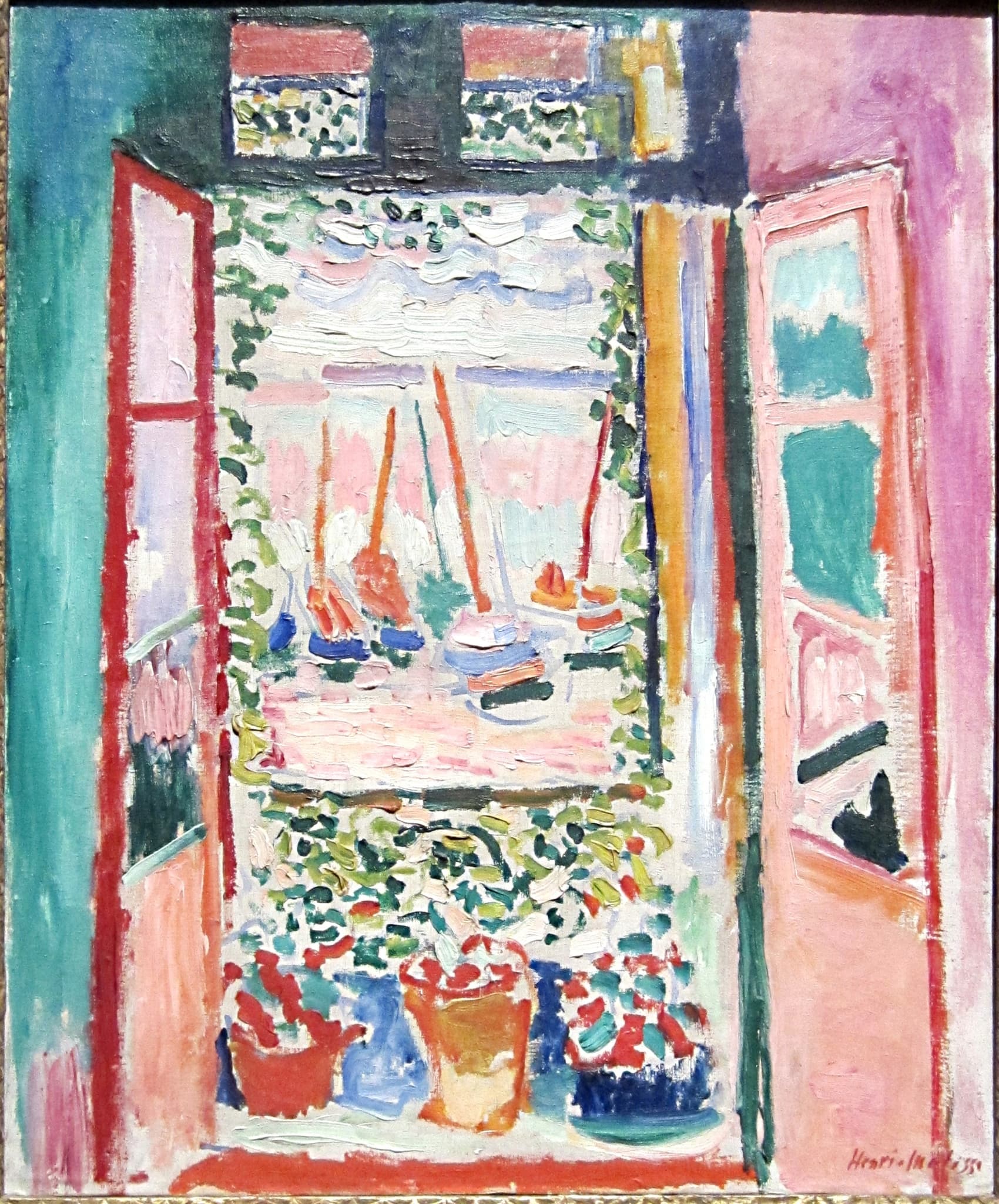
Open Window, Collioure (1905) is a canonical Fauvist masterpiece by Henri Matisse, long held by the National Gallery of Art. With no public sale history, we extrapolate from the artist’s $80.75m auction record and recent nine-figure demand for movement-defining modern trophies to a hypothetical value of $120–180 million. If ever offered, it would almost certainly set a new auction record for Matisse.
Valuation Analysis
Open Window, Collioure (1905) is among Matisse’s most important early paintings and a touchstone of Fauvism. Painted in Collioure during the pivotal summer of 1905, it crystallizes the radical colorism and structure that defined the movement. The work has been in the National Gallery of Art, Washington, since 1998 (ex-John Hay Whitney collection), is extensively published, and is widely cited in the literature on early Matisse [1]. There is no public sale history for this specific painting.
To derive value, we anchor to the artist’s market apex and to cross-artist trophy dynamics. Matisse’s standing auction record is $80.75 million for Odalisque couchée aux magnolias (1923) at Christie’s in 2018 [2]. Meanwhile, the top end of the modern market continues to support nine-figure outcomes for movement-defining masterworks with museum-level provenance—e.g., Picasso’s Femme à la montre at $139.4 million (Sotheby’s, 2023) and Klimt’s 2025 portrait at $236.4 million [4][5].
Within Matisse’s own category, recent marquee results confirm renewed depth for high-quality paintings: La Chaise lorraine (1919) realized $48.4 million in May 2026, and Figure et bouquet (Tête ocre) (1937) brought $32.26 million in November 2025 [3]. However, true 1905 Fauve icons are essentially absent from the market: cognate masterworks such as Woman with a Hat and Le bonheur de vivre are in museums. Open Window, Collioure therefore occupies an apex position in the oeuvre with near-zero private supply, a key driver of premium pricing.
Based on this scarcity, art-historical primacy, and current trophy demand, we estimate a hypothetical price realized of $120–180 million (inclusive of fees) if the painting were ever to be offered. The low end reflects a conservative step above the existing Matisse record, while the high end contemplates intense global competition consistent with recent nine-figure modern benchmarks [2][4][5]. The painting’s relatively intimate size (approx. 55 × 46 cm) is more than offset by its canonical status, pristine provenance, and widespread scholarly visibility, all of which enhance liquidity and price resilience [1].
Conclusion: Open Window, Collioure would command a new artist record and trade at the top tier of the modern market. This valuation is hypothetical given long-term museum ownership, but it is well supported by the work’s singular significance, market scarcity in the 1905 corpus, and demonstrated appetite for movement-defining masterpieces [1][2][3][4][5].
Key Valuation Factors
Art Historical Significance
High ImpactPainted in 1905 during Matisse’s first summer in Collioure, Open Window is a canonical statement of Fauvism, marking the artist’s decisive embrace of expressive, non-naturalistic color and flattened structure. It is reproduced in virtually every survey of early Matisse and is frequently paired with other 1905 touchstones such as Woman with a Hat. As a crystallization of the Fauve vocabulary—and a landmark in the transition to 20th‑century colorist modernism—the painting has enormous scholarly and cultural weight. Works that define an artist’s breakthrough are prized disproportionately in the market because they provide the clearest, earliest articulation of the artist’s lasting contribution, attracting both top private collectors and institutions.
Rarity and Market Supply
High ImpactTop‑tier Fauve Matisses from 1905 are almost entirely museum-held. Sister works of comparable art-historical standing (e.g., Woman with a Hat; Le bonheur de vivre) are not in private hands, which means a painting like Open Window has essentially no direct, tradeable peer. This structural scarcity is a fundamental price driver at the trophy end of the market. When supply is near-zero, collectors compete across categories and geographies, and price discovery can leap beyond the artist’s existing record. Consequently, if Open Window were to come to market, it would draw intense institutional and private interest and command a significant scarcity premium over even the best Nice‑period paintings that dominate the artist’s auction record.
Provenance and Institutional Standing
High ImpactThe painting’s passage through distinguished hands—most notably the John Hay Whitney collection—and its long-term residence at the National Gallery of Art confer unimpeachable provenance and extensive exhibition and literature history. Such pedigrees are powerful de-risking factors for buyers: they reduce concerns about authenticity, condition history, and title, and they often correlate with superior curatorial attention and publication. Although museum ownership makes an actual sale highly unlikely, the institutional imprimatur increases both confidence and perceived cultural capital. In a hypothetical transaction, this kind of blue-chip provenance typically supports aggressive bidding and can offset secondary considerations such as the work’s intimate format.
Record and Comparable Benchmarks
High ImpactMatisse’s standing auction record is $80.75m for a 1923 Nice‑period odalisque (Christie’s, 2018), while recent strong results—$48.4m in 2026 and $32.26m in 2025 for high‑quality pre‑war canvases—demonstrate renewed depth in the category. Cross‑artist comparables show sustained nine‑figure demand for movement‑defining modern masterpieces (e.g., Picasso at $139.4m in 2023; Klimt at $236.4m in 2025). Extrapolating from these anchors, a canonical 1905 Fauvist icon with museum‑level pedigree would logically clear the artist’s record by a wide margin. These data points justify a $120–180m range, with the upper bound reflecting competitive conditions typical for fresh-to-market, category‑defining works.
Sale History
Galerie Druet, Paris (subsequently to Pieter Van der Velde/General Réquin)
Early dealer and private transfers; no public price disclosed
Carstairs Gallery & Sidney Janis Gallery, New York
Sold to Mr. and Mrs. John Hay Whitney; price not public
National Gallery of Art, Washington, D.C.
Gift from the John Hay Whitney collection; accession 1998.74.7
Henri Matisse's Market
Henri Matisse is a blue‑chip, globally liquid modern master with deep institutional and private demand. His public auction record stands at $80.75 million for Odalisque couchée aux magnolias (Christie’s, 2018). Since then, strong results have affirmed renewed appetite for high‑quality paintings: in 2026 a major 1919 canvas achieved $48.4 million, and in 2025 a 1937 work realized $32.26 million, while important bronzes have also reached multi‑eight‑figure levels. The market’s upper tier is selective but robust: works with top provenance, freshness, and visual impact compete aggressively, whereas average examples are more price sensitive. Supply of true Fauvist (1905–06) masterpieces is extremely limited, concentrating buyer interest and setting the stage for record‑setting potential when A+ works are hypothetically considered.
Comparable Sales
Odalisque couchée aux magnolias
Henri Matisse
Artist’s auction record; top‑tier oil on canvas from a blue‑chip period (Nice years). Serves as the best market anchor for what the very top of Matisse can achieve at auction.
$80.8M
2018, Christie's New York
~$102.6M adjusted
La Chaise lorraine
Henri Matisse
Major painting from 1919 (early Nice years). Recent marquee result demonstrating current depth for high‑quality pre‑war Matisses.
$48.4M
2026, Sotheby's New York
~$47.4M adjusted
Figure et bouquet (Tête ocre)
Henri Matisse
Strong pre‑war oil (1937) with competitive bidding; evidences renewed appetite for blue‑chip Matisse paintings.
$32.3M
2025, Christie's New York
La Séance du matin
Henri Matisse
Well‑known Nice‑period interior (1924) with solid recent price; useful for gauging upper‑mid tier for high‑quality oils by the artist.
$20.0M
2026, Sotheby's New York
~$19.6M adjusted
Fleurs ou Fleurs devant un portrait
Henri Matisse
1923 Nice‑period still life; benchmarks the robust mid‑eight‑figure tier for desirable but non‑trophy Matisses.
$15.3M
2022, Sotheby's New York
~$16.8M adjusted
Femme à la montre
Pablo Picasso
Cross‑artist benchmark: a movement‑defining, early‑20th‑century modern trophy with fresh provenance. Shows current nine‑figure depth for canonical masterpieces—relevant ceiling context for a 1905 Fauve icon by Matisse.
$139.4M
2023, Sotheby's New York
~$147.8M adjusted
Current Market Trends
The modern category has reasserted leadership as collectors pivot toward historically secure names and museum‑quality trophies. Recent seasons have delivered multiple nine‑figure outcomes for early 20th‑century icons, confirming deep global demand. This bifurcation favors works with landmark status, impeccable provenance, and strong color/design, while thinner works or those with condition compromises face greater scrutiny. Within Matisse’s market, top‑tier paintings and sculptures have benefited from this shift, with competitive bidding at the high end. Against this backdrop, a canonical 1905 Fauvist masterpiece would be positioned to outperform prior artist records and align with the broader pricing regime for movement‑defining modern trophies.
Sources
- National Gallery of Art – Open Window, Collioure (object page)
- Christie’s – Rockefeller sale results (Matisse record, May 8, 2018)
- The Art Newspaper – Bidding battle for Matisse leads Sotheby’s $303m Modern sale (May 20, 2026)
- Sotheby’s – New York Sales November 2023 results (includes Picasso, Femme à la montre, $139.4m)
- Associated Press – Klimt portrait sets modern art auction record (Nov 2025)