How Much Is The Dream (Le Rêve) Worth?
Last updated: March 30, 2026
Quick Facts
- Methodology
- comparable analysis
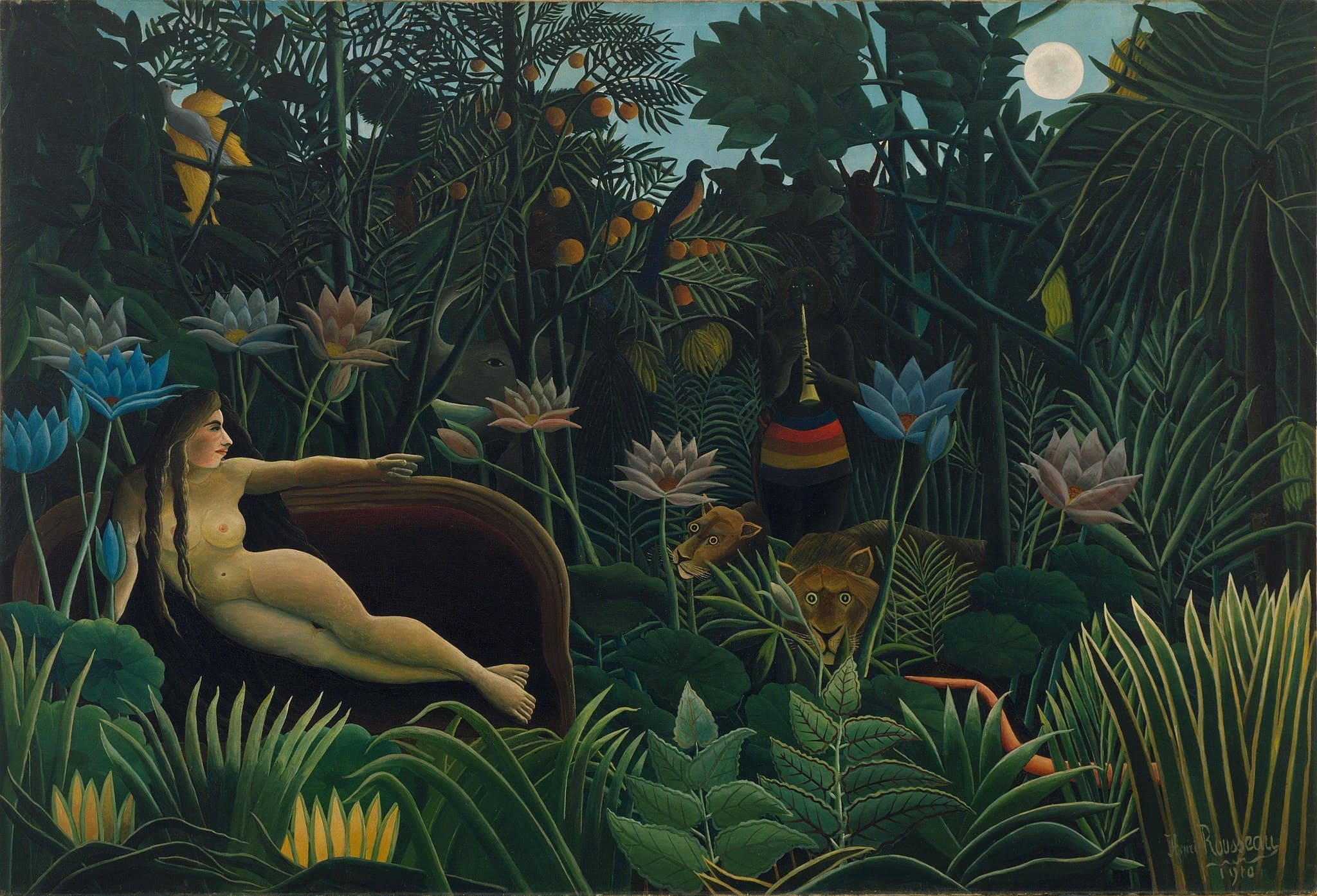
If hypothetically offered on the open market today, Henri Rousseau’s The Dream (Le Rêve), 1910 would most plausibly achieve between USD 20–60 million at public auction, anchored by Rousseau’s 2023 auction record (Les Flamants, USD 43.535M). Museum ownership (MoMA), pristine provenance and exhibition pedigree push value toward the high end; legal/deaccession constraints and condition can materially compress realizations.
Valuation Analysis
Overview: This valuation assumes a hypothetical, fully marketable offering of Henri Rousseau’s The Dream (Le Rêve), 1910. Using direct artist comparables and recent trophy sales as the primary anchor, a reasoned public-auction range is USD 20–60 million. The principal market anchor is the Christie’s New York result for Rousseau’s Les Flamants (1910), which sold for USD 43,535,000 in May 2023 and demonstrably reset the auction ceiling for top Rousseau jungle canvases [2]. The Dream is currently accessioned in the Museum of Modern Art (gift of Nelson A. Rockefeller, 1954) and has not appeared on the modern secondary market [1].
Why this range: The Dream is one of Rousseau’s most famous, large‑scale jungle fantasies and therefore carries a blue‑chip premium within the artist’s corpus. The 2023 Les Flamants sale shows that the market will pay tens of millions for A+ Rousseau canvases, and The Dream’s iconic status and exhibition/publication history make it competitive with that result. At the same time, top Rousseau works are overwhelmingly museum‑held; scarcity creates volatility. If The Dream were deaccessioned and marketed with full provenance, a major evening‑sale placement would likely produce bidding that tests the $40–60M band; weaker sale circumstances or condition issues could push bids toward the lower part of the USD 20M band.
Caveats and upside: Museum ownership (MoMA) both increases the work’s prestige in market narratives and sharply reduces the likelihood and predictability of a sale. Donor restrictions, institutional policy and national/export rules may block deaccession or complicate sale mechanics. Conversely, an exceptional private‑sale campaign with competing institutional and private buyers — or a highly publicized deaccession timed to a market peak and tied to major exhibitions — could exceed the auction range; private‑sale ceilings for unique museum masterpieces can materially outstrip public results in rare cases (outliers exist well above USD 60–80M for other artists). However, absent demonstrable buyer competition and a confirmed pathway out of MoMA custody, the prudent public‑auction estimate remains USD 20–60 million, with private‑sale upside possible but speculative [2].
Recommendations to refine value: Obtain formal confirmation of deaccessionability from MoMA, an up‑to‑date condition/conservation report, and an auction‑house pre‑sale opinion from a global house (Christie’s or Sotheby’s). Tie any marketing to major exhibition loans and technical studies to maximize competitive bidding. With those items in hand, the estimate can be narrowed and a sale strategy confidently set [1][2].
Key Valuation Factors
Art Historical Significance
High ImpactThe Dream (Le Rêve) is one of Rousseau’s canonical late ‘jungle’ paintings and a central image in his posthumous reputation. Painted in 1910, it exemplifies his mature visual language — lush foliage, an imagined tropical setting, and a reclining female figure — and features repeatedly in scholarship, exhibition catalogues and popular reproductions. That cultural and curatorial prominence translates directly into market premium: collectors and institutions prize works that anchor monographs and retrospectives because those works attract media attention and competitive bidding. The Dream’s unmistakable iconography and scale mean it is valued not just as a Rousseau but as an emblematic work of early modernism, elevating its market position above smaller or lesser‑known canvases.
Provenance & Institutional Ownership
High ImpactThe documented provenance (Ambroise Vollard → Knoedler → Sidney Janis → Nelson A. Rockefeller → Museum of Modern Art, gift 1954) is exceptionally strong and historically continuous. Museum custody at MoMA confers unquestioned scholarly validation and increases market prestige — a factor positive for price — but it also decreases the probability of an open‑market sale. Donor agreements, institutional policy and legal/export restrictions may prohibit or complicate deaccession, and even where sale is legally permissible, museums typically require a high‑profile, carefully managed process that can influence timing and realized price. Provenance strength therefore supports a premium but can limit practicable liquidity.
Market Comparables & Scarcity
High ImpactThe primary market comparable is Rousseau’s Les Flamants (1910), which established a new auction ceiling of USD 43.535M in May 2023; that result demonstrates active demand for major jungle canvases. Historically, handfuls of high‑quality Rousseau works exist in private hands; most top examples are museum‑sequestered, producing acute supply scarcity. That scarcity drives competitive bidding when a trophy example appears, but the pool of qualified buyers remains relatively small. Consequently, market outcomes for top Rousseau canvases can swing sharply upward under optimal sale conditions and down if buyer turnout is weak or the work has provenance/condition questions.
Condition & Conservation
Medium ImpactCondition is a decisive determinant of final price for major canvases. Technical conservation history, stability of paint layers, and any visible retouching or historical overpaint will be scrutinized by buyers and specialist conservators. A pristine technical report and recent conservation treatment that supports exhibition loans will support the high end of the estimate; conversely, significant restoration history or unresolved structural issues can materially reduce buyer confidence and price. Commissioning and presenting a thorough conservation report is therefore essential before market placement.
Sale History
The Dream (Le Rêve) has never been sold at public auction.
Henri Rousseau's Market
Henri Rousseau occupies a distinctive niche as a self‑taught/post‑Impressionist master whose large 'jungle' canvases are widely collected by major institutions and blue‑chip private collectors. Historically his auction peak lagged other modern masters, but the 2023 Christie’s Les Flamants result reset market perception and demonstrated that trophy‑grade Rousseau canvases can reach the high tens of millions. Supply is constrained because many premier works are museum‑held, producing episodic, high‑intensity bidding when A+ examples reach the market. The market is therefore bifurcated: pronounced strength for canonical, exhibition‑ready paintings and more price sensitivity for lesser or poorly documented works.
Comparable Sales
Les Flamants
Henri Rousseau
Same artist, same year (1910) and a major 'jungle' canvas — the direct market anchor that reset Rousseau's auction ceiling in 2023.
$43.5M
2023, Christie's, New York
~$47.1M adjusted
Portrait of Joseph Brummer
Henri Rousseau
Same artist but different subject (portrait) and an earlier-market result; shows Rousseau's historical auction floor prior to the 2023 market reset.
$4.4M
1993, Christie's, London
~$9.7M adjusted
Les Femmes d'Alger (Version O)
Pablo Picasso
Not the same artist but a recent high‑profile 'marquee' sale of a museum‑grade modern masterpiece — useful as a trophy‑market analogue for how competitive bidding lifts prices when a blue‑chip work appears.
$179.4M
2015, Christie's, New York (Evening Sale)
~$241.0M adjusted
Portrait of Adele Bloch-Bauer I
Gustav Klimt
Example of a museum‑quality masterpiece moving in the private market for an extremely high price; shows ceiling potential for iconic, museum‑held works (not a direct Rousseau comp but illustrative).
$135.0M
2006, Private sale (reported to Ronald Lauder / Neue Galerie)
~$203.8M adjusted
Portrait of Dr. Gachet
Vincent van Gogh
Historic high‑end auction result for a canonical modern master — useful as a benchmark for how rare, museum‑quality works by major names have traded at auction (illustrative rather than directly comparable).
$82.5M
1990, Christie's, New York
~$195.5M adjusted
Current Market Trends
Recent market dynamics show a scarcity‑driven premium for museum‑quality Rousseau canvases; the 2023 record sale reset expectations and institutional exhibitions (e.g., major monographs and acquisition programs) are sustaining collector interest. Buyers are more selective below trophy level, and successful outcomes increasingly depend on impeccable provenance, condition, and exhibition ties. In short, top works perform strongly when marketed as museum‑grade rarities, while mid‑tier pieces face greater downward pressure.
Sources
- Museum of Modern Art — collection entry: Henri Rousseau, The Dream (Le Rêve), accession 252.1954
- Christie’s — sale results and press: Les Flamants (Henri Rousseau), 11 May 2023 (sale result USD 43,535,000)
- The Art Newspaper — coverage and market commentary on Christie’s 2023 sale and Rousseau market reset